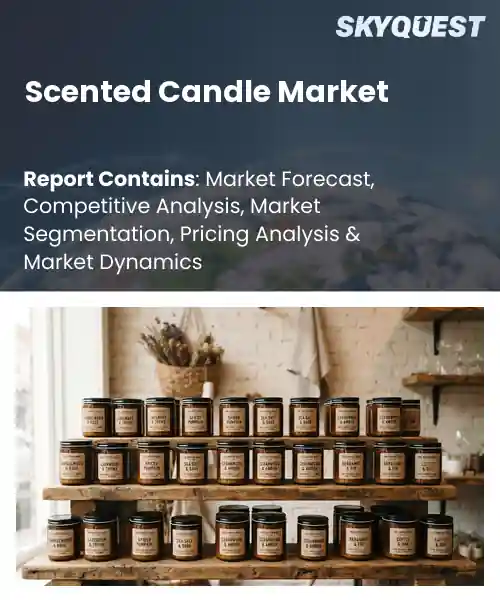
Scented Candle Market
Report ID: SQMIG30K2133
Report ID: SQMIG30K2133
[email protected]
USA +1 351-333-4748
Report ID:
SQMIG30K2133 |
Region:
Global |
Published Date: August, 2026
Pages:
157
|Tables:
157
|Figures:
78


Global Scented Candle Market size was valued at USD 3.84 Billion in 2024 and is poised to grow from USD 4.08 Billion in 2025 to USD 6.6 Billion by 2033, growing at a CAGR of 6.2% during the forecast period (2026-2033).
Over the past decade the scented‑candle market has evolved from a niche home‑decor segment into a multi‑billion‑dollar industry, driven chiefly by consumers’ pursuit of ambience and wellness benefits. In 2013 total sales lingered near US$7 billion, yet by 2023 they surpassed US$13 billion as retailers and brands proliferated across online platforms, specialty boutiques, and chains. The surge reflects shifting lifestyles that value aromatherapy, stress relief, and interior styling, especially after the COVID‑19 pandemic when people spent time at home. Companies such as Yankee Home and Diptyque illustrate how product innovation, from soy‑based blends to limited‑edition fragrances, has amplified market relevance and consumer engagement. The emergence of sustainable sourcing has become pivotal growth catalyst, because environmentally aware shoppers demand biodegradable waxes and recyclable packaging, prompting manufacturers to reformulate product lines. Brands that switched to coconut or rapeseed wax reported a 12 percent sales uplift in regions such as Europe, where green labeling influences purchasing decisions. This shift unlocks opportunities in premium retail channels, as consumers associate eco‑friendly candles with higher perceived quality and are willing to pay price premiums. Moreover, partnerships with fragrance houses enable limited‑edition collections that tap into seasonal trends, creating revenue streams while reinforcing brand loyalty through storytelling aligned with sustainability narratives.
How is AI-driven personalization influencing consumer preferences in the scented candle market?
AI‑driven personalization is reshaping how shoppers discover scented candles by turning scent selection into a data‑rich experience. Brands feed purchase histories, scent preferences and lifestyle cues into machine‑learning models that generate curated recommendations. The technology moves beyond simple “best‑seller” lists, offering real‑time suggestions that reflect seasonal moods, home decor themes and individual aroma affinities. Consumers appreciate the convenience of a digital nose that narrows choices to the most resonant fragrances, reducing overwhelm and increasing purchase confidence. Retailers see higher conversion rates as shoppers encounter products that feel uniquely suited to them, turning browsing into a more intimate journey.Yankee Candle, June 2024, launched an AI‑driven scent recommendation platform that tailors fragrance suggestions to each shopper’s taste profile, boosting confidence and streamlining discovery while supporting market growth.
Market snapshot - (2026-2033)
Global Market Size
USD 3.84 Billion
Largest Segment
Container Candles
Fastest Growth
Other Scented Candles
Growth Rate
6.2% CAGR
To get more insights on this market click here to Request a Free Sample Report
Global scented candle market is segmented by product type, wax type, fragrance type, distribution channel, end user and region. Based on product type, the market is segmented into Container Candles, Pillar Candles, Votive Candles, Tealight Candles, Taper Candles and Other Scented Candles. Based on wax type, the market is segmented into Paraffin Wax, Soy Wax, Beeswax, Palm Wax, Coconut Wax, Blended Wax and Others. Based on fragrance type, the market is segmented into Floral, Fruity, Woody, Spicy, Fresh & Citrus and Other Fragrance Types. Based on distribution channel, the market is segmented into Supermarkets & Hypermarkets, Specialty Stores, Convenience Stores, Online Retail and Other Channels. Based on end user, the market is segmented into Residential, Hospitality, Commercial & Corporate and Others. Based on region, the market is segmented into North America, Europe, Asia Pacific, Latin America and Middle East & Africa.
Container candles segment dominates because they marry visual appeal with practical convenience, allowing brands to showcase intricate artwork while fitting standard retail shelving. Their glass or metal vessels protect fragrance oils, extending burn time and ensuring consistent scent release. Consumers value the reusable containers for home décor, reinforcing repeat purchases and prompting retailers to allocate premium shelf space, which sustains their market leadership.
However, pillar candles are witnessing the strongest growth momentum as consumers seek freestanding options that deliver longer burn periods without the need for external holders. Their solid form enhances scent diffusion in open spaces, and boutique designers are experimenting with layered fragrances, opening new premium niches that accelerate market expansion.
Soy wax segment dominates because its renewable origin aligns with consumer demand for sustainable home products, while offering a clean, even burn that preserves fragrance integrity. The soft texture facilitates easy pouring, enabling small batch artisans and large manufacturers alike to produce consistent candles. Retailers promote soy based lines as eco friendly choices, reinforcing brand loyalty and driving continual market preference.
Meanwhile, coconut wax is emerging as the key high growth area due to its fast melt point and superior scent throw, attracting premium brands seeking tactile experiences. Its creamy finish and ability to blend seamlessly with essential oils inspire product innovation, prompting new fragrance launches that capture niche consumer interest and expand market momentum.
To get detailed segments analysis, Request a Free Sample Report
North America leads the scented candle market through a combination of mature consumer culture, strong retail infrastructure, and a deep appreciation for home fragrance as a lifestyle element. The region benefits from a high concentration of premium brands that invest heavily in product innovation, scent storytelling, and sustainable packaging, resonating with environmentally conscious shoppers. Robust distribution channels spanning specialty boutiques, large‑format retailers, and e‑commerce platforms ensure wide product accessibility. Cultural trends that emphasize self‑care, interior design, and seasonal gifting further amplify demand. Additionally, the presence of influential design and lifestyle media amplifies brand visibility, creating a feedback loop that sustains market leadership.
Scented Candle Market in the United States thrives on a sophisticated consumer base that values both luxury experiences and everyday comfort. Brands differentiate through artisanal craftsmanship, unique fragrance blends, and collaborations with designers and celebrities. Retail environments range from high‑end department stores to boutique concept shops, while online platforms enable niche players to reach broader audiences. The emphasis on wellness and home ambiance drives continuous product experimentation and seasonal releases.
Scented Candle Market in Canada reflects a growing preference for locally sourced ingredients and eco‑friendly production methods. Consumers appreciate narratives that highlight botanicals and sustainable sourcing, prompting brands to emphasize transparency and community engagement. Distribution blends traditional craft stores with upscale lifestyle retailers, complemented by a community that shares scent recommendations and DIY projects. Seasonal celebrations and a strong emphasis on home hospitality further stimulate demand for diverse fragrance collections.
Europe’s scented candle market expands rapidly due to a confluence of cultural appreciation for artisanal craftsmanship, heightened focus on interior aesthetics, and a strong commitment to sustainability. Consumers across the continent seek products that combine sophisticated fragrance profiles with environmentally responsible packaging, prompting brands to adopt natural waxes and recyclable materials. The region’s rich heritage of perfumery fuels innovative scent development, while lifestyle media and design influencers amplify demand for seasonal and limited‑edition collections. Retail landscapes blend historic department stores, boutique concept shops, and thriving e‑commerce platforms, ensuring broad market reach. Moreover, the growing wellness movement positions scented candles as essential tools for relaxation and mental well‑being, reinforcing their appeal in both private homes and hospitality settings.
Scented Candle Market in Germany is anchored by a tradition of precision and quality that resonates with discerning consumers. Brands emphasize high‑grade natural waxes, sophisticated fragrance layering, and meticulous design, often collaborating with renowned perfumers. Retail channels include upscale department stores, specialty boutiques, and a robust online ecosystem that supports niche artisans. The German consumer’s preference for sustainability drives transparent sourcing and eco‑friendly packaging, reinforcing the market’s strong premium positioning.
Scented Candle Market in the United Kingdom is propelled by a lifestyle culture that embraces décor and gifting. Consumers gravitate toward innovative scent narratives, limited‑edition releases, and collaborations with fashion and music icons. Retail environments range from chains to concept stores, while digital platforms enable trend diffusion. A strong emphasis on ethical sourcing and biodegradable packaging aligns with the UK’s environmental consciousness, fostering brand loyalty and encouraging continual market expansion.
Scented Candle Market in France is emerging as consumers seek olfactory experiences that complement interior design. Brands focus on elegant fragrance compositions inspired by French heritage, utilizing natural waxes and artisanal craftsmanship. Distribution blends boutique concept stores in districts with department outlets and an e‑commerce presence. The French emphasis on cultural authenticity and sustainable practices drives demand for transparent ingredient sourcing, positioning scented candles as decorative art and lifestyle accessory.
Asia Pacific is strengthening its scented candle position by blending traditional aromatic heritage with modern lifestyle trends and rapid digital adoption. Consumers increasingly view candles as tools for mindfulness, interior styling, and cultural celebration, prompting manufacturers to experiment with indigenous botanicals and contemporary scent profiles. The region benefits from a dynamic e‑commerce ecosystem that accelerates brand discovery and enables small‑scale artisans to reach broader audiences. Growing middle‑class affluence fuels demand for premium and designer offerings, while sustainability concerns drive the use of natural waxes and recyclable packaging. Collaborative retail concepts that integrate wellness spaces, boutique hotels, and pop‑up galleries further embed scented candles into everyday experiences across the region.
Scented Candle Market in Japan merges minimalist aesthetic sensibilities with a reverence for seasonal aromas. Brands prioritize subtle fragrance blends that evoke nature, often incorporating traditional Japanese botanicals such as cherry blossom and green tea. Retail channels include department stores, specialty lifestyle boutiques, and an online marketplace that highlights artisanal craftsmanship. A strong cultural emphasis on harmony and well‑being drives demand for candles that enhance meditation spaces and home tranquility.
Scented Candle Market in South Korea is driven by a youthful consumer base that values products and experiential ambiance. Brands experiment with innovative scent pairings, such as citrus‑herb blends and reinterpretations of traditional Korean fragrances. Distribution combines sleek flagship stores, concept pop‑ups, and an e‑commerce platform that leverages media influencers. An increasing focus on eco‑consciousness encourages the adoption of soy or plant‑based waxes and recyclable packaging, reinforcing significant market growth.
To know more about the market opportunities by region and country, click here to
Buy The Complete Report
Growing Consumer Preference For Home Fragrance
Consumers increasingly seek scented candles to create personalized atmospheres, driving demand across lifestyle segments. This preference encourages retailers to expand assortments, while manufacturers innovate with diverse aromas and designs. The emotional connection associated with fragrance enhances perceived value, prompting repeat purchases and brand loyalty. Consequently, the market experiences sustained expansion as households allocate discretionary spending toward ambient products that contribute to wellbeing and interior aesthetics. Additionally, the sensory experience aligns with seasonal celebrations, further stimulating purchase cycles throughout the year.
Rise In Sustainable Candle Materials
Eco‑conscious consumers prioritize candles made from renewable waxes, encouraging manufacturers to adopt plant‑based alternatives and biodegradable packaging. This shift enhances brand reputation and aligns with broader sustainability narratives, attracting environmentally aware shoppers. As retailers highlight green credentials, product visibility improves, fostering market penetration across premium and mass‑market channels. The collective emphasis on responsible sourcing and reduced ecological impact thus fuels market growth by expanding the consumer base and reinforcing loyalty among values‑driven purchasers. Furthermore, the perceived health benefits of natural ingredients increase consumer confidence, encouraging higher spending on premium offerings.
High Cost Of Premium Ingredients
Premium natural waxes, essential oils, and artisanal packaging elevate production expenses, resulting in higher retail prices that may deter price‑sensitive shoppers. This cost barrier limits market accessibility, especially in emerging economies where discretionary income is constrained. Retailers often prioritize lower‑margin, mass‑produced alternatives to maintain volume, reducing shelf space for premium scented candles. Consequently, the elevated cost structure hampers widespread adoption and slows overall market expansion despite growing consumer interest. Additionally, small manufacturers face challenges in achieving economies of scale, further inflating unit costs and limiting competitive pricing options.
Regulatory Restrictions On Fragrance Compounds
Stringent regulations governing volatile organic compounds and allergenic fragrance ingredients impose compliance burdens on candle producers, necessitating reformulation and testing. These requirements increase development timelines and operational costs, discouraging product launches. Moreover, varying standards across regions create complexity for multinational firms, limiting their ability to standardize offerings and achieve cost efficiencies. As a result, regulatory constraints act as a deterrent to market growth, particularly for innovative scent profiles seeking broader distribution. Compliance also limits synthetic fragrance use, forcing reliance on fewer natural options.
Request Free Customization of this report to help us to meet your business objectives.
Competition in the global scented candle market intensifies as legacy brands pursue M&A, strategic alliances, and digital innovation. Newell Brands’ acquisition of Yankee Candle consolidates distribution power, while Bath & Body Works’ partnership with Disney drives seasonal demand through co‑branded collections. Meanwhile, companies such as Diptyque are experimenting with QR‑linked scent narratives and smart‑candle prototypes to differentiate product experiences.
Top Player’s Company Profile
Recent Developments
SkyQuest’s ABIRAW (Advanced Business Intelligence, Research & Analysis Wing) is our Business Information Services team that Collects, Collates, Correlates, and Analyses the Data collected by means of Primary Exploratory Research backed by robust Secondary Desk research. As per SkyQuest analysis, the scented‑candle market is being propelled primarily by a growing consumer preference for home fragrance, which fuels higher SKUs across retail and e‑commerce channels, while the rising cost of premium ingredients restrains price‑sensitive shoppers and limits broader adoption. North America remains the dominant region, benefiting from strong retail infrastructure and a culture that values interior aromatherapy. Container candles continue to lead the segment mix because their reusable vessels combine visual appeal with extended burn time, reinforcing repeat purchases. A second important driver is the shift toward sustainable packaging and plant‑based waxes, which enhances brand credibility and allows firms to command price premiums.
| Report Metric | Details |
|---|---|
| Market size value in 2024 | USD 3.84 Billion |
| Market size value in 2033 | USD 6.6 Billion |
| Growth Rate | 6.2% |
| Base year | 2024 |
| Forecast period | (2026-2033) |
| Forecast Unit (Value) | USD Billion |
| Segments covered |
|
| Regions covered | North America (US, Canada), Europe (Germany, France, United Kingdom, Italy, Spain, Rest of Europe), Asia Pacific (China, India, Japan, Rest of Asia-Pacific), Latin America (Brazil, Rest of Latin America), Middle East & Africa (South Africa, GCC Countries, Rest of MEA) |
| Companies covered |
|
| Customization scope | Free report customization with purchase. Customization includes:-
|
To get a free trial access to our platform which is a one stop solution for all your data requirements for quicker decision making. This platform allows you to compare markets, competitors who are prominent in the market, and mega trends that are influencing the dynamics in the market. Also, get access to detailed SkyQuest exclusive matrix.
Table Of Content
Executive Summary
Market overview
Parent Market Analysis
Market overview
Market size
KEY MARKET INSIGHTS
COVID IMPACT
MARKET DYNAMICS & OUTLOOK
Market Size by Region
KEY COMPANY PROFILES
Methodology
For the Scented Candle Market, our research methodology involved a mixture of primary and secondary data sources. Key steps involved in the research process are listed below:
1. Information Procurement: This stage involved the procurement of Market data or related information via primary and secondary sources. The various secondary sources used included various company websites, annual reports, trade databases, and paid databases such as Hoover's, Bloomberg Business, Factiva, and Avention. Our team did 45 primary interactions Globally which included several stakeholders such as manufacturers, customers, key opinion leaders, etc. Overall, information procurement was one of the most extensive stages in our research process.
2. Information Analysis: This step involved triangulation of data through bottom-up and top-down approaches to estimate and validate the total size and future estimate of the Scented Candle Market.
3. Report Formulation: The final step entailed the placement of data points in appropriate Market spaces in an attempt to deduce viable conclusions.
4. Validation & Publishing: Validation is the most important step in the process. Validation & re-validation via an intricately designed process helped us finalize data points to be used for final calculations. The final Market estimates and forecasts were then aligned and sent to our panel of industry experts for validation of data. Once the validation was done the report was sent to our Quality Assurance team to ensure adherence to style guides, consistency & design.
Analyst Support
Customization Options
With the given market data, our dedicated team of analysts can offer you the following customization options are available for the Scented Candle Market:
Product Analysis: Product matrix, which offers a detailed comparison of the product portfolio of companies.
Regional Analysis: Further analysis of the Scented Candle Market for additional countries.
Competitive Analysis: Detailed analysis and profiling of additional Market players & comparative analysis of competitive products.
Go to Market Strategy: Find the high-growth channels to invest your marketing efforts and increase your customer base.
Innovation Mapping: Identify racial solutions and innovation, connected to deep ecosystems of innovators, start-ups, academics, and strategic partners.
Category Intelligence: Customized intelligence that is relevant to their supply Markets will enable them to make smarter sourcing decisions and improve their category management.
Public Company Transcript Analysis: To improve the investment performance by generating new alpha and making better-informed decisions.
Social Media Listening: To analyze the conversations and trends happening not just around your brand, but around your industry as a whole, and use those insights to make better Marketing decisions.
REQUEST FOR SAMPLE
 REQUEST FREE CUSTOMIZATION


Want to customize this report? This report can be personalized according to your needs. Our analysts and industry experts will work directly with you to understand your requirements and provide you with customized data in a short amount of time. We offer $1000 worth of FREE customization at the time of purchase.
Feedback From Our Clients


 USA (+1) 351-333-4748

