Rubber Frame Monitors Market
Report ID: SQMIG45I2515
Report ID: SQMIG45I2515
[email protected]
USA +1 351-333-4748
Report ID:
SQMIG45I2515 |
Region:
Global |
Published Date: September, 2026
Pages:
157
|Tables:
144
|Figures:
78


Global Rubber Frame Monitors Market size was valued at USD 814.3 Million in 2024 and is poised to grow from USD 863.97 Million in 2025 to USD 1387.47 Million by 2033, growing at a CAGR of 6.1% during the forecast period (2026-2033).
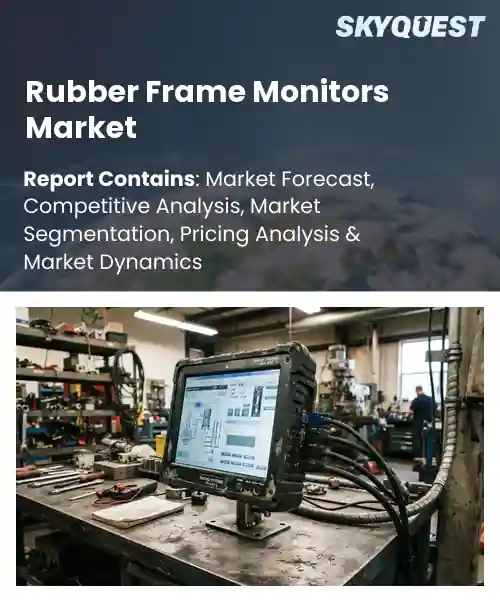
The rubber‑frame monitor market consists of LCD and LED displays that use a flexible rubber bezel to shield the screen and cut chassis weight. Originating in the early 2010s, manufacturers replaced rigid plastic frames to boost durability for harsh settings such as construction sites and military vehicles. The primary driver has been rising demand for rugged visual interfaces capable of resisting vibration, extreme temperatures, and accidental impact while preserving image quality. In the last decade adoption moved from niche industrial panels to mainstream global automotive infotainment, illustrated by Panasonic and LG offering rubber‑framed units for harsh‑weather trucks and outdoor kiosks. The next catalyst reshaping the global rubber‑frame monitor market is the proliferation of IoT‑enabled edge devices that require resilient displays for data visualization. As factories adopt smart sensors and autonomous vehicles, the need for screens that survive dust, oil, and frequent cleaning intensifies, prompting integrators to specify rubber‑framed panels. This requirement drives investment in lightweight composite frames, which lowers shipping costs and eases mounting on machinery. A clear example is Siemens deploying rubber‑frame monitors on its CNC machines, where enhanced shock resistance reduces downtime and boosts production efficiency, opening lucrative opportunities for suppliers targeting the expanding global industrial IoT sector.
How is AI-driven automation influencing design and pricing in the rubber frame monitors market?
AI driven automation is reshaping how rubber frame monitors are designed and priced. By analyzing user ergonomics and material stress, algorithms generate frame geometries that balance durability with lightweight feel. Production lines use robotic assembly guided by real time data, cutting waste and shortening lead times. This efficiency lets manufacturers adjust pricing more responsively, offering tiered models that reflect feature complexity rather than fixed cost structures. As a result, customers see faster product cycles and more customized options, while companies benefit from lower overhead and the ability to scale designs quickly.Samsung Electronics announced a new rubber frame monitor with AI optimized chassis in June 2023, demonstrating how automated design reduces material use and shortens time to market. The launch shows the technology’s role in delivering cost effective, high performance displays that meet evolving consumer demands.
Market snapshot - (2026-2033)
Global Market Size
USD 814.3 Million
Largest Segment
Industrial Monitors
Fastest Growth
Outdoor Monitors
Growth Rate
6.1% CAGR
To get more insights on this market click here to Request a Free Sample Report
Global rubber frame monitors market is segmented by monitor type, screen size, mounting type, application, end user and region. Based on monitor type, the market is segmented into Industrial Monitors, Marine Monitors and Outdoor Monitors. Based on screen size, the market is segmented into Up to 15 Inches, 16–24 Inches and Above 24 Inches. Based on mounting type, the market is segmented into Panel Mount, Wall Mount and Desktop. Based on application, the market is segmented into Manufacturing, Transportation, Oil & Gas and Marine. Based on end user, the market is segmented into Industrial and Commercial. Based on region, the market is segmented into North America, Europe, Asia Pacific, Latin America and Middle East & Africa.
Panel mount segment dominates because it integrates monitors directly into equipment enclosures, reducing exposure to harsh conditions and simplifying cabling. This tight integration creates a sealed environment that protects the rubber frame, extending service life and meeting strict industrial reliability standards. Manufacturers favor this solution for its inherent robustness, ease of maintenance, and ability to streamline system design, resulting in fewer downtimes and lower total cost of ownership.
Meanwhile, desktop segment emerges as the fastest growing because flexible workstation layouts and demand for ergonomic interfaces drive adoption of rubber frame monitors on desks. The convenience of plug‑and‑play setup encourages upgrades in control rooms and design studios, accelerating market expansion and creating new opportunities for accessory ecosystems.
Above 24 inches segment dominates because larger displays provide comprehensive situational awareness for maritime operators, allowing simultaneous monitoring of navigation charts, sensor data, and communications. The expansive visual field reduces glance time, enhances decision speed, and aligns with crew training standards. This size advantage also supports integration of advanced imaging technologies, reinforcing the preference for oversized rubber frame monitors in marine environments.
On the other hand, wall mount segment is witnessing the strongest growth because ship designers prioritize space optimization and robust mounting solutions. The ability to securely affix rubber frame monitors to bulkheads maximizes clearance, supports vibration resistance, and facilitates rapid retrofits, spurring broader adoption across vessel classes and driving market momentum.
To get detailed segments analysis, Request a Free Sample Report
Asia Pacific enjoys a confluence of manufacturing expertise, advanced component supply chains, and a culture of rapid technology adoption that fuels its leadership in the rubber frame monitors arena. The region’s electronics and automotive sectors demand flexible, durable displays, prompting manufacturers to invest heavily in specialized tooling and materials science. Robust research ecosystems in Japan and South Korea accelerate innovation in ergonomics and sustainability, while cost‑effective production capabilities enable competitive pricing without compromising quality. Strong collaboration between original equipment manufacturers and material suppliers creates a seamless pipeline from design to delivery, reinforcing the region’s reputation as a hub for cutting‑edge monitor solutions.
Rubber Frame Monitors Market in Japan benefits from a legacy of precision engineering and a deep integration with high‑end consumer electronics. Local manufacturers prioritize miniaturization and reliability, aligning product development with demanding automotive and aerospace applications. Close ties with research institutes foster continuous material enhancements, while established distribution networks ensure swift market penetration. This environment supports a steady flow of innovative monitor designs that meet stringent performance criteria and aesthetic expectations.
Rubber Frame Monitors Market in South Korea is propelled by a vibrant tech ecosystem and aggressive investment in display technology. Domestic firms focus on high‑resolution flexible panels suited for mobile devices and immersive entertainment platforms. Government‑backed initiatives encourage sustainable material use, driving advances in recyclable rubber composites. Collaborative ventures between component producers and design houses accelerate time‑to‑market, while a skilled workforce ensures meticulous assembly and quality control across the value chain.
North America experiences swift expansion driven by heightened demand for ergonomic and high‑performance display solutions across corporate, healthcare, and educational settings. Consumers and enterprises alike value the durability and design flexibility offered by rubber frames, prompting manufacturers to tailor products for premium workstations and collaborative environments. Strong venture capital activity fuels startups that integrate smart features, while established players leverage extensive distribution channels to reach diverse end‑users. Environmental awareness also pushes firms toward recyclable frame materials, reinforcing market growth through sustainability commitments.
Rubber Frame Monitors Market in the United States thrives on a culture of innovation and a sizable corporate sector that prioritizes ergonomic workspaces. Companies adopt flexible frame designs to enhance durability and aesthetic appeal in office and medical equipment. A robust ecosystem of technology providers, design firms, and logistics services accelerates product rollout, while consumer preference for premium, sustainably sourced monitors drives continual refinement of material compositions.
Rubber Frame Monitors Market in Canada is shaped by a strong emphasis on eco‑conscious design and government encouragement of green manufacturing practices. Market participants focus on integrating recycled rubber components to meet both regulatory expectations and consumer demand for sustainable products. Niche applications in digital signage and public sector procurement create opportunities for specialized monitor solutions that balance performance with environmental responsibility.
Europe solidifies its role by leveraging rigorous quality standards, collaborative research frameworks, and a deep commitment to environmental stewardship within the rubber frame monitors sector. Cross‑border initiatives enable shared development of high‑performance materials that meet strict safety and recyclability criteria. The region’s mature industrial base, especially in automotive and medical device manufacturing, drives demand for robust, precision‑engineered monitors. Moreover, design‑centred markets such as fashion retail and media production prioritize aesthetic integration, encouraging manufacturers to fuse functionality with refined visual appeal. These combined forces reinforce Europe’s reputation as a hub for premium, sustainable monitor solutions.
Rubber Frame Monitors Market in Germany benefits from world‑renowned engineering acumen and a strong industrial base that demands durable, high‑precision displays. Manufacturers integrate rigorous testing protocols to ensure compliance with stringent safety and environmental regulations. Close cooperation with automotive and medical device sectors fuels the development of monitors that can withstand demanding operational conditions while maintaining visual excellence.
Rubber Frame Monitors Market in the United Kingdom is driven by a vibrant creative industry and a growing emphasis on flexible work environments. Designers seek monitor frames that combine robustness with sleek aesthetics, supporting sectors such as broadcasting, gaming, and digital media. Collaborative research hubs and a proactive approach to sustainable material sourcing further enhance the market’s appeal to both domestic and international buyers.
Rubber Frame Monitors Market in France aligns with the nation’s strong fashion and retail sectors, where visual presentation and durability are paramount. Manufacturers focus on integrating recyclable rubber frames that complement high‑resolution displays used in boutique storefronts and luxury showrooms. Ongoing partnerships with design schools and sustainability initiatives promote continual innovation toward elegant, eco‑friendly monitor solutions.
To know more about the market opportunities by region and country, click here to
Buy The Complete Report
Growing Demand For Ergonomic Workstations
Advancements In Minimalist Frame Design
High Material Cost Sensitivity
Limited Compatibility With Legacy Systems
Request Free Customization of this report to help us to meet your business objectives.
The competitive landscape of the Global Rubber Frame Monitors Market is shaped by intense rivalry among established OEMs and emerging specialists, driving rapid product differentiation and supply‑chain integration. Key market drivers include the demand for lightweight, shock‑resistant displays in industrial and mobile applications, prompting firms to pursue strategic M&A, joint‑development partnerships, and accelerated tech innovation. For example, Dell’s partnership with Flextronics to co‑develop rubber‑frame monitor prototypes has accelerated time‑to‑market, while HP’s acquisition of a thin‑bezel technology firm has enabled new ergonomic designs that leverage rubber framing for enhanced durability.
Top Player’s Company Profile
Recent Developments
SkyQuest’s ABIRAW (Advanced Business Intelligence, Research & Analysis Wing) is our Business Information Services team that Collects, Collates, Correlates, and Analyses the Data collected by means of Primary Exploratory Research backed by robust Secondary Desk research. As per SkyQuest analysis, the global rubber‑frame monitors market is being propelled primarily by the growing demand for ergonomic workstations, which pushes manufacturers to embed shock‑absorbing rubber frames that improve user comfort and reduce fatigue. A second driver is the recent advancement in minimalist frame design that enables slimmer bezels without sacrificing durability, attracting style‑conscious buyers. However, high material‑cost sensitivity remains a restraint, as volatile rubber prices can erode margins and deter price‑sensitive purchasers. Asia Pacific dominates the market thanks to its strong manufacturing base, advanced supply chains and rapid technology adoption. Within the product mix, the panel‑mount segment leads, offering integrated, sealed installations that enhance durability and lower total cost of ownership.
| Report Metric | Details |
|---|---|
| Market size value in 2024 | USD 814.3 Million |
| Market size value in 2033 | USD 1387.47 Million |
| Growth Rate | 6.1% |
| Base year | 2024 |
| Forecast period | (2026-2033) |
| Forecast Unit (Value) | USD Million |
| Segments covered |
|
| Regions covered | North America (US, Canada), Europe (Germany, France, United Kingdom, Italy, Spain, Rest of Europe), Asia Pacific (China, India, Japan, Rest of Asia-Pacific), Latin America (Brazil, Rest of Latin America), Middle East & Africa (South Africa, GCC Countries, Rest of MEA) |
| Companies covered |
|
| Customization scope | Free report customization with purchase. Customization includes:-
|
To get a free trial access to our platform which is a one stop solution for all your data requirements for quicker decision making. This platform allows you to compare markets, competitors who are prominent in the market, and mega trends that are influencing the dynamics in the market. Also, get access to detailed SkyQuest exclusive matrix.
Table Of Content
Executive Summary
Market overview
Parent Market Analysis
Market overview
Market size
KEY MARKET INSIGHTS
COVID IMPACT
MARKET DYNAMICS & OUTLOOK
Market Size by Region
KEY COMPANY PROFILES
Methodology
For the Rubber Frame Monitors Market, our research methodology involved a mixture of primary and secondary data sources. Key steps involved in the research process are listed below:
1. Information Procurement: This stage involved the procurement of Market data or related information via primary and secondary sources. The various secondary sources used included various company websites, annual reports, trade databases, and paid databases such as Hoover's, Bloomberg Business, Factiva, and Avention. Our team did 45 primary interactions Globally which included several stakeholders such as manufacturers, customers, key opinion leaders, etc. Overall, information procurement was one of the most extensive stages in our research process.
2. Information Analysis: This step involved triangulation of data through bottom-up and top-down approaches to estimate and validate the total size and future estimate of the Rubber Frame Monitors Market.
3. Report Formulation: The final step entailed the placement of data points in appropriate Market spaces in an attempt to deduce viable conclusions.
4. Validation & Publishing: Validation is the most important step in the process. Validation & re-validation via an intricately designed process helped us finalize data points to be used for final calculations. The final Market estimates and forecasts were then aligned and sent to our panel of industry experts for validation of data. Once the validation was done the report was sent to our Quality Assurance team to ensure adherence to style guides, consistency & design.
Analyst Support
Customization Options
With the given market data, our dedicated team of analysts can offer you the following customization options are available for the Rubber Frame Monitors Market:
Product Analysis: Product matrix, which offers a detailed comparison of the product portfolio of companies.
Regional Analysis: Further analysis of the Rubber Frame Monitors Market for additional countries.
Competitive Analysis: Detailed analysis and profiling of additional Market players & comparative analysis of competitive products.
Go to Market Strategy: Find the high-growth channels to invest your marketing efforts and increase your customer base.
Innovation Mapping: Identify racial solutions and innovation, connected to deep ecosystems of innovators, start-ups, academics, and strategic partners.
Category Intelligence: Customized intelligence that is relevant to their supply Markets will enable them to make smarter sourcing decisions and improve their category management.
Public Company Transcript Analysis: To improve the investment performance by generating new alpha and making better-informed decisions.
Social Media Listening: To analyze the conversations and trends happening not just around your brand, but around your industry as a whole, and use those insights to make better Marketing decisions.
REQUEST FOR SAMPLE
 REQUEST FREE CUSTOMIZATION


Want to customize this report? This report can be personalized according to your needs. Our analysts and industry experts will work directly with you to understand your requirements and provide you with customized data in a short amount of time. We offer $1000 worth of FREE customization at the time of purchase.
Feedback From Our Clients


 USA (+1) 351-333-4748

