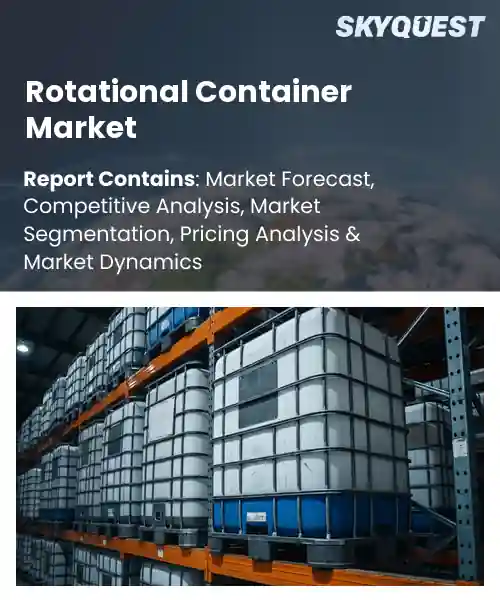
Rotational Container Market
Report ID: SQMIG15G2170
Report ID: SQMIG15G2170
[email protected]
USA +1 351-333-4748
Report ID:
SQMIG15G2170 |
Region:
Global |
Published Date: March, 2026
Pages:
157
|Tables:
118
|Figures:
77


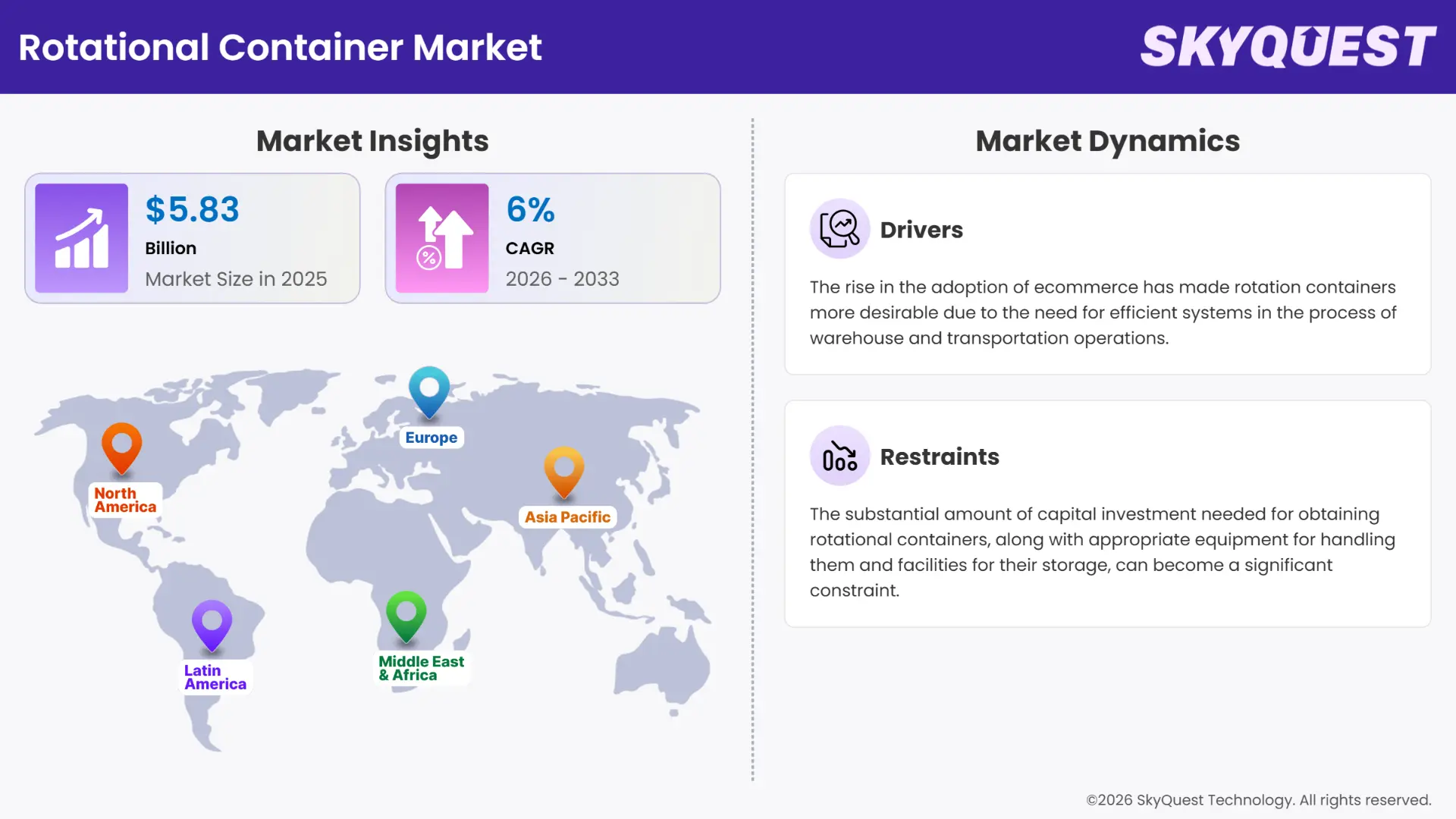
Global Rotational Container Market size was valued at USD 5.5 Billion in 2024 and is poised to grow from USD 5.83 Billion in 2025 to USD 9.29 Billion by 2033, growing at a CAGR of 6% during the forecast period (2026-2033).
Key Takeaways: Market Trends & Insights
Growing demand for durable and cost-effective storage solutions, increasing use in agriculture and industrial applications, rising adoption of plastic containers, advancements in rotational molding technology, and expanding infrastructure development are driving sales of rotational containers.
The process of rotational molding allows the creation of robust, hollow parts with great durability. Various improvements, including the use of multi-layer polyethylene, UV stabilized materials, and automation, contribute to the development of the market by increasing the longevity of products as well as decreasing production costs. Such developments allow rotational molding technology to find more use in areas such as chemicals, petroleum, and agriculture. Moreover, there are more possibilities for manufacturers in developing countries due to the increasing need for mobile storage facilities. Growing need for lightweight, corrosion-resistant, and versatile storage solutions coupled with a shift toward efficient manufacturing processes is expected to primarily drive rotational container market growth.
On the contrary, fluctuating raw material prices, environmental concerns related to plastic usage, competition from alternative materials, regulatory restrictions on plastics, and high initial setup costs for manufacturing equipment are anticipated to slow down rotational container market penetration in the future.
How is Automation Enhancing Production Efficiency in the Rotational Container Market?
With the help of automation, the manufacturing process for rotational molding is being revolutionized by the incorporation of coordination among mold heating, material dispensing, and robotic operations. The industry trend is shifting towards automation from manual operations. Automation not only enhances consistency but also helps to minimize wastage. It even aids the creation of intricate and seamless containers. Companies have started utilizing recipe-based controls as well as data analysis for accelerating their production cycle and for making scalability easier. With automation, mold heating can be done directly and in real-time through sensors.
To get more insights on this market click here to Request a Free Sample Report
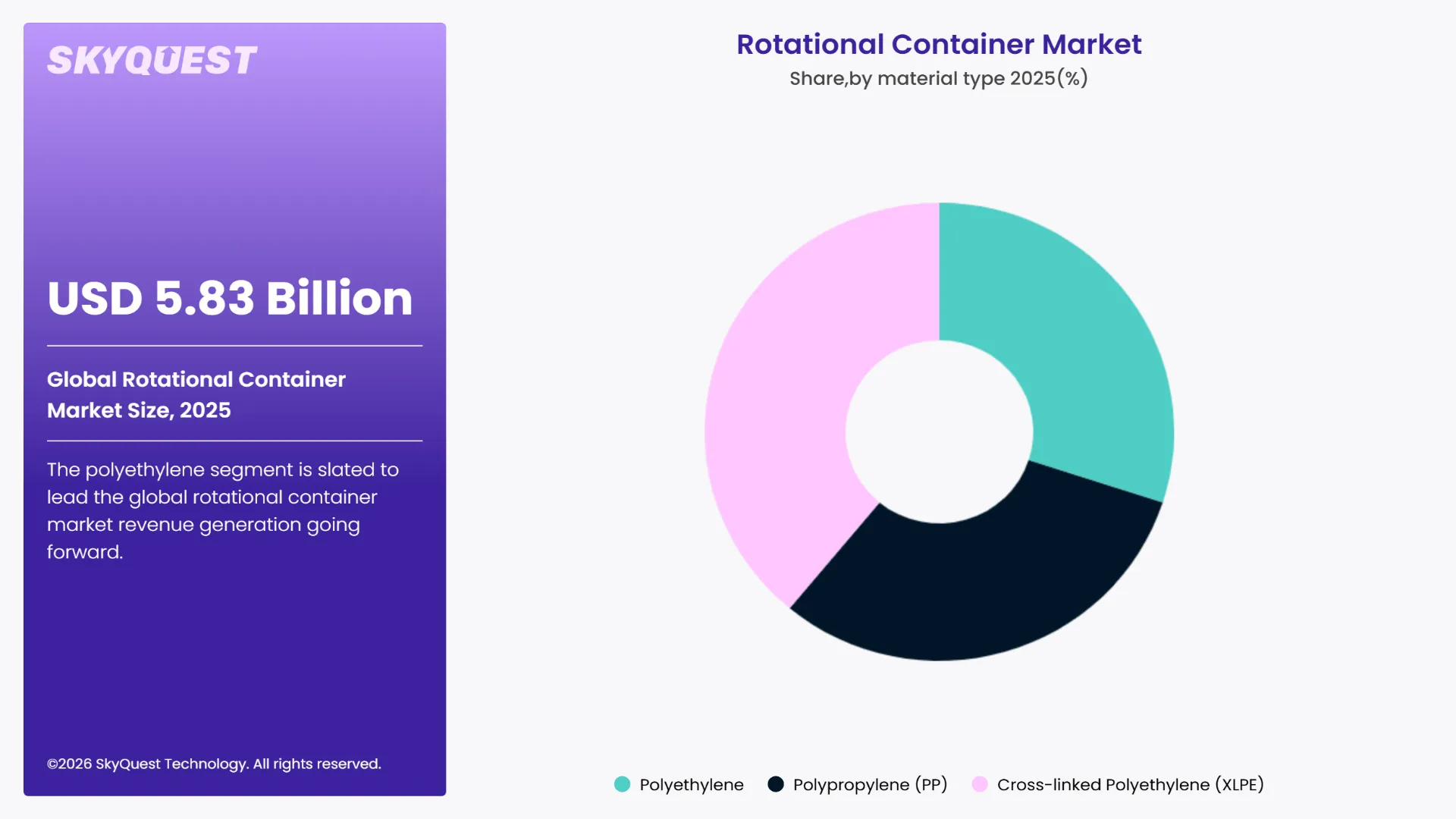
The rotational container market is segmented by material type, wall construction, product category, end-use industry, and region. Based on material type, the market is segmented into Polyethylene, Polypropylene (PP), and Cross-linked Polyethylene (XLPE). Based on wall construction, the market is segmented into single-wall containers and double-wall/insulated. Based on product category, the market is segmented into bulk storage tanks, intermediate bulk containers (IBCs), material handling totes & bins, and specialized marine/floatation containers. Based on end-use industry, the market is segmented into chemicals & petrochemicals, food & beverage, pharmaceuticals & healthcare, and waste management & recycling. Based on region, the market is segmented into North America, Europe, Asia Pacific, Latin America, and Middle East & Africa.
The polyethylene segment is slated to lead the global rotational container market revenue generation going forward. High moldability, impact resistance and chemical compatibility are key factors helping cement the dominance of this segment. Moreover, the component allows for the creation of complex yet consistent shapes that offer optimal performance. The ease of processability of the material leads to fewer variations in the cycle and minimizes waste, thus reducing the overall cost of ownership and promoting consistency in design.
However, polypropylene is emerging as the most rapidly expanding segment as per this rotational container industry analysis. Higher stiffness, temperature resilience, and lighter weight, open new applications in hot-fill and structurally demanding uses. Improvements in copolymer formulas and compatibilizers enhance the efficiency of materials for particular applications within chemical and food processing industries, leading to new growth prospects and the need for diversity in material selection.
The intermediate bulk containers segment accounts for the largest global rotational container market share going forward. Standardized formats and rotational molding compatibility deliver a balance of high-volume liquid containment and stackable transport efficiency allowing this segment to hold sway over others. They are durable and reusable, hence reducing the complications in their handling and the likelihood of damaging them, making them compatible with palletized loading and forklift systems, hence encouraging the purchase of these boxes.
On the other hand, material handling totes and bins have been identified as the most rapidly growing segment because of the rising trend towards warehouse automation and e-commerce fulfillment as well as ergonomic demands. This product can be easily customized and manufactured using rapid prototyping techniques, making it suitable for automation purposes.
To get detailed segments analysis, Request a Free Sample Report
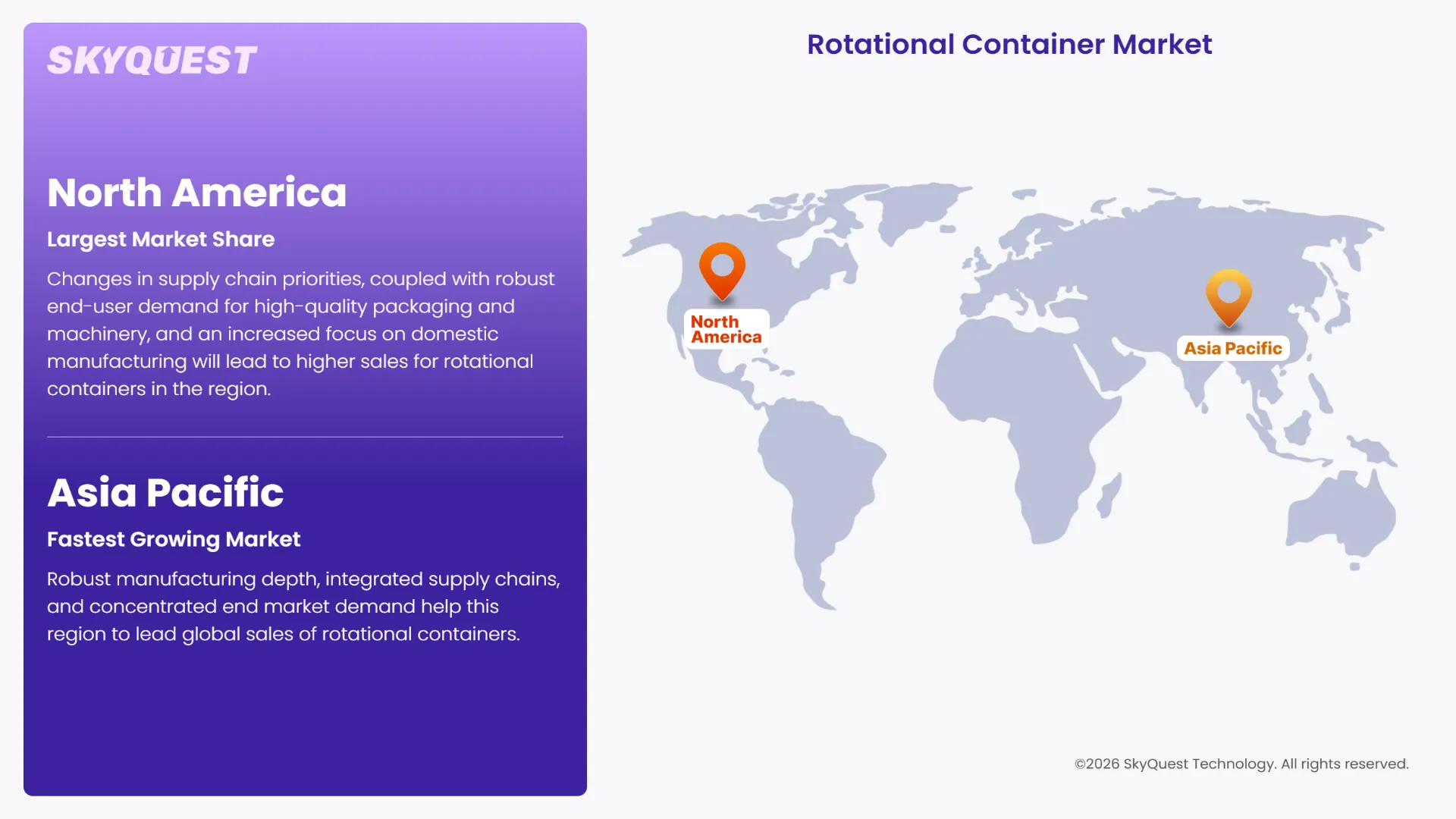
Changes in supply chain priorities, coupled with robust end-user demand for high-quality packaging and machinery, and an increased focus on domestic manufacturing will lead to higher sales for rotational containers in the region. The manufacturers will still enjoy good sales networks as well as customizing products according to customer requirements. Automation will help manufacturers meet manufacturing demands faster.
Additionally, there is increased emphasis on sustainability and material recycling providing manufacturers with the necessary resources to innovate new products. Close cooperation between suppliers and end users streamlines prototyping and aftermarket support and enhances the momentum of the marketplace and allows each region's competitors to differentiate themselves from one another. There is also an increased degree of regulatory expectation regarding product safety and environmental performance which drives manufacturers to create higher quality manufactured products. Additionally, access to skilled technicians and design talent allows for the development of complex projects and long-term service offerings.
High emphasis on customization across construction, agricultural, and energy industries is shaping rotational container demand in the United States. Effective channeling and after-sales services contribute positively towards the longevity of the product life cycle. Working together with the final consumers and design engineers facilitates customization and quick prototyping. Designs that are tough and durable, safety and environmental compliance, and logistics within the chain are priorities for manufacturers.
Rotational container demand in Canada is centered around durable solutions for challenging climates and heavy duty applications such as forestry and agriculture. Sustainability in terms of material use and recycling has been prioritized in developing the products in accordance with regulatory and consumer demands. Material strength, modularity, and minimum maintenance are the main attributes sought by the producers.
Robust manufacturing depth, integrated supply chains, and concentrated end market demand help this region to lead global sales of rotational containers. Robust Original Equipment Manufacturer (OEM) relationships with auto, electronics, and consumer goods industries provide consistent demand for customized rotational containers.
In addition, continued investment in advanced materials and automation within the region continues to increase the performance and efficiency of the products being manufactured. There are enough competing suppliers providing high volume, as well as specialized and niche solutions, for both domestic and export applications. In addition, government programs and policies to support the development of the export industry, coupled with significant levels of investment from the private sector, will continue to provide a well-trained and dynamic workforce for the ongoing development and continuous improvements in the performance and quality of rotational containers.
Advanced materials research, precision engineering capabilities, and close alignment with demanding OEM quality standards drives sustained sales of rotational containers in Japan. Safety and environmental regulations ensure that quality is maintained and competitiveness is enhanced. Manufacturers concentrate on longevity, precision, and application suitability for automobile parts, electronic enclosures, and unique industrial containers. The emphasis on innovation and well-developed supply chains allows quick responses to specific requirements and customization needs.
Advanced industrial clusters, high automation and integration with shipbuilding, automotive, and electronics supply chains supports rotational container demand in South Korea. Cooperation between the manufacturers and suppliers allows creating customized containers that are used both in domestic industries and exported abroad. Local rotational container providers concentrate on the production process efficiency, fast prototyping, and innovation in materials to satisfy tough functional and durable demands.
Highly advanced engineering abilities, strict regulatory structures, and sustainable manufacturing processes will influence future container rotational purchase decisions in Europe. Producers apply lightweight material, recycled plastics, and design methods for increased recoverability at the end of products' lifecycle, consistent with circular economy theories.
As there is a high level of expertise in rotational manufacturing involving tooling, surface finish, and precision, the highly engineered parts produced from rotational containers have exceptionally high quality standards. The presence of skilled workers and specialized contract manufacturers creates an opportunity for rapid scaling of niche products. Furthermore, the proximity of manufacturers to research institutions and standards agencies enables quick transition of technical advances to compliant commercial products.
Emphasis on precision engineering, tooling expertise, and close links to automotive industries are shaping rotational container demand in Germany. Automation ensures reliable production, while collaborations with engineering companies provide customized products. A focus on durable design, recyclability, and longevity enhances the company's reputation as reliable and innovative players in the highly complex industry sectors. Companies focus on accurate dimensions, strong materials, and adherence to strict industrial standards.
Design-led approaches, strong research links and capabilities in composite materials for specialized applications are influencing rotational container sales in the United Kingdom. Lifecycle management and recycling are critical considerations in selecting materials and designing products. Rapid prototyping, customized designs, and complex logistics systems that integrate well with advanced supply chains in aerospace, defense, and industrial markets are hallmarks of the industry’s producers.
Design-driven packaging and specialty industrial solutions, serving strong domestic demand for consumer and food applications are shaping rotational container adoption in France. Collaboration clusters and artisanal contract manufacturing allow customization of product lines, while the exporters capitalize on design prestige and environmentally friendly material usage to cater to niche markets abroad. Manufacturing involves beauty finish, material invention, and conformance to food safety and environment legislation for catering to strict customer specifications.
To know more about the market opportunities by region and country, click here to
Buy The Complete Report
Rising E-Commerce Fulfillment Needs
The rise in the adoption of ecommerce has made rotation containers more desirable due to the need for efficient systems in the process of warehouse and transportation operations. The use of rotation containers enables making the products modular in terms of various sizes, helps prevent damage that may be inflicted upon them from improper piling up, and makes it easier to recycle because they are reusable. Due to the rising demand for logistics service providers to manage changes sustainably, the purchase of rotation containers presents prospects of growth.
Innovation In Container Material Technology
Innovations in material science and manufacturing have resulted in the evolution of rotational containers that are not only lightweight but highly strong and resistant to chemicals, making them durable and convenient in a variety of operating conditions. The better materials used facilitate easy cleaning and maintenance and permit more efficient designs that are more stackable and can easily be automated. The innovations in materials provide an opportunity to customize the product according to user needs, thus boosting productivity for them and promoting the use of rotational containers in various industries.
High Capital Investment Requirements
The substantial amount of capital investment needed for obtaining rotational containers, along with appropriate equipment for handling them and facilities for their storage, can become a significant constraint. Small logistics companies and businesses where cost constraints are prevalent may choose not to implement such solutions because of the lack of adequate capital resources to fund their investments in other areas. The necessity of modifying current facilities and providing adequate training for employees may add to the challenge of implementation, resulting in preference for cheaper options.
Limited Intermodal Compatibility Standards
The lack of consistency in the compatibility standards for each mode of transportation and regional differences in the regulatory environment limits the ability to seamlessly exchange rotational cargo containers among different operators, creating inefficiencies in this process. The need for customization based on the various requirements for each standard creates additional challenges in production and makes it less likely that the container will be universally designed, forcing consumers to juggle several different kinds of containers, which hampers rotational container market outlook.
Request Free Customization of this report to help us to meet your business objectives.
Competitive landscape in the global rotational container market is defined by consolidation among molders, raw material suppliers and IBC specialists, with competition driven by product differentiation and faster cycle automation. Firms pursue M&A such as Tank Holding’s acquisition of Hoover Ferguson and product extensions like Elkhart Plastics’ E Series IBC. Equipment suppliers such as Rotoline and material specialists are securing partnerships to deliver machine automation and specialized roto powders.
Sustainable Material Adoption
Digital Asset Visibility
SkyQuest’s ABIRAW (Advanced Business Intelligence, Research & Analysis Wing) is our Business Information Services team that Collects, Collates, Correlates, and Analyses the Data collected by means of Primary Exploratory Research backed by robust Secondary Desk research.
As per SkyQuest analysis, rising demand for durable and cost-effective storage solutions, increasing adoption of rotational molding technology, and growing use of plastic containers across agriculture and industrial sectors are anticipated to drive the demand for rotational containers going forward. However, fluctuating raw material prices, environmental concerns related to plastic usage, regulatory restrictions, and competition from alternative materials are slated to slow down the adoption of rotational containers in the future. Asia Pacific is slated to spearhead the demand for rotational containers owing to expanding agricultural activities, rapid infrastructure development, and increasing industrialization. Integration of automated molding systems, advancements in multi-layer and UV-stabilized materials, and development of energy-efficient production technologies are anticipated to be key trends driving the rotational container sector across the study period.
| Report Metric | Details |
|---|---|
| Market size value in 2024 | USD 5.5 Billion |
| Market size value in 2033 | USD 9.29 Billion |
| Growth Rate | 6% |
| Base year | 2024 |
| Forecast period | 2026-2033 |
| Forecast Unit (Value) | USD Billion |
| Segments covered |
|
| Regions covered | North America (US, Canada), Europe (Germany, France, United Kingdom, Italy, Spain, Rest of Europe), Asia Pacific (China, India, Japan, Rest of Asia-Pacific), Latin America (Brazil, Rest of Latin America), Middle East & Africa (South Africa, GCC Countries, Rest of MEA) |
| Companies covered |
|
| Customization scope | Free report customization with purchase. Customization includes:-
|
To get a free trial access to our platform which is a one stop solution for all your data requirements for quicker decision making. This platform allows you to compare markets, competitors who are prominent in the market, and mega trends that are influencing the dynamics in the market. Also, get access to detailed SkyQuest exclusive matrix.
Table Of Content
Executive Summary
Market overview
Parent Market Analysis
Market overview
Market size
KEY MARKET INSIGHTS
COVID IMPACT
MARKET DYNAMICS & OUTLOOK
Market Size by Region
KEY COMPANY PROFILES
Methodology
For the Rotational Container Market, our research methodology involved a mixture of primary and secondary data sources. Key steps involved in the research process are listed below:
1. Information Procurement: This stage involved the procurement of Market data or related information via primary and secondary sources. The various secondary sources used included various company websites, annual reports, trade databases, and paid databases such as Hoover's, Bloomberg Business, Factiva, and Avention. Our team did 45 primary interactions Globally which included several stakeholders such as manufacturers, customers, key opinion leaders, etc. Overall, information procurement was one of the most extensive stages in our research process.
2. Information Analysis: This step involved triangulation of data through bottom-up and top-down approaches to estimate and validate the total size and future estimate of the Rotational Container Market.
3. Report Formulation: The final step entailed the placement of data points in appropriate Market spaces in an attempt to deduce viable conclusions.
4. Validation & Publishing: Validation is the most important step in the process. Validation & re-validation via an intricately designed process helped us finalize data points to be used for final calculations. The final Market estimates and forecasts were then aligned and sent to our panel of industry experts for validation of data. Once the validation was done the report was sent to our Quality Assurance team to ensure adherence to style guides, consistency & design.
Analyst Support
Customization Options
With the given market data, our dedicated team of analysts can offer you the following customization options are available for the Rotational Container Market:
Product Analysis: Product matrix, which offers a detailed comparison of the product portfolio of companies.
Regional Analysis: Further analysis of the Rotational Container Market for additional countries.
Competitive Analysis: Detailed analysis and profiling of additional Market players & comparative analysis of competitive products.
Go to Market Strategy: Find the high-growth channels to invest your marketing efforts and increase your customer base.
Innovation Mapping: Identify racial solutions and innovation, connected to deep ecosystems of innovators, start-ups, academics, and strategic partners.
Category Intelligence: Customized intelligence that is relevant to their supply Markets will enable them to make smarter sourcing decisions and improve their category management.
Public Company Transcript Analysis: To improve the investment performance by generating new alpha and making better-informed decisions.
Social Media Listening: To analyze the conversations and trends happening not just around your brand, but around your industry as a whole, and use those insights to make better Marketing decisions.
REQUEST FOR SAMPLE
 REQUEST FREE CUSTOMIZATION
Global Rotational Container Market size was valued at USD 5.5 Billion in 2024 and is poised to grow from USD 5.83 Billion in 2025 to USD 9.29 Billion by 2033, growing at a CAGR of 6.0% during the forecast period (2026-2033).
Key vendors in the Rotational Container Market include Remcon Plastics Incorporated, RPC Group, Zero Manufacturing, Dura-Cast Products Inc., MODRoto Inc., SKB Corporation, Granger Plastics, Elkhart Plastics Inc., Snyder Industries, and Pelican Products Inc.
The key driver of the Rotational Container Market is the increasing demand for durable, lightweight, and cost-effective storage and transportation solutions across industries such as chemicals, food & beverages, and logistics. Additionally, the growing need for impact-resistant and customizable containers is further boosting market growth.
A key market trend in the Rotational Container Market is the increasing adoption of sustainable and recyclable materials, driven by environmental regulations and circular economy initiatives. Additionally, there is a growing focus on customized container designs and integration of advanced manufacturing technologies to enhance performance and production efficiency.
North America accounted for the largest share in the Rotational Container Market, driven by strong demand from industrial, logistics, and chemical sectors, along with advanced manufacturing capabilities and widespread adoption of durable storage solutions in the region.


Want to customize this report? This report can be personalized according to your needs. Our analysts and industry experts will work directly with you to understand your requirements and provide you with customized data in a short amount of time. We offer $1000 worth of FREE customization at the time of purchase.
Feedback From Our Clients


 USA (+1) 351-333-4748

