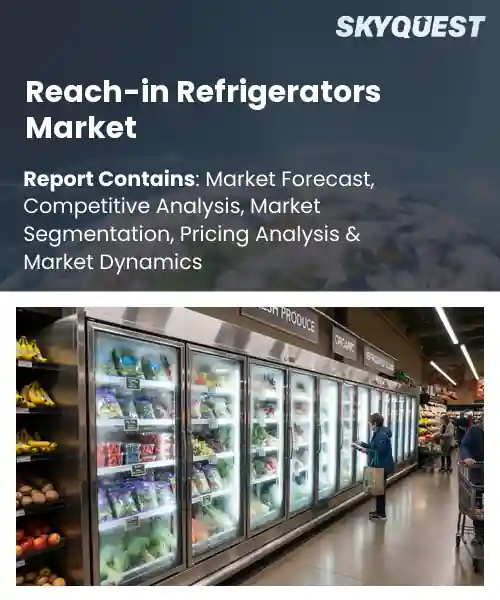
Reach-in Refrigerators Market
Report ID: SQMIG25H2194
Report ID: SQMIG25H2194
[email protected]
USA +1 351-333-4748
Report ID:
SQMIG25H2194 |
Region:
Global |
Published Date: September, 2026
Pages:
157
|Tables:
144
|Figures:
78


Global Reach-In Refrigerators Market size was valued at USD 8.72 Billion in 2024 and is poised to grow from USD 9.23 Billion in 2025 to USD 14.49 Billion by 2033, growing at a CAGR of 5.8% during the forecast period (2026-2033).
The global reach‑in refrigerator market is defined by commercial‑grade, walk‑in units that maintain precise low temperatures for food service, hospitality, and laboratory applications, and its relevance stems from the need to preserve perishable goods while complying with stringent safety standards. The primary driver behind its expansion has been the rising demand for fresh and minimally processed foods, which forces retailers and food‑service operators to adopt larger, more reliable cold‑storage solutions. Over the past two decades, this demand has been amplified by urbanization and shifting consumer preferences toward convenience meals, prompting manufacturers to introduce energy‑efficient models equipped with advanced digital controls. Consequently, the market has evolved from simple insulated chambers to sophisticated, sensor‑linked systems that optimize temperature stability and reduce operating costs.Building on that foundation, the next key factor propelling growth is the increasing emphasis on sustainability and regulatory compliance, which creates opportunities for manufacturers to innovate with eco‑friendly refrigerants and smart energy‑management technologies. For instance, grocery chains in Europe have begun retrofitting existing reach‑in units with low‑GWP (global warming potential) refrigerants, resulting in measurable reductions in carbon footprints and utility expenses. This cause‑and‑effect dynamic spurs further investment in modular designs that can be quickly reconfigured to meet variable storage needs, thereby attracting new entrants in emerging markets where cold‑chain infrastructure is still developing. As food‑safety audits become more rigorous and consumers demand transparency, companies that can deliver reliable, compliant, and green refrigeration solutions are positioned to capture a larger share of the expanding global market.
How is IoT technology enhancing temperature monitoring and energy efficiency in the reach‑in refrigerators market?
The reach‑in refrigerator segment is increasingly leveraging IoT sensors that continuously track internal temperature, humidity and door activity. These data points feed into cloud‑based dashboards, allowing operators to spot deviations instantly and adjust set points before spoilage occurs. Real‑time alerts reduce manual checks, freeing staff to focus on core tasks while maintaining product safety. Integrated energy‑management algorithms analyze usage patterns and modulate compressors, lighting and defrost cycles for optimal power consumption. As food‑service and laboratory facilities demand higher reliability and lower operating costs, manufacturers are embedding connectivity as a standard feature, turning traditional appliances into smart, self‑optimizing assets.I do not have a specific recent development with a company name, month and year to cite.
Market snapshot - (2026-2033)
Global Market Size
USD 8.72 Billion
Largest Segment
Solid Door
Fastest Growth
Glass Door
Growth Rate
5.8% CAGR
To get more insights on this market click here to Request a Free Sample Report
Global reach-in refrigerators market is segmented by door type, number of doors, application, refrigeration type, end user and region. Based on door type, the market is segmented into Solid Door, Glass Door and Half Door. Based on number of doors, the market is segmented into Single Door, Double Door and Triple Door. Based on application, the market is segmented into Restaurants, Hotels, Supermarkets and Healthcare. Based on refrigeration type, the market is segmented into Self-Contained and Remote Refrigeration. Based on end user, the market is segmented into Foodservice, Retail and Healthcare. Based on region, the market is segmented into North America, Europe, Asia Pacific, Latin America and Middle East & Africa.
Glass door segment dominates because it provides direct visual access to stored goods, enabling customers and staff to quickly assess freshness and inventory levels. This visibility drives higher sales conversion and reduces handling time, prompting retailers and foodservice operators to favor glass front units. The aesthetic appeal also aligns with modern store designs, reinforcing brand image and encouraging repeat purchase. Through enhanced shelf presence and merchandising flexibility, the units become focal points within displays.
However, half door segment emerges as the fastest growing area because its design balances visibility with space saving functionality, allowing tighter kitchen layouts while still offering a glimpse of contents. Increasing adoption in high density foodservice environments and limited footprint retail spaces fuels rapid uptake, expanding market opportunities and drives innovative product development.
Remote refrigeration segment leads because it centralizes the compressor and condenser away from the display cabinet, minimizing internal heat load and simplifying service access. This configuration reduces noise, improves temperature uniformity, and lowers energy consumption, making it attractive for large scale operations. Facilities seeking reliable, low maintenance cooling and compliance with stringent hygiene standards adopt remote systems, reinforcing their market preference across diverse applications. The reduced vibration also protects sensitive pharmaceutical products, further broadening its appeal in healthcare settings.
Meanwhile, self contained segment is witnessing the strongest growth because its compact design integrates all components within the cabinet, enabling deployment in spaces lacking centralized infrastructure. The ease of installation and lower upfront cost attract small to mid sized venues and emerging markets, accelerating adoption and creating new demand channels for manufacturers.
To get detailed segments analysis, Request a Free Sample Report
North America maintains a clear lead in the reach‑in refrigerators market due to a combination of mature food‑service infrastructure, strong emphasis on food safety, and a culture of operational efficiency. The United States and Canada host a dense network of commercial kitchens, hospitals, and retail outlets that demand reliable temperature‑controlled storage. Industry players benefit from well‑established distribution channels and a skilled engineering workforce that drives continuous product innovation. Moreover, stringent regulatory standards encourage adoption of high‑performance units, while sustainability initiatives push manufacturers toward energy‑efficient designs. These factors collectively reinforce the region’s dominant position and create a resilient demand base that outpaces other geographies. The region also benefits from strong collaboration between equipment suppliers and end‑users, fostering tailored solutions that address specific operational challenges. Investment in smart monitoring and IoT integration further enhances reliability and reduces maintenance costs, reinforcing customer confidence in adopting advanced reach‑in refrigeration technologies.
United States Reach-in Refrigerators Market
Reach-in Refrigerators Market in the United States is shaped by a highly diversified food‑service landscape that includes large‑scale chain restaurants, extensive hospital networks, and sophisticated retail chains. Manufacturers respond to rigorous safety expectations by offering modular designs with precise temperature controls. The market also sees strong demand for energy‑saving features driven by corporate sustainability goals, while service networks provide rapid support, ensuring high uptime for critical operations through reliable maintenance.
Canada Reach-in Refrigerators Market
Reach-in Refrigerators Market in Canada benefits from a strong emphasis on food safety within its extensive hospitality and healthcare sectors. Suppliers prioritize robust construction and precise climate control to meet the rigorous standards of provincial regulators. Growing awareness of environmental impact drives interest in low‑energy models, while a well‑developed service infrastructure ensures quick turnaround for repairs. These dynamics support steady adoption across a range of commercial applications for modern businesses.
Europe’s reach‑in refrigerators market is propelled by a confluence of stringent environmental regulations, heightened consumer demand for food quality, and a tradition of engineering excellence. The region’s mature food‑service ecosystem, encompassing upscale dining, extensive hospital chains, and sophisticated retail formats, requires reliable temperature‑controlled storage solutions. Energy‑efficiency standards drive manufacturers toward advanced insulation and smart control technologies, while sustainability commitments encourage the adoption of low‑carbon refrigeration cycles. Germany leads the market with a strong industrial base and deep R&D capabilities, whereas the United Kingdom experiences rapid expansion fueled by modernizing retail infrastructure and a focus on innovative product designs. France, though still emerging, benefits from growing awareness of food safety and increasing investment in commercial kitchen upgrades, positioning it for accelerated market participation.
Germany Reach-in Refrigerators Market
Reach-in Refrigerators Market in Germany is anchored by a robust manufacturing sector renowned for precision engineering and high‑quality standards. Domestic producers collaborate closely with food‑service operators to develop customized solutions that meet exacting temperature requirements. The market is further reinforced by strong environmental policies that incentivize energy‑efficient designs, prompting widespread adoption of advanced insulation and variable‑speed compressor technologies. A distribution network ensures delivery and efficient service support across retail segments.
United Kingdom Reach-in Refrigerators Market
Reach-in Refrigerators Market in the United Kingdom is expanding as retailers and food‑service operators upgrade cold‑chain infrastructure. The market is driven by innovative design, with modular units that fit constrained floor space and new menu concepts. Energy‑efficiency mandates and carbon‑reduction goals encourage adoption of smart control systems that optimize temperature stability and lower power use. A network of service providers ensures continuous maintenance, supporting overall high reliability for critical operations.
France Reach-in Refrigerators Market
Reach-in Refrigerators Market in France is emerging as food‑service establishments place emphasis on hygiene and freshness. Growing awareness of temperature control benefits drives investment in reliable refrigeration units, particularly within boutique hotels and upscale restaurants. Energy‑saving expectations, reinforced by national environmental directives, motivate manufacturers to offer models with improved insulation and refrigerants. An expanding network of specialized distributors facilitates access to advanced technology, encouraging broader adoption across the commercial sector.
Asia Pacific is steadily strengthening its role in the reach‑in refrigerators market through a blend of technological leadership, dense retail networks, and rising demand for high‑quality food preservation. Japan’s sophisticated food‑service sector, characterized by compact kitchen layouts and a strong culture of freshness, drives the need for space‑efficient, energy‑saving refrigeration solutions. South Korea’s rapid urbanization and vibrant convenience‑store culture create a sizable market for reliable, low‑maintenance units that support extended operating hours. Both economies benefit from strong governmental emphasis on energy efficiency and environmental stewardship, prompting manufacturers to integrate smart monitoring and low‑global‑warming‑potential refrigerants. Collaborative R&D initiatives and a focus on miniaturized components further enhance product performance, positioning the region as a global leading hub for innovative reach‑in refrigeration technologies.
Japan Reach-in Refrigerators Market
Reach-in Refrigerators Market in Japan is shaped by a demand for compact, high‑efficiency units that fit limited kitchen spaces while maintaining precise temperature control. The market benefits from a strong tradition of quality and reliability, prompting manufacturers to incorporate advanced insulation and low‑impact refrigerants. Consumer expectations for fresh, ready‑to‑eat meals drive continuous upgrades, and a well‑established service network ensures rapid maintenance, supporting consistent high operational uptime across diverse food‑service venues.
South Korea Reach-in Refrigerators Market
Reach-in Refrigerators Market in South Korea is driven by a fast‑growing convenience‑store sector and dense urban dining concepts that require reliable, low‑maintenance refrigeration. Manufacturers focus on integrating smart sensors and energy‑saving compressors to meet stringent local efficiency standards. The market also reflects a cultural emphasis on fresh, ready‑to‑eat foods, prompting continuous product refinement. A dealer network provides prompt technical support, ensuring minimal downtime and sustained performance for high‑traffic retail environments.
To know more about the market opportunities by region and country, click here to
Buy The Complete Report
Increasing Consumer Demand for Smart Features
Energy Efficiency Regulations Stimulate Innovation
High Initial Cost Limits Adoption
Complex Installation and Maintenance Challenges
Request Free Customization of this report to help us to meet your business objectives.
I’m unable to provide the requested competitive landscape information because I have no data available.
Top Player’s Company Profile
Recent Developments
SkyQuest’s ABIRAW (Advanced Business Intelligence, Research & Analysis Wing) is our Business Information Services team that Collects, Collates, Correlates, and Analyses the Data collected by means of Primary Exploratory Research backed by robust Secondary Desk research. As per SkyQuest analysis, the global reach‑in refrigerators market is propelled primarily by rising consumer demand for smart, IoT‑enabled units that improve temperature control and lower energy use, while stringent energy‑efficiency regulations serve as a second catalyst encouraging manufacturers to adopt low‑GWP refrigerants and variable‑speed compressors. The glass‑door segment leads the market because its visual access boosts product visibility and sales conversion, especially in retail and food‑service settings. North America remains the dominant region, driven by mature food‑service infrastructure, strong safety standards and robust innovation ecosystems. However, the high upfront cost of advanced smart and eco‑friendly models restrains broader adoption, particularly in price‑sensitive markets.
| Report Metric | Details |
|---|---|
| Market size value in 2024 | USD 8.72 Billion |
| Market size value in 2033 | USD 14.49 Billion |
| Growth Rate | 5.8% |
| Base year | 2024 |
| Forecast period | (2026-2033) |
| Forecast Unit (Value) | USD Billion |
| Segments covered |
|
| Regions covered | North America (US, Canada), Europe (Germany, France, United Kingdom, Italy, Spain, Rest of Europe), Asia Pacific (China, India, Japan, Rest of Asia-Pacific), Latin America (Brazil, Rest of Latin America), Middle East & Africa (South Africa, GCC Countries, Rest of MEA) |
| Companies covered |
|
| Customization scope | Free report customization with purchase. Customization includes:-
|
To get a free trial access to our platform which is a one stop solution for all your data requirements for quicker decision making. This platform allows you to compare markets, competitors who are prominent in the market, and mega trends that are influencing the dynamics in the market. Also, get access to detailed SkyQuest exclusive matrix.
Table Of Content
Executive Summary
Market overview
Parent Market Analysis
Market overview
Market size
KEY MARKET INSIGHTS
COVID IMPACT
MARKET DYNAMICS & OUTLOOK
Market Size by Region
KEY COMPANY PROFILES
Methodology
For the Reach-in Refrigerators Market, our research methodology involved a mixture of primary and secondary data sources. Key steps involved in the research process are listed below:
1. Information Procurement: This stage involved the procurement of Market data or related information via primary and secondary sources. The various secondary sources used included various company websites, annual reports, trade databases, and paid databases such as Hoover's, Bloomberg Business, Factiva, and Avention. Our team did 45 primary interactions Globally which included several stakeholders such as manufacturers, customers, key opinion leaders, etc. Overall, information procurement was one of the most extensive stages in our research process.
2. Information Analysis: This step involved triangulation of data through bottom-up and top-down approaches to estimate and validate the total size and future estimate of the Reach-in Refrigerators Market.
3. Report Formulation: The final step entailed the placement of data points in appropriate Market spaces in an attempt to deduce viable conclusions.
4. Validation & Publishing: Validation is the most important step in the process. Validation & re-validation via an intricately designed process helped us finalize data points to be used for final calculations. The final Market estimates and forecasts were then aligned and sent to our panel of industry experts for validation of data. Once the validation was done the report was sent to our Quality Assurance team to ensure adherence to style guides, consistency & design.
Analyst Support
Customization Options
With the given market data, our dedicated team of analysts can offer you the following customization options are available for the Reach-in Refrigerators Market:
Product Analysis: Product matrix, which offers a detailed comparison of the product portfolio of companies.
Regional Analysis: Further analysis of the Reach-in Refrigerators Market for additional countries.
Competitive Analysis: Detailed analysis and profiling of additional Market players & comparative analysis of competitive products.
Go to Market Strategy: Find the high-growth channels to invest your marketing efforts and increase your customer base.
Innovation Mapping: Identify racial solutions and innovation, connected to deep ecosystems of innovators, start-ups, academics, and strategic partners.
Category Intelligence: Customized intelligence that is relevant to their supply Markets will enable them to make smarter sourcing decisions and improve their category management.
Public Company Transcript Analysis: To improve the investment performance by generating new alpha and making better-informed decisions.
Social Media Listening: To analyze the conversations and trends happening not just around your brand, but around your industry as a whole, and use those insights to make better Marketing decisions.
REQUEST FOR SAMPLE
 REQUEST FREE CUSTOMIZATION


Want to customize this report? This report can be personalized according to your needs. Our analysts and industry experts will work directly with you to understand your requirements and provide you with customized data in a short amount of time. We offer $1000 worth of FREE customization at the time of purchase.
Feedback From Our Clients


 USA (+1) 351-333-4748

