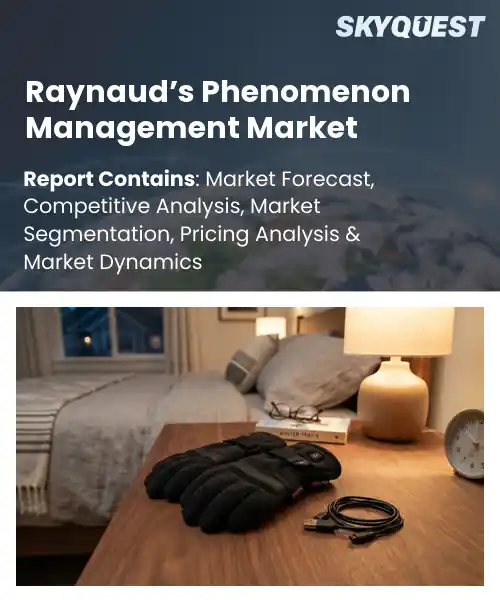
Raynaud’s Phenomenon Management Market
Report ID: SQMIG35I3700
Report ID: SQMIG35I3700
[email protected]
USA +1 351-333-4748
Report ID:
SQMIG35I3700 |
Region:
Global |
Published Date: August, 2026
Pages:
157
|Tables:
118
|Figures:
77


Global Raynaud’S Phenomenon Management Market size was valued at USD 2.13 Billion in 2024 and is poised to grow from USD 2.28 Billion in 2025 to USD 3.89 Billion by 2033, growing at a CAGR of 6.9% during the forecast period (2026-2033).
Global Raynaud’s Phenomenon Management market comprises pharmaceuticals, medical devices, and lifestyle interventions designed to alleviate vascular spasms in extremities. Its significance stems from the condition’s prevalence affecting up to 5 % of the population and causing substantial quality‑of‑life loss, particularly among women and cold‑exposed workers. Historically, the market was limited to calcium‑channel blockers such as nifedipine, but the past decade has witnessed diversification through topical nitrates, endothelin‑receptor antagonists, and wearable heating garments. This evolution reflects rising clinical awareness, broader diagnostic criteria, and the growing endorsement of multimodal therapy by rheumatology societies, thereby expanding the addressable patient base in global markets today.
The principal growth engine for this market is the increasing incidence of secondary Raynaud’s associated with autoimmune disorders such as systemic sclerosis, where current therapeutic options remain insufficient. As clinicians confront higher disease burden, demand spikes for novel agents that target endothelial dysfunction, prompting intensified R&D pipelines and strategic partnerships among biotech firms and major pharmaceutical players. Real‑world adoption is evident in hospitals that now combine oral phosphodiesterase‑5 inhibitors with personalized warming devices, achieving measurable improvements in finger perfusion scores. Consequently, investment inflows rise, reimbursement frameworks evolve, and emerging economies expand distribution networks, collectively unlocking sizable revenue upside for stakeholders.
How is AI-driven telehealth transforming the Raynaud’s phenomenon management market?
AI-driven telehealth is reshaping Raynaud’s phenomenon management by bringing diagnostic insight and personalized care directly to patients’ homes. Remote temperature sensors feed real‑time data to machine‑learning models that flag early vascular changes, while virtual consultations let clinicians adjust treatment plans without delay. The technology also supports education, delivering interactive guides that help users avoid triggers and monitor symptom patterns. By reducing the need for in‑person visits, AI telehealth expands access for people living in colder regions and eases pressure on specialty clinics, creating a more responsive and patient‑centered ecosystem.
In August 2026, a telehealth platform launched an AI‑based symptom‑tracking tool, demonstrating how digital innovation can streamline monitoring and accelerate therapeutic adjustments, thereby reinforcing market growth and efficiency.
Market snapshot - (2026-2033)
Global Market Size
USD 2.13 Billion
Largest Segment
Pharmacological Therapy
Fastest Growth
Non-Pharmacological Therapy
Growth Rate
6.9% CAGR
To get more insights on this market click here to Request a Free Sample Report
Global raynaud’s phenomenon management market is segmented by treatment type, drug class, disease type, end user and region. Based on treatment type, the market is segmented into Pharmacological Therapy, Non-Pharmacological Therapy and Surgical Intervention. Based on drug class, the market is segmented into Calcium Channel Blockers, Vasodilators, Endothelin Receptor Antagonists, PDE-5 Inhibitors and Others. Based on disease type, the market is segmented into Primary Raynaud's Phenomenon and Secondary Raynaud's Phenomenon. Based on end user, the market is segmented into Hospitals, Specialty Clinics and Homecare. Based on region, the market is segmented into North America, Europe, Asia Pacific, Latin America and Middle East & Africa.
Calcium Channel Blockers segment dominates because clinicians rely on its well‑established efficacy in reducing vasospasm and improving peripheral blood flow for Raynaud’s patients. The long history of safety data builds prescriber confidence, while generic availability keeps therapy affordable across care settings. Consequently, physicians prioritize this class as first‑line management, reinforcing steady demand and anchoring market revenue within the broader therapeutic landscape and supporting long‑term treatment adherence among diverse patient populations.
However, Endothelin Receptor Antagonists segment is witnessing the strongest growth momentum as biotech innovators introduce molecules that target endothelial dysfunction specific to secondary Raynaud’s. Emerging clinical evidence of symptom relief and regulatory incentives for rare‑disease therapies drive heightened adoption, positioning this class as a catalyst for future market expansion.
Non‑Pharmacological Therapy segment dominates because lifestyle modifications, biofeedback, and protective clothing address triggers without drug‑related adverse effects. Patient empowerment through education reduces attack frequency, while low cost encourages broad adoption in clinic and home environments. This holistic approach aligns with chronic disease management trends, sustaining its leading role in the Raynaud’s phenomenon market. Clinical guidelines endorse these interventions, and payer policies favor them as cost‑effective options, supporting clinician preference and patient compliance.
Meanwhile, Surgical Intervention segment emerges as the key high‑growth area as minimally invasive sympathectomy techniques gain traction for severe refractory cases. Advances in imaging and procedural safety attract specialist referrals, while expanding insurer coverage for procedures deemed cost‑saving in advanced disease stages fuels adoption, opening new revenue streams.
To get detailed segments analysis, Request a Free Sample Report
North America leads the market through a combination of advanced healthcare infrastructure, strong clinical research networks, and high consumer awareness of vascular health. The region benefits from extensive specialist outreach, robust insurance coverage, and a proactive regulatory environment that encourages the introduction of innovative therapeutic options. Patient advocacy groups and educational initiatives further reinforce early detection and sustained treatment adherence. Collaborative partnerships between academic institutions and pharmaceutical companies accelerate product development, while a mature distribution network ensures wide geographic reach. Collectively, these elements create a resilient ecosystem that sustains market leadership and drives continual improvement in patient outcomes.
Raynaud’s Phenomenon Management Market in the United States is characterized by a deep pipeline of novel therapies supported by leading research hospitals and a regulatory framework that encourages rapid approval pathways. Strong reimbursement policies enable broad patient access, and a high level of physician familiarity with condition management supports early diagnosis. Consumer education programs and digital health platforms further widen awareness, ensuring that treatment options are promptly utilized across diverse patient populations.
Raynaud’s Phenomenon Management Market in Canada is shaped by a publicly funded health system that prioritizes equitable access to specialized care. Collaborative provincial initiatives foster integration of multidisciplinary expertise, enhancing diagnostic precision and therapeutic consistency. Engagement of patient advocacy groups promotes education and self‑management, while partnerships with academic centers drive clinical trial participation, reinforcing the availability of emerging treatment modalities throughout the country.
Europe’s expansion is fueled by unified regulatory standards that streamline cross‑border product availability, combined with a strong emphasis on preventive health strategies across member states. Healthcare systems that integrate specialist referral pathways improve early detection, while robust reimbursement frameworks encourage adoption of innovative therapies. Patient‑centric initiatives raise disease awareness and foster adherence, and collaborative research networks across the continent accelerate clinical evidence generation. The convergence of these factors creates a supportive environment for sustained market growth and heightened therapeutic options for patients.
Raynaud’s Phenomenon Management Market in Germany benefits from a comprehensive insurance model that ensures wide patient coverage and from well‑established clinical centers renowned for vascular research. Strong ties between industry and academic institutions promote the rapid translation of scientific discoveries into therapeutic products. Continuous professional education and national patient outreach campaigns raise disease visibility, supporting early intervention and long‑term management across the population.
Raynaud’s Phenomenon Management Market in the United Kingdom experiences accelerated growth through a national health service that emphasizes guideline‑driven care pathways and equitable treatment access. Pivotal clinical research hubs drive innovation, while robust patient advocacy networks enhance public understanding and promote early screening. The integration of digital health tools into routine practice further expands monitoring capabilities, fostering a proactive approach to disease management.
Raynaud’s Phenomenon Management Market in France is emerging as a dynamic segment supported by a strong tradition of pharmaceutical research and a health system that balances public and private delivery. Collaborative initiatives between universities and biotech firms stimulate development of targeted therapies. Educational programs led by specialist societies increase clinician awareness, while patient support groups champion self‑care practices, collectively advancing market penetration.
Asia Pacific is enhancing its market presence through rising health consciousness, expanding specialist networks, and increasing investment in biomedical research across the region. National health policies are progressively incorporating comprehensive coverage for chronic vascular conditions, encouraging broader adoption of advanced treatments. Growing middle‑class demographics amplify demand for quality care, while regional collaborations among medical societies foster knowledge exchange and standardize clinical practice. Technological adoption, particularly in telemedicine and remote monitoring, further extends access to underserved areas, positioning the region as an increasingly influential contributor to global market dynamics.
Raynaud’s Phenomenon Management Market in Japan is distinguished by a sophisticated healthcare system that offers universal coverage and emphasizes early detection through routine health examinations. Strong synergy between pharmaceutical innovators and clinical institutions accelerates the introduction of novel therapies. Public health campaigns and patient education initiatives raise condition awareness, while advanced diagnostics enhance treatment precision, supporting sustained market advancement.
Raynaud’s Phenomenon Management Market in South Korea benefits from an integrated health infrastructure that couples extensive insurance benefits with a high density of specialized clinics. Government support for biomedical research fuels development of cutting‑edge treatment options. Active patient advocacy groups and digital health platforms promote awareness and enable continuous monitoring, contributing to expanding market reach and improved patient outcomes.
To know more about the market opportunities by region and country, click here to
Buy The Complete Report
Increasing Awareness Among Patients
Advances In Non‑Pharmacologic Therapies
Limited Reimbursement Policies
Challenges In Accurate Diagnosis
Request Free Customization of this report to help us to meet your business objectives.
The competitive landscape is dominated by major pharmaceutical players such as Pfizer, Johnson & Johnson and Bayer, which are leveraging strategic partnerships and technology‑focused R&D to expand their Raynaud’s treatment portfolios; recent collaborations on prostacyclin analogs and the launch of novel delivery platforms illustrate how M&A and joint‑venture activities are intensifying market competition and driving pipeline innovation.
Top Player’s Company Profile
SkyQuest’s ABIRAW (Advanced Business Intelligence, Research & Analysis Wing) is our Business Information Services team that Collects, Collates, Correlates, and Analyses the Data collected by means of Primary Exploratory Research backed by robust Secondary Desk research.
As per SkyQuest analysis, the global Raynaud’s phenomenon management market is being propelled primarily by rising patient awareness, which fuels demand for both drug and device solutions, while limited reimbursement policies act as a notable restraint that can curb adoption especially in cost‑sensitive settings. North America remains the dominant region, supported by advanced healthcare infrastructure and strong payer coverage, and the calcium‑channel blocker class continues to dominate the treatment landscape as the first‑line pharmacological segment. A second driver, the rapid integration of digital therapeutics and AI‑enabled telehealth, is expanding access and personalising care, further accelerating market growth globally in the coming years.
| Report Metric | Details |
|---|---|
| Market size value in 2024 | USD 2.13 Billion |
| Market size value in 2033 | USD 3.89 Billion |
| Growth Rate | 6.9% |
| Base year | 2024 |
| Forecast period | (2026-2033) |
| Forecast Unit (Value) | USD Billion |
| Segments covered |
|
| Regions covered | North America (US, Canada), Europe (Germany, France, United Kingdom, Italy, Spain, Rest of Europe), Asia Pacific (China, India, Japan, Rest of Asia-Pacific), Latin America (Brazil, Rest of Latin America), Middle East & Africa (South Africa, GCC Countries, Rest of MEA) |
| Companies covered |
|
| Customization scope | Free report customization with purchase. Customization includes:-
|
To get a free trial access to our platform which is a one stop solution for all your data requirements for quicker decision making. This platform allows you to compare markets, competitors who are prominent in the market, and mega trends that are influencing the dynamics in the market. Also, get access to detailed SkyQuest exclusive matrix.
Table Of Content
Executive Summary
Market overview
Parent Market Analysis
Market overview
Market size
KEY MARKET INSIGHTS
COVID IMPACT
MARKET DYNAMICS & OUTLOOK
Market Size by Region
KEY COMPANY PROFILES
Methodology
For the Raynaud’s Phenomenon Management Market, our research methodology involved a mixture of primary and secondary data sources. Key steps involved in the research process are listed below:
1. Information Procurement: This stage involved the procurement of Market data or related information via primary and secondary sources. The various secondary sources used included various company websites, annual reports, trade databases, and paid databases such as Hoover's, Bloomberg Business, Factiva, and Avention. Our team did 45 primary interactions Globally which included several stakeholders such as manufacturers, customers, key opinion leaders, etc. Overall, information procurement was one of the most extensive stages in our research process.
2. Information Analysis: This step involved triangulation of data through bottom-up and top-down approaches to estimate and validate the total size and future estimate of the Raynaud’s Phenomenon Management Market.
3. Report Formulation: The final step entailed the placement of data points in appropriate Market spaces in an attempt to deduce viable conclusions.
4. Validation & Publishing: Validation is the most important step in the process. Validation & re-validation via an intricately designed process helped us finalize data points to be used for final calculations. The final Market estimates and forecasts were then aligned and sent to our panel of industry experts for validation of data. Once the validation was done the report was sent to our Quality Assurance team to ensure adherence to style guides, consistency & design.
Analyst Support
Customization Options
With the given market data, our dedicated team of analysts can offer you the following customization options are available for the Raynaud’s Phenomenon Management Market:
Product Analysis: Product matrix, which offers a detailed comparison of the product portfolio of companies.
Regional Analysis: Further analysis of the Raynaud’s Phenomenon Management Market for additional countries.
Competitive Analysis: Detailed analysis and profiling of additional Market players & comparative analysis of competitive products.
Go to Market Strategy: Find the high-growth channels to invest your marketing efforts and increase your customer base.
Innovation Mapping: Identify racial solutions and innovation, connected to deep ecosystems of innovators, start-ups, academics, and strategic partners.
Category Intelligence: Customized intelligence that is relevant to their supply Markets will enable them to make smarter sourcing decisions and improve their category management.
Public Company Transcript Analysis: To improve the investment performance by generating new alpha and making better-informed decisions.
Social Media Listening: To analyze the conversations and trends happening not just around your brand, but around your industry as a whole, and use those insights to make better Marketing decisions.
REQUEST FOR SAMPLE
 REQUEST FREE CUSTOMIZATION
Global Raynaud’S Phenomenon Management Market size was valued at USD 2.13 Billion in 2024 and is poised to grow from USD 2.28 Billion in 2025 to USD 3.89 Billion by 2033, growing at a CAGR of 6.9% during the forecast period (2026-2033).
The competitive landscape is dominated by major pharmaceutical players such as Pfizer, Johnson & Johnson and Bayer, which are leveraging strategic partnerships and technology‑focused R&D to expand their Raynaud’s treatment portfolios; recent collaborations on prostacyclin analogs and the launch of novel delivery platforms illustrate how M&A and joint‑venture activities are intensifying market competition and driving pipeline innovation. 'Pfizer Inc.', 'Sanofi S.A.', 'Bayer AG', 'Novartis AG', 'Johnson & Johnson', 'Merck & Co., Inc.', 'Teva Pharmaceutical Industries Ltd.', 'Viatris Inc.', 'Astellas Pharma Inc.', 'AbbVie Inc.', 'Boehringer Ingelheim International GmbH', 'GlaxoSmithKline plc', 'AstraZeneca PLC', 'Eli Lilly and Company', 'Amgen Inc.', 'Dr. Reddy's Laboratories Limited', 'Sun Pharmaceutical Industries Limited', 'Cipla Limited', 'Torrent Pharmaceuticals Limited', 'Recordati S.p.A.'
Growing public education campaigns and clinician outreach programs have heightened recognition of Raynaud’s phenomenon, prompting individuals to seek early evaluation and management. This heightened awareness encourages patients to adopt lifestyle modifications and adhere to prescribed treatments, thereby expanding the demand for therapeutic options and monitoring devices. As more patients become informed about symptom triggers and preventive strategies, healthcare providers are more likely to recommend comprehensive care plans, which fuels market expansion through increased product utilization and service adoption across diverse care settings.
Digital Therapeutics Integration: Healthcare providers are increasingly adopting digital therapeutic platforms to complement traditional Raynaud’s management, leveraging mobile apps and remote monitoring to personalize vaso‑protective regimens. These solutions enable real‑time symptom tracking, patient education, and algorithm‑driven medication adjustments, enhancing adherence and outcomes. Clinicians value the data insights for tailoring lifestyle recommendations, while patients appreciate convenience and empowerment. As technology matures, integration with electronic health records is creating seamless care pathways, driving broader acceptance across primary and specialty practices and improved clinical efficiency overall.
Why does North America Dominate the Global Raynaud’s Phenomenon Management Market? |@12


Want to customize this report? This report can be personalized according to your needs. Our analysts and industry experts will work directly with you to understand your requirements and provide you with customized data in a short amount of time. We offer $1000 worth of FREE customization at the time of purchase.
Feedback From Our Clients


 USA (+1) 351-333-4748

