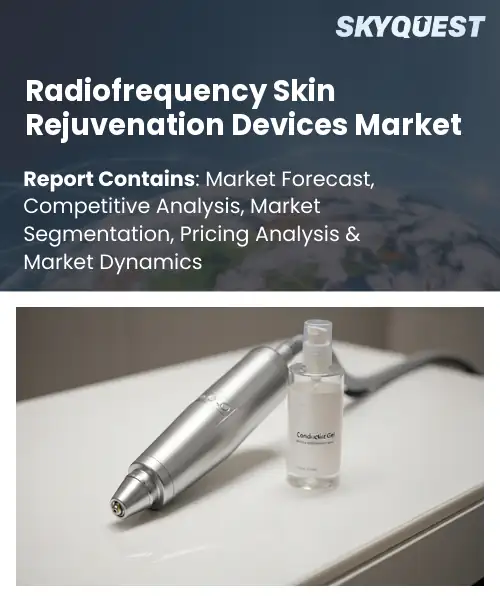
Radiofrequency Skin Rejuvenation Devices Market
Report ID: SQMIG35A3704
Report ID: SQMIG35A3704
[email protected]
USA +1 351-333-4748
Report ID:
SQMIG35A3704 |
Region:
Global |
Published Date: June, 2026
Pages:
157
|Tables:
155
|Figures:
78


Global Radiofrequency Skin Rejuvenation Devices Market size was valued at USD 789.4 Million in 2024 and is poised to grow from USD 856.5 Million in 2025 to USD 1645.0 Million by 2033, growing at a CAGR of 8.5% during the forecast period (2026-2033).
The major factor driving demand for the radiofrequency skin rejuvenation device market is the combination of demographic changes and rising popularity of minimally invasive treatment. The market encompasses devices that generate radiofrequency waves used to promote collagen production, as well as skin tightening and smoothing. The market is significant because of the non-invasive nature of the treatment, which reduces post-procedure recovery time while also making the procedure accessible to those who have not undergone plastic surgery before. Technological development during the last few decades has brought monopole technology to fractional and microneedling RF technologies.
An important aspect within the Global Radiofrequency Skin Rejuvenation Devices Market involves innovation alongside the emergence of evidence-based practice, as an improvement in accuracy and safety leads to an increase in confidence levels among physicians, thereby leading to an increase in patient acceptance. With the introduction of both fractional and microneedle radiofrequency devices that minimize downtime while also resulting in a remodeled collagen matrix, new revenue streams are generated within clinic settings, creating an incentive for increased investments. Regulatory approval plays an important role as it mitigates risks and increases market penetration within med spas and dermatological clinics at hospitals.
How is AI Enhancing Clinical Outcomes in the Radiofrequency Skin Rejuvenation Devices Market?
AI is enhancing clinical outcomes in the radiofrequency skin rejuvenation market through enhanced precision, customization and objectivity in care. Important elements in this regard include AI-powered imaging analysis for baseline and follow-up assessments, machine learning algorithms for prediction of patient response profiles and optimization of energy parameters, and real-time feedback on temperature management and tissue targeting. The change from procedure-driven treatments to data-driven ones is evident here. Recent clinical research indicates that deep learning tools are capable of evaluating and predicting outcomes following monopolar radiofrequency treatments around the eye and that AI analysis of skin is able to quantitate wrinkle and firmness improvements following combined RF treatments while systemic reviews have found that RF treatments provide significant patient benefit. Venus Concept's introduction in December 2025 of a cleared device associated with its Venus AI program demonstrates how embedded AI contributes to market growth by adding to treatment consistency, clinical decision-making and outcome documentation.
Market snapshot - (2026-2033)
Global Market Size
USD 789.4 Million
Largest Segment
Bipolar Radiofrequency Devices
Fastest Growth
RF Microneedling Devices
Growth Rate
8.5% CAGR
To get more insights on this market click here to Request a Free Sample Report
Global radiofrequency skin rejuvenation devices market is segmented by product type, portability, distribution channel, application, end user and region. Based on product type, the market is segmented into Monopolar Radiofrequency Devices, Bipolar Radiofrequency Devices, Multipolar Radiofrequency Devices, Fractional Radiofrequency Devices, RF Microneedling Devices, Combined RF Devices (RF with Laser/IPL/Ultrasound), Portable & Home-Use RF Devices and Others. Based on portability, the market is segmented into Standalone/Console-Based Devices and Portable & Handheld Devices. Based on distribution channel, the market is segmented into Direct Sales, Distributor & Third-Party Sales and Online Sales. Based on application, the market is segmented into Skin Tightening, Wrinkle Reduction & Anti-Aging, Facial Rejuvenation, Acne Scar & Scar Treatment, Body Contouring & Cellulite Reduction, Skin Resurfacing, Pigmentation & Texture Improvement and Others. Based on end user, the market is segmented into Dermatology Clinics, Cosmetic & Aesthetic Clinics, Hospitals, Medical Spas and Others. Based on region, the market is segmented into North America, Europe, Asia Pacific, Latin America and Middle East & Africa.
The RF Microneedling Devices Market Segment is the largest as a result of the fact that a blend of the controlled dermal damage and the use of radiofrequency energy causes the production of reliable results in terms of remodeling of collagen and changes in the texture of the skin. The minimally invasive nature of the modality makes it less complex for the patients as well as makes it more accepted by them. The continuous development of devices in this regard gives rise to wide application prospects.
However, the market of Fractional Radiofrequency Devices is becoming the fastest growing one because of the ability of this modality to provide efficient treatment through targeted ablation and thermal columns.
The reason why Online Sales is the dominant segment in the channel mix is that online markets and manufacturing websites simplify the acquisition process of the medical instruments, allowing the clinicians to obtain information on the devices, their varieties, as well as related offers of services and accessories. The transparency and simplicity make the buying process faster, while the logistics and customer services help in the fast deployment of the devices. Thus, smaller facilities and first-time users can quickly assess and purchase advanced RF devices without additional complications.
Distributor and third party sales become the fastest growing channels because of the provision of a wide range of services addressing aftercare of the devices and reducing overall costs.
To get detailed segments analysis, Request a Free Sample Report
The domination in the market is due to the concentration of health care infrastructure, regulatory framework, clinical acceptance, and high consumer awareness regarding aesthetic procedures. A sophisticated network of providers and efficient reimbursement environments allow the quick introduction of new technologies and extensive training for clinicians. The most successful companies establish local headquarters for their operations and carry out localized research and development, strategic alliances, and local services. The existence of high patient demand for minimally invasive rejuvenation techniques, as well as provider acceptance of gradual changes, allows maintaining regional market leadership. Effective professional education, clinical studies, and services contribute to this dominance and constitute barriers for other companies entering the market. The dense population in urban regions with patients' ability to pay and the presence of aesthetic clinics allow performing a lot of procedures in the region. Moreover, access to funding and active marketing lead to the quicker adoption of devices.
The market for Radiofrequency Skin Rejuvenation Devices in the US is driven by the presence of a substantial number of dermatology and cosmetic surgery clinics, high acceptability rate among patients towards minimally invasive procedures, and geographic proximity to advanced medical devices manufacturers. High level of clinical research activities and centralized training programs allow fast dissemination of information. The commercial framework comprising service and distribution provides the basis for quick delivery and after sales service.
Market for Radiofrequency Skin Rejuvenation Devices in Canada is enabled by its background in universal health care, which provides for professionalism, urban cluster concentration of clinics with an interest in aesthetics, and cooperation with regional distributors. Professional networks of clinicians value evidence-based approach, and market players benefit from localized service approach. Patient interest in non-surgical skin rejuvenation together with clinical trials conducted by private clinics and research centers explains the technology uptake.
There is currently rapid growth in Europe, attributed to the maturity of clinical professionals, the increased demand for minimally invasive aesthetics by consumers, and investments in aesthetic medicine in key regions. Regulatory convergence and active professional organizations create opportunities for developing consistent guidelines, which help clinicians and facilitate market adoption. Effective networks of private clinics and distributors together with consumer education create an environment where the market has better coverage and creates consumer demand in various economic classes. Medical tourism and clinical studies within Europe create clinical validation and help refine devices. Local companies and multinationals use focused entry strategies based on local training programs and partnerships with the best dermatological and cosmetic centers in the country.
The Market for Radiofrequency Skin Rejuvenation Devices in Germany is bolstered by a strong domestic manufacturing industry, synergies between clinical research facilities and industry players, as well as strict regulatory policies that facilitate clinical validation. Extensive dermatological and plastic surgical networks ensure professional acceptance, along with specialized distributors who provide services and training. Strong clinical norms and practices that emphasize evidence-based validation ensure that more advanced devices are adopted, as well as collaborations between manufacturers and clinical facilities.
The market for Radiofrequency Skin Rejuvenation Devices in United Kingdom features a dynamic and competitive private aesthetics industry, high levels of consumer acceptance, and an adaptive environment for new technologies. The commercial vendors focus on clinician education and regional marketing strategies to create brand loyalty. Synergy between device providers and clinics fosters the adoption of new technologies, whereas efficient distribution networks and educational programs ensure the rapid adoption of radiofrequency technologies.
The market for Radiofrequency Skin Rejuvenation Devices in France is developing as more and more medical clinics and dermatologists demonstrate their willingness to embrace skin rejuvenation technology that requires minimal invasion due to French people’s concern about looking attractive safely. Companies are paying attention to local training, regulatory compliance, and partnerships with medical professionals for generating positive clinical experience. Clinic groups and regional distributors concentrate on educating patients and offering quality services to introduce advanced radiofrequency devices gradually.
Asia Pacific is establishing itself in terms of concentrated innovation efforts, robust consumer interests in their aesthetic appearance and increased contribution from manufacturers in the region. The combination of advanced technological skills and collaborations between clinical centers and technology firms speeds up the localization process and optimization of devices. High urban clinic density coupled with matured beauty industry allows fast implementation of beauty services, whereas culturally motivated interests in minimally invasive procedures ensure continued interest in such treatment methods. Global suppliers partner with local distributors to create easier access into the market, while the training of clinicians promotes more adoption of radiofrequency techniques. Manufacturers from the region adapt their products to skin needs and preferences in the region with specialized clinical trials and KOLs support. Medical beauty clinics and spas offer convenient treatment options for consumers, while digital marketing and teleconsultation services serve as additional options to physical in-clinic procedures.
Japanese Market for Radiofrequency Skin Rejuvenation Devices is fuelled by technological expertise, stringent regulations, clinical standards, and good collaboration between the manufacturer of radiofrequency skin rejuvenation devices and clinical practitioners. The clinicians emphasize on providing treatment that is based on evidence and of high standard. Existing beauty clinic practices and dermatological services at hospitals serve as an avenue for validation, while a focus on safety facilitates the use of radiofrequency devices.
South Korea Radiofrequency Skin Rejuvenation Device Market is driven by an active aesthetic environment coupled with rapid commercialization of beauty technologies. In this market, local manufacturers work in partnership with aesthetic clinics to fine-tune treatment regimens and customize the devices according to local tastes. Digital marketing and social media play critical roles in raising consumer awareness, while the clinic-based approach ensures convenient access to the procedures.
To know more about the market opportunities by region and country, click here to
Buy The Complete Report
Increasing Demand for Minimally Invasive Treatments
With the increasing trend of choosing treatments that will have little recovery time among patients and practitioners alike, the use of skin revitalization techniques utilizing radiofrequency technology has become more common due to their effectiveness even without having to sacrifice long recovery periods. Patients are more willing to undergo treatments because of the fast results, which leads to practitioners purchasing such technology in their facilities, thus making it available to more patients because of its proven effectiveness.
Technological Advancements in Devices
The continued development of devices in terms of design, energy delivery control, and safety has ensured higher levels of efficacy and patient satisfaction, hence wider acceptance by clinicians, which drives manufacturers to improve on their products. With the improved ergonomics and modularity of the devices, practitioners can customize the procedures for various skin conditions, and better training guides make adoption easier. The sense that there is improved efficacy and predictability in results makes clinicians adopt newer devices, thus boosting the growth of the aesthetic device market.
High Upfront Costs
The high cost associated with installing and maintaining sophisticated radiofrequency devices may make it difficult for smaller medical centers to acquire the device, confining its use mainly to financially stable organizations. Service costs, the purchase of disposable materials, and employee training costs will all result in a rise in the total cost of ownership, resulting in fewer people being able to join the industry. This makes adoption difficult in economically challenging locations and hinders expansion into new geographical areas, encouraging potential clients to search for less costly solutions.
Regulatory and Reimbursement Barriers
Differences in regulatory obligations from one geographic location to another, along with the lack of any standard processes for obtaining payments, may lead to uncertainties and difficulties when entering the market. Slow processes of gaining approval, as well as device classification differences, affect the time-to-market process and associated costs; low levels of coverage by insurance programs limit the demand for products. All this discourages small manufacturers and diverts attention to other markets where conditions are more favorable.
Request Free Customization of this report to help us to meet your business objectives.
The competition in the global radiofrequency skin rejuvenation devices industry is fuelled by fast-paced product differentiation, regulatory approvals, and transactional activities. The existing OEMs make acquisitions and tie-ups for the distribution of their products whereas the newcomers focus on gaining patents for their energy-based systems and conducting clinical trials. These activities can be substantiated by the recent transactions like the takeover of Lumenis, new product launches by InMode, etc.
At Home Device Adoption: The rising inclination toward convenient and non-invasive solutions among consumers is pushing the market demand for small and user-friendly radiofrequency devices that can be used at home. Companies are focusing on creating an easy-to-use interface, safety features, and applications to assist with self-treatments under the supervision of healthcare professionals. This trend helps the market widen its scope, promotes customer loyalty via regular products, and creates opportunities for collaboration with retail and online distribution channels. Proper education of customers and guidelines for use promote device adoption.
AI-driven Treatment Personalization: The use of such cutting-edge technology helps to develop treatment plans that will suit different people by adjusting parameters like energy, penetration depths, and frequency of sessions to suit the individual patient's skin. The use of software-based programs also ensures that different operators can be consistent in their application and helps to reduce the time taken to learn about the procedure. This makes room for device/software combinations, subscriptions for analytics, and partnerships with digital health companies for customer satisfaction and loyalty.
SkyQuest’s ABIRAW (Advanced Business Intelligence, Research & Analysis Wing) is our Business Information Services team that Collects, Collates, Correlates, and Analyses the Data collected by means ofPrimary Exploratory Research backed by robust Secondary Desk research.
As per SkyQuest analysis, the global market for radiofrequency skin rejuvenation devices is being driven by a major driver, which is the increasing preference for minimally invasive aesthetic treatments which reduce recovery time, along with a restraint in terms of the initial and overall cost incurred, which prevents small clinics from investing in them. The dominant region is North America because of well-established clinical technology and strong consumer demand, while the dominant product segment is RF microneedling devices as they provide effective collagen regeneration with a wide range of applications. A secondary driver includes technological advancement in fractional technologies and AI to personalize treatments.
| Report Metric | Details |
|---|---|
| Market size value in 2024 | USD 789.4 Million |
| Market size value in 2033 | USD 1645.0 Million |
| Growth Rate | 8.5% |
| Base year | 2024 |
| Forecast period | (2026-2033) |
| Forecast Unit (Value) | USD Million |
| Segments covered |
|
| Regions covered | North America (US, Canada), Europe (Germany, France, United Kingdom, Italy, Spain, Rest of Europe), Asia Pacific (China, India, Japan, Rest of Asia-Pacific), Latin America (Brazil, Rest of Latin America), Middle East & Africa (South Africa, GCC Countries, Rest of MEA) |
| Companies covered |
|
| Customization scope | Free report customization with purchase. Customization includes:-
|
To get a free trial access to our platform which is a one stop solution for all your data requirements for quicker decision making. This platform allows you to compare markets, competitors who are prominent in the market, and mega trends that are influencing the dynamics in the market. Also, get access to detailed SkyQuest exclusive matrix.
Table Of Content
Executive Summary
Market overview
Parent Market Analysis
Market overview
Market size
KEY MARKET INSIGHTS
COVID IMPACT
MARKET DYNAMICS & OUTLOOK
Market Size by Region
KEY COMPANY PROFILES
Methodology
For the Radiofrequency Skin Rejuvenation Devices Market, our research methodology involved a mixture of primary and secondary data sources. Key steps involved in the research process are listed below:
1. Information Procurement: This stage involved the procurement of Market data or related information via primary and secondary sources. The various secondary sources used included various company websites, annual reports, trade databases, and paid databases such as Hoover's, Bloomberg Business, Factiva, and Avention. Our team did 45 primary interactions Globally which included several stakeholders such as manufacturers, customers, key opinion leaders, etc. Overall, information procurement was one of the most extensive stages in our research process.
2. Information Analysis: This step involved triangulation of data through bottom-up and top-down approaches to estimate and validate the total size and future estimate of the Radiofrequency Skin Rejuvenation Devices Market.
3. Report Formulation: The final step entailed the placement of data points in appropriate Market spaces in an attempt to deduce viable conclusions.
4. Validation & Publishing: Validation is the most important step in the process. Validation & re-validation via an intricately designed process helped us finalize data points to be used for final calculations. The final Market estimates and forecasts were then aligned and sent to our panel of industry experts for validation of data. Once the validation was done the report was sent to our Quality Assurance team to ensure adherence to style guides, consistency & design.
Analyst Support
Customization Options
With the given market data, our dedicated team of analysts can offer you the following customization options are available for the Radiofrequency Skin Rejuvenation Devices Market:
Product Analysis: Product matrix, which offers a detailed comparison of the product portfolio of companies.
Regional Analysis: Further analysis of the Radiofrequency Skin Rejuvenation Devices Market for additional countries.
Competitive Analysis: Detailed analysis and profiling of additional Market players & comparative analysis of competitive products.
Go to Market Strategy: Find the high-growth channels to invest your marketing efforts and increase your customer base.
Innovation Mapping: Identify racial solutions and innovation, connected to deep ecosystems of innovators, start-ups, academics, and strategic partners.
Category Intelligence: Customized intelligence that is relevant to their supply Markets will enable them to make smarter sourcing decisions and improve their category management.
Public Company Transcript Analysis: To improve the investment performance by generating new alpha and making better-informed decisions.
Social Media Listening: To analyze the conversations and trends happening not just around your brand, but around your industry as a whole, and use those insights to make better Marketing decisions.
REQUEST FOR SAMPLE
 REQUEST FREE CUSTOMIZATION
Global Radiofrequency Skin Rejuvenation Devices Market size was valued at USD 789.4 Million in 2024 and is poised to grow from USD 856.5 Million in 2025 to USD 1645.0 Million by 2033, growing at a CAGR of 8.5% during the forecast period (2026-2033).
Competitive intensity in the global radiofrequency skin rejuvenation devices market is driven by rapid product differentiation, regulatory clearances and dealmaking. Established OEMs execute acquisitions and distribution partnerships to broaden portfolios, while technology entrants pursue patentable energy platforms and clinic pilots. Recent concrete moves include the Lumenis acquisition, InMode new platform launches, Candela regulatory expansions, and venture backed Series A raises supporting international rollouts. 'Cutera, Inc.', 'Candela Corporation', 'Lumenis Be Ltd.', 'Cynosure, LLC', 'Alma Lasers Ltd.', 'Venus Concept Inc.', 'Lutronic Corporation', 'InMode Ltd.', 'Fotona d.o.o.', 'BTL Industries Inc.', 'EndyMed Medical Ltd.', 'Solta Medical, Inc.', 'ThermiGen, LLC', 'Jeisys Medical Inc.', 'SharpLight Technologies Ltd.', 'Pollogen Ltd.', 'Aerolase Corporation', 'BISON Medical Co., Ltd.', 'Sincoheren Ltd.', 'Asclepion Laser Technologies GmbH'
The growing preference among patients and clinicians for procedures that minimize downtime and procedural risk has elevated interest in radiofrequency skin rejuvenation devices, as they can deliver effective outcomes without extensive recovery. Increased patient willingness to seek cosmetic treatments that offer rapid return to routine activities encourages clinics and practitioners to invest in these systems, while demonstrating consistent aesthetic benefits fosters practitioner confidence, leading to broader adoption across dermatology and cosmetic surgery practices and expanded availability to a larger patient population.
At Home Device Adoption: Growing consumer preference for convenient noninvasive aesthetic solutions is driving interest in compact, user friendly radiofrequency devices designed for home use. Manufacturers are prioritizing simple interfaces, safety features, and companion apps to support guided treatments and remote monitoring by clinicians. This shift expands addressable market beyond clinics, fosters brand loyalty through recurring consumables and services, and encourages partnerships with retail and e commerce channels. Strong consumer education and clear usage protocols enhance adoption while preserving clinical referrals for advanced procedures.
Why does North America Dominate the Global Radiofrequency Skin Rejuvenation Devices Market? |@12


Want to customize this report? This report can be personalized according to your needs. Our analysts and industry experts will work directly with you to understand your requirements and provide you with customized data in a short amount of time. We offer $1000 worth of FREE customization at the time of purchase.
Feedback From Our Clients


 USA (+1) 351-333-4748

