Programmatic Digital Out-of-home (pDOOH) Market
Report ID: SQMIG45E2758
Report ID: SQMIG45E2758
[email protected]
USA +1 351-333-4748
Report ID:
SQMIG45E2758 |
Region:
Global |
Published Date: April, 2026
Pages:
157
|Tables:
87
|Figures:
78


Global Programmatic Digital Out-Of-Home (Pdooh) Market size was valued at USD 12.4 Billion in 2024 and is poised to grow from USD 15.07 Billion in 2025 to USD 12.6 Billion by 2033, growing at a CAGR of 21.5% during the forecast period (2026-2033).
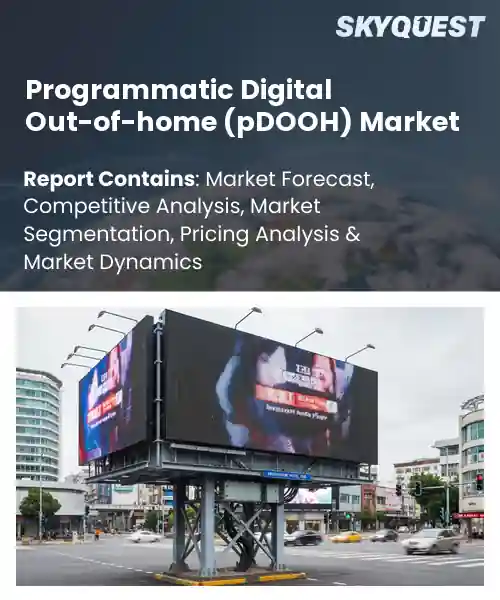
The primary driver of programmatic digital out of home adoption is the maturation of data driven adtech that enables real time audience targeting and automated buying, transforming static outdoor inventory into addressable, measurable media. Programmatic DOOH is a network of digitally managed screens on streets, in transit hubs and retail environments sold through automated platforms instead of manual orders, and it matters because it connects the scale of traditional outdoor with targeting precision of online channels. Over the past decade the market shifted from digital billboards to integrated systems that ingest footfall, mobile and weather signals to trigger dynamic creatives.Because programmatic DOOH now delivers verifiable audience level measurement, advertisers increase budgets, which accelerates liquidity and monetization while lowering CPMs. Improved measurement and interoperable supply side platforms enable precise audience buys across networks, so brands run weather triggered quick service campaigns, retail displays that promote in stock items when footfall rises, and transit offers for events. Privacy preserving location aggregation produces safer targeting, prompting adoption by large advertisers and agencies, creating opportunities for local businesses to access premium screens. As media buyers demand attribution, DOOH’s measurable reach becomes integral to cross screen planning and programmatic bundling, delivering measurable incremental ROI.
How is AI optimizing targeting and measurement in the programmatic digital out-of-home (pdooh) market?
AI optimizes targeting and measurement in programmatic digital out of home by combining contextual signals, audience inference, and automated creative delivery. Key aspects include machine learned audience models that infer who is nearby, dynamic creative that adapts to environment and time, and real time bidding that prioritizes impressions based on expected relevance. The market is moving from manual planning to platform driven workflows where DSPs and SSPs use AI for planning, attribution, and optimization. This creates smoother campaign setup, clearer performance signals, and better alignment with other digital channels. Practical instances include AI categorizing assets, feed based scheduling, and context aware swaps for more relevant outdoor messaging.VIOOH March 2026, released its annual pDOOH report highlighting AI as central to campaign execution and measurement, and this shows how automated attribution and machine learned optimization cut manual work while improving efficiency and supporting market growth.
Market snapshot - (2026-2033)
Global Market Size
USD 12.4 Billion
Largest Segment
Fresh/Artisanal Bagels
Fastest Growth
Frozen & Pre-packaged Bagels
Growth Rate
21.5% CAGR
To get more insights on this market click here to Request a Free Sample Report
Global programmatic digital out-of-home (pdooh) market is segmented by product type, distribution channel, flavor profile and region. Based on product type, the market is segmented into Fresh/Artisanal Bagels and Frozen & Pre-packaged Bagels. Based on distribution channel, the market is segmented into Food Service (Bake Shops/Cafes/QSRs) and Retail (Grocery Stores/Supermarkets). Based on flavor profile, the market is segmented into Savory Bagels (Plain/Everything/Sesame) and Sweet Bagels (Cinnamon/Berry). Based on region, the market is segmented into North America, Europe, Asia Pacific, Latin America and Middle East & Africa.
Fresh/Artisanal Bagels segment dominates because their sensory rich appeal and premium positioning align strongly with pDOOH’s visual and contextual strengths, enabling compelling creative that drives immediate foot traffic and trial. Programmatic delivery lets advertisers schedule freshness focused messages to match dayparts and in store availability, while brand and local provenance stories perform well in dynamic screens, creating efficient engagement paths that advertisers favor in pDOOH planning.
However, Frozen & Pre-packaged Bagels are the most rapidly expanding area in pDOOH due to their scalability and compatibility with programmatic inventory optimization. Automated promos tied to retail availability and e commerce links allow broad reach, while predictable supply and longer shelf life enable frequent dynamic campaigns that unlock new distribution partnerships and measurable conversion pathways.
Retail (Grocery Stores/Supermarkets) segment dominates because consistent in store dwell and predictable shopper journeys allow pDOOH campaigns to deliver contextually relevant ads at critical purchase decision moments. Integration with inventory feeds and loyalty data amplifies personalization, while standardized store formats simplify programmatic targeting and measurement across networks, driving advertiser preference for scalable, data driven DOOH buys that yield reliable attribution and campaign optimization.
However, Food Service (Bake Shops/Cafes/QSRs) is witnessing the strongest growth momentum in pDOOH because flexible digital menu systems and close proximity to purchase points enable rapid split testing and dayparted messaging. Rising adoption by local operators, combined with location based triggers and creative personalization, is expanding applications and creating new partnership models that accelerate campaign experimentation and future revenue streams.
To get detailed segments analysis, Request a Free Sample Report
North American dominance in programmatic digital out-of-home reflects a convergence of advanced ad tech, extensive modernised inventory, and deep advertiser demand that together lower barriers to programmatic scale. A mature ecosystem of demand side and supply side platforms, combined with interoperable standards and robust measurement practices, enables complex cross-channel campaign orchestration. Operators across transit, retail, and roadside environments have invested in dynamic creative and real-time audience signals, making inventory attractive for outcome-driven buyers. Privacy and compliance frameworks have been integrated with practical targeting approaches, and collaborative industry initiatives have improved transparency and inventory quality. This alignment of technology, inventory quality, and commercial models allows advertisers and agencies to buy programmatically with confidence across diverse local and national media landscapes.
Programmatic Digital Out-of-home (pDOOH) Market in the United States is anchored by a sophisticated ad tech infrastructure and broad inventory across transit, retail, and roadside environments. Advertisers benefit from mature measurement approaches, strong demand from brands and agency integration that drive complex campaign strategies. Operators emphasize dynamic creative, audience signals, and transparency to enable real-time buying, while collaborations with data partners and owners further expand targeting and campaign optimization capabilities.
Programmatic Digital Out-of-home (pDOOH) Market in Canada reflects a pragmatic, privacy-aware environment where public and private networks collaborate to scale digital inventory. Operators lean on transit, shopping centres, and urban displays to deliver contextually relevant messaging. Advertisers favor measured, brand-safety minded placements and partnerships that integrate local audience signals. Investment in interoperability, dynamic creative, and strong relationships with programmatic platforms supports more consistent and rigorous campaign execution across regional markets.
The rapid expansion of programmatic digital out-of-home across Europe is driven by coordinated efforts to modernise inventory, standardise supply chain practices, and improve measurement compatibility across markets. Media owners and technology vendors are investing in interoperable platforms that facilitate cross-market buying and reliable campaign reporting, while agencies and brands are increasingly comfortable allocating budget to context-rich outdoor formats. Regulatory emphasis on privacy has catalysed innovation around contextual targeting and audience-lite approaches, which balance compliance with effectiveness. Urban transit networks, retail partnerships, and premium roadside displays provide scalable inventory for programmatic pilots to evolve into repeatable campaigns. Industry collaboration and dissemination of best practices are enabling faster adoption in diverse markets, helping to translate pilots into operational programmatic channels.
Programmatic Digital Out-of-home (pDOOH) Market in Germany is marked by swift expansion driven by modernisation of urban infrastructure and proactive adoption by media owners. Operators are upgrading displays, embracing open supply frameworks, and integrating local audience signals to support targeted buys. Agencies and advertisers are allocating more budget to dynamic, context-aware formats while measurement partnerships and standardisation efforts reduce friction and improve cross-network campaign planning across diverse regional media landscapes.
Programmatic Digital Out-of-home (pDOOH) Market in the United Kingdom benefits from a mature advertising ecosystem and sophisticated programmatic infrastructure that supports large scale buys and complex audience strategies. Media owners prioritise premium placements across transit and retail, while agencies leverage advanced attribution and cross-channel orchestration. Ongoing collaboration between technology vendors, operators, and advertisers fosters standardised measurement, robust inventory quality controls, and creative innovation that sustains leadership within the regional market.
Programmatic Digital Out-of-home (pDOOH) Market in France is emerging with a focus on creative formats, localized audience engagement as operators modernise inventory. Brands and agencies experiment with dynamic contextual campaigns in retail and urban environments while measurement approaches evolve to support accountability. Collaboration among local media owners, technology providers, and advertisers is strengthening supply chain transparency and operational readiness, positioning the market to transition from projects to broader programmatic adoption.
Asia Pacific is strengthening its position in programmatic digital out-of-home through accelerated infrastructure upgrades, deep integration with mobile ecosystems, and active collaboration between local operators and global ad tech vendors. Smart city investments and urban density are expanding high-quality digital inventory across transport hubs and retail environments, offering advertisers rich contextual opportunities. Local platform innovation and strong ties to mobile data sources enhance real-time targeting and dynamic creative delivery. Despite diverse regulatory and commercial landscapes, concerted efforts around interoperability, measurement standardisation, and creative experimentation are enabling scalable programmatic approaches that align with regional consumption patterns and advertiser objectives.
Programmatic Digital Out-of-home (pDOOH) Market in Japan is characterized by high technological sophistication and careful integration of programmatic workflows into established media operations. Operators leverage dense urban displays, retail environments, and transport networks to deliver contextually tailored messaging. Advertisers prioritise quality inventory, nuanced creative execution, and compliance with strict privacy norms, while technology partners focus on enhanced measurement, operational reliability, and seamless connectivity to global demand sources and audience insights.
Programmatic Digital Out-of-home (pDOOH) Market in South Korea is advancing through dense urban networks, strong integration with mobile-first consumer behaviours, and proactive adoption of programmatic platforms by media owners. Operators and technology vendors prioritise fast, data-informed creative delivery and frictionless bidding workflows. Advertisers value agile campaign execution, localised content strategies, and close measurement partnerships that bridge online and outdoor touchpoints, reinforcing the role of pDOOH in omnichannel planning and outcomes.
To know more about the market opportunities by region and country, click here to
Buy The Complete Report
Expansion Of Programmatic Platforms
Advanced Audience Targeting Capabilities
Fragmented Inventory Standards
Privacy and Data Protection
Request Free Customization of this report to help us to meet your business objectives.
Competitive dynamics in the global programmatic DOOH market center on inventory consolidation, measurement standardization, and real time audience targeting, driving concrete strategies such as M&A, tech acquisitions, and exchange partnerships. Examples include Perion's acquisition of Hivestack, Billups' purchase of Ads on Top, and JCDecaux's rollout of a regional programmatic offering, moves that reward platforms with unified inventory access and validated measurement.
Top Player’s Company Profile
Recent Developments
SkyQuest’s ABIRAW (Advanced Business Intelligence, Research & Analysis Wing) is our Business Information Services team that Collects, Collates, Correlates, and Analyses the Data collected by means of Primary Exploratory Research backed by robust Secondary Desk research. As per SkyQuest analysis, the global pDOOH market is being propelled by the maturation of data-driven adtech as a key driver, enabling real-time audience targeting and measurable attribution, and further accelerated by expansion of programmatic platforms as a second driver that standardizes buying and increases liquidity. A restraint is fragmented inventory standards that impede cross-network buying and measurement. North America remains the dominating region due to advanced ad tech, interoperable platforms and deep advertiser demand, while the Fresh/Artisanal Bagels segment dominates among product types by leveraging sensory-rich, premium creative suited to dynamic screens. Overall, market momentum balances technological enablement with standardization challenges.
| Report Metric | Details |
|---|---|
| Market size value in 2024 | USD 12.4 Billion |
| Market size value in 2033 | USD 12.6 Billion |
| Growth Rate | 21.5% |
| Base year | 2024 |
| Forecast period | (2026-2033) |
| Forecast Unit (Value) | USD Billion |
| Segments covered |
|
| Regions covered | North America (US, Canada), Europe (Germany, France, United Kingdom, Italy, Spain, Rest of Europe), Asia Pacific (China, India, Japan, Rest of Asia-Pacific), Latin America (Brazil, Rest of Latin America), Middle East & Africa (South Africa, GCC Countries, Rest of MEA) |
| Companies covered |
|
| Customization scope | Free report customization with purchase. Customization includes:-
|
To get a free trial access to our platform which is a one stop solution for all your data requirements for quicker decision making. This platform allows you to compare markets, competitors who are prominent in the market, and mega trends that are influencing the dynamics in the market. Also, get access to detailed SkyQuest exclusive matrix.
Table Of Content
Executive Summary
Market overview
Parent Market Analysis
Market overview
Market size
KEY MARKET INSIGHTS
COVID IMPACT
MARKET DYNAMICS & OUTLOOK
Market Size by Region
KEY COMPANY PROFILES
Methodology
For the Programmatic Digital Out-of-home (pDOOH) Market, our research methodology involved a mixture of primary and secondary data sources. Key steps involved in the research process are listed below:
1. Information Procurement: This stage involved the procurement of Market data or related information via primary and secondary sources. The various secondary sources used included various company websites, annual reports, trade databases, and paid databases such as Hoover's, Bloomberg Business, Factiva, and Avention. Our team did 45 primary interactions Globally which included several stakeholders such as manufacturers, customers, key opinion leaders, etc. Overall, information procurement was one of the most extensive stages in our research process.
2. Information Analysis: This step involved triangulation of data through bottom-up and top-down approaches to estimate and validate the total size and future estimate of the Programmatic Digital Out-of-home (pDOOH) Market.
3. Report Formulation: The final step entailed the placement of data points in appropriate Market spaces in an attempt to deduce viable conclusions.
4. Validation & Publishing: Validation is the most important step in the process. Validation & re-validation via an intricately designed process helped us finalize data points to be used for final calculations. The final Market estimates and forecasts were then aligned and sent to our panel of industry experts for validation of data. Once the validation was done the report was sent to our Quality Assurance team to ensure adherence to style guides, consistency & design.
Analyst Support
Customization Options
With the given market data, our dedicated team of analysts can offer you the following customization options are available for the Programmatic Digital Out-of-home (pDOOH) Market:
Product Analysis: Product matrix, which offers a detailed comparison of the product portfolio of companies.
Regional Analysis: Further analysis of the Programmatic Digital Out-of-home (pDOOH) Market for additional countries.
Competitive Analysis: Detailed analysis and profiling of additional Market players & comparative analysis of competitive products.
Go to Market Strategy: Find the high-growth channels to invest your marketing efforts and increase your customer base.
Innovation Mapping: Identify racial solutions and innovation, connected to deep ecosystems of innovators, start-ups, academics, and strategic partners.
Category Intelligence: Customized intelligence that is relevant to their supply Markets will enable them to make smarter sourcing decisions and improve their category management.
Public Company Transcript Analysis: To improve the investment performance by generating new alpha and making better-informed decisions.
Social Media Listening: To analyze the conversations and trends happening not just around your brand, but around your industry as a whole, and use those insights to make better Marketing decisions.
REQUEST FOR SAMPLE
 REQUEST FREE CUSTOMIZATION


Want to customize this report? This report can be personalized according to your needs. Our analysts and industry experts will work directly with you to understand your requirements and provide you with customized data in a short amount of time. We offer $1000 worth of FREE customization at the time of purchase.
Feedback From Our Clients


 USA (+1) 351-333-4748

