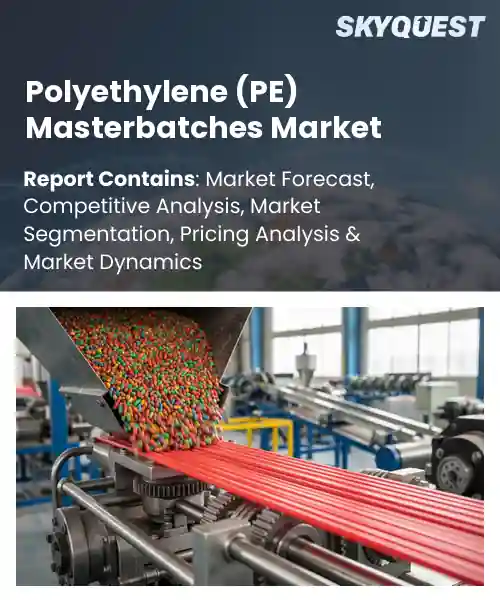
Polyethylene (PE) Masterbatches Market
Report ID: SQMIG15E3429
Report ID: SQMIG15E3429
[email protected]
USA +1 351-333-4748
Report ID:
SQMIG15E3429 |
Region:
Global |
Published Date: March, 2026
Pages:
157
|Tables:
118
|Figures:
77


Global Polyethylene (PE) Masterbatches Market size was valued at USD 7.5 Billion in 2024 and is poised to grow from USD 8.02 Billion in 2025 to USD 13.67 Billion by 2033, growing at a CAGR of 6.9% during the forecast period (2026-2033).
Rising demand for packaging applications, increasing use of polyethylene in flexible and rigid formats, growing emphasis on product differentiation through color and functionality, and advancements in additive technologies are driving sales of polyethylene (PE) masterbatches.
The growth in sustainability objectives and tougher regulatory frameworks ensure sustained demand for polyethylene (PE) masterbatches. Adoption of innovations such as compatibilizer technology, deodorant masterbatches, and high-performance pigments is helping recycled plastics conform to the highest quality and food-grade standards. Growing regulatory focus on circular economics and recycling promotes the use of specialty masterbatches. This is driven by the growing demand for masterbatches that ensure uniform coloration, odor control, and mechanical strength of recycled plastics. Wide-ranging uses of polyethylene masterbatches in flexible food packaging, agriculture film production, and automobile part manufacturing are ensuring new opportunities through 2033. Rise in demand for films, pouches, and containers in the packaging industry coupled with the need for consistent coloration, UV protection, and improved processing efficiency are expected to bolster polyethylene (PE) masterbatches market growth through 2033.
On the contrary, fluctuating raw material prices, high costs associated with specialty masterbatches, regulatory compliance challenges, and performance inconsistencies in recycled materials are anticipated to slow down polyethylene (PE) masterbatches market penetration over the coming years.
How is AI Improving Quality Control in the Polyethylene (PE) Masterbatches Market?
Quality control of polyethylene (PE) masterbatches can be enhanced through the use of AI technology, which integrates inline monitoring, machine learning, and closed-loop process control. These systems utilize automated spectral and vision-based monitoring techniques that can detect any color deviations or dispersion problems during the manufacturing process. The predictive analytics model assists in establishing the relationship between the formulation and process variables with the desired characteristics of the end product, and digital twin modeling ensures consistent extrusion parameters.
In February 2026, Ampacet demonstrated its LIAD Smart color automation system, which uses spectral feedback and automated dosing to adjust color in real time. This AI-driven approach reduces waste, improves consistency, and helps manufacturers produce high-quality PE masterbatches with less rework.
Market snapshot - 2026-2033
Global Market Size
USD 7.5 Billion
Largest Segment
Color Masterbatches
Fastest Growth
Additive Masterbatches
Growth Rate
6.9% CAGR
To get more insights on this market click here to Request a Free Sample Report
Global polyethylene (PE) masterbatches market is segmented by product type, carrier resin grade, processing method, end-use industry, and region. Based on product type, the market is segmented into white masterbatches, black masterbatches, color masterbatches, and additive masterbatches. Based on carrier resin grade, the market is segmented into LDPE Carrier, LLDPE Carrier, and HDPE Carrier. Based on processing method, the market is segmented into film extrusion, injection molding, and blow molding. Based on end-use industry, the market is segmented into packaging & fast moving consumer goods (FMCG), agriculture, and automotive & consumer electronics. Based on region, the market is segmented into North America, Europe, Asia Pacific, Latin America, and Middle East & Africa.
The white masterbatches segment is slated to account for the highest global polyethylene (PE) masterbatches market share going forward. Essential opacity, uniform whiteness, and surface brightness that directly elevate polyethylene product aesthetics and quality allows this segment to hold sway over others. With the ability to incorporate large amounts of pigments and ensure even distribution, this type of concentrate compensates for any fluctuations in the resin quality and allows manufacturers to uphold aesthetic standards using thin gauges. Such consistency in manufacturing is what makes these concentrates highly popular in the packaging industry.
However, additive masterbatches are experiencing the fastest growth as per this polyethylene (PE) masterbatches industry analysis. Converters demand multifunctional enhancements like UV stabilization, anti-fog, slip and antimicrobial properties, which creates new business scope. Emphasis on performance and the product's shelf life, coupled with an interest by the formulators to achieve differentiation of functional performance, drives the creation of customized concentrates, thereby broadening the range of applications possible for polyethylene masterbatches.
The film extrusion segment is anticipated to spearhead the global polyethylene (PE) masterbatches market revenue generation through 2033. Continuous cast and blown film production requires masterbatches that deliver optical clarity, uniform coloration, and consistent functional behavior, which allows this segment to cement its dominance. Because of the requirements for good dispersibility, low fogging, and anti-blocking capabilities of thin films, the need to achieve compatibility between carriers and additives becomes necessary, hence ensuring that the products are purchased by big converters because of their consistency.
On the other hand, injection molding is becoming the fastest-growing segment as there is growing demand for high-performance, colored polyethylene components in electronic products and automobiles. With shorter production cycles and more stringent aesthetic standards, there is growing development of heat-stable and high-flow master batches, making it possible for companies to explore new uses of PE.
To get detailed segments analysis, Request a Free Sample Report
Robust manufacturing ecosystems, dense downstream plastics processing capacity, and concentrated demand from diverse sectors helps this region lead global polyethylene (PE) masterbatches demand. Significant investment within Asia-Pacific in infrastructure to process polymers, partnership between industry and academia on collaborative research, and large numbers of application engineers help to sustain this leadership position. Furthermore, a very dynamic supplier base that can develop and modify masterbatches based upon the local regulatory and sustainability requirements, helps capture diverse market segments. In addition, the export nature of the business and the ability of suppliers to produce at a competitive production scale support continued dominance of this area in global trade flows. The direction of investment from both multinational and regional suppliers will continue to depend on the ability of suppliers to deliver agile supply chains and cost-effective solutions.
Polyethylene (PE) Masterbatch production in Japan is being driven by coloration technology expertise and quality expectations. The domestic manufacturers have taken advantage of their proficiency in technical and material science services to serve demanding industries such as electronic, automobile, and specialty packaging. Innovations are being made because of the need for precise formulation due to high-performance needs.
Strong ties to automotive and electronics value chains, where color consistency and functional additives are critical help boost demand for polyethylene (PE) masterbatches in South Korea. Collaborations with resin producers and concentration on light weighting and aesthetic surface finish enable the suppliers to undertake sophisticated specifications. Local manufacturers stress the importance of rapid prototyping, flexibility in manufacturing, and technical support to the converter.
Robust end market demand, advancements in polymer formulation, and a favorable ecosystem for innovation are helping drive sales of polyethylene (PE) masterbatches in this region. Producers within North America benefit greatly from their close partnerships with converters of masterbatch products; a significant amount of this advantage comes from having a flexible supply chain and a growing interest in sustainable additive solutions and color technology development. In addition, investments made by manufacturers in technical support for customers, pilot scale development of new products, and application-driven research have reduced the lead time necessary for new applications of specialized PE masterbatches to be ready for market. Regional technical service centers from suppliers enable faster formulation testing, development of applications, and problem resolution specifically for customer applications. Strategic partnerships between suppliers of masterbatches and downstream manufacturers are helping address lightweighting, recyclability of finished goods, and enhanced aesthetics of finished goods requirements.
Application driven development, where formulators prioritize regulatory alignment and sustainable additive systems help shape adoption of polyethylene (PE) masterbatches in the United States. Close collaborations with packaging and medical device companies promote fast adoption of functional masterbatches. Technical support and accurate color match capabilities along with scalability cater to broad needs of converters.
Emphasis on sustainable formulations and close cooperation with recycling initiatives are helping shape demand for polyethylene (PE) masterbatches in Canada. Superior services and support from experts help converters satisfy strict customer needs and take care of material flow issues. Such cooperation ensures that relevant application masterbatches are developed for packaging, agricultural, and film purposes. Formulations with minimal environmental impact are preferred, while compatibility with the local recycling system is essential.
Coordinated regulatory focus, sustainability initiatives, and investment in advanced material technologies helps create new business scope in Europe. Manufacturers across Europe are realigning and harmonizing their formulations with circular economy principles which is resulting in the development of recyclable compatible and lower impact additive systems to meet stringent environmental expectations. Continued expansion of technical centers and pilot facilities creates the ability to rapidly develop specialty masterbatches and the continued consolidation among suppliers and the emphasis on providing superior service increases the resiliency of the market. Collectively, through the combination of compliant to regulations and delivering differentiated products/ capabilities, Europe solidifies their strategic relevance to the global value chain. A strong emphasis on specialty colorants, high performance additives, and collaborative research & development partnerships synergistically foster the increased sophistication of the market as well as accelerate the positioning of premium products across an expanding array of end use markets.
Engineering grades, high-end color systems, as well as additives that are meant to be applied under difficult conditions, contribute to the choice of PE masterbatches in Germany. The high standards of the engineering environment coupled with an inclination towards material testing helps create masterbatches that are durable and recyclable. These processes, such as quality control, lab work, and manufacturing requirements, are stressed by German manufacturers.
Strong design and branding demands and emphasis on sophisticated coloration in consumer goods and packaging sectors are shaping polyethylene (PE) masterbatches adoption in the country. Service-minded manufacturers enable application testing and troubleshooting to meet market expectations across the United Kingdom. Technological partnership between formulators and converters facilitates fast customization and color uniformity throughout the supply chain. Eco-friendly formulations and compatibility with recyclable streams is also a key priority for polyethylene (PE) masterbatches companies.
Innovation in specialty additives, color trends, and regulatory driven formulation adjustments are shaping polyethylene (PE) masterbatches demand in France. Service-oriented and quality-driven approach helps them comply with customers' needs and European standards. French manufacturers ensure interaction with the design and converting community for providing unique aesthetics and functionalities. Research collaborations and testing are some of the initiatives that help the producers adapt to circularity and recycling considerations.
To know more about the market opportunities by region and country, click here to
Buy The Complete Report
Expansion Of Flexible Packaging
The use of PE masterbatches allows manufacturers to keep up with the demands of flexible packaging, as they offer reliable coloring, superior barrier properties, and processibility that match the needs of packaging makers. The ability to ensure effective coloring and dispersal of functional additives helps brands distinguish themselves from others on store shelves without slowing down the production process. The adaptability of PE masterbatches to different PE resins and easy processing make their use in different packaging formats convenient, thus ensuring widespread usage of PE masterbatches in packaging.
Technological Advances In Additives
Advancements in additive chemistry and masterbatch manufacturing processes have led to increased functionality of PE masterbatches, resulting in better management of colors, UV protection, flame resistance, and processability. With the use of modern technology, it is possible to include additive blends that will help enhance final product characteristics without affecting melt flow and mechanical strength. Better dispersibility and higher-quality production lead to reduced defect rates and waste, thus instilling trust among converters, who prefer using masterbatches for their reliability and efficiency.
Regulatory and Environmental Concerns
Changing regulations and growing environmental pressure pose challenges to the masterbatch producers for PE, as the use of particular additives, pigments, and processing aids is regulated, which requires changes in the product composition and testing. Regulations regarding the higher percentage of recycled materials and better waste handling practices can cause difficulties in the compatibility of the masterbatch with different sources of recycled PE, thus extending the development period. The demand for certification of products according to environmental criteria and regional standards increases the operational complexity.
Feedstock Price Volatility
Fluctuations in the availability and prices of the raw materials used to produce masterbatches pose limitations on their development due to uncertainties experienced by the manufacturers and converters. Since the quality of supplies or supplies themselves may not be constant, the company will be faced with an additional task of finding substitutes to the raw material, which is both risky and complex. The uncertainty reduces investments in new production lines, which impedes the global polyethylene (PE) masterbatches market outlook.
Request Free Customization of this report to help us to meet your business objectives.
Consolidation and sustainability shape the competitive landscape for the global polyethylene masterbatches market. Mergers and acquisitions, licensing deals, and co development agreements are also emerging as popular strategies as per this polyethylene (PE) masterbatches market analysis. Here are a couple of startups that are estimated to influence polyethylene (PE) masterbatches innovation in the long run.
SkyQuest’s ABIRAW (Advanced Business Intelligence, Research & Analysis Wing) is our Business Information Services team that Collects, Collates, Correlates, and Analyses the Data collected by means of Primary Exploratory Research backed by robust Secondary Desk research.
As per SkyQuest analysis, increasing use of polyethylene in flexible and rigid formats and growing need for enhanced product aesthetics and performance are anticipated to drive the demand for polyethylene (PE) masterbatches going forward. However, fluctuating raw material prices, high costs of specialty masterbatches, and performance inconsistencies in recycled materials are slated to slow down the adoption of polyethylene (PE) masterbatches in the future. Asia Pacific is slated to spearhead the demand for polyethylene (PE) masterbatches owing to rapid industrialization, expanding packaging industry, and strong manufacturing base. Development of sustainable and bio-based masterbatches and integration with advanced additive technologies are anticipated to be key trends driving the polyethylene (PE) masterbatches industry going forward.
| Report Metric | Details |
|---|---|
| Market size value in 2024 | USD 7.5 Billion |
| Market size value in 2033 | USD 13.67 Billion |
| Growth Rate | 6.9% |
| Base year | 2024 |
| Forecast period | 2026-2033 |
| Forecast Unit (Value) | USD Billion |
| Segments covered |
|
| Regions covered | North America (US, Canada), Europe (Germany, France, United Kingdom, Italy, Spain, Rest of Europe), Asia Pacific (China, India, Japan, Rest of Asia-Pacific), Latin America (Brazil, Rest of Latin America), Middle East & Africa (South Africa, GCC Countries, Rest of MEA) |
| Companies covered |
|
| Customization scope | Free report customization with purchase. Customization includes:-
|
To get a free trial access to our platform which is a one stop solution for all your data requirements for quicker decision making. This platform allows you to compare markets, competitors who are prominent in the market, and mega trends that are influencing the dynamics in the market. Also, get access to detailed SkyQuest exclusive matrix.
Table Of Content
Executive Summary
Market overview
Parent Market Analysis
Market overview
Market size
KEY MARKET INSIGHTS
COVID IMPACT
MARKET DYNAMICS & OUTLOOK
Market Size by Region
KEY COMPANY PROFILES
Methodology
For the Polyethylene (PE) Masterbatches Market, our research methodology involved a mixture of primary and secondary data sources. Key steps involved in the research process are listed below:
1. Information Procurement: This stage involved the procurement of Market data or related information via primary and secondary sources. The various secondary sources used included various company websites, annual reports, trade databases, and paid databases such as Hoover's, Bloomberg Business, Factiva, and Avention. Our team did 45 primary interactions Globally which included several stakeholders such as manufacturers, customers, key opinion leaders, etc. Overall, information procurement was one of the most extensive stages in our research process.
2. Information Analysis: This step involved triangulation of data through bottom-up and top-down approaches to estimate and validate the total size and future estimate of the Polyethylene (PE) Masterbatches Market.
3. Report Formulation: The final step entailed the placement of data points in appropriate Market spaces in an attempt to deduce viable conclusions.
4. Validation & Publishing: Validation is the most important step in the process. Validation & re-validation via an intricately designed process helped us finalize data points to be used for final calculations. The final Market estimates and forecasts were then aligned and sent to our panel of industry experts for validation of data. Once the validation was done the report was sent to our Quality Assurance team to ensure adherence to style guides, consistency & design.
Analyst Support
Customization Options
With the given market data, our dedicated team of analysts can offer you the following customization options are available for the Polyethylene (PE) Masterbatches Market:
Product Analysis: Product matrix, which offers a detailed comparison of the product portfolio of companies.
Regional Analysis: Further analysis of the Polyethylene (PE) Masterbatches Market for additional countries.
Competitive Analysis: Detailed analysis and profiling of additional Market players & comparative analysis of competitive products.
Go to Market Strategy: Find the high-growth channels to invest your marketing efforts and increase your customer base.
Innovation Mapping: Identify racial solutions and innovation, connected to deep ecosystems of innovators, start-ups, academics, and strategic partners.
Category Intelligence: Customized intelligence that is relevant to their supply Markets will enable them to make smarter sourcing decisions and improve their category management.
Public Company Transcript Analysis: To improve the investment performance by generating new alpha and making better-informed decisions.
Social Media Listening: To analyze the conversations and trends happening not just around your brand, but around your industry as a whole, and use those insights to make better Marketing decisions.
REQUEST FOR SAMPLE
 REQUEST FREE CUSTOMIZATION
Global Polyethylene (Pe) Masterbatches Market size was valued at USD 7.5 Billion in 2024 and is poised to grow from USD 8.02 Billion in 2025 to USD 13.67 Billion by 2033, growing at a CAGR of 6.9% during the forecast period (2026-2033).
Consolidation and sustainability shape the competitive landscape for the global polyethylene masterbatches market. Mergers and acquisitions, licensing deals, and co development agreements are used to secure recyclate feedstock and proprietary color and additive formulations. Notable concrete moves include Clariant selling its masterbatches business to Avient in July 2020 and Avient launching Rejoin PCR masterbatch to enable higher post consumer recycled content; Ampacet increased European capacity to support sustainable product lines. 'LyondellBasell', 'Avient Corporation', 'Clariant AG', 'Ampacet Corp', 'Cabot Corporation', 'BASF SE', 'SABIC', 'Tosaf Compounds', 'A. Schulman', 'Americhem Inc.', 'Hubron International', 'Penn Color', 'Plastika Kritis', 'RTP Company', 'Vibrant Technologies', 'Gabriel-Chemie', 'Kandui Industries', 'Poddr Masterbatch', 'Alok Masterbatches', 'JJ Masterbatches'
PE masterbatches enable producers to meet expanding flexible packaging requirements by providing consistent coloration, improved barrier performance, and processability that align with packaging manufacturers’ needs. By facilitating efficient pigmentation and functional additive dispersion, masterbatches help brands achieve product differentiation and shelf appeal without compromising production throughput. Their compatibility with various PE resins and ease of handling reduce formulation complexity, allowing converters to adopt new packaging formats and lightweight structures more readily, thereby supporting broader adoption of PE masterbatches across packaging applications.
Advanced Functional Additives: Manufacturers increasingly prioritize masterbatches that deliver multifunctional performance improvements such as enhanced UV resistance, thermal stability, processability, and targeted surface properties to meet application-specific demands across packaging, automotive, and consumer goods. Development emphasis is shifting toward finely tuned chemistries and compatibilizers that improve dispersion, color consistency, and end-use durability while enabling thinner structures and improved aesthetic outcomes. Collaboration between compounders and brand owners accelerates customized solutions, driving formulation innovation and deeper value-added services across the polyethylene value chain and scalability.
Asia Pacific Dominate the Global Polyethylene (PE) Masterbatches Market.


Want to customize this report? This report can be personalized according to your needs. Our analysts and industry experts will work directly with you to understand your requirements and provide you with customized data in a short amount of time. We offer $1000 worth of FREE customization at the time of purchase.
Feedback From Our Clients


 USA (+1) 351-333-4748

