Polyester Ripcord Market
Report ID: SQMIG15E3376
Report ID: SQMIG15E3376
[email protected]
USA +1 351-333-4748
Report ID:
SQMIG15E3376 |
Region:
Global |
Published Date: March, 2026
Pages:
157
|Tables:
117
|Figures:
77


Global Polyester Ripcord Market size was valued at USD 1.50 Billion in 2024 and is poised to grow from USD 1.58 Billion in 2025 to USD 2.35 Billion by 2033, growing at a CAGR of 5.1% during the forecast period (2026-2033).
Key Takeaways: Market Trends & Insights
The global polyester ripcord market penetration depends mainly on the growing need for dependable tear tapes which flexible packaging brands use to create secure opening systems and tamper-proof designs and automatic high-speed application systems. The use of polyester ripcords, which function as narrow cords that manufacturers place inside packaging films and laminates, provides a way to create clean openings from bags and pouches and tubular packaging, which customers value since it improves their shopping experience and affects how brands are perceived and impacts production processes at factories.
In addition, the global polyester ripcord market outlook has transitioned during the previous decades from using cotton and nylon materials to adopting polyester as the material which provides constant tensile strength and predictable feed rates and protects against humidity, according to worldwide food and drug packaging breakthroughs. The global market now expands because packaging automation needs and consumer convenience requirements create new possibilities to use polyester ripcords.
Automated production lines require cords that deliver steady feeding to machines, which leads manufacturers to select polyester ripcords as their solution to decrease production downtime and minimize workforce costs while their customers request simple-to-open products that drive repeat buying. The snack food industry achieves faster production times with polyester cords while pharmaceutical packaging processes require precise opening methods to guarantee the correct dosage delivery. The business applies customized yarn counts and adhesives together with integration solutions to create materials which find usage in three sectors, namely ecommerce, pet food products and industrial sack manufacturing.
How is Automation Improving Production Efficiency in the Polyester Ripcord Market?The global polyester ripcord industry benefits from automation which connects various process enhancements into a coordinated production system. The system combines automated yarn handling with in-line insertion systems and machine vision for defect detection and production orchestration software to attain its operational goals. The present environment gives manufacturers the upper hand because these solutions help reduce their requirement for manual rework while decreasing their machine changeover duration. Automation improves product quality and trackability at multiple operations which proves vital for maintaining cable performance standards. Automated winding processes with ultrasonic bonding methods create complete quality inspection systems which detect flaws at an early stage while maintainingmaterial consumption at constant levels to provide more flexible design development.
To get more insights on this market click here to Request a Free Sample Report
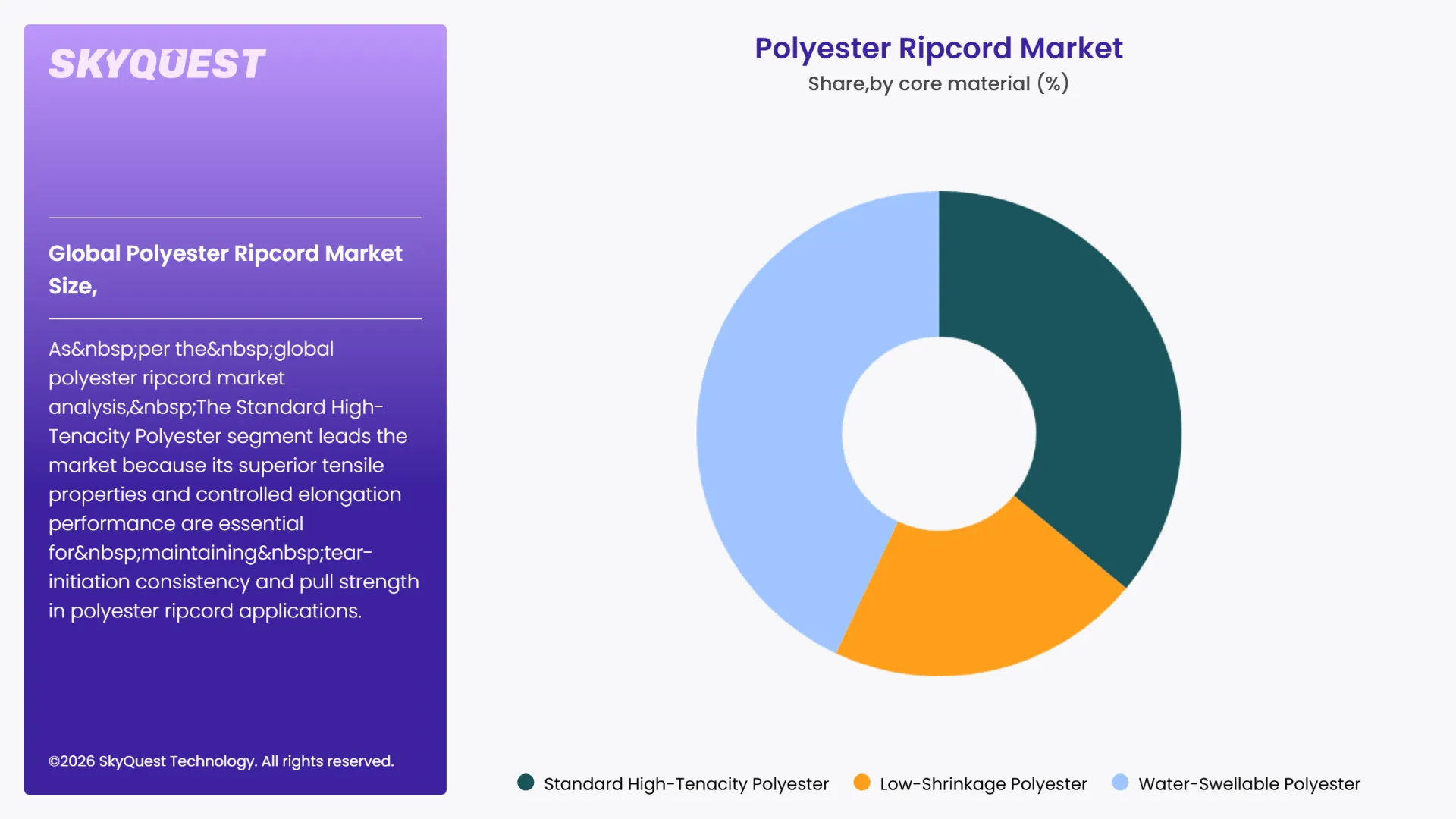
The global polyester ripcord market is segmented based on core material, coating type, denier or thickness, cable application, and region. By core material, the market is categorized into standard high-tenacity polyester, low-shrinkage polyester, and water-swellable polyester. Based on coating type, it is divided into waxed ripcords, unwaxed or soft ripcords, and resin-coated ripcords. In terms of denier or thickness, the market includes low denier, standard denier, and high denier segments. By cable application, it is segmented into fiber optic cables, telecommunication or copper cables, and power and submarine cables. Regionally, the market is classified into North America, Europe, Asia Pacific, Latin America, and the Middle East & Africa.
As per the global polyester ripcord market analysis, The Standard High-Tenacity Polyester segment leads the market because its superior tensile properties and controlled elongation performance are essential for maintaining tear-initiation consistency and pull strength in polyester ripcord applications. The material receives preference from cable manufacturers because it delivers expected mechanical functionalities which reduce both extrusion and braiding accidents that occur during production and post-installation. The material provides dependable performance, which leads to lower maintenance requirements, as it ensures customers can make design selections without risk, thus becoming the standard material used in the Polyester Ripcord Market by all original equipment manufacturers.
However, the Low-Shrinkage Polyester category experiences the fastest growth rate because designers require materials which maintain their shape through multiple thermal processes and subsequentmanufacturing operations. The space-saving jacket designs of the material achieve their function because the material maintains its dimensional requirements while its relaxation properties decrease which permits the construction of compact cable systems. The ongoing product development process will continue to advance product development work while it creates new opportunities to create advanced ripcord materials and innovative installation techniques.
According to the global polyester ripcord market forecast, the Waxed Ripcords segment dominates because the wax coating lowers friction and improves penetration through dense polymer jackets, delivering consistent pull-through and predictable strip starts in polyester ripcord use cases. The wax layer boosts machinability for finishing processes while reducing wear on tools, which results in more efficient assembly and field installation work. The operational advantages of these systems lead to decreased risk during handling activities, which makes manufacturers choose these systems as their preferred solution, which results in waxed variants becoming the standard option in the Polyester Ripcord Market.
Whereas the Resin-Coated ripcords category is predicted to achieve the largest polyester ripcord market share because researchers have developed thin coatings which bond securely to polyester centers while resisting chemical damage from harsh outer synthetic materials. The material delivers enhanced protection against abrasion through its dual capabilities of maintaining surface energy at specific levels, which enables automated systems to handle products at high speeds while ensuring their performance remains intact in challenging environments.
To get detailed segments analysis, Request a Free Sample Report
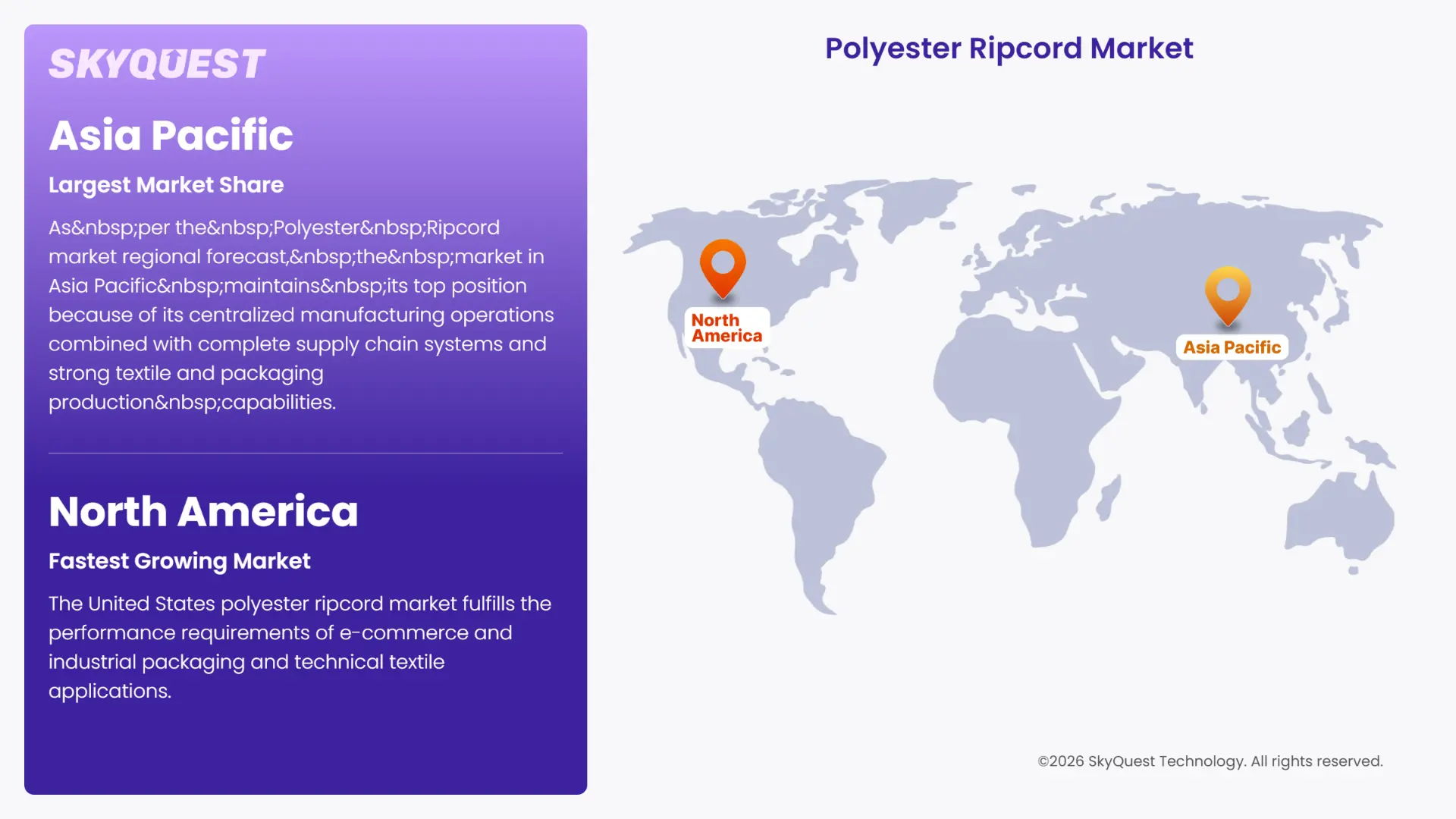
As per the Polyester Ripcord market regional forecast, the market in Asia Pacific maintains its top position because of its centralized manufacturing operations combined with complete supply chain systems and strong textile and packaging production capabilities. Regional suppliers benefit from their deep understanding of synthetic fiber processing together with their location near key fiber production sites and their access to a network of converters and OEMs that help them develop and customize products. Organizations use their commitment to cost-effective operations and expandable production systems and joint research with material science centers to develop advanced ripcords through quick development cycles.
The Japanese polyester ripcord sector operates through specialized manufacturing operations which create precise product requirements and require manufacturers to develop high-grade materials and work with industrial users throughout their manufacturing process. Domestic firms emphasize advanced polymer formulations and consistency in strand performance to meet stringent packaging and textile specifications. The converters maintain strong relationships with research institutions which enable them to develop products that stand out through their superior durability and customized design elements. The industrial market maintains its demand for products through supply of reliability and certification practices.
The polyester ripcord industry in South Korea operates through a unified system that connects its advanced manufacturing businesses which create demand for specific ripcord products to meet their exact component assembly and advanced packaging needs. Local producers emphasize rapid product adaptation, close collaboration with electronics and automotive suppliers, and stringent quality controls aligned with export expectations. The combined strengths of product enhancement and supplier ability to respond create customized solutions which match the demanding specifications of end users.
The North American market experiences rapid growth because of three major driving factors which include new supply chain practices and rising demand for e-commerce and industrial packaging that delivers superior performance and growing user requirements for product reliability. Regional manufacturers and converters prioritize material consistency, traceability, and supplier collaboration to support complex assembly and logistics requirements. Organizations accelerate their market access through its investments in application engineering and distribution of network improvements and regulatory safety framework alignment.
The United States polyester ripcord market fulfills the performance requirements of e-commerce and industrial packaging and technical textile applications. Domestic suppliers focus on product customization and adherence to stringent safety and quality protocols. The brand owners and logistics providers work together to develop solutions which handle advanced packaging challenges. The development of recyclable ripcord products with better performance results from organizations that support material innovation through their sustainable development work.
The polyester ripcord market in Canada operates through three essential elements which include supplier flexibility and quality assurance and their ability to meet multiple application requirements. The local manufacturers supply specialized packaging and industrial markets which require materials that offer strength and dependable functionality in different environments. The combination of converters and logisticsproviders enables the organization to create specific requirements which they use to deliver products directly to customers. The Canadian producers sustain their position as quick-to-respond partners for specialized ripcord requirements through their sustainable material sourcing and product selection strategies.
The European Union strengthens its market position through its technical staff who develop advanced technology and its strict safety and quality regulations, and its dedicated research on environmental-friendly materials. Existing production hubs allow polymer experts to work together with converters and automotive and premium packaging businesses to create higher product development standards. The need to create unique ripcord products stems from circular material requirements and recyclability needs and the ongoing development of new regulatory standards. The ability to create customized solutions for difficult market conditions increases through cross-border cooperation and industry consortia and application engineering investments, which also establish supplier trust through existing certification systems and brand requirements throughout Europe.
The advanced engineering methods in Germany create a polyester ripcord market which connects to automotive and industrial manufacturing companies while delivering products with high precision and durability. Manufacturers require control over product quality through material tracking, which requires certification of all materials used in industrial applications. The development of custom ripcord profiles and testing and qualification processes is achieved through partnerships with research centers and specialized converters. German suppliers position themselves as dependable partners for premium technical packaging requirements through their current sustainable production methods.
The United Kingdom polyester ripcord market penetration depends on retailers who want aesthetic packaging solutions that protect their brands yet provide flexible packaging options which meet their business needs. UK suppliers focus their efforts on creating designs together with customers which they can develop quickly while meeting all consumer safety requirements. Companies develop ripcord profiles through partnerships with converters and brand owners which meet all visual and functional requirements for their products. Sustainable materials and reduced environmental impacts together with supply chain transparency are key factors that determine market suppliers who need to shape their product offerings and business approach.
The French polyester ripcord market serves luxury and premium packaging needs which require design and tactile quality and discreet functionality instead of everyday packaging design. French suppliers create packaging solutions which require exclusive color matching and refined finishes to meet the needs of high-end packaging needs. The company works with designers and specialized converters to create custom ripcord solutions which fit their brand identity. Brands need to establish their development priorities and market positioning through their commitment to using sustainable materials and traceable sourcing methods.
To know more about the market opportunities by region and country, click here to
Buy The Complete Report
Rising Demand in Safety Applications
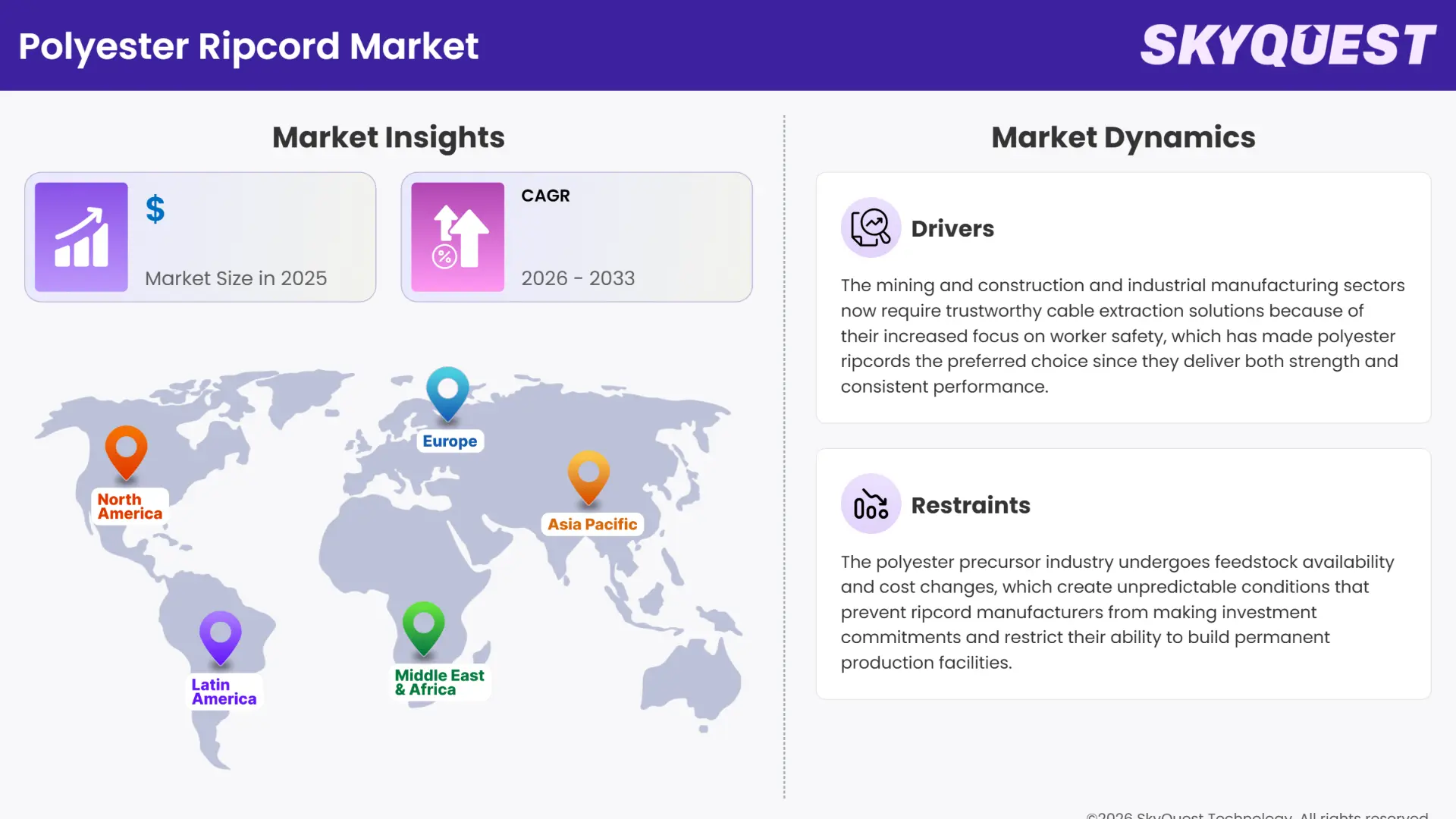
The mining and construction and industrial manufacturing sectors now require trustworthy cable extraction solutions because of their increased focus on worker safety, which has made polyester ripcords the preferred choice since they deliver both strength and consistent performance. Manufacturers increase their production capacity while they enhance product quality because customers demand more products which leads to market growth through increased safety equipment usage in essential application areas. Designers and procurement teams gain confidence in proven ripcord variants because they fulfill specific application needs, which leads to increased adoption of these solutions for both current and future cable projects.
Advancements in Manufacturing Processes
The ongoing development of polymer processing and filament formation techniques together with automated assembly methods, has enabled polyester ripcords to achieve improved dimensional accuracy and tensile strength, which now allows their use in multiple cable applications. Suppliers can deliver a broader range of specifications which designers need because process innovations reduce defects and enhance yield performance. The rise of production reliability and scalability will give customers more confidence about supply maintenance and product performance, which will lead to increased market expansion.
Raw Material Price Volatility
The polyester precursor industry undergoes feedstock availability and cost changes, which create unpredictable conditions that prevent ripcord manufacturers from making investment commitments and restrict their ability to build permanent production facilities. Uncertain raw material pricing leads producers to focus on cost control which results in delays for new product development and worsened response times to customer requests. Buyers will turn to other material options or new suppliers who provide stable prices, which will break up demand and create supply chain challenges for downstream manufacturers.
Stringent Environmental Compliance Requirements
The entire production process of polymers together with its chemical additives and waste disposal systems requires environmental regulations to regulate all its operational activities, which results in additionalcompliance responsibilities for polyester ripcord manufacturers that drive up their operational and manufacturing costs. Organizations must obtain permits while reporting their findings and handling materials, which forces them to distribute their resources across multiple tasks instead of focusing on product development and market expansion efforts. The approval process for new ripcord variations takes longer, which causes delays in market entry, while regulatory obligations create barriers which stop smaller suppliers from growing their operations and push them to merge with other suppliers, which results in fewer suppliers and reduced market innovation and product adoption.
Request Free Customization of this report to help us to meet your business objectives.
The global polyester ripcord market exhibits fragmented competition between traditional yarn and cable manufacturers and new specialized companies who compete based on their product performance and environmental practices. The market competitiveness increases because consumers prefer easy open products, and manufacturers need recycled materials for their operations. The companies implement specific business strategies through product development and control of supply chains and the creation of business alliances. The company Suzhou Qiaoke has developed recycled polyester ripcord yarn products while the major yarn manufacturers have started their eco material initiatives.
Sustainable Product Development: Manufacturers create eco-conscious formulations and processes which satisfy both buyer expectations and their brand commitments. The product redesign process is driven by three elements which include the need for recycled polyester content and the demand for production methods that use less energy and the requirement for products to have better biodegradability. The suppliers work together with customers to provide material traceability solutions which verify the origin of materials and their disposal method while establishing ripcords as fundamental elements of comprehensive circular economy initiatives. The shift creates distinctiveness which helps sustainability commitments throughout the supply chain while enabling partnerships with apparel and luggage brands that need transparent components which have minimal environmental effects and comply with their legal requirements.
Customization and Application Diversification: Brands are increasingly requesting customized ripcords because they need specific strength and flexibility and aesthetic characteristics that will make their products different from others. The suppliers provide customized yarn blends together with various finishes and functional layers which match different end-use requirements in luggage and outdoor equipment and safety textiles and new soft hardware markets. The faster prototyping process together with close OEM collaboration enables quicker adoption of niche variants because smaller batch production combined with flexible logistics allows companies to adjust their production according to seasonal and market demands. The trend enables designers to create better designs because it matches their specifications with improved accessibility.
SkyQuest’s ABIRAW (Advanced Business Intelligence, Research & Analysis Wing) is our Business Information Services team that Collects, Collates, Correlates, and Analyses the Data collected by means ofPrimary Exploratory Research backed by robust Secondary Desk research.
As per SkyQuest analysis, the global polyester ripcord market will grow steadily because packaging automation and consumer convenience lead to higher demand for tear tapes which provide constant performance in food and pharmaceutical and e-commerce packaging. The manufacturing processes have seen improvements which enable higher adoption rates because they deliver better output quality and production efficiency while the raw material price volatility acts as a major constraint which damages profit margins and stops new investments. Asia Pacific emerges as the dominating region due to integrated supply chains and scalable production, and Standard High-Tenacity Polyester stands out as the dominating segment because of its predictable tensile performance and broad OEM preference. The market develops new products while showing sensitivity to supply chain operations.
| Report Metric | Details |
|---|---|
| Market size value in 2024 | USD 88.0 Billion |
| Market size value in 2033 | USD 160.43 Billion |
| Growth Rate | 6.9% |
| Base year | 2024 |
| Forecast period | (2026-2033) |
| Forecast Unit (Value) | USD Billion |
| Segments covered |
|
| Regions covered | North America (US, Canada), Europe (Germany, France, United Kingdom, Italy, Spain, Rest of Europe), Asia Pacific (China, India, Japan, Rest of Asia-Pacific), Latin America (Brazil, Rest of Latin America), Middle East & Africa (South Africa, GCC Countries, Rest of MEA) |
| Companies covered |
|
| Customization scope | Free report customization with purchase. Customization includes:-
|
To get a free trial access to our platform which is a one stop solution for all your data requirements for quicker decision making. This platform allows you to compare markets, competitors who are prominent in the market, and mega trends that are influencing the dynamics in the market. Also, get access to detailed SkyQuest exclusive matrix.
Table Of Content
Executive Summary
Market overview
Parent Market Analysis
Market overview
Market size
KEY MARKET INSIGHTS
COVID IMPACT
MARKET DYNAMICS & OUTLOOK
Market Size by Region
KEY COMPANY PROFILES
Methodology
For the Polyester Ripcord Market, our research methodology involved a mixture of primary and secondary data sources. Key steps involved in the research process are listed below:
1. Information Procurement: This stage involved the procurement of Market data or related information via primary and secondary sources. The various secondary sources used included various company websites, annual reports, trade databases, and paid databases such as Hoover's, Bloomberg Business, Factiva, and Avention. Our team did 45 primary interactions Globally which included several stakeholders such as manufacturers, customers, key opinion leaders, etc. Overall, information procurement was one of the most extensive stages in our research process.
2. Information Analysis: This step involved triangulation of data through bottom-up and top-down approaches to estimate and validate the total size and future estimate of the Polyester Ripcord Market.
3. Report Formulation: The final step entailed the placement of data points in appropriate Market spaces in an attempt to deduce viable conclusions.
4. Validation & Publishing: Validation is the most important step in the process. Validation & re-validation via an intricately designed process helped us finalize data points to be used for final calculations. The final Market estimates and forecasts were then aligned and sent to our panel of industry experts for validation of data. Once the validation was done the report was sent to our Quality Assurance team to ensure adherence to style guides, consistency & design.
Analyst Support
Customization Options
With the given market data, our dedicated team of analysts can offer you the following customization options are available for the Polyester Ripcord Market:
Product Analysis: Product matrix, which offers a detailed comparison of the product portfolio of companies.
Regional Analysis: Further analysis of the Polyester Ripcord Market for additional countries.
Competitive Analysis: Detailed analysis and profiling of additional Market players & comparative analysis of competitive products.
Go to Market Strategy: Find the high-growth channels to invest your marketing efforts and increase your customer base.
Innovation Mapping: Identify racial solutions and innovation, connected to deep ecosystems of innovators, start-ups, academics, and strategic partners.
Category Intelligence: Customized intelligence that is relevant to their supply Markets will enable them to make smarter sourcing decisions and improve their category management.
Public Company Transcript Analysis: To improve the investment performance by generating new alpha and making better-informed decisions.
Social Media Listening: To analyze the conversations and trends happening not just around your brand, but around your industry as a whole, and use those insights to make better Marketing decisions.
REQUEST FOR SAMPLE
 REQUEST FREE CUSTOMIZATION
Global Polyester Ripcord Market size was valued at USD 88.0 Billion in 2024 and is poised to grow from USD 94.07 Billion in 2025 to USD 160.43 Billion by 2033, growing at a CAGR of 6.9% during the forecast period (2026-2033).
Competition in the global polyester ripcord market is fragmented, with legacy yarn and cable suppliers and newer specialists competing on functionality and sustainability. Rising demand for easy open solutions and recycled feedstocks drives competitive intensity. Firms pursue concrete strategies such as product innovation, vertical integration and partnerships. For example Suzhou Qiaoke expanded recycled polyester ripcord yarn and major yarn groups have published eco material programmes. 'DuPont', 'Eastman Chemical Company', 'Teijin Limited', 'Toray Industries', 'Mitsubishi Chemical Corporation', 'BASF SE', 'Huntsman Corporation', 'Invista', 'Avery Dennison Corporation', 'Covestro AG', 'Zhejiang Huafon Chemical Group', 'Hyosung Corporation', 'Asiatic Fiber Corporation', 'SSM Industries', 'Jiangsu Wansheng Co., Ltd.', 'Poly fibre Industries', 'Zhejiang Hengyi Group', 'Jiangsu Jintong Chemical Fiber Co., Ltd.', 'Gidani LLC', 'Shandong Wuxin Chemical Fiber Co., Ltd.'
Growing emphasis on worker safety in sectors such as mining, construction, and industrial manufacturing has increased the need for reliable cable extraction solutions, positioning polyester ripcords as a preferred component due to their strength and consistent performance. This heightened demand encourages manufacturers to expand production capacity and invest in product quality improvements, supporting market expansion through wider adoption in safety-critical applications. Availability of proven, application-specific ripcord variants fosters confidence among designers and procurement teams, further driving specification in new and existing cable designs.
Sustainable Product Development: Manufacturers are prioritizing eco-conscious formulations and processes to meet buyer expectations and brand commitments. Emphasis on recycled polyester content, lower-energy production methods, and improved biodegradability profiles is driving product redesign. Suppliers collaborate with customers to deliver traceable material origins and end-of-life options, positioning ripcords as part of broader circular strategies. This shift enhances differentiation, supports sustainability claims across supply chains, and opens partnerships with apparel and luggage brands seeking transparent, lower-impact components in their finished products and regulatory alignment efforts.
Asia Pacific Dominate the Global Polyester Ripcord Market?
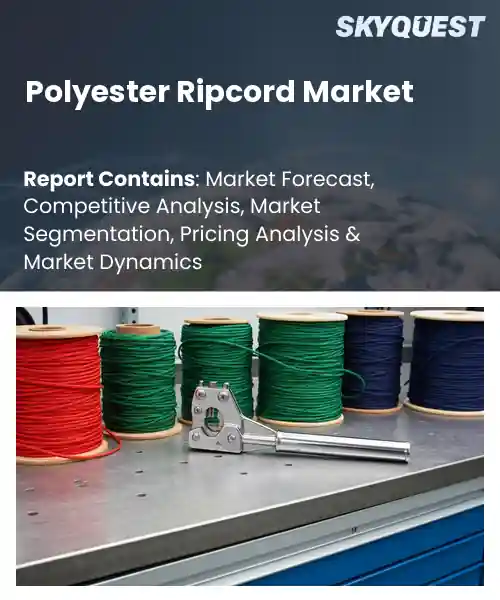
Polyester ripcords are narrow cords used in packaging and cable applications to enable clean opening systems, improve tear initiation, and support automated production processes.


Want to customize this report? This report can be personalized according to your needs. Our analysts and industry experts will work directly with you to understand your requirements and provide you with customized data in a short amount of time. We offer $1000 worth of FREE customization at the time of purchase.
Feedback From Our Clients


 USA (+1) 351-333-4748

