

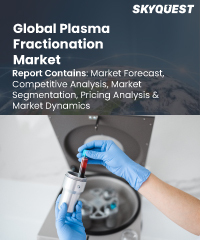
Plasma Fractionation Market
Report ID: SQMIG35H2165
Skyquest Technology's expert advisors have carried out comprehensive research and identified these companies as industry leaders in the Plasma Fractionation Market. This Analysis is based on comprehensive primary and secondary research on the corporate strategies, financial and operational performance, product portfolio, market share and brand analysis of all the leading Plasma Fractionation industry players.


The expansion of the global plasma fractionation market is mainly attributed to the increasing incidence of chronic and rare blood disorders such as hemophilia, immunodeficiencies, and bleeding disorders, which necessitate plasma-derived treatment modalities. Increasing level of awareness among healthcare professionals and patients toward the advantages of using plasma-derived products (i.e., immunoglobulin, clotting factors, and albumin) is driving growth in demand.
According to SkyQuest Technology “Plasma Fractionation Market By Product (Immunoglobulins, Coagulation Factor Concentrates, Albumin, Protease Inhibitors, Other Plasma Products), By Method (Cryoprecipitation, Chromatography, Ethanol Precipitation, Ultrafiltration, Others), By End Use, By Region- Industry Forecast 2025-2032,” Global Plasma Fractionation Market is projected to grow at a CAGR of over 8.3% by 2032, on account of urgent need for automating quantified data. Technological advancements in plasma fractionation methods, such as outcomes yielding better safety, yields, purification advantages, etc., are propelling the availability and advancement of plasma products. Moreover, there is a higher usage of plasma due to the growing elderly population and the growing rate of surgical procedures. Growing government initiatives, healthcare expenditures, and the growing presence of plasma collection centers worldwide are also significantly contributing to market growth.
|
Company |
Est. Year |
Headquarters |
Revenue |
Key Services |
|
CSL Behring |
1904 |
King of Prussia, PA, USA |
USD 12.1 billion |
Immunoglobulins, coagulation factors, albumin, recombinant proteins |
|
Grifols |
1909 |
Barcelona, Spain |
USD 7.0 billion |
Albumin, IVIG, alpha‑1 antitrypsin, other plasma proteins |
|
Takeda (Plasma division) |
1781 |
Tokyo, Japan |
USD 6.4 billion |
Coagulation factors, immunoglobulins, rare‑disease therapies |
|
Octapharma |
1983 |
Lachen, Switzerland |
USD 3.9 billion |
Immunoglobulins, coagulation factors, albumin, critical care proteins |
|
Kedrion Biopharma |
2001 |
Castelvecchio Pascoli, Italy |
USD 1.2 billion |
Hyper‑immune globulins, coagulation factors, plasma‑derived therapies |
|
Biotest |
1946 |
Dreieich, Germany |
USD 1.1 billion |
Immunoglobulins, biotherapeutic plasma‑derived products |
|
China Biologic Products |
1989 |
Beijing, China |
USD 1.0 billion |
Human albumin, immunoglobulins, plasma derivatives |
|
LFB Group |
1994 |
Les Ulis, France |
USD 950 billion |
Fibrinogen, immunoglobulins, plasma‑derived proteins for rare diseases |
|
Bio Products Laboratory (BPL) |
1943 |
United Kingdom |
USD 900 billion |
Immunoglobulins, albumin, plasma proteins |
|
ADMA Biologics |
2004 |
Boca Raton, Florida, USA |
USD 300 billion |
Immunoglobulins, specialty plasma therapies |
With its origins in Behringwerke established in 1904, CSL Behring is a worldwide pioneer of biotherapeutics and plasma-derived therapies, headquarted in King of Prussia Pennsylvania, USA., with parent company CSL Limited in Australia. The company is focused on immunoglobulins, coagulation factors, albumin and recombinant proteins. The company is well established around the world and specializes in developing new therapies to treat rare disease and, serious conditions, serving patients in over 60 countries.
Grifols was founded in 1909, based in Barcelona, Spain, and is a multinational healthcare company-oriented around plasma-derived medicines and diagnostic solutions. The company manufactures albumin, intravenous immunoglobulins (IVIG), alpha-1 antitrypsin, and numerous other plasma proteins. Grifols operates one of the world's largest plasma collection networks and is dedicated to researching and developing therapies for chronic and rare illness.
Takeda is among the world's leading pharmaceutical companies, founded in 1781 and headquarted in Tokyo, Japan, with a substantial plasma division through acquisitions. The plasma business has a portfolio including coagulation factors, immunoglobulins, and rare disease therapies. Takeda is committed to innovation through a patient-centric approach as they are commited to providing therapies for patients around the world. The company is headquartered in North America, Europe, and Asia.
Octapharma is a family-owned business that specializes in human protein therapies derived from either human cell lines or plasma, and it has been in operation since 1983 in Lachen, Switzerland. Its product line includes immunoglobulins, coagulation factors and albumin. Octapharma is committed to increasing treatment alternatives to patients suffering from rare diseases, immune deficiencies or those requiring care in critical conditions.
Kedrion Biopharma was established in 2001 in Castelvecchio Pascoli, Italy. The company manufactures and develops plasma-derived therapies (coagulation factors, hyper-immune globulins), and it serves a worldwide market focused on rare and chronic conditions with the goal of advancing patient access to high-quality plasma-derived therapies.
Biotest is a German biopharmaceutical company founded in 1946 in Dreieich, Germany. Biotest has a commitment to plasma proteins and biotherapeutics. Biotest offers immunoglobulin and other plasma-derived products to treat immune deficiencies and coagulation disorders, and it prides itself on research and innovation in plasma fractionation techniques to improve product safety and efficacy.
China Biologic Products is a leading biopharmaceutical company in China that is plasma-based and was founded in 1989. The company produces human albumin, immunoglobulin and other plasma derivatives. China Biologic Products focuses on domestic healthcare needs with respect to plasma-derived therapies and advancing access to plasma therapy across China.
Founded in 1994 in Les Ulis, France, LFB Group is a biotechnology company that develops and manufactures biotherapeutics and plasma-derived proteins. It produces various plasma proteins and biotherapeutics, such as fibrinogen and immunoglobulins, for rare diseases. Through innovation and strategic partnerships within Europe and globally, LFB Group continues to develop innovative products to improve patient outcomes.
Bio Products Laboratory (BPL), established in 1943 in the United Kingdom, is a company specializing in plasma-derived therapies such as immunoglobulins and albumin. BPL manufactures essential plasma proteins responsible for patient treatment in immune deficiencies and bleeding disorders. BPL incorporates a combination of advanced manufacturing processes and high safety standards to provide people currently seeking treatment around the world.
ADMA Biologics, founded in 2004 and headquartered in Boca Raton, Florida, USA, is a biotechnology company focused on specialized plasma therapies. ADMA Biologics' product portfolio includes immunoglobulins such as ASCENIV for the treatment of primary immune deficiencies and other plasma-derived therapies. ADMA Biologics supports out-of-the-box thinking and rapid development to address patient needs as they emerge in immunology space.
The global plasma fractionation market is set to grow at a steady rate due to the increased demand for plasma-derived therapies, technological advancements in fractionation techniques, and the increasing awareness of whole blood disorders. Government supportive initiatives, the infrastructure for collection of plasma and blood-derived products, and increased healthcare spending support the positive market outlook. New therapeutic applications are discovered through research, adding to the safety and potency of products. The market will continue to grow at a steady rate over the long term, providing opportunities for manufacturers and healthcare providers.
REQUEST FOR SAMPLE
 REQUEST FREE CUSTOMIZATION
Global Plasma Fractionation Market size was valued at USD 36.2 Billion in 2024 and is poised to grow from USD 39.2 Billion in 2025 to USD 74.19 Billion by 2033, growing at a CAGR of 8.3% in the forecast period (2026–2033).
Key vendors in the Plasma Fractionation Market include CSL Behring, Grifols S.A., Takeda Pharmaceutical Company Limited, Kedrion Biopharma Inc., Octapharma AG, LFB Group, Biotest AG, ADMA Biologics, Inc., China Biologic Products Holdings, Inc., and GC Biopharma Corp.. These companies are expanding plasma collection networks and investing in advanced fractionation technologies to meet the growing global demand for plasma-derived therapies.
The key driver of the Plasma Fractionation Market is the increasing prevalence of immunological and bleeding disorders worldwide. Growing demand for plasma-derived therapies, such as immunoglobulins and clotting factor concentrates, along with rising healthcare investments and improved diagnostic capabilities, is significantly driving market growth.
The key market trend in the Plasma Fractionation Market is the expansion of plasma collection infrastructure and advancements in fractionation technologies. Market players are increasing investments in automated plasma processing and capacity expansion initiatives to enhance production efficiency and meet the rising global demand for plasma-derived therapeutics.
North America accounted for the largest share in the Plasma Fractionation Market due to its well-established plasma collection infrastructure, high adoption of plasma-derived therapies, and favorable reimbursement policies. The region also benefits from strong healthcare spending and the presence of leading plasma fractionation manufacturers and collection centers.
Want to customize this report? This report can be personalized according to your needs. Our analysts and industry experts will work directly with you to understand your requirements and provide you with customized data in a short amount of time. We offer $1000 worth of FREE customization at the time of purchase.
Feedback From Our Clients
Report ID: SQMIG35H2165
[email protected]
USA +1 351-333-4748
 USA (+1) 351-333-4748

