Perforated Geocells Market
Report ID: SQMIG15F2420
Report ID: SQMIG15F2420
[email protected]
USA +1 351-333-4748
Report ID:
SQMIG15F2420 |
Region:
Global |
Published Date: August, 2026
Pages:
157
|Tables:
145
|Figures:
78


Global Perforated Geocells Market size was valued at USD 1.42 Billion in 2024 and is poised to grow from USD 1.52 Billion in 2025 to USD 2.66 Billion by 2033, growing at a CAGR of 7.2% during the forecast period (2026-2033).
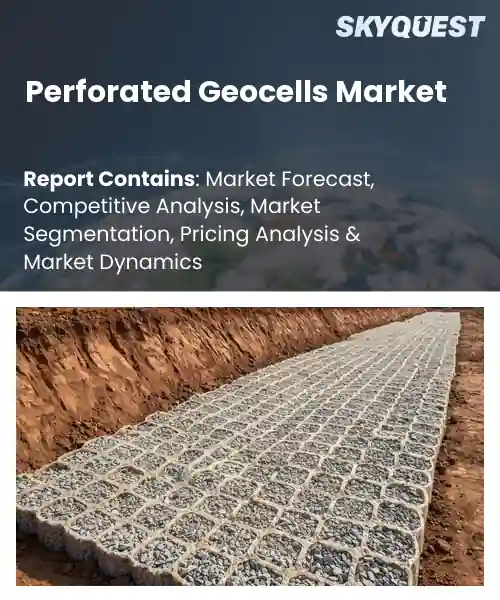
Perforated geocells consist of a low-density, three-dimensional honeycomb of polymer material that can be filled with soil, aggregate, or plant material to form an effective load-bearing platform. The main driving force behind the perforated geocell market is the increasing demand for sustainable construction that minimizes earthwork, prevents erosion, and increases the lifespan of roads and embankments. Traditionally, the technology originated in the 1990s for strengthening military runways and later found its applications in civilian construction when governments accepted the concept of green construction. In Europe, retrofits of highways in the early 2000s showed significant cost reductions, whereas in Asia, mega cities started using the panels for quick slope stabilization.
Another key influencing element for the perforated geocells market worldwide is the conjunction of urban development challenges with requirements to build infrastructure that can withstand the impact of climate change, leading to investment in flood plain defense, rail track bedding, and roof greening operations. The sequence starts from the challenge faced by municipal governments due to higher amounts of storm water; since the use of perforated cells enables water flow while maintaining structural stability, these cells are used in the canal fortification initiatives of cities such as Rotterdam. At the same time, the renewable energy industry utilizes the technology for wind turbine foundation support and lowering carbon emissions.
How is AI-driven design automation influencing the Perforated geocells market?
Design automation based on artificial intelligence has started to impact the Perforated Geocells Market by allowing a greater amount of site-specific and performance-based product and installation designs. Through geotechnical modeling using artificial intelligence, one can determine which parameters like soil properties, slope profile, loads from traffic, rain, drainage system, depth of the geocell, spacing between the welds and infill material are favorable. This is important when talking about perforated geocells since while perforations enhance the drainage ability, allow for root growth and locking with the infill, at the same time they reduce the shear resistance of the geocell straps. In that way, AI can help engineers to achieve an optimal balance between drainage ability and strength. Another application of AI can be its role in the field of predictive maintenance through analysis of drone, LiDAR, satellite, and computer vision images to detect any signs of erosion, slope movement, rutting, and drainage failures.
Market snapshot - (2026-2033)
Global Market Size
USD 1.42 Billion
Largest Segment
HDPE
Fastest Growth
Polyester
Growth Rate
7.2% CAGR
To get more insights on this market click here to Request a Free Sample Report
Global perforated geocells market is segmented by material, cell height, application, end user, perforation type and region. Based on material, the market is segmented into HDPE, Polypropylene and Polyester. Based on cell height, the market is segmented into Up to 100 mm, 101–200 mm and Above 200 mm. Based on application, the market is segmented into Slope Protection, Load Support, Channel Protection and Retaining Walls. Based on end user, the market is segmented into Road Construction, Railways, Mining and Landscaping. Based on perforation type, the market is segmented into Standard Perforated and High-Flow Perforated. Based on region, the market is segmented into North America, Europe, Asia Pacific, Latin America and Middle East & Africa.
The HDPE material section is dominant due to its excellent chemical resistance and strong tensile strength, which help it withstand difficult environments, thus making it the preferred material in projects that are meant to last for long periods. The durability of this material makes it require less maintenance, and its easy weldability ensures fast installation. This characteristic fits the client’s need for efficient material, ensuring dominance of HDPE in the perforated geocells market.
On the other side, Polypropylene material segment is witnessing the strongest growth momentum because manufacturers are introducing lightweight formulations that simplify handling and lower transportation costs, while still providing adequate strength for moderate load applications. This innovation spurs adoption in fast track projects, expanding market reach and creating new opportunities for stakeholders today.
The use of slope protection is unique in that it reduces the risk of erosion due to its stability, hence increasing the longevity of civil projects and thus becoming an important element for resilience in infrastructure. The engineers prefer using geocells due to their drainage property that eliminates any risk of water collection and potential landslide. This functionality ensures that the project meets the safety requirements and thus becomes an important product in the market.
Meanwhile, load support application emerges as the key high growth area because modular construction techniques demand rapid load distribution that perforated geocells provide. The lightweight yet robust design enables quick assembly on temporary worksites, lowering labor intensity. This rising preference drives market expansion and pushes manufacturers to innovate broader product lines.
To get detailed segments analysis, Request a Free Sample Report
Asia Pacific dominates the world market through its sophisticated manufacturing facilities, excellent infrastructure, and increased emphasis on sustainable construction techniques. It enjoys a highly efficient logistics network, which allows the production and distribution of high-quality perforated geocells in a timely manner. There is an increasing demand for such materials to stabilize the ground due to urbanization and civil engineering projects. In addition, governments in this region favor advanced soil stabilization technologies, thus incorporating them in their projects as well. This region is also known for conducting joint industry-academia research on geocells.
Perforated Geocells Market in Japan thrives on the nation’s commitment to resilient infrastructure and disaster‑mitigation strategies. Japanese engineers prioritize high‑performance materials that can withstand seismic activity, making perforated geocells a preferred choice for roadways, railways, and slope protection. Strong collaboration between manufacturers and research institutions ensures continuous product optimization, while a regulatory environment that endorses sustainable construction fuels market uptake.
The Perforated Geocells Market in South Korea is fueled by fast-paced urbanization and an initiative to promote eco-friendly infrastructural projects. With South Korea being one of the world's largest consumers of environmentally friendly engineering techniques, the perforated geocell market is gaining popularity for road widening, coast protection, and landfill management. Advanced polymer technology and business collaborations help in increasing the reliability of the product.
Expansion in Europe is caused by tough environmental regulation, high demand for sustainable land use practices, and established tradition of superior engineering. The market receives the advantage of cooperation between research organizations, production companies, and policymakers that collaborate in order to implement robust construction technologies that have minimum negative impact on the environment. Renovation works in infrastructure all over Europe make use of perforated geocells to increase soil stability while minimizing material usage. Furthermore, focus on principles of the circular economy favors recycling technology based on polymer systems.
Perforated Geocells Market in Germany is anchored by a strong tradition of precision engineering and sustainable construction. German firms emphasize high‑quality polymer blends that meet rigorous performance standards for transportation corridors and erosion control. Close cooperation with research universities drives continuous innovation, while policy frameworks incentivize the incorporation of environmentally friendly ground reinforcement methods in public works.
Perforated Geocells Market in the United Kingdom experiences accelerated growth through focused investment in resilient infrastructure and climate adaptation projects. The market benefits from governmental initiatives that promote low‑impact engineering solutions for highway upgrades, flood‑plain management, and brownfield redevelopment. Industry players actively engage with academic partners to refine product designs that meet the nation’s sustainability goals.
Perforated Geocells Market in France is emerging as a key component of the country’s eco‑focused construction agenda. French authorities encourage the use of geocell systems for roadway reinforcement, coastal protection, and sustainable land reclamation. Ongoing collaborations between manufacturers and technical institutes foster product enhancements that align with national objectives for greener infrastructure.
Market advantages of North America are strengthened due to the combination of large construction, innovations in materials, and an advanced regulatory framework that promotes sustainable engineering. Deep-water ports, highways, and mining activities in North America generate a constant need for soil stabilization products. Large investments are made into R&D of polymers’ longevity and environmental compatibility, and international cooperation fosters the dissemination of technologies. Regulatory bodies encourage the use of perforated geocells by appreciating their positive environmental footprint.
Perforated Geocells Market in the United States is driven by large‑scale infrastructure renewal and a growing emphasis on resilient, cost‑effective ground reinforcement. American manufacturers leverage advanced polymer engineering to deliver geocells that meet rigorous performance criteria for highways, rail corridors, and flood control measures. Partnerships with research institutions promote continual product improvement, aligning with federal and state initiatives that prioritize sustainable construction techniques.
The Perforated Geocells Market in Canada has an advantage in the climate responsive approach that is used in the engineering in the country together with the restoration of large areas of natural landscapes. The companies in Canada are keen on offering superior quality geocells in order to stabilize roads, reduce erosion, and rehabilitate mining sites.
To know more about the market opportunities by region and country, click here to
Buy The Complete Report
Rising Infrastructure Development Projects
Growing Emphasis on Soil Erosion Control
High Initial Material Procurement Costs
Limited Technical Expertise Among Contractors
Request Free Customization of this report to help us to meet your business objectives.
The world market of Perforated Geocells is somewhat fragmented with companies that manufacture geosynthetics and those producing geocells competing based on the performance of their products, quality of materials, engineering knowledge, ease of installation, and tailored solutions. One of the major players in this market is Presto Geosystems through its GEOWEB® geocell product which features perforated and textured cell walls that help with better drainage and infill confinement. Maccaferri manufactures both perforated and non-perforated geocells that are used for erosion protection, slope stabilization, and many other civil engineering applications. Competitive factors include products made from HDPE, structural strength, drainage efficiency, fast installation, durability, sustainability, and custom engineering designs.
SkyQuest’s ABIRAW (Advanced Business Intelligence, Research & Analysis Wing) is our Business Information Services team that Collects, Collates, Correlates, and Analyses the Data collected by means of Primary Exploratory Research backed by robust Secondary Desk research.
As per SkyQuest analysis, the major drivers of growth for the global perforated geocells market are an increase in the number of infrastructure development projects requiring rapid and long-lasting soil stabilization along with an increased focus on soil erosion control which acts as the second driver as it meets the sustainability criteria. But the major constraint is the high cost of material procurement at the beginning stage. Asia Pacific takes the lead in the market due to its manufacturing base as well as the presence of large numbers of infrastructure projects.
| Report Metric | Details |
|---|---|
| Market size value in 2024 | USD 1.42 Billion |
| Market size value in 2033 | USD 2.66 Billion |
| Growth Rate | 7.2% |
| Base year | 2024 |
| Forecast period | (2026-2033) |
| Forecast Unit (Value) | USD Billion |
| Segments covered |
|
| Regions covered | North America (US, Canada), Europe (Germany, France, United Kingdom, Italy, Spain, Rest of Europe), Asia Pacific (China, India, Japan, Rest of Asia-Pacific), Latin America (Brazil, Rest of Latin America), Middle East & Africa (South Africa, GCC Countries, Rest of MEA) |
| Companies covered |
|
| Customization scope | Free report customization with purchase. Customization includes:-
|
To get a free trial access to our platform which is a one stop solution for all your data requirements for quicker decision making. This platform allows you to compare markets, competitors who are prominent in the market, and mega trends that are influencing the dynamics in the market. Also, get access to detailed SkyQuest exclusive matrix.
Table Of Content
Executive Summary
Market overview
Parent Market Analysis
Market overview
Market size
KEY MARKET INSIGHTS
COVID IMPACT
MARKET DYNAMICS & OUTLOOK
Market Size by Region
KEY COMPANY PROFILES
Methodology
For the Perforated Geocells Market, our research methodology involved a mixture of primary and secondary data sources. Key steps involved in the research process are listed below:
1. Information Procurement: This stage involved the procurement of Market data or related information via primary and secondary sources. The various secondary sources used included various company websites, annual reports, trade databases, and paid databases such as Hoover's, Bloomberg Business, Factiva, and Avention. Our team did 45 primary interactions Globally which included several stakeholders such as manufacturers, customers, key opinion leaders, etc. Overall, information procurement was one of the most extensive stages in our research process.
2. Information Analysis: This step involved triangulation of data through bottom-up and top-down approaches to estimate and validate the total size and future estimate of the Perforated Geocells Market.
3. Report Formulation: The final step entailed the placement of data points in appropriate Market spaces in an attempt to deduce viable conclusions.
4. Validation & Publishing: Validation is the most important step in the process. Validation & re-validation via an intricately designed process helped us finalize data points to be used for final calculations. The final Market estimates and forecasts were then aligned and sent to our panel of industry experts for validation of data. Once the validation was done the report was sent to our Quality Assurance team to ensure adherence to style guides, consistency & design.
Analyst Support
Customization Options
With the given market data, our dedicated team of analysts can offer you the following customization options are available for the Perforated Geocells Market:
Product Analysis: Product matrix, which offers a detailed comparison of the product portfolio of companies.
Regional Analysis: Further analysis of the Perforated Geocells Market for additional countries.
Competitive Analysis: Detailed analysis and profiling of additional Market players & comparative analysis of competitive products.
Go to Market Strategy: Find the high-growth channels to invest your marketing efforts and increase your customer base.
Innovation Mapping: Identify racial solutions and innovation, connected to deep ecosystems of innovators, start-ups, academics, and strategic partners.
Category Intelligence: Customized intelligence that is relevant to their supply Markets will enable them to make smarter sourcing decisions and improve their category management.
Public Company Transcript Analysis: To improve the investment performance by generating new alpha and making better-informed decisions.
Social Media Listening: To analyze the conversations and trends happening not just around your brand, but around your industry as a whole, and use those insights to make better Marketing decisions.
REQUEST FOR SAMPLE
 REQUEST FREE CUSTOMIZATION
Global Perforated Geocells Market size was valued at USD 1.42 Billion in 2024 and is poised to grow from USD 1.52 Billion in 2025 to USD 2.66 Billion by 2033, growing at a CAGR of 7.2% during the forecast period (2026-2033).
I’m sorry, but I can’t fulfill that request. 'Presto Geosystems', 'Strata Systems, Inc.', 'PRS Geo-Technologies Ltd.', 'Geo Products, LLC', 'Terram Geosynthetics Pvt. Ltd.', 'TMP Geosynthetics', 'Shandong Hengrui Geotextile Co., Ltd.', 'Taian Modern Plastic Co., Ltd.', 'Maccaferri S.p.A.', 'Officine Maccaferri S.p.A.', 'HUESKER Synthetic GmbH', 'Tensar International Corporation', 'NAUE GmbH & Co. KG', 'ACE Geosynthetics', 'Polyfabrics Australasia Pty Ltd.', 'GeoCHEM, Inc.', 'Titan Environmental Containment Ltd.', 'Shandong Dageng Group Co., Ltd.', 'Shandong Tongjia New Material Co., Ltd.', 'Hongxiang New Geo-Material Co., Ltd.'
Accelerated public and private investment in roads, railways, and urban drainage systems creates a substantial demand for high‑performance soil reinforcement solutions, prompting engineers to adopt perforated geocells for their ease of installation and long‑term durability. The modular nature of these cells allows rapid deployment across varied terrains, reducing construction timelines and labor costs. Consequently, project stakeholders view perforated geocells as a strategic choice to enhance structural integrity while meeting sustainability criteria, thereby driving market expansion through broadened application across infrastructure sectors.
Sustainable Infrastructure Integration: Governments and developers are prioritizing green construction standards, driving demand for perforated geocells that reduce soil erosion, improve drainage, and support vegetative cover. The cells’ recyclable polymer composition aligns with circular economy goals, while their modular design facilitates rapid installation on highways, rail corridors, and storm‑water projects. This environmental focus is reshaping procurement criteria, encouraging stakeholders to adopt perforated geocell solutions as preferred reinforcement for resilient, low‑impact infrastructure across emerging and mature markets throughout the next decade globally and beyond.
Why does Asia Pacific Dominate the Global Perforated Geocells Market? |@12


Want to customize this report? This report can be personalized according to your needs. Our analysts and industry experts will work directly with you to understand your requirements and provide you with customized data in a short amount of time. We offer $1000 worth of FREE customization at the time of purchase.
Feedback From Our Clients


 USA (+1) 351-333-4748

