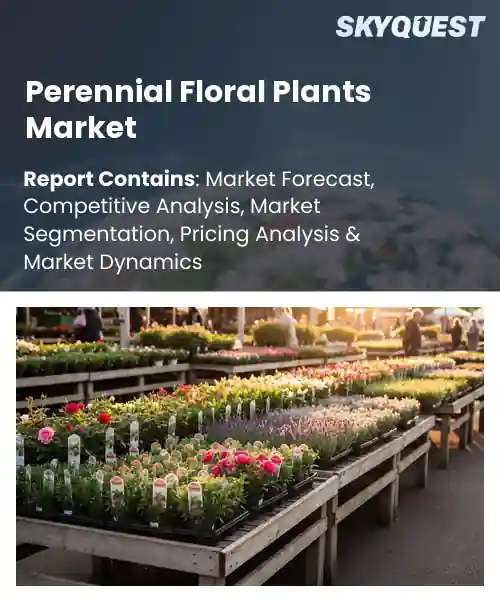
Perennial Floral Plants Market
Report ID: SQMIG30H2508
Report ID: SQMIG30H2508
[email protected]
USA +1 351-333-4748
Report ID:
SQMIG30H2508 |
Region:
Global |
Published Date: July, 2026
Pages:
157
|Tables:
120
|Figures:
77


Global Perennial Floral Plants Market size was valued at USD 4.86 Billion in 2024 and is poised to grow from USD 5.15 Billion in 2025 to USD 8.14 Billion by 2033, growing at a CAGR of 5.9% during the forecast period (2026-2033).
The global perennial floral plants market encompasses the production, distribution, and retail of species such as peonies, lavender, and daylilies, which return year after year without replanting. Its significance lies in supplying garden designers, landscapers, and hobbyists with color options that reduce maintenance costs and water usage. Historically, the market expanded from niche nurseries in the 1970s to an industry, driven by consumer preference for low gardens and the rise of “green” certifications. For example, European distributors reported a 12 % CAGR between 2015 and 2022 as municipalities adopted perennial‑focused planting schemes, illustrating how policy and lifestyle trends have shaped growth. Building on this foundation, the growth catalyst for the global perennial floral plants market is the escalating demand for landscaping solutions, which compels municipalities, commercial developers, and residential consumers to choose species that deliver long‑term aesthetic value with minimal inputs. As cities adopt resilient infrastructure, the procurement of drought‑tolerant perennials such as sage and coneflower spikes orders for contracts, generating revenue streams for growers. Retail platforms embrace seed kits that enable enthusiasts to cultivate perennials, expanding market reach and creating sales. Consequently, investment in breeding programs targeting disease resistance and extended bloom periods unlocks new segments, reinforcing the market’s trajectory.
How is AI influencing disease detection in the perennial floral plants market?
AI is reshaping disease detection in the perennial floral plants market by turning visual symptoms into actionable data. Machine learning models trained on thousands of leaf images can spot early signs of fungal or bacterial infection that are invisible to the human eye. Portable cameras and drones feed real‑time imagery to cloud platforms where algorithms flag hotspots, allowing growers to intervene before a problem spreads. This early warning reduces reliance on broad‑spectrum chemicals and helps maintain the aesthetic standards demanded by retailers. As the market expands with new varieties, growers are adopting these tools to protect plant health and sustain supply chains.Proven Winners May 2025 plant preview, showcased new perennials that benefit from AI driven disease monitoring adopted by growers, enhancing crop protection and supporting market growth.
Market snapshot - (2026-2033)
Global Market Size
USD 4.86 Billion
Largest Segment
Herbaceous Perennials
Fastest Growth
Bulbous Perennials
Growth Rate
5.9% CAGR
To get more insights on this market click here to Request a Free Sample Report
Global perennial floral plants market is segmented by plant type, flower type, application, distribution channel and region. Based on plant type, the market is segmented into Herbaceous Perennials, Woody Perennials and Bulbous Perennials. Based on flower type, the market is segmented into Flowering Shrubs, Flowering Bulbs, Ground Covers and Climbers. Based on application, the market is segmented into Landscaping, Residential Gardening, Commercial Horticulture and Public Gardens. Based on distribution channel, the market is segmented into Garden Centers, Nurseries, Online Retail and Wholesale Suppliers. Based on region, the market is segmented into North America, Europe, Asia Pacific, Latin America and Middle East & Africa.
Herbaceous perennials segment dominates because they offer year round visual appeal and adaptable growth habits that meet diverse consumer preferences. Their relatively low maintenance requirements and ease of propagation encourage widespread adoption by hobbyists and commercial growers alike. This versatility fuels strong demand across residential gardens, public landscapes, and niche horticultural collections, positioning herbaceous perennials as the cornerstone of market growth. Their ability to thrive in varying soil conditions and resilience to seasonal fluctuations further enhances their appeal to sustainable landscaping initiatives.
However, woody perennials segment is witnessing the strongest growth momentum as landscape designers prioritize long term structural elements. Innovative breeding programs delivering drought tolerant varieties and ornamental value are expanding usage in urban green spaces and climate responsive projects. This surge opens new opportunities for suppliers to differentiate through specialty cultivars and premium packaging.
Garden centers segment dominates because they provide tactile experiences that allow customers to assess plant health and aesthetics before purchase. Their strategic locations in high traffic retail zones coupled with expert staff guidance foster confidence and impulse buying, driving consistent volume across diverse consumer groups. The combination of physical presence and curated assortments creates a reliable sales channel that sustains market momentum. Their ability to showcase seasonal displays and host educational workshops further solidifies loyalty and repeat visitation, reinforcing their central role in market dynamics.
On the other hand, online retail segment emerges as the key high growth area as digital platforms expand reach beyond traditional brick and mortar limits. Seamless e commerce interfaces, fast shipping, and virtual plant care tools attract tech savvy consumers and professional growers seeking convenience. This acceleration fuels broader market penetration and opens pathways for innovative subscription models and data driven personalization.
To get detailed segments analysis, Request a Free Sample Report
North America benefits from a mature consumer base that values ornamental horticulture for both private and public spaces. Advanced research institutions drive continuous development of resilient and aesthetically diverse varieties, while extensive distribution networks ensure rapid market penetration. The region enjoys a broad range of climatic zones that support diverse planting seasons, allowing growers to supply a varied product portfolio year‑round. Strong retail ecosystems, including specialty garden centers and large‑scale home improvement chains, amplify consumer access. Supportive regulatory frameworks encourage sustainable cultivation practices, reinforcing market confidence. Together these factors create a virtuous cycle of innovation, availability, and consumer enthusiasm that sustains North America’s leading position.
Perennial Floral Plants Market in the United States thrives on a culture of home gardening and professional landscape design that prioritizes seasonal color and low‑maintenance options. Extensive research collaborations among universities and private firms generate new cultivars tailored to regional climates. A well‑developed wholesale infrastructure connects growers with a wide array of retailers, from boutique nurseries to national chain stores. Consumer preferences for eco‑friendly and native species further stimulate market growth, while strong horticultural education programs nurture ongoing demand.
Perennial Floral Plants Market in Canada capitalizes on a strong tradition of garden stewardship and a climate that supports cold‑hardy varieties. Collaborative initiatives between research institutes and provincial growers produce cultivars suited to diverse growing zones. Retail channels ranging from garden centres to online platforms broaden consumer reach across both urban and rural areas. An emphasis on sustainable practices and native plant adoption resonates with environmentally conscious buyers, fostering steady expansion of the market.
Europe’s expansion is propelled by a deep‑seated appreciation for garden aesthetics combined with progressive environmental policies that encourage biodiversity. Consumers increasingly seek plants that offer year‑round visual interest while reducing resource inputs, aligning with sustainability goals. Robust horticultural expertise across the continent supports continuous breeding of resilient, high‑quality varieties. A well‑established network of specialty retailers, garden festivals, and design consultancies fuels demand across both residential and public spaces. Cross‑border trade facilitated by harmonized regulations further amplifies market dynamism, positioning Europe as a vibrant hub for ornamental plant innovation and consumption.
Perennial Floral Plants Market in Germany benefits from a long‑standing horticultural tradition and a strong emphasis on high‑quality breeding programs. Advanced research facilities collaborate closely with commercial growers to develop cultivars that meet rigorous performance standards. An extensive retail landscape, including garden centers and specialist nurseries, provides broad consumer access. Environmental stewardship and a preference for native species guide purchasing decisions, reinforcing market resilience.
Perennial Floral Plants Market in the United Kingdom experiences rapid growth driven by a passionate gardening culture and a surge in urban greening initiatives. Innovative breeding focuses on compact, climate‑adaptable varieties suited to limited space and variable weather. Retail channels ranging from traditional garden shops to digital platforms expand reach to a diverse audience. Growing interest in heritage gardens and seasonal planting schemes fuels continuous demand.
Perennial Floral Plants Market in France is emerging as a dynamic segment supported by a strong appreciation for decorative landscaping and boutique horticulture. Creative breeders emphasize fragrance, texture, and artistic form, catering to sophisticated consumer tastes. Small‑scale growers and artisanal nurseries supply niche markets through farmers‑markets and curated garden boutiques. An increasing focus on sustainable gardening practices aligns with consumer preferences for environmentally responsible choices.
Asia Pacific is strengthening its market position through rising consumer interest in ornamental gardening and expanding middle‑class lifestyles that prioritize home beautification. Countries in the region invest in research and development to create varieties adapted to diverse climatic conditions, from temperate to subtropical zones. Government incentives promote modern horticultural techniques, enhancing productivity and quality. Growing export capabilities enable the region to supply neighboring markets, while domestic retail networks, including large garden malls and e‑commerce platforms, increase product accessibility. These combined efforts elevate the region’s influence within the global landscape of perennial floral offerings.
Perennial Floral Plants Market in Japan reflects a refined aesthetic sensibility that values subtle color palettes and seasonal harmony. Advanced breeding programs focus on compact, resilient plants suitable for limited garden spaces and container cultivation. A sophisticated retail environment, encompassing specialty garden shops and high‑end department stores, delivers curated selections to discerning consumers. Cultural traditions emphasizing garden design and serenity reinforce steady demand for high‑quality perennial options.
Perennial Floral Plants Market in South Korea expands rapidly as urban dwellers seek greenery for balconies and small yards. Innovative breeding emphasizes low‑maintenance, disease‑resistant cultivars that thrive in dense city environments. A vibrant network of online nurseries and modern garden centers provides convenient access to a broad product range. Government support for green city initiatives further stimulates interest in incorporating perennial plants into modern living spaces.
To know more about the market opportunities by region and country, click here to
Buy The Complete Report
Rising Demand for Sustainable Décor
Growth of Urban Green Initiatives
High Cost of Production Inputs
Stringent Phytosanitary Regulations
Request Free Customization of this report to help us to meet your business objectives.
The perennial floral plants market is shaped by fierce competition among established breeders and new tech‑enabled growers. Proven Winners differentiates with rapid launches such as ‘Edge of Night’ Hibiscus and ‘Evening Gown’ Heuchera, while Danziger expands reach through strategic partnerships with growers and retailers. Tech‑focused moves, like Flower Labs’ AI platform and Bloom & Wolf’s digital faux‑flower service, highlight innovation and M&A activity driving consolidation.
Top Player’s Company Profile
Recent Developments
SkyQuest’s ABIRAW (Advanced Business Intelligence, Research & Analysis Wing) is our Business Information Services team that Collects, Collates, Correlates, and Analyses the Data collected by means of Primary Exploratory Research backed by robust Secondary Desk research. As per SkyQuest analysis the global perennial floral plants market is being propelled primarily by the rising demand for sustainable décor while the rapid growth of urban green initiatives provides a second boost by creating steady contracts for drought‑tolerant varieties. Herbaceous perennials remain the dominant segment because of their low‑maintenance appeal and broad consumer acceptance. North America leads the market thanks to its mature retail network, strong research ecosystem and diverse climate zones that support year‑round supply. However, high production input costs act as a restraint, limiting profit margins and discouraging new entrants, which could temper overall expansion if not addressed.
| Report Metric | Details |
|---|---|
| Market size value in 2024 | USD 4.86 Billion |
| Market size value in 2033 | USD 8.14 Billion |
| Growth Rate | 5.9% |
| Base year | 2024 |
| Forecast period | (2026-2033) |
| Forecast Unit (Value) | USD Billion |
| Segments covered |
|
| Regions covered | North America (US, Canada), Europe (Germany, France, United Kingdom, Italy, Spain, Rest of Europe), Asia Pacific (China, India, Japan, Rest of Asia-Pacific), Latin America (Brazil, Rest of Latin America), Middle East & Africa (South Africa, GCC Countries, Rest of MEA) |
| Companies covered |
|
| Customization scope | Free report customization with purchase. Customization includes:-
|
To get a free trial access to our platform which is a one stop solution for all your data requirements for quicker decision making. This platform allows you to compare markets, competitors who are prominent in the market, and mega trends that are influencing the dynamics in the market. Also, get access to detailed SkyQuest exclusive matrix.
Table Of Content
Executive Summary
Market overview
Parent Market Analysis
Market overview
Market size
KEY MARKET INSIGHTS
COVID IMPACT
MARKET DYNAMICS & OUTLOOK
Market Size by Region
KEY COMPANY PROFILES
Methodology
For the Perennial Floral Plants Market, our research methodology involved a mixture of primary and secondary data sources. Key steps involved in the research process are listed below:
1. Information Procurement: This stage involved the procurement of Market data or related information via primary and secondary sources. The various secondary sources used included various company websites, annual reports, trade databases, and paid databases such as Hoover's, Bloomberg Business, Factiva, and Avention. Our team did 45 primary interactions Globally which included several stakeholders such as manufacturers, customers, key opinion leaders, etc. Overall, information procurement was one of the most extensive stages in our research process.
2. Information Analysis: This step involved triangulation of data through bottom-up and top-down approaches to estimate and validate the total size and future estimate of the Perennial Floral Plants Market.
3. Report Formulation: The final step entailed the placement of data points in appropriate Market spaces in an attempt to deduce viable conclusions.
4. Validation & Publishing: Validation is the most important step in the process. Validation & re-validation via an intricately designed process helped us finalize data points to be used for final calculations. The final Market estimates and forecasts were then aligned and sent to our panel of industry experts for validation of data. Once the validation was done the report was sent to our Quality Assurance team to ensure adherence to style guides, consistency & design.
Analyst Support
Customization Options
With the given market data, our dedicated team of analysts can offer you the following customization options are available for the Perennial Floral Plants Market:
Product Analysis: Product matrix, which offers a detailed comparison of the product portfolio of companies.
Regional Analysis: Further analysis of the Perennial Floral Plants Market for additional countries.
Competitive Analysis: Detailed analysis and profiling of additional Market players & comparative analysis of competitive products.
Go to Market Strategy: Find the high-growth channels to invest your marketing efforts and increase your customer base.
Innovation Mapping: Identify racial solutions and innovation, connected to deep ecosystems of innovators, start-ups, academics, and strategic partners.
Category Intelligence: Customized intelligence that is relevant to their supply Markets will enable them to make smarter sourcing decisions and improve their category management.
Public Company Transcript Analysis: To improve the investment performance by generating new alpha and making better-informed decisions.
Social Media Listening: To analyze the conversations and trends happening not just around your brand, but around your industry as a whole, and use those insights to make better Marketing decisions.
REQUEST FOR SAMPLE
 REQUEST FREE CUSTOMIZATION


Want to customize this report? This report can be personalized according to your needs. Our analysts and industry experts will work directly with you to understand your requirements and provide you with customized data in a short amount of time. We offer $1000 worth of FREE customization at the time of purchase.
Feedback From Our Clients


 USA (+1) 351-333-4748

