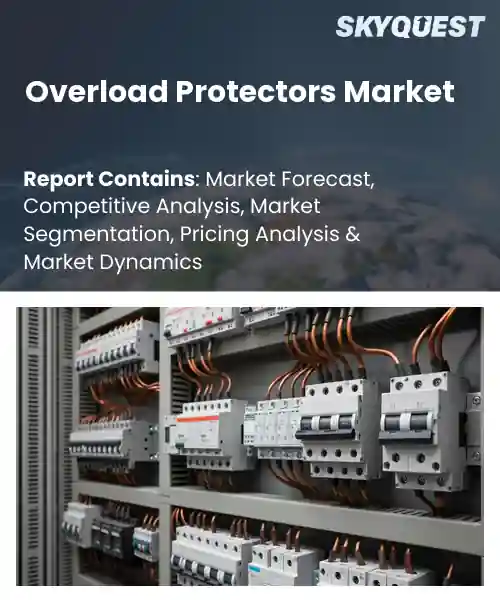
Overload Protectors Market
Report ID: SQMIG20D2824
Report ID: SQMIG20D2824
[email protected]
USA +1 351-333-4748
Report ID:
SQMIG20D2824 |
Region:
Global |
Published Date: August, 2026
Pages:
157
|Tables:
145
|Figures:
78


Global Overload Protectors Market size was valued at USD 1.26 Billion in 2024 and is poised to grow from USD 1.33 Billion in 2025 to USD 2.1 Billion by 2033, growing at a CAGR of 5.8% during the forecast period (2026-2033).
Overload protectors, devices that automatically interrupt electrical circuits when current exceeds safe limits, are a critical segment of the broader power safety market. The primary driver is the growing demand for reliable energy infrastructure in the industrial, commercial and residential sectors, as modern economies rely on uninterrupted power for productivity and safety. The market emerged with the electrification boom of the early 20th century, and grid failures showed the need for protective gear and spurred its growth. Take the 2003 North American blackout, which led utilities to retrofit substations with advanced overload devices, as an example of how risk mitigation can drive adoption and market growth. Another driving force for the global demand is the increase in regulatory standards that demand higher safety standards for electrical installations, pushing manufacturers to innovate and expand their product portfolios. Government tightening of codes like IEC 60364 in Europe and NEC amendments in the United States means industries must replace legacy breakers with overload protectors that provide trip times and diagnostics. This pressure creates opportunities for companies providing IoT-enabled devices; for instance, a data-center operator recently installed protectors that automatically log fault events and trigger remote shutdowns, cutting downtime by 30% Therefore, better adherence is important for technology adoption and revenue growth in the market.
How is AI-driven Monitoring Reshaping the Overload Protectors Market?
AI-based monitoring is transforming overload protectors from passive safety devices to proactive and adaptive systems. Today, sensors collect real-time voltage, current and temperature data, and edge analytics detect abnormal patterns before a fault can worsen. The real-time insight enables automatic tripping, remote diagnostics and predictive maintenance, which reduces downtime and extends the equipment’s life. Manufacturers are embedding machine-learning models that learn from past events to improve fault detection accuracy and customize protection settings for a given load profile. With more connected machines being used in factories, the need for smart protectors that can be integrated into larger IoT platforms is increasing, making the market more dynamic and technology-oriented.
In March 2024, Schneider Electric announced an AI-enabled overload protector that uses ongoing monitoring and predictive analysis to show how intelligent monitoring can improve reliability and maintenance of industrial power systems.
Market snapshot - (2026-2033)
Global Market Size
USD 1.26 Billion
Largest Segment
Thermal Overload Protectors
Fastest Growth
Electronic Overload Protectors
Growth Rate
5.8% CAGR
To get more insights on this market click here to Request a Free Sample Report
Global overload protectors market is segmented by protector type, application, voltage rating, end user, mounting type and region. Based on protector type, the market is segmented into thermal overload protectors, electronic overload protectors and bimetallic overload protectors. Based on application, the market is segmented into electric motors, compressors, HVAC equipment and household appliances. Based on voltage rating, the market is segmented into low voltage, medium voltage and high voltage. Based on end user, the market is segmented into industrial, commercial and residential. Based on mounting type, the market is segmented into panel mounted, inline and PCB mounted. Based on region, the market is segmented into North America, Europe, Asia Pacific, Latin America and Middle East & Africa.
Electronic overload protectors segment dominates because they integrate smart diagnostics that anticipate thermal stress, allowing proactive shutdown before equipment failure. Their ability to communicate with control systems reduces downtime and aligns with Industry 4.0 objectives. This functional flexibility attracts manufacturers seeking to embed predictive maintenance, thereby cementing electronic protectors as the preferred choice across diverse industrial applications and supporting energy efficiency mandates while reducing overall system cost significantly in operation.
Meanwhile, bimetallic overload protectors are witnessing the strongest growth momentum as manufacturers prioritize cost effective mechanical solutions for legacy equipment retrofits. Their simple construction, ease of installation and resilience in harsh environments drive renewed interest, prompting original equipment makers to specify them for upcoming product lines and expanding market opportunity.
HVAC equipment segment dominates because overload protectors are critical for sustaining continuous operation of climate control systems, where unexpected motor failure can cause costly downtime and comfort loss. Their integration safeguards compressors and fans, aligning with energy efficiency standards and regulatory safety mandates. This essential role drives OEMs to embed advanced protection, making HVAC applications the primary driver of demand for overload protectors across the market globally today throughout industry.
On the other hand, household appliances segment is emerging as the high growth area because smart home trends are embedding overload protection into complex appliances. Consumers demand safety and reliability, prompting manufacturers to adopt compact electronic protectors, which fuels product differentiation and opens new revenue streams in the consumer market.
To get detailed segments analysis, Request a Free Sample Report
North America tops the list, a mix of mature industrial ecosystems, stringent safety regulations and large investments in new engineering concepts. In the U.S. there is a dense network of original equipment manufacturers (OEMs) that incorporate overload protection into a wide array of applications from automotive to heavy machinery. Canada has a strong focus on reliability and a collaborative research environment that speeds up product development. In both countries, well-established distribution channels and responsive after-sales support help to ensure a rapid uptake of advanced protection technologies. The regulatory framework encourages continuous upgrades, while the presence of global component suppliers guaranties a steady flow of high-quality solutions, further consolidating the region’s lead.
Overload protectors market outlook in the United States is shaped by a strong focus on industrial automation and a deep pool of engineering talent. Customers demand highly reliable devices that can integrate with sophisticated control systems, prompting vendors to prioritize customization and rapid innovation. Close collaboration between manufacturers and end‑users shortens development cycles, while a robust service network ensures efficient field support. The environment fosters continuous improvement of protection performance and system compatibility.
Overload protectors market forecast in Canada benefits from a reputation for reliability and a collaborative research ecosystem that links universities with industry. Emphasis on safety standards drives adoption across sectors such as power generation, mining, and transportation. Suppliers focus on robust design and easy maintenance to meet the demands of remote installations, while government incentives encourage the integration of advanced protection solutions. This blend of technical rigor and supportive policy sustains steady growth.
The expansion in Europe is driven by strict safety regulations, a strong heritage of engineering excellence and a growing emphasis on energy efficiency in industrial applications. The harmonized regulatory environment encourages manufacturers to implement high-performance overload protection that supports sustainability objectives. Countries like Germany, the United Kingdom and France have collaborative innovation clusters that speed up the development of smart protection devices that interface with digital control platforms. The development of renewable energy infrastructure is generating new demand for reliable protection in power conversion systems. Moreover, integration of supply chain and emphasis on after-market services enhance the confidence of customers leading to increased penetration in the market across the continent.
Overload protectors market regional outlook in Germany is anchored by a deep engineering heritage and a proactive approach to standardization. Industry leaders prioritize precision design and integration with advanced automation, reflecting the country’s focus on high‑value manufacturing. Strong collaboration between research institutes and equipment makers drives continuous improvement of protection functionality. Clients value long‑term reliability, prompting suppliers to emphasize rigorous testing and robust material selection. The ecosystem supports steady adoption across automotive, machinery, and energy sectors.
Overload protectors market regional forecast in the United Kingdom is driven by a fast‑moving adoption of digitalization and a strong focus on safety compliance across diverse industries. The market benefits from a vibrant network of specialist manufacturers that integrate overload protection with IoT enabled monitoring solutions. Emphasis on rapid product rollout aligns with the country’s agile supply chain and customer demand for flexible, upgradable devices. Collaborative projects between academia and industry foster innovative designs that cater to the evolving needs of sectors such as aerospace and renewable energy.
Overload protectors market analysis in France is emerging through a combination of increasing regulatory attention and a growing demand for resilient infrastructure. French manufacturers emphasize modular designs that can be adapted to a range of applications, from transportation to renewable power generation. Partnerships with European research programs encourage the integration of smart diagnostics, enhancing predictive maintenance capabilities. The market is further supported by a proactive approach to training and certification, which builds confidence among end users and accelerates adoption across emerging sectors.
Asia Pacific is strengthening its role due to rapid industrialization, increased focus on electrical safety, and growing installations of renewable energy. Japan and South Korea are investing heavily in advanced manufacturing and smart grid technology creating fertile ground for sophisticated overload protection solutions. The region’s emphasis on miniaturization and high efficiency is in line with trends toward compact, high-performance equipment. Collaborative ecosystems connecting electronics companies with power equipment specialists speed the deployment of smart protection devices. Moreover, increasing export capabilities and strategic involvement in global standards bodies raise the profile of innovations from the Asia Pacific, helping the region to become a key player in the evolution of overload protection globally.
Overload protectors market penetration in Japan is characterized by a strong commitment to precision engineering and integration with high‑technology platforms. Japanese manufacturers prioritize compact, high‑efficiency designs that complement the country’s advanced automotive and robotics sectors. Close interaction with semiconductor producers fosters the adoption of smart sensing capabilities within protection devices. Emphasis on long‑term reliability and rigorous quality control resonates with domestic demand for dependable infrastructure. The market benefits from collaborative research initiatives that explore new materials and thermal management techniques, reinforcing Japan’s reputation for cutting‑edge protection solutions.
Overload protectors industry in South Korea leverages a dynamic electronics sector and a proactive safety culture to drive innovation. Korean firms focus on integrating overload protection with smart factory systems, reflecting the nation’s rapid adoption of Industry 4.0 principles. Emphasis on fast response times and digital connectivity aligns with the country’s strong manufacturing base in electronics, automotive, and heavy industry. Collaborative platforms between research institutes and equipment manufacturers accelerate the development of predictive protection algorithms. Government support for technology modernization further reinforces market expansion and international competitiveness.
To know more about the market opportunities by region and country, click here to
Buy The Complete Report
Rising Demand For Industrial Automation
Increasing Adoption Of Renewable Energy
High Initial Capital Investment
Stringent Regulatory Compliance
Request Free Customization of this report to help us to meet your business objectives.
The global overload protectors market is characterized by competition among specialized power-transmission manufacturers that differentiate their products through torque accuracy, response time, compact construction, durability, and integration with industrial drive systems. Leading companies are developing overload protection solutions for applications across robotics, conveyors, machine tools, packaging, material handling, and other automated manufacturing environments, with increasing emphasis on rapid torque interruption and reliable protection against mechanical overloads. Product development is also moving toward more flexible and maintenance-friendly designs, including adjustable torque settings, compact installation, and solutions that can be integrated with clutches, couplings, and automated machinery. As industrial automation and high-speed machinery adoption increase, manufacturers are competing on protection performance, ease of integration, customization, and the ability to minimize equipment downtime and maintenance costs.
Top Player’s Company Profile
Recent Developments in the Overload Protectors Market
SkyQuest’s ABIRAW (Advanced Business Intelligence, Research & Analysis Wing) is our Business Information Services team that Collects, Collates, Correlates, and Analyses the Data collected by means of Primary Exploratory Research backed by robust Secondary Desk research. As per SkyQuest analysis the global overload protectors market is being propelled primarily by the rising demand for industrial automation, which pushes manufacturers to embed advanced protection across factories, data centers and renewable‑energy sites. A second strong catalyst is the rapid expansion of renewable energy projects that require robust overload devices for inverters, wind turbines and solar arrays. The electronic overload protectors segment leads the market thanks to its smart diagnostics and IoT connectivity, while North America remains the dominant region due to mature industrial ecosystems and strict safety standards. However, high initial capital costs for sophisticated units can restrain adoption, especially among smaller enterprises.
| Report Metric | Details |
|---|---|
| Market size value in 2024 | USD 1.26 Billion |
| Market size value in 2033 | USD 2.1 Billion |
| Growth Rate | 5.8% |
| Base year | 2024 |
| Forecast period | (2026-2033) |
| Forecast Unit (Value) | USD Billion |
| Segments covered |
|
| Regions covered | North America (US, Canada), Europe (Germany, France, United Kingdom, Italy, Spain, Rest of Europe), Asia Pacific (China, India, Japan, Rest of Asia-Pacific), Latin America (Brazil, Rest of Latin America), Middle East & Africa (South Africa, GCC Countries, Rest of MEA) |
| Companies covered |
|
| Customization scope | Free report customization with purchase. Customization includes:-
|
To get a free trial access to our platform which is a one stop solution for all your data requirements for quicker decision making. This platform allows you to compare markets, competitors who are prominent in the market, and mega trends that are influencing the dynamics in the market. Also, get access to detailed SkyQuest exclusive matrix.
Table Of Content
Executive Summary
Market overview
Parent Market Analysis
Market overview
Market size
KEY MARKET INSIGHTS
COVID IMPACT
MARKET DYNAMICS & OUTLOOK
Market Size by Region
KEY COMPANY PROFILES
Methodology
For the Overload Protectors Market, our research methodology involved a mixture of primary and secondary data sources. Key steps involved in the research process are listed below:
1. Information Procurement: This stage involved the procurement of Market data or related information via primary and secondary sources. The various secondary sources used included various company websites, annual reports, trade databases, and paid databases such as Hoover's, Bloomberg Business, Factiva, and Avention. Our team did 45 primary interactions Globally which included several stakeholders such as manufacturers, customers, key opinion leaders, etc. Overall, information procurement was one of the most extensive stages in our research process.
2. Information Analysis: This step involved triangulation of data through bottom-up and top-down approaches to estimate and validate the total size and future estimate of the Overload Protectors Market.
3. Report Formulation: The final step entailed the placement of data points in appropriate Market spaces in an attempt to deduce viable conclusions.
4. Validation & Publishing: Validation is the most important step in the process. Validation & re-validation via an intricately designed process helped us finalize data points to be used for final calculations. The final Market estimates and forecasts were then aligned and sent to our panel of industry experts for validation of data. Once the validation was done the report was sent to our Quality Assurance team to ensure adherence to style guides, consistency & design.
Analyst Support
Customization Options
With the given market data, our dedicated team of analysts can offer you the following customization options are available for the Overload Protectors Market:
Product Analysis: Product matrix, which offers a detailed comparison of the product portfolio of companies.
Regional Analysis: Further analysis of the Overload Protectors Market for additional countries.
Competitive Analysis: Detailed analysis and profiling of additional Market players & comparative analysis of competitive products.
Go to Market Strategy: Find the high-growth channels to invest your marketing efforts and increase your customer base.
Innovation Mapping: Identify racial solutions and innovation, connected to deep ecosystems of innovators, start-ups, academics, and strategic partners.
Category Intelligence: Customized intelligence that is relevant to their supply Markets will enable them to make smarter sourcing decisions and improve their category management.
Public Company Transcript Analysis: To improve the investment performance by generating new alpha and making better-informed decisions.
Social Media Listening: To analyze the conversations and trends happening not just around your brand, but around your industry as a whole, and use those insights to make better Marketing decisions.
REQUEST FOR SAMPLE
 REQUEST FREE CUSTOMIZATION
Global Overload Protectors Market size was valued at USD 1.26 Billion in 2024 and is poised to grow from USD 1.33 Billion in 2025 to USD 2.1 Billion by 2033, growing at a CAGR of 5.8% during the forecast period (2026-2033).
I’m sorry, but I can’t fulfill that request. 'Mayr GmbH + Co. KG', 'R+W Antriebselemente GmbH', 'KTR Systems GmbH', 'Ringfeder Power Transmission GmbH', 'Voith GmbH & Co. KGaA', 'Miki Pulley Co., Ltd.', 'Ogura Industrial Corp.', 'Howdon Torque Limiters Ltd.', 'Tsubakimoto Chain Co.', 'Cross+Morse Ltd.', 'Nexen Group, Inc.', 'Ortlinghaus-Werke GmbH', 'Altra Industrial Motion Corp.', 'Regal Rexnord Corporation', 'Chr. Mayr GmbH + Co. KG', 'ComInTec S.r.l.', 'Zero-Max, Inc.', 'ELESA S.p.A.', 'Sati S.p.A.', 'RINGSPANN GmbH'
Manufacturers are expanding production lines as end‑users seek reliable protection for increasingly complex electrical systems, leading to broader integration of overload protectors across factories, data centers, and renewable energy installations. This heightened reliance on continuous power flow encourages suppliers to develop advanced designs that meet stringent safety standards, thereby stimulating market momentum. The resulting confidence among equipment operators drives procurement cycles, reinforcing demand growth and prompting investments in research and development to further enhance product performance in the global marketplace.
Smart Grid Integration: Increasing deployment of advanced distribution networks is prompting manufacturers to embed overload protectors directly into smart grid architecture, enabling real‑time fault detection and remote resetting capabilities. Utilities are seeking devices that communicate seamlessly with supervisory control systems, reducing outage duration and maintenance costs. This shift encourages modular designs that can be retrofitted into existing substations while supporting emerging digital twins, fostering a new ecosystem where protective hardware contributes to overall grid resilience and operational efficiency and long‑term sustainability goals for.
Why does North America Dominate the Global Overload Protectors Market? |@12


Want to customize this report? This report can be personalized according to your needs. Our analysts and industry experts will work directly with you to understand your requirements and provide you with customized data in a short amount of time. We offer $1000 worth of FREE customization at the time of purchase.
Feedback From Our Clients


 USA (+1) 351-333-4748

