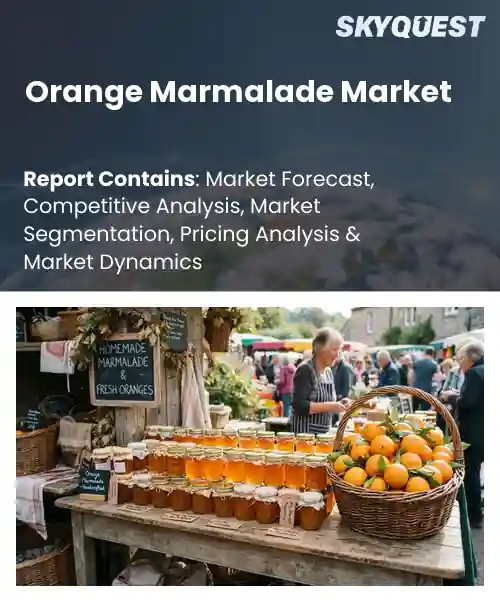
Orange Marmalade Market
Report ID: SQMIG30I3295
Report ID: SQMIG30I3295
[email protected]
USA +1 351-333-4748
Report ID:
SQMIG30I3295 |
Region:
Global |
Published Date: November, 2026
Pages:
157
|Tables:
119
|Figures:
77


Global Orange Marmalade Market size was valued at USD 2.45 Billion in 2024 and is poised to grow from USD 2.54 Billion in 2025 to USD 3.43 Billion by 2033, growing at a CAGR of 3.8% during the forecast period (2026-2033).
The orange marmalade market represents the segment of processed fruit spreads derived primarily from bitter Seville oranges, sugar and pectin, sold through retail, foodservice and specialty channels. Its significance lies in the product’s role as a breakfast condiment and as a flavoring ingredient in confectionery, bakery and dairy formulations. The market emerged in the early 20th century when British colonial trade introduced Seville oranges to Europe, subsequently expanding as manufacturers standardized pasteurization and packaging. Consumer nostalgia for heritage brands such as Robertson’s and the rise of artisanal jars have driven volume growth, while trends have nudged producers toward lower‑sugar formulations. Rising consumer demand for foods has become the pivotal factor accelerating the orange marmalade market, because manufacturers can position the spread as a source of vitamin C and flavonoids. This health narrative encourages supermarkets to allocate shelf space to fortified varieties, prompting companies such as Bonne Maman to launch vitamin‑enriched lines that command pricing. The resulting premium fuels investment in sustainable sourcing of Seville oranges from Mediterranean farms that use low‑pesticide cultivation, which satisfies buyers and opens export channels to health stores. Consequently, brand differentiation through nutrition and sustainability creates a loop that expands market size and attracts new entrants.
How is AI influencing product personalization in the orange marmalade market?
AI is reshaping how orange marmalade is tailored to individual tastes by analysing consumer preferences, purchase histories and flavor feedback. Machine learning models identify patterns such as preferred sweetness, zest intensity and texture, allowing producers to create micro‑batches that match specific palates. Brands can now adjust recipes in real time, testing variations on digital platforms before scaling production. This data‑rich approach also informs packaging design, suggesting personalized label messages that resonate with niche audiences. The result is a more engaging shopping experience where customers feel the product reflects their unique flavor profile, driving loyalty and encouraging repeat purchases.A recent development from Wilkin & Sons in June 2023 introduced an AI driven customization portal that lets shoppers select flavor nuances, supporting market growth through enhanced personalization.
Market snapshot - (2026-2033)
Global Market Size
USD 2.45 Billion
Largest Segment
Traditional Orange Marmalade
Fastest Growth
Reduced-Sugar & Sugar-Free Marmalade
Growth Rate
3.8% CAGR
To get more insights on this market click here to Request a Free Sample Report
Global orange marmalade market is segmented by product type, form, distribution channel, end user and region. Based on product type, the market is segmented into Traditional Orange Marmalade, Bitter Orange Marmalade, Sweet Orange Marmalade and Reduced-Sugar & Sugar-Free Marmalade. Based on form, the market is segmented into Smooth and Chunky. Based on distribution channel, the market is segmented into Supermarkets & Hypermarkets, Convenience Stores, Online Retail, Specialty Food Stores and Other Channels. Based on end user, the market is segmented into Household Consumers, Foodservice & Hospitality and Food Manufacturers. Based on region, the market is segmented into North America, Europe, Asia Pacific, Latin America and Middle East & Africa.
Traditional orange marmalade segment dominates because it embodies the classic flavor profile that consumers associate with breakfast spreads, offering a balance of bitter peel and sweet pulp that reinforces brand heritage. Its long‑standing presence in households creates a trust loop, prompting repeat purchases and anchoring shelf space. This familiarity drives retailers to prioritize it, reinforcing its leadership and sustaining overall market momentum.
Meanwhile, reduced‑sugar & sugar‑free marmalade segment emerges as the key high‑growth area in the orange marmalade market, propelled by increasing health consciousness and demand for lower‑calorie options. Innovative sweetening technologies and clean‑label positioning attract diet‑focused consumers, expanding distribution into health‑oriented retail channels. This momentum unlocks new opportunities, widening the market’s appeal beyond traditional sweet spreads.
Smooth form segment leads because its spreadable consistency meets consumer expectations for ease of use on toast and pastries, enhancing perceived value and encouraging higher usage frequency. The uniform texture aligns with packaging automation, reducing production waste and enabling cost‑effective bulk filling, which appeals to large retailers seeking efficient shelf turnover. These operational advantages reinforce its prevalence across multiple sales channels.
Conversely, chunky form segment is witnessing the strongest growth momentum in the orange marmalade market as consumers seek textural novelty and premium experiences. The inclusion of citrus rind pieces creates a sensory distinction that resonates with gourmet and artisanal trends, prompting specialty stores and online platforms to expand their assortments. This interest stimulates product innovation and drives overall market expansion through differentiated offerings.
To get detailed segments analysis, Request a Free Sample Report
Europe retains a leading position in the orange marmalade market due to a confluence of cultural, product‑development, and distribution strengths. Long‑standing culinary traditions in the region value citrus spreads as staple breakfast items, creating deep consumer familiarity. Leading brands leverage heritage storytelling and premium positioning, resonating with discerning shoppers who prioritize quality and authenticity. Well‑established retail networks ensure broad shelf presence, while sophisticated supply chains support consistent raw‑material sourcing. Collaborative innovation among manufacturers and food‑service operators drives new flavor variations and packaging formats, reinforcing Europe reputation as a benchmark for excellence in the category. Regulatory frameworks that emphasize food safety and labeling transparency further boost consumer confidence, while cross‑border trade within the EU facilitates efficient market access for both established and emerging producers. The convergence of these factors sustains Europe dominant role and encourages continuous refinement of product portfolios.
Orange Marmalade Market in Germany benefits from a strong affinity for high‑quality spreads and a robust bakery culture that integrates citrus products into traditional breakfasts and pastries. Consumers appreciate nuanced flavor profiles, prompting manufacturers to prioritize natural ingredients and refined textures. Retail channels ranging from premium supermarkets to specialized delicatessen shops provide extensive visibility, while collaborative efforts with chefs foster innovative applications that keep the segment lively and engaging experiences.
Orange Marmalade Market in the United Kingdom is anchored by a heritage of tea‑time rituals where citrus spreads complement classic scones and toast. British consumers value artisanal craftsmanship, encouraging producers to emphasize small‑batch production and authentic flavor balance. Distribution thrives through both high‑street retailers and premium online platforms, while collaborations with heritage brands and culinary schools nurture novel pairings that reinforce the spread’s cultural relevance and appeal for modern palates.
Orange Marmalade Market in France intertwines with the nation’s long‑standing appreciation for refined gastronomy and balanced flavor interplay. French consumers seek marmalade that marries bright citrus notes with subtle sweetness, prompting manufacturers to perfect texture and natural ingredient sourcing. Presence across gourmet boutiques, hypermarkets, and specialty food fairs ensures wide accessibility, while partnerships with pâtisserie schools inspire creative uses in desserts, reinforcing the product’s status as a sophisticated staple.
North America experiences rapid expansion of the orange marmalade market driven by evolving consumer preferences that prioritize natural sweetness, functional ingredients, and convenient ready‑to‑eat options. Growing interest in culinary exploration encourages households to incorporate citrus spreads beyond breakfast, using them in sauces, glazes, and dessert applications. Retail environments benefit from strategic shelf placements in both mainstream supermarkets and specialty natural food stores, amplifying visibility. Producers respond with innovative flavor blends, reduced‑sugar formulations, and sustainable packaging, aligning with broader health and environmental concerns. Collaborative marketing campaigns featuring chefs and lifestyle influencers further stimulate demand, positioning orange marmalade as a versatile and premium pantry staple across the region. The convergence of rising disposable income and an increased willingness to pay for premium food experiences reinforces this momentum, while supply chain efficiencies ensure consistent product availability across diverse retail formats.
Orange Marmalade Market in the United States is propelled by a vibrant food‑service sector and a growing appetite for globally inspired flavors. Consumers appreciate clean‑label products, prompting brands to emphasize natural orange content and minimal additives. Distribution thrives through extensive networks ranging from mass chains to gourmet retailers, while innovative promotional collaborations with culinary schools and lifestyle media expand consumer engagement. The result is a dynamic market landscape where tradition meets contemporary taste preferences.
Orange Marmalade Market in Canada reflects a consumer base that values high‑quality artisanal products and a strong emphasis on local sourcing. Retail channels blend large‑scale supermarkets with boutique food stores, providing broad exposure for premium marmalade offerings. Producers highlight traceability and environmentally friendly packaging, resonating with eco‑conscious shoppers. Collaborative initiatives with regional chefs and culinary festivals showcase versatile uses, reinforcing the spread’s position as both a traditional breakfast staple and an innovative ingredient in modern Canadian cuisine.
Asia Pacific is strengthening its position in the orange marmalade market through a combination of rising disposable incomes, expanding food‑service landscapes, and a growing curiosity for international food experiences. Consumers in key economies are embracing citrus‑based spreads as versatile ingredients for both traditional breakfast rituals and modern fusion dishes. Local manufacturers are investing in advanced processing technologies that preserve natural flavor while meeting stringent quality standards, enabling them to compete with established global brands. Strategic collaborations with culinary institutes and retail innovators foster product differentiation, while an increasing focus on sustainable sourcing aligns with regional environmental priorities. These dynamics collectively elevate the region’s relevance and drive a more prominent role in the global orange marmalade ecosystem. Furthermore, digital marketing platforms enable producers to reach younger demographics, further cementing market growth across urban centers.
Orange Marmalade Market in Japan blends classic breakfast habits with a taste for balanced citrus flavors. Japanese consumers prefer marmalade that offers bright acidity softened by gentle sweetness, leading manufacturers to focus on premium orange varieties and precise processing. Distribution includes department stores, specialty food aisles, and online channels, reaching discerning shoppers. Collaborations with patisserie schools and culinary influencers showcase creative uses in pastries and desserts, cementing the spread’s role as a refined yet familiar pantry staple.
Orange Marmalade Market in South Korea reflects curiosity for Western‑style breakfasts and culinary experimentation. Korean consumers seek marmalade that balances vibrant orange zest with mellow sweetness, prompting producers to use refined recipes and quality fruit. Sales occur through hypermarkets and boutique online stores, providing access. Partnerships with cooking schools and food influencers showcase uses on toast, as glazes, and in dessert toppings, positioning the spread as both a comforting classic and a modern flavor enhancer.
To know more about the market opportunities by region and country, click here to
Buy The Complete Report
Health Conscious Consumers Favor
Premium Flavor Innovation Expands
Seasonal Fruit Supply Constraints
High Sugar Content Perception
Request Free Customization of this report to help us to meet your business objectives.
The global orange marmalade market is shaped by intense competition among legacy producers and emerging niche brands, with recent M&A activity such as the acquisition of a boutique fruit preserve company by a major food conglomerate driving consolidation. Strategic partnerships between citrus growers and specialty food manufacturers are enhancing supply chain efficiency, while investments in natural flavor technology are differentiating product lines and expanding premium segments.
Top Player’s Company Profile
Recent Developments
SkyQuest’s ABIRAW (Advanced Business Intelligence, Research & Analysis Wing) is our Business Information Services team that Collects, Collates, Correlates, and Analyses the Data collected by means of Primary Exploratory Research backed by robust Secondary Desk research. As per SkyQuest analysis, the global orange marmalade market is being propelled by health‑conscious consumers who value natural fruit and vitamin‑C content, which drives premium pricing and wider shelf placement, while seasonal fruit supply constraints limit raw material availability and act as a key restraint. Europe remains the dominant region thanks to deep breakfast traditions and strong retail networks, and the traditional orange marmalade product type continues to lead consumer preference, anchoring overall sales. A second driver comes from premium flavor innovation, where manufacturers blend orange with ginger, vanilla or exotic citrus to create gourmet variants that open new usage occasions and attract higher‑margin retail channels.
| Report Metric | Details |
|---|---|
| Market size value in 2024 | USD 2.45 Billion |
| Market size value in 2033 | USD 3.43 Billion |
| Growth Rate | 3.8% |
| Base year | 2024 |
| Forecast period | (2026-2033) |
| Forecast Unit (Value) | USD Billion |
| Segments covered |
|
| Regions covered | North America (US, Canada), Europe (Germany, France, United Kingdom, Italy, Spain, Rest of Europe), Asia Pacific (China, India, Japan, Rest of Asia-Pacific), Latin America (Brazil, Rest of Latin America), Middle East & Africa (South Africa, GCC Countries, Rest of MEA) |
| Companies covered |
|
| Customization scope | Free report customization with purchase. Customization includes:-
|
To get a free trial access to our platform which is a one stop solution for all your data requirements for quicker decision making. This platform allows you to compare markets, competitors who are prominent in the market, and mega trends that are influencing the dynamics in the market. Also, get access to detailed SkyQuest exclusive matrix.
Table Of Content
Executive Summary
Market overview
Parent Market Analysis
Market overview
Market size
KEY MARKET INSIGHTS
COVID IMPACT
MARKET DYNAMICS & OUTLOOK
Market Size by Region
KEY COMPANY PROFILES
Methodology
For the Orange Marmalade Market, our research methodology involved a mixture of primary and secondary data sources. Key steps involved in the research process are listed below:
1. Information Procurement: This stage involved the procurement of Market data or related information via primary and secondary sources. The various secondary sources used included various company websites, annual reports, trade databases, and paid databases such as Hoover's, Bloomberg Business, Factiva, and Avention. Our team did 45 primary interactions Globally which included several stakeholders such as manufacturers, customers, key opinion leaders, etc. Overall, information procurement was one of the most extensive stages in our research process.
2. Information Analysis: This step involved triangulation of data through bottom-up and top-down approaches to estimate and validate the total size and future estimate of the Orange Marmalade Market.
3. Report Formulation: The final step entailed the placement of data points in appropriate Market spaces in an attempt to deduce viable conclusions.
4. Validation & Publishing: Validation is the most important step in the process. Validation & re-validation via an intricately designed process helped us finalize data points to be used for final calculations. The final Market estimates and forecasts were then aligned and sent to our panel of industry experts for validation of data. Once the validation was done the report was sent to our Quality Assurance team to ensure adherence to style guides, consistency & design.
Analyst Support
Customization Options
With the given market data, our dedicated team of analysts can offer you the following customization options are available for the Orange Marmalade Market:
Product Analysis: Product matrix, which offers a detailed comparison of the product portfolio of companies.
Regional Analysis: Further analysis of the Orange Marmalade Market for additional countries.
Competitive Analysis: Detailed analysis and profiling of additional Market players & comparative analysis of competitive products.
Go to Market Strategy: Find the high-growth channels to invest your marketing efforts and increase your customer base.
Innovation Mapping: Identify racial solutions and innovation, connected to deep ecosystems of innovators, start-ups, academics, and strategic partners.
Category Intelligence: Customized intelligence that is relevant to their supply Markets will enable them to make smarter sourcing decisions and improve their category management.
Public Company Transcript Analysis: To improve the investment performance by generating new alpha and making better-informed decisions.
Social Media Listening: To analyze the conversations and trends happening not just around your brand, but around your industry as a whole, and use those insights to make better Marketing decisions.
REQUEST FOR SAMPLE
 REQUEST FREE CUSTOMIZATION


Want to customize this report? This report can be personalized according to your needs. Our analysts and industry experts will work directly with you to understand your requirements and provide you with customized data in a short amount of time. We offer $1000 worth of FREE customization at the time of purchase.
Feedback From Our Clients


 USA (+1) 351-333-4748

