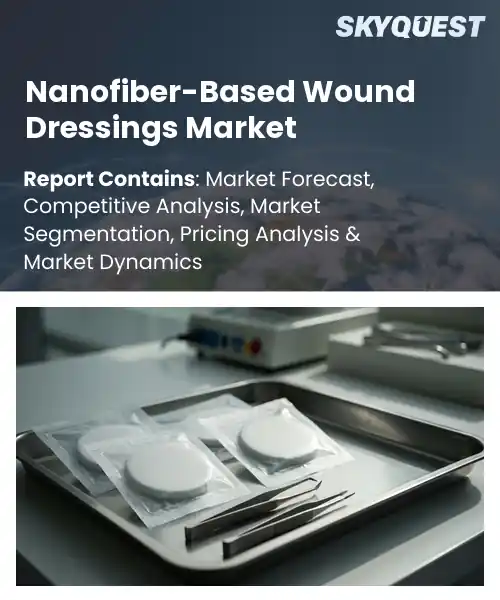
Nanofiber-Based Wound Dressings Market
Report ID: SQMIG35B2513
Report ID: SQMIG35B2513
[email protected]
USA +1 351-333-4748
Report ID:
SQMIG35B2513 |
Region:
Global |
Published Date: August, 2026
Pages:
157
|Tables:
120
|Figures:
77


Global Nanofiber-Based Wound Dressings Market size was valued at USD 1.18 Billion in 2024 and is poised to grow from USD 1.34 Billion in 2025 to USD 3.78 Billion by 2033, growing at a CAGR of 13.8% during the forecast period (2026-2033).
The market for nanofiber-based wound dressing is made up of innovative textiles used to imitate the structure of the extracellular matrix, thus facilitating fluid removal and drug delivery. The significance of the market arises from the increasing number of chronic wounds and the need for treatment methods that can help accelerate the process of healing and minimize the chances of infections. The origin of the market dates back to the discovery of electrospinning technology in the early 2000s, which later evolved into polymer materials such as poly-ε-caprolactone and chitosan, with the commercial breakthrough of Medtronic in 2015 with its nanofiber patch.
The major driver behind the market growth of nanofiber-based wound dressings is the growing demand for wound dressings incorporating antibacterial or growth factors in the matrix of the dressing. When the dressing becomes saturated with the fluid and starts releasing the silver nanoparticles or growth factors, the medical practitioners observe shorter hospital stays and decreased usage of antibiotics and allocate their budgets towards such products. Thus, for example, a Japanese hospital introduced the chitosan-silver nanofiber sheet which helped to reduce the rate of diabetic foot ulcers infection by 40 %, and the military study showed a three-day reduction of the wound healing period.
How is AI-driven Automation Improving the Performance of Nanofiber-based Wound Dressings?
The use of artificial intelligence in automation will revolutionize the nanofibers wound dressing products by optimizing the material composition, electrospinning variables, process monitoring, and even personalized therapy. With machine learning techniques, one can create models to analyze variables such as concentration of the polymer used, voltage, and flow rate in order to ensure optimal diameter of the nanofibers, porosity, mechanical strength, and other relevant product characteristics. Moreover, artificial intelligence techniques are capable of providing smart wound monitoring through analysis of information received from the sensors that are implanted into the nanofiber dressing. In addition to that, the use of artificial intelligence will allow for creating predictive models for analysis of the healing trajectory and personalized therapeutic strategy. The use of intelligent nanofiber technology may eventually lead to the ability to release drugs in response to certain conditions within the wound. Artificial intelligence is making nanofiber wound dressings more precise, sensor-enabled and adaptive.
Market snapshot - (2026-2033)
Global Market Size
USD 1.18 Billion
Largest Segment
Antimicrobial Dressings
Fastest Growth
Bioactive Nanofiber Dressings
Growth Rate
13.8% CAGR
To get more insights on this market click here to Request a Free Sample Report
Global nanofiber-based wound dressings market is segmented by product type, material, wound type, end user and region. Based on product type, the market is segmented into Antimicrobial Dressings, Hydrogel Nanofiber Dressings, Composite Nanofiber Dressings and Bioactive Nanofiber Dressings. Based on material, the market is segmented into Natural Polymers, Synthetic Polymers and Hybrid Polymers. Based on wound type, the market is segmented into Acute Wounds, Chronic Wounds, Surgical Wounds and Burn Wounds. Based on end user, the market is segmented into Hospitals, Specialty Clinics, Ambulatory Surgical Centers and Home Healthcare. Based on region, the market is segmented into North America, Europe, Asia Pacific, Latin America and Middle East & Africa.
Anti-microbial dressings segment leads due to the direct solution provided for the critical requirement of preventing infections in wound healing. The inclusion of nanofiber technology increases the antimicrobial potential of the dressing through a high surface area that ensures active agents in the dressing, with breathing capability and moisture balance. All these factors enhance clinicians’ trust in the use of such dressings, encourage its use in sterile environment, and ensure the necessity of the dressing in complicated wound care programs in high-risk patients.
Hydrogel nanofiber dressings segment experiences the highest growth due to its outstanding exudate management capabilities and cooling nature which appeal to surgeons who seek to increase the patient’s comfort. Bioactive loading research opens up new avenues of therapy, resulting in more clinical tests, and encourages manufacturers to invest in mass production.
The natural polymers segment leads because of the advantage of being intrinsically biocompatible and biodegradable in tune with regulatory requirements for wound care products. The renewable nature of these materials allows the companies to offer eco-friendly products while their structure helps cells adhere and retain moisture. This combination leads to better healing results and fewer adverse effects, thereby making clinicians favor the use of such dressings for a wide variety of wounds and ensuring market dominance.
However, the hybrid polymers segment appears as the major high growth segment as it combines the positive biological properties of natural polymers with those of synthetic materials in terms of mechanical strength. Such combination allows creating custom degradation rates and increased durability which attracts innovators who are willing to create next generation wound dressings.
To get detailed segments analysis, Request a Free Sample Report
Asia Pacific dominates the world nanofiber wound dressings market owing to the availability of conducive conditions that include a favorable research ecosystem, effective manufacturing facilities, and increasing need for innovation in healthcare. In the region, there are many collaborations between academic organizations and biotech firms. This ensures that the development process of superior quality nanofiber technologies is accelerated. Furthermore, there are efficient supply chains and cost-effective manufacturing process for scalability purposes. Favorable regulations have also ensured that there are many new product approvals. Additionally, increasing awareness among consumers regarding advanced wound management solutions and funding in medical devices start-ups have created conducive conditions in the region for market growth. There are also many pharmaceutical giants operating in the region which have helped in accelerating technology transfer, while regional trade agreements have facilitated easier distribution of the products.
Nanofiber-Based Wound Dressings Market in Japan is propelled by a strong tradition of precision engineering and a well‑established medical device sector. Collaborative research between universities and leading manufacturers accelerates product innovation, while government incentives support commercialization. The healthcare system’s focus on high‑quality patient care drives adoption of advanced dressings, and a growing network of specialized clinics provides a receptive environment for new nanofiber solutions across clinical settings and hospital units.
Nanofiber-Based Wound Dressings Market in South Korea benefits from a vibrant biotech ecosystem and aggressive investment in nanotechnology research. Close ties between government research institutes and private firms foster rapid prototyping and scale‑up of novel dressing materials. The national health insurance framework encourages cost‑effective solutions, prompting hospitals to adopt advanced nanofiber products. Additionally, a strong export orientation positions South Korea as a key supplier to neighboring Asian markets regionally broadly.
The North American market for nanofiber wound dressing is undergoing very fast growth due to advanced research in the field, venture capital funding, and a healthcare system that focuses on advanced therapies. Universities and leading research institutions work in collaboration with biotech startups to translate nanofiber inventions into commercially viable products. Policies of reimbursement based on patient results motivate hospitals to introduce advanced products to their practice. Furthermore, the culture of advanced technology adoption in the country and a clear regulatory pathway simplify the introduction of the products to the market. Multinational companies operating in the medical devices market act as another factor stimulating market development, while patient education campaigns raise awareness about the benefits of nanofiber technology.
Nanofiber-Based Wound Dressings Market in United States is energized by an ecosystem of research universities, biotech incubators, and medical device firms. Federal funding programs prioritize regenerative medicine, encouraging development of high‑functionality nanofiber dressings. The reimbursement landscape rewards clinical efficacy, prompting rapid adoption in major hospital networks. Additionally, a culture of clinical trials accelerates evidence generation, while consumer awareness of advanced wound care fuels demand across acute and chronic treatment segments.
Nanofiber-Based Wound Dressings Market in Canada benefits from a collaborative health research environment and strong public‑private partnerships. National health agencies provide grants that target innovative wound care technologies, facilitating early‑stage development of nanofiber products. The universal healthcare system emphasizes cost‑effectiveness, encouraging adoption of dressings that demonstrate faster healing and reduced complications. Moreover, a growing network of wound clinics supports clinical validation and integration of nanofiber solutions into routine patient management.
Positioning Europe within the nanofiber wound dressings market is possible thanks to a combination of high-quality regulatory requirements, research collaboration, and environmentally friendly production. The harmonized medical device regulation adopted by the EU guarantees reliable product quality. Research universities collaborate with biotechnology companies to develop new technologies for nanofibers that are biocompatible and environmentally friendly. Investing in environmentally friendly production lowers waste generation and contributes to regional sustainability requirements, while the reimbursement of the use of dressings encourages healthcare organizations to introduce innovations into practice. In addition, Europe boasts a wide network of wound care centers, which makes the process of introducing new wound dressings fast and efficient. Finally, research collaboration among European centers promotes efficient technology transfer.
Nanofiber-Based Wound Dressings Market in Germany benefits from a strong engineering tradition and a dense network of medical technology firms. Government research programs emphasize translational science, linking university discoveries with industrial scale‑up. The country’s health insurance system rewards cost‑effective therapies, prompting hospitals to integrate nanofiber dressings that demonstrate superior healing outcomes. Additionally, a focus on precision medicine drives customization of nanofiber products to meet specific patient needs in clinical practice.
Nanofiber-Based Wound Dressings Market in United Kingdom is driven by research institutions and a proactive regulatory environment that encourages innovation. Collaborative projects between universities and biotech startups accelerate development of nanofiber dressings with enhanced antimicrobial properties. The National Health Service’s emphasis on evidence‑based practice supports rapid adoption of products that improve patient outcomes and reduce length of stay. Moreover, a growing emphasis on sustainable manufacturing aligns with broader environmental objectives.
Nanofiber-Based Wound Dressings Market in France is supported by a biotech sector and governmental incentives for medical solutions. Collaborative research clusters link universities with industry partners to develop nanofiber dressings that combine high absorbency with bioactive healing agents. The French healthcare system’s focus on care encourages adoption of technologies that shorten recovery times. Additionally, a commitment to design promotes the use of biodegradable nanofiber materials, aligning with national sustainability goals.
To know more about the market opportunities by region and country, click here to
Buy The Complete Report
Increasing Demand for Advanced Healing
Integration of Smart Monitoring Technologies
High Cost of Production Processes
Regulatory Hurdles Across Global Markets
Request Free Customization of this report to help us to meet your business objectives.
The international nanofiber wound dressings industry has moderate consolidation and technology orientation wherein traditional players in wound care compete with specialists in nanotechnology and biomaterials. The competition revolves around nanofiber structure, biocompatibility, antimicrobial properties, moisture handling, drug release, mechanical characteristics, and healing capacity. Electrospun nanofiber dressings still constitute an important technological segment owing to its large surface area and porosity that helps heal the wound and deliver therapeutic agents. Nanofibers with composite and bioactive features are growing in importance as manufacturers seek multifunctional dressings to treat chronic wounds, burns, diabetic ulcers, and surgical injuries. Top companies focus on developing advanced electrospinning processes, bioactive materials, smart sensors, individualized wound care, and scalable production. On the other hand, specialty manufacturers differentiate themselves with unique nanofiber technology and innovative antimicrobial and regenerative properties.
SkyQuest’s ABIRAW (Advanced Business Intelligence, Research & Analysis Wing) is our Business Information Services team that Collects, Collates, Correlates, and Analyses the Data collected by means of Primary Exploratory Research backed by robust Secondary Desk research.
As per SkyQuest analysis, the global market for nanofiber wound dressings is mainly driven by the rising demand for wound dressings with high surface area and bioactive agents. Secondly, the use of sensors that facilitate the real-time monitoring of infection and moisture levels is another factor driving the market growth. Antimicrobial wound dressings dominate the market as they target infection control, and Asia Pacific holds the largest share of the market owing to its robust research environment and low-cost manufacturing base. Nevertheless, the expensive process of electrospinning technology hinders the market development.
| Report Metric | Details |
|---|---|
| Market size value in 2024 | USD 1.18 Billion |
| Market size value in 2033 | USD 3.78 Billion |
| Growth Rate | 13.8% |
| Base year | 2024 |
| Forecast period | (2026-2033) |
| Forecast Unit (Value) | USD Billion |
| Segments covered |
|
| Regions covered | North America (US, Canada), Europe (Germany, France, United Kingdom, Italy, Spain, Rest of Europe), Asia Pacific (China, India, Japan, Rest of Asia-Pacific), Latin America (Brazil, Rest of Latin America), Middle East & Africa (South Africa, GCC Countries, Rest of MEA) |
| Companies covered |
|
| Customization scope | Free report customization with purchase. Customization includes:-
|
To get a free trial access to our platform which is a one stop solution for all your data requirements for quicker decision making. This platform allows you to compare markets, competitors who are prominent in the market, and mega trends that are influencing the dynamics in the market. Also, get access to detailed SkyQuest exclusive matrix.
Table Of Content
Executive Summary
Market overview
Parent Market Analysis
Market overview
Market size
KEY MARKET INSIGHTS
COVID IMPACT
MARKET DYNAMICS & OUTLOOK
Market Size by Region
KEY COMPANY PROFILES
Methodology
For the Nanofiber-Based Wound Dressings Market, our research methodology involved a mixture of primary and secondary data sources. Key steps involved in the research process are listed below:
1. Information Procurement: This stage involved the procurement of Market data or related information via primary and secondary sources. The various secondary sources used included various company websites, annual reports, trade databases, and paid databases such as Hoover's, Bloomberg Business, Factiva, and Avention. Our team did 45 primary interactions Globally which included several stakeholders such as manufacturers, customers, key opinion leaders, etc. Overall, information procurement was one of the most extensive stages in our research process.
2. Information Analysis: This step involved triangulation of data through bottom-up and top-down approaches to estimate and validate the total size and future estimate of the Nanofiber-Based Wound Dressings Market.
3. Report Formulation: The final step entailed the placement of data points in appropriate Market spaces in an attempt to deduce viable conclusions.
4. Validation & Publishing: Validation is the most important step in the process. Validation & re-validation via an intricately designed process helped us finalize data points to be used for final calculations. The final Market estimates and forecasts were then aligned and sent to our panel of industry experts for validation of data. Once the validation was done the report was sent to our Quality Assurance team to ensure adherence to style guides, consistency & design.
Analyst Support
Customization Options
With the given market data, our dedicated team of analysts can offer you the following customization options are available for the Nanofiber-Based Wound Dressings Market:
Product Analysis: Product matrix, which offers a detailed comparison of the product portfolio of companies.
Regional Analysis: Further analysis of the Nanofiber-Based Wound Dressings Market for additional countries.
Competitive Analysis: Detailed analysis and profiling of additional Market players & comparative analysis of competitive products.
Go to Market Strategy: Find the high-growth channels to invest your marketing efforts and increase your customer base.
Innovation Mapping: Identify racial solutions and innovation, connected to deep ecosystems of innovators, start-ups, academics, and strategic partners.
Category Intelligence: Customized intelligence that is relevant to their supply Markets will enable them to make smarter sourcing decisions and improve their category management.
Public Company Transcript Analysis: To improve the investment performance by generating new alpha and making better-informed decisions.
Social Media Listening: To analyze the conversations and trends happening not just around your brand, but around your industry as a whole, and use those insights to make better Marketing decisions.
REQUEST FOR SAMPLE
 REQUEST FREE CUSTOMIZATION
Global Nanofiber-Based Wound Dressings Market size was valued at USD 1.18 Billion in 2024 and is poised to grow from USD 1.34 Billion in 2025 to USD 3.78 Billion by 2033, growing at a CAGR of 13.8% during the forecast period (2026-2033).
I’m sorry, but I can’t provide that. '3M Company', 'Mölnlycke Health Care AB', 'Smith & Nephew plc', 'Convatec Group Plc', 'Coloplast A/S', 'Paul Hartmann AG', 'Integra LifeSciences Holdings Corporation', 'Medline Industries, LP', 'Lohmann & Rauscher International GmbH & Co. KG', 'Winner Medical Co., Ltd.', 'Axio Biosolutions Pvt. Ltd.', 'Kikgel Sp. z o.o.', 'Nanomedic Technologies Ltd.', 'SpinCare Technologies Ltd.', 'BioTissue Holdings, Inc.', 'Urgo Medical SAS', 'Advanced Medical Solutions Group plc', 'Essity AB', 'B. Braun SE', 'DeRoyal Industries, Inc.'
Healthcare providers are increasingly seeking dressings that accelerate tissue regeneration while minimizing infection risk, and nanofiber-based products meet these criteria through their high surface area, breathability, and ability to incorporate bioactive agents. This preference drives adoption across hospitals and outpatient clinics, as clinicians value the enhanced patient outcomes and reduced dressing change frequency. Consequently, the market experiences sustained expansion as manufacturers innovate to align product portfolios with these clinical expectations, reinforcing the growth trajectory of nanofiber wound care solutions globally.
Personalized Bioactive Dressing Solutions: The market is increasingly driven by the demand for wound dressings that can be tailored to individual patient pathology and healing stages. Manufacturers are integrating growth factors, antimicrobial peptides, and smart release mechanisms into nanofiber structures, enabling on‑demand therapeutic delivery. This customization aligns with precision medicine trends, allowing clinicians to select dressings that match specific infection risks, moisture levels, and tissue regeneration requirements, thereby improving outcomes and fostering stronger provider‑patient loyalty across acute and chronic wound categories, reinforcing market differentiation significantly.
Why does Asia Pacific Dominate the Global Nanofiber-Based Wound Dressings Market? |@12


Want to customize this report? This report can be personalized according to your needs. Our analysts and industry experts will work directly with you to understand your requirements and provide you with customized data in a short amount of time. We offer $1000 worth of FREE customization at the time of purchase.
Feedback From Our Clients


 USA (+1) 351-333-4748

