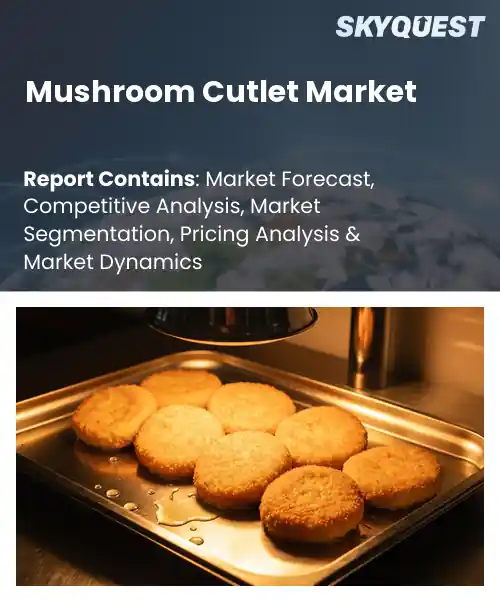
Mushroom Cutlet Market
Report ID: SQMIG30I3069
Report ID: SQMIG30I3069
[email protected]
USA +1 351-333-4748
Report ID:
SQMIG30I3069 |
Region:
Global |
Published Date: July, 2026
Pages:
157
|Tables:
151
|Figures:
78


Global Mushroom Cutlet Market size was valued at USD 119.6 Million in 2024 and is poised to grow from USD 128.93 Million in 2025 to USD 235.13 Million by 2033, growing at a CAGR of 7.8% during the forecast period (2026-2033).
The mushroom cutlet market has emerged as a niche within plant‑based protein segment, driven primarily by increasing consumer demand for sustainable alternatives to traditional meat patties. Over past decade, supply chains have expanded as growers adopt indoor cultivation techniques, enabling availability and consistent quality. This evolution has turned a boutique offering into mainstream product found in supermarkets across North America and Asia, underscoring growing relevance.
The dominant driver of the global mushroom cutlet market is the merging of health concerns with sustainability goals, which pushes retailers to substitute animal‑derived products with comparable alternatives. As consumers seek lower cholesterol, manufacturers emphasize the fiber and vitamin content of mushroom patties, prompting supermarkets to allocate shelf space previously occupied by chicken burgers. This shift yields cost efficiencies; indoor mushroom farms cut water use by up to 70 % versus livestock, enabling producers to price competitively with conventional meat. Consequently, chains are testing menu items featuring mushroom cutlets, using the ingredient’s fast cooking to keep service speed while signaling environmental stewardship.
How is AI-driven automation influencing product development in the mushroom cutlet market?
AI driven automation is reshaping how mushroom cutlets are created by linking data from ingredient sourcing to texture modeling. Algorithms analyze protein content and moisture to suggest optimal blends, while robotic mixers ensure consistent dough without human variation. Real time feedback loops adjust seasoning and binding agents as the product moves through pilot batches, shortening the time from concept to shelf. The market sees startups leveraging these tools to launch plant based alternatives that mimic meat texture, and larger producers are adopting the same systems to scale output while keeping flavor integrity. This blend of data and machinery makes development faster and more reliable.
Meati in June 2024, introduced an AI guided formulation platform that automates blend testing and scales production of mushroom cutlets with minimal waste. The system predicts texture outcomes and adjusts processing parameters instantly, accelerating launch cycles and supporting the market’s rapid expansion.
Market snapshot - (2026-2033)
Global Market Size
USD 119.6 Million
Largest Segment
Ready-to-Eat Mushroom Cutlets
Fastest Growth
Frozen Mushroom Cutlets
Growth Rate
7.8% CAGR
To get more insights on this market click here to Request a Free Sample Report
Global mushroom cutlet market is segmented by product type, mushroom type, distribution channel, end user, packaging type and region. Based on product type, the market is segmented into Frozen Mushroom Cutlets, Ready-to-Cook Mushroom Cutlets, Ready-to-Eat Mushroom Cutlets and Others. Based on mushroom type, the market is segmented into Button Mushroom, Oyster Mushroom, Shiitake Mushroom, Mixed Mushrooms and Others. Based on distribution channel, the market is segmented into Supermarkets & Hypermarkets, Convenience Stores, Online Retail, Foodservice and Others. Based on end user, the market is segmented into Household Consumers, Restaurants, Catering Services and Others. Based on packaging type, the market is segmented into Pouches, Trays, Boxes and Others. Based on region, the market is segmented into North America, Europe, Asia Pacific, Latin America and Middle East & Africa.
Ready-to-cook mushroom cutlets segment dominates with large mushroom cutlet market share because consumers value the convenience of minimal preparation while retaining a fresh‑cooked texture. This product type aligns with busy lifestyles, delivering a balance between raw ingredient handling and fully prepared meals. Its appeal is reinforced by easy storage, predictable cooking times, and versatility across household and foodservice kitchens, driving steady demand across channels. Additionally, manufacturers can incorporate varied mushroom blends, catering to flavor preferences and nutritional expectations, which further entrenches its market position.
As per mushroom cutlet market outlook, ready-to-eat mushroom cutlets segment is witnessing the strongest growth momentum because ready‑made, heat‑and‑serve formats cater to ultra‑convenient snacking and on‑the‑go meals. Emerging health‑focused consumers seek protein‑rich, plant‑based snacks, prompting manufacturers to innovate with cleaner labels and extended shelf‑life technologies that accelerate market expansion. across both retail and foodservice environments.
As per mushroom cutlet market forecast, supermarkets & hypermarkets segment dominates because they provide the broadest product assortment, enabling shoppers to compare price, quality, and packaging side by side. These retail formats benefit from high foot traffic, extensive shelf space, and effective promotional capabilities that keep mushroom cutlets visible to a diverse consumer base. Their established supply chains also ensure consistent replenishment, reinforcing trust and repeat purchases. Additionally, loyalty programs and in‑store sampling further drive trial and adoption among health‑conscious shoppers.
Meanwhile, online retail segment emerges as the key high‑growth area because digital platforms offer tailored discovery, subscription models, and rapid doorstep delivery that match modern purchasing habits. Enhanced data analytics enable personalized recommendations, while pandemic‑induced e‑commerce acceleration fuels trial of novel mushroom cutlet variants, expanding market reach among new customers.
To get detailed segments analysis, Request a Free Sample Report
Asia Pacific shows a confluence of deep culinary heritage that incorporates mushrooms into everyday dishes, providing a natural demand foundation for mushroom‑based products. Robust agricultural ecosystems supply high‑quality mushroom varieties, while advanced food‑processing capabilities enable cost‑effective conversion into cutlet formats. Consumer preferences in the region favor convenient, plant‑forward proteins, and strong distribution networks ensure widespread retail penetration. Additionally, sustained innovation in flavor profiles aligns with local taste palettes, reinforcing brand loyalty and encouraging repeat purchase. Collectively, these factors create a resilient ecosystem that sustains market leadership and drives continuous product evolution.
As per mushroom cutlet market regional outlook, Japan benefits from a long‑standing reverence for mushrooms as a nutritional staple, combined with a sophisticated snack culture that embraces ready‑to‑cook options. Domestic growers deliver premium varieties, while manufacturers focus on refined textures that meet exacting consumer expectations. Retail channels ranging from convenience stores to specialty aisles provide extensive accessibility, and ongoing research into umami‑rich formulations keeps the product relevant within a competitive landscape.
As per mushroom cutlet market regional forecast, South Korea is propelled by a strong tradition of mushroom consumption and a rapidly expanding interest in health‑conscious convenience foods. Local production capabilities ensure a steady supply of diverse mushroom species, while culinary innovators tailor seasoning blends to match Korean flavor preferences. The market is further reinforced by extensive grocery and online platforms that facilitate easy acquisition, and promotional strategies that highlight the protein‑rich, low‑fat attributes of mushroom cutlets.
Europe’s mushroom cutlet segment is energized by rising consumer awareness of sustainable diets and a shift toward plant‑based protein alternatives. Food‑tech firms are investing in scalable processing methods that preserve texture and flavor, while regulatory frameworks encourage clean‑label labeling that resonates with health‑focused shoppers. Culinary trends across the continent emphasize gourmet yet convenient options, creating demand in both premium and mainstream retail channels. Moreover, collaborative initiatives between growers and manufacturers foster supply chain resilience, allowing the market to respond swiftly to evolving taste and nutritional preferences across diverse European cuisines.
Germany is characterized by a strong emphasis on quality and functional nutrition, supported by a well‑established mushroom cultivation sector. Consumers appreciate the product’s protein content and its compatibility with traditional German dishes, prompting widespread adoption in supermarkets and specialty stores. Continuous product refinement, such as incorporating regional herbs, sustains consumer interest and solidifies the market’s dominant position.
United Kingdom is experiencing swift growth fueled by a vibrant plant‑based movement and increasing demand for convenient meal solutions. Retailers are expanding shelf space for mushroom‑based alternatives, and foodservice operators are integrating cutlets into innovative menu concepts. Consumer education campaigns highlighting environmental benefits further accelerate acceptance, positioning the market as a fast‑growing segment within the broader alternative protein landscape.
France is emerging as a niche yet promising segment, buoyed by sophisticated culinary traditions that value artisanal ingredients. French consumers are drawn to the delicate texture and earthy flavor of mushroom cutlets, which complement both classic and contemporary recipes. Gourmet retailers and boutique food outlets are championing the product, while chefs experiment with local mushroom varieties to create distinctive offerings, fostering gradual market expansion.
North America is reinforcing its mushroom cutlet presence through a blend of innovation, strategic partnerships, and consumer‑centric marketing. Food manufacturers are leveraging advanced extrusion technologies to achieve consistent bite‑size textures, while collaborations with growers secure reliable supply of diverse mushroom strains. Retail environments, from big‑box chains to online platforms, are allocating prominent shelf space, reflecting growing shopper interest in plant‑forward convenience foods. Nutritional messaging that underscores protein density and low cholesterol aligns with health‑oriented consumer narratives, encouraging trial and repeat purchase. This multifaceted approach is steadily elevating the region’s market relevance.
United States is driven by a dynamic consumer base that seeks convenient, protein‑rich options without animal involvement. Large‑scale production facilities enable broad distribution across grocery aisles and meal‑kit services, while innovative flavor launches cater to diverse regional palates. Marketing initiatives that emphasize sustainability and wellness resonate strongly, fostering brand loyalty and expanding market penetration.
Canada benefits from a strong environmental consciousness and a growing appetite for plant‑based alternatives. Domestic mushroom farms supply high‑quality raw material, and food processors focus on clean‑label formulations that appeal to health‑aware shoppers. Retail chains and natural food cooperatives provide extensive access, while culinary influencers promote versatile uses of mushroom cutlets in both home cooking and restaurant menus.
To know more about the market opportunities by region and country, click here to
Buy The Complete Report
Increasing Health Consciousness Drives Demand
Expansion Of Plant Based Cuisine
Supply Chain Disruptions Limit Availability
Higher Production Costs Reduce Profitability
Request Free Customization of this report to help us to meet your business objectives.
Competition in the mushroom cutlet segment is intensifying as innovators leverage mycelium processing, strategic partnerships and targeted funding to capture vegan and flexitarian demand. Meati’s 2024 launch of a mycelium‑based cutlet backed by a $60 million Series B and a national food‑service supply deal illustrates tech‑driven scaling. Pan’s 2025 entry, powered by a $30 million Series A and a distribution alliance with a European supermarket chain, shows how partnership networks accelerate market reach.
SkyQuest’s ABIRAW (Advanced Business Intelligence, Research & Analysis Wing) is our Business Information Services team that Collects, Collates, Correlates, and Analyses the Data collected by means of Primary Exploratory Research backed by robust Secondary Desk research.
As per SkyQuest analysis, the mushroom cutlet market growth is being propelled primarily by increasing health consciousness, as consumers seek low‑fat, protein‑rich alternatives that highlight mushrooms’ nutritional benefits. A second catalyst is the rapid expansion of plant‑based cuisine, which broadens applications and encourages retailers to allocate shelf space for these products. The ready‑to‑cook segment leads the market, offering convenience while preserving fresh‑cooked texture that appeals to busy households and foodservice operators. Asia Pacific dominates regionally, driven by strong mushroom consumption traditions, robust supply chains and growing demand for convenient plant‑forward proteins. However, supply‑chain disruptions pose a restraint, causing raw‑material shortages and affecting consistent product availability. The global mushroom cutlet market trend is driven by rising consumer preference for plant-based foods, increasing awareness of healthy eating habits, and growing demand for meat alternatives.
| Report Metric | Details |
|---|---|
| Market size value in 2024 | USD 119.6 Million |
| Market size value in 2033 | USD 235.13 Million |
| Growth Rate | 7.8% |
| Base year | 2024 |
| Forecast period | (2026-2033) |
| Forecast Unit (Value) | USD Million |
| Segments covered |
|
| Regions covered | North America (US, Canada), Europe (Germany, France, United Kingdom, Italy, Spain, Rest of Europe), Asia Pacific (China, India, Japan, Rest of Asia-Pacific), Latin America (Brazil, Rest of Latin America), Middle East & Africa (South Africa, GCC Countries, Rest of MEA) |
| Companies covered |
|
| Customization scope | Free report customization with purchase. Customization includes:-
|
To get a free trial access to our platform which is a one stop solution for all your data requirements for quicker decision making. This platform allows you to compare markets, competitors who are prominent in the market, and mega trends that are influencing the dynamics in the market. Also, get access to detailed SkyQuest exclusive matrix.
Table Of Content
Executive Summary
Market overview
Parent Market Analysis
Market overview
Market size
KEY MARKET INSIGHTS
COVID IMPACT
MARKET DYNAMICS & OUTLOOK
Market Size by Region
KEY COMPANY PROFILES
Methodology
For the Mushroom Cutlet Market, our research methodology involved a mixture of primary and secondary data sources. Key steps involved in the research process are listed below:
1. Information Procurement: This stage involved the procurement of Market data or related information via primary and secondary sources. The various secondary sources used included various company websites, annual reports, trade databases, and paid databases such as Hoover's, Bloomberg Business, Factiva, and Avention. Our team did 45 primary interactions Globally which included several stakeholders such as manufacturers, customers, key opinion leaders, etc. Overall, information procurement was one of the most extensive stages in our research process.
2. Information Analysis: This step involved triangulation of data through bottom-up and top-down approaches to estimate and validate the total size and future estimate of the Mushroom Cutlet Market.
3. Report Formulation: The final step entailed the placement of data points in appropriate Market spaces in an attempt to deduce viable conclusions.
4. Validation & Publishing: Validation is the most important step in the process. Validation & re-validation via an intricately designed process helped us finalize data points to be used for final calculations. The final Market estimates and forecasts were then aligned and sent to our panel of industry experts for validation of data. Once the validation was done the report was sent to our Quality Assurance team to ensure adherence to style guides, consistency & design.
Analyst Support
Customization Options
With the given market data, our dedicated team of analysts can offer you the following customization options are available for the Mushroom Cutlet Market:
Product Analysis: Product matrix, which offers a detailed comparison of the product portfolio of companies.
Regional Analysis: Further analysis of the Mushroom Cutlet Market for additional countries.
Competitive Analysis: Detailed analysis and profiling of additional Market players & comparative analysis of competitive products.
Go to Market Strategy: Find the high-growth channels to invest your marketing efforts and increase your customer base.
Innovation Mapping: Identify racial solutions and innovation, connected to deep ecosystems of innovators, start-ups, academics, and strategic partners.
Category Intelligence: Customized intelligence that is relevant to their supply Markets will enable them to make smarter sourcing decisions and improve their category management.
Public Company Transcript Analysis: To improve the investment performance by generating new alpha and making better-informed decisions.
Social Media Listening: To analyze the conversations and trends happening not just around your brand, but around your industry as a whole, and use those insights to make better Marketing decisions.
REQUEST FOR SAMPLE
 REQUEST FREE CUSTOMIZATION
Global Mushroom Cutlet Market size was valued at USD 119.6 Million in 2024 and is poised to grow from USD 128.93 Million in 2025 to USD 235.13 Million by 2033, growing at a CAGR of 7.8% during the forecast period (2026-2033).
Competition in the mushroom cutlet segment is intensifying as innovators leverage mycelium processing, strategic partnerships and targeted funding to capture vegan and flexitarian demand. Meati’s 2024 launch of a mycelium‑based cutlet backed by a $60 million Series B and a national food‑service supply deal illustrates tech‑driven scaling. Pan’s 2025 entry, powered by a $30 million Series A and a distribution alliance with a European supermarket chain, shows how partnership networks accelerate market reach. 'Dr. Oetker GmbH', 'McCain Foods Limited', 'Nomad Foods Limited', 'Conagra Brands, Inc.', 'The Kraft Heinz Company', 'Nestlé S.A.', 'Amy's Kitchen, Inc.', 'Haldiram Snacks Pvt. Ltd.', 'ITC Limited', 'Godrej Tyson Foods Limited', 'Beyond Meat, Inc.', 'The Vegetarian Butcher', 'Quorn Foods Ltd.', 'Greenyard NV', 'Bonduelle S.A.', 'Fry Family Food Co.', 'Strong Roots Ltd.', 'MTR Foods Pvt. Ltd.', 'Blue Tribe Foods Pvt. Ltd.', 'Imagine Meats'
Consumers are turning toward natural, low‑fat protein alternatives, and mushroom cutlets satisfy these preferences through their earthy flavor and nutritional profile. The perception of mushrooms as a source of vitamins, minerals, and dietary fiber reinforces their appeal, prompting retailers to allocate more shelf space. Restaurants seeking innovative menu items also incorporate mushroom cutlets to attract health‑aware diners, further amplifying exposure. This convergence of consumer attitudes and culinary experimentation fuels sustained interest and encourages manufacturers to expand product lines, thereby strengthening overall market momentum.
Plant-Based Protein Innovation: The mushroom cutlet is being positioned as a premium alternative to conventional meat, driven by consumer curiosity about novel plant‑based proteins. Brands are experimenting with texture‑enhancing processing techniques and flavor‑infusion methods that mimic familiar meat experiences while highlighting the umami richness of fungi. This focus on culinary authenticity is expanding trial rates among flexitarians and attracting chefs seeking sustainable menu options, thereby accelerating market acceptance beyond niche health circles and encouraging retailers to allocate dedicated shelf space for these products.
Why does Asia Pacific Dominate the Global Mushroom Cutlet Market? |@12


Want to customize this report? This report can be personalized according to your needs. Our analysts and industry experts will work directly with you to understand your requirements and provide you with customized data in a short amount of time. We offer $1000 worth of FREE customization at the time of purchase.
Feedback From Our Clients


 USA (+1) 351-333-4748

