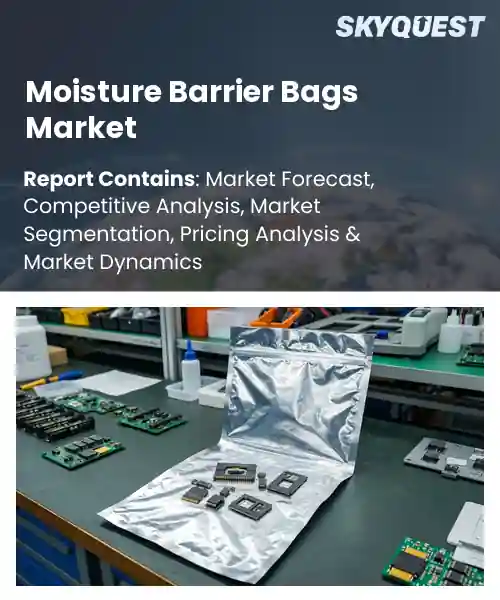
Moisture Barrier Bags Market
Report ID: SQMIG15H2248
Report ID: SQMIG15H2248
[email protected]
USA +1 351-333-4748
Report ID:
SQMIG15H2248 |
Region:
Global |
Published Date: July, 2026
Pages:
157
|Tables:
147
|Figures:
78


Global Moisture Barrier Bags Market size was valued at USD 1.48 Billion in 2024 and is poised to grow from USD 1.56 Billion in 2025 to USD 2.32 Billion by 2033, growing at a CAGR of 5.1% during the forecast period (2026-2033).
The global moisture‑barrier bag market comprises packaging designed to prevent water vapor transmission and protect sensitive goods such as pharmaceuticals, electronics, and food ingredients. Its significance stems from regulatory standards and rising consumer demand for product integrity, which have driven manufacturers to adopt multilayer films with laminates. Historically, the market emerged in the early 2000s as a niche solution for moisture‑sensitive drugs, but advances in coating technologies and the expansion of logistics have broadened its application base. For example, a leading pharmaceutical firm switched to barrier bags in 2018, reporting a 15% reduction in product spoilage, illustrating sector’s evolving relevance. Building on this foundation, growth catalyst for the moisture‑barrier bag market is the surge in demand for moisture‑sensitive products across pharmaceutical and electronics sectors. As manufacturers aim to extend shelf life and reduce warranty claims, they invest in barrier solutions incorporating scavenging layers, creating a link between packaging performance and cost savings. This dynamic fuels opportunities for innovators to develop bio‑based films that meet sustainability mandates while maintaining efficiency. For instance, a smartphone assembler adopted a barrier pouch in 2022, achieving a 12% decline in device failures linked to humidity, demonstrating how concerns, and profitability converge to expand the market.
How is AI-driven automation influencing the moisture barrier bags market?
AI‑driven automation is reshaping how moisture barrier bags are designed, produced and inspected. Machine‑learning models predict the optimal polymer blends to achieve superior barrier performance while minimizing material waste. Robotics streamline the sealing and cutting stages, delivering consistent quality at higher speeds. Real‑time vision systems catch defects instantly, reducing scrap and shortening cycle times. These technologies also enable rapid customization for niche applications, allowing manufacturers to respond swiftly to changing customer needs. As the market expands, the integration of AI tools is becoming a core differentiator for producers seeking efficiency and sustainability.In June 2026, a leading packaging firm launched an AI‑controlled production line that adjusts parameters on the fly, cutting setup time and boosting throughput, thereby reinforcing growth and operational efficiency in the moisture barrier bags sector
Market snapshot - (2026-2033)
Global Market Size
USD 1.48 Billion
Largest Segment
Aluminum Foil Layers
Fastest Growth
Nylon Polymers
Growth Rate
5.1% CAGR
To get more insights on this market click here to Request a Free Sample Report
Global moisture barrier bags market is segmented by material chemistry, structural lamination style, closure mechanism, volumetric size capacity, end-use target sector and region. Based on material chemistry, the market is segmented into Aluminum Foil Layers, Polyethylene Blends, Polyester Sheets, Nylon Polymers and Polypropylene Substrates. Based on structural lamination style, the market is segmented into Multi-Layer Laminates, Foil Laminates and Clear ESD Laminates. Based on closure mechanism, the market is segmented into Heat Sealable Bags and Zipper Closure Bags. Based on volumetric size capacity, the market is segmented into Small Size Packages, Medium Size Packages and Large Industrial Liners. Based on end-use target sector, the market is segmented into Electronics Hardware Protection, Pharmaceutical Packaging, Medical Devices Sterility Retention, Bulk Food Packaging and Chemical Specialty Storage. Based on region, the market is segmented into North America, Europe, Asia Pacific, Latin America and Middle East & Africa.
Aluminum foil layers segment dominates because its exceptional impermeability creates a reliable barrier against moisture, oxygen, and volatile compounds. This intrinsic property fulfills strict protection requirements for sensitive electronic components and pharmaceutical products. Manufacturers favor aluminum foil for its proven performance, thermal stability, and compatibility with various lamination techniques. Consequently, it becomes the preferred choice for high value applications where product integrity is non negotiable, driving its leadership in the moisture barrier bags market.
However, polyethylene blends segment is witnessing the strongest growth momentum as manufacturers leverage its flexibility, cost efficiency, and ease of heat sealing to meet rising demand for lightweight packaging. Innovations in blend formulations improve barrier performance, opening new applications in bulk food and chemical storage, thereby accelerating market expansion and creating fresh opportunities.
Heat sealable bags segment dominates because it provides a simple, reliable method to create airtight seals that protect contents from moisture ingress. The process integrates seamlessly into high speed production lines, reducing handling complexity and cost while ensuring consistent barrier performance. Its universal compatibility with diverse material chemistries makes it the go to choice for electronics, medical, and food packaging, reinforcing its leading position in the moisture barrier bags market.
Meanwhile, zipper closure bags segment emerges as the key high growth area as reusable packaging gains traction in sustainable supply chains. The reclosable feature enhances product convenience and extends shelf life, prompting adoption across medical devices and premium food applications. This functional advantage drives rapid market uptake and expands future revenue streams.
To get detailed segments analysis, Request a Free Sample Report
Asia Pacific leads the global moisture barrier bags market due to a combination of advanced manufacturing expertise, intense consumer demand for superior packaging, and supportive regulatory frameworks. The region benefits from extensive collaboration between academic institutions and industry, driving continuous innovation in barrier film structures and materials. Growth across pharmaceuticals, food, and electronics creates a persistent need for reliable moisture protection, prompting producers to scale capacity and adopt sustainable solutions. Regional trade agreements streamline cross‑border supply chains, enabling manufacturers to service neighboring markets efficiently. This blend of technical prowess, demand intensity, and logistical advantage positions Asia Pacific as the dominant hub for moisture barrier bag solutions.
Moisture Barrier Bags Market in Japan is shaped by a rigorous quality culture and a long history of precision engineering. Leading manufacturers integrate cutting‑edge polymer blends to meet stringent standards in the pharmaceutical and high‑tech sectors. Close collaboration with research institutes accelerates the development of ultra‑low permeation films, while consumer preference for premium packaging reinforces demand. Sustainability initiatives further drive the adoption of recyclable barrier solutions and also support circular economy goals.
Moisture Barrier Bags Market in South Korea benefits from strong government backing for advanced materials and a vibrant electronics manufacturing base. Domestic players leverage high‑tech polymer research to create films with exceptional barrier performance for displays and battery components. Close ties between conglomerates and specialty chemical firms accelerate product roll‑outs, while growing awareness of food safety drives demand in the consumer segment. Environmental regulations encourage shift toward reusable and bio‑based barrier solutions.
North America experiences rapid expansion in the moisture barrier bags market because of heightened focus on product integrity across food, pharmaceutical, and advanced technology sectors. Consumer expectations for freshness and safety compel manufacturers to adopt sophisticated barrier films that prevent degradation. Strong investment in research and development, particularly in sustainable polymer technologies, fuels continuous improvement of barrier performance. Regulatory frameworks emphasizing contamination control reinforce adoption of high‑quality packaging solutions. Additionally, the presence of major multinational packaging firms enables rapid scaling and integration of innovative materials across supply chains, reinforcing the region’s momentum.
Moisture Barrier Bags Market in the United States is driven by a large consumer base demanding premium freshness and safety in packaged foods. Major food processors collaborate with specialty film producers to integrate high barrier layers that extend shelf life. The pharmaceutical sector also requires stringent moisture protection for biologics, prompting adoption of advanced barrier solutions. Ongoing sustainability initiatives promote development of recyclable and compostable barrier films, aligning with corporate environmental commitments.
Moisture Barrier Bags Market in Canada reflects strong emphasis on food safety and emerging biotech applications. Canadian food manufacturers prioritize barrier technologies that preserve quality during extended distribution across vast geographic regions. The growing nutraceutical sector leverages moisture‑resistant packaging to protect sensitive ingredients. Collaborative research programs between universities and polymer firms accelerate the introduction of low‑permeability films, while environmental policies encourage the shift toward recyclable barrier solutions.
Europe strengthens its position in the moisture barrier bags market through a blend of stringent regulatory standards, robust innovation ecosystems, and a deep commitment to sustainability. The region’s strong pharmaceutical and premium food industries demand highly reliable barrier solutions, prompting continuous refinement of film technologies. Collaborative networks linking research institutes, chemical producers, and packaging converters accelerate the development of advanced barrier polymers and bio‑based alternatives. Environmental directives drive the adoption of recyclable and circular packaging models, while consumer preference for eco‑friendly products reinforces market growth. This integrated approach ensures Europe remains at the forefront of high‑performance, sustainable moisture barrier packaging.
Moisture Barrier Bags Market in Germany is characterized by a high degree of technical expertise and close integration with the automotive and electronics sectors. German manufacturers focus on developing ultra‑thin barrier films that meet demanding performance criteria for sensitive components. Partnerships with research universities foster rapid innovation in nanocomposite barrier materials. Strong environmental regulations also push manufacturers toward recyclable and renewable barrier solutions, aligning with the country’s broader sustainability agenda.
Moisture Barrier Bags Market in the United Kingdom benefits from a vibrant packaging design community and strong ties to the pharmaceutical and specialty food sectors. British firms emphasize barrier films that combine high performance with aesthetic appeal for premium product lines. Collaborative clusters linking material scientists, universities, and end‑users accelerate the translation of research into commercial barrier solutions. Environmental policies encourage the incorporation of recyclable polymers, reinforcing the market’s shift toward circular packaging strategies.
Moisture Barrier Bags Market in France is driven by a strong culinary tradition that values freshness and quality, as well as a robust pharmaceutical industry. French packaging companies invest heavily in barrier technologies that preserve organoleptic properties of gourmet foods while meeting strict safety standards. Collaborative initiatives between research labs and specialty chemical firms expedite the development of bio‑based barrier films. National sustainability goals further motivate the transition toward recyclable and compostable moisture barrier solutions across multiple product categories.
To know more about the market opportunities by region and country, click here to
Buy The Complete Report
Increasing Demand for Sustainable Packaging
Advancements in Barrier Film Technology
High Production Cost of Specialty Materials
Stringent Regulatory Compliance Requirements
Request Free Customization of this report to help us to meet your business objectives.
The moisture‑barrier bag market is shaped by intense competition among established packaging giants such as Amcor, Sealed Air and Berry Global, which are accelerating M&A activity—Amcor’s recent acquisition of Bemis to broaden its barrier film portfolio—and forming strategic alliances with sustainable‑material innovators. Parallelly, firms are investing in nanocoating technologies and bio‑based barrier films to meet retailer‑driven demand for longer shelf life and reduced plastic waste. These concrete moves are redefining cost structures and product differentiation across the sector.
Top Player’s Company Profile
Recent Developments
SkyQuest’s ABIRAW (Advanced Business Intelligence, Research & Analysis Wing) is our Business Information Services team that Collects, Collates, Correlates, and Analyses the Data collected by means of Primary Exploratory Research backed by robust Secondary Desk research. As per SkyQuest analysis, the global moisture barrier bags market is being propelled primarily by the rising demand for sustainable packaging as manufacturers seek recyclable or biodegradable barrier solutions to meet consumer and regulatory expectations. A second important catalyst is the rapid advancement in barrier film technology which delivers higher performance at lower weight and enables new applications across pharmaceuticals and electronics. The market is constrained by the high production cost of specialty multilayer materials that can deter price‑sensitive users. Asia Pacific leads the market, buoyed by strong manufacturing expertise and demand, while aluminum‑foil‑layer constructions remain the dominant segment due to their unmatched impermeability.
| Report Metric | Details |
|---|---|
| Market size value in 2024 | USD 1.48 Billion |
| Market size value in 2033 | USD 2.32 Billion |
| Growth Rate | 5.1% |
| Base year | 2024 |
| Forecast period | (2026-2033) |
| Forecast Unit (Value) | USD Billion |
| Segments covered |
|
| Regions covered | North America (US, Canada), Europe (Germany, France, United Kingdom, Italy, Spain, Rest of Europe), Asia Pacific (China, India, Japan, Rest of Asia-Pacific), Latin America (Brazil, Rest of Latin America), Middle East & Africa (South Africa, GCC Countries, Rest of MEA) |
| Companies covered |
|
| Customization scope | Free report customization with purchase. Customization includes:-
|
To get a free trial access to our platform which is a one stop solution for all your data requirements for quicker decision making. This platform allows you to compare markets, competitors who are prominent in the market, and mega trends that are influencing the dynamics in the market. Also, get access to detailed SkyQuest exclusive matrix.
Table Of Content
Executive Summary
Market overview
Parent Market Analysis
Market overview
Market size
KEY MARKET INSIGHTS
COVID IMPACT
MARKET DYNAMICS & OUTLOOK
Market Size by Region
KEY COMPANY PROFILES
Methodology
For the Moisture Barrier Bags Market, our research methodology involved a mixture of primary and secondary data sources. Key steps involved in the research process are listed below:
1. Information Procurement: This stage involved the procurement of Market data or related information via primary and secondary sources. The various secondary sources used included various company websites, annual reports, trade databases, and paid databases such as Hoover's, Bloomberg Business, Factiva, and Avention. Our team did 45 primary interactions Globally which included several stakeholders such as manufacturers, customers, key opinion leaders, etc. Overall, information procurement was one of the most extensive stages in our research process.
2. Information Analysis: This step involved triangulation of data through bottom-up and top-down approaches to estimate and validate the total size and future estimate of the Moisture Barrier Bags Market.
3. Report Formulation: The final step entailed the placement of data points in appropriate Market spaces in an attempt to deduce viable conclusions.
4. Validation & Publishing: Validation is the most important step in the process. Validation & re-validation via an intricately designed process helped us finalize data points to be used for final calculations. The final Market estimates and forecasts were then aligned and sent to our panel of industry experts for validation of data. Once the validation was done the report was sent to our Quality Assurance team to ensure adherence to style guides, consistency & design.
Analyst Support
Customization Options
With the given market data, our dedicated team of analysts can offer you the following customization options are available for the Moisture Barrier Bags Market:
Product Analysis: Product matrix, which offers a detailed comparison of the product portfolio of companies.
Regional Analysis: Further analysis of the Moisture Barrier Bags Market for additional countries.
Competitive Analysis: Detailed analysis and profiling of additional Market players & comparative analysis of competitive products.
Go to Market Strategy: Find the high-growth channels to invest your marketing efforts and increase your customer base.
Innovation Mapping: Identify racial solutions and innovation, connected to deep ecosystems of innovators, start-ups, academics, and strategic partners.
Category Intelligence: Customized intelligence that is relevant to their supply Markets will enable them to make smarter sourcing decisions and improve their category management.
Public Company Transcript Analysis: To improve the investment performance by generating new alpha and making better-informed decisions.
Social Media Listening: To analyze the conversations and trends happening not just around your brand, but around your industry as a whole, and use those insights to make better Marketing decisions.
REQUEST FOR SAMPLE
 REQUEST FREE CUSTOMIZATION


Want to customize this report? This report can be personalized according to your needs. Our analysts and industry experts will work directly with you to understand your requirements and provide you with customized data in a short amount of time. We offer $1000 worth of FREE customization at the time of purchase.
Feedback From Our Clients


 USA (+1) 351-333-4748

