Mobile-phone Triaxial Stabilizer Market
Report ID: SQMIG45J2910
Report ID: SQMIG45J2910
[email protected]
USA +1 351-333-4748
Report ID:
SQMIG45J2910 |
Region:
Global |
Published Date: September, 2026
Pages:
157
|Tables:
144
|Figures:
78


Global Mobile-Phone Triaxial Stabilizer Market size was valued at USD 1.73 Billion in 2024 and is poised to grow from USD 1.85 Billion in 2025 to USD 3.13 Billion by 2033, growing at a CAGR of 6.8% during the forecast period (2026-2033).
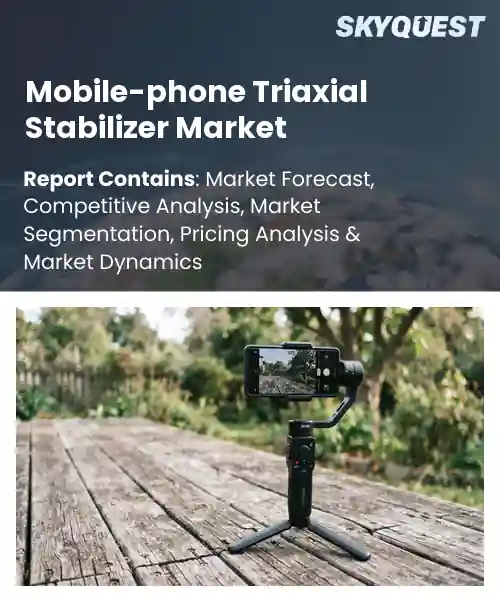
The mobile‑phone triaxial stabilizer market consists of hardware and software solutions that keep a smartphone’s camera level along roll, pitch, and yaw axes while recording video. Its relevance stems from the explosion of user‑generated content, where shaky footage can diminish perceived professionalism and hinder platform algorithms. The market emerged in the early 2010s as manufacturers bundled micro‑electromechanical gyroscopes with firmware corrections, but it accelerated after 2018 when social media platforms prioritized short‑form vertical video. For example, the introduction of sensor‑shift optical image stabilization in flagship devices sparked a surge in third‑party gimbal sales, illustrating how consumer demand drives market expansion. A decisive factor propelling growth is the convergence of advanced sensor arrays with AI algorithms that deliver motion correction without bulky hardware. As 5G lowers latency, creators stream stabilized footage from phones, prompting platforms such as TikTok and Instagram to embed stabilization presets. This creates a feedback loop: better software fuels demand for higher‑grade sensors, encouraging chipset makers to integrate multi‑axis gyros at lower cost. Real‑world examples include the DJI Osmo Mobile 6, which pairs a smartphone with a gimbal, and the iPhone 15 Pro Max, whose sensor‑shift OIS reduces reliance on rigs, opening opportunities for gaming and video conferencing.
How is AI-driven automation influencing the mobile-phone triaxial stabilizer market?
AI-driven automation is reshaping the mobile‑phone triaxial stabilizer market by embedding real‑time perception and decision‑making directly into the gimbal’s control loop. Machine‑learning models analyse gyroscope data, scene depth and facial landmarks to predict motion, allowing smoother pan, tilt and roll corrections with minimal latency. Manufacturers now offer automatic subject tracking, horizon lock and gesture‑based start‑stop functions that adapt to each user’s hand tremor profile. The trend is also accelerating integration with smartphone AI processors, reducing the need for external hardware and extending battery life. As creators demand cinematic quality from pocket‑size devices, AI‑enhanced gimbals are becoming a standard accessory for vloggers, journalists and enterprise field teams.In September 2023, Insta360 released the Flow smartphone gimbal, adding AI‑based object tracking and predictive stabilization that automatically adjusts each axis as the user moves. The feature cuts setup time and improves smoothness, demonstrating how AI automation drives faster adoption and higher efficiency in the market.
Market snapshot - (2026-2033)
Global Market Size
USD 1.73 Billion
Largest Segment
Handheld Gimbals
Fastest Growth
Wearable Stabilizers
Growth Rate
6.8% CAGR
To get more insights on this market click here to Request a Free Sample Report
Global mobile-phone triaxial stabilizer market is segmented by stabilizer type, stabilization technology, control type, application, distribution channel and region. Based on stabilizer type, the market is segmented into Handheld Gimbals, Wearable Stabilizers and Smartphone Stabilizer Rigs. Based on stabilization technology, the market is segmented into Three-Axis Gimbal Stabilization and Electronic Image Stabilization. Based on control type, the market is segmented into Manual, App-Controlled and AI-Assisted. Based on application, the market is segmented into Photography, Videography, Live Streaming and Social Media Content Creation. Based on distribution channel, the market is segmented into Specialty Electronics Stores, Online Retail and Direct Sales. Based on region, the market is segmented into North America, Europe, Asia Pacific, Latin America and Middle East & Africa.
Handheld Gimbals segment dominates because they provide intuitive physical handling that aligns with creators’ need for precise framing and smooth motion. The mechanical axes deliver reliable stabilization across diverse shooting conditions, fostering trust among professional and enthusiast users. Their portability and ergonomic design simplify on the go setups, encouraging widespread adoption in spontaneous content creation. Consequently manufacturers prioritize feature upgrades and accessory ecosystems, reinforcing market leadership and continuous innovation.
However, Wearable Stabilizers segment emerges as the fastest growing because creators seek hands free operation that integrates stabilization into body movements. Advances in motor design and battery efficiency enable longer recording sessions without compromising comfort. This freedom fuels adoption in live streaming and on location shoots, expanding market reach and prompting partnership models.
App Controlled segment leads because it offers intuitive touch interfaces that sync directly with smartphones, allowing creators to adjust pan, tilt, and roll without additional hardware. Real time feedback and customizable presets streamline workflow, reducing setup time and learning curve. Integration with popular editing apps further enhances value, driving widespread preference among both hobbyists and professional videographers. This seamless connectivity fuels continuous demand and encourages manufacturers to embed advanced firmware capabilities.
Meanwhile, AI Assisted segment emerges as the fastest growing because machine learning algorithms automatically detect motion patterns and apply predictive corrections, delivering smoother footage with minimal user input. Software updates introduce shooting modes, attracting creators seeking cutting edge performance. This capability expands market appeal to content platforms, accelerating adoption and opening revenue streams for developers.
To get detailed segments analysis, Request a Free Sample Report
The dominance of Asia Pacific stems from a convergence of advanced manufacturing ecosystems, robust consumer appetite for high‑performance imaging, and a culture of rapid technology adoption. Leading semiconductor fabs and precision engineering hubs provide cost‑effective yet sophisticated components that underpin triaxial stabilization solutions. Simultaneously, smartphone manufacturers in the region prioritize cutting‑edge camera capabilities as key differentiators, driving intensive integration of stabilization technology. Strong research collaborations between device makers and component specialists accelerate innovation cycles, while extensive distribution networks ensure swift market penetration across diverse consumer segments. This blend of manufacturing excellence, consumer demand, and collaborative innovation creates a self‑reinforcing environment that places Asia Pacific at the forefront of the global market.
Mobile-phone Triaxial Stabilizer Market in Japan benefits from a deep heritage of precision optics and a consumer base that values photographic excellence. Domestic manufacturers integrate sophisticated stabilization modules to meet high expectations for low‑light performance and video smoothness. Close partnerships between hardware providers and software developers foster seamless integration, while a vibrant ecosystem of startups contributes niche enhancements that keep the market dynamic and forward‑looking.
Mobile-phone Triaxial Stabilizer Market in South Korea is propelled by a fiercely competitive smartphone landscape that champions cutting‑edge camera functionalities. Industry leaders invest heavily in proprietary stabilization algorithms and compact hardware designs, ensuring that devices deliver professional‑grade video capture. The country's strong semiconductor sector supplies high‑quality gyroscopes and actuators, while aggressive marketing of premium imaging features fuels consumer enthusiasm and rapid adoption across multiple device tiers.
Europe’s rapid expansion is driven by a combination of heightened consumer expectations for cinematic mobile content, stringent quality standards, and strategic emphasis on differentiated camera experiences. Leading OEMs across the continent prioritize integration of triaxial stabilization to meet regulatory expectations for device performance and to satisfy media‑savvy users. Collaborative research initiatives between automotive, aerospace, and consumer electronics sectors generate cross‑industry innovations that enhance sensor accuracy and reliability. Moreover, a mature retail environment and strong brand loyalty encourage manufacturers to embed premium stabilization features as core selling points, reinforcing Europe’s position as a vibrant growth hub for this technology.
Mobile-phone Triaxial Stabilizer Market in Germany thrives on a robust engineering tradition and a consumer base that demands precision and durability. Domestic smartphone brands leverage German expertise in sensor technology to embed highly responsive stabilization modules. Collaborative projects between research institutes and component manufacturers drive continual refinement of motion‑compensation algorithms, ensuring that devices deliver consistently smooth footage across a range of shooting conditions.
Mobile-phone Triaxial Stabilizer Market in United Kingdom experiences accelerated growth due to a vibrant creative community that heavily utilizes mobile video for content creation. Brands respond by offering advanced stabilization solutions that support fast‑paced, on‑the‑go filming. Partnerships with academic centers foster rapid prototyping of innovative actuator designs, while a dynamic market of app developers adds software layers that enhance the perceived smoothness of captured media.
Mobile-phone Triaxial Stabilizer Market in France is emerging as a focal point for artistic and lifestyle applications, with a consumer culture that values aesthetic quality and ease of use. French tech firms integrate compact stabilization units that complement minimalist design trends, while collaborations with fashion and media sectors highlight the technology’s role in visual storytelling. Growing awareness of creative possibilities drives steady adoption among younger demographics.
North America strengthens its position through a blend of technology leadership, extensive venture capital support, and a media‑driven consumer environment that prizes high‑definition video capture. Leading device manufacturers invest heavily in in‑house research to push the boundaries of stabilization performance, while an ecosystem of suppliers delivers cutting‑edge actuation and sensor solutions. The region’s strong focus on software integration enhances real‑time motion correction, and a proliferation of content platforms fuels demand for smoother mobile footage. Collaborative initiatives between academia, defense research, and consumer electronics further accelerate the translation of advanced stabilization concepts into commercially viable products, cementing North America’s role as an innovation hub.
Mobile-phone Triaxial Stabilizer Market in United States is characterized by aggressive innovation cycles and extensive collaborations between smartphone giants and specialized component firms. The market benefits from a strong startup culture that launches novel actuator designs and AI‑driven stabilization algorithms. Consumer enthusiasm for high‑quality social media video propels manufacturers to integrate increasingly sophisticated stabilization packages, reinforcing a cycle of continual product enhancement.
Mobile-phone Triaxial Stabilizer Market in Canada gains momentum through close ties with research institutions focusing on sensor accuracy and low‑power actuator technologies. Domestic manufacturers adopt these advancements to deliver reliable stabilization in diverse climatic conditions, appealing to a market that values both performance and durability. Strategic partnerships with North American supply chains ensure access to high‑quality components, supporting steady growth.
To know more about the market opportunities by region and country, click here to
Buy The Complete Report
Increasing Demand for Stable Imaging
Advancements in Miniaturized Gyro Technology
High Cost of Precision Components
Limited Battery Life Compatibility
Request Free Customization of this report to help us to meet your business objectives.
Intense competition in the mobile‑phone triaxial stabilizer market drives rapid innovation, with major players accelerating M&A and strategic alliances. DJI’s acquisition of gimbal‑sensor maker gForce in 2023 and its partnership with Samsung to embed actuator technology exemplify this trend, while Zhiyun’s joint venture with Xiaomi accelerates integrated hardware solutions, intensifying pressure on emerging entrants.
Top Player’s Company Profile
Recent Developments
SkyQuest’s ABIRAW (Advanced Business Intelligence, Research & Analysis Wing) is our Business Information Services team that Collects, Collates, Correlates, and Analyses the Data collected by means of Primary Exploratory Research backed by robust Secondary Desk research. As per SkyQuest analysis the global mobile‑phone triaxial stabilizer market is being propelled primarily by the rising demand for stable, high‑resolution imaging on smartphones, while a second important catalyst is the rapid advancement of miniaturized gyroscope technology that enables compact, three‑axis correction without adding bulk. The market is led by handheld gimbals, which dominate because they deliver intuitive physical control and reliable motion smoothing for creators. Asia Pacific remains the dominant region thanks to its strong manufacturing base, tech‑savvy consumers and aggressive smartphone innovation. However, the high cost of precision components continues to restrain broader adoption, especially in price‑sensitive segments and limit growth potential.
| Report Metric | Details |
|---|---|
| Market size value in 2024 | USD 1.73 Billion |
| Market size value in 2033 | USD 3.13 Billion |
| Growth Rate | 6.8% |
| Base year | 2024 |
| Forecast period | (2026-2033) |
| Forecast Unit (Value) | USD Billion |
| Segments covered |
|
| Regions covered | North America (US, Canada), Europe (Germany, France, United Kingdom, Italy, Spain, Rest of Europe), Asia Pacific (China, India, Japan, Rest of Asia-Pacific), Latin America (Brazil, Rest of Latin America), Middle East & Africa (South Africa, GCC Countries, Rest of MEA) |
| Companies covered |
|
| Customization scope | Free report customization with purchase. Customization includes:-
|
To get a free trial access to our platform which is a one stop solution for all your data requirements for quicker decision making. This platform allows you to compare markets, competitors who are prominent in the market, and mega trends that are influencing the dynamics in the market. Also, get access to detailed SkyQuest exclusive matrix.
Table Of Content
Executive Summary
Market overview
Parent Market Analysis
Market overview
Market size
KEY MARKET INSIGHTS
COVID IMPACT
MARKET DYNAMICS & OUTLOOK
Market Size by Region
KEY COMPANY PROFILES
Methodology
For the Mobile-phone Triaxial Stabilizer Market, our research methodology involved a mixture of primary and secondary data sources. Key steps involved in the research process are listed below:
1. Information Procurement: This stage involved the procurement of Market data or related information via primary and secondary sources. The various secondary sources used included various company websites, annual reports, trade databases, and paid databases such as Hoover's, Bloomberg Business, Factiva, and Avention. Our team did 45 primary interactions Globally which included several stakeholders such as manufacturers, customers, key opinion leaders, etc. Overall, information procurement was one of the most extensive stages in our research process.
2. Information Analysis: This step involved triangulation of data through bottom-up and top-down approaches to estimate and validate the total size and future estimate of the Mobile-phone Triaxial Stabilizer Market.
3. Report Formulation: The final step entailed the placement of data points in appropriate Market spaces in an attempt to deduce viable conclusions.
4. Validation & Publishing: Validation is the most important step in the process. Validation & re-validation via an intricately designed process helped us finalize data points to be used for final calculations. The final Market estimates and forecasts were then aligned and sent to our panel of industry experts for validation of data. Once the validation was done the report was sent to our Quality Assurance team to ensure adherence to style guides, consistency & design.
Analyst Support
Customization Options
With the given market data, our dedicated team of analysts can offer you the following customization options are available for the Mobile-phone Triaxial Stabilizer Market:
Product Analysis: Product matrix, which offers a detailed comparison of the product portfolio of companies.
Regional Analysis: Further analysis of the Mobile-phone Triaxial Stabilizer Market for additional countries.
Competitive Analysis: Detailed analysis and profiling of additional Market players & comparative analysis of competitive products.
Go to Market Strategy: Find the high-growth channels to invest your marketing efforts and increase your customer base.
Innovation Mapping: Identify racial solutions and innovation, connected to deep ecosystems of innovators, start-ups, academics, and strategic partners.
Category Intelligence: Customized intelligence that is relevant to their supply Markets will enable them to make smarter sourcing decisions and improve their category management.
Public Company Transcript Analysis: To improve the investment performance by generating new alpha and making better-informed decisions.
Social Media Listening: To analyze the conversations and trends happening not just around your brand, but around your industry as a whole, and use those insights to make better Marketing decisions.
REQUEST FOR SAMPLE
 REQUEST FREE CUSTOMIZATION


Want to customize this report? This report can be personalized according to your needs. Our analysts and industry experts will work directly with you to understand your requirements and provide you with customized data in a short amount of time. We offer $1000 worth of FREE customization at the time of purchase.
Feedback From Our Clients


 USA (+1) 351-333-4748

