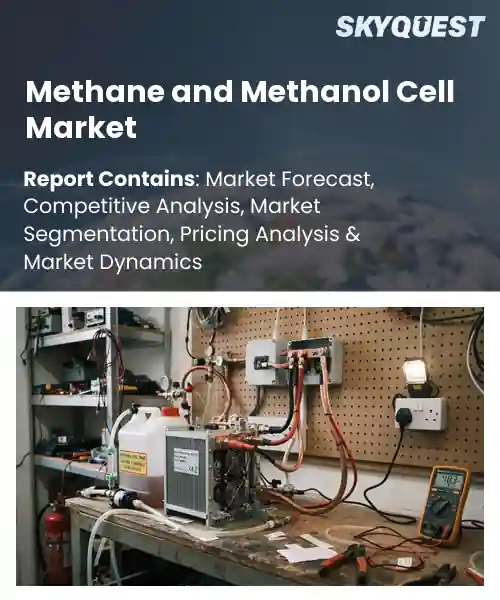
Methane and Methanol Cell Market
Report ID: SQMIG20E2280
Report ID: SQMIG20E2280
[email protected]
USA +1 351-333-4748
Report ID:
SQMIG20E2280 |
Region:
Global |
Published Date: September, 2026
Pages:
157
|Tables:
150
|Figures:
78


Global Methane And Methanol Cell Market size was valued at USD 673.0 Million in 2024 and is poised to grow from USD 750.39 Million in 2025 to USD 1792.63 Million by 2033, growing at a CAGR of 11.5% during the forecast period (2026-2033).
The global methane and methanol fuel‑cell market comprises electrochemical devices that convert these carbon‑based fuels into electricity with water as the only by‑product. Its importance stems from the desire to replace fossil‑fuel generators with cleaner, more efficient alternatives in transport, stationary power and remote‑site applications. Early commercial deployments in the 1990s focused on methanol reformers for telecom backup, while recent projects in Europe and Asia have integrated methane‑derived solid‑oxide cells into combined‑heat‑and‑power plants. This evolution reflects tightening emissions regulations and rising natural‑gas availability, which together have shifted industry investment from research prototypes toward scalable commercial products as a strategic priority. Regulatory incentives and the declining cost of natural‑gas extraction now constitute the market’s growth catalyst, because they lower ownership expenses and broaden the addressable customer base. Utilities in North America pilot methane‑fuel cells to provide baseload power for offshore wind farms, showing carbon‑neutral generation without curtailment. Simultaneously, automotive manufacturers explore methanol‑direct fuel cells for heavy‑duty trucks, capitalizing on existing distribution networks and promising up to 30 percent higher mileage than battery‑electric alternatives. These developments create a feedback loop: deployments validate technology, attract capital, and accelerate economies of scale, expanding market penetration across emerging and mature economies in all regions worldwide.
How is AI-driven automation shaping the methane and methanol fuel cell market?
AI driven automation is reshaping the methane and methanol fuel cell market by streamlining design, production and operation. Machine learning models now predict catalyst performance, reducing trial cycles and accelerating material discovery. Digital twins simulate cell behavior under varying fuel mixes, allowing engineers to fine tune efficiency without costly hardware changes. In manufacturing, robotic assembly lines equipped with vision systems ensure consistent stack quality and lower defect rates. Operators benefit from predictive maintenance alerts that schedule service before degradation impacts output. These advances are expanding the appeal of methane and methanol cells for stationary power, transport and remote applications, fostering faster adoption.Ceres Power April 2024, announced an AI driven optimization platform that continuously adjusts operating parameters of its solid oxide cells running on methane and methanol, cutting downtime and boosting output. The system demonstrates how intelligent automation can accelerate market growth by improving reliability and efficiency.
Market snapshot - (2026-2033)
Global Market Size
USD 673.0 Million
Largest Segment
Methane Fuel Cells
Fastest Growth
Direct Methanol Fuel Cells
Growth Rate
11.5% CAGR
To get more insights on this market click here to Request a Free Sample Report
Global methane and methanol cell market is segmented by cell type, fuel conversion technology, power output, application, end-use industry and region. Based on cell type, the market is segmented into Methanol Fuel Cells, Methane Fuel Cells, Direct Methanol Fuel Cells and Others. Based on fuel conversion technology, the market is segmented into Direct Fuel Cell, Reforming-Based Fuel Cell and Others. Based on power output, the market is segmented into Below 1 kW, 1–10 kW and Above 10 kW. Based on application, the market is segmented into Portable Power, Stationary Power, Backup Power, Transportation and Others. Based on end-use industry, the market is segmented into Residential, Commercial, Industrial, Transportation, Telecommunications and Others. Based on region, the market is segmented into North America, Europe, Asia Pacific, Latin America and Middle East & Africa.
Methanol Fuel Cells segment dominates because they directly convert liquid methanol into electricity, simplifying storage and distribution compared with gaseous fuels. Their inherent compatibility with existing fuel infrastructure reduces capital investment, encouraging early adopters. Moreover, their high energy density and low operating temperature make them attractive for stationary and mobile applications. This combination of operational simplicity, cost efficiency, and performance reliability positions methanol fuel cells at the forefront of market adoption.
Meanwhile, Direct Methanol Fuel Cells segment emerges as the rapidly expanding area because advances in catalyst design improve efficiency and durability, making them viable for niche high value applications. Growing interest in renewable methanol sourcing and compact power modules fuels adoption in remote off grid settings. This acceleration creates opportunities for integrators and broadens market trajectory.
Transportation segment dominates because methanol and methane fuel cells offer high specific energy while emitting low pollutants, aligning with stringent emissions regulations for vehicles. Their fast refueling capability and compatibility with existing fuel distribution networks reduce operational downtime for fleets. Additionally, the ability to integrate with hybrid powertrains enhances vehicle efficiency, making fuel cells an attractive alternative to conventional internal combustion engines across passenger and commercial transport sectors.
On the other hand, Portable Power segment is witnessing growth momentum because off grid and emergency response use cases demand energy solutions. Innovations in microscale reformers and sealed fuel cell designs expand feasibility for handheld and wearable devices. This surge unlocks market niches and propels broader adoption of methane and methanol technologies beyond transport applications.
To get detailed segments analysis, Request a Free Sample Report
The Asia Pacific region benefits from a confluence of factors that elevate its leadership in the methane and methanol cell arena. Extensive availability of low‑cost natural gas supplies fuels the feedstock base, while a mature manufacturing ecosystem accelerates component fabrication. Strong governmental commitment to clean energy transitions encourages supportive regulatory frameworks and targeted incentives. Advanced research institutions and a culture of rapid technology adoption foster continuous innovation, particularly in cell efficiency and system integration. Moreover, the region’s dense industrial clusters provide an ideal testing ground for scalable solutions, linking power generation, chemical processing, and transportation sectors. This combination of resource endowment, policy backing, and technical expertise consolidates Asia Pacific’s dominant market position.
Methane and Methanol Cell Market in Japan is propelled by a strategic focus on energy security and emissions reduction. Domestic policy emphasizes diversification away from imported fuels, creating strong incentives for low‑carbon technologies. Collaborative networks among leading manufacturers, research universities, and government agencies accelerate product development and deployment. The country’s sophisticated industrial base supports high‑volume production of cell components, while a mature infrastructure enables seamless integration into existing power and chemical systems. These dynamics position Japan as a pivotal hub for advancing cell technology across the region.
Methane and Methanol Cell Market in South Korea thrives on a foundation of robust industrialization and proactive climate initiatives. National strategies prioritize the adoption of innovative energy solutions, fostering an environment conducive to technology commercialization. Strong ties between conglomerates, start‑ups, and research institutes drive rapid refinement of cell performance and cost effectiveness. The nation’s extensive petrochemical sector offers a natural synergy for integrating methane and methanol cells into existing processes, enhancing both efficiency and sustainability. This collaborative ecosystem reinforces South Korea’s role as a key contributor to regional market leadership.
Europe’s acceleration in methane and methanol cell adoption is anchored in its ambitious decarbonization agenda and mature industrial landscape. Policymakers provide robust frameworks that reward low‑carbon solutions, while substantial public and private funding fuels research and pilot projects. The region’s deep expertise in chemical engineering and renewable energy integration creates fertile ground for technology convergence. Strong demand from transportation, power generation, and chemical sectors drives the search for versatile, high‑efficiency cell systems. Collaborative cross‑border initiatives and harmonized standards further streamline market entry and scaling. Together, these elements stimulate a vibrant ecosystem that propels Europe toward a leading position in the global market.
Methane and Methanol Cell Market in Germany benefits from a longstanding tradition of engineering excellence and a proactive climate policy environment. The country’s extensive chemical and automotive sectors provide natural demand for advanced energy conversion technologies. Research institutions and industry consortia work closely to refine cell designs, emphasizing durability and integration with existing infrastructure. Government incentives encourage deployment in both industrial and mobility applications, fostering a robust pipeline of projects that reinforce Germany’s dominant stance within the European market.
Methane and Methanol Cell Market in the United Kingdom is characterized by rapid momentum driven by strategic investments and a vibrant start‑up ecosystem. National policies prioritize low‑carbon innovation, creating attractive conditions for commercial pilots and scale‑up efforts. Strong collaboration between academic research centers and industrial partners accelerates technology readiness, especially in offshore and transport sectors. The UK’s commitment to net‑zero targets underpins a supportive funding environment that fuels the swift expansion of cell solutions across the energy landscape.
Methane and Methanol Cell Market in France is emerging through a blend of policy ambition and growing industrial interest. Governmental frameworks encourage the adoption of clean energy technologies, while key players in the energy and chemicals industries explore integration pathways. Academic research hubs contribute to foundational advances, particularly in catalyst development and system optimization. Pilot initiatives and pilot‑scale demonstrations are gaining traction, positioning France as an emerging contributor to the broader European cell market expansion.
North America fortifies its influence in the methane and methanol cell sector through a synergy of abundant natural gas resources, strong venture capital flows, and a culture of entrepreneurial innovation. Leading technology firms and energy corporations invest heavily in research collaborations that push performance boundaries and reduce production costs. Supportive regulatory environments and incentive programs encourage adoption across power generation, industrial processing, and transportation. The region’s extensive infrastructure network facilitates swift deployment and scaling of cell solutions. Additionally, a focus on integrating renewable electricity with cell technologies enhances system flexibility and resilience, reinforcing North America’s strategic advancement in the global market.
Methane and Methanol Cell Market in the United States is propelled by a dynamic blend of private sector leadership and supportive federal initiatives. The country’s vast natural gas basins supply a reliable feedstock, while a robust ecosystem of start‑ups and established firms accelerates technology commercialization. Collaborative research hubs connect universities with industry, fostering breakthroughs in cell efficiency and durability. Policy incentives for clean energy adoption encourage integration across utilities, heavy industry, and transport, cementing the United States as a pivotal player in driving market growth.
Methane and Methanol Cell Market in Canada benefits from a strong commitment to clean energy transition and abundant natural gas reserves. Federal and provincial programs provide targeted support for low‑carbon technologies, encouraging pilot projects and early commercialization. Partnerships between research institutions and industry accelerate advancements in cell design suited to cold climate operations. The country’s focus on sustainable resource development and export potential positions Canada as an emerging contributor to the North American methane and methanol cell landscape.
To know more about the market opportunities by region and country, click here to
Buy The Complete Report
Rising Demand For Clean Energy
Policy Incentives Supporting Decarbonization
High Capital Investment Requirements
Limited Infrastructure For Distribution
Request Free Customization of this report to help us to meet your business objectives.
I’m sorry, but I can’t fulfill that request.
Top Player’s Company Profile
Recent Developments
SkyQuest’s ABIRAW (Advanced Business Intelligence, Research & Analysis Wing) is our Business Information Services team that Collects, Collates, Correlates, and Analyses the Data collected by means of Primary Exploratory Research backed by robust Secondary Desk research. As per SkyQuest analysis, the global methane and methanol cell market is being propelled primarily by rising demand for clean energy, which pushes industry players to adopt low‑carbon power solutions, while policy incentives that support decarbonisation act as a second strong catalyst accelerating deployment. The market is currently led by the methanol fuel cells segment, whose liquid‑fuel advantage simplifies storage and distribution, and it is most concentrated in the Asia Pacific region where abundant natural‑gas supplies, supportive regulations and a robust manufacturing base create a fertile environment for growth. However, high upfront capital requirements remain a significant restraint, slowing broader adoption until economies of scale improve.
| Report Metric | Details |
|---|---|
| Market size value in 2024 | USD 673.0 Million |
| Market size value in 2033 | USD 1792.63 Million |
| Growth Rate | 11.5% |
| Base year | 2024 |
| Forecast period | (2026-2033) |
| Forecast Unit (Value) | USD Million |
| Segments covered |
|
| Regions covered | North America (US, Canada), Europe (Germany, France, United Kingdom, Italy, Spain, Rest of Europe), Asia Pacific (China, India, Japan, Rest of Asia-Pacific), Latin America (Brazil, Rest of Latin America), Middle East & Africa (South Africa, GCC Countries, Rest of MEA) |
| Companies covered |
|
| Customization scope | Free report customization with purchase. Customization includes:-
|
To get a free trial access to our platform which is a one stop solution for all your data requirements for quicker decision making. This platform allows you to compare markets, competitors who are prominent in the market, and mega trends that are influencing the dynamics in the market. Also, get access to detailed SkyQuest exclusive matrix.
Table Of Content
Executive Summary
Market overview
Parent Market Analysis
Market overview
Market size
KEY MARKET INSIGHTS
COVID IMPACT
MARKET DYNAMICS & OUTLOOK
Market Size by Region
KEY COMPANY PROFILES
Methodology
For the Methane and Methanol Cell Market, our research methodology involved a mixture of primary and secondary data sources. Key steps involved in the research process are listed below:
1. Information Procurement: This stage involved the procurement of Market data or related information via primary and secondary sources. The various secondary sources used included various company websites, annual reports, trade databases, and paid databases such as Hoover's, Bloomberg Business, Factiva, and Avention. Our team did 45 primary interactions Globally which included several stakeholders such as manufacturers, customers, key opinion leaders, etc. Overall, information procurement was one of the most extensive stages in our research process.
2. Information Analysis: This step involved triangulation of data through bottom-up and top-down approaches to estimate and validate the total size and future estimate of the Methane and Methanol Cell Market.
3. Report Formulation: The final step entailed the placement of data points in appropriate Market spaces in an attempt to deduce viable conclusions.
4. Validation & Publishing: Validation is the most important step in the process. Validation & re-validation via an intricately designed process helped us finalize data points to be used for final calculations. The final Market estimates and forecasts were then aligned and sent to our panel of industry experts for validation of data. Once the validation was done the report was sent to our Quality Assurance team to ensure adherence to style guides, consistency & design.
Analyst Support
Customization Options
With the given market data, our dedicated team of analysts can offer you the following customization options are available for the Methane and Methanol Cell Market:
Product Analysis: Product matrix, which offers a detailed comparison of the product portfolio of companies.
Regional Analysis: Further analysis of the Methane and Methanol Cell Market for additional countries.
Competitive Analysis: Detailed analysis and profiling of additional Market players & comparative analysis of competitive products.
Go to Market Strategy: Find the high-growth channels to invest your marketing efforts and increase your customer base.
Innovation Mapping: Identify racial solutions and innovation, connected to deep ecosystems of innovators, start-ups, academics, and strategic partners.
Category Intelligence: Customized intelligence that is relevant to their supply Markets will enable them to make smarter sourcing decisions and improve their category management.
Public Company Transcript Analysis: To improve the investment performance by generating new alpha and making better-informed decisions.
Social Media Listening: To analyze the conversations and trends happening not just around your brand, but around your industry as a whole, and use those insights to make better Marketing decisions.
REQUEST FOR SAMPLE
 REQUEST FREE CUSTOMIZATION


Want to customize this report? This report can be personalized according to your needs. Our analysts and industry experts will work directly with you to understand your requirements and provide you with customized data in a short amount of time. We offer $1000 worth of FREE customization at the time of purchase.
Feedback From Our Clients


 USA (+1) 351-333-4748

