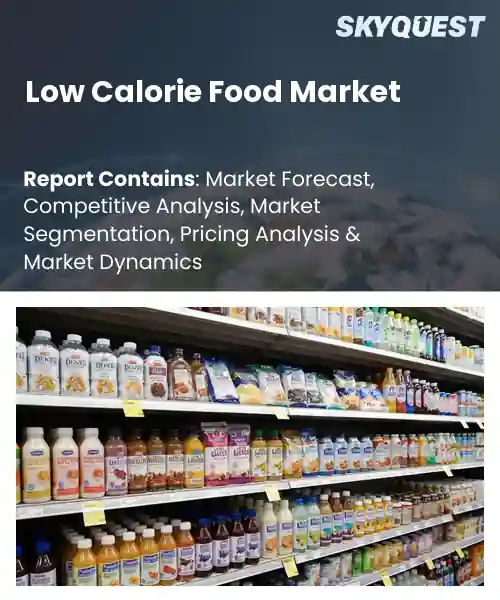
Low Calorie Food Market
Report ID: SQMIG30I2940
Report ID: SQMIG30I2940
[email protected]
USA +1 351-333-4748
Report ID:
SQMIG30I2940 |
Region:
Global |
Published Date: June, 2026
Pages:
157
|Tables:
152
|Figures:
80


Global Low Calorie Food Market size was valued at USD 27.6 Billion in 2024 and is poised to grow from USD 28.65 Billion in 2025 to USD 38.61 Billion by 2033, growing at a CAGR of 3.8% during the forecast period (2026-2033).
The primary motivation for the rise of the low calorie food industry is that of heightened health consciousness, since the occurrence of health problems like obesity and diabetes are becoming common among customers. Low calorie foods include innovations in the food, drinks, and snacks industry aimed at reducing caloric intake. These developments have become vital due to the high cost of poor public health, government involvement, and stiff competition in retail businesses which makes the invention of low calorie foods crucial. Various trends have emerged in the industry, among them being the inclusion of calories in menus, using stevia as a substitute for sugar, and low calorie protein bars.
As a consequence of this general acceptance, innovative ingredients will play a vital role in driving growth because it is only with their help that low-calorie foods will resemble more of traditional foods and therefore become acceptable to consumers. In this instance, acceptance leads to higher assortment by retailers and restaurants of low-calories food on their menus. This in turn motivates manufacturers to reformulate their products and reduce costs. Real examples of growth possibilities would be meal kits offering low-calories meals according to calories needs, therapeutic low-calories meals under hospital agreements, and e-commerce advice regarding low-calories foods.
How is AI Optimizing Product Development in the Low-Calorie Food Market?
AI is helping the low-calorie food industry by blending consumer-driven insights from data analysis with predictive formulations and virtual sensory simulation. Some major aspects include quick testing of ingredients, virtual match of flavors and textures, and automatic optimization of recipes in order to maintain the original taste but reduce the calorie intake. Presently, several startups and big players within the food industry are using machine learning techniques to eliminate the need for repeated trials within the lab setting and align their product lines with the shifting consumer trends towards low-calorie foods. This is an effort to keep up with rising consumer demands for healthier snacks and beverages without compromising the taste experience.
Market snapshot - (2026-2033)
Global Market Size
USD 27.6 Billion
Largest Segment
Low-Calorie Beverages
Fastest Growth
Low-Calorie Snacks
Growth Rate
3.8% CAGR
To get more insights on this market click here to Request a Free Sample Report
Global low calorie food market is segmented by product type, ingredient type, distribution channel, consumer group, end user and region. Based on product type, the market is segmented into Low-Calorie Snacks, Low-Calorie Beverages, Low-Calorie Dairy Products, Low-Calorie Bakery & Confectionery, Low-Calorie Ready Meals, Low-Calorie Sweeteners and Others. Based on ingredient type, the market is segmented into Natural Ingredients, Artificial Ingredients, Plant-Based Ingredients and Sugar Substitutes. Based on distribution channel, the market is segmented into Supermarkets & Hypermarkets, Convenience Stores, Specialty Stores, Online Retail and Foodservice Channels.
Based on consumer group, the market is segmented into Weight Management Consumers, Diabetic Consumers, Fitness & Lifestyle Consumers and General Health-Conscious Consumers. Based on end user, the market is segmented into Household Consumers, Restaurants & Cafes and Corporate & Institutional Buyers. Based on region, the market is segmented into North America, Europe, Asia Pacific, Latin America and Middle East & Africa.
The Low-Calorie Snacks segment is currently dominant since there is consumer demand for snacks that will not sabotage dietary efforts but still fulfill their hunger and appetite pangs. The producers in this category use the approach of product reformulation and taste creation in order to keep the snack products appetizing, yet reduced in calorie content. As such, the segment enjoys high availability and repeated trials from shoppers, thus making it an essential stepping stone to other low-calorie products.
However, the fast-growing product type at the moment is Low-Calorie Ready Meals. It seems like the demand for such products is continuously growing because consumers want meals that will be both convenient and healthy. There are improvements in taste and texture of these meals, as well as innovative meal and chilled/freezing technologies, which make usage occasions and retail shelf availability increase.
Natural Ingredients category prevails since clean labels and safety concerns prompt rethinking and use of more natural and easily recognizable ingredients for product formulation. The health and mouthfeel benefits offered through the use ofextracts from plants or foods, fibers, etc. provide an effective marketing tool used by brands to attract consumers’ attention and convince them of buying the products. Retailers and marketers use the origins of ingredients and simplicity of formulas as a basis for the unique value offer and positioning of the products in the premium tier within the category.
Meanwhile, the category of Plant-Based Ingredients shows the strongest growth rates due to the fact that the ingredients are used to enrich food with proteins and increase satiety levels. Innovations in the field of plant proteins are expanding their application prospects, and many new products are being developed.
To get detailed segments analysis, Request a Free Sample Report
Dominance in North America is based on a long history of consumer interest in well-being, advanced retail and foodservice systems, and high-level expertise in food sciences and ingredients sourcing. Big retailers and foodservice chains offer the advantages of scale and reliable distribution channels for newly developed products of lower caloric content, while the manufacturers spend money on sensory research to compensate for taste shortcomings that traditionally hampered product acceptance. Collaboration between ingredients providers, co-packers, and product developers facilitates innovation and launch speed. Advanced marketing skills, strong performance in the field of private labeling, and omnichannel distribution capabilities enhance market penetration. Labeling guidelines and an established culture of well-being help to keep consumer interest at a high level.
The Low Calorie Food Market in the United States has seen rapid innovation in formulating, flavor masking, and texturizing in order to fulfill taste demands without increasing calories. Product visibility is achieved through national grocery stores and multiple web platforms, and large food service companies integrate lower-calorie products in their regular menu. The combined efforts of ingredient suppliers and brand marketers have resulted in a variety of functional and multi-purpose solutions.
Canadian Low Calorie Food Market demonstrates the high importance consumers place on the clean formulation of their food products and ethically sourced ingredients. Regional retail companies and regional food service organizations develop localized innovations, and specialized producers bring niche products targeting the health-conscious audience. Suppliers help brands customize functionality according to taste profiles, while collaborations expedite the market introduction process.
Fast-growing trends in Europe can be explained by the convergence of factors such as consumers' health consciousness, the efforts of retailers to promote health through formulation changes, and the presence of advanced infrastructure for innovation in food. The large pan-European retailers and private label companies advocate for low-calorie products, which stimulates the creation of ingredients with multiple functionalities and which provide sensory benefits. Different customer groups appreciate issues of provenance, naturalness, and equivalent taste, which promotes premiumization and segmentation next to mainstream offerings. Distribution activities cross-border and e-commerce accelerate the entry process into the market, while cooperation between manufacturers and science helps to adapt global innovations to local cuisine.
German Low-Calorie Food Market enjoys an advantage owing to its highly advanced manufacturing techniques and consumers' heightened interest in nutritional values and origins of the ingredients used in products. The retail sector and private label manufacturers are pushing the need for reformulating foods and clean labels, which forces suppliers to develop functional ingredients that do not sacrifice taste and consistency. Joint efforts by food technologists and the food industry make innovations suitable for local preferences.
United Kingdom Low Calorie Food Market will thrive because of the demand from consumers for easy-to-consume, healthy and tasty low-calorie foods. Nimble companies create innovative products which are liked by health conscious younger consumers. Feedback through retail sales and marketing allows quick improvements. Marketing creates a balance between the taste level and nutritional information provided in the marketing material. Consumption in cities and robust retail network ensure popularity.
Market for Low Calorie Foods in France is influenced by a rich culture of gastronomy that puts a premium on flavor and quality ingredients but allows for health concerns. Reformulation that sustains the unique character of the foodstuff by incorporating premium ingredients is a key strategy adopted by manufacturers to attract selective customers. Hybrid foods that merge the indulgent nature of foods with low calorie content come from specialty stores and pastry categories.
Asias Pacific region continues to build its market strength through innovative cooking techniques, adaptation to changing consumer demands, and investment in technology in both ingredients and processing. With urbanization trends and busy lifestyles, there is the need for innovative food products that have low-calorie value but still retain regional flavors. There are thriving startup communities and existing brands that work together to innovate global ingredient solutions while utilizingdifferent retail avenues and robust e-commerce structures to make the products available to urban and regional customers. The influence of digital marketing and interest in preventive health further drive the uptake of low-calorie products.
In Low Calorie Food Market of Japan, there is an intense culture of product development, wherein the focus is on developing products through perfecting the texture, umami balance, and portion control. Traditional food producers and start-ups team up to use technologies for fiber fortification and fermentation techniques that preserve the flavor of the food. The convenience factor enables easy consumption of these foods and high culinary standards ensure their acceptance.
South Korea Low Calorie Food Market
Market for Low Calorie Foods in South Korea has been developed by means of cooking innovations and convenience culture. The use of sophisticated ingredient technology by manufacturers to create mouthwatering low-calorie sauces, instant foods, and drinks according to regional tastes has led to faster consumer trials through influencer trends, along with fast-moving retail platforms like convenience stores and e-commerce. This focus on keeping flavors intense makes for better consumer adoption of the product range.
To know more about the market opportunities by region and country, click here to
Buy The Complete Report
Rising Health Consciousness Among Consumers
Awareness of the importance of dietary concerns and an increasing trend towards prevention-oriented wellness on the side of consumers is leading to a growing need for low calorie food items. In response, the producers develop a range of low calorie foods, redesign their recipes to maintain the taste and texture of foods, and promote benefits associated with managing weight and metabolism. Consumers see increased shelf presence and availability of low calorie foods, which leads to greater acceptability of such products.
Innovation in Sugar Substitute Technologies
Developments in sweetener technology have provided manufacturers with an ability to develop products that mimic the taste properties of sugar, but which contribute lesser calories to the end products. This technological capability facilitatesgreater applications of low-calorie sweeteners in drinks, snack foods, and even processed foods. The developments have allowed for lower sensory compromises that were earlier encountered when attempting to manufacture lower calorie products. With greater technical possibilities being achieved, food producers are increasingly inclined towards producing low calorie versions of existing products and new products.
Regulatory Labeling and Claims Complexity
The complexity of regulations in terms of approval of ingredients, health claims, and nutritional labeling raises concerns for companies that want to establish low calorie foods. In different regions, there are various regulations, requiring manufacturers to tailor their approach on ingredients, packaging, and even advertising to comply with various standards, thus delaying launch and hindering the idea of launching globally. Documentation, reformulation, and making sure claims are valid all contribute to this, increasing the risk involved, especially for small companies.
High Costs of Natural Sweeteners
The premium pricing associated with some natural low-calorie sweeteners add significantly to the production costs and makes cost-efficient re-formulations difficult for food producers, especially those who are concentrating on offering value-based products. Additional input costs would mean that there is room for compromise in terms of ingredients sourcing, margins, and even focus on premium ranges rather than expanding their product lines. Consumers might also resist higher costs, thus making it more difficult to achieve wide availability of these healthier products.
Request Free Customization of this report to help us to meet your business objectives.
The competitive forces at work in the global market for low-calorie foods are due to reformulation needs, new sweetener scale-ups, and increased brand consolidation. This is evidenced by the takeover of Halo Top by Wells Enterprises, enzyme collaborations for allulose industrialization, and the use of digital therapeutics that incorporate low-calorie meals into weight loss programs.
Health-Conscious Formulations: With rising consumer preference for low-calorie food that tastes indulgent and is texturally familiar while fulfilling their health objectives, companies have started to redesign their products with alternate ingredients, less sugar content, and more fibers or protein content to keep customers feeling full. The development team focuses on clean labeling, sensory parity, and brand loyalty, while the R&D team looks for ways of using new technologyand innovative ingredient synergies to scale up production.
Plant Based Functional Ingredients: Brands have begun using proteins, fibers, enzymes, and botanical extracts from plants in their products for increased satiety, better mouth feel, and shelf stability, and to meet the ethos of ethical and sustainability. Botanical concentrates and fermented ingredients are being used by ingredient companies to achieve functionality and at the same time does not compromise on the taste profile of the food. This leads to cross-industrycollaboration between ingredients, manufacturers, processing companies, and retailers, and to premiumization of reduced calorie products and good consumer stories.
SkyQuest’s ABIRAW (Advanced Business Intelligence, Research & Analysis Wing) is our Business Information Services team that Collects, Collates, Correlates, and Analyses the Data collected by means of Primary Exploratory Research backed by robust Secondary Desk research.
As per SkyQuest analysis, health awareness serves as one of the critical drivers driving the demand for low-calorie products as consumers and producers look for ways to manage their weight and metabolism. The development of sugar alternatives technology is another driver that has been fueling the market through innovations that allow for more enjoyable and better-tasting alternatives. One significant factor restraining the market is the issue of labeling as it delays launches into other markets and increases costs. In terms of geographic dominance, North America continues to lead the market, and the dominating product category includes low-calorie snacks.
| Report Metric | Details |
|---|---|
| Market size value in 2024 | USD 27.6 Billion |
| Market size value in 2033 | USD 38.61 Billion |
| Growth Rate | 3.8% |
| Base year | 2024 |
| Forecast period | (2026-2033) |
| Forecast Unit (Value) | USD Billion |
| Segments covered |
|
| Regions covered | North America (US, Canada), Europe (Germany, France, United Kingdom, Italy, Spain, Rest of Europe), Asia Pacific (China, India, Japan, Rest of Asia-Pacific), Latin America (Brazil, Rest of Latin America), Middle East & Africa (South Africa, GCC Countries, Rest of MEA) |
| Companies covered |
|
| Customization scope | Free report customization with purchase. Customization includes:-
|
To get a free trial access to our platform which is a one stop solution for all your data requirements for quicker decision making. This platform allows you to compare markets, competitors who are prominent in the market, and mega trends that are influencing the dynamics in the market. Also, get access to detailed SkyQuest exclusive matrix.
Table Of Content
Executive Summary
Market overview
Parent Market Analysis
Market overview
Market size
KEY MARKET INSIGHTS
COVID IMPACT
MARKET DYNAMICS & OUTLOOK
Market Size by Region
KEY COMPANY PROFILES
Methodology
For the Low Calorie Food Market, our research methodology involved a mixture of primary and secondary data sources. Key steps involved in the research process are listed below:
1. Information Procurement: This stage involved the procurement of Market data or related information via primary and secondary sources. The various secondary sources used included various company websites, annual reports, trade databases, and paid databases such as Hoover's, Bloomberg Business, Factiva, and Avention. Our team did 45 primary interactions Globally which included several stakeholders such as manufacturers, customers, key opinion leaders, etc. Overall, information procurement was one of the most extensive stages in our research process.
2. Information Analysis: This step involved triangulation of data through bottom-up and top-down approaches to estimate and validate the total size and future estimate of the Low Calorie Food Market.
3. Report Formulation: The final step entailed the placement of data points in appropriate Market spaces in an attempt to deduce viable conclusions.
4. Validation & Publishing: Validation is the most important step in the process. Validation & re-validation via an intricately designed process helped us finalize data points to be used for final calculations. The final Market estimates and forecasts were then aligned and sent to our panel of industry experts for validation of data. Once the validation was done the report was sent to our Quality Assurance team to ensure adherence to style guides, consistency & design.
Analyst Support
Customization Options
With the given market data, our dedicated team of analysts can offer you the following customization options are available for the Low Calorie Food Market:
Product Analysis: Product matrix, which offers a detailed comparison of the product portfolio of companies.
Regional Analysis: Further analysis of the Low Calorie Food Market for additional countries.
Competitive Analysis: Detailed analysis and profiling of additional Market players & comparative analysis of competitive products.
Go to Market Strategy: Find the high-growth channels to invest your marketing efforts and increase your customer base.
Innovation Mapping: Identify racial solutions and innovation, connected to deep ecosystems of innovators, start-ups, academics, and strategic partners.
Category Intelligence: Customized intelligence that is relevant to their supply Markets will enable them to make smarter sourcing decisions and improve their category management.
Public Company Transcript Analysis: To improve the investment performance by generating new alpha and making better-informed decisions.
Social Media Listening: To analyze the conversations and trends happening not just around your brand, but around your industry as a whole, and use those insights to make better Marketing decisions.
REQUEST FOR SAMPLE
 REQUEST FREE CUSTOMIZATION
Global Low Calorie Food Market size was valued at USD 27.6 Billion in 2024 and is poised to grow from USD 28.65 Billion in 2025 to USD 38.61 Billion by 2033, growing at a CAGR of 3.8% during the forecast period (2026-2033).
Competitive dynamics in the global low calorie food market are driven by reformulation demand, novel sweetener scale up, and intensified brand consolidation, prompting acquisitions, ingredient partnerships, and product tech convergence. Examples include Wells Enterprises acquisition of Halo Top, enzyme partnerships to industrialize allulose, and digital therapeutics integrating low calorie meal programs for clinical weight management, reshaping shelf and direct to consumer competition. 'Habitual: Established in 2019, their main objective is to deliver clinically informed low calorie, nutritionally complete meal programs combined with a digital therapeutics platform that induces rapid weight loss and supports type two diabetes remission while embedding behavioral change for long term maintenance. Recent development: the company scaled its subscription and meal replacement services, integrated supervised GLP 1 medication access into care pathways, and closed additional seed funding to expand UK and direct to consumer operations.', 'Ambrosia Bio: Established in 2020, their main objective is to industrialize enzyme driven bioprocesses that convert common sugars into low calorie rare sugars such as allulose, enabling food formulators to replace sucrose and reduce calories while retaining taste and texture. Recent development: the company emerged from stealth, partnered with Ginkgo Bioworks to optimize production enzymes, secured strategic backing and began pilot ingredient supply to manufacturers seeking sugar reduced formulations for retail and foodservice channels.', 'Nestlé S.A.', 'Danone S.A.', 'The Kraft Heinz Company', 'Conagra Brands, Inc.', 'General Mills, Inc.', 'Kellogg Company (Kellanova)', 'PepsiCo, Inc.', 'The Coca-Cola Company', 'Unilever PLC', 'Mars, Incorporated', 'Mondelez International, Inc.', 'Ajinomoto Co., Inc.', 'Hain Celestial Group, Inc.', 'Ingredion Incorporated', 'Amy's Kitchen, Inc.', 'McNeil Nutritionals LLC', 'Nature’s Path Foods Inc.', 'Glanbia plc', 'Simply Good Foods Co.', 'Hero Group'
Rising awareness of diet-related health issues and a broader consumer shift toward preventive wellbeing are encouraging demand for foods with reduced calorie content. Manufacturers respond by expanding low calorie portfolios, reformulating recipes to preserve taste and texture, and marketing benefits tied to weight management and metabolic health. Retailers increase shelf space and product visibility, reinforcing consumer choice. This interplay between consumer priorities and industry adaptation strengthens acceptance of low calorie alternatives, making such products an integral part of everyday food purchasing and consumption behavior.
Health Conscious Formulations: Consumers increasingly seek low calorie foods that retain indulgent taste and familiar texture while meeting health goals, prompting manufacturers to reformulate recipes with alternative ingredients, reduced sugars, and enhanced fiber or protein for satiety. Product teams prioritize clean label positioning and sensory equivalence to maintain brand loyalty, while R&D explores novel processing and ingredient synergies that enable scale. Retailers and foodservice partners respond with curated assortments and clearer communication about balanced benefits and meal relevance and drive incremental category growth.
Why does North America Dominate the Global Low Calorie Food Market? |@12


Want to customize this report? This report can be personalized according to your needs. Our analysts and industry experts will work directly with you to understand your requirements and provide you with customized data in a short amount of time. We offer $1000 worth of FREE customization at the time of purchase.
Feedback From Our Clients


 USA (+1) 351-333-4748

