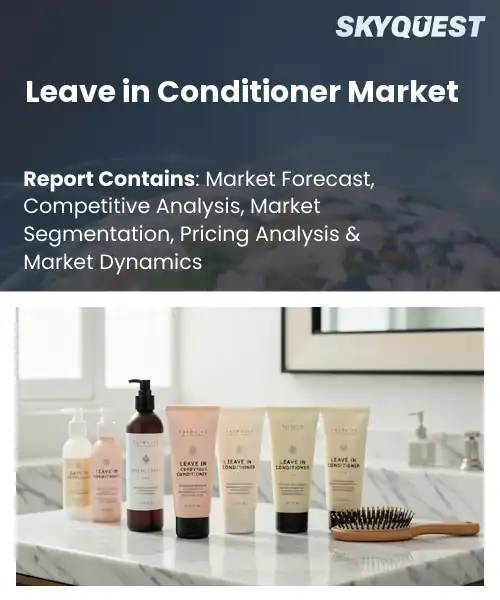
Leave in Conditioner Market
Report ID: SQMIG30L2416
Report ID: SQMIG30L2416
[email protected]
USA +1 351-333-4748
Report ID:
SQMIG30L2416 |
Region:
Global |
Published Date: June, 2026
Pages:
157
|Tables:
117
|Figures:
77


Global Leave in Conditioner Market size was valued at USD 8.52 Billion in 2024 and is poised to grow from USD 9.06 Billion in 2025 to USD 14.85 Billion by 2033, growing at a CAGR of 6.32% during the forecast period (2026-2033).
Innovation in ingredients is the key in the leave-in conditioners market as new bio-based polymers and low-silicone compositions attract more customers and justify the pricing. The use of hydrolysed wheat protein and plant-based moisturizers contributed to better moisture retention, making athletes and travelers repurchase for long-lasting moisture without washing off. Meanwhile, the growth in e-commerce provided small businesses with an opportunity to offer sustainable packaging including refillable aluminum tubes, which attracted eco-friendly consumers and skipped the hair salon sales channels. This chain of developments, changes in customer preferences, and marketing provides a perfect environment for new ventures to get venture capital while existing companies diversify their product range.
How is AI-driven Personalization Reshaping the Leave-in Conditioner Market?
AI-powered personalization is making the leave-in conditioner market a highly data-rich zone where brands design products based on the unique hair profile of consumers. Using machine learning algorithms, companies will analyze the texture, climate, and consumer preferences to offer product suggestions that seem customized to the user. The brand companies have been incorporating interactive quizzes on their e-commerce websites where customer feedback will be incorporated into the product development pipeline. In essence, consumer insights will influence the creation of new smells and textures for the products while helping the brands manage inventory better through demand.
Market snapshot - (2026-2033)
Global Market Size
USD 8.52 Billion
Largest Segment
Cream Leave-in Conditioner
Fastest Growth
Spray Leave-in Conditioner
Growth Rate
6.32% CAGR
To get more insights on this market click here to Request a Free Sample Report
Global leave in the conditioner market is segmented by form, hair type, distribution, consumer and region. Based on form, the market is segmented into Spray Leave-in Conditioner, Cream Leave-in Conditioner and Lotion Leave-in Conditioner. Based on hair type, the market is segmented into Curly/Coily Hair, Straight/Wavy Hair and Damaged/Color-Treated Hair. Based on distribution, the market is segmented into Online Retail, Beauty Specialty Stores, and Supermarkets. Based on consumer, the market is segmented into Women, Men and Children. Based on the region, the market is segmented into North America, Europe, Asia Pacific, Latin America, and Middle East & Africa.
The cream leaves in conditioner segment is the most popular one owing to the high level of moisturization and the ability to control frizz offered by it and thus satisfying the requirements of those who expect to achieve long lasting manageability. It makes people want to use it again, while components like shea butter and oil make the product stand out from light conditioners. This helps companies build their brand and target their products in the right way.
On the other hand, the spray leave in conditioner segment becomes the fastest growing segment due to the ease of use offered by it. It fits the lifestyle of busy individuals and the young generation.
The curly coily hair segment becomes distinguishable due to its porous nature that requires intensive hydration and definition. It is why developers opt for ingredients that will provide the necessary moisture and protein content. The consumers of this category appreciate the retention of curls and prevention of frizz. Thus, companies develop the formulas that meet the needs of their clients, which makes their products irreplaceable for them.
As for the damaged color treated hair segment, it demonstrates the fastest rate of development since consumers look for hair products that will help them restore the beauty of their hair. Due to developments in the field of antioxidants and UV protectors, hair enthusiasts have become interested in such products, thus increasing sales.
To get detailed segments analysis, Request a Free Sample Report
North America enjoys its dominant position on account of its capability to leverage innovations, effective distribution channels, and consumers who are ready to pay for quality. There is an established culture of grooming in North America combined with an active marketing strategy based on convenience and performance. Beauty influencers and an already existing environment for online trading contribute to brand awareness, whereas regulatory requirements facilitate innovative ingredient formulation. All these factors help North America maintain its dominance within the global market.
The Leave in Conditioner market in the US has a lot of differentiated products with different brands catering to different hair concerns. There is an expectation of getting instant results from the use of such conditioners and that too, which can serve multiple purposes. There is wide availability through a variety of retail routes including high-end salons and mass markets, along with active online interaction for trend discovery.
Leave In Conditioner Market of Canada is another indicator of people’s increasing interest in products based on natural formulas. The market for leave-in conditioners is quite well distributed due to the presence of both specialized beauty stores and regular stores. Leave-in conditioners education highlighting the convenience of such products stimulates consumers’ interest in them.
The European market growth is driven by an advanced consumer base, which demands both efficiency and responsible sourcing, thus motivating companies to develop products with natural, bio-based ingredients. A rich culture of hair salons and the presence of a strong background in hair care knowledge create a conducive market for luxury leave-in products. Cooperation between producers, sellers and research organizations helps to speed up the process of development of new products, while cross-border trade within the region increases their accessibility.
The Leave-In Conditioner Market in Germany is characterized by its strong focus on scientific formulation and stringent quality standards. The customers show a high awareness of products that provide tangible results and are environmentally friendly at the same time. Such an environment provides good conditions for a high level of demand for leave-in conditioners that perform well and are sustainable.
Market for Leave In Conditioner in the United Kingdom has fast adaptation to trend-led products, owing to the vibrant social media environment and the presence of prominent stylistic experts. There is a demand for products that provide styling benefits along with conditioning; this results in the development of agile limited editions by the companies. Availability in large quantities in both offline and online channels and an increased emphasis on sustainable aspects add to the attractiveness of the product.
Market for Leave-in Conditioners in France is a reaction to the growing trend of indulgence in luxury hair care experience through the combination of aesthetic elements and functionality. The French have a taste for sophisticated fragrances and beautiful packaging, thus prompting cosmetic companies to market leave-in conditioners as a luxurious beauty ritual. Specialized hair care salons and luxury department stores have become instrumental in the formation of such new ideas, with natural cosmetics becoming increasingly popular.
Asia Pacific is enhancing its position due to the combination of increasing disposable incomes, changing beauty trends, and cultural values of hair care. Fast urbanization in the region creates a need for easy-to-use high-performance products suitable for different hair types. Development and research in the field done by local producers create unique combinations of ingredients and formulas to satisfy regional tastes. Efficient digital commerce channels and influencer marketing ensure a wider product exposure, while cooperation between regions brings global trends to the market.
The Market for Leave in Conditioner in Japan is motivated by an obsession with hair texture and the preference for light silky finish. The formulations must be able to complement conventional grooming techniques while providing modern performance. The market is fortunate enough to have a well-developed retail channel that combines department stores with the latest internet retailing technologies, making it possible to introduce innovative products quickly.
Leave in Conditioner Market of South Korea capitalizes on the fast-moving nature of beauty trends and the penchant for multi-tasking products. The Korean consumer appreciates shine and will look for a leave-in product that can do more than one job, such as conditioning and heat protection or coloring preservation. There is a thriving community of K-beauty influencers and salons driving the trend, while e-commerce channels provide quick penetration into the market. The focus on research drives innovation in products.
To know more about the market opportunities by region and country, click here to
Buy The Complete Report
Increasing Demand for Natural
The consumers’ quest for hair care products that integrate fragrance with conditioning functions has led companies to produce leave-in conditioners containing extracts of natural origin. As a result, this trend motivates companies to introduce more products to their lines, create unique fragrance formulas, and offer functional benefits, which in turn will attract more consumers and promote repurchasing. The synergy between sensory qualities and functionality adds value and contributes to increased popularity among different consumer groups.
Enhanced Fragrance Customization Options
Through the use of modern scent-mixing technology, brands are able to create a wide variety of customized scents that can be used in leave-in conditioners. In this way, the marketer is able to offer special edition scents and even cause some excitement. The personalized experience in terms of scents is something that people value highly and, as such, are willing to pay more for it. Through this, the retailer gets to give them special places on the shelf, which contributes to growth in the market.
Regulatory Scrutiny Over Synthetic Fragrances
Guidelines regarding the use of artificial aromatic substances in cosmetic products are becoming stricter in many areas due to possible risks associated with their use. These stricter guidelines force manufacturers to re-formulate the leave-in conditioners, perform extra tests, and get more certifications. Longer development and increased compliance costs prevent fast releases of products, which means that innovative fragrances cannot enter the market immediately. Some companies can therefore decide not to release some of their products at all.
High Cost of Premium Ingredients
High-quality natural extracts and high-quality fragrances drive up costs of raw materials used in making leave-in conditioners with a rich scent. Producers need to factor in the costs while considering that price-sensitive consumers could become their buyers. This makes the margin for profitability narrow for the manufacturers. High costs of making leave-in conditioners could prevent smaller companies from venturing into the sector because of low competitiveness and product diversity. This would make the products less attractive to price-sensitive consumers.
Request Free Customization of this report to help us to meet your business objectives.
The Leave-in Conditioner Market on a global level is somewhat fragmented, with competition being driven by large multinational corporations of the beauty and personal care industry, professional salon brands, as well as premium and clean beauty brands that are gaining popularity. Competition in the market includes innovation in products, ingredient transparency, formulations suitable for particular hair types, sustainability programs, and multi-channel distribution. The rising need for multifunctional leave-in products capable of hydrating, providing heat protection, smoothing frizz, and repairing bonds has increased the level of competition in the market.
Sustainable Ingredient Sourcing: The consumers demand transparency and environmental responsibility, and hence companies are trying to ensure that the raw materials that go into making of their product are sustainably sourced, along with the adoption of biodegradable packaging. There have been changes in leave-in conditioners in terms of formulating them with responsibly sourced oils, biopolymers, and sustainable manufacturing practices to be in tune with the environmentalists. This would lead to working with certified farms and use of renewable sources of energy along with ensuring traceability through the supply chain.
Personalized Hair Care Solutions: Technological progress in the form of digital profiling and machine learning algorithms has made it possible for companies to customize the formula of leave-in conditioners depending on the hair and scalp type and consumer lifestyle. Personalized advice is possible using apps and tests offered on company websites, providing consumers with personalized products that cater specifically to their moisturizing, strengthening, and styling needs. This kind of customization encourages user engagement and minimizes waste while allowing for premium pricing, as customers appreciate personalized solutions nowadays.
SkyQuest’s ABIRAW (Advanced Business Intelligence, Research & Analysis Wing) is our Business Information Services team that Collects, Collates, Correlates, and Analyses the Data collected by means of Primary Exploratory Research backed by robust Secondary Desk research.
As per SkyQuest analysis, the global leave-in conditioner market is being driven by the growing need for natural ingredients, which promotes the addition of more botanical ingredients and eco-friendly packaging among brands, whereas restrictions on artificial fragrances are restraining market growth as they increase the cost of compliance and affect product launches. The North America region has been dominating the market due to innovations in products and robust e-commerce sales channels, and the cream leave-in conditioners segment has been gaining maximum customer loyalty because of their moisturizing effects. The popularity of customized hair care offerings with the help of AI-based profiling will further create new growth opportunities in the coming years.
| Report Metric | Details |
|---|---|
| Market size value in 2024 | USD 8.52 Billion |
| Market size value in 2033 | USD 14.85 Billion |
| Growth Rate | 6.32% |
| Base year | 2024 |
| Forecast period | (2026-2033) |
| Forecast Unit (Value) | USD Billion |
| Segments covered |
|
| Regions covered | North America (US, Canada), Europe (Germany, France, United Kingdom, Italy, Spain, Rest of Europe), Asia Pacific (China, India, Japan, Rest of Asia-Pacific), Latin America (Brazil, Rest of Latin America), Middle East & Africa (South Africa, GCC Countries, Rest of MEA) |
| Companies covered |
|
| Customization scope | Free report customization with purchase. Customization includes:-
|
To get a free trial access to our platform which is a one stop solution for all your data requirements for quicker decision making. This platform allows you to compare markets, competitors who are prominent in the market, and mega trends that are influencing the dynamics in the market. Also, get access to detailed SkyQuest exclusive matrix.
Table Of Content
Executive Summary
Market overview
Parent Market Analysis
Market overview
Market size
KEY MARKET INSIGHTS
COVID IMPACT
MARKET DYNAMICS & OUTLOOK
Market Size by Region
KEY COMPANY PROFILES
Methodology
For the Leave in Conditioner Market, our research methodology involved a mixture of primary and secondary data sources. Key steps involved in the research process are listed below:
1. Information Procurement: This stage involved the procurement of Market data or related information via primary and secondary sources. The various secondary sources used included various company websites, annual reports, trade databases, and paid databases such as Hoover's, Bloomberg Business, Factiva, and Avention. Our team did 45 primary interactions Globally which included several stakeholders such as manufacturers, customers, key opinion leaders, etc. Overall, information procurement was one of the most extensive stages in our research process.
2. Information Analysis: This step involved triangulation of data through bottom-up and top-down approaches to estimate and validate the total size and future estimate of the Leave in Conditioner Market.
3. Report Formulation: The final step entailed the placement of data points in appropriate Market spaces in an attempt to deduce viable conclusions.
4. Validation & Publishing: Validation is the most important step in the process. Validation & re-validation via an intricately designed process helped us finalize data points to be used for final calculations. The final Market estimates and forecasts were then aligned and sent to our panel of industry experts for validation of data. Once the validation was done the report was sent to our Quality Assurance team to ensure adherence to style guides, consistency & design.
Analyst Support
Customization Options
With the given market data, our dedicated team of analysts can offer you the following customization options are available for the Leave in Conditioner Market:
Product Analysis: Product matrix, which offers a detailed comparison of the product portfolio of companies.
Regional Analysis: Further analysis of the Leave in Conditioner Market for additional countries.
Competitive Analysis: Detailed analysis and profiling of additional Market players & comparative analysis of competitive products.
Go to Market Strategy: Find the high-growth channels to invest your marketing efforts and increase your customer base.
Innovation Mapping: Identify racial solutions and innovation, connected to deep ecosystems of innovators, start-ups, academics, and strategic partners.
Category Intelligence: Customized intelligence that is relevant to their supply Markets will enable them to make smarter sourcing decisions and improve their category management.
Public Company Transcript Analysis: To improve the investment performance by generating new alpha and making better-informed decisions.
Social Media Listening: To analyze the conversations and trends happening not just around your brand, but around your industry as a whole, and use those insights to make better Marketing decisions.
REQUEST FOR SAMPLE
 REQUEST FREE CUSTOMIZATION
Global Leave In Conditioner Market size was valued at USD 8.52 Billion in 2024 and is poised to grow from USD 9.06 Billion in 2025 to USD 14.85 Billion by 2033, growing at a CAGR of 6.32% during the forecast period (2026-2033).
Top Player’s Company Profile 'L'Oréal SA (Garnier, Mizani)', 'Unilever (TRESemmé, Dove)', 'Procter & Gamble (Pantene)', 'Shea Moisture (Unilever)', 'Aveda (Estée Lauder)', 'Carol's Daughter (L'Oréal)', 'Cantu Beauty (PDC Brands)', 'SheaMoisture', 'Mielle Organics (P&G)', 'DevaCurl (Henkel)', 'Curl Junkie', 'As I Am Naturals', 'Briogeo Hair Care', 'Kerastase (L'Oréal)', 'Pureology (L'Oréal)', 'Living Proof (Unilever)', 'It's a 10 Haircare', 'Moroccanoil', 'OUAI Haircare (Vita Coco)', 'Olaplex Holdings'
Consumers are increasingly seeking hair care solutions that combine fragrance with conditioning benefits, prompting manufacturers to develop leave‑in conditioners enriched with natural extracts. This shift encourages brands to expand product portfolios, innovate scent profiles, and market multifunctional benefits, thereby attracting new user segments and reinforcing repeat purchases. The alignment of sensory appeal with functional performance enhances perceived value, driving wider adoption across diverse demographics and reinforcing overall market momentum. Retail channels also respond by highlighting these attributes in promotional displays, further amplifying consumer awareness and trial rates.
Sustainable Ingredient Sourcing: Consumers are increasingly demanding transparency and environmental stewardship, prompting manufacturers to prioritize sustainably sourced botanicals and biodegradable packaging. Brands are reformulating leave‑in conditioners with responsibly harvested oils, plant‑based polymers, and zero‑waste production methods to align with eco‑conscious values. This shift is driving collaborations with certified farms, investing in renewable energy, and emphasizing traceability throughout the supply chain, ultimately enhancing brand equity and fostering loyalty among environmentally aware shoppers and reinforcing their market position in a competitive landscape globally today now
Why does North America Dominate the Global Leave in Conditioner Market? |@12


Want to customize this report? This report can be personalized according to your needs. Our analysts and industry experts will work directly with you to understand your requirements and provide you with customized data in a short amount of time. We offer $1000 worth of FREE customization at the time of purchase.
Feedback From Our Clients


 USA (+1) 351-333-4748

