
Jak and Pi3K Signaling Pathway Market
Report ID: SQMIG35H2461
Report ID: SQMIG35H2461
[email protected]
USA +1 351-333-4748
Report ID:
SQMIG35H2461 |
Region:
Global |
Published Date: March, 2026
Pages:
157
|Tables:
116
|Figures:
77


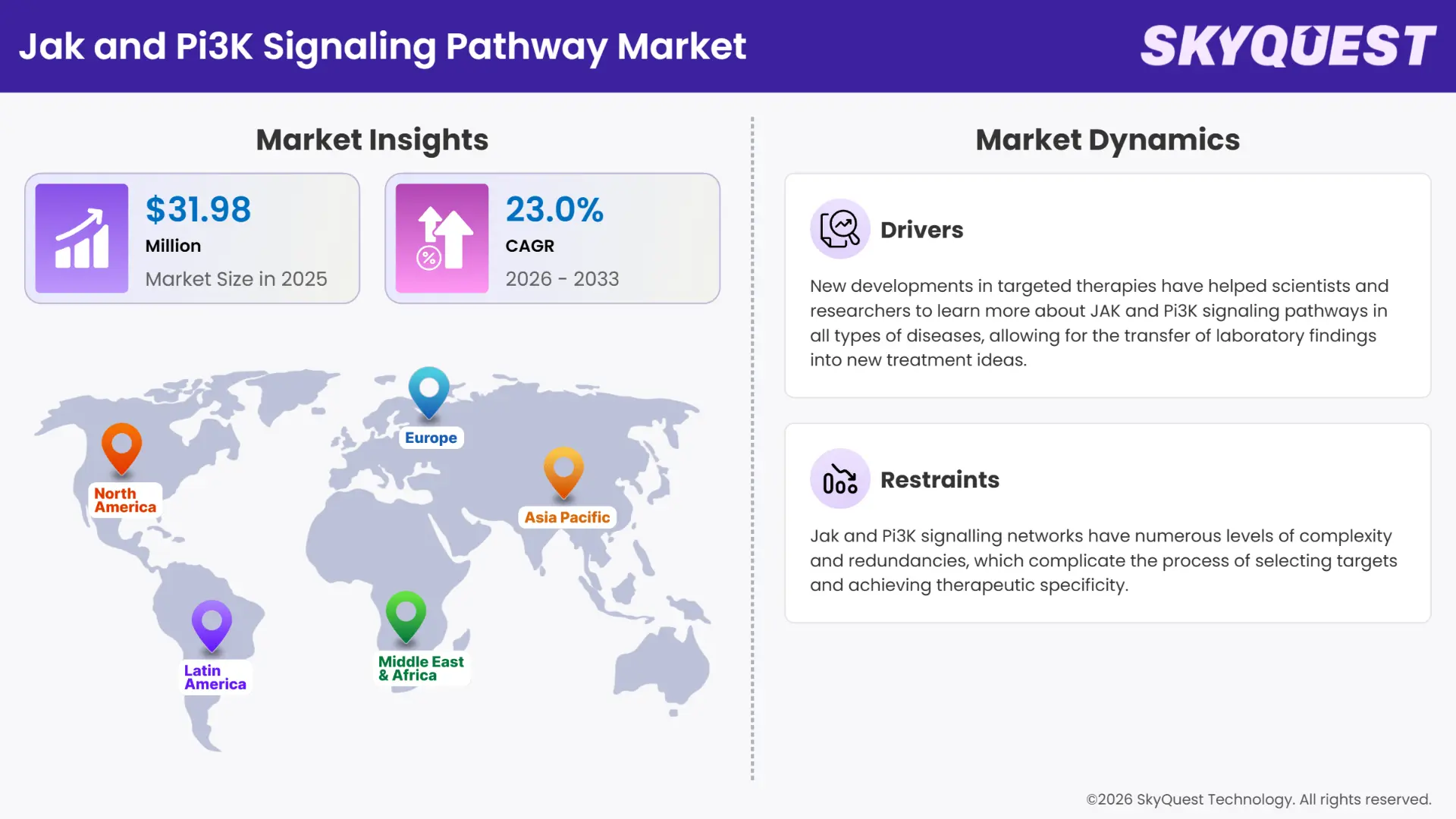
Global Jak and Pi3K Signaling Pathway Market size was valued at USD 26.0 Million in 2024 and is poised to grow from USD 31.98 Million in 2025 to USD 167.54 Million by 2033, growing at a CAGR of 23.0% during the forecast period (2026-2033).
Key Takeaways: Market Trends & Insights
One major catalyst for the JAK and Pi3K signaling pathway market growth globally has been the urgent clinical need for therapies that target key intracellular signaling nodes responsible for modulating the pathophysiology of tumors and/or the inflammatory processes involved with autoimmune diseases. Therapies, diagnostics, and research reagents that seek to exploit these pathways represent key product segments associated with JAK and Pi3K biology. Such products are critical to the treatment and prevention of chronic illnesses due to the high morbidity associated with diseases related to both kinases.
Therefore, there is a real opportunity to develop precision medicine therapies that can provide better outcomes with less adverse side effects for patients afflicted by the diseases associated with these two kinases.
Another key factor supporting the growth of the global JAK and PI3K signaling pathway market is the increasing clinical validation of targeted pathway nodes, supported by a growing body of evidence demonstrating their effectiveness. This has led to greater acceptance in clinical practice among prescribers, while improved reimbursement by payers is being driven by the strength and reliability of expanding clinical trial data. As more robust data becomes available, prescribers gain greater confidence in adopting these therapies.
At the same time, the rising development of biomarkers and companion diagnostics is enabling clinicians to select patients more accurately for targeted treatments, resulting in higher response rates. This precision-based approach is contributing to increased utilization of pathway inhibitors across oncological and autoimmune indications, with PI3K inhibitors showing improved outcomes in lymphoma patients and JAK inhibitors demonstrating effectiveness in reducing flare incidence in patients with rheumatoid arthritis.
How is AI Accelerating Drug Discovery in the JAK and PI3K Signaling Pathway Market?
The combination of targeted biology with computational capabilities in AI is accelerating the existing discovery process within the Pi3K and JAK signalling space. AI is being utilized to assist with target identification so that we can uncover vulnerabilities in signalling pathways; generative design will aid in the design of molecules with a higher selectivity and predicted safety profile. The use of virtual screening and physics-based models results in an accelerated candidate list through model refinement and continued use of computational approaches. Machine learning is being used to model resistance mechanisms and suggest various combinations to enhance the chances of success. These approaches will decrease the amount of time needed for lead candidates to reach the market and allow companies to focus their resources on assets that have a more defined biomarker pathway. This is currently being demonstrated through collaborations between drug developers and computational platform companies that have been working together on JAK and oncology targets. The initiation of clinical testing for a Pi3K-targeted antibody therapy by HUTCHMED as reported in March 2026 illustrates how the use of computational design and patient selection based on AI has the potential to streamline candidate identification in order to create more clinic-ready candidates more quickly.
To get more insights on this market click here to Request a Free Sample Report
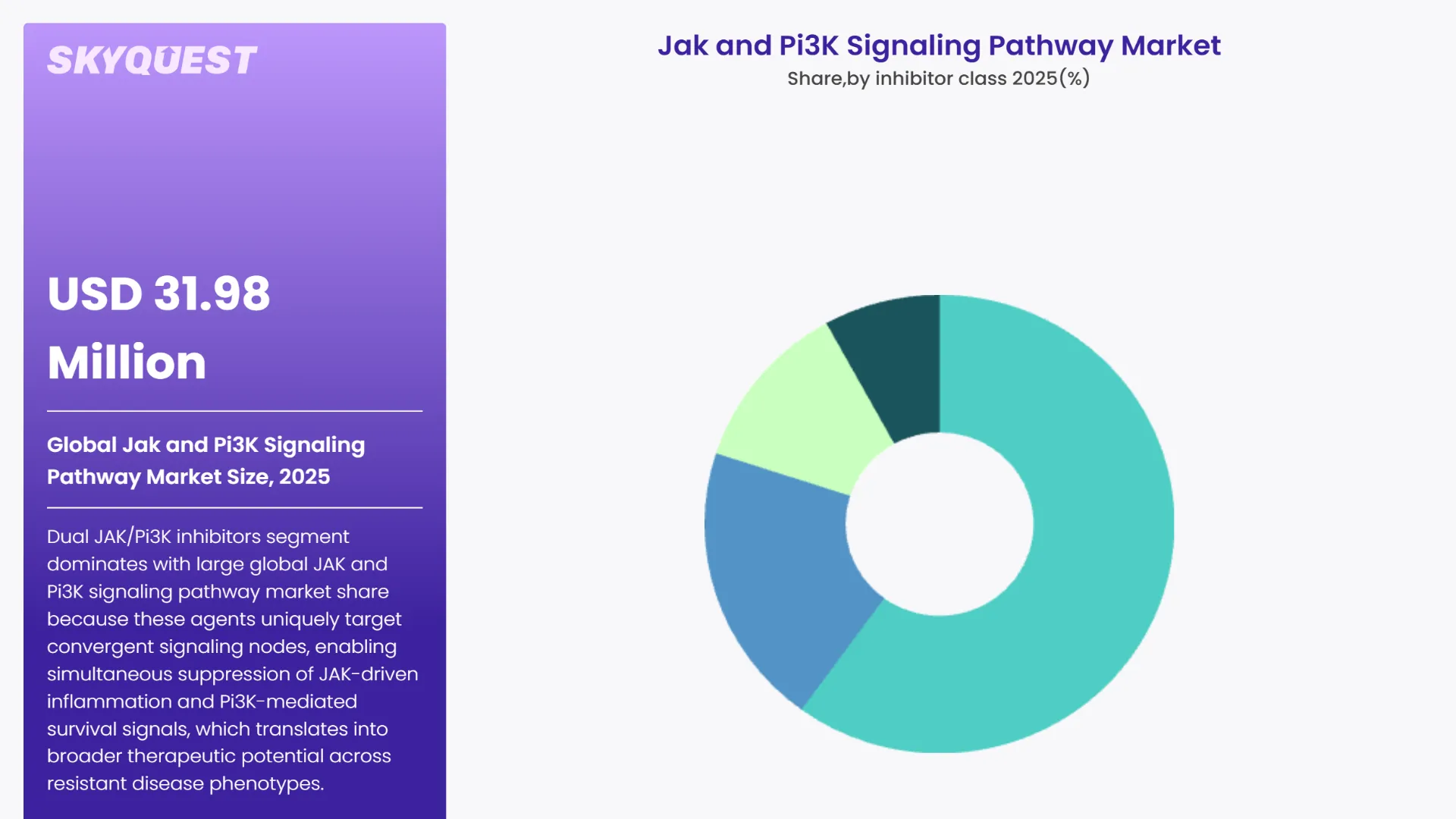
Global jak and Pi3K signaling pathway market is segmented into inhibitor class, therapeutic indication, development stage, route of administration and region. Based on inhibitor class, the market is segmented into JAK1/JAK2/JAK3 selective inhibitors, Pan-JAK inhibitors, Pi3K alpha/beta/delta/gamma isoform inhibitors and dual JAK/Pi3K inhibitors. Based on therapeutic indication, the market is segmented into oncology, autoimmune diseases and hematological disorders. Based on development stage, the market is segmented into FDA approved/commercialized and clinical phase. Based on route of administration, the market is segmented into oral tablets/capsules and topical formulations. Based on region, the market is segmented into North America, Europe, Asia Pacific, Latin America and Middle East & Africa.
Dual JAK/Pi3K inhibitors segment dominates with large global JAK and Pi3K signaling pathway market share because these agents uniquely target convergent signaling nodes, enabling simultaneous suppression of JAK-driven inflammation and Pi3K-mediated survival signals, which translates into broader therapeutic potential across resistant disease phenotypes. Significant preclinical rationale together with focused R&D investment results in pipeline prioritization; unique synergies in mechanistic pathways lend themselves to combination strategies and attract partnership proposals that will also focus resource & commercial interests in these areas. Differentiated clinical stories provide an additional level of confidence for stakeholders who will support this type of approach.
As per global JAK and PI3K signaling pathway market analysis, the fastest growing segment of the market appears to be Pan-JAK Inhibitors. These are gaining a lot of traction now as the applicability of such agents is so broad across many types of inflammatory or hematological diseases, short oral dosing time, and many ongoing clinical programmes to expand their indications. The established safety profiles of the established Pan-JAK inhibitors and similar manufacturing processes allow the expansion of use in commercial products. Therefore, this will assist with the acceleration of adoption rates and help to create additional commercial opportunities resulting from the increasing level of investment into evolving adjacent therapies.
As per global JAK and Pi3K signaling pathway market forecast, the autoimmune diseases segment is the leading area of the therapeutic pathways because of the high and sustained demand that chronic inflammatory conditions place on manufacturers to develop pathway modulators, which directly suppress the immune system’s abnormal functioning. The clinical success of JAK Inhibitors for multiple autoimmune indications has set a high standard for the development of new drugs, which is helping payers and clinicians make formulary decisions and is attracting funding for both JAK & Pi3K targeting programs. The focus of both payers and clinical practices is on durable oral therapies with an acceptable safety profile; therefore, the R&D and commercial strategies have shifted to these areas of the industry.
As per global JAK and Pi3K signaling pathway market outlook, the oncology segment is experiencing the greatest growth. There is a clear increase in the number of oncology products that use both the JAK and PI3K pathways as the target to stimulate new products to treat tumor resistance and develop better therapies to use with these treatments. There are an increasing number of products that are looking to create new indications by combining therapies and using biomarkers in early studies and immunotherapy combinations, which is creating new commercial opportunities and accelerating the movement from research into clinical practice.
To get detailed segments analysis, Request a Free Sample Report
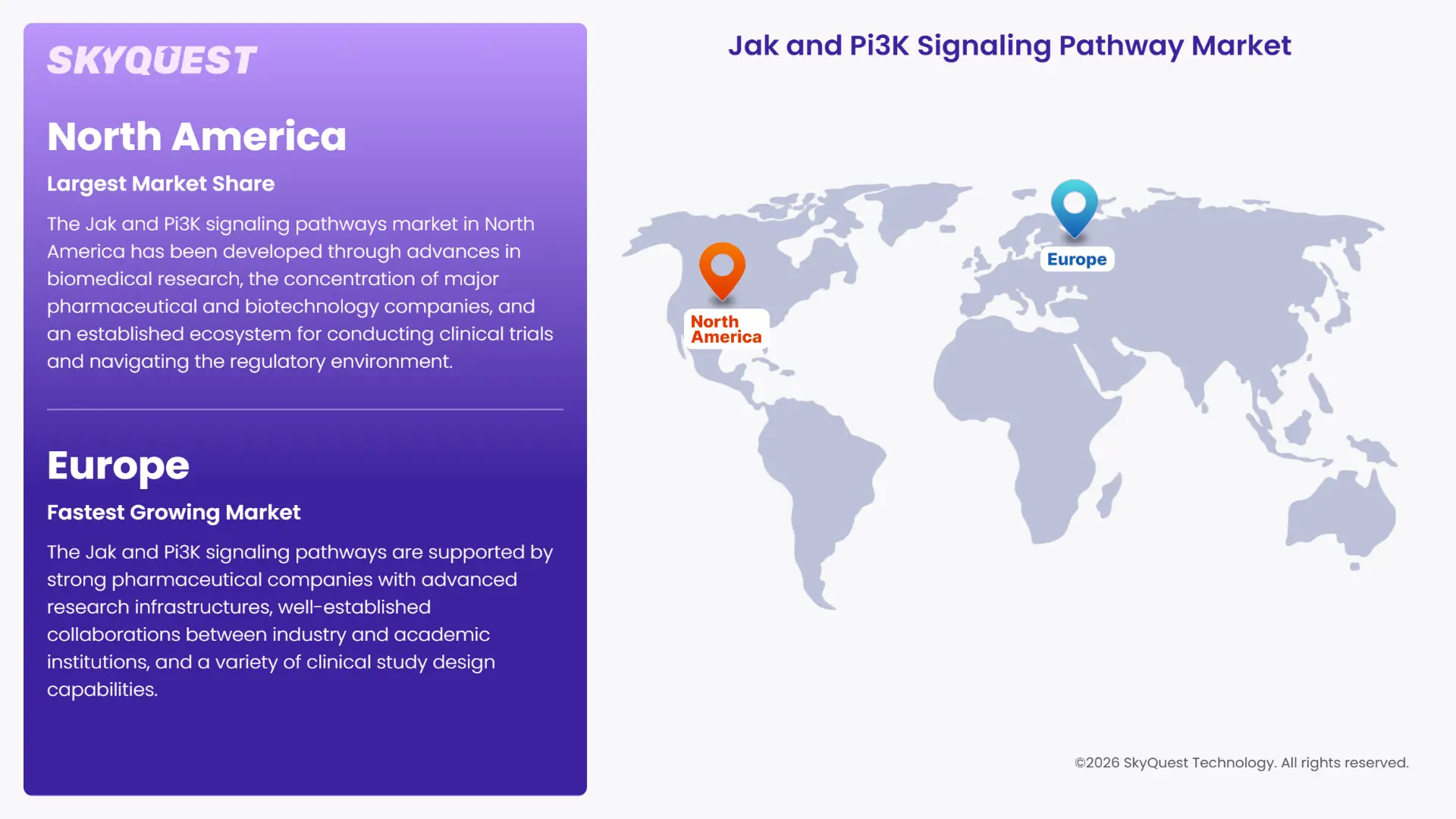
The Jak and Pi3K signaling pathways market in North America has been developed through advances in biomedical research, the concentration of major pharmaceutical and biotechnology companies, and an established ecosystem for conducting clinical trials and navigating the regulatory environment. The presence of a strong private/public research funding base, as well as extensive translational research networks and significant clinical trial infrastructure, provides for the rapid validation of therapeutic candidates and commercialization.
The U.S. Jak and Pi3K signaling pathway market is driven primarily by the presence of numerous biopharmaceutical headquarters; an extensive clinical trial network; and an established ecosystem of both research hospitals and specialized laboratories. High caliber investigators; strong translational medicine capabilities; and close cooperation with regulatory and payer stakeholders will facilitate the rapid advancement of therapeutics. Support from academic companies and others will enhance their commercialization; while established industry players will enhance their scalability and continue to foster global partnerships.
The Canada market for the Jak and Pi3K signaling pathways is characterized by strong translational research networks; collaborative academic research centers; and research focused on early drug discovery and advanced biomarker discovery. Regulatory and reimbursement policies will encourage practical clinical development strategies that align with national health systems.
The rapid expansion of the Jak and Pi3K signaling pathway market in Europe can be attributed to multiple factors such as cohesive research consortia, significant public investment towards translational science, and a dense collection of immunology and oncology-focused academic centers. Additionally, the progressive harmonization of regulatory standards among member states has fostered a climate that supports investment into precision medicine with both targeted therapies and companion diagnostics.
The Jak and Pi3K signaling pathways are supported by strong pharmaceutical companies with advanced research infrastructures, well-established collaborations between industry and academic institutions, and a variety of clinical study design capabilities. A deeper level of specialization and understanding of target validation exists within specialized hospitals and reference laboratories, allowing for streamlined trial designs and biomarker assays. Assistance from governmental policy encourages innovation, with many countries allowing for expedited processing of new medicines and pharmaceutical agents; therefore, developing countries will likely be able to build their pharmaceutical research capabilities quickly. The available pool of qualified clinical investigators and clinical development strategies will assist in establishing a favorable environment for the commercialization of pathway modulation therapeutic agents.
The United Kingdom's Jak and Pi3K signaling pathway market is built on an established biotech sector, dynamic translational and clinical research capabilities, facilitating the rapid advancement of new agents. Strong collaboration between academia and industry, together with favourable regulatory interactions, allows for the timely evaluation of new therapies. A wide array of specialists comprises a strong clinical network, while experienced investigators enable the efficient conduct of clinical trials. The pathway therapeutics marketplace is rapidly evolving because of the continued growth of investment and partnerships.
The Jak and Pi3K signaling pathway market in France is very much an emerging market driven by large academic research hubs; a multitude of clinical research centers that specialize in the development of early phase clinical trials and a growing number of biotechnology companies driving this market forward. Publicly funded research organizations and academic medical centers provide valuable expertise in the areas of immunology and oncology, and these breed collaborations for translational projects and biomarker studies. Collaborative relationships between domestic and international companies are increasing access to the development of resources and networks. There is increasing public policy support and investor interest in the maturation of the market.
As per JAK and Pi3K signaling pathway industry analysis, Asia Pacific is enhancing its position within the market through strategic investment into biomedical research, development of new clinical trial capacity, and improved capabilities within the local biotech industry. More government support for life sciences and the growth of translational research centres will result in quicker movement along the continuum from discovery to clinical evaluation, as well as improvements to the regulatory framework.
As per JAK and Pi3K signaling pathway market regional forecast, Japan has benefited from very strong pharmaceutical research capabilities, existence of translational research centres, and close collaboration between industry and academia who both contribute resources for drug discovery. The regulatory environment and skilled clinical investigators can ensure complex trial designs will be successful, as well as conducting biomarker-driven studies. Global partnerships and manufacturing capabilities will facilitate the international advancement of these candidates. Targeted investment in precision medicine and education/training will build on the national capacity to enhance the development of drugs that target the various signalling pathways.
As per JAK and Pi3K signaling pathway market regional outlook, South Korea has improved through the innovation within the biotech industry and government support for the life sciences, as well as having an established clinical research infrastructure that will enable early development and transitional studies. The synergy that occurs between biotech companies, hospitals, and research institutions will create an efficient environment for candidate screening and biomarker validation.
To know more about the market opportunities by region and country, click here to
Buy The Complete Report
Advancements In Targeted Therapies
New developments in targeted therapies have helped scientists and researchers to learn more about JAK and Pi3K signaling pathways in all types of diseases, allowing for the transfer of laboratory findings into new treatment ideas. More rigorous target validation improved molecular profiling, and continued refinement of molecules have given both developers and physicians more confidence. This increased confidence will help to increase the number of programs being developed and implemented that are specific to these signaling pathways. These improvements have not only made drug design and clinical strategy easier, but they have also decreased the clinical barriers perceived by scientists and increased the level of funding available to develop these programs.
Increased Research Collaboration and Funding
The increase in collaborative research efforts and more funding for research has created a collaborative environment for multidisciplinary teams working together, and with shared resources, to continue to explore the biological mechanisms involved in JAK and PI3K signaling. Examples of this type of collaboration can be found in coordinated initiatives among academic institutions, biopharma companies, and research consortia, which will allow for continuous learning through preclinical and translational studies, and de-risking the various therapeutic approaches available. Access to greater amounts of both expertise and infrastructure will ultimately result in a greater number of programs funded and developed with the intent to target a specific pathway, which will result in a broader and more successful pipeline of products and subsequently, will facilitate the translation of these products into multiple disease areas.
Complexity of Signaling Networks
Jak and Pi3K signalling networks have numerous levels of complexity and redundancies, which complicate the process of selecting targets and achieving therapeutic specificity. As a result, there are scientific and developmental challenges in the process of launching products based on these signalling networks. Therefore, there is a limiting growth in the market. The crosstalk among pathways and the context-dependent nature of signalling outcomes create a high level of uncertainty related to predicted clinical effects; thus, making it more difficult for developers to determine their anticipated benefit. These challenges greatly increase the perceived risk to developers and may result in a more careful approach to project prioritization, which limits the speed of development for new pathway-targeted therapies into clinical practice.
Regulatory and Reimbursement Barriers
Regulatory expectations for both Jak/PI3K pathway therapies have grown more complex and are constantly evolving, creating the need for regulatory authorities to keep pace with their development. Moreover, the various reimbursement landscapes create barriers to commercial success. High evidentiary requirements for demonstrating comparative safety/efficacy, the requirement for demonstrating long-term clinical safety, and the variation in payer requirements between countries increase the risk to developers and make it more difficult to plan launches. These factors create qualitative barriers that may delay product entry into the marketplace, limit the attractiveness of high-risk initiatives, and require that substantial stakeholder engagement occur. Thereby moderating the velocity and extent by which innovative pathway-targeted therapies will achieve widespread clinical use.
Request Free Customization of this report to help us to meet your business objectives.
Competitive forces in the global JAK and Pi3K signaling pathway market are primarily based on differentiated mechanisms and a platform driven discovery process that has led to many deals and alliances between companies engaging in recent M&A activity and asset divestitures such as Verastem's divestiture of duvelisib from its portfolio, driving consolidation within this space. Start-Up Companies, working with computational chemistry companies such as schrödinger, have begun to use covalent target design to provide themselves with a platform to demonstrate clinical differentiation and attract late-stage financing.
SkyQuest’s ABIRAW (Advanced Business Intelligence, Research & Analysis Wing) is our Business Information Services team that Collects, Collates, Correlates, and Analyses the Data collected by means of Primary Exploratory Research backed by robust Secondary Desk research.
As per SkyQuest analysis, the global JAK and PI3K signaling pathway industry is driven by urgent clinical demand for targeted therapies that improve outcomes in oncology and autoimmune diseases and further supported by AI enabled drug discovery accelerating target identification and molecule design. Growth is restrained by the complexity of JAK and Pi3K signaling networks, which complicates target selection and safety prediction. North America remains the dominating region due to concentrated research, funding and clinical infrastructure, while dual JAK/Pi3K Inhibitors represent the dominating segment because they target convergent signaling nodes and enable broader therapeutic potential. Overall, the market is poised for rapid expansion amid precision medicine and driven biomarker-driven adoption. A key global JAK and Pi3K signaling pathway market trend is the shift toward personalized medicine, where treatments are tailored based on biomarkers, improving therapeutic efficacy and patient outcomes.
| Report Metric | Details |
|---|---|
| Market size value in 2024 | USD 26.0 Million |
| Market size value in 2033 | USD 167.54 Million |
| Growth Rate | 23.0% |
| Base year | 2024 |
| Forecast period | 2026-2033 |
| Forecast Unit (Value) | USD Million |
| Segments covered |
|
| Regions covered | North America (US, Canada), Europe (Germany, France, United Kingdom, Italy, Spain, Rest of Europe), Asia Pacific (China, India, Japan, Rest of Asia-Pacific), Latin America (Brazil, Rest of Latin America), Middle East & Africa (South Africa, GCC Countries, Rest of MEA) |
| Companies covered | |
| Customization scope | Free report customization with purchase. Customization includes:-
|
To get a free trial access to our platform which is a one stop solution for all your data requirements for quicker decision making. This platform allows you to compare markets, competitors who are prominent in the market, and mega trends that are influencing the dynamics in the market. Also, get access to detailed SkyQuest exclusive matrix.
Table Of Content
Executive Summary
Market overview
Parent Market Analysis
Market overview
Market size
KEY MARKET INSIGHTS
COVID IMPACT
MARKET DYNAMICS & OUTLOOK
Market Size by Region
KEY COMPANY PROFILES
Methodology
For the Jak and Pi3K Signaling Pathway Market, our research methodology involved a mixture of primary and secondary data sources. Key steps involved in the research process are listed below:
1. Information Procurement: This stage involved the procurement of Market data or related information via primary and secondary sources. The various secondary sources used included various company websites, annual reports, trade databases, and paid databases such as Hoover's, Bloomberg Business, Factiva, and Avention. Our team did 45 primary interactions Globally which included several stakeholders such as manufacturers, customers, key opinion leaders, etc. Overall, information procurement was one of the most extensive stages in our research process.
2. Information Analysis: This step involved triangulation of data through bottom-up and top-down approaches to estimate and validate the total size and future estimate of the Jak and Pi3K Signaling Pathway Market.
3. Report Formulation: The final step entailed the placement of data points in appropriate Market spaces in an attempt to deduce viable conclusions.
4. Validation & Publishing: Validation is the most important step in the process. Validation & re-validation via an intricately designed process helped us finalize data points to be used for final calculations. The final Market estimates and forecasts were then aligned and sent to our panel of industry experts for validation of data. Once the validation was done the report was sent to our Quality Assurance team to ensure adherence to style guides, consistency & design.
Analyst Support
Customization Options
With the given market data, our dedicated team of analysts can offer you the following customization options are available for the Jak and Pi3K Signaling Pathway Market:
Product Analysis: Product matrix, which offers a detailed comparison of the product portfolio of companies.
Regional Analysis: Further analysis of the Jak and Pi3K Signaling Pathway Market for additional countries.
Competitive Analysis: Detailed analysis and profiling of additional Market players & comparative analysis of competitive products.
Go to Market Strategy: Find the high-growth channels to invest your marketing efforts and increase your customer base.
Innovation Mapping: Identify racial solutions and innovation, connected to deep ecosystems of innovators, start-ups, academics, and strategic partners.
Category Intelligence: Customized intelligence that is relevant to their supply Markets will enable them to make smarter sourcing decisions and improve their category management.
Public Company Transcript Analysis: To improve the investment performance by generating new alpha and making better-informed decisions.
Social Media Listening: To analyze the conversations and trends happening not just around your brand, but around your industry as a whole, and use those insights to make better Marketing decisions.
REQUEST FOR SAMPLE
 REQUEST FREE CUSTOMIZATION
Global Jak And Pi3K Signaling Pathway Market size was valued at USD 26.0 Million in 2024 and is poised to grow from USD 31.98 Million in 2025 to USD 167.54 Million by 2033, growing at a CAGR of 23.0% during the forecast period (2026-2033).
Competitive activity in the global JAK and PI3K signaling pathway market centers on differentiated mechanisms and platform driven discovery, driving deals and alliances. Recent M&A and asset sales such as Verastem’s divestiture of duvelisib illustrate consolidation. Startups partner with computational chemistry firms like Schrödinger and deploy covalent target design such as Totus Medicines' TOS-358 to claim clinical differentiation and attract late stage financing. 'Pfizer', 'AbbVie', 'Eli Lilly', 'Incyte Corp', 'Novartis', 'Bristol Myers Squibb', 'Gilead Sciences', 'AstraZeneca', 'Roche', 'GlaxoSmithKline (GSK)', 'Sanofi', 'Bayer', 'Takeda Pharmaceutical', 'Amgen', 'Johnson & Johnson', 'Otsuka', 'Sun Pharma', 'Cipla', 'Dr. Reddy's', 'Aurobindo Pharma'
Advancements in targeted therapies have expanded scientific understanding of Jak and PI3K signaling roles across diseases, enabling translation of basic research into novel therapeutic concepts. Improved target validation, refined molecular profiling, and iterative optimization of molecules have increased confidence among developers and clinicians, fostering portfolio expansion and prioritization of pathway-specific programs. These qualitative improvements in drug design and clinical strategy reduce perceived scientific barriers, encourage investment, and support broader adoption of pathway-directed approaches, collectively driving increased activity and momentum within the market ecosystem.
Targeted Therapeutics Innovation: Increasing focus on isoform-selective Jak and PI3K inhibitors is driving more precise intervention strategies, enabling researchers to tailor molecules to disease-specific signaling profiles and minimize off-target effects. Collaborations between biotech and academia accelerate translational research, while emerging biomarker-guided patient stratification refines clinical trial design. This trend promotes adaptive development pathways, encourages modular drug combination approaches, and stimulates investment in companion diagnostics to support differentiated therapeutic positioning across oncology, immunology, and rare disease indications and expands opportunities for personalized treatment strategies.
North America Dominate the Global Jak and Pi3K Signaling Pathway Market.
The JAK1/JAK2/JAK3 Selective Inhibitors segment currently holds the largest market share due to strong clinical adoption, proven efficacy, and broad application across autoimmune and inflammatory disorders.
Dual JAK/PI3K Inhibitors are projected to witness the fastest growth owing to their potential to target multiple disease pathways simultaneously, improving therapeutic outcomes in complex diseases.
AI is accelerating drug discovery by improving target identification, molecule design, virtual screening, resistance prediction, and patient selection, helping pharmaceutical companies develop more effective therapies faster.


Want to customize this report? This report can be personalized according to your needs. Our analysts and industry experts will work directly with you to understand your requirements and provide you with customized data in a short amount of time. We offer $1000 worth of FREE customization at the time of purchase.
Feedback From Our Clients


 USA (+1) 351-333-4748

