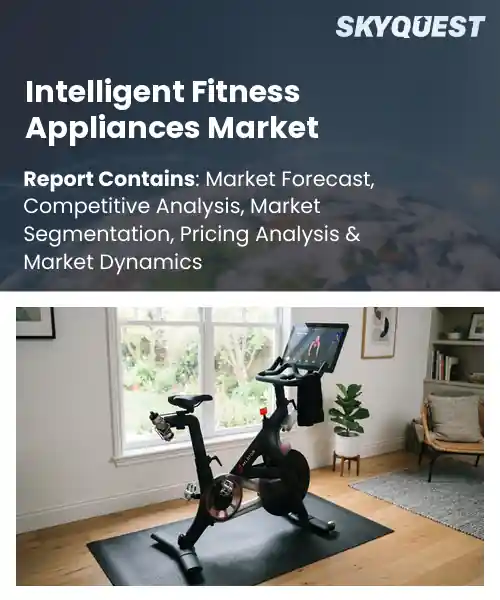
Intelligent Fitness Appliances Market
Report ID: SQMIG25E2310
Report ID: SQMIG25E2310
[email protected]
USA +1 351-333-4748
Report ID:
SQMIG25E2310 |
Region:
Global |
Published Date: September, 2026
Pages:
157
|Tables:
121
|Figures:
77


Global Intelligent Fitness Appliances Market size was valued at USD 12.4 Billion in 2024 and is poised to grow from USD 13.66 Billion in 2025 to USD 29.73 Billion by 2033, growing at a CAGR of 10.2% during the forecast period (2026-2033).
The global intelligent fitness appliances market includes connected treadmills, smart stationary bikes, AI‑guided strength trainers and devices that blend sensors, cloud analytics and interactive software to personalize workouts. Its relevance stems from rising health consciousness, aging populations and the desire for data‑driven training, which together push consumers toward equipment that can track performance and adapt routines in time. Historically, segment emerged from early Bluetooth‑enabled heart‑rate monitors in the 2010s, evolved through machine‑learning integration in 2018, and surged after COVID‑19 lockdowns when home gyms required remote coaching. These milestones show how technology and lifestyle shifts have converged to shape the market. AI‑driven personalization drives the most significant growth in the global intelligent fitness appliances market because it lets manufacturers create differentiated products and deliver measurable results. When a smart bike processes cadence, heart‑rate and terrain data, the system generates interval plans that shift resistance automatically, boosting engagement and cutting subscriber churn. This functionality draws gym chains that want embedded subscription models, as shown by Peloton’s alliance with commercial facilities that integrate its connectivity engine into existing machines. The result is recurring revenue for OEMs, adaptive coaching for users, and a reinforcing loop that spurs further investment in sensors and cloud platforms.
How is AI and IoT integration driving growth in the intelligent fitness appliances market?
AI and IoT integration is reshaping intelligent fitness appliances by turning static equipment into interactive, data‑driven platforms. Sensors capture real‑time metrics such as heart rate, movement patterns and power output, while AI algorithms interpret this data to personalize workouts, adjust resistance and suggest recovery strategies. The market now sees devices that sync seamlessly with smartphones and cloud services, enabling users to track progress across multiple sessions and share insights with virtual coaches. Brands are leveraging these capabilities to differentiate products, enhance user engagement and create subscription‑based ecosystems that generate recurring revenue. This convergence of AI personalization and IoT connectivity is expanding the appeal of smart equipment beyond traditional gyms to home environments, driving broader adoption and fostering a more holistic health experience.A recent development illustrates this trend: Peloton announced a new AI‑enhanced treadmill in March 2024, integrating advanced motion sensors and cloud‑based coaching, which streamlines user feedback and boosts engagement, underscoring how AI‑IoT synergy fuels market growth.
Market snapshot - (2026-2033)
Global Market Size
USD 12.4 Billion
Largest Segment
Intelligent Treadmills
Fastest Growth
Smart Strength Equipment
Growth Rate
10.2% CAGR
To get more insights on this market click here to Request a Free Sample Report
Global intelligent fitness appliances market is segmented by product type, connectivity, application, end user and region. Based on product type, the market is segmented into Intelligent Treadmills, Smart Exercise Bikes, Smart Rowing Machines, Smart Strength Equipment and Other Intelligent Fitness Appliances. Based on connectivity, the market is segmented into Bluetooth-Enabled, Wi-Fi-Enabled and Bluetooth & Wi-Fi Enabled. Based on application, the market is segmented into Cardiovascular Training, Strength Training, Functional Training and Other Fitness Applications. Based on end user, the market is segmented into Residential, Commercial Gyms & Fitness Centers, Hotels & Corporate Wellness and Other End Users. Based on region, the market is segmented into North America, Europe, Asia Pacific, Latin America and Middle East & Africa.
Intelligent Treadmills segment dominates because they combine familiar cardio experience with integrated digital coaching, real-time performance tracking, and immersive media, making home workouts more appealing. Their ability to sync with ecosystems and provide personalized programs drives higher adoption among both casual and serious exercisers, reinforcing their central role in market growth. Additionally, the seamless integration with health data platforms and the gamified challenges encourage consistent usage, which further entrenches their market leadership.
Meanwhile, Smart Rowing Machines are witnessing the strongest growth momentum because they offer full-body low-impact workouts while delivering immersive virtual courses and precise biomechanical feedback. This appeal to health‑conscious users seeking efficient training drives rapid adoption, expanding the market’s reach into functional fitness spaces and creating new partnership opportunities.
Bluetooth & Wi‑Fi Enabled segment leads because it merges the convenience of short‑range pairing with the robust, cloud‑based data streaming capabilities, allowing users to seamlessly integrate equipment with mobile apps, streaming services, and enterprise health platforms. This dual‑connectivity reduces friction, supports real‑time coaching, and enhances ecosystem lock‑in, strengthening overall market appeal. Consequently, manufacturers prioritize this connectivity suite to differentiate products, driving broader consumer acceptance and fostering innovative service models.
On the other hand, Wi‑Fi‑Enabled is emerging as the key high‑growth area because it enables uninterrupted, high‑bandwidth communication essential for immersive VR workouts and AI‑driven performance analytics. The growing demand for rich media experiences and cloud‑based personalization accelerates its adoption, opening new revenue streams for developers and service providers.
To get detailed segments analysis, Request a Free Sample Report
North America commands the lead through a convergence of advanced technology ecosystems, robust consumer appetite for connected health solutions, and well‑established distribution channels that span both retail and digital platforms. The region benefits from extensive research and development investments by major appliance manufacturers, fostering rapid iteration of sensor integration, AI coaching, and data analytics features. High disposable income paired with a cultural emphasis on personal wellness accelerates adoption, while regulatory frameworks support data security and interoperability standards. Collaborative partnerships between technology firms, fitness brands, and health insurers further embed intelligent fitness appliances into broader wellness initiatives, reinforcing the market’s depth and resilience across the United States and Canada. The presence of leading academic institutions that specialize in biomechanics and human‑machine interaction also fuels continuous innovation, ensuring that product offerings remain at the forefront of performance tracking and personalized training.
Intelligent Fitness Appliances Market in the United States thrives on a culture of early technology adoption and a broad ecosystem of venture‑backed startups that specialize in AI‑driven workout platforms. Strong collaboration between consumer electronics brands and fitness influencers creates seamless integration of hardware and personalized coaching content. Consumers value data‑rich experiences that synchronize with mobile health applications, prompting manufacturers to prioritize seamless connectivity, voice control, and real‑time performance analytics.
Intelligent Fitness Appliances Market in Canada benefits from a health‑centric public mindset and supportive government initiatives that encourage smart home integration. Partnerships with research hospitals and sports science institutes drive refinement of biometric monitoring capabilities, while an emphasis on privacy‑friendly data practices builds consumer confidence. Retail channels combine experiential showrooms with online configurators, allowing shoppers to tailor devices to individual fitness goals and household ecosystems. Additional support services extend the product lifecycle and reinforce brand loyalty.
Europe experiences rapid expansion of intelligent fitness appliances through a blend of sophisticated consumer expectations, progressive regulatory environments, and deep‑rooted fitness culture. Governments across the region promote active lifestyles and invest in digital health infrastructure, creating fertile ground for connected equipment that integrates with national health portals. Manufacturers leverage the continent’s strong engineering heritage to embed advanced sensor arrays and machine‑learning algorithms, delivering highly accurate performance feedback. A surge in boutique fitness studios and collaborative ecosystems between tech firms and sports science research centers accelerates innovation cycles. Consumers place high value on data privacy and interoperability, prompting firms to adopt open standards that facilitate seamless interaction with wearables and health apps. This confluence of policy support, technical excellence, and lifestyle alignment positions Europe as a hotspot for intelligent fitness appliance adoption.
Intelligent Fitness Appliances Market in Germany benefits from a reputation for engineering precision and a strong emphasis on health optimization. Collaboration between industrial technology firms and elite sports institutes drives the integration of high‑resolution motion capture and AI‑based training recommendations. Consumers appreciate robust data security frameworks and the ability to sync devices with national health records, reinforcing confidence in ongoing usage. Retail experiences combine experiential demonstrations with specialist consulting, ensuring that buyers select solutions aligned with personal performance goals.
Intelligent Fitness Appliances Market in the United Kingdom is propelled by a fast‑growing culture of digital fitness and a vibrant ecosystem of startup innovators. The market leverages strong ties between university research labs and commercial manufacturers to embed predictive analytics and adaptive coaching into home equipment. Consumers value the ability to integrate devices with popular health platforms and to access streaming workout content directly through the appliances. Retail channels emphasize trial‑fit experiences and flexible financing, accelerating adoption among tech‑savvy households.
Intelligent Fitness Appliances Market in France is emerging as consumers adopt holistic wellness routines that blend nutrition, movement, and digital coaching. Partnerships between lifestyle brands and technology developers foster aesthetically refined products that complement contemporary home décor while delivering precise biometric feedback. Regulatory emphasis on user privacy and data sovereignty encourages manufacturers to adopt transparent data practices, building trust among privacy‑concerned shoppers. Specialty retailers provide curated showcases that highlight the synergy between fashion‑forward design and advanced fitness functionality.
Asia Pacific is strengthening its position in the intelligent fitness appliances arena by capitalizing on rapidly evolving consumer tech habits, urban living trends, and a surge in health‑oriented lifestyle adoption. Leading manufacturers tap into a deep pool of electronics expertise and cost‑effective production capabilities, enabling the delivery of feature‑rich devices at competitive price points. Governments encourage smart‑home integration through incentives and standards that promote seamless connectivity with emerging IoT ecosystems. The region’s vibrant gaming and entertainment culture fuels demand for immersive, interactive workout experiences that blend gamification with real‑time performance tracking. Collaborative research initiatives between universities and fitness corporations accelerate advances in sensor precision and AI personalization, while a growing network of specialty retailers and e‑commerce platforms ensures wide accessibility across diverse demographic segments.
Intelligent Fitness Appliances Market in Japan reflects a blend of high technological sophistication and a cultural reverence for disciplined exercise. Manufacturers integrate ultra‑precise motion sensors and advanced machine‑learning models that adapt to individual training patterns, catering to users who seek meticulous performance data. Consumers appreciate seamless synchronization with popular wellness apps and the ability to incorporate traditional exercise philosophies into digital routines. Retail experiences often feature knowledgeable staff who demonstrate device functionalities within a context of personalized health coaching.
Intelligent Fitness Appliances Market in South Korea advances through a dynamic synergy of cutting‑edge consumer electronics expertise and a strong appetite for connected lifestyle solutions. Companies leverage rapid broadband adoption and a gaming‑centric mindset to embed immersive visual interfaces and real‑time feedback loops within home fitness equipment. Users value integration with popular music streaming services and social sharing features that foster community motivation. Retail channels combine high‑tech showrooms with online platforms, providing consumers with interactive product trials and personalized configuration options.
To know more about the market opportunities by region and country, click here to
Buy The Complete Report
Increasing Consumer Health Awareness
Integration With Home Entertainment Systems
High Initial Purchase Cost
Privacy Concerns Around Data Collection
Request Free Customization of this report to help us to meet your business objectives.
The intelligent fitness appliances market is shaped by fierce rivalry as incumbents pursue M&A, strategic alliances and rapid tech upgrades. Peloton’s $525 million acquisition of Precor in 2022 broadened its commercial‑gym footprint, while Tonal’s integration with Apple Health enabled seamless biometric syncing. Fitbit’s post‑Google acquisition rollout of AI‑driven coaching modules and NordicTrack’s partnership with Peloton Digital to bundle streaming content further intensify competitive pressure and spur innovation.
Top Player’s Company Profile
Recent Developments
SkyQuest’s ABIRAW (Advanced Business Intelligence, Research & Analysis Wing) is our Business Information Services team that Collects, Collates, Correlates, and Analyses the Data collected by means of Primary Exploratory Research backed by robust Secondary Desk research. As per SkyQuest analysis, the global intelligent fitness appliances market is set to expand rapidly as increasing consumer health awareness fuels demand for data‑driven workout experiences, while the integration of fitness equipment with home entertainment systems adds convenience and boosts engagement. AI‑driven personalization is the key driver that differentiates products and encourages subscription revenue, whereas the high initial purchase cost remains a significant restraint limiting mass adoption. North America dominates the market thanks to its advanced technology ecosystem and strong disposable income, and intelligent treadmills lead the product‑type segment by combining familiar cardio with immersive digital coaching. Together these forces shape a dynamic growth trajectory for the industry.
| Report Metric | Details |
|---|---|
| Market size value in 2024 | USD 12.4 Billion |
| Market size value in 2033 | USD 29.73 Billion |
| Growth Rate | 10.2% |
| Base year | 2024 |
| Forecast period | (2026-2033) |
| Forecast Unit (Value) | USD Billion |
| Segments covered |
|
| Regions covered | North America (US, Canada), Europe (Germany, France, United Kingdom, Italy, Spain, Rest of Europe), Asia Pacific (China, India, Japan, Rest of Asia-Pacific), Latin America (Brazil, Rest of Latin America), Middle East & Africa (South Africa, GCC Countries, Rest of MEA) |
| Companies covered |
|
| Customization scope | Free report customization with purchase. Customization includes:-
|
To get a free trial access to our platform which is a one stop solution for all your data requirements for quicker decision making. This platform allows you to compare markets, competitors who are prominent in the market, and mega trends that are influencing the dynamics in the market. Also, get access to detailed SkyQuest exclusive matrix.
Table Of Content
Executive Summary
Market overview
Parent Market Analysis
Market overview
Market size
KEY MARKET INSIGHTS
COVID IMPACT
MARKET DYNAMICS & OUTLOOK
Market Size by Region
KEY COMPANY PROFILES
Methodology
For the Intelligent Fitness Appliances Market, our research methodology involved a mixture of primary and secondary data sources. Key steps involved in the research process are listed below:
1. Information Procurement: This stage involved the procurement of Market data or related information via primary and secondary sources. The various secondary sources used included various company websites, annual reports, trade databases, and paid databases such as Hoover's, Bloomberg Business, Factiva, and Avention. Our team did 45 primary interactions Globally which included several stakeholders such as manufacturers, customers, key opinion leaders, etc. Overall, information procurement was one of the most extensive stages in our research process.
2. Information Analysis: This step involved triangulation of data through bottom-up and top-down approaches to estimate and validate the total size and future estimate of the Intelligent Fitness Appliances Market.
3. Report Formulation: The final step entailed the placement of data points in appropriate Market spaces in an attempt to deduce viable conclusions.
4. Validation & Publishing: Validation is the most important step in the process. Validation & re-validation via an intricately designed process helped us finalize data points to be used for final calculations. The final Market estimates and forecasts were then aligned and sent to our panel of industry experts for validation of data. Once the validation was done the report was sent to our Quality Assurance team to ensure adherence to style guides, consistency & design.
Analyst Support
Customization Options
With the given market data, our dedicated team of analysts can offer you the following customization options are available for the Intelligent Fitness Appliances Market:
Product Analysis: Product matrix, which offers a detailed comparison of the product portfolio of companies.
Regional Analysis: Further analysis of the Intelligent Fitness Appliances Market for additional countries.
Competitive Analysis: Detailed analysis and profiling of additional Market players & comparative analysis of competitive products.
Go to Market Strategy: Find the high-growth channels to invest your marketing efforts and increase your customer base.
Innovation Mapping: Identify racial solutions and innovation, connected to deep ecosystems of innovators, start-ups, academics, and strategic partners.
Category Intelligence: Customized intelligence that is relevant to their supply Markets will enable them to make smarter sourcing decisions and improve their category management.
Public Company Transcript Analysis: To improve the investment performance by generating new alpha and making better-informed decisions.
Social Media Listening: To analyze the conversations and trends happening not just around your brand, but around your industry as a whole, and use those insights to make better Marketing decisions.
REQUEST FOR SAMPLE
 REQUEST FREE CUSTOMIZATION


Want to customize this report? This report can be personalized according to your needs. Our analysts and industry experts will work directly with you to understand your requirements and provide you with customized data in a short amount of time. We offer $1000 worth of FREE customization at the time of purchase.
Feedback From Our Clients


 USA (+1) 351-333-4748

