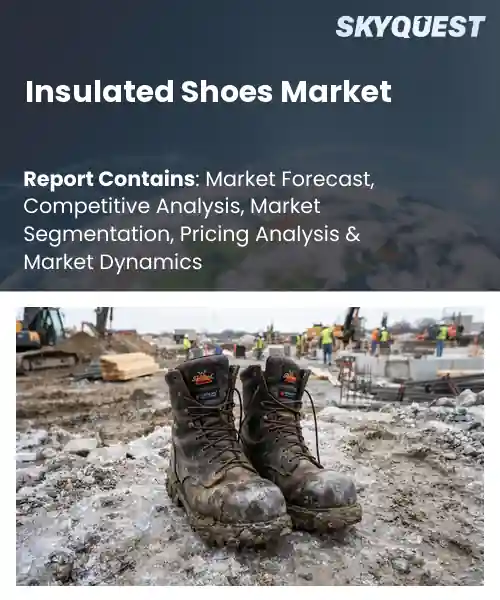
Insulated Shoes Market
Report ID: SQMIG25L2043
Report ID: SQMIG25L2043
[email protected]
USA +1 351-333-4748
Report ID:
SQMIG25L2043 |
Region:
Global |
Published Date: November, 2026
Pages:
157
|Tables:
147
|Figures:
78


Global Insulated Shoes Market size was valued at USD 3.4 Billion in 2024 and is poised to grow from USD 3.6 Billion in 2025 to USD 5.65 Billion by 2033, growing at a CAGR of 5.8% during the forecast period (2026-2033).
The insulated shoes market comprises footwear engineered with thermal liners, reflective membranes, or insulated midsoles to retain body heat in cold environments, and it has become a pivotal segment within the broader outdoor‑apparel industry. Its relevance stems from growing consumer demand for comfort and safety in winter sports, construction sites, and military operations, where exposure to sub‑zero temperatures can impair performance and increase injury risk. Historically, the market emerged in the late‑1990s when advances in synthetic fibers such as Thinsulate enabled lightweight yet effective insulation, prompting early adopters like ski resorts and alpine guides to adopt specialized boots. Over the past decade, rising disposable incomes and heightened awareness of occupational health standards have accelerated adoption, turning insulated shoes from niche gear into a mainstream product line found in both premium outdoor brands and mass‑market retailers.A key driver of the market’s expansion is the convergence of climate‑induced demand and technological innovation, which together create a virtuous cycle of growth. As winter weather patterns become more extreme, outdoor enthusiasts and workers alike seek footwear that can prevent heat loss without sacrificing agility, prompting manufacturers to invest in breathable, moisture‑wicking composites that maintain insulation even during high‑intensity activity. This development unlocks opportunities for new entrants to differentiate through smart‑temperature regulation features, such as embedded heating elements powered by rechargeable batteries a trend already visible in military supply contracts and high‑end hiking gear. Consequently, retailers experience increased turnover from repeat purchases, while supply chains benefit from economies of scale as production volumes rise. The cause‑effect relationship between harsher climates, consumer expectations for performance‑enhancing technology, and broader distribution channels thus fuels sustained revenue growth and positions insulated shoes for continued penetration across both recreational and professional markets.
How is AI-driven automation influencing design and sustainability in the insulated shoes market?
AI‑driven automation is reshaping insulated‑shoe design by streamlining material selection, pattern generation and fit testing. Machine‑learning models analyze thermal performance, weight and durability to suggest optimal insulation blends, while generative design tools produce complex lattice structures that trap heat efficiently yet reduce bulk. These technologies accelerate prototyping, allowing brands to iterate rapidly and bring lighter, more breathable boots to market. Sustainability benefits emerge as algorithms identify recycled or bio‑based fibers that meet performance criteria, cutting waste and lowering the carbon footprint of manufacturing. The result is a tighter feedback loop between designers, engineers and factories, delivering products that meet consumer expectations for comfort, protection and environmental responsibility.Columbia Sportswear announced an AI‑optimized insulated boot line in March 2024, showcasing how automated design reduces material waste and shortens development cycles, driving growth and efficiency in the insulated shoes market.
Market snapshot - (2026-2033)
Global Market Size
USD 3.4 Billion
Largest Segment
Thermal Insulating Shoes
Fastest Growth
Cold-Weather Insulated Shoes
Growth Rate
5.8% CAGR
To get more insights on this market click here to Request a Free Sample Report
Global insulated shoes market is segmented by product type, material, application, end user, distribution channel and region. Based on product type, the market is segmented into Electrical Insulating Shoes, Thermal Insulating Shoes and Cold-Weather Insulated Shoes. Based on material, the market is segmented into Leather, Rubber, Synthetic Materials and Composite Materials. Based on application, the market is segmented into Electrical & Utilities, Construction, Manufacturing, Oil & Gas and Outdoor & Cold-Weather Activities. Based on end user, the market is segmented into Industrial Workers, Commercial Users and Individual Consumers. Based on distribution channel, the market is segmented into Direct Sales, Safety Equipment Distributors and Retail & Online Sales. Based on region, the market is segmented into North America, Europe, Asia Pacific, Latin America and Middle East & Africa.
Electrical Insulating Shoes segment dominates because they directly address the core safety requirement of preventing electrical shock for personnel working on live circuits. Their specialized non conductive soles and reinforced toe caps are mandated by occupational health regulations, prompting procurement by utilities and contractors. This inherent risk mitigation creates a persistent demand, reinforcing their central role in market adoption and positioning them as the primary product category for industrial protection.
Meanwhile, Thermal Insulating Shoes are witnessing the strongest growth momentum because rising exposure to high temperature processes in manufacturing and metalworking drives demand for footwear that safeguards against heat burns. Material innovation improves comfort and durability, encouraging broader adoption across sectors and expanding the market’s reach into new high heat applications.
Synthetic Materials segment leads because they combine lightweight properties with high resistance to chemicals and temperature extremes, meeting the versatile performance criteria demanded by modern workplaces. Their ease of mass production lowers cost, enabling manufacturers to supply large volumes while maintaining consistent quality. This flexibility satisfies both industrial procurement standards and the preferences of individual consumers seeking durable yet affordable insulated footwear throughout demanding work environments and evolving safety protocols.
Conversely, Composite Materials are emerging as a high growth area because they integrate advanced fiber reinforcements that enhance thermal protection while preserving flexibility. Research yields lighter composites that meet stricter ergonomic standards, attracting sectors that require both safety and mobility. This innovation fuels product launches, widening market appeal and creating revenue streams.
To get detailed segments analysis, Request a Free Sample Report
North America leads the insulated footwear segment because of a mature consumer base that values performance and comfort in cold climates, combined with a strong tradition of outdoor recreation and a highly developed retail infrastructure. Brands benefit from advanced material science capabilities and extensive supply chains that enable rapid product innovation. Consumers exhibit a willingness to adopt premium technologies for warmth, durability and style, reinforcing market depth. Additionally, regulatory frameworks support high safety standards, encouraging manufacturers to prioritize quality and differentiate through advanced insulation fabrics. The convergence of affluent consumer segments with a cultural emphasis on active lifestyles creates persistent demand for innovative insulated shoes that perform across urban and wilderness settings. Retail channels ranging from specialty outdoor stores to e‑commerce platforms provide broad exposure, while collaborations between designers and technology firms fuel continuous product refresh cycles.
Insulated Shoes Market in the United States thrives on a culture that celebrates outdoor pursuits across diverse climates, from mountainous regions to northern states. Consumers prioritize high‑performance gear that balances warmth with flexibility, prompting brands to invest heavily in research and collaborative design. The extensive distribution network, encompassing dedicated outdoor retailers and online platforms, ensures rapid product adoption, while a strong emphasis on sustainability drives the integration of eco‑friendly insulating materials.
Insulated Shoes Market in Canada benefits from a climate that demands reliable thermal protection for daily commuting and recreational activities alike. The consumer mindset emphasizes durability and comfort, leading manufacturers to tailor products with advanced insulation that performs under extreme cold without sacrificing style. A well‑established retail framework that blends specialty winter gear shops with robust e‑commerce options facilitates broad market penetration, while collaborative initiatives with local material innovators enhance product relevance.
Europe experiences a swift expansion of insulated footwear driven by heightened consumer awareness of climate‑responsive apparel and a strong cultural affinity for active travel across varied weather conditions. Urban populations seek stylish yet functional options that provide warmth without bulk, prompting brands to blend fashion trends with cutting‑edge insulation technologies. Government incentives encouraging sustainable manufacturing reinforce the shift toward recycled and bio‑based insulating fibers, aligning product development with environmental priorities. The region’s dense network of specialized outdoor retailers and digital marketplaces accelerates product diffusion, while collaborative research clusters in key economies foster continuous innovation, ensuring that European consumers benefit from ever‑advancing performance standards. Moreover, the integration of smart textile solutions that adapt to temperature fluctuations captures interest among tech‑savvy shoppers, further enriching the market landscape. Retailers also emphasize experiential shopping environments that allow customers to test insulation performance, reinforcing confidence and brand loyalty.
Insulated Shoes Market in Germany reflects a blend of engineering excellence and a disciplined consumer focus on reliability for both urban commuting and alpine activities. Manufacturers prioritize precision‑crafted insulation that delivers consistent thermal performance while adhering to rigorous quality standards. The market benefits from a well‑structured distribution system that includes dedicated sport specialty chains and online portals, and collaborative initiatives with research institutes accelerate material breakthroughs that align with strict environmental regulations.
Insulated Shoes Market in the United Kingdom experiences rapid growth fueled by a consumer base that embraces active lifestyles despite unpredictable weather patterns. Brands respond with versatile designs that combine heritage aesthetics with modern insulation technologies, appealing to both city dwellers and countryside enthusiasts. A dynamic retail environment, supported by boutique outdoor stores and vibrant e‑commerce platforms, accelerates product reach, while partnerships with textile innovators promote the use of lightweight, sustainable insulating solutions.
Insulated Shoes Market in France is emerging as designers fuse fashion forward thinking with functional warmth, catering to consumers who value style alongside practicality for urban and regional travel. The sector leverages a growing appreciation for responsibly sourced materials, encouraging the incorporation of recycled insulation fibers. Distribution relies heavily on a network of lifestyle boutiques and online channels that highlight product storytelling, fostering a connection between brand heritage and contemporary climate‑responsive performance.
Asia Pacific is strengthening its foothold in insulated footwear through a confluence of rising consumer enthusiasm for outdoor pursuits and rapid advancements in textile engineering tailored to diverse climatic zones. The region’s manufacturers are leveraging agile supply chains and cost‑effective production capabilities to deliver high‑performance insulated shoes that meet both functional and aesthetic expectations. Growing urban middle classes place increasing importance on versatile products that transition from office environments to seasonal excursions. Strategic collaborations between technology firms and traditional shoe makers accelerate the integration of smart temperature‑regulating fabrics, while regional trade initiatives expand market access across neighboring economies. These dynamics collectively elevate the Asia Pacific profile as a hub of innovation and scalable production in the insulated shoes arena. Consumer confidence is further reinforced by targeted marketing that highlights durability and comfort, encouraging repeat purchases and brand advocacy.
Insulated Shoes Market in Japan is shaped by a sophisticated consumer base that values precision engineering and minimalist design alongside reliable warmth for seasonal activities. Companies integrate advanced ceramic and aerogel insulation technologies to achieve lightweight performance, meeting the expectations of urban commuters and mountain trekkers alike. A dense network of specialty retailers coupled with high‑tech e‑commerce platforms ensures swift market diffusion, while collaborations with research universities propel continuous material innovation.
Insulated Shoes Market in South Korea reflects a blend of high fashion sensibility and cutting edge thermal technology, catering to consumers who demand sleek aesthetics without compromising on warmth. Local manufacturers adopt innovative nano‑fiber insulation that delivers efficient heat retention while maintaining a slim profile. The rapid adoption of digital retail experiences, supported by immersive online fitting tools, drives strong consumer engagement, and ongoing partnerships with material science institutes foster the introduction of next generation insulating fabrics.
To know more about the market opportunities by region and country, click here to
Buy The Complete Report
Rising Cold‑Weather Activity
Advancements In Sustainable Insulation
High Production Material Costs
Limited Consumer Awareness
Request Free Customization of this report to help us to meet your business objectives.
The insulated footwear segment is shaped by intense rivalry among established brands and emerging innovators, with competition driving rapid product differentiation and seasonal market entry. Companies are leveraging strategic acquisitions, such as a leading outdoor apparel group’s purchase of a thermal‑sole specialist, and forming technology partnerships to integrate advanced insulation materials like aerogel composites, thereby enhancing performance and expanding distribution channels.
Top Player’s Company Profile
Recent Developments
SkyQuest’s ABIRAW (Advanced Business Intelligence, Research & Analysis Wing) is our Business Information Services team that Collects, Collates, Correlates, and Analyses the Data collected by means of Primary Exploratory Research backed by robust Secondary Desk research. As per SkyQuest analysis, the insulated shoes market is propelled primarily by rising cold‑weather activity, which spurs consumer demand for warm yet flexible footwear and drives manufacturers to expand product lines, while a second driver comes from advancements in sustainable insulation that attract eco‑conscious buyers and enable premium pricing. The dominant region is North America, where strong outdoor culture, high disposable income and robust retail channels sustain the highest sales volumes. Electrical insulating shoes remain the leading segment because they fulfill essential safety standards for workers handling live circuits, creating steady procurement. However, high production material costs act as a restraint, limiting price‑sensitivity and slowing adoption in cost‑conscious markets.
| Report Metric | Details |
|---|---|
| Market size value in 2024 | USD 3.4 Billion |
| Market size value in 2033 | USD 5.65 Billion |
| Growth Rate | 5.8% |
| Base year | 2024 |
| Forecast period | (2026-2033) |
| Forecast Unit (Value) | USD Billion |
| Segments covered |
|
| Regions covered | North America (US, Canada), Europe (Germany, France, United Kingdom, Italy, Spain, Rest of Europe), Asia Pacific (China, India, Japan, Rest of Asia-Pacific), Latin America (Brazil, Rest of Latin America), Middle East & Africa (South Africa, GCC Countries, Rest of MEA) |
| Companies covered |
|
| Customization scope | Free report customization with purchase. Customization includes:-
|
To get a free trial access to our platform which is a one stop solution for all your data requirements for quicker decision making. This platform allows you to compare markets, competitors who are prominent in the market, and mega trends that are influencing the dynamics in the market. Also, get access to detailed SkyQuest exclusive matrix.
Table Of Content
Executive Summary
Market overview
Parent Market Analysis
Market overview
Market size
KEY MARKET INSIGHTS
COVID IMPACT
MARKET DYNAMICS & OUTLOOK
Market Size by Region
KEY COMPANY PROFILES
Methodology
For the Insulated Shoes Market, our research methodology involved a mixture of primary and secondary data sources. Key steps involved in the research process are listed below:
1. Information Procurement: This stage involved the procurement of Market data or related information via primary and secondary sources. The various secondary sources used included various company websites, annual reports, trade databases, and paid databases such as Hoover's, Bloomberg Business, Factiva, and Avention. Our team did 45 primary interactions Globally which included several stakeholders such as manufacturers, customers, key opinion leaders, etc. Overall, information procurement was one of the most extensive stages in our research process.
2. Information Analysis: This step involved triangulation of data through bottom-up and top-down approaches to estimate and validate the total size and future estimate of the Insulated Shoes Market.
3. Report Formulation: The final step entailed the placement of data points in appropriate Market spaces in an attempt to deduce viable conclusions.
4. Validation & Publishing: Validation is the most important step in the process. Validation & re-validation via an intricately designed process helped us finalize data points to be used for final calculations. The final Market estimates and forecasts were then aligned and sent to our panel of industry experts for validation of data. Once the validation was done the report was sent to our Quality Assurance team to ensure adherence to style guides, consistency & design.
Analyst Support
Customization Options
With the given market data, our dedicated team of analysts can offer you the following customization options are available for the Insulated Shoes Market:
Product Analysis: Product matrix, which offers a detailed comparison of the product portfolio of companies.
Regional Analysis: Further analysis of the Insulated Shoes Market for additional countries.
Competitive Analysis: Detailed analysis and profiling of additional Market players & comparative analysis of competitive products.
Go to Market Strategy: Find the high-growth channels to invest your marketing efforts and increase your customer base.
Innovation Mapping: Identify racial solutions and innovation, connected to deep ecosystems of innovators, start-ups, academics, and strategic partners.
Category Intelligence: Customized intelligence that is relevant to their supply Markets will enable them to make smarter sourcing decisions and improve their category management.
Public Company Transcript Analysis: To improve the investment performance by generating new alpha and making better-informed decisions.
Social Media Listening: To analyze the conversations and trends happening not just around your brand, but around your industry as a whole, and use those insights to make better Marketing decisions.
REQUEST FOR SAMPLE
 REQUEST FREE CUSTOMIZATION


Want to customize this report? This report can be personalized according to your needs. Our analysts and industry experts will work directly with you to understand your requirements and provide you with customized data in a short amount of time. We offer $1000 worth of FREE customization at the time of purchase.
Feedback From Our Clients


 USA (+1) 351-333-4748

