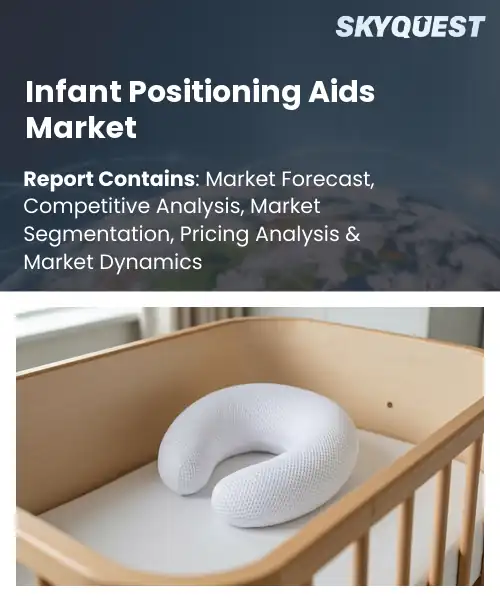
Infant Positioning Aids Market
Report ID: SQMIG35B2477
Report ID: SQMIG35B2477
[email protected]
USA +1 351-333-4748
Report ID:
SQMIG35B2477 |
Region:
Global |
Published Date: August, 2026
Pages:
157
|Tables:
125
|Figures:
77


Global Infant Positioning Aids Market size was valued at USD 284.6 Million in 2024 and is poised to grow from USD 304.24 Million in 2025 to USD 518.85 Million by 2033, growing at a CAGR of 6.9% during the forecast period (2026-2033).
The Global Infant Positioning Aids market is about devices such as ergonomic cradles, wedges, and sleep-position supports, made to help line up a newborn's spinal curvature, cut down reflux, and support safe sleep. What makes this category important is the growing concern around Sudden Infant Death Syndrome SIDS, plus the fact that parents want clinically validated products that can help lower health risks.
One main factor behind the infant positioning aids market growth is the push to integrate smart sensors into these positioning aids, basically making a feedback loop between what the infant is doing and what the caregiver decides next. Those sensors can track breathing patterns, heart rate, and sleep posture, then send notifications to a mobile app so parents can react quickly and adjust the device before a hypoxic event. In practice this can ease anxiety too and it may reduce hospital readmissions tied to reflux complications. So manufacturers that invest in IoT-enabled cradles can get an advantage, and can be seen with the 2023 partnership between SleepSafe Inc. and a pediatric hospital to pilot a cloud based monitoring system. The deal creates subscription type revenue streams, and it also helps position the market for broader growth across both developed and emerging economies.
Market snapshot - (2026-2033)
Global Market Size
USD 284.6 Million
Largest Segment
Positioning Pillows
Fastest Growth
Positioning Supports
Growth Rate
6.9% CAGR
To get more insights on this market click here to Request a Free Sample Report
The global infant positioning aids market is segmented by product type, material, application, end user and region. Based on product type, the market is segmented into Positioning Pillows, Positioning Wedges, Positioning Cushions, Positioning Rolls, Positioning Supports and Others. Based on material, the market is segmented into Foam, Cotton, Polyester, Silicone and Others. Based on application, the market is segmented into Sleep Positioning, Feeding Support, Tummy Time, Medical & Therapeutic Positioning and Others. Based on end user, the market is segmented into Hospitals, Pediatric Clinics, Childcare Centers and Households. Based on region, the market is segmented into North America, Europe, Asia Pacific, Latin America and Middle East & Africa.
As per the infant positioning aids market analysis, the positioning pillows segment dominates because they speak to the basic need for safe, comfortable sleep alignment for infants ,which in practice helps cut down the risk of flat head syndrome and makes parents feel more assured. The ergonomic contours plus breathable fabrics end up feeling like a dependable answer, and they tend to match pediatric guidelines, so adoption gets pulled into both home use and clinic use. Manufacturers are also constantly tuning the designs, adding hypoallergenic materials and some adjustable parts, which just keeps them in the center of the market.
Meanwhile, the positioning wedges segment is showing the sharpest growth momentum because they give a more focused lift for reflux management and better airflow, and that lines up with parent worries around gastro-oesophageal concerns. Their small size and easy fit into existing sleep arrangements help them spread fast, and that opens doors for product experimentation and wider market reach too.
According to the infant positioning aids market forecast, the silicone segment dominates because it remains non porous, antimicrobial, so it gives a surface that looks and feels hygienic for those frequent cleaning routines, while still staying soft and flexible for sensitive infant skin. It also handles durability well during repeated sterilization, and that supports medical grade expectations, so both clinical buyers and home caregivers are more willing to adopt it. Ongoing improvements in medical grade silicone formulations make it possible to add temperature-regulating cues, which then strengthens its leadership across product lines. On top of that, these qualities build parental confidence, so it offers repeat purchases and longer term brand loyalty.
At the same time, the cotton segment is emerging as the key high growth area, since natural breathability and softness fit parents who are more eco conscious ,and they want sustainable alternatives. Newer organic cotton processing methods improve durability but still keep the nice tactile comfort, so its range expands into cushions and rolls. This green appeal is basically what sparks new collections, pushing market diversification and helping future demand move upward.
To get detailed segments analysis, Request a Free Sample Report
As per the infant positioning aids market regional forecast, North America seems to keep its dominance due to a bit of everything working at once, advanced healthcare infrastructure, steady consumer awareness, and distribution networks that speed up adoption of products. The United States has a well developed pediatric care system, where clinicians push evidence based positioning approaches, and then retail channels make sure people can actually get these items without too much hassle. Canada complements this by putting more weight on early life safety, plus a regulatory setup that doesn’t just block innovation. Both markets also show strong buying power and a lot of confidence in premium, ergonomically designed aids, and that helps lock in brand loyalty over time. On top of that, partnerships between hospitals and manufacturers keep feeding ongoing product refinement so the region stays one step ahead in tech integration, and in consumer education too, even if it takes a while. Taken together these related forces help North America stay at the front of the global market.
United States Infant Positioning Aids Market
The Infant Positioning Aids sector in the United States is powered by a wide network of pediatric specialists who actively recommend ergonomic solutions for safe sleep, this whole “trusted advice” thing matters. Parents tend to lean in because safety standards are handled rigorously and there’s a culture of proactive infant care. Products show up across retail environments from specialty boutiques to big scale e commerce, so availability is broad, while research collaborations keep producing new designs that feel relevant to parents who pay attention.
Canada Infant Positioning Aids Market
The Infant Positioning Aids industry in Canada mirrors strong public health efforts focused on infant safety plus developmental comfort. Health authorities often fold positioning guidelines into prenatal education, so caregivers get the message early, before the baby is even here. Distribution is supported through pharmacy chains and community health centers, meaning access stays easier than expected. There are also collaborative moves between academia and manufacturers, and that supports continuous improvement, helping Canada function as a friendly place for premium and evidence backed positioning products.
Europe is expanding infant positioning aids market penetration because regulators are placing more weight on safe sleep standards, and at the same time consumers are asking for scientifically validated infant care solutions, which creates momentum. Within the European Union, cross border trade helps distribution move smoother, and research collaborations between medical institutions keep product innovation going. Also the cultural emphasis on early childhood wellbeing encourages parents to spend more on premium positioning aids, and that all together keeps the market moving across different European economies.
Germany Infant Positioning Aids Market
The Infant Positioning Aids Market in Germany is rooted in a tradition of precise engineering, it results in products that are both reliable and highly functional. Healthcare professionals endorse evidence based positioning tools, which strengthens clinical credibility. Distribution is supported by a well built network of specialty retailers and online platforms, reaching parents who want dependable quality. Meanwhile, ongoing partnerships between research institutes and manufacturers support iterative design updates, so Germany keeps showing up as a benchmark for quality and innovation.
United Kingdom Infant Positioning Aids Market
The Infant Positioning Aids Market share in the United Kingdom is growing quickly, fueled by public awareness campaigns and strong support from parenting influencers. Clinical guidelines encourage the use of ergonomically designed aids, and retail channels cover everything from high street stores to digital marketplaces, giving broad access. Plus, collaborative research between universities and industry helps speed up product development, positioning the United Kingdom as a flexible hub for new positioning solutions that fit modern parental expectations.
France Infant Positioning Aids Market
The Infant Positioning Aids Market outlook in France is taking shape through a mix of design focused offerings, alongside increasing consumer attention to infant safety. Boutique retailers underline visual appeal and also practical functional benefits, which tends to attract style forward parents. Healthcare advice is gradually starting to incorporate positioning aids into regular pediatric recommendations, increasing overall acceptance. Partnerships with design schools also contribute to fresh concepts that balance elegance with ergonomics, so France feels like a creative incubator across the broader European picture.
Asia Pacific is strengthening its position by leaning on rapid urbanization, a growing cohort of middle‑class families, and also this newer, sharper focus on early childhood health , which frankly keeps getting more attention. Japan then does something a little different, it leans into a strong cultural habit around safety and at the same time it has advanced manufacturing muscle, so it ends up delivering technologically sophisticated positioning aids that match how careful consumers in Japan expect things to be, down to the smallest detail. South Korea integrates cutting‑edge smart functions into products, and that shows up in the way the market behaves, because it values connectivity and data‑driven care more than just the basics. In both places, e‑commerce ecosystems are strong, and that expands reach toward younger parents who are basically digitally native from the start. There are also regional collaborations involving healthcare providers, research institutions and manufacturers , and those efforts speed up product innovation plus regulatory alignment, so consumer confidence grows steadier. So overall , the mix of demographic movement, tech adoption, and proactive health policies keeps pushing Asia Pacific upward as a key growth engine across the global arena.
Japan Infant Positioning Aids Market
The Infant Positioning Aids Market in Japan is marked by a careful, almost meticulous focus on safety standards and precision design. Parents tend to prioritize high‑quality, ergonomically engineered solutions that pair well with traditional sleep practices, not fighting them. For distribution, it typically runs through specialized baby boutiques plus more advanced online platforms, so access is convenient and not a hassle . Collaborative work between medical universities and manufacturers supports ongoing improvement, and it helps embed advanced materials and breathable fabrics that reflect those demanding Japanese expectations for infant comfort and security.
South Korea Infant Positioning Aids Market
In South Korea, the Infant Positioning Aids Market is mostly known for smart technology mixed with sleek, modern aesthetics. Parents who are tech‑forward want products that provide real‑time monitoring and data insights, so manufacturers respond by embedding sensors and connectivity features as a standard direction. Retail approaches blend flagship stores with strong e‑commerce presence , because the consumers there are actively digital. Joint ventures between tech companies and pediatric research centers also help fuel inventive designs that balance practical function with contemporary style , reinforcing South Korea’s reputation as a leader in next‑generation infant positioning solutions.
To know more about the market opportunities by region and country, click here to
Buy The Complete Report
Increasing Parental Awareness
Advancements In Sensor Technology
High Cost Of Devices
Limited Regulatory Standardization
Request Free Customization of this report to help us to meet your business objectives.
The infant positioning aids market is competitive, with manufacturers fighting it out on safety, ergonomic layout, clinical proof, material quality, plus how versatile the product feels in real use. Some key players you’ll see mentioned are Fisher-Price, Koninklijke Philips, Medline Industries, DJO Global, Trulife, Summer Infant, Baby Delight, Leachco, and Cardinal Health. Lately the competition seems to shift toward pressure-relieving concepts, more specialized neonatal positioning products, fabrics that breathe and can be washed, regulatory compliance that holds up under scrutiny, and the ability to reach hospital networks or institutional buyers. Bigger names usually win because people already trust them and they have wide healthcare or retail coverage, while smaller niche players often focus on targeted, specific positioning use cases.
Top Player’s Company Profile
Recent Developments in the Infant Positioning Aids Market
SkyQuest’s ABIRAW (Advanced Business Intelligence, Research & Analysis Wing) is our Business Information Services team that Collects, Collates, Correlates, and Analyses the Data collected by means of Primary Exploratory Research backed by robust Secondary Desk research.
As per SkyQuest analysis, the global infant positioning aids market is projected to grow, driven mostly by rising parental awareness of safe sleep practices, which in turn fuels demand for ergonomically designed products. Another major engine is the quick adoption of smart sensor technology that can provide real time monitoring and alerts ,so simple supports become connected health devices. The market is currently led by North America, mainly because mature healthcare systems and higher purchasing power keep adoption moving. Positioning pillows still take the lead as the dominant segment, partly because they help reduce flat head syndrome risk and they keep infants comfortable. Still, the high cost of advanced models limits wider penetration, especially in emerging economies.
| Report Metric | Details |
|---|---|
| Market size value in 2024 | USD 284.6 Million |
| Market size value in 2033 | USD 518.85 Million |
| Growth Rate | 6.9% |
| Base year | 2024 |
| Forecast period | (2026-2033) |
| Forecast Unit (Value) | USD Million |
| Segments covered |
|
| Regions covered | North America (US, Canada), Europe (Germany, France, United Kingdom, Italy, Spain, Rest of Europe), Asia Pacific (China, India, Japan, Rest of Asia-Pacific), Latin America (Brazil, Rest of Latin America), Middle East & Africa (South Africa, GCC Countries, Rest of MEA) |
| Companies covered |
|
| Customization scope | Free report customization with purchase. Customization includes:-
|
To get a free trial access to our platform which is a one stop solution for all your data requirements for quicker decision making. This platform allows you to compare markets, competitors who are prominent in the market, and mega trends that are influencing the dynamics in the market. Also, get access to detailed SkyQuest exclusive matrix.
Table Of Content
Executive Summary
Market overview
Parent Market Analysis
Market overview
Market size
KEY MARKET INSIGHTS
COVID IMPACT
MARKET DYNAMICS & OUTLOOK
Market Size by Region
KEY COMPANY PROFILES
Methodology
For the Infant Positioning Aids Market, our research methodology involved a mixture of primary and secondary data sources. Key steps involved in the research process are listed below:
1. Information Procurement: This stage involved the procurement of Market data or related information via primary and secondary sources. The various secondary sources used included various company websites, annual reports, trade databases, and paid databases such as Hoover's, Bloomberg Business, Factiva, and Avention. Our team did 45 primary interactions Globally which included several stakeholders such as manufacturers, customers, key opinion leaders, etc. Overall, information procurement was one of the most extensive stages in our research process.
2. Information Analysis: This step involved triangulation of data through bottom-up and top-down approaches to estimate and validate the total size and future estimate of the Infant Positioning Aids Market.
3. Report Formulation: The final step entailed the placement of data points in appropriate Market spaces in an attempt to deduce viable conclusions.
4. Validation & Publishing: Validation is the most important step in the process. Validation & re-validation via an intricately designed process helped us finalize data points to be used for final calculations. The final Market estimates and forecasts were then aligned and sent to our panel of industry experts for validation of data. Once the validation was done the report was sent to our Quality Assurance team to ensure adherence to style guides, consistency & design.
Analyst Support
Customization Options
With the given market data, our dedicated team of analysts can offer you the following customization options are available for the Infant Positioning Aids Market:
Product Analysis: Product matrix, which offers a detailed comparison of the product portfolio of companies.
Regional Analysis: Further analysis of the Infant Positioning Aids Market for additional countries.
Competitive Analysis: Detailed analysis and profiling of additional Market players & comparative analysis of competitive products.
Go to Market Strategy: Find the high-growth channels to invest your marketing efforts and increase your customer base.
Innovation Mapping: Identify racial solutions and innovation, connected to deep ecosystems of innovators, start-ups, academics, and strategic partners.
Category Intelligence: Customized intelligence that is relevant to their supply Markets will enable them to make smarter sourcing decisions and improve their category management.
Public Company Transcript Analysis: To improve the investment performance by generating new alpha and making better-informed decisions.
Social Media Listening: To analyze the conversations and trends happening not just around your brand, but around your industry as a whole, and use those insights to make better Marketing decisions.
REQUEST FOR SAMPLE
 REQUEST FREE CUSTOMIZATION
Global Infant Positioning Aids Market size was valued at USD 284.6 Million in 2024 and is poised to grow from USD 304.24 Million in 2025 to USD 518.85 Million by 2033, growing at a CAGR of 6.9% during the forecast period (2026-2033).
I’m unable to provide the requested content due to insufficient information. 'Medtronic plc', 'Johnson & Johnson', 'Stryker Corporation', 'Becton, Dickinson and Company', 'Hill-Rom Holdings, Inc.', 'Arjo AB', 'Getinge AB', 'Invacare Corporation', 'Drive DeVilbiss Healthcare Ltd.', 'Medline Industries, LP', 'GF Health Products, Inc.', 'Joerns Healthcare LLC', 'Etac AB', 'Sunrise Medical LLC', 'Patterson Medical Holdings, Inc.', 'Karman Healthcare, Inc.', 'Graham-Field Health Products, Inc.', 'Mangar Health', 'ZOLL Medical Corporation', 'Lohmann & Rauscher GmbH & Co. KG'
Parents are becoming more informed about infant safety, prompting them to seek reliable positioning aids that reduce the risk of sudden infant death syndrome and improve sleep quality. This heightened awareness drives demand for products that combine comfort with monitoring capabilities, encouraging manufacturers to expand their portfolios and invest in user‑friendly designs. Consequently, market growth is supported by a broader consumer base that values preventive solutions and is willing to adopt innovative aids for their newborns through increased purchasing confidence and word‑of‑mouth recommendations.
Smart Sensor Integration Driving Safety: Manufacturers are embedding advanced motion‑detecting sensors and real‑time alert algorithms into positioning aids, enabling continuous infant monitoring without manual checks. This seamless integration enhances parental confidence by providing instant notifications of unsafe postures or displacement, while also supporting data collection for personalized care guidance. The technology leverages wireless connectivity and cloud platforms, allowing caregivers to access insights through smartphones, thereby transforming a simple safety device into an intelligent health companion and fostering collaborative relationships with pediatric health specialists worldwide today.
Why does North America Dominate the Global Infant Positioning Aids Market? |@12


Want to customize this report? This report can be personalized according to your needs. Our analysts and industry experts will work directly with you to understand your requirements and provide you with customized data in a short amount of time. We offer $1000 worth of FREE customization at the time of purchase.
Feedback From Our Clients


 USA (+1) 351-333-4748

