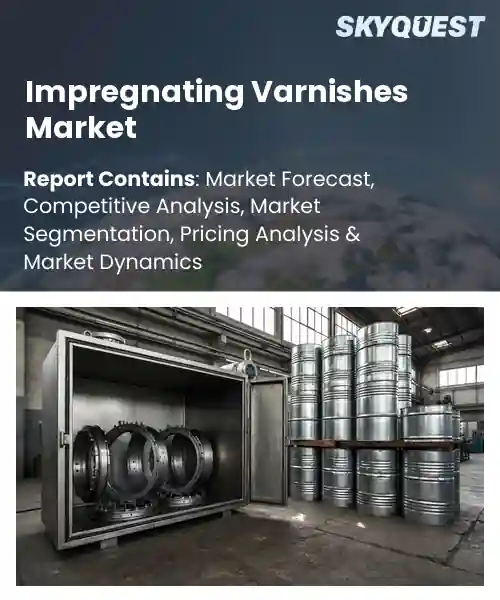
Impregnating Varnishes Market
Report ID: SQMIG15E3391
Report ID: SQMIG15E3391
[email protected]
USA +1 351-333-4748
Report ID:
SQMIG15E3391 |
Region:
Global |
Published Date: March, 2026
Pages:
157
|Tables:
120
|Figures:
77


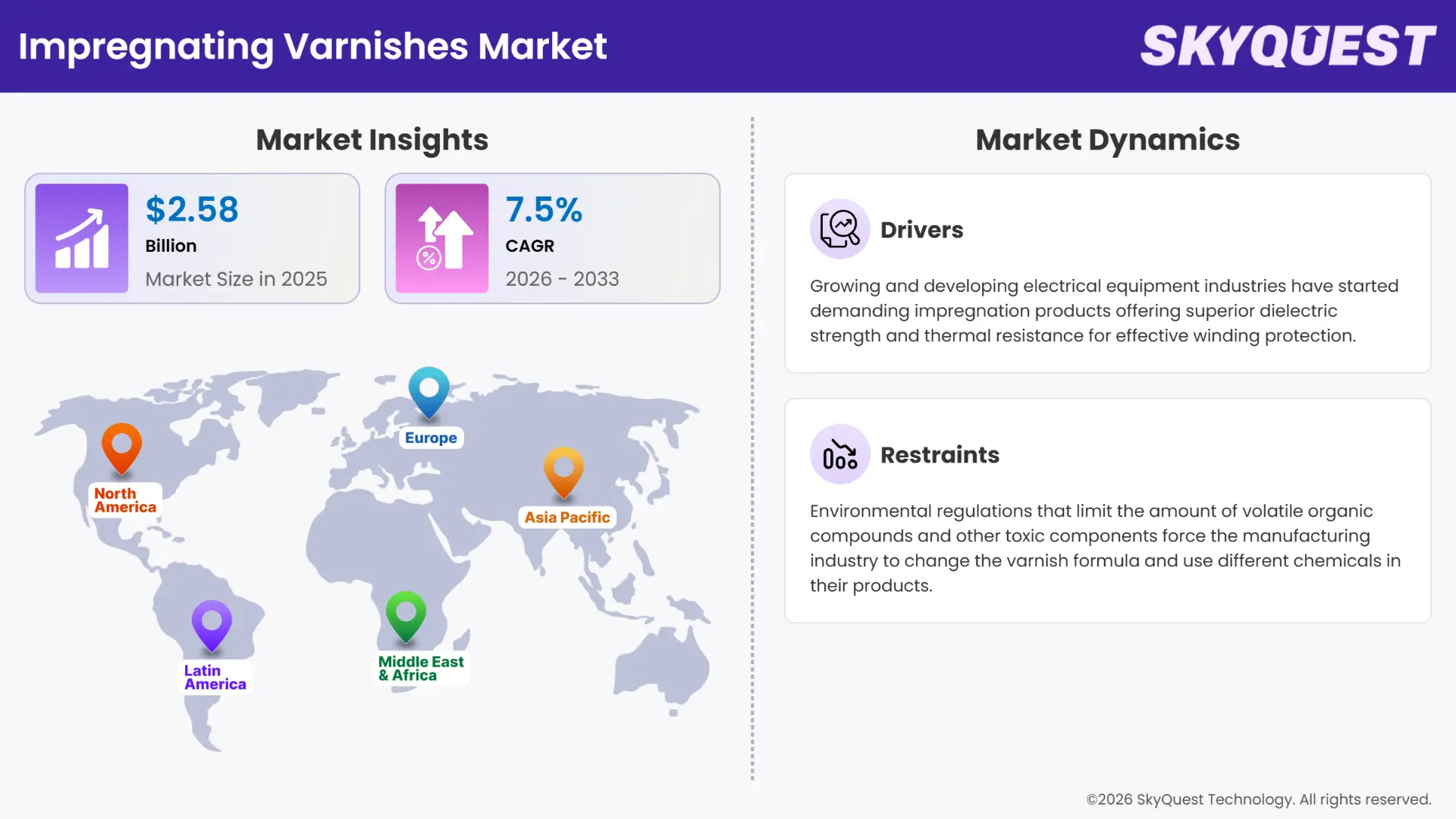
Global Impregnating Varnishes Market size was valued at USD 2.4 Billion in 2024 and is poised to grow from USD 2.58 Billion in 2025 to USD 4.6 Billion by 2033, growing at a CAGR of 7.5% during the forecast period (2026-2033).
Key Takeaways: Market Trends & Insights
Growing demand for electrical equipment, rising focus on energy efficiency, increasing adoption of electric vehicles and renewable energy systems, advancements in insulation materials, and emphasis on equipment durability are driving sales of impregnating varnishes.
Pressure for low VOC material usage and reducing maintenance cost are adding to the move towards environmentally friendly and high-performing varnishes. Usage of electric vehicles and wind power generation systems is contributing to the requirement for high thermal and moisture resistance insulation, leading to consistent growth in impregnating varnishes. Growing industrialization and electrification around the world coupled with increasing demand for reliable and efficient electrical systems are expected to primarily drive impregnating varnishes market growth. An increase in use of motors, transformers, and generators across industries is also forecasted to help boost the sales of impregnating varnishes across the study period and beyond.
On the contrary, high costs of advanced varnish formulations, regulatory compliance challenges, volatility in raw material prices, and performance limitations under extreme operating conditions are projected to impede impregnating varnishes market penetration over the coming years.
How is AI Enhancing Quality Control In the Impregnating Varnishes Market?
AI is enhancing quality control process by utilizing high-definition sensors and cameras to identify minor defects and correlate formulation and processing parameters with the product's end performance. Machine learning algorithms facilitate predictive testing and adjustments in real-time, which minimizes errors and increases batch uniformity. To cope with increasing customer demands for reliable products and stringent environmental regulations, businesses are leveraging smart analytics and digital technologies to resolve problems promptly.
In May 2026, BASF showcased its Lab Assistant and AI-powered formulation tools at the American Coatings Show. These tools combine simulation and sensor feedback for faster validation and real-time quality control, improving consistency, reducing material waste, and accelerating product development.
To get more insights on this market click here to Request a Free Sample Report
Global impregnating varnishes market is segmented by resin chemistry, curing method, application process, end-use industry, and region. Based on resin chemistry, the market is segmented into Polyester Resin, Epoxy Resin, Polyesterimide, and silicone-based varnishes. Based on curing method, the market is segmented into thermal curing, UV curing, and air drying/moisture curing. Based on application process, the market is segmented into trickle impregnation, vacuum pressure impregnation (VPI), dip & bake process, and roll-through impregnation. Based on end-use industry, the market is segmented into electric motors & generators, transformers & coils, automotive, and consumer appliances. Based on region, the market is segmented into North America, Europe, Asia Pacific, Latin America, and Middle East & Africa.
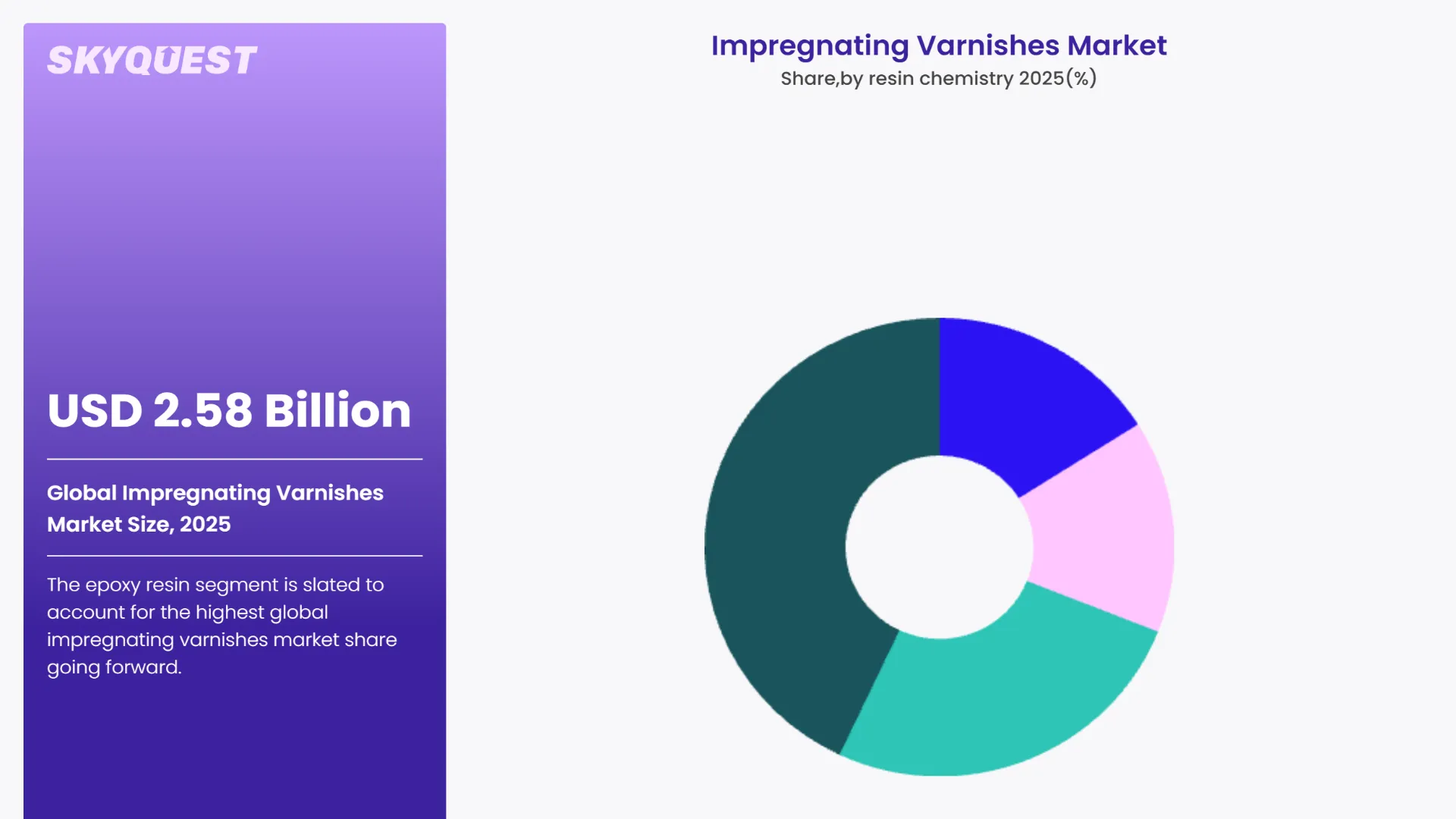
The epoxy resin segment is slated to account for the highest global impregnating varnishes market share going forward. Its inherent chemical crosslinking yields superior mechanical strength, dielectric stability, and adhesion are expected to help this segment hold sway over others. Such attributes minimize potential failure mechanisms associated with temperature fluctuation, vibration, and electric current stress, thus promoting the selection of epoxy resin systems in applications involving motors and transformers. This is because of the compatibility of such technology with different curing processes, alongside the continuous improvement of formulators.
However, Polyesterimide is emerging as the fastest growing segment as per this impregnating varnishes industry analysis. Elevated thermal endurance and improved flexibility offered by this material enable longer service life in higher temperature insulation systems. The increasing requirement for smaller, fast machines along with advancements in resin technology are promoting the use of polyesterimides, opening up possibilities for advanced applications such as motors and generators that need to work at higher temperatures.
The vacuum pressure impregnation segment is estimated to lead the global impregnating varnishes market revenue generation in the long run. Its ability to offer deeper resin penetration and consistent void free insulation layers that substantially enhance dielectric integrity, and mechanical support helps cement its dominance. With the elimination of air entrapment followed by the injection of the varnish into small spaces, there is less chance of developing hot spots, and this will prevent moisture penetration. This technique is widely accepted because of its demonstrated effectiveness in improving heat dissipation and longevity.
On the other hand, Trickle Impregnation is gaining popularity among the fastest-growing processes due to simpler machines and reduced cycle times that reduce the initial investment requirements for small and medium-size firms. Energy-efficient motor designs, flexible manufacturing capabilities, and innovative developments in low-viscosity varnish formulations have all contributed to the rise of trickle impregnation techniques.
To get detailed segments analysis, Request a Free Sample Report
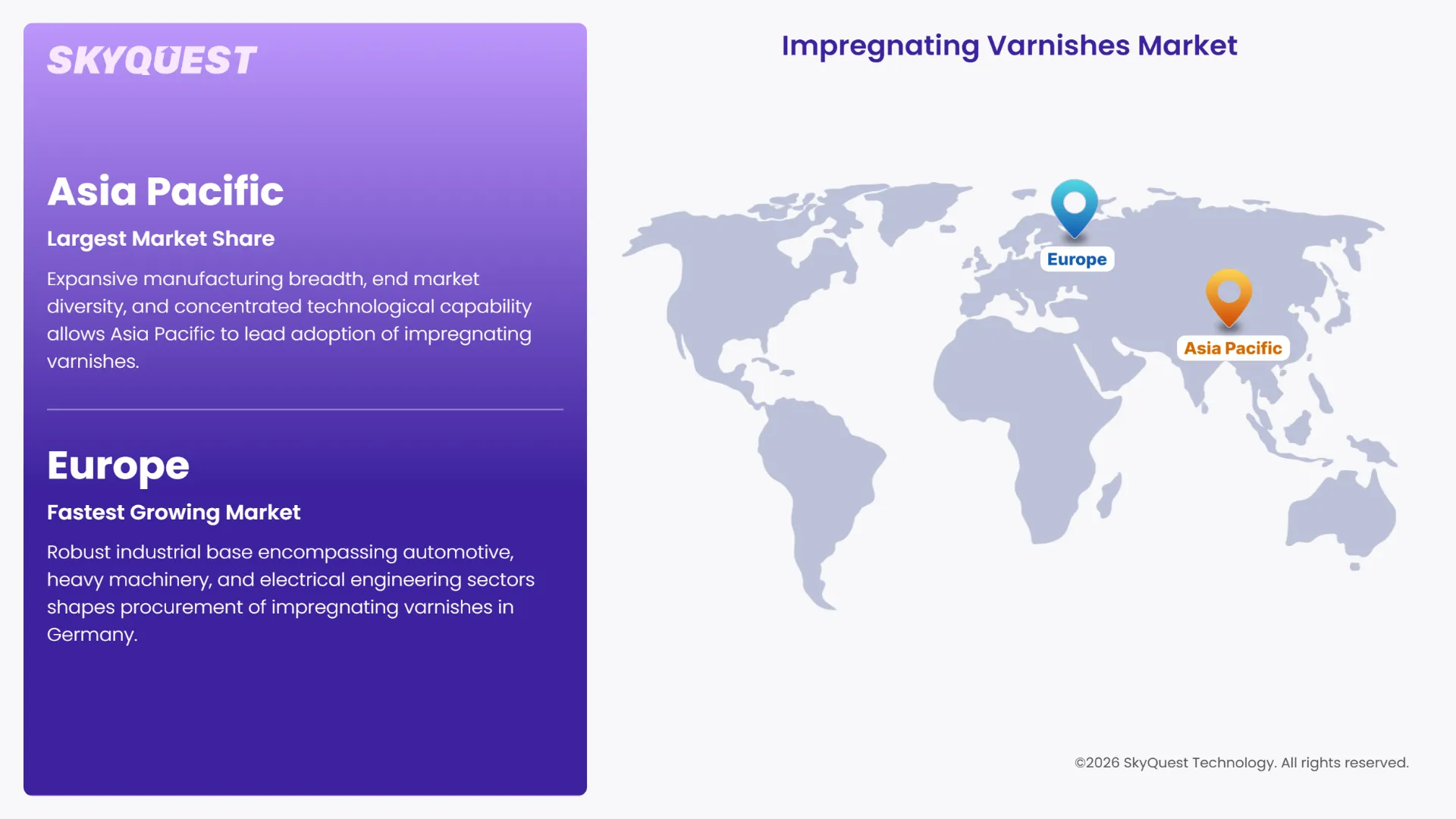
Expansive manufacturing breadth, end market diversity, and concentrated technological capability allows Asia Pacific to lead adoption of impregnating varnishes. Regional manufacturers have made significant investments in specialized formulations and application know-how; backed by research centres and collaboration with the industry. Rapid industrial growth, many projects that use renewable energy resources, and the presence of equipment manufacturing clusters with high population density mean that size does matter. An environment-friendly quality-based regulation system encourages progress about environmentally friendly waterborne formulations. Overall, all these features, along with a responsive and export-oriented distribution network, contribute to long-term market dominance.
High technical sophistication and demand for premium performance shapes sales of impregnating varnishes in Japan. Domestic manufacturers focus on maintaining strict quality controls and continuous improvements through cooperation between the varnish companies and original equipment manufacturers. Precision electronics, high efficiency motors, and state-of-the-art automotive applications need coatings to provide stability and durability
Robust electronics and automotive value chains and rapid adoption of advanced manufacturing methods boosts demand for impregnating varnishes in South Korea. Joint ventures among suppliers and manufacturers facilitate innovation and application. Locally sourced companies are well-versed in providing specialized varnish solutions for rapid assembly and performance specifications relating to insulation and corrosion resistance.
Modernization of legacy industrial sectors, renewed investment in electrification, and strong focus on sustainable product profiles boost demand for impregnating varnishes in Europe. Strong regulation and harmonized standards continue to enhance product quality and promote the adoption of low-emission, energy-efficient formulations. Furthermore, there is already an extensive network of specialized suppliers and engineering service companies that provide customized solutions with quick lead times to customers. Collaborative research between research institutions and industry also promotes new resin chemistry and application processes, while activities to retrofit existing installations will continue to create a demand for impregnated varnishes. machinery, automotive and power-generation are upgrading their insulation systems to conform to stricter performance and environmental standards resulting in increased sales of impregnating varnishes in the region.
Robust industrial base encompassing automotive, heavy machinery, and electrical engineering sectors shapes procurement of impregnating varnishes in Germany. Integration between the varnishes makers and parts manufacturers helps the industry develop joint solutions to sophisticated insulating tasks. Demand in the country is focused on durability, thermal properties, and adherence to tough standards, which makes the suppliers deliver reliable formulas and services.
Electrification projects, growing renewables activity, and innovation in specialty manufacturing boosts sales of impregnating varnishes across the United Kingdom. New applications for impregnating varnishes are spurred by retrofit projects aimed at updating the aged electrical infrastructure with new insulation systems. Local manufacturers and technology suppliers have increased their ability to formulate varnishes and offer coating services, besides collaborating with engineering companies to offer solutions in niche applications.
Modernization efforts across energy and transport sectors and a strategic push toward advanced manufacturing boosts adoption of impregnating varnishes across France. Local manufacturers are expanding their range of products that can be customized and applied using advanced technology not only for new constructions but also for upgrading. End users look for paints that have stringent requirements on safety and durability, particularly when they are used in connection with grid components and industrial motors.
Strategic reshoring and targeted investment in high value manufacturing boosts the sales of impregnating varnishes across North America. Innovative chemistries and new application methods are moving more quickly into commercial use with the help of partnerships among OEMs, material scientists, and fabricators. Regional supply chain initiatives and increasing domestic production ability enhance the resilience and responsiveness of the North American supply chain to market demands. Focusing on technical services, after-market support, and retrofit programs is helping to further establish the North American marketplace for impregnating varnishes as competitive and as increasingly self-sufficient. Rising R&D for impregnating varnishes with low emissions, high performance, that can meet strict environmental and safety standards is also creating new opportunities.
High emphasis on innovation, customization, and regulatory compliance augments sales of impregnating varnishes across the United States. Investment in technology in terms of applications and testing makes sure that new resin systems get adopted faster. Formulations must be developed in a way that satisfies both requirements while also taking into account environmental factors. Suppliers can provide solutions along with support when formulating such products.
Energy intensive sectors, a commitment to sustainable materials, and close integration with neighboring industrial hubs boost the demand for impregnating varnishes in Canada. Local producers emphasize specialization, performance, and reliability in their products to cater to both local and trans-border collaborations. Market players with expertise in providing consultation along with robust formulae are valued in the industry. Demands emerge due to application areas like power production, mining tools, and specific manufacturing where tough insulating materials are required.
To know more about the market opportunities by region and country, click here to
Buy The Complete Report
Expansion In Electrical Insulation Applications
Growing and developing electrical equipment industries have started demanding impregnation products offering superior dielectric strength and thermal resistance for effective winding protection. In addition to providing improved resin distribution and better adhesion properties to prevent failures caused by moisture and mechanical factors, varnishing offers a significant functionality which helps OEMs prefer such solutions at the time of designing. It results in increased use of impregnation materials in a variety of applications, including motors, generators and transformers, thus expanding impregnating varnishes market outlook.
Technological Advancements In Formulations
Constant advancements in the chemistry of resins and curing methods allow for impregnation varnishes that provide enhanced thermal resistance, chemical resistance, and efficiency, thus being more suitable to meet the changing needs of industry. Such improvements in the composition will result in faster curing and increased adaptability to different substrates, making it easier for manufacturers to incorporate varnish in their production process. Enhanced performance and efficiency will help make the use of varnishes more appealing to consumers, prompting the substitution of other types of coatings.
Strict Environmental Compliance Requirements
Environmental regulations that limit the amount of volatile organic compounds and other toxic components force the manufacturing industry to change the varnish formula and use different chemicals in their products. The need for compliance raises technological challenges and makes the development process longer because the manufacturer should prove the efficiency of its products and receive permission to introduce them to the market. Small enterprises may find it difficult to handle these requirements because of resource limitations, which may result in the absence of diversity within the range of products on the market.
Dependence on Specialty Raw Materials
Reliance upon a small number of specialized types of resin, solvent, and hardener makes varnishes vulnerable to issues in sourcing and availability of materials. In the event that certain raw materials become scarce, or in case of mergers among providers, manufacturers will need to invest in qualifying suitable alternatives, modifying their manufacturing schedule, and sourcing materials from elsewhere, thus increasing lead time for delivery to customers. Restricted access to raw materials means that manufacturers cannot respond to demand changes quickly and that potential competitors will find it difficult to enter the market.
Request Free Customization of this report to help us to meet your business objectives.
Competitive dynamics in the global impregnating varnishes market are driven by consolidation, targeted technology licensing and sustainability partnerships as incumbents secure specialty chemistries and scale through acquisitions and alliances; for example AkzoNobel’s recent acquisition of Stahl’s powder activities and Remmers’ strategic partnership with Teknovace. Startups and materials innovators such as Repela Tech and Clean Ocean Coatings push non toxic and solvent free formulations, accelerating product differentiation and procurement partnerships.
SkyQuest’s ABIRAW (Advanced Business Intelligence, Research & Analysis Wing) is our Business Information Services team that Collects, Collates, Correlates, and Analyses the Data collected by means of Primary Exploratory Research backed by robust Secondary Desk research.
As per SkyQuest analysis, rising demand for efficient electrical insulation and increasing adoption of electric vehicles and renewable energy systems are anticipated to drive the demand for impregnating varnishes going forward. However, high costs of advanced formulations, regulatory compliance challenges, and raw material price volatility are slated to slow down the adoption of impregnating varnishes in the future. North America is slated to spearhead the demand for impregnating varnishes owing to strong industrial base, high adoption of advanced electrical equipment, and stringent environmental regulations. Advancements in low-VOC and high-performance resin chemistries, integration of AI-driven quality control systems, and development of heat- and moisture-resistant varnishes are anticipated to be key trends driving the impregnating varnishes sector across the study period.
| Report Metric | Details |
|---|---|
| Market size value in 2024 | USD 2.4 Billion |
| Market size value in 2033 | USD 4.6 Billion |
| Growth Rate | 7.5% |
| Base year | 2024 |
| Forecast period | 2026-2033 |
| Forecast Unit (Value) | USD Billion |
| Segments covered |
|
| Regions covered | North America (US, Canada), Europe (Germany, France, United Kingdom, Italy, Spain, Rest of Europe), Asia Pacific (China, India, Japan, Rest of Asia-Pacific), Latin America (Brazil, Rest of Latin America), Middle East & Africa (South Africa, GCC Countries, Rest of MEA) |
| Companies covered |
|
| Customization scope | Free report customization with purchase. Customization includes:-
|
To get a free trial access to our platform which is a one stop solution for all your data requirements for quicker decision making. This platform allows you to compare markets, competitors who are prominent in the market, and mega trends that are influencing the dynamics in the market. Also, get access to detailed SkyQuest exclusive matrix.
Table Of Content
Executive Summary
Market overview
Parent Market Analysis
Market overview
Market size
KEY MARKET INSIGHTS
COVID IMPACT
MARKET DYNAMICS & OUTLOOK
Market Size by Region
KEY COMPANY PROFILES
Methodology
For the Impregnating Varnishes Market, our research methodology involved a mixture of primary and secondary data sources. Key steps involved in the research process are listed below:
1. Information Procurement: This stage involved the procurement of Market data or related information via primary and secondary sources. The various secondary sources used included various company websites, annual reports, trade databases, and paid databases such as Hoover's, Bloomberg Business, Factiva, and Avention. Our team did 45 primary interactions Globally which included several stakeholders such as manufacturers, customers, key opinion leaders, etc. Overall, information procurement was one of the most extensive stages in our research process.
2. Information Analysis: This step involved triangulation of data through bottom-up and top-down approaches to estimate and validate the total size and future estimate of the Impregnating Varnishes Market.
3. Report Formulation: The final step entailed the placement of data points in appropriate Market spaces in an attempt to deduce viable conclusions.
4. Validation & Publishing: Validation is the most important step in the process. Validation & re-validation via an intricately designed process helped us finalize data points to be used for final calculations. The final Market estimates and forecasts were then aligned and sent to our panel of industry experts for validation of data. Once the validation was done the report was sent to our Quality Assurance team to ensure adherence to style guides, consistency & design.
Analyst Support
Customization Options
With the given market data, our dedicated team of analysts can offer you the following customization options are available for the Impregnating Varnishes Market:
Product Analysis: Product matrix, which offers a detailed comparison of the product portfolio of companies.
Regional Analysis: Further analysis of the Impregnating Varnishes Market for additional countries.
Competitive Analysis: Detailed analysis and profiling of additional Market players & comparative analysis of competitive products.
Go to Market Strategy: Find the high-growth channels to invest your marketing efforts and increase your customer base.
Innovation Mapping: Identify racial solutions and innovation, connected to deep ecosystems of innovators, start-ups, academics, and strategic partners.
Category Intelligence: Customized intelligence that is relevant to their supply Markets will enable them to make smarter sourcing decisions and improve their category management.
Public Company Transcript Analysis: To improve the investment performance by generating new alpha and making better-informed decisions.
Social Media Listening: To analyze the conversations and trends happening not just around your brand, but around your industry as a whole, and use those insights to make better Marketing decisions.
REQUEST FOR SAMPLE
 REQUEST FREE CUSTOMIZATION
Global Impregnating Varnishes Market size was valued at USD 2.4 Billion in 2024 and is poised to grow from USD 2.58 Billion in 2025 to USD 4.6 Billion by 2033, growing at a CAGR of 7.5% during the forecast period (2026-2033).
Competitive dynamics in the global impregnating varnishes market are driven by consolidation, targeted technology licensing and sustainability partnerships as incumbents secure specialty chemistries and scale through acquisitions and alliances; for example AkzoNobel’s recent acquisition of Stahl’s powder activities and Remmers’ strategic partnership with Teknovace. Startups and materials innovators such as Repela Tech and Clean Ocean Coatings push non toxic and solvent free formulations, accelerating product differentiation and procurement partnerships. 'Elantas', 'Von Roll Holding', 'Axalta Coating Systems', 'Henkel AG', 'Huntsman Corporation', 'BASF SE', '3M Company', 'Wacker Chemie', 'Momentive Performance', 'Aditya Birla', 'Bodo Möller Chemie', 'Robnor ResinLab', 'Bawa Polymers', 'VUKI a.s.', 'Kyocera', 'Hitachi Chemical', 'Sumitomo Bakelite', 'Isovolta Group', 'AEV Group', 'Cremascoli'
Emerging and expanding electrical equipment sectors increasingly require high performance impregnation materials to improve dielectric strength, thermal stability and long term reliability of windings and coils. Impregnating varnishes provide uniform resin distribution and enhanced adhesion that reduce failure modes associated with moisture and mechanical stress, thereby extending service life and lowering maintenance needs. This functional advantage encourages original equipment manufacturers to specify varnish solutions during design stages, supporting broader adoption across motors, transformers and generators and contributing to steady market growth through specification led procurement.
Sustainability Driven Innovation: Manufacturers are prioritizing development of low emission and bio derived impregnating varnishes that maintain performance while addressing customer demand for greener materials and easier end of life handling. Reformulation efforts focus on renewable feedstocks, reduced solvent use, and enhanced recyclability without compromising electrical or mechanical properties. Brand owners and specifiers increasingly favor suppliers who demonstrate lifecycle thinking and transparent sourcing, prompting investment in alternative chemistries and certification pathways that align product portfolios with corporate sustainability commitments and circular economy objectives.
Asia Pacific Dominate the Global Impregnating Varnishes Market.
The Epoxy Resin segment currently holds the largest share of the market due to its excellent electrical insulation properties, thermal stability, and durability in industrial applications.
Key application processes include Trickle Impregnation, Vacuum Pressure Impregnation (VPI), Dip & Bake Process, and Roll-through Impregnation, depending on the performance requirements of the electrical components being treated.
AI is improving quality control by utilizing sensors, cameras, and machine learning algorithms to detect defects, optimize formulations, enable predictive testing, and enhance production consistency while reducing material waste.


Want to customize this report? This report can be personalized according to your needs. Our analysts and industry experts will work directly with you to understand your requirements and provide you with customized data in a short amount of time. We offer $1000 worth of FREE customization at the time of purchase.
Feedback From Our Clients


 USA (+1) 351-333-4748

