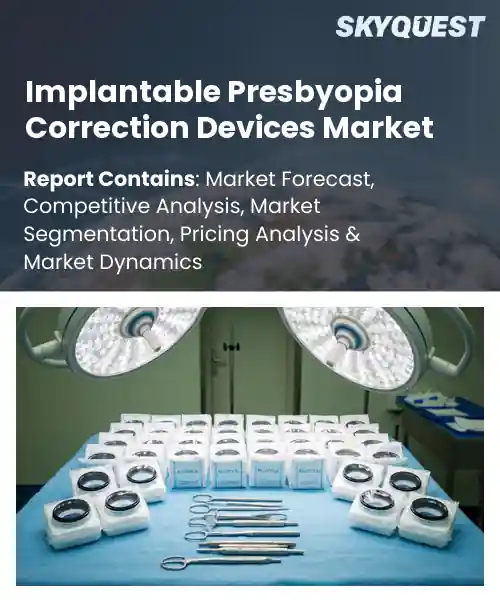
Implantable Presbyopia Correction Devices Market
Report ID: SQMIG35A3351
Report ID: SQMIG35A3351
[email protected]
USA +1 351-333-4748
Report ID:
SQMIG35A3351 |
Region:
Global |
Published Date: March, 2026
Pages:
157
|Tables:
141
|Figures:
78


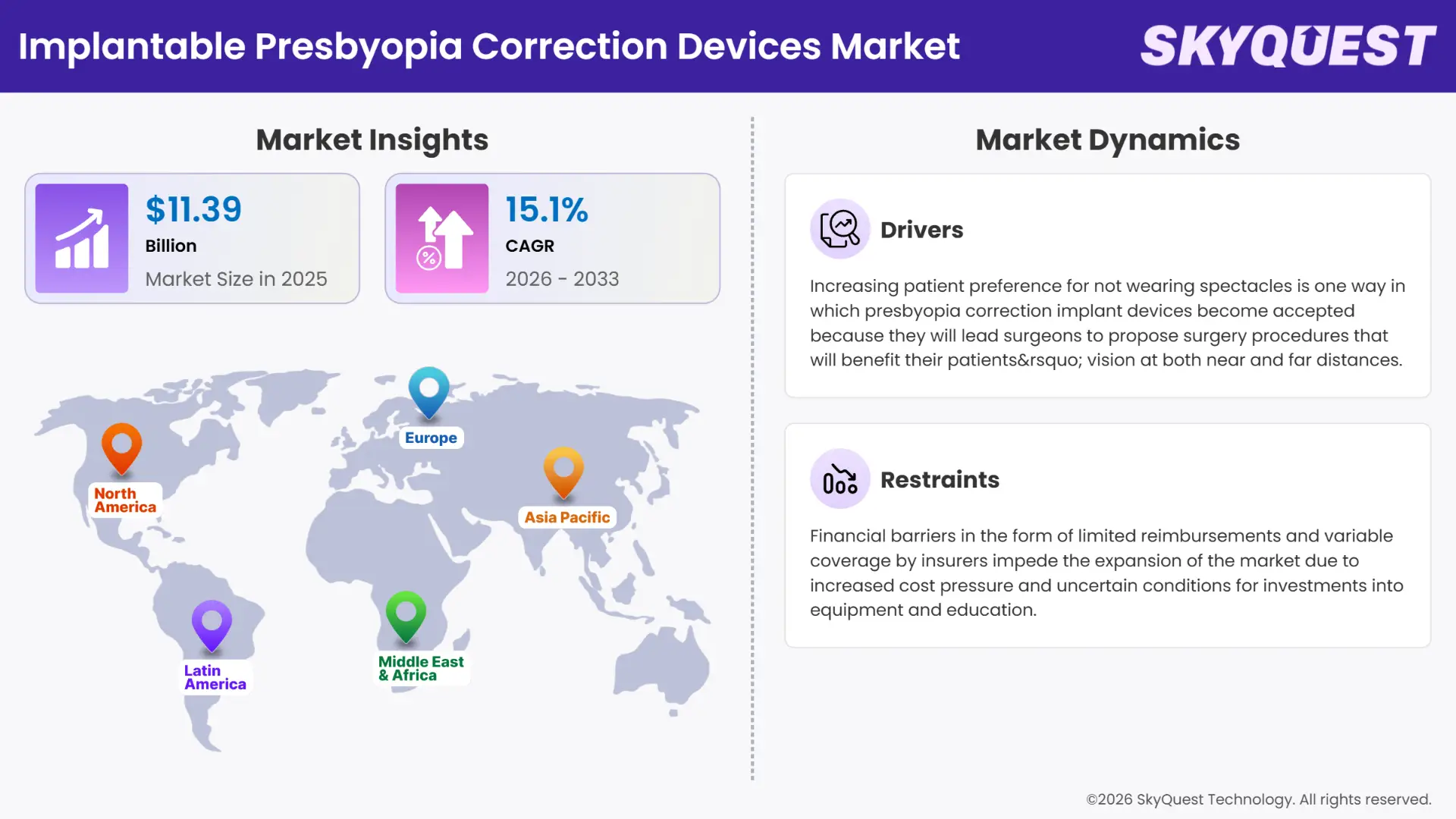
Global Implantable Presbyopia Correction Devices Market size was valued at USD 9.9 Billion in 2024 and is poised to grow from USD 11.39 Billion in 2025 to USD 35.1 Billion by 2033, growing at a CAGR of 15.1% during the forecast period (2026-2033).
Key Takeaways: Market Trends & Insights
Growing aging population, increasing demand for vision correction, rising preference for spectacle independence, advancements in ophthalmic technologies, and emphasis on improving quality of life arae driving sales of implantable presbyopia correction devices.
Advances in lenses in terms of technology (multifocal, extended depth of focus IOLs), alongside enhancements in procedures, are contributing to improved outcomes for patients. In addition, increasing penetration into developing economies, bolstered by growing numbers of cataracts surgeries and changes in the reimbursement structure, is expected to boost sales of advanced implantable presbyopia correction devices. The rising prevalence of presbyopia and increasing participation of older adults in active lifestyles are also promoting the sales of implantable presbyopia correction devices. Growing awareness regarding vision health among consumers around the world coupled with increasing demand for long-term corrective solutions is expected to primarily drive implantable presbyopia correction devices market growth.
On the contrary, high costs of premium implantable devices, risk of surgical complications, limited access in developing regions, and variability in patient outcomes are anticipated to slow down implantable presbyopia correction devices market penetration over the coming years.
How is AI Driving Innovation in the Implantable Presbyopia Correction Devices Market?
AI is revolutionizing presbyopia correction through implantation through advancements in diagnosis, planning of the surgery, choosing the best lenses, and tracking outcomes of treatment. Some of these developments are the use of AI algorithms in analyzing OCT and corneal topography images for lens choice, prediction tools for finding the best candidates, and simulations for perfecting surgical techniques pre-operation. The market trend now is towards more personalized implants due to adoption of an AI-driven approach that makes surgery safer and facilitates counseling for the patient.
In February 2026, STAAR Surgical expanded the FDA age indication for its EVO ICL. Combined with AI-enabled imaging and surgical planning tools, this supports better patient selection, improves workflow efficiency, and accelerates adoption of implantable vision correction solutions.
To get more insights on this market click here to Request a Free Sample Report
Global implantable presbyopia correction devices market is segmented by type, device type, material, age group, end user, and region. Based on type, the market is segmented into corneal inlays and scleral implants. Based on device type, the market is segmented into Monofocal Implants, Multifocal Implants, and Toric Implants. Based on material, the market is segmented into Silicone and Acrylic. Based on age group, the market is segmented into Age 40-50, Age 50-65, and Age above 65. Based on end user, the market is segmented into hospitals & clinics and ambulatory surgical centers. Based on region, the market is segmented into North America, Europe, Asia Pacific, Latin America, and Middle East & Africa.
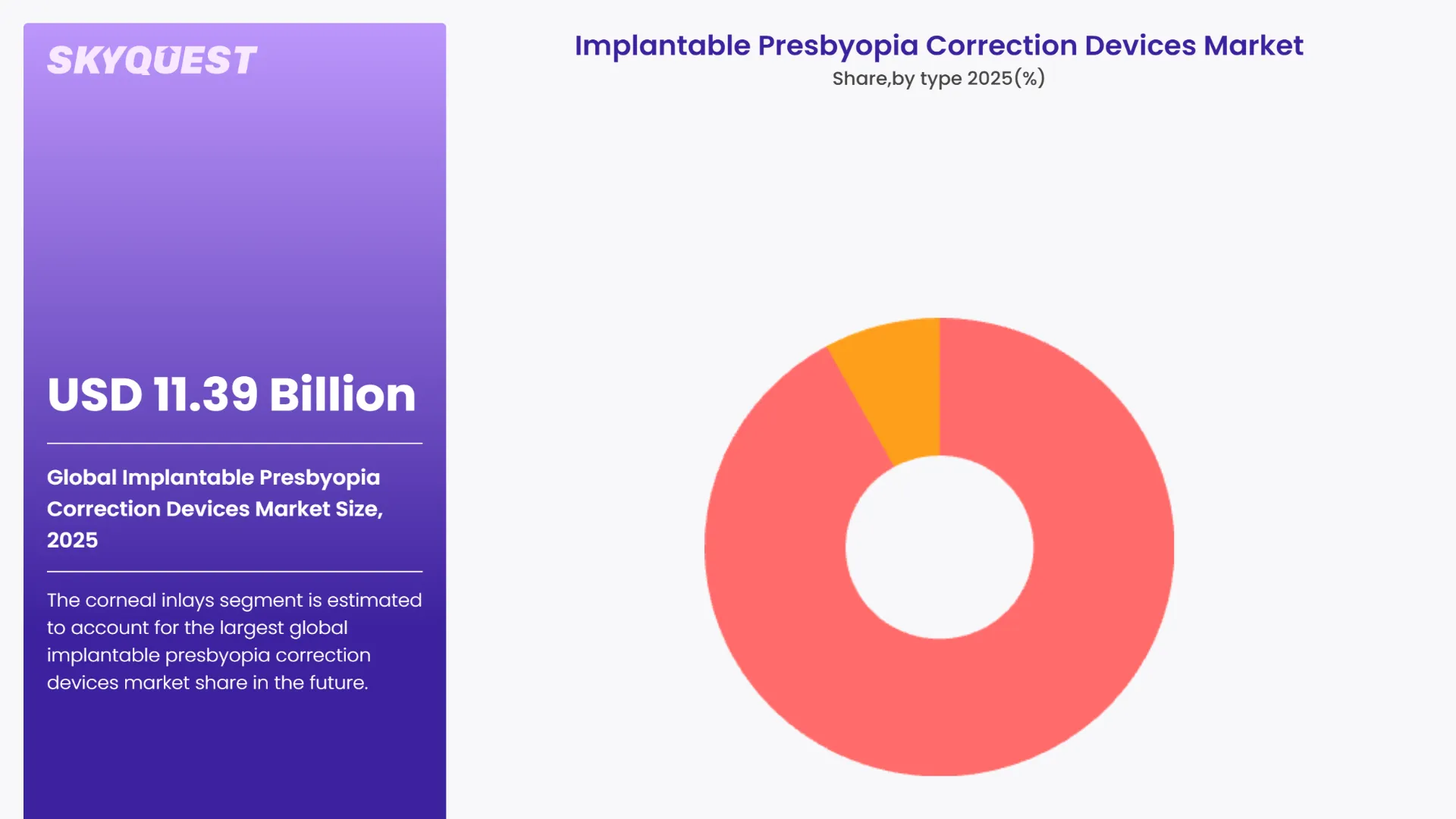
The corneal inlays segment is estimated to account for the largest global implantable presbyopia correction devices market share in the future. They offer a minimally invasive option that directly restores near vision by altering corneal optics while preserving ocular anatomy, which helps this segment hold sway over others. Clinical experience with cornea-based refractive surgery, simpler nature of surgical procedures, and continuous evolution of technology result in purchases by eye doctors, thus forming a steady stream of surgeries that contribute to building physician confidence and maintaining patient demand among the presbyopic population.
However, scleral implants are emerging as the most rapidly expanding segment as per this implantable presbyopia correction devices market forecast. Potential of these implants to treat a broader range of presbyopic conditions and deliver stable refractive changes is helping create new opportunities. Advancements in implant design and surgeon enthusiasm about anatomical techniques are spurring research, investments, and procedures that will lead to future product growth opportunities.
The multifocal implants segment is projected to spearhead the global implantable presbyopia correction devices market revenue generation through 2033. These devices offer simultaneous multiple focal points enabling patients to achieve functional near and distance vision with a single implant, allowing them to lead global demand. Advances in the field of lens optics, increased skill levels of surgeons in implementing implants, and favorable feedback from patients all work towards increasing the acceptance rate for this technology, encouraging manufacturers to improve its capabilities further.
However, toric implants show the highest growth momentum due to their ability to cater to the condition of presbyopia along with corneal astigmatism, fulfilling the gaps in medical practice and bringing about innovation in both optics and aligning technology; the features, along with advancements in surgical practices, form the basis of new avenues for success.
To get detailed segments analysis, Request a Free Sample Report
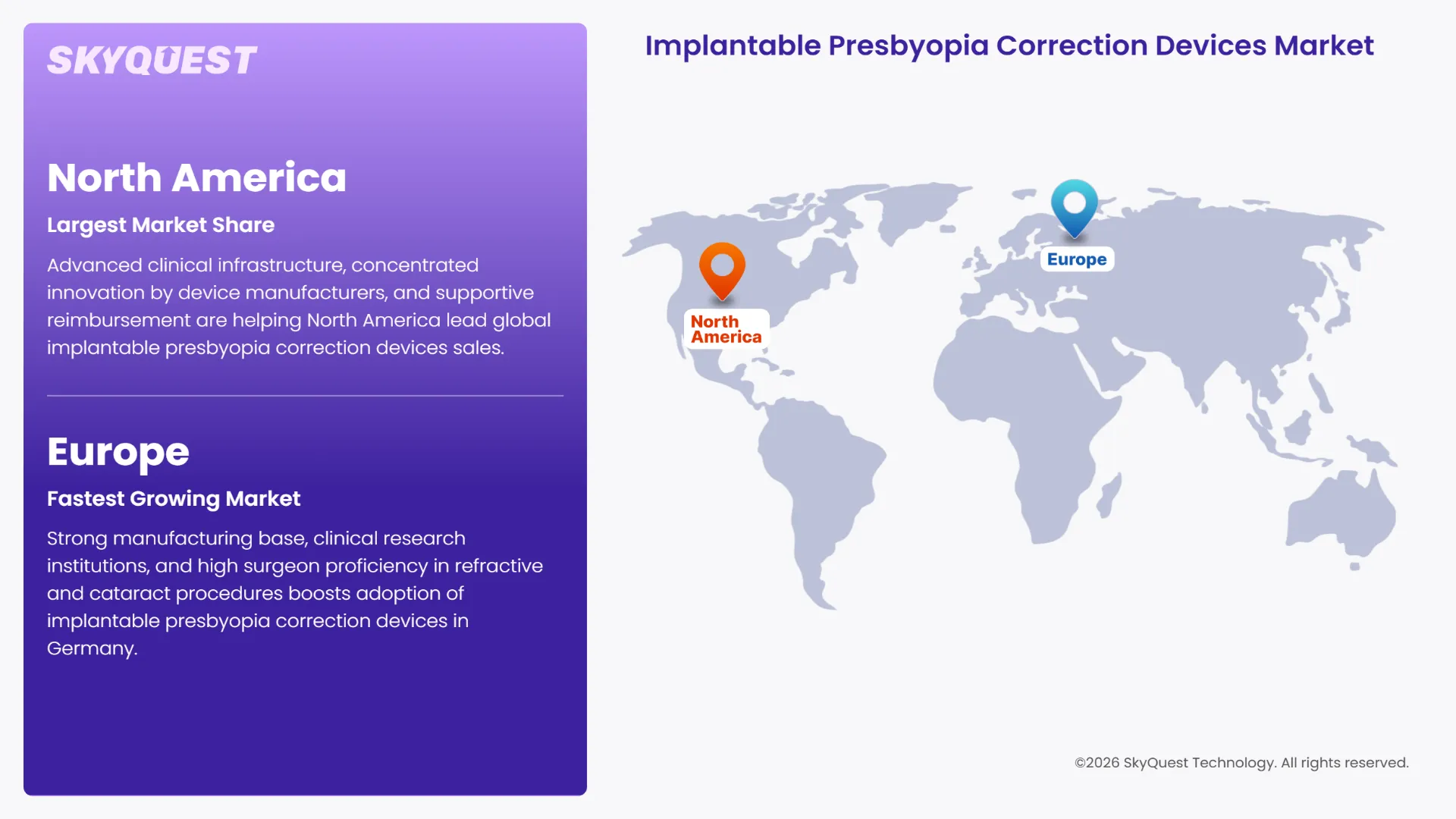
Advanced clinical infrastructure, concentrated innovation by device manufacturers, and supportive reimbursement are helping North America lead global implantable presbyopia correction devices sales. The familiarity of doctors with implantable ocular devices in practice and referral networks for surgeons are supporting consistent demand for implantable presbyopia correction devices across this region. Collaborations between research institutions and manufacturers can collect data that provide evidence of effectiveness and develop new indications for use of the devices. Centers of excellence allow the sharing of best practices. Through funding by both private and institutional investors, there is sufficient support to conduct clinical evaluations and surveillance after the product is placed, which allows for continued use of the devices and improving the design of each device across the study period.
Presence of multiple specialized ophthalmic centers, leading device developers, and active clinical research helps boost sales of implantable presbyopia correction devices in the United States. Efficient distribution channels and familiarity among distributors ensure widespread availability of devices, while a favorable patient demographic for enhancing vision drives implantable presbyopia correction devices adoption. Skilled surgeons and training programs ensure adoption of techniques, whereas well-developed reimbursement systems and participation of private insurers make it easier to conduct elective surgeries.
Strong clinical networks, centralized referral centers, and collaborative research partnerships are helping govern demand for implantable presbyopia correction devices in Canada. Engagement of clinicians and training coordination ensure standardization of procedure guidelines, whereas funding avenues shape accessibility and adoption. Established distribution channels and patient demand for better near vision along with approval processes boost sales of advanced implantable presbyopia correction devices.
Rising clinical expertise in refractive and cataract surgery and collaborative research initiatives across national centers are forecasted to boost sales of implantable presbyopia correction devices in this region. Increasing emphasis on patient quality of life outcomes is also creating new business scope. Both clinical societies and professional networks have developed best practice guidelines through which clinicians can share experiences. Additionally, the market for elective vision correction has expanded through increased payer willingness to pay for surgery and increased willingness of private clinics to provide services as evidenced by the development of strategic partnerships between local distributors and international manufacturers. Investment into regional clinical trials and education campaigns about presbyopia has increased the number of clinicians willing to provide surgical treatment options. Collaboration between countries via Cross border collaborations and harmonized clinical guidelines has improved access to successful presbyopia treatment options in many disparate health systems.
Strong manufacturing base, clinical research institutions, and high surgeon proficiency in refractive and cataract procedures boosts adoption of implantable presbyopia correction devices in Germany. Well-organized professional associations and centers of excellence facilitate the adoption of evidence-based practices, whereas payor systems and private clinics enable access to advanced implantable presbyopia correction devices. Industry-academia partnerships help drive device development and clinical studies, ensuring the integration of novel implantable devices into clinical practice.
Private clinic growth, patient engagement, and rapid adoption of new refractive technologies are helping shape implantable presbyopia correction devices demand in the United Kingdom. A competitive market environment along with innovative service delivery models facilitates innovations in implantable presbyopia correction devices. Competent training and involvement of professional bodies contribute to the rapid adoption of surgical methods.
Robust hospital expertise and an expanding private sector adopting innovative vision correction options is boosting sales of implantable presbyopia correction devices in France. Cooperation between manufacturers and clinicians aids in piloting and adopting implantable presbyopia correction devices. Research clinics and hospitals are involved in generating proof, while associations and trainings increase the competency level of surgeons. Reimbursement policies and purchase mechanisms determine both access to treatment and its adoption.
Improvements in clinical capabilities, growing local manufacturing competence, and targeted collaborations with global device developers boost implantable presbyopia correction devices acceptance in this region. The presence of private practice as well as hospital facilities in major urban areas has facilitated the early adoption of these advanced technologies by patients, as well as created a greater demand for them by increasing patient awareness of the potential quality of life benefits provided by these technologies. In order to further facilitate the greater scalability of implantable presbyopic solutions across the region's healthcare systems, there are numerous public policy initiatives and industry partnerships aimed at aligning regulations, establishing reimbursement pathways, and increasing availability of the products manufactured by several multinationals through local research and technology transfer to enhance local product adaptation and increase local manufacturing ranks to enable greater accessibility than may otherwise occur if all implantable presbyopic products are manufactured exclusively in multinational facilities.
Sophisticated clinical infrastructure and high surgeon expertise in refractive procedures is boosting demand for novel implantable presbyopia correction devices in Japan. Awareness among patients about elective vision correction surgeries, coupled with post-surgery care protocols, promotes the adoption of implantable presbyopia treatment devices. Partnerships between domestic manufacturers and clinical institutions allow tailoring devices according to regional requirements, and hospitals and clinics offer routes for implementation.
Rapid clinical adoption, advanced hospitals, and collaboration between local device companies and international partners shapes procurement of implantable presbyopia correction devices in South Korea. Patient education through clinical studies and educational programs makes people more informed about their procedures, and regulation is essential for introducing innovative presbyopia implants successfully. Training and experience in refractive surgery will facilitate adaptation to new implants, and competing private medical centers provide convenience for patients.
To know more about the market opportunities by region and country, click here to
Buy The Complete Report
Rising Demand For Spectacle Independence
Increasing patient preference for not wearing spectacles is one way in which presbyopia correction implant devices become accepted because they will lead surgeons to propose surgery procedures that will benefit their patients’ vision at both near and far distances. This will encourage more patients to choose these services due to convenience and high-quality lifestyles, leading to an increase in the number of services offered by practitioners. Patients’ positive feedback will further encourage practitioners to adopt this device and provide services based on consumer demands.
Advances In Implantable Lens Technology
Constant innovation of implantable lens technology and surgical equipment has contributed to positive visual results, and the increasing self-confidence of the surgeon has led to an increased utilization of implantable lenses that can correct presbyopia. Optical properties, customization, and biocompatibility allow such devices to provide reliable outcomes and greater satisfaction among patients. Along with advancements in technology, the introduction of effective training programs for surgeons is likely to further boost implantable presbyopia correction devices market outlook.
Limited Reimbursement and Coverage
Financial barriers in the form of limited reimbursements and variable coverage by insurers impede the expansion of the market due to increased cost pressure and uncertain conditions for investments into equipment and education. Since payers categorize corrections of presbyopia as being elective, implementation will be hindered due to the challenge that practitioners have in obtaining consistent reimbursement, while patients must bear out-of-pocket costs. Consequently, both parties have low levels of motivation to utilize the procedure, which adversely affects health care organizations and hampers referrals.
Concerns About Surgical Complications
Insecurity regarding possible adverse effects due to surgery and inconsistent postoperative results is a constraint that encourages caution on the part of both patients and medical practitioners, hence slow implementation of presbyopia-correcting implants. Issues of risks associated with improper placement of the implants, visual disruption, or need for further procedures affect medical decision-making processes in a significant way. In many cases, doctors may lean toward less radical methods or stick to what they know better, while patients go for less invasive solutions.
Request Free Customization of this report to help us to meet your business objectives.
Competitive dynamics in implantable presbyopia devices are driven by strategic M&A, targeted venture financings, and product differentiation through novel IOL designs. Examples include Alcon acquiring PowerVision to secure fluid accommodating lens IP and venture financings such as Adaptilens Series A to accelerate accommodating IOL development. Partnerships and device innovation are reshaping supplier scale and surgeon adoption.
SkyQuest’s ABIRAW (Advanced Business Intelligence, Research & Analysis Wing) is our Business Information Services team that Collects, Collates, Correlates, and Analyses the Data collected by means of Primary Exploratory Research backed by robust Secondary Desk research.
As per SkyQuest analysis, expanding aging population and increasing demand for vision correction are anticipated to drive the demand for implantable presbyopia correction devices going forward. However, high costs of premium implants, risk of surgical complications, and variability in patient outcomes are slated to slow down the adoption of implantable presbyopia correction devices in the future. North America is slated to spearhead the demand for implantable presbyopia correction devices owing to advanced ophthalmic infrastructure, high adoption of surgical vision correction procedures, and strong presence of leading device manufacturers. Advancements in AI-driven diagnostic tools, development of personalized implant solutions, and improvements in surgical techniques are anticipated to be key trends driving the implantable presbyopia correction devices market over the coming years.
| Report Metric | Details |
|---|---|
| Market size value in 2024 | USD 9.9 Billion |
| Market size value in pia | USD 35.1 Billion |
| Growth Rate | 15.1% |
| Base year | 2024 |
| Forecast period | 2026-2033 |
| Forecast Unit (Value) | USD Billion |
| Segments covered |
|
| Regions covered | North America (US, Canada), Europe (Germany, France, United Kingdom, Italy, Spain, Rest of Europe), Asia Pacific (China, India, Japan, Rest of Asia-Pacific), Latin America (Brazil, Rest of Latin America), Middle East & Africa (South Africa, GCC Countries, Rest of MEA) |
| Companies covered |
|
| Customization scope | Free report customization with purchase. Customization includes:-
|
To get a free trial access to our platform which is a one stop solution for all your data requirements for quicker decision making. This platform allows you to compare markets, competitors who are prominent in the market, and mega trends that are influencing the dynamics in the market. Also, get access to detailed SkyQuest exclusive matrix.
Table Of Content
Executive Summary
Market overview
Parent Market Analysis
Market overview
Market size
KEY MARKET INSIGHTS
COVID IMPACT
MARKET DYNAMICS & OUTLOOK
Market Size by Region
KEY COMPANY PROFILES
Methodology
For the Implantable Presbyopia Correction Devices Market, our research methodology involved a mixture of primary and secondary data sources. Key steps involved in the research process are listed below:
1. Information Procurement: This stage involved the procurement of Market data or related information via primary and secondary sources. The various secondary sources used included various company websites, annual reports, trade databases, and paid databases such as Hoover's, Bloomberg Business, Factiva, and Avention. Our team did 45 primary interactions Globally which included several stakeholders such as manufacturers, customers, key opinion leaders, etc. Overall, information procurement was one of the most extensive stages in our research process.
2. Information Analysis: This step involved triangulation of data through bottom-up and top-down approaches to estimate and validate the total size and future estimate of the Implantable Presbyopia Correction Devices Market.
3. Report Formulation: The final step entailed the placement of data points in appropriate Market spaces in an attempt to deduce viable conclusions.
4. Validation & Publishing: Validation is the most important step in the process. Validation & re-validation via an intricately designed process helped us finalize data points to be used for final calculations. The final Market estimates and forecasts were then aligned and sent to our panel of industry experts for validation of data. Once the validation was done the report was sent to our Quality Assurance team to ensure adherence to style guides, consistency & design.
Analyst Support
Customization Options
With the given market data, our dedicated team of analysts can offer you the following customization options are available for the Implantable Presbyopia Correction Devices Market:
Product Analysis: Product matrix, which offers a detailed comparison of the product portfolio of companies.
Regional Analysis: Further analysis of the Implantable Presbyopia Correction Devices Market for additional countries.
Competitive Analysis: Detailed analysis and profiling of additional Market players & comparative analysis of competitive products.
Go to Market Strategy: Find the high-growth channels to invest your marketing efforts and increase your customer base.
Innovation Mapping: Identify racial solutions and innovation, connected to deep ecosystems of innovators, start-ups, academics, and strategic partners.
Category Intelligence: Customized intelligence that is relevant to their supply Markets will enable them to make smarter sourcing decisions and improve their category management.
Public Company Transcript Analysis: To improve the investment performance by generating new alpha and making better-informed decisions.
Social Media Listening: To analyze the conversations and trends happening not just around your brand, but around your industry as a whole, and use those insights to make better Marketing decisions.
REQUEST FOR SAMPLE
 REQUEST FREE CUSTOMIZATION
Global Implantable Presbyopia Correction Devices Market size was valued at USD 9.9 Billion in 2024 and is poised to grow from USD 11.39 Billion in 2025 to USD 35.1 Billion by 2033, growing at a CAGR of 15.1% during the forecast period (2026-2033).
Competitive dynamics in implantable presbyopia devices are driven by strategic M&A, targeted venture financings, and product differentiation through novel IOL designs. Examples include Alcon acquiring PowerVision to secure fluid accommodating lens IP and venture financings such as Adaptilens Series A to accelerate accommodating IOL development. Partnerships and device innovation are reshaping supplier scale and surgeon adoption. 'AcuFocus, Inc.', 'Alcon Vision LLC', 'ReVision Optics', 'LifePoint Health', 'Bausch + Lomb', 'Vortecia', 'Allergan, a subsidiary of AbbVie', 'Eyepoint Pharmaceuticals', 'Croma Pharma GmbH', 'Vision Solutions, Inc.', 'Presbyopia Therapy, Inc.', 'Eyetec, Inc.', 'Shringrix Technologies', 'Ocular Dynamics', 'Dextina Health', 'Solos Endoscopy', 'Presbia PLC', '4D Vision', 'Insight Vision', 'Adaptica Srl'
Rising patient preference for spectacle independence drives adoption of implantable presbyopia correction devices by encouraging clinicians to offer surgical solutions that improve near and distance vision simultaneously. As more patients prioritize convenience and quality of life, demand leads providers to expand service offerings and invest in training and equipment. Positive patient experiences and word of mouth referrals reinforce acceptance, motivating surgeons to integrate these devices into practice, thereby creating a sustainable pathway for market expansion through increased clinical adoption and consumer driven service provision.
Personalized Implant Solutions: Manufacturers and clinicians are shifting toward customizable implant designs and adjustable optics to address diverse visual needs and lifestyle preferences of presbyopic patients. Emphasis on modular components, surgeon-controlled tuning, and patient-tailored biocompatible materials enhances perceived outcomes and satisfaction. This trend fosters closer collaboration among device developers, ophthalmic surgeons, and patient advocates, accelerating iterative improvements and informed adoption. Marketing increasingly highlights individualized patient journeys and outcome predictability, strengthening brand differentiation and supporting premium positioning in competitive markets while sustaining clinical trust.
North America Dominate the Global Implantable Presbyopia Correction Devices Market.
The Corneal Inlays segment holds the largest market share due to its minimally invasive nature, ability to restore near vision effectively, and growing physician and patient acceptance.
The Scleral Implants segment is anticipated to witness the fastest growth owing to advancements in implant design, broader treatment capabilities, and increasing clinical interest in anatomical correction techniques.
AI is improving diagnostic accuracy, surgical planning, implant selection, and treatment outcome monitoring. AI-powered imaging and predictive analytics are helping physicians personalize procedures and improve patient outcomes.


Want to customize this report? This report can be personalized according to your needs. Our analysts and industry experts will work directly with you to understand your requirements and provide you with customized data in a short amount of time. We offer $1000 worth of FREE customization at the time of purchase.
Feedback From Our Clients


 USA (+1) 351-333-4748

