Image Recognition in Retail Market
Report ID: SQMIG45E2976
Report ID: SQMIG45E2976
[email protected]
USA +1 351-333-4748
Report ID:
SQMIG45E2976 |
Region:
Global |
Published Date: July, 2026
Pages:
157
|Tables:
118
|Figures:
79


Global Image Recognition In Retail Market size was valued at USD 1.82 Billion in 2024 and is poised to grow from USD 2.13 Billion in 2025 to USD 7.52 Billion by 2033, growing at a CAGR of 17.12% during the forecast period (2026-2033).
High demand for frictionless shopping experiences, increasing adoption of AI-powered retail technologies, rising investments in store automation, advancements in computer vision, and expanding focus on inventory optimization are driving sales of image recognition in retail solutions.
Rising demand for automated retail operations and enhanced customer experiences, coupled with increasing adoption of computer vision technologies, is expected to primarily drive image recognition in retail market growth. Widespread application of image recognition systems for automated checkout, inventory control, shelf management, customer insights and loss prevention is driving market growth. Rising investments in AI-enabled analytics, advanced smart cameras, omnichannel retail ecosystems, and automated store operations are complementing the market growth. Constant innovations in deep learning techniques, real-time image analytics, cloud-enabled analytics and intelligent retail solutions are resulting in improved operational efficiencies and enhanced customer experience. Moreover, increasing demand for more personalized shopping experience and data-driven retail strategies is providing promising opportunities to the market players.
On the contrary, high implementation costs, data privacy concerns, integration challenges with legacy retail systems, and accuracy limitations in complex retail environments are anticipated to slow down image recognition in retail market penetration across the study period and beyond.
How is AI-powered Image Recognition Reshaping Inventory Management for Retail Companies?
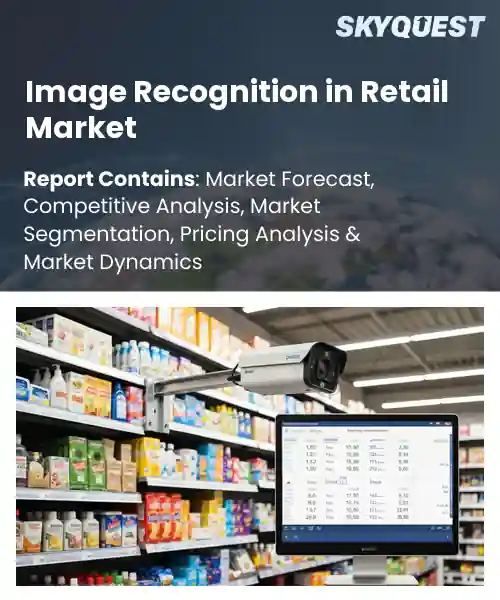
AI-enabled image recognition is enabling retailers to enhance real-time shelf visibility and optimize inventory management. Smart cameras installed on store shelves view products and continually detect when products are running out of stock, identify misplaced products and out of stock customers without the need for manual shelf checks. The image recognition system feeds information into inventory management software systems and automatically reminds store associates to replenish stocks. Retailers also apply demand predictions to image recognition data to optimize inventory allocation between stores and distribution centers.
Market snapshot - (2026-2033)
Global Market Size
USD 1.82 Billion
Largest Segment
Deep Learning (CNN)
Fastest Growth
Deep Learning (CNN)
Growth Rate
17.12% CAGR
To get more insights on this market click here to Request a Free Sample Report
Global image recognition in retail market is segmented by technology, application, end-use, deployment, and region. Based on technology, the market is segmented into Machine Learning-Based, Deep Learning (CNN), and Computer Vision. Based on application, the market is segmented into shelf monitoring (planogram compliance), loss prevention, cashierless checkout, and customer behavior analytics. Based on end-use, the market is segmented into supermarkets, fashion retail, and convenience stores. Based on deployment, the market is segmented into in-store cameras, mobile devices, and drones. Based on region, the market is segmented into North America, Europe, Asia Pacific, Latin America, and Middle East & Africa.
The Deep Learning (CNN) segment is forecasted to lead the global image recognition in retail market revenue generation across the study period. It provides the best possible object identification, essential for retail shelves containing numerous non-uniform items. Its deep architecture captures complex visual features, allowing it to generalize for occlusion and light variation. This feature is valuable for retailers seeking to relax out of stock and TOC penalties. Ongoing research and open-source implementations lower entry hurdles for niche uptake by stores.
However, computer vision segment is witnessing the strongest growth momentum as per this image recognition in retail industry analysis, as the technology is being adopted by retailers for dynamic shopper interaction analysis. Edge processing reduces lag, paving way for on-the-spot real time analytics. Incorporation with inventory management system creates a smooth data circle drawing in merchants targeting customized deals. This market boom creates new income sources for firms.
The shelf monitoring (Planogram Compliance) segment is slated to account for the highest global image recognition in retail market share in the future. It effectively integrates visual assurance with merchandising standards, maintaining that the products on the shelves are laid out as planned, thus minimizing manual searches and eliminating shelf infraction errors-ultimately elevating sell-through and brand image. Trade users consider this a strategic line of defense, leading to installation of camera networks and analytics applications for ongoing validation of shelf layout over the entire shopping day.
Meanwhile, cashierless checkout emerges as the high growth segment as retailers seek frictionless shopping journeys. Faster image processing and sensor fusion drive down transaction time, draw in shoppers. Pilot installs show larger basket size and saving labor cost, fueling for wider roll outs. The tide turns and market build-up gathers pace, presenting opportunities for providers to deliver end-to-end solution.
To get detailed segments analysis, Request a Free Sample Report
Mature technology ecosystem, deep capital investment, and strong collaboration between leading retailers and advanced AI startups are helping the region hold sway over others. High rates of digitization among consumers favor seamless omnichannel journeys, encouraging brands to deploy visual search, automatic checkouts and inventory systems, supported by a mature data ecosystem and a flexible legal framework for innovation, making it easier to develop and expand the use of computervision products. The competition amongst leading technology providers and universities accelerates algorithmic refinement. The pioneers also establish standards that newer markets strive for, and cater to foreign firms testing new tools to engage consumers at all points of the buying process.
Image recognition in retail market in United States is propelled by a convergence of cutting‑edge research labs and retail innovators that prioritize seamless shopper experiences. Major chain operators experiment with shelf‑level monitoring to reduce out‑of‑stock events, while boutique brands leverage visual search to personalize product discovery. The extensive cloud infrastructure and talent pool enable rapid deployment of scalable solutions that enhance operational efficiency and customer engagement across channels online offline
Image recognition in retail market in Canada benefits from a collaborative ecosystem where government research programs and forward‑looking retailers co‑create solutions for visual merchandising and checkout automation. Canadian grocery chains adopt shelf‑analytics to optimize product placement, while fashion retailers use virtual try‑on interfaces to reduce return rates. Strong emphasis on data privacy and ethical AI builds consumer trust, encouraging broader acceptance of visual technologies throughout the shopping journey in stores
High consumer digital adoption, intense competition among retailers and strong governmental support for artificial intelligence initiatives are forecasted to boost the demand for image recognition in retail in the region. Shoppers across the region are already embracing the convenience of mobile visual search thus reducing friction points for 3rdparty retailers to incorporate real-time visual product search into their apps and inflows. With distribution networks struggling to cope with complexity levels and crowded city-center store fronts, an appetite exists for automated shelf monitoring/loss prevention systems. A steady recruitment pipeline of computer vision talent from top Asian technology elites propels the cycle of definition-design- adoption while collaborations between local retail chains and global artificial intelligence players promote cross-border best practice dissemination. Together, such a vibrant ecosystem provides application-driven fertile soil for innovations in the likes of augmented reality fitting rooms and cashless payment counters.
Image recognition in retail market in Japan is shaped by a culture of precision and emphasis on technology within stores. Retailers use visual inventory checks to keep shelves accurate, and convenience chains apply facial recognition for personalized offers. Partnerships between electronics makers and fashion brands deliver seamless virtual try‑on experiences that draw shoppers. A regulatory approach fosters consumer trust and supports adoption of visual solutions across online and physical channels
Image recognition in retail market in South Korea is accelerated by a consumer base that seeks visual assistance while shopping. Departmental stores employ shelf scanning to reduce stockouts while cosmetics retailers employ augmented reality mirrors for product testing. Artificial intelligence companies collaborate with grocery store chains for bar-code free walk-in check-outs. Public incentives surrounding AI work cement the ecosystem resulting in increasing penetration of visual tech at both ecommerce and brick-and-mortar facilities.
The European region is strengthening its position in the image recognition in retail market through coordinated investment in research, a focus on data protection standards, and increasing collaboration between retail chains and technology innovators. Leading retailers adopt visual analytics to refine in‑store merchandising, while fashion brands integrate smart mirrors that blend AI with customer preference data. A mature regulatory framework encourages responsible AI deployment, fostering consumer confidence and facilitating cross‑border technology transfer within the European Union. Strong academic institutions provide a pipeline of expertise in computer vision, and public‑private partnerships fund pilot programs that test contactless checkout and automated inventory solutions. These concerted efforts create a resilient ecosystem that not only advances domestic capabilities but also positions Europe as a benchmark for ethical and efficient visual retail technologies.
Image recognition in retail market in Germany benefits from a base and emphasis on precision engineering that yields sophisticated analytics for retailers. Supermarkets use shelf‑view cameras to monitor product placement, while automotive‑linked retail concepts employ image‑based identification for integration. Partnerships between research institutes and department stores accelerate AI model development that respects regulations. Consumer trust is reinforced by data practices, encouraging wider adoption of digital checkout and inventory automation
Image recognition in retail market in United Kingdom is driven by a retail sector that embraces omni‑channel strategies and a fintech ecosystem. Stores deploy visual shelf scanning to improve merchandising, while platforms integrate image‑based search to enhance product discovery. Collaboration between universities and retailers accelerates research on ethical AI, ensuring compliance with data protection rules. Consumer confidence grows as solutions streamline checkout and inventory processes across physical and digital storefronts
Image recognition in retail market in France benefits from a retail culture and governmental support for AI research. Retailers leverage visual tagging to streamline grocery aisle displays while fashion retailers such as boutiques and boutiques are investing in the adoption of augmented reality mirrors for fitting experience. Tech incubators are partnering with department stores to hatch AI models which adhere to privacy principles. When used at checkout counters and inventory, consumers are receptive to the convenience affordances they bring without risk of data breach.
To know more about the market opportunities by region and country, click here to
Buy The Complete Report
Enhanced Customer Personalization
Real-Time Inventory Management
High Implementation Costs
Data Privacy Concerns
Request Free Customization of this report to help us to meet your business objectives.
Intense rivalry among AI‑driven vision providers is accelerating innovation in retail image recognition, as firms vie for shelf‑level visual search and virtual try‑on capabilities. Players are pursuing M&A, such as Flock AI’s purchase of a 3D‑modeling startup, forging partnerships like Stability AI’s alliance with a major fashion retailer, and rapidly deploying next‑gen deep‑learning models to secure platform dominance.
SkyQuest’s ABIRAW (Advanced Business Intelligence, Research & Analysis Wing) is our Business Information Services team that Collects, Collates, Correlates, and Analyses the Data collected by means of Primary Exploratory Research backed by robust Secondary Desk research.
As per SkyQuest analysis, increasing adoption of AI-powered retail technologies, rising investments in store automation, and advancements in computer vision are anticipated to drive the demand for image recognition in retail going forward. However, high implementation costs and data privacy concerns are slated to slow down the adoption of image recognition in retail in the future. North America is slated to spearhead the demand for image recognition in retail owing to widespread adoption of AI-driven retail technologies, strong investments in smart store infrastructure, the presence of leading technology providers, and increasing demand for automated retail operations. AI-powered inventory management and integration of image recognition with omnichannel retail analytics are anticipated to be key trends driving the image recognition in retail market over the coming years.
| Report Metric | Details |
|---|---|
| Market size value in 2024 | USD 1.82 Billion |
| Market size value in 2033 | USD 7.52 Billion |
| Growth Rate | 17.12% |
| Base year | 2024 |
| Forecast period | (2026-2033) |
| Forecast Unit (Value) | USD Billion |
| Segments covered |
|
| Regions covered | North America (US, Canada), Europe (Germany, France, United Kingdom, Italy, Spain, Rest of Europe), Asia Pacific (China, India, Japan, Rest of Asia-Pacific), Latin America (Brazil, Rest of Latin America), Middle East & Africa (South Africa, GCC Countries, Rest of MEA) |
| Companies covered |
|
| Customization scope | Free report customization with purchase. Customization includes:-
|
To get a free trial access to our platform which is a one stop solution for all your data requirements for quicker decision making. This platform allows you to compare markets, competitors who are prominent in the market, and mega trends that are influencing the dynamics in the market. Also, get access to detailed SkyQuest exclusive matrix.
Table Of Content
Executive Summary
Market overview
Parent Market Analysis
Market overview
Market size
KEY MARKET INSIGHTS
COVID IMPACT
MARKET DYNAMICS & OUTLOOK
Market Size by Region
KEY COMPANY PROFILES
Methodology
For the Image Recognition in Retail Market, our research methodology involved a mixture of primary and secondary data sources. Key steps involved in the research process are listed below:
1. Information Procurement: This stage involved the procurement of Market data or related information via primary and secondary sources. The various secondary sources used included various company websites, annual reports, trade databases, and paid databases such as Hoover's, Bloomberg Business, Factiva, and Avention. Our team did 45 primary interactions Globally which included several stakeholders such as manufacturers, customers, key opinion leaders, etc. Overall, information procurement was one of the most extensive stages in our research process.
2. Information Analysis: This step involved triangulation of data through bottom-up and top-down approaches to estimate and validate the total size and future estimate of the Image Recognition in Retail Market.
3. Report Formulation: The final step entailed the placement of data points in appropriate Market spaces in an attempt to deduce viable conclusions.
4. Validation & Publishing: Validation is the most important step in the process. Validation & re-validation via an intricately designed process helped us finalize data points to be used for final calculations. The final Market estimates and forecasts were then aligned and sent to our panel of industry experts for validation of data. Once the validation was done the report was sent to our Quality Assurance team to ensure adherence to style guides, consistency & design.
Analyst Support
Customization Options
With the given market data, our dedicated team of analysts can offer you the following customization options are available for the Image Recognition in Retail Market:
Product Analysis: Product matrix, which offers a detailed comparison of the product portfolio of companies.
Regional Analysis: Further analysis of the Image Recognition in Retail Market for additional countries.
Competitive Analysis: Detailed analysis and profiling of additional Market players & comparative analysis of competitive products.
Go to Market Strategy: Find the high-growth channels to invest your marketing efforts and increase your customer base.
Innovation Mapping: Identify racial solutions and innovation, connected to deep ecosystems of innovators, start-ups, academics, and strategic partners.
Category Intelligence: Customized intelligence that is relevant to their supply Markets will enable them to make smarter sourcing decisions and improve their category management.
Public Company Transcript Analysis: To improve the investment performance by generating new alpha and making better-informed decisions.
Social Media Listening: To analyze the conversations and trends happening not just around your brand, but around your industry as a whole, and use those insights to make better Marketing decisions.
REQUEST FOR SAMPLE
 REQUEST FREE CUSTOMIZATION
Global Image Recognition In Retail Market size was valued at USD 1.82 Billion in 2024 and is poised to grow from USD 2.13 Billion in 2025 to USD 7.52 Billion by 2033, growing at a CAGR of 17.12% during the forecast period (2026-2033).
Intense rivalry among AI‑driven vision providers is accelerating innovation in retail image recognition, as firms vie for shelf‑level visual search and virtual try‑on capabilities. Players are pursuing M&A, such as Flock AI’s purchase of a 3D‑modeling startup, forging partnerships like Stability AI’s alliance with a major fashion retailer, and rapidly deploying next‑gen deep‑learning models to secure platform dominance. 'Stability AI: Established in 2020, their main objective is to develop open‑source generative AI models that power image creation and recognition for retailers, enabling visual search and photorealistic product rendering. Recent development: the company closed a $101 million Series B round in 2025 to scale its image‑recognition APIs and announced a partnership with a leading fashion retailer to embed visual‑search functionality directly into its mobile shopping app. The deal also includes joint development of AI‑driven style recommendation tools for in‑store kiosks.', 'Flock AI: Established in 2022, their main objective is to deliver a generative‑AI platform that enables fashion and retail brands to produce photorealistic product imagery and virtual models without traditional photography. Recent development: the company secured $45 million Series A funding in early 2024, rolled out a native integration with a leading e‑commerce platform for automated image generation, and completed the acquisition of a niche 3D‑modeling startup to strengthen its rendering pipeline.', 'Amazon (Just Walk Out)', 'Microsoft Azure Cognitive Services', 'Google Cloud Vision API', 'Trigo Vision', 'Focal Systems', 'Simbe Robotics', 'Shelf Engine', 'Spacee', 'Standard Cognition', 'AiFi Inc.', 'Grabango', 'Zippin (Zebra Technologies)', 'Inokyo (Zebra)', 'Neurala (Motorola Solutions)', 'Plainsight Technologies', 'Mashgin', 'SES-imagotag', 'Verizon Intelligent Edge', 'Outsight', 'Deep North'
Enhanced customer personalization enables retailers to deliver tailored experiences, increasing engagement and loyalty which drives repeat visits and higher basket sizes. By analyzing visual data captured through image recognition, stores can recommend complementary products, adjust merchandising, and respond to individual preferences in real time. This dynamic interaction creates a perception of attentive service, encouraging consumers to spend more and fostering brand affinity, thereby propelling market expansion for image recognition solutions in the retail sector. Additionally, linking visual insights to loyalty data refines offers, boosting conversion rates and sales.
Ai-Powered Shelf Analytics: Retailers are deploying AI-driven shelf analytics that combine real‑time image recognition with predictive algorithms to continuously monitor stock levels, planogram compliance, and product placement effectiveness, enabling instant visual alerts and automated replenishment triggers; this seamless integration enhances operational efficiency, reduces out‑of‑stock incidents, and deepens insight into shopper behavior, fostering a data‑centric approach that aligns merchandising strategies with consumer demand dynamics across omnichannel environments. The system also supports dynamic pricing adjustments, cross‑promotional analytics, and real‑time dashboard visualizations for store managers daily.
Why does North America Dominate the Global Image Recognition in Retail Market? |@12


Want to customize this report? This report can be personalized according to your needs. Our analysts and industry experts will work directly with you to understand your requirements and provide you with customized data in a short amount of time. We offer $1000 worth of FREE customization at the time of purchase.
Feedback From Our Clients


 USA (+1) 351-333-4748

