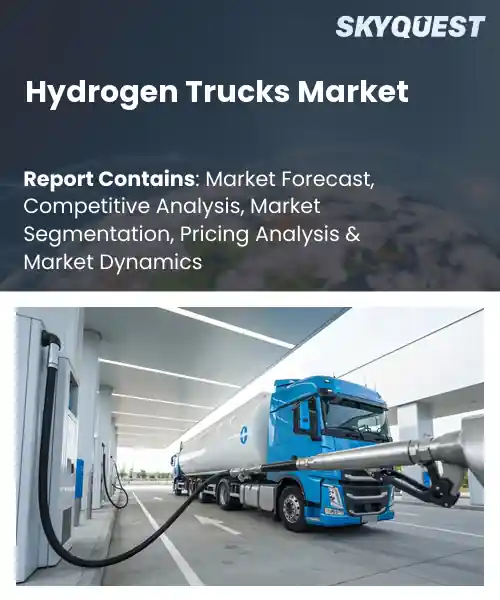
Hydrogen Trucks Market
Report ID: SQMIG25C2248
Report ID: SQMIG25C2248
[email protected]
USA +1 351-333-4748
Report ID:
SQMIG25C2248 |
Region:
Global |
Published Date: June, 2026
Pages:
157
|Tables:
175
|Figures:
79


Global Hydrogen Trucks Market size was valued at USD 4.3 Billion in 2024 and is poised to grow from USD 5.33 Billion in 2025 to USD 29.59 Billion by 2033, growing at a CAGR of 23.9% during the forecast period (2026-2033).
The primary driver of the hydrogen trucks market is the imperative to decarbonize heavy-duty transportation while preserving range and payload capacity, because battery electric solutions remain constrained by energy density and charging time. This market comprises fuel cell electric trucks, onboard hydrogen storage, refueling infrastructure and associated supply chains, and it matters for freight emissions, urban air quality and energy resilience. Development moved from laboratory fuel cell stacks and concept vehicles in the 2000s to demonstrator fleets and commercial rollouts, exemplified by Hyundai and Toyota trials, Nikola prototypes and EU pilot corridors, which together signal maturing technology and policy alignment.
A central factor driving global hydrogen truck growth is the rapid expansion and decarbonization of hydrogen supply, because lower-cost green hydrogen reduces total cost of ownership for fleet operators and makes fuel cell trucks commercially viable. As electrolyzer capacity scales and renewable power rises, hydrogen production costs fall, prompting infrastructure investment in refueling hubs, which in turn encourages logistics companies to trial long-haul and port drayage fuel cell fleets. For example H2Haul demonstrations in Europe and California port pilots show that when refueling reliability exists, operators achieve predictable duty cycles and reduced downtime, attracting procurement commitments that accelerate manufacturing scale-up.
How will AI-driven fleet management impact hydrogen truck efficiency?
AI driven fleet management will raise hydrogen truck efficiency by coordinating fueling, predictive maintenance and route planning. Key aspects include real time telematics, fuel cell health monitoring and attention to hydrogen range and refueling constraints. The market is shifting from pilots to early commercial deployments as OEMs and fleets test fuel cell trucks and local infrastructure grows.
Road trials and new vehicle introductions show operators can rely on operations data to smooth refueling and preserve fuel cell life. With smarter scheduling and condition based servicing AI reduces wasted hydrogen and improves vehicle uptime for realistic freight routes.Daimler Truck May 2026, announced a liquefied hydrogen supply chain agreement that reduces refueling uncertainty and enables AI driven fleet systems to plan routes and refueling more effectively. This helps fleets scale commercial operations more quickly and lowers operational risk as hydrogen infrastructure matures.
Market snapshot - (2026-2033)
Global Market Size
USD 4.3 Billion
Largest Segment
Heavy-duty Hydrogen Trucks
Fastest Growth
Heavy-duty Hydrogen Trucks
Growth Rate
23.9% CAGR
To get more insights on this market click here to Request a Free Sample Report
Global hydrogen trucks market is segmented by vehicle type, technology, range, application, end user, hydrogen storage type and region. Based on vehicle type, the market is segmented into Light-duty Hydrogen Trucks, Medium-duty Hydrogen Trucks and Heavy-duty Hydrogen Trucks. Based on technology, the market is segmented into Fuel Cell Electric Trucks and Hydrogen Internal Combustion Engine Trucks. Based on range, the market is segmented into Below 300 km, 300 km to 700 km and Above 700 km. Based on application, the market is segmented into Logistics & Freight Transport, Municipal Services, Construction & Mining, Long-haul Transportation, Port & Airport Operations and Others. Based on end user, the market is segmented into Fleet Operators, Logistics Companies, Municipal Authorities, Construction Companies and Others. Based on hydrogen storage type, the market is segmented into Compressed Hydrogen Storage, Liquid Hydrogen Storage and Solid-state Hydrogen Storage. Based on region, the market is segmented into North America, Europe, Asia Pacific, Latin America and Middle East & Africa.
Heavy-duty Hydrogen Trucks segment dominates because manufacturers and fleet operators view these vehicles as the most effective pathway to decarbonize bulk freight, encouraging concentrated investment in powertrains and fueling infrastructure. Their high payload capability and long operational cycles justify greater capital expenditure, which in turn drives OEM focus, scale in production, and targeted policy incentives that create a reinforcing cycle of adoption and infrastructure build out across the market.
However, Light-duty Hydrogen Trucks are witnessing the strongest growth momentum as urban delivery and last mile operators adopt smaller hydrogen platforms to meet zero emission mandates and operational uptime requirements. Their lower capital intensity and compatibility with emerging refueling networks enable quick pilots and fleet conversions, accelerating demand and stimulating supplier innovation and service ecosystems.
Fuel Cell Electric Trucks segment leads because their high efficiency and rapid drivetrain maturation deliver meaningful operational advantages for heavy use cases, prompting fleet modernization and supplier investment. Cleaner energy profiles attract supportive procurement policies and corporate sustainability requirements, which lower perceived technology risk and mobilize capital toward scale deployments, enabling expanded manufacturing, optimized maintenance models, and coordinated charging and refueling solutions that further improve economics for operators.
Meanwhile, Hydrogen Internal Combustion Engine Trucks are emerging as the fastest growing area due to lower integration complexity with existing vehicle platforms and the ability to leverage familiar maintenance ecosystems. Their appeal for retrofit programs and quicker route to market supports broad operator experimentation, stimulating supplier activity, fueling infrastructure alignment, and expanding near term deployment opportunities.
To get detailed segments analysis, Request a Free Sample Report
Asia Pacific dominates the global hydrogen trucks market through a combination of concentrated industrial capability, proactive public policy, and dense logistics demand that aligns with hydrogen strengths for heavy duty transport. Deep manufacturing ecosystems support vehicle and component production while energy sector players invest in distribution and refueling networks. Collaborative frameworks between governments, research institutions, and private industry accelerate technology validation and early commercial deployments. Strategic ports and long haul corridors create practical use cases that attract original equipment manufacturers and fleet operators. Market maturity is reinforced by localized supply chains, skilled engineering talent, and cross border partnerships that lower integration barriers and foster a robust environment for scale and continuous innovation. Accessible financing mechanisms and growing corporate interest in decarbonized logistics support fleet trials and procurement pathways. Harmonized technical standards and the emergence of maintenance and service ecosystems reduce total cost of ownership concerns, enabling broader commercial uptake.
Hydrogen Trucks Market in Japan benefits from strong automaker engagement, coordinated public policy, and concentrated research capability. Collaborative networks link manufacturers, energy providers, and logistics operators to pilot hydrogen fleets and scale supply chains. Emphasis on heavy duty applications and urban freight creates commercial use cases. Supportive infrastructure deployment and norms development foster industry confidence, accelerating integration of fuel cell trucks into broader freight ecosystems across major transport corridors nationwide.
Hydrogen Trucks Market in South Korea is driven by integrated manufacturing ecosystems and collaboration between vehicle builders and fuel suppliers. Deployment in industrial logistics and port operations validates operational performance for fleet operators. Technology exchange between heavy vehicle makers and hydrogen producers strengthens supply reliability. Policy alignment and pilot initiatives, combined with local fuel cell expertise, create a favorable environment for adoption of hydrogen trucks in intercity commercial routes nationwide.
Europe is driving rapid expansion of the hydrogen trucks market through policy alignment on decarbonisation, strong corporate commitments from logistics and manufacturing sectors, and coordinated infrastructure planning across national borders. Market dynamics are shaped by established original equipment manufacturers integrating fuel cell applications into heavy duty portfolios, and by energy companies investing in refueling corridors that match freight flows. Cross industry alliances, standardisation efforts, and public funding mechanisms reduce market friction for early adopters. Strategic use cases in ports, regional distribution, and high intensity freight lanes provide demonstrable value propositions for fleet operators. Collective focus on interoperability, maintenance ecosystems, and training supports repeatable rollouts and accelerates transition from pilot projects to sustained commercial operations. Market maturity is aided by growing service networks and aftermarket capabilities that lower operational risks. International cooperation on technical standards and cross border refueling strategies further enhances commercial viability.
Hydrogen Trucks Market in Germany is characterized by strong industrial demand, a concentrated automotive supplier base, and ecosystem development around heavy transport. Vehicle manufacturers, component suppliers, and energy firms coordinate to develop fuel cell solutions and refueling infrastructures that suit long haul logistics. Focus on interoperability, training, and alignment between freight operators and public policy accelerates commercial trials and strengthens confidence among fleet owners considering hydrogen as an operational option.
Hydrogen Trucks Market in United Kingdom is marked by rapid experimentation, strong logistics sector interest, and coordinated private public initiatives that prioritize decarbonized freight. Fleet operators engage in pilot programs across ports and regional corridors to validate operational resilience. Investment focus on refueling hubs and partnerships between energy providers and vehicle makers supports commercialization pathways. Policy flexibility and incentives encourage collaboration among operators, manufacturers, and providers to accelerate roll out.
Hydrogen Trucks Market in France is emerging through targeted industrial clusters and a focus on developing green hydrogen supply chains for freight. Collaborative pilot projects link vehicle manufacturers, energy suppliers, and logistics operators to demonstrate operational viability on regional routes and port hinterlands. Emphasis on interoperability, standards, and local maintenance capabilities supports early fleet adoption. Public private cooperation and sector initiatives foster momentum and create conditions for gradual commercial scaling.
North America is strengthening its position in the hydrogen trucks market through coordinated public private efforts, targeted infrastructure pilots, and growing commercial engagement from logistics operators. Key freight corridors and major port clusters are focal points for refueling network deployment, while vehicle manufacturers and energy companies align on technical standards and supply chain readiness. Complementary incentives and procurement strategies at state and provincial levels reduce entry barriers for fleet operators. Emphasis on heavy duty applications, cold climate performance, and aftermarket services supports practical validation. Cross border collaboration on corridors and interoperability further enhances the region capacity to transition pilot activities into sustained commercial operations and to nurture a domestic supply base for vehicles, components, and fueling services. Growing service ecosystems and workforce training programs improve operational reliability and lower perceived risk among fleet decision makers.
Hydrogen Trucks Market in United States is advancing through pilot deployments, collaboration among OEMs, energy providers, and logistics firms, and infrastructure development in freight hubs. State and federal alignment on incentives and procurement pathways helps derisk early fleets. Emphasis on heavy duty applications, port operations, and interregional corridors creates attractive commercial cases. Aftermarket service capability and training programs support operator confidence and practical maintenance frameworks necessary for fleet adoption nationwide.
Hydrogen Trucks Market in Canada benefits from strategic provincial initiatives, interest from resource and logistics companies, and a focus on routes connecting industrial hubs and port facilities. Collaboration between vehicle manufacturers, energy producers, and regional fleets drives pilots validating refueling strategies in cold climates. Emphasis on green hydrogen pathways, maintenance networks, and skills development supports operator readiness and helps create replicable models for commercial adoption across provincial markets at scale.
To know more about the market opportunities by region and country, click here to
Buy The Complete Report
Expansion Of Refueling Infrastructure
Supportive Government Policies And Incentives
High Vehicle Acquisition Costs
Limited Hydrogen Supply And Distribution
Request Free Customization of this report to help us to meet your business objectives.
Competitive landscape in the global hydrogen trucks market is driven by competition over fuel cell integration, onboard hydrogen storage and refuelling networks. Strategic moves include consortium partnerships and industrial funding to secure supply chains and scale. Examples include MAN Truck and Bus working with Cryomotive on CRYOGAS storage and energy major investments such as Total’s stake in Hyzon, plus SPAC listings to access capital and production capacity.
Top Player’s Company Profile
Recent Developments
SkyQuest’s ABIRAW (Advanced Business Intelligence, Research & Analysis Wing) is our Business Information Services team that Collects, Collates, Correlates, and Analyses the Data collected by means of Primary Exploratory Research backed by robust Secondary Desk research. As per SkyQuest analysis, a key driver is the imperative to decarbonize heavy‑duty transportation while preserving range and payload, and a second driver is the rapid expansion and decarbonization of hydrogen supply that lowers total cost of ownership for fleet operators. A major restraint remains high vehicle acquisition costs which slow broader fleet conversions. Asia Pacific is the dominating region thanks to strong manufacturing ecosystems, policy support and dense logistics demand, while heavy‑duty hydrogen trucks are the dominating segment because their payload and operational cycles justify concentrated investment and infrastructure build‑out. Overall, momentum is shifting from pilots to early commercial deployments as supply chains and refueling networks mature.
| Report Metric | Details |
|---|---|
| Market size value in 2024 | USD 4.3 Billion |
| Market size value in 2033 | USD 29.59 Billion |
| Growth Rate | 23.9% |
| Base year | 2024 |
| Forecast period | (2026-2033) |
| Forecast Unit (Value) | USD Billion |
| Segments covered |
|
| Regions covered | North America (US, Canada), Europe (Germany, France, United Kingdom, Italy, Spain, Rest of Europe), Asia Pacific (China, India, Japan, Rest of Asia-Pacific), Latin America (Brazil, Rest of Latin America), Middle East & Africa (South Africa, GCC Countries, Rest of MEA) |
| Companies covered |
|
| Customization scope | Free report customization with purchase. Customization includes:-
|
To get a free trial access to our platform which is a one stop solution for all your data requirements for quicker decision making. This platform allows you to compare markets, competitors who are prominent in the market, and mega trends that are influencing the dynamics in the market. Also, get access to detailed SkyQuest exclusive matrix.
Table Of Content
Executive Summary
Market overview
Parent Market Analysis
Market overview
Market size
KEY MARKET INSIGHTS
COVID IMPACT
MARKET DYNAMICS & OUTLOOK
Market Size by Region
KEY COMPANY PROFILES
Methodology
For the Hydrogen Trucks Market, our research methodology involved a mixture of primary and secondary data sources. Key steps involved in the research process are listed below:
1. Information Procurement: This stage involved the procurement of Market data or related information via primary and secondary sources. The various secondary sources used included various company websites, annual reports, trade databases, and paid databases such as Hoover's, Bloomberg Business, Factiva, and Avention. Our team did 45 primary interactions Globally which included several stakeholders such as manufacturers, customers, key opinion leaders, etc. Overall, information procurement was one of the most extensive stages in our research process.
2. Information Analysis: This step involved triangulation of data through bottom-up and top-down approaches to estimate and validate the total size and future estimate of the Hydrogen Trucks Market.
3. Report Formulation: The final step entailed the placement of data points in appropriate Market spaces in an attempt to deduce viable conclusions.
4. Validation & Publishing: Validation is the most important step in the process. Validation & re-validation via an intricately designed process helped us finalize data points to be used for final calculations. The final Market estimates and forecasts were then aligned and sent to our panel of industry experts for validation of data. Once the validation was done the report was sent to our Quality Assurance team to ensure adherence to style guides, consistency & design.
Analyst Support
Customization Options
With the given market data, our dedicated team of analysts can offer you the following customization options are available for the Hydrogen Trucks Market:
Product Analysis: Product matrix, which offers a detailed comparison of the product portfolio of companies.
Regional Analysis: Further analysis of the Hydrogen Trucks Market for additional countries.
Competitive Analysis: Detailed analysis and profiling of additional Market players & comparative analysis of competitive products.
Go to Market Strategy: Find the high-growth channels to invest your marketing efforts and increase your customer base.
Innovation Mapping: Identify racial solutions and innovation, connected to deep ecosystems of innovators, start-ups, academics, and strategic partners.
Category Intelligence: Customized intelligence that is relevant to their supply Markets will enable them to make smarter sourcing decisions and improve their category management.
Public Company Transcript Analysis: To improve the investment performance by generating new alpha and making better-informed decisions.
Social Media Listening: To analyze the conversations and trends happening not just around your brand, but around your industry as a whole, and use those insights to make better Marketing decisions.
REQUEST FOR SAMPLE
 REQUEST FREE CUSTOMIZATION
Global Hydrogen Trucks Market size was valued at USD 4.3 Billion in 2024 and is poised to grow from USD 5.33 Billion in 2025 to USD 29.59 Billion by 2033, growing at a CAGR of 23.9% during the forecast period (2026-2033).
Competitive landscape in the global hydrogen trucks market is driven by competition over fuel cell integration, onboard hydrogen storage and refuelling networks. Strategic moves include consortium partnerships and industrial funding to secure supply chains and scale. Examples include MAN Truck and Bus working with Cryomotive on CRYOGAS storage and energy major investments such as Total’s stake in Hyzon, plus SPAC listings to access capital and production capacity. 'Hyundai Motor Company', 'Toyota Motor Corporation', 'Nikola Corporation', 'Daimler Truck', 'Volvo Group', 'PACCAR', 'Hino Motors', 'MAN Truck & Bus', 'Iveco Group', 'Quantron', 'Ballard Power Systems', 'Cummins', 'Bosch', 'Plug Power', 'Hyzon Motors', 'Scania', 'Dongfeng Motor Corporation', 'FAW Group', 'Ashok Leyland', 'Tata Motors'
Expansion of hydrogen refueling networks reduces operational uncertainty for fleet operators and enables longer routes and quick turnaround, thereby making hydrogen trucks a more practical option for fleet adoption. As fueling accessibility increases, operators gain confidence to incorporate fuel cell vehicles into logistics strategies, which in turn encourages manufacturers and service providers to invest in vehicle production and maintenance capabilities. The growing network also supports pilot deployments and scaling, reinforcing a virtuous cycle of adoption across regional and long haul transport corridors.
𝐈𝐧𝐭𝐞𝐠𝐫𝐚𝐭𝐢𝐨𝐧 𝐰𝐢𝐭𝐡 𝐑𝐞𝐧𝐞𝐰𝐚𝐛𝐥𝐞 𝐇𝐮𝐛𝐬: Strategic co-location of hydrogen refueling with renewable energy hubs is driving more sustainable supply chains and reducing lifecycle emissions for heavy transport. By aligning production and refueling points with wind and solar generation, logistics operators can access predictable, low-carbon fuel streams and simplify permitting and land use planning. This synergy supports new commercial models that bundle energy supply, storage, and vehicle services, enhancing operational resilience and enabling fleet managers to integrate hydrogen trucking into decarbonization programs across regional distribution networks.
Why does Asia Pacific Dominate the Global Hydrogen Trucks Market? |@12


Want to customize this report? This report can be personalized according to your needs. Our analysts and industry experts will work directly with you to understand your requirements and provide you with customized data in a short amount of time. We offer $1000 worth of FREE customization at the time of purchase.
Feedback From Our Clients


 USA (+1) 351-333-4748

