Human Biobanking Equipment Market
Report ID: SQMIG35J2222
Report ID: SQMIG35J2222
[email protected]
USA +1 351-333-4748
Report ID:
SQMIG35J2222 |
Region:
Global |
Published Date: February, 2026
Pages:
157
|Tables:
197
|Figures:
80


Global Human Biobanking Equipment Market size was valued at USD 2.6 Billion in 2024 and is poised to grow from USD 2.81 Billion in 2025 to USD 5.2 Billion by 2033, growing at a CAGR of 8.0% during the forecast period (2026-2033).
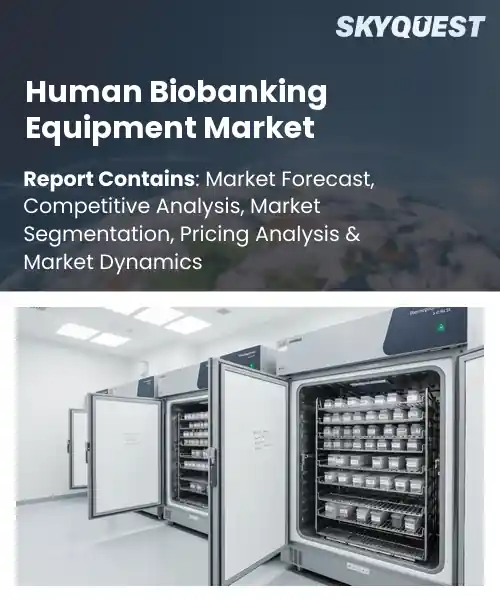
The primary driver of the human biobanking equipment industry is rising demand for scalable sample management fueled by precision medicine and population research. Human biobanking equipment includes cryogenic freezers, liquid nitrogen tanks, automated retrieval units and information management systems that preserve and catalog biospecimens. The market matters because storage and traceability underpin reproducible research, therapeutic development and public health surveillance; examples include UK Biobank enabling genome-wide association studies and the All of Us program supporting personalized risk models. Over decades the field shifted from manual cold rooms to integrated automated platforms with remote monitoring and compliance as sample volumes grew.
As sample volumes grew, a key factor shaping the global human biobanking equipment market has been automation and digital integration, which create efficiencies that unlock growth. When laboratories adopt automated retrieval systems and LIMS, sample turnaround and inventory accuracy improve, reducing loss and enabling sponsors to run multicenter trials with consistent specimen handling. Pharmaceutical companies consequently invest in higher-capacity cryogenic infrastructure to support biomarker discovery and cell therapy supply chains, while public health agencies deploy standardized freezers during outbreaks for rapid specimen accumulation. These effects open emerging markets and drive demand for remote monitoring, service contracts and regulatory-compliant solutions globally.
How is AI Transforming Inventory Management in the Human Biobanking Equipment Market?
Biobanks’ inventory management processes are being altered due to AI-based solutions replacing traditional manual methods with automated workflows. These solutions allow for unified tracking of samples, storage devices, and laboratory information across biobanks. The benefits of AI-based solutions within biobank operations include the automated identification of cryovials; the real-time monitoring of environmental conditions affecting each cryovial; and the provisioning of consumables before they are needed. AI-based solutions that leverage hybrid storage technologies will help organizations predict future demand and connect metadata to laboratory information systems.
Increasing demand for larger volumes of samples and maintaining the integrity of the chain of custody for samples are driving organizations to adopt integrated platforms due to industry trends. Examples of these integrated platforms currently exist in practice (e.g., RFID-embedded vials, sensor-enabled refrigerators, and cloud-native sample management systems), significantly reducing the amount of time required to conduct manual audits of samples, retrieve samples from storage locations, and reconcile inventory.
Market snapshot - 2026-2033
Global Market Size
USD 2.6 Billion
Largest Segment
Cryogenic Freezers
Fastest Growth
Cryogenic Freezers
Growth Rate
8.0% CAGR
To get more insights on this market click here to Request a Free Sample Report
Global human biobanking equipment market is segmented into storage equipment, sample collection, processing equipment, automation systems, monitoring equipment, application, end-user and region. Based on storage equipment, the market is segmented into cryogenic freezers, refrigerators, incubators and others. based on sample collection, the market is segmented into collection kits and transport containers. Based on processing equipment, the market is segmented into centrifuges and cell sorters.
Based on automation systems, the market is segmented into sample management system and robotic systems. Based on monitoring equipment, the market is segmented into temperature monitors and environment monitors. based on application, the market is segmented into regenerative medicine, life science research, clinical research and others. Based on end-user, the market is segmented into biobanks, hospitals, research organizations and others. Based on region, the market is segmented into North America, Europe, Asia Pacific, Latin America and Middle East & Africa.
As per human biobanking equipment market outlook, cryogenic freezer segment dominates because the ultra-low temperatures provided by cryogenic freezers will ensure that there is stability at ultra-low temperatures for the molecular integrity and cellular viability of many different types of human biospecimens, resulting in less degradation and more value for research purposes. Cryogenic freezers are also a proven technology, and therefore will meet all regulatory expectations, and will allow for long term retention of stored tissue, which means that institutions that plan to purchase cryogenic freezers will do so based on their foundation of being able to provide reproducible results and longevity of samples.
However, refrigerators segment is growing the most rapidly due to the ability they must provide a short-term storage option with the immediate access capabilities needed to support decentralized work processes. Additionally, the continual advancements being made in precise temperature control technology, energy efficiencies, and integration with monitoring systems are all factors that are driving facilities to purchase refrigerators for their cold chain storage alternatives.
As per human biobanking equipment market forecast, the sample management system segment is the fastest growing segment in automation because the centralized digital inventory systems having multi-faceted biospecimen inventory processes allow for improved biospecimen tracking, enforcement of the chain of custody and integration with Laboratory Information Systems allowing for compliance and consistency of data. The advancements in traceability of biospecimens will reduce not only sample loss and decrease human errors, but also make it easier to manage cohorts of biospecimens and improve operational efficiencies. As a result, biobanks are adopting scalable and auditable systems enabling improved data sharing and greater confidence in downstream research and clinical determination of an outcome.
As per human biobanking equipment market analysis, robotic systems are becoming the fastest growing area of automation because they allow for high throughput, sterile processing of biospecimens and consistency with human specimens, all decreasing labor intensiveness and human variation. There are rapid technology developments with flexible automation, ease of integration into existing software, and increasing demand for scalable contactless automated processes contributing to the accelerating adoption of robotics and creating new high-efficiency laboratory models and increased capacity.
To get detailed segments analysis, Request a Free Sample Report
As per human biobanking equipment market regional forecast, North America leads the market. The region also enjoys strong integration of biobanks with university-based medical institutions, leading to high awareness and adoption rates of automated systems and informatics tools. A robust supply chain supporting both equipment manufacturing and specialized services provides ready access to high-quality equipment.
The presence of strong regulatory frameworks and quality systems creates a competitive marketplace for procuring reliable and effective storage, processing, and tracking solutions, in addition to facilitating collaborative initiatives between public and private entities. Formal and informal "boot camp" style training programs supported by local institutions provide users with consistent skills to operate and utilize new technologies, resulting in a reinforcing loop of investment, innovation, and widespread adoption that has established regional dominance within the human biobanking equipment market.
U.S. Human Biobanking Equipment Market
The United States has the largest human biobanking equipment market in North America due to its significant number of universities with medical schools, the number of associated healthcare providers conducting research, and the early adoption of new laboratory technologies by various institutions. Universities use standardized protocols and quality management systems to create and maintain a consistent standard of performance for all biobanks, resulting in more pathways for distributors and suppliers to sell products through established networks of clinical, academic, and industry partnerships. Collectively, through well-established industry relationships and partnerships, vendors can deliver products to end-users with limited implementation delays and with thorough after-sale support, thus enhancing customer service, operation reliability, and overall equipment scalability.
Canada Human Biobanking Equipment Market
The Canada human biobanking equipment market is supported by integrated health research networks, coordinated biobank consortia and government-funded research infrastructure that focus on the quality of samples and interoperability of data. The focus on translational research increases the need for reliable storage, automated processing and informatics for the laboratory. Local suppliers and global vendors work with academic institutions to develop systems to suit their area of service. Training and quality assurance programs help maintain consistent operational standards at all institutions.
As per human biobanking equipment market regional outlook, the rapid growth occurring within Europe’s industry is due to increased collaboration among academic medical centers, national biobank networks and pharmaceutical companies with a shared commitment to apply standardized governance and interoperability standards to samples. Policymakers are creating regulations that support establishing ethical frameworks and data protection, which facilitates harmonization of storage and tracking systems; therefore, creating an environment for investment in compliant systems. The variety of funding methods and strong agenda for translational research promotes the need for better preservation technologies, more automation, and integrated informatics across systems.
A well-established manufacturing base and an array of specialized service providers can provide customized solutions; while cross border initiatives and public-private partnerships expedite the transfer of new technology. Finally, education, certification and quality assurance also strengthen clinical stakeholders' confidence in their ability to function within an interoperable system and thus support the use of contemporary tracking and cold chain management equipment through the purchase of new equipment.
Germany Human Biobanking Equipment Market
Germany has developed a human biobanking equipment sector due to its well-established manufacturing and strong collaborative efforts within clinical labs and research institutes. In Germany's human biobanking market, the quality of engineering practices, along with strict regulations, has led to an increase in demand for dependable means of storing, processing, and tracking samples.
U.K. Human Biobanking Equipment Market
United Kingdom human biobanking equipment industry has many vibrancies; an avant-garde biotech community that leads in translational research and collaboration between industry and healthcare systems supports the market. Innovations and commercialization are a strong motivator for early adopters of new technologies such as advanced preservation, automation of lab processes, and implementation of laboratory information systems. Investment/Incubator networks provide the means for developing customized solutions. Collaborations and pilot programs allow for expedited purchasing and rapid adoption of biobanking for academic and clinical use as well as providing the necessary training for all involved parties.
France Human Biobanking Equipment Market
The human biobanking equipment sector within France is beginning to emerge due to national objectives that deal with research capabilities and sample governance. As rare disease networks and clinical research continue to grow in France, so too will the demands for reliable, secure, and effective storage options for samples. Governments are providing support via collaboration with universities and hospitals to help improve laboratory infrastructures. Domestic manufacturers partner with global companies in order to design systems for specific clinical applications while at the same time developing quality assurance programs and training for consistent operational usage among institutions.
As per human biobanking equipment industry analysis, the Asia Pacific region is enhancing its competitive profile by increasing its research capability, making targeted investments in laboratory infrastructure and enhancing collaboration among researchers in academia, health care and industry. Biobanking facilities in Asia Pacific countries have been improved and upgraded, and laboratories are using automation and informatics to improve the quality and traceability of samples in biobanks, and develop supplier ecosystems to support local manufacturing and service delivery to biobanks.
Japan Human Biobanking Equipment Market
Human biobanking equipment market in Japan is characterized by the presence of advanced laboratories, world-class biomedical research institutions and collaboration between universities and industry to build a strong biomedical research base. The human biobanking equipment market trend toward precision medicine and clinical translational research places high demands on the development of sophisticated systems for storing, automatically processing and managing data on human biological specimens, and the domestic manufacturers and specialized service providers sell customized equipment and service/support for biobanking operations in Japan.
South Korea Human Biobanking Equipment Market
Human biobanking equipment market in South Korea is supported by the thriving biotechnology industry in South Korea, high rates of biopharmaceuticals, rapidly increasing rates of adoption of automated and computerized laboratory workflows, and strong collaborative relationships among hospitals, research institutions and industry. The increasing emphasis on integrating technology and digital deliveries into the workflow process in laboratories has resulted in increased demand for sophisticated systems for storing, processing and tracking human biological specimens. Domestic manufacturers and global suppliers work together to deliver customized solutions to biobanks and provide service and support to biobanks after the sale of the equipment and supplies.
To know more about the market opportunities by region and country, click here to
Buy The Complete Report
Rising Demand for Sample Preservation
Growing Precision Medicine Programs
High Capital and Operational Costs
Regulatory Complexity and Compliance Burden
Request Free Customization of this report to help us to meet your business objectives.
Competition in the global human biobanking equipment market is intensifying as conglomerates use acquisitions to broaden the equipment portfolios and service offerings, logistics specialists forge strategic alliances to secure cold chain scale, and software-first entrants disrupt sample discovery and provenance. Examples include Danaher's acquisition of GE's biopharma unit to expand equipment capabilities, Azenta's consolidation of Brooks Life Sciences assets, and Cryoport partnerships to extend cold-chain services.
Digital Integration of Biobanks
Sustainable Cold Chain Solutions
SkyQuest’s ABIRAW (Advanced Business Intelligence, Research & Analysis Wing) is our Business Information Services team that Collects, Collates, Correlates, and Analyses the Data collected by means of Primary Exploratory Research backed by robust Secondary Desk research.
As per SkyQuest analysis, the global human biobanking equipment market is being driven primarily by rising demand for scalable sample management from precision medicine initiatives and population research. A second key driver is rapid adoption of automation and digital integration that improves inventory accuracy, sample traceability and operational scalability. Nonetheless growth is tempered by high capital and operational costs for specialized cold storage, automation and facility upgrades, which constrain adoption among smaller centers. North America remains the dominant region due to mature research infrastructure and strong funding, while cryogenic freezers continue as the leading segment because they provide the ultra-low temperature stability required for long term specimen integrity. The human biobanking equipment market share is largely held by established life science and laboratory equipment manufacturers that supply advanced storage, sample handling, and cryopreservation technologies to research institutions, biobanks, and pharmaceutical companies worldwide.
| Report Metric | Details |
|---|---|
| Market size value in 2024 | USD 2.6 Billion |
| Market size value in 2033 | USD 5.2 Billion |
| Growth Rate | 8.0% |
| Base year | 2024 |
| Forecast period | 2026-2033 |
| Forecast Unit (Value) | USD Billion |
| Segments covered |
|
| Regions covered | North America (US, Canada), Europe (Germany, France, United Kingdom, Italy, Spain, Rest of Europe), Asia Pacific (China, India, Japan, Rest of Asia-Pacific), Latin America (Brazil, Rest of Latin America), Middle East & Africa (South Africa, GCC Countries, Rest of MEA) |
| Companies covered |
|
| Customization scope | Free report customization with purchase. Customization includes:-
|
To get a free trial access to our platform which is a one stop solution for all your data requirements for quicker decision making. This platform allows you to compare markets, competitors who are prominent in the market, and mega trends that are influencing the dynamics in the market. Also, get access to detailed SkyQuest exclusive matrix.
Table Of Content
Executive Summary
Market overview
Parent Market Analysis
Market overview
Market size
KEY MARKET INSIGHTS
COVID IMPACT
MARKET DYNAMICS & OUTLOOK
Market Size by Region
KEY COMPANY PROFILES
Methodology
For the Human Biobanking Equipment Market, our research methodology involved a mixture of primary and secondary data sources. Key steps involved in the research process are listed below:
1. Information Procurement: This stage involved the procurement of Market data or related information via primary and secondary sources. The various secondary sources used included various company websites, annual reports, trade databases, and paid databases such as Hoover's, Bloomberg Business, Factiva, and Avention. Our team did 45 primary interactions Globally which included several stakeholders such as manufacturers, customers, key opinion leaders, etc. Overall, information procurement was one of the most extensive stages in our research process.
2. Information Analysis: This step involved triangulation of data through bottom-up and top-down approaches to estimate and validate the total size and future estimate of the Human Biobanking Equipment Market.
3. Report Formulation: The final step entailed the placement of data points in appropriate Market spaces in an attempt to deduce viable conclusions.
4. Validation & Publishing: Validation is the most important step in the process. Validation & re-validation via an intricately designed process helped us finalize data points to be used for final calculations. The final Market estimates and forecasts were then aligned and sent to our panel of industry experts for validation of data. Once the validation was done the report was sent to our Quality Assurance team to ensure adherence to style guides, consistency & design.
Analyst Support
Customization Options
With the given market data, our dedicated team of analysts can offer you the following customization options are available for the Human Biobanking Equipment Market:
Product Analysis: Product matrix, which offers a detailed comparison of the product portfolio of companies.
Regional Analysis: Further analysis of the Human Biobanking Equipment Market for additional countries.
Competitive Analysis: Detailed analysis and profiling of additional Market players & comparative analysis of competitive products.
Go to Market Strategy: Find the high-growth channels to invest your marketing efforts and increase your customer base.
Innovation Mapping: Identify racial solutions and innovation, connected to deep ecosystems of innovators, start-ups, academics, and strategic partners.
Category Intelligence: Customized intelligence that is relevant to their supply Markets will enable them to make smarter sourcing decisions and improve their category management.
Public Company Transcript Analysis: To improve the investment performance by generating new alpha and making better-informed decisions.
Social Media Listening: To analyze the conversations and trends happening not just around your brand, but around your industry as a whole, and use those insights to make better Marketing decisions.
REQUEST FOR SAMPLE
 REQUEST FREE CUSTOMIZATION
Global Human Biobanking Equipment Market size was valued at USD 2.6 Billion in 2024 and is poised to grow from USD 2.81 Billion in 2025 to USD 5.2 Billion by 2033, growing at a CAGR of 8.0% during the forecast period (2026-2033).
Thermo Fisher Scientific, Brooks Automation, Qiagen, VWR International, Sartorius AG, Eppendorf AG, BioStorage Technologies, Tecan Group, Hamilton Company, Greiner Bio-One, NucleoSpin, Biolife Solutions, Labcorp, F. Hoffmann-La Roche AG, Merck KGaA, Axygen Biosciences, Becton, Dickinson and Company, Genvault Corporation, 3M Company, BioBanking Solutions
The key driver of the Human Biobanking Equipment Market is the increasing demand for biospecimen storage and preservation in clinical research and precision medicine. Growing investments in biobanks, rising genomic research, and expanding drug discovery activities are significantly boosting the demand for advanced biobanking equipment.
A key market trend in the Human Biobanking Equipment Market is the adoption of automated and digital biobanking systems. Advanced cryogenic storage, robotic sample handling, and integrated data management platforms are improving sample tracking, storage efficiency, and long-term biospecimen preservation.
North America accounted for the largest share in the Human Biobanking Equipment Market, driven by strong investments in biomedical research, well-established biobank infrastructure, advanced healthcare facilities, and increasing genomic and clinical research activities.


Want to customize this report? This report can be personalized according to your needs. Our analysts and industry experts will work directly with you to understand your requirements and provide you with customized data in a short amount of time. We offer $1000 worth of FREE customization at the time of purchase.
Feedback From Our Clients


 USA (+1) 351-333-4748

