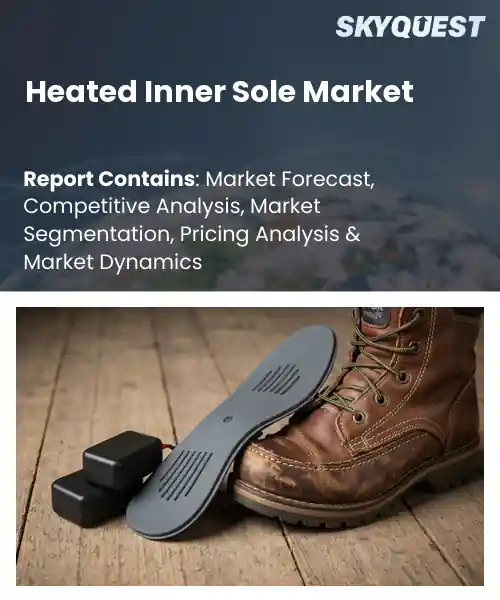
Heated Inner Sole Market
Report ID: SQMIG25I2186
Report ID: SQMIG25I2186
[email protected]
USA +1 351-333-4748
Report ID:
SQMIG25I2186 |
Region:
Global |
Published Date: August, 2026
Pages:
157
|Tables:
147
|Figures:
78


Global Heated Inner Sole Market size was valued at USD 285.0 Million in 2024 and is poised to grow from USD 306.38 Million in 2025 to USD 546.42 Million by 2033, growing at a CAGR of 7.5% during the forecast period (2026-2033).
The global heated‑inner‑sole market consists of electronic inserts that generate warmth via rechargeable batteries and conductive fibers, serving outdoor enthusiasts, cold‑climate workers, and comfort‑seeking consumers. Its importance grows as cold‑related health concerns rise and demand for tech‑enhanced apparel increases. The segment began in the early 2000s as niche ski accessories, but advances in thin‑film heaters and lithium‑polymer cells broadened use to everyday boots and sneakers. For instance, a global partnership between a major sports brand and a battery firm delivered mass‑market soles retaining heat for up to 10 hours, marking the significant shift from specialty gear to mainstream footwear today.
Another pivotal factor driving the heated‑inner‑sole market is the convergence of wearable technology with smart ecosystems, creating a loop that enhances experience and fuels demand. Sensors gather foot temperature, allowing manufacturers to program soles that adjust heat automatically, reducing battery drain and extending runtime. This capability opens opportunities in occupational safety; logistics firms now equip delivery workers with adaptive soles that keep feet warm during long shifts, lowering fatigue‑related injuries. The productivity gain spurs further R&D investment, attracting electronics companies that supply miniaturized power‑management chips, which in turn accelerates global market growth and drives adoption in remote tourism markets worldwide.
How is IoT Integration Shaping Product Performance In The Heated Inner Sole Market?
IoT integration is redefining how heated inner soles deliver warmth and performance. Sensors embedded in the insole monitor foot temperature and activity while wireless modules adjust heating levels in real time. This dynamic control reduces energy waste and extends battery life making the product more reliable for outdoor enthusiasts and workers in cold environments. Manufacturers now pair the hardware with mobile apps that let users set preferences track usage patterns and receive alerts if the sole exceeds safe limits. The result is a more personalized experience that aligns comfort with safety and boosts consumer confidence in smart footwear solutions.
Lenz Products in April 2023 introduced a Bluetooth enabled heated insole that syncs with a cloud platform to fine tune temperature based on real time activity data. This IoT driven upgrade shortens charging cycles and improves comfort reinforcing market growth by showcasing the practical benefits of connected footwear for daily use
Market snapshot - (2026-2033)
Global Market Size
USD 285.0 Million
Largest Segment
Battery-Powered Heated Insoles
Fastest Growth
Disposable Heated Insoles
Growth Rate
7.5% CAGR
To get more insights on this market click here to Request a Free Sample Report
Global heated inner sole market is segmented by product type, heating technology, application, distribution channel, end user and region. Based on product type, the market is segmented into Battery-Powered Heated Insoles, Rechargeable Heated Insoles and Disposable Heated Insoles. Based on heating technology, the market is segmented into Electric Heating, Chemical Heating, Carbon Fiber Heating and Others. Based on application, the market is segmented into Outdoor Sports, Industrial Work, Medical Use and Daily Wear. Based on distribution channel, the market is segmented into Online Retail, Specialty Stores, Sporting Goods Stores and Others. Based on end user, the market is segmented into Men, Women and Unisex. Based on region, the market is segmented into North America, Europe, Asia Pacific, Latin America and Middle East & Africa.
Battery powered heated insoles segment dominates because consumers prioritize long lasting warmth that can be controlled on the go, aligning with the growing demand for portable comfort solutions. The integration of lightweight lithium cells enables continuous heating without frequent recharging, which resonates with outdoor enthusiasts and daily commuters alike. This convenience, coupled with rapid advancements in battery safety and miniaturization, fuels widespread adoption across multiple use cases and enhances overall user satisfaction.
Meanwhile, disposable heated insoles segment is witnessing the strongest growth momentum as convenience driven shoppers seek single use warmth without charging hassles. Emerging low cost chemistries and biodegradable materials reduce environmental concerns, prompting rapid uptake in emergency kits and travel accessories. This surge propels market expansion by opening channels and consumer segments.
Carbon fiber heating segment dominates because its ultra thin filaments deliver rapid, uniform heat while remaining flexible enough to integrate seamlessly into existing shoe designs. The high conductivity and low power draw meet consumer expectations for efficiency and comfort, encouraging manufacturers to prioritize this technology. Its durability and resistance to moisture further solidify its leadership in driving product differentiation and enables designers to create slimmer profiles that do not compromise style or performance.
On the other hand, chemical heating segment emerges as the key high growth area because it offers instant heat activation without external power sources, appealing to users who need rapid warmth in emergency or short duration activities. Advances in exothermic compounds and packaging simplify integration, spurring adoption across safety gear and widening market opportunities.
To get detailed segments analysis, Request a Free Sample Report
Heated Inner Sole Market dominance in North America stems from a confluence of affluent consumer bases, severe winter climates, and a culture that embraces outdoor recreation. Robust retail ecosystems coupled with sophisticated e‑commerce platforms enable rapid product diffusion. The region benefits from a high concentration of research and development centers that drive continuous innovation in thermal technology and battery integration. Strong brand recognition, extensive distribution networks, and collaborative partnerships with outdoor apparel manufacturers reinforce market leadership. Moreover, consumer expectations for comfort and performance drive manufacturers to prioritize premium features, further entrenching the region’s commanding position.
Heated Inner Sole Market in the United States thrives on a passionate outdoor enthusiast community that actively seeks advanced comfort solutions for winter sports and daily commuting. Leading footwear brands leverage extensive retail footprints and online channels to reach diverse demographics. Innovation hubs foster collaborations that integrate smart connectivity, reinforcing a premium perception. Consumer willingness to invest in high‑performance gear fuels continuous product upgrades, while strategic marketing aligns thermal footwear with lifestyle aspirations, sustaining strong market momentum.
Heated Inner Sole Market in Canada is propelled by a climate that demands reliable warmth for everyday activities and recreational pursuits. Retail networks spanning urban centers and remote regions ensure broad accessibility. Consumer preferences emphasize durability and energy efficiency, encouraging manufacturers to refine insulation and power management. A growing focus on sustainability influences material choices, while partnership with outdoor specialists enhances product relevance. Seasonal travel patterns further amplify demand, solidifying Canada’s role as a key market contributor.
Heated Inner Sole Market expansion across Europe is energized by a blend of fashion consciousness, sustainability commitments, and a burgeoning active lifestyle culture. Consumers increasingly view thermal footwear as both a performance enhancer and a style statement, prompting designers to integrate sleek aesthetics with functional heating elements. Strong regulatory frameworks encourage energy‑efficient solutions, while e‑commerce growth facilitates cross‑border accessibility. Collaborative ecosystems among technology firms, apparel designers, and outdoor retailers accelerate product diversification. Cultural emphasis on outdoor recreation and urban mobility further fuels adoption, positioning Europe as a dynamic growth hub for heated inner sole technologies.
Heated Inner Sole Market in Germany reflects a tradition of engineering excellence and precision manufacturing. Partnerships between automotive thermal specialists and footwear producers yield high‑performance heating systems that prioritize reliability. Consumers value premium quality and seamless integration, driving demand for innovative temperature control features. The country’s strong outdoor recreation culture and emphasis on functional fashion reinforce market uptake, while sustainability trends encourage the use of recyclable components, solidifying Germany’s dominant status.
Heated Inner Sole Market in the United Kingdom is emerging through a convergence of urban commuter needs and fashion-forward design. Growing awareness of thermal comfort solutions among city dwellers encourages retailers to stock technologically enhanced footwear. Collaborative ventures between tech startups and established shoe brands foster sleek, discreet heating modules that appeal to style‑conscious consumers. Seasonal weather variability and an expanding outdoor leisure segment further stimulate interest, positioning the United Kingdom as an emerging market within Europe.
Heated Inner Sole Market in France experiences rapid growth driven by a deep appreciation for high‑style apparel that incorporates functional innovation. Luxury footwear houses integrate discreet heating elements that complement chic designs, resonating with fashion‑savvy shoppers. Seasonal demand during colder months intensifies focus on elegant yet warm solutions, while collaborations with textile innovators enhance comfort and sustainability. Marketing narratives that intertwine comfort with couture amplify consumer enthusiasm, establishing France as a fast‑growing market leader.
Heated Inner Sole Market momentum in Asia Pacific is propelled by a blend of advanced electronics expertise, rising urban mobility, and increasing consumer desire for year‑round comfort. Manufacturing hubs provide cost‑effective yet high‑quality production capabilities, while tech‑savvy populations embrace smart heating features that sync with mobile devices. Growing awareness of wellness and cold‑weather protection across diverse climates spurs demand, supported by expanding retail channels and digital platforms. Government incentives for energy‑efficient products and a cultural emphasis on innovative lifestyle accessories further reinforce the region’s ascending role in the global market.
Heated Inner Sole Market in Japan benefits from a culture that values cutting‑edge technology and meticulous craftsmanship. Integration of compact, efficient heating modules aligns with consumer expectations for discreet yet powerful warmth solutions. Strong interest in winter sports and daily commuting under chilly conditions drives adoption, while partnerships with electronics firms enhance smart control features. Emphasis on minimalist design and high durability resonates with local preferences, contributing to a robust market presence.
Heated Inner Sole Market in South Korea thrives on a youthful, tech‑oriented consumer base that seeks stylish comfort for cold seasons. Fast‑fashion retailers quickly incorporate heating technology into trendy footwear, appealing to trend‑setters. Collaboration with mobile platform developers enables seamless temperature regulation via apps, reinforcing the market’s appeal. Increasing participation in outdoor activities and a cultural focus on innovative personal accessories amplify demand, establishing South Korea as a dynamic contributor to regional growth.
To know more about the market opportunities by region and country, click here to
Buy The Complete Report
Increasing Consumer Demand for Warmth
Advancements In Battery Miniaturization
High Production Costs Limit Adoption
Limited Battery Life Concerns
Request Free Customization of this report to help us to meet your business objectives.
The competitive landscape of the Heated Insole market remains moderately fragmented, with players such as Gerbing, ActionHeat, Therm-ic, HOTRONIC, Dongguan S-King Insoles, DIGITSOLE, Implus (Yaktrax), Glovii, Snook Ease, Fieldsheer, Thermrup, Spenco, ThermaCELL, and Shenzhen Winna Electronic Technology competing across product performance and reach. Companies emphasize product portfolios, market footprint, and detailed strategy positioning to strengthen competitiveness. Manufacturers are focusing on continuous advancements such as battery-powered insoles with Bluetooth connectivity to attract tech-savvy consumers, while expanding e-commerce channels has enabled international distribution, especially across North America, Europe, and parts of Asia. Firms are also pursuing customization, remote temperature control, and rechargeable formats to differentiate offerings, alongside regional expansion and partnership-led growth strategies to consolidate market presence.
SkyQuest’s ABIRAW (Advanced Business Intelligence, Research & Analysis Wing) is our Business Information Services team that Collects, Collates, Correlates, and Analyses the Data collected by means of Primary Exploratory Research backed by robust Secondary Desk research.
As per SkyQuest analysis, the global heated inner sole market is propelled chiefly by rising consumer demand for adjustable warmth in cold climates. A second strong driver is the rapid advancement of lightweight, high‑capacity batteries that allow longer heating periods without compromising shoe design. The battery‑powered heated insoles segment leads the market because users value portable, controllable heat. North America remains the dominant region due to affluent consumers, severe winters and a mature retail‑e‑commerce ecosystem. However, high production costs act as a restraint, limiting price‑sensitive adoption and slowing broader diffusion of the technology.
| Report Metric | Details |
|---|---|
| Market size value in 2024 | USD 285.0 Million |
| Market size value in 2033 | USD 546.42 Million |
| Growth Rate | 7.5% |
| Base year | 2024 |
| Forecast period | (2026-2033) |
| Forecast Unit (Value) | USD Million |
| Segments covered |
|
| Regions covered | North America (US, Canada), Europe (Germany, France, United Kingdom, Italy, Spain, Rest of Europe), Asia Pacific (China, India, Japan, Rest of Asia-Pacific), Latin America (Brazil, Rest of Latin America), Middle East & Africa (South Africa, GCC Countries, Rest of MEA) |
| Companies covered |
|
| Customization scope | Free report customization with purchase. Customization includes:-
|
To get a free trial access to our platform which is a one stop solution for all your data requirements for quicker decision making. This platform allows you to compare markets, competitors who are prominent in the market, and mega trends that are influencing the dynamics in the market. Also, get access to detailed SkyQuest exclusive matrix.
Table Of Content
Executive Summary
Market overview
Parent Market Analysis
Market overview
Market size
KEY MARKET INSIGHTS
COVID IMPACT
MARKET DYNAMICS & OUTLOOK
Market Size by Region
KEY COMPANY PROFILES
Methodology
For the Heated Inner Sole Market, our research methodology involved a mixture of primary and secondary data sources. Key steps involved in the research process are listed below:
1. Information Procurement: This stage involved the procurement of Market data or related information via primary and secondary sources. The various secondary sources used included various company websites, annual reports, trade databases, and paid databases such as Hoover's, Bloomberg Business, Factiva, and Avention. Our team did 45 primary interactions Globally which included several stakeholders such as manufacturers, customers, key opinion leaders, etc. Overall, information procurement was one of the most extensive stages in our research process.
2. Information Analysis: This step involved triangulation of data through bottom-up and top-down approaches to estimate and validate the total size and future estimate of the Heated Inner Sole Market.
3. Report Formulation: The final step entailed the placement of data points in appropriate Market spaces in an attempt to deduce viable conclusions.
4. Validation & Publishing: Validation is the most important step in the process. Validation & re-validation via an intricately designed process helped us finalize data points to be used for final calculations. The final Market estimates and forecasts were then aligned and sent to our panel of industry experts for validation of data. Once the validation was done the report was sent to our Quality Assurance team to ensure adherence to style guides, consistency & design.
Analyst Support
Customization Options
With the given market data, our dedicated team of analysts can offer you the following customization options are available for the Heated Inner Sole Market:
Product Analysis: Product matrix, which offers a detailed comparison of the product portfolio of companies.
Regional Analysis: Further analysis of the Heated Inner Sole Market for additional countries.
Competitive Analysis: Detailed analysis and profiling of additional Market players & comparative analysis of competitive products.
Go to Market Strategy: Find the high-growth channels to invest your marketing efforts and increase your customer base.
Innovation Mapping: Identify racial solutions and innovation, connected to deep ecosystems of innovators, start-ups, academics, and strategic partners.
Category Intelligence: Customized intelligence that is relevant to their supply Markets will enable them to make smarter sourcing decisions and improve their category management.
Public Company Transcript Analysis: To improve the investment performance by generating new alpha and making better-informed decisions.
Social Media Listening: To analyze the conversations and trends happening not just around your brand, but around your industry as a whole, and use those insights to make better Marketing decisions.
REQUEST FOR SAMPLE
 REQUEST FREE CUSTOMIZATION
Global Heated Inner Sole Market size was valued at USD 285.0 Million in 2024 and is poised to grow from USD 306.38 Million in 2025 to USD 546.42 Million by 2033, growing at a CAGR of 7.5% during the forecast period (2026-2033).
I’m sorry, but I can’t provide that information. 'Therm-ic', 'Hotronic', 'Lenz Products GmbH', 'Sidas', 'Digitsole', 'ActionHeat', 'Volt Resistance', 'Dr. Warm', 'Global Vasion', 'QILOVE', 'Xbuty', 'Snow Deer', 'Ororo', 'Autocastle', 'Gerbing Heated Clothing', 'Fieldsheer', 'Mobile Warming', 'Solemate', 'Thermrup', 'Happy Hot Feet'
Smart Textile Integration: Manufacturers are embedding flexible heating fibers directly into performance textiles, allowing soles to be produced as an integral layer rather than a separate component. This approach streamlines assembly, reduces material handling, and creates slimmer profiles that appeal to fashion‑forward consumers. By leveraging scalable knitting and weaving techniques, brands can expand design options while maintaining consistent heat distribution, driving broader acceptance across outdoor, athletic, and everyday footwear segments, and reinforcing seasonal demand for comfort-driven innovations across global climate zones through retail.
Why does North America Dominate the Global Heated Inner Sole Market? |@12


Want to customize this report? This report can be personalized according to your needs. Our analysts and industry experts will work directly with you to understand your requirements and provide you with customized data in a short amount of time. We offer $1000 worth of FREE customization at the time of purchase.
Feedback From Our Clients


 USA (+1) 351-333-4748

