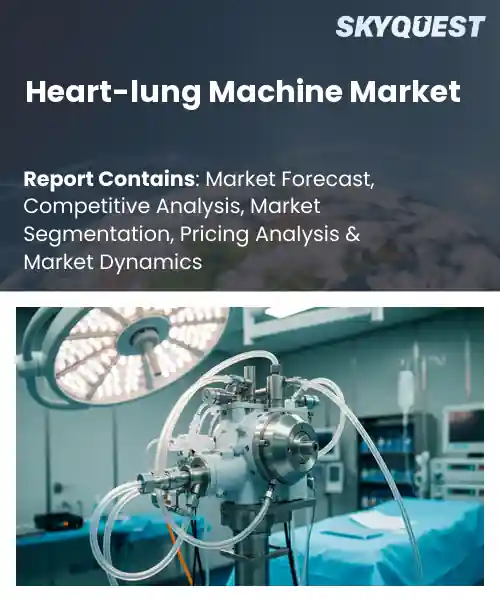
Heart-lung Machine Market
Report ID: SQMIG35A3655
Report ID: SQMIG35A3655
[email protected]
USA +1 351-333-4748
Report ID:
SQMIG35A3655 |
Region:
Global |
Published Date: May, 2026
Pages:
157
|Tables:
117
|Figures:
72


Global Heart-Lung Machine Market size was valued at USD 382.5 Million in 2024 and is poised to grow from USD 405.91 Million in 2025 to USD 652.4 Million by 2033, growing at a CAGR of 6.12% during the forecast period (2026-2033).
Increasing number of cardiothoracic surgeries (volume and complexity) is leading to rise in demand for extracorporeal circulation systems which is driving the growth of heart lung machine market. This market includes perfusion pumps, oxygenators, tubing sets and monitoring devices used to support patients during open heart procedures and transplant operations and extracorporeal membrane oxygenation support. It matters because better outcomes during surgery directly translate into reduced mortality and postoperative complications, with cost savings and improved quality of life, In mature fields, incremental innovations—from roller pumps to centrifugal pumps, from hollow-fiber oxygenators to polymethylpentene membranes—have historically improved safety and enabled wider clinical adoption.
Regulatory approvals and reimbursement policies are a critical catalyst to transform market opportunity into adoption, as rising demand for surgery and increased confidence in extracorporeal technologies grow. Heart-lung machine procedures are well coded and reimbursed by governments and insurers. Hospitals invest in modern perfusion systems and train perfusionists to increase procedural capacity and reduce wait times. Manufacturers are responding with integrated systems with monitoring and disposable kits that reduce infection risk and allowing them to expand into emerging markets. In fact, better payment frameworks, as in Germany and Japan, have led to higher procurement rates in practice, opening up opportunities for service contracts and localization.
How is AI improving performance in the heart-lung machine market?
AI is enhancing the performance of heart lung machines with real time monitoring, predictive analytics and clinical decision support. Key features are: continuous integration of sensor data adaptive control of pump and gas settings anomaly detection workflow guidance The current state of affairs shows that manufacturers and hospitals are deploying smart connected platforms to enhance patient safety and clinicians’ situational awareness. Adoption is driven by market demand for less complications, more consistent extracorporeal support. Examples include next generation monitoring suites from established cardiopulmonary suppliers to new sensor systems that provide continuous metabolic visibility and make management more proactive.
Getinge March 2026, launched Cardiohelp II with Smart connected monitoring and improved trend analysis. These capabilities are similar to AI based analytics and decision support that help clinicians identify deterioration earlier minimizing manual adjustments and enabling workflows for wider adoption and operational efficiency.
Market snapshot - (2026-2033)
Global Market Size
USD 382.5 Million
Largest Segment
Oxygenator
Fastest Growth
Centrifugal Pump
Growth Rate
6.12% CAGR
To get more insights on this market click here to Request a Free Sample Report
Global heart-lung machine market is segmented by component, product type, application, end-user and region. Based on component, the market is segmented into Oxygenator, Roller Pump, Centrifugal Pump, Heat Exchanger and Reservoir. Based on product type, the market is segmented into Heart-Lung Machines and Cardioplegia Delivery Systems. Based on application, the market is segmented into Coronary Artery Bypass Grafting (CABG), Valve Replacement and Congenital Heart Defect Repair. Based on end-user, the market is segmented into Hospitals and Cardiac Surgery Centers. Based on region, the market is segmented into North America, Europe, Asia Pacific, Latin America and Middle East & Africa.
The oxygenator segment is the dominant segment because oxygenators are the essential component for reliable gas exchange and systemic oxygen delivery during cardiopulmonary bypass, and hence are critical to the success of the procedure. Material and membrane developments decrease blood trauma and inflammatory response, factors that decrease the risk of complications and influence the clinician preference. Robust manufacturer support, integration with monitoring systems, and well-established clinical protocols further support adoption across operating suites and institutional procurement priorities.
However, Centrifugal Pump is emerging as the fastest growing area due to its lower shear design which reduces the risk of hemolysis and its compact, modular form factors which fit minimally invasive and hybrid workflows. Improvements in magnetic levitation and simplified priming make setup easier and safer, which increases clinician acceptance and allows wider application in different surgical procedures, leading to new procurement and service opportunities.
The Cardioplegia Delivery Systems segment dominates the market, due to targeted myocardial protection via accurate dosing, temperature control, and controlled delivery, which directly minimizes ischemic injury during arrest and improves surgical outcomes. Automation decreases procedural variability and clinician workload . Compatibility with various perfusion protocols facilitates adoption . Ongoing device improvements, improved delivery catheters, and adherence to clinical practice guidelines increase surgeon confidence and sustain demand in cardiac operating rooms.
Heart-Lung Machines, on the other hand, are becoming the fastest growing product area as new integrated platforms offer turnkey perfusion management, intuitive interfaces and improved safety interlocks that facilitate set-up and support complicated procedures. Modularity and interoperability with monitoring systems improvements are driving uptake, enabling bundled equipment and service models that expand long term revenue opportunities and market reach.
To get detailed segments analysis, Request a Free Sample Report
North America leads the market on the back of a combination of strong clinical infrastructure, dense clusters of excellence in cardiac surgery and established channels for technology adoption. Together, manufacturers, academic institutions and clinical opinion leaders work closely to accelerate product development and clinical validation. Strong reimbursement policies and institutional purchasing practices facilitate market entry and scale for validated platforms. Continued investment in medtech innovation from private and public sources and participation in venture capital underpins a steady pipeline of incremental and disruptive enhancements. Standardized perfusion protocols as well as operator competency are promoted by professional societies and continuing education programs, leading to consistent clinical results and the institutional preference for validated Heart-lung Machine platforms throughout the region.
The United States Heart-lung Machine Market is characterized by the concentration of high-volume cardiovascular centers, extensive clinician expertise and early adoption of incremental technology improvements. Device manufacturers and clinical researchers work together to validate and improve systems. Specialized training, service networks and integrated clinical support enhances operational reliability and trust. The market is receptive to platforms and perfusion technologies that focus on safety, streamlining workflows and improving outcomes.
Heart-lung Machine Market in Canada is a reflection of balance of advanced tertiary care centers and focus on centralized procurement and standardized clinical pathways. Robust provincial programs favor training and maintenance models that support device reliability and service partnerships. Incentives for regional technology adaptations based on collaborative networks between hospitals and manufacturers, clinician competency, patient safety protocols and interoperable systems drive adoption of refined Heart-lung Machine solutions.
Europe is growing fast with a strong manufacturing heritage of medical technology, integrated clinical networks and regulatory harmonization that allows cross-border adoption. Industry-clinical collaboration adapts product features to local clinical practices. Centralized purchasing consortia and coordinated training programs improve institutional readiness. Active involvement of professional societies and multicenter clinical initiatives enhances evidence generation and guideline development, promoting broader acceptance. The pathways for adoption have been improved by public–private partnerships and targeted investment in clinical education and post-market support. Service networks provide uptime and maintenance. Platforms are appealing in the setting because they are tailored to surgical techniques and perioperative care models.
Germany’s strong manufacturing base for medtech products, dense network of specialized cardiac centers and close cooperation between industry and clinical research institutions are expected to drive the market. Strong local supplier ecosystems enable prototyping, customization and strong aftermarket servicing. Validated platforms are characterized by standardized clinical pathways and training. Hospitals are always seeking reliability, clinical performance and supplier service capabilities. This creates a market environment that is conducive to advanced Heart-lung Machine solutions.
The Heart-lung Machine Market in United Kingdom is witnessing dynamic adoption, driven by centralized procurement reforms, a focus on clinical pathways, and supplier engagement. Investment in clinician training and improved post-sale support is reducing barriers to deployment. We partner with academic centers to generate evidence and customize devices. The interplay between national procurement mechanisms and regional cardiac centers is promoting the uptake of advanced Heart-lung Machine platforms tailored to different surgical workflows and system resilience.
France Heart-lung Machine Market is emerging with the strengthened collaboration between regional cardiac center and device manufacturers for validation. The increasing focus on standardized perfusion protocols and training programs argues for more widespread institutional consideration. Procurement strategies need to balance clinical performance and service reliability with cost-effectiveness. Hospitals are aligning with clinical guidelines and focusing on safety. This is favorable for the market to adopt customized Heart-lung Machine platforms that match local clinical workflows and maintenance expectations.
Asia Pacific is building its position through the targeted investment in advanced manufacturing capabilities, focused clinical research and strategic partnerships between local suppliers and global device companies. The region is focused on high quality engineering, regulatory alignment and localised product adaptations that are suited to the region’s surgical practices and hospital infrastructure. More robust clinician training programs, growth in specialty cardiac centers and better post-sale service networks increase clinician confidence and system uptime. The export orientation combined with an increasing domestic demand is conducive to incremental innovation. Joint research programs and regional distribution channels facilitate broader adoption of refined Heart-lung Machine platforms across various healthcare settings. Regulatory modernization and alignment with international quality standards enhance market access and competitiveness. Public-private collaboration and incubation programs strengthen component supply chains and local production of consumables, reducing dependency on imports. The development of clinical expertise and regional centers of excellence provide reference sites to support institutional procurement and service agreements, further strengthening market stability.
Japan’s heart-lung machine market is characterized by its precision engineering, regulatory compliance and close collaboration between manufacturers and clinical researchers. Strong hospital networks, specialized cardiac centers prefer devices with proven reliability, service support. Purchasing decisions include local adjustment for surgical nuances and availability of consumables This ongoing partnership between industry and clinical leaders delivers incremental innovation and educational programs to build user confidence and incorporate refined Heart-lung Machine technologies in clinical practice.
South Korea’s Heart-lung Machine Market benefits from strong medtech manufacturing capabilities and close ties between hospitals and technology developers. Localized design and consumable availability enables clinical adoption in cardiac centers. Being an active player in clinical research in the region and export helps to improve reliability and service delivery. Collaboration between government and industry on certification and training programs that enable advanced Heart-lung Machine platforms to be incorporated across care settings builds clinician confidence.
To know more about the market opportunities by region and country, click here to
Buy The Complete Report
Increasing Prevalence Of Cardiovascular Disease
Advances In Heart Lung Technology
High Cost Of Heart Lung Systems
Shortage Of Trained Perfusionists
Request Free Customization of this report to help us to meet your business objectives.
The global heart-lung machine market competition is based on consolidation and rapid product differentiation through strategic M&A, targeted partnerships, and oxygenator innovation. Breethe’s compact ECMO: Added to a heart pump portfolio in the Abiomed acquisition. The acquisition of Hemovent strengthened MicroPort’s ECLS product portfolio. Emerging vendors are focusing on novel designs of oxygenators, integration of sensors to secure contracts with hospitals and clinical partnerships.
SkyQuest’s ABIRAW (Advanced Business Intelligence, Research & Analysis Wing) is our Business Information Services team that Collects, Collates, Correlates, and Analyses the Data collected by means of Primary Exploratory Research backed by robust Secondary Desk research.
As per SkyQuest analysis, the global heart-lung machine market is being driven primarily by rising volumes and complexity of cardiothoracic surgeries, which expand demand for extracorporeal circulation systems, while advances in heart-lung technology further accelerate adoption through safer, more modular devices. However high acquisition and ownership costs remain a significant restraint for many hospitals and surgical centers. North America dominates the market thanks to advanced clinical infrastructure, robust reimbursement and concentrated cardiac centers, and the oxygenator segment dominates product adoption because membrane and material innovations directly improve gas exchange and reduce complications. Continued digital perfusion optimization and AI-enabled monitoring are expected to sustain momentum and create service and consumable opportunities.
| Report Metric | Details |
|---|---|
| Market size value in 2024 | USD 382.5 Million |
| Market size value in 2033 | USD 652.4 Million |
| Growth Rate | 6.12% |
| Base year | 2024 |
| Forecast period | (2026-2033) |
| Forecast Unit (Value) | USD Million |
| Segments covered |
|
| Regions covered | North America (US, Canada), Europe (Germany, France, United Kingdom, Italy, Spain, Rest of Europe), Asia Pacific (China, India, Japan, Rest of Asia-Pacific), Latin America (Brazil, Rest of Latin America), Middle East & Africa (South Africa, GCC Countries, Rest of MEA) |
| Companies covered |
|
| Customization scope | Free report customization with purchase. Customization includes:-
|
To get a free trial access to our platform which is a one stop solution for all your data requirements for quicker decision making. This platform allows you to compare markets, competitors who are prominent in the market, and mega trends that are influencing the dynamics in the market. Also, get access to detailed SkyQuest exclusive matrix.
Table Of Content
Executive Summary
Market overview
Parent Market Analysis
Market overview
Market size
KEY MARKET INSIGHTS
COVID IMPACT
MARKET DYNAMICS & OUTLOOK
Market Size by Region
KEY COMPANY PROFILES
Methodology
For the Heart-lung Machine Market, our research methodology involved a mixture of primary and secondary data sources. Key steps involved in the research process are listed below:
1. Information Procurement: This stage involved the procurement of Market data or related information via primary and secondary sources. The various secondary sources used included various company websites, annual reports, trade databases, and paid databases such as Hoover's, Bloomberg Business, Factiva, and Avention. Our team did 45 primary interactions Globally which included several stakeholders such as manufacturers, customers, key opinion leaders, etc. Overall, information procurement was one of the most extensive stages in our research process.
2. Information Analysis: This step involved triangulation of data through bottom-up and top-down approaches to estimate and validate the total size and future estimate of the Heart-lung Machine Market.
3. Report Formulation: The final step entailed the placement of data points in appropriate Market spaces in an attempt to deduce viable conclusions.
4. Validation & Publishing: Validation is the most important step in the process. Validation & re-validation via an intricately designed process helped us finalize data points to be used for final calculations. The final Market estimates and forecasts were then aligned and sent to our panel of industry experts for validation of data. Once the validation was done the report was sent to our Quality Assurance team to ensure adherence to style guides, consistency & design.
Analyst Support
Customization Options
With the given market data, our dedicated team of analysts can offer you the following customization options are available for the Heart-lung Machine Market:
Product Analysis: Product matrix, which offers a detailed comparison of the product portfolio of companies.
Regional Analysis: Further analysis of the Heart-lung Machine Market for additional countries.
Competitive Analysis: Detailed analysis and profiling of additional Market players & comparative analysis of competitive products.
Go to Market Strategy: Find the high-growth channels to invest your marketing efforts and increase your customer base.
Innovation Mapping: Identify racial solutions and innovation, connected to deep ecosystems of innovators, start-ups, academics, and strategic partners.
Category Intelligence: Customized intelligence that is relevant to their supply Markets will enable them to make smarter sourcing decisions and improve their category management.
Public Company Transcript Analysis: To improve the investment performance by generating new alpha and making better-informed decisions.
Social Media Listening: To analyze the conversations and trends happening not just around your brand, but around your industry as a whole, and use those insights to make better Marketing decisions.
REQUEST FOR SAMPLE
 REQUEST FREE CUSTOMIZATION
Global Heart-Lung Machine Market size was valued at USD 382.5 Million in 2024 and is poised to grow from USD 405.91 Million in 2025 to USD 652.4 Million by 2033, growing at a CAGR of 6.12% during the forecast period (2026-2033).
Competition in the global heart-lung machine market centers on consolidation and rapid product differentiation driven by strategic M&A, targeted partnerships, and oxygenator innovation. Abiomed’s acquisition of Breethe added compact ECMO capability to a heart pump portfolio. MicroPort’s purchase of Hemovent strengthened its ECLS lineup. Emerging vendors focus on novel oxygenator designs and sensor integration to secure hospital contracts and clinical partnerships. 'LivaNova plc', 'Getinge AB', 'Medtronic plc', 'Nipro Corporation', 'Terumo Cardiovascular', 'Fresenius Medical Care', 'Braile Biomédica', 'Chalice Medical', 'Xenios AG (Fresenius)', 'Eurosets srl', 'Medos Medizintechnik', 'Beijing MEDOS', 'Guangdong Bain Medical', 'Surgica Cardiovascular', 'Spectrum Medical Group'
An increasing prevalence of cardiovascular diseases drives greater demand for surgical interventions that require heart lung machines, prompting healthcare providers to expand cardiac surgery programs and invest in circulatory support infrastructure. As patient volumes and clinical indications rise, hospitals prioritize acquisition and upgrading of extracorporeal circulation systems, fostering market expansion through procurement cycles, service contracts, and associated disposables. The resulting clinical need encourages manufacturers to innovate and scale production, enhancing availability and variety of devices to meet diverse institutional requirements effectively.
𝗠𝗶𝗻𝗶𝗺𝗮𝗹𝗹𝘆 𝗜𝗻𝘃𝗮𝘀𝗶𝘃𝗲 𝗜𝗻𝘁𝗲𝗴𝗿𝗮𝘁𝗶𝗼𝗻: Surgeons increasingly favor less invasive cardiac approaches, prompting manufacturers to adapt heart-lung systems for compact footprints and streamlined workflows. Devices are being redesigned for rapid setup, easier vascular access, and compatibility with endovascular techniques, enabling integration within hybrid operating rooms. This shift emphasizes patient-centric features such as reduced priming, simplified disposables, and modular connectivity, encouraging closer collaboration between device developers and surgical teams. Investment in targeted training and perioperative protocols supports broader adoption and aligns product roadmaps with clinical practice.
Why does North America Dominate the Global Heart-lung Machine Market? |@12


Want to customize this report? This report can be personalized according to your needs. Our analysts and industry experts will work directly with you to understand your requirements and provide you with customized data in a short amount of time. We offer $1000 worth of FREE customization at the time of purchase.
Feedback From Our Clients


 USA (+1) 351-333-4748

