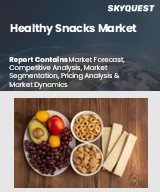
Healthy Snacks Market
Report ID: SQMIG30D2072
Report ID: SQMIG30D2072
[email protected]
USA +1 351-333-4748
Report ID:
SQMIG30D2072 |
Region:
Global |
Published Date: June, 2025
Pages:
193
|Tables:
125
|Figures:
72


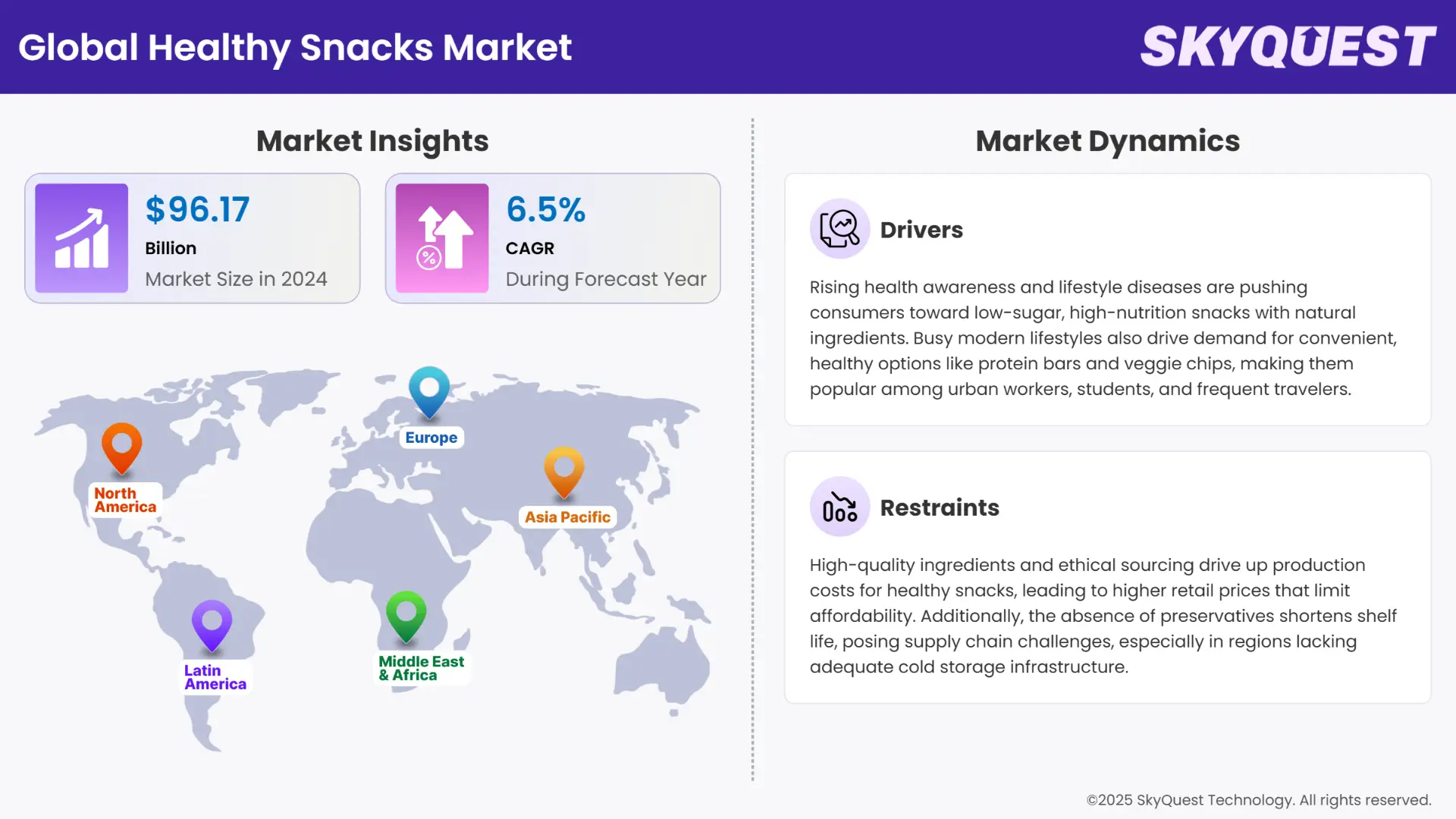
Global Healthy Snacks Market size was valued at USD 96.17 Billion in 2024 and is poised to grow from USD 102.42 Billion in 2025 to USD 169.51 Billion by 2033, growing at a CAGR of 6.5% in the forecast period (2026–2033).
The healthy snacks market is experiencing robust growth, driven by a global shift toward healthier lifestyles, increasing awareness of nutritional intake, and changing snacking habits. Consumers are increasingly opting for snacks that are not only convenient and tasty but also aligned with their wellness goals, focusing on ingredients that support immunity, digestion, energy, and weight management. Additionally, there is a growing consumer focus on clean label snacks products made with minimal, recognizable, and natural ingredients, free from artificial additives, preservatives, and excessive sugars. This preference aligns with the broader movement towards transparency and health consciousness in food consumption.
The healthy snacks market is currently dominated by key segments that hold substantial market shares due to strong consumer demand and widespread availability. For instance, the gluten-free segment captures a significant portion of the market, driven by increasing health awareness and dietary restrictions.
How is AI Enhancing Product Innovation in the Healthy Snacks Market?
AI is transforming product development by analyzing consumer behavior, preferences, and dietary needs at a scale. Through data analytics, companies can identify trending ingredients, taste preferences, and nutrition demands, enabling them to formulate innovative, health-conscious snacks faster than traditional R&D methods. AI also aids in predicting future trends, allowing brands to stay ahead of market shifts.
AI enhances the efficiency of sourcing, production, and distribution processes by forecasting demand, minimizing food waste, and optimizing inventory levels. In the healthy snacks segment, where shelf life and ingredient quality are critical, AI ensures timely manufacturing and delivery while reducing environmental impact.
To get more insights on this market click here to Request a Free Sample Report
The healthy snacks market is segmented by product, claim, packaging, distribution channel and region. Based on product, the market is segmented into frozen & refrigerated, fruit, nuts and seeds, bakery, savory, bars and confectionery, dairy and others. Based on claim, the market is segmented into gluten-free, low/no sugar, low/no fat and others. Based on packaging, the market is segmented into bag & pouches, boxes, cans, jars and others. Based on distribution channel, the market is segmented into supermarkets & hypermarkets, convenience stores, online and others. Based on region, the healthy snacks market is segmented into North America, Asia-Pacific, Europe, Latin America, and Middle East & Africa.
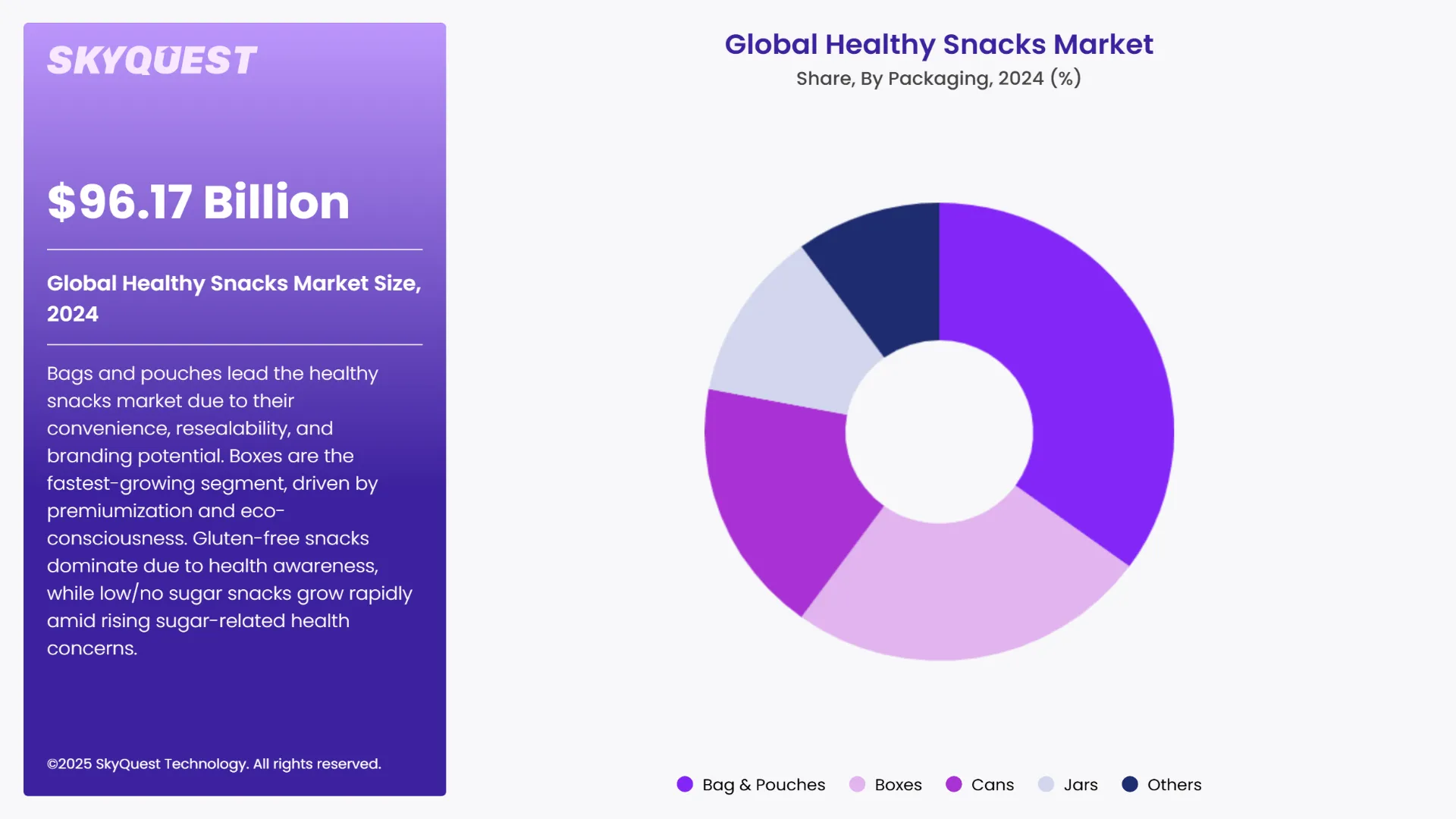
As per the global healthy snacks market outlook, bag & pouches dominate the market due to their versatility and convenience. These flexible packaging options are lightweight, cost-effective, and easy to transport and store, making them ideal for both manufacturers and consumers. Resealable pouches enhance product freshness, which is critical for snacks with natural or organic ingredients that lack preservatives. Moreover, bags and pouches offer excellent printing surfaces for vibrant branding and nutritional information, helping attract health-conscious buyers. Their suitability for single-serve portions aligns perfectly with the rising demand for on-the-go snacking.
As per global healthy snacks market forecast, boxes are the fastest-growing segment within the market. This growth is largely driven by premiumization and gifting trends. Consumers are increasingly willing to pay more for attractive, sustainable, and sturdy packaging that reflects product quality. Boxes offer structural protection, making them suitable for fragile snacks like granola bars, nuts, and dried fruits. They also allow for more elaborate designs, making them popular for limited editions and festive packaging. Additionally, boxes often incorporate eco-friendly materials, appealing to environmentally conscious consumers.
As per the global healthy snacks market analysis, the gluten-free segment dominated the market. This is primarily due to the increasing awareness and diagnosis of gluten intolerance and celiac disease worldwide. Many consumers also choose gluten-free products as part of a health-conscious lifestyle, believing these snacks to be easier to digest and healthier overall. The widespread availability of gluten-free ingredients and clear labeling regulations have made gluten-free snacks accessible and trusted by a broad consumer base. Additionally, many established snack brands have introduced gluten-free lines, further boosting market penetration.
The low/no sugar segment is experiencing the fastest growth in the market. Rising concerns about the negative health impacts of excessive sugar consumption including obesity, diabetes, and heart disease are motivating consumers to seek snacks with reduced or zero added sugars. This growth is also supported by regulatory initiatives in several countries imposing sugar taxes and stricter labeling requirements, pushing manufacturers to reformulate products. Moreover, advancements in natural sweeteners and sugar substitutes have allowed producers to maintain taste while reducing sugar content, making low/no sugar snacks increasingly appealing.
To get detailed segments analysis, Request a Free Sample Report
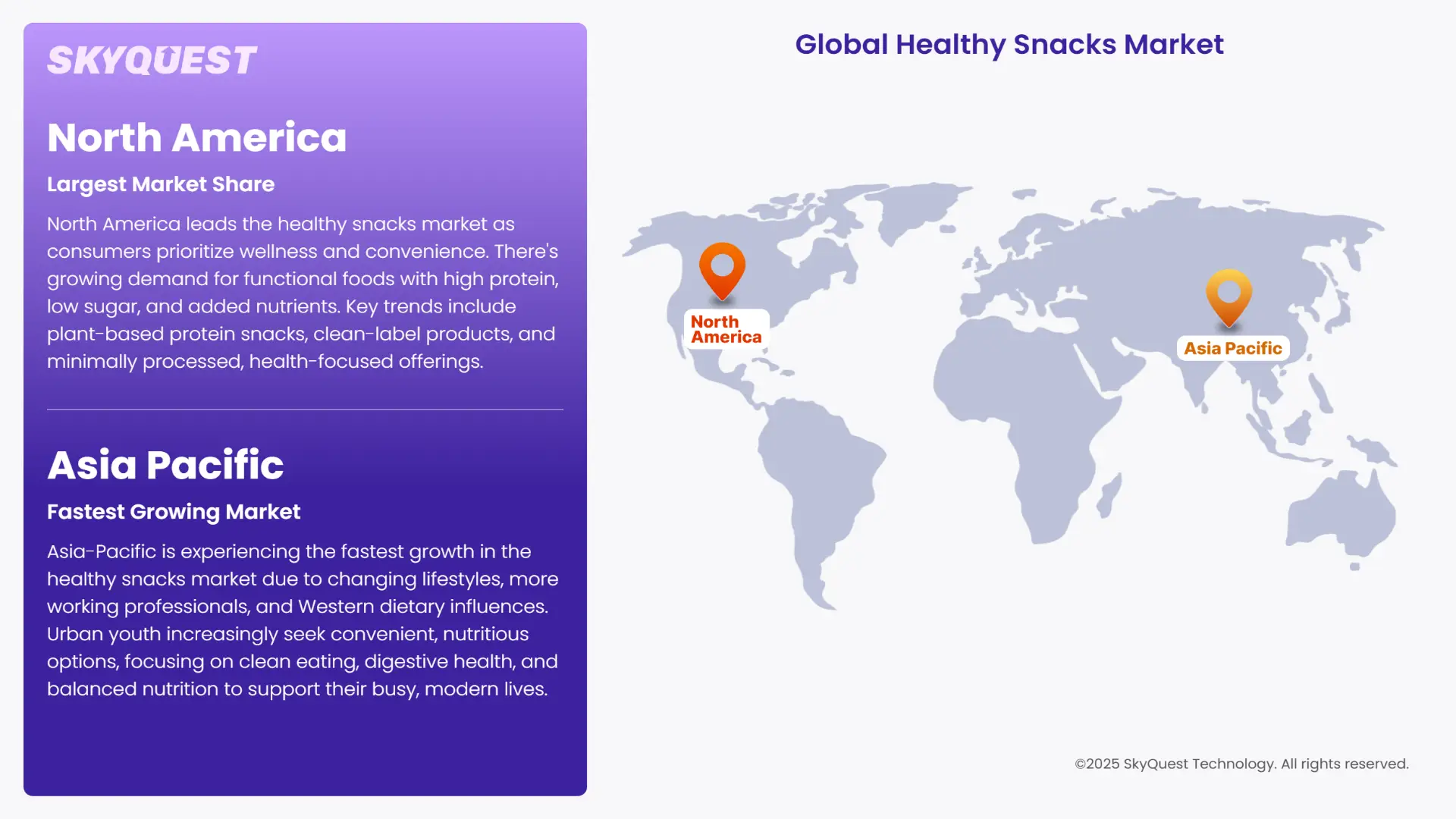
North America remains a leading region in the healthy snacks market forecast. Consumers are increasingly prioritizing health, wellness, and convenience in their food choices. There’s a widespread inclination toward functional foods that offer added health benefits such as high protein, low sugar, and added vitamins or probiotics. Key trends include the rise of plant-based protein snacks, clean-label products, and demand for minimally processed items.
The U.S. dominates the North America healthy snacks market due to its large consumer base and a strong ecosystem of health-conscious brands. American consumers are driving demand for gluten-free, low-carb, vegan, and keto-friendly snacks. The growing popularity of on-the-go snacking and the digitalization of grocery retail (via platforms like Amazon Fresh and Instacart) make it easier for consumers to access niche healthy snack products. Startups and established brands alike are focusing on ingredient transparency and innovative formats such as functional bars, energy bites, and air-dried fruits and vegetables.
Canada reflects U.S. healthy snacks market trends while emphasizing sustainability and locally sourced products. Canadian consumers are highly informed, and there is growing demand for organic, allergen-free, and ethically produced snacks. Health awareness campaigns and nutritional labeling regulations have also contributed to consumer education. Canadian brands are expanding portfolios to include indigenous superfoods like seaweed and berries while promoting eco-conscious packaging.
Asia-Pacific is witnessing the fastest CAGR in the healthy snacks market share. Changing lifestyles, an increase in working professionals, and a shift toward Western dietary habits are driving the growth of convenient, nutritious snacks. There's an increasing focus on digestive health, clean eating, and balanced nutrition, particularly among urban consumers and younger generations.
Japan healthy snacks market has a unique consumer landscape with high awareness of functional and nutraceutical snacks. Products tailored to support immune health, gut health, and cognitive performance are in demand, especially among the aging population. Companies are leveraging traditional Japanese ingredients like matcha, seaweed, and soy in innovative formats. The market also emphasizes portion control, with many healthy snacks sold in small, individualized packaging.
South Korea is shaping the future of wellness by merging health, beauty, and food innovation. Korean consumers prefer snacks with clear health claims—such as “low-sugar,” “cholesterol-free,” and “rich in collagen.” Social media and K-pop influence also play a role in shaping food trends. Functional snacks featuring ingredients like ginseng, konjac, and fermented foods are gaining traction, while homegrown brands are integrating these ingredients into snack bars, chips, and cookies.
Europe's healthy snacks market growth is characterized by mature demand, strong regulatory oversight, and growing environmental awareness. European consumers are focused on quality ingredients, sustainability, and ethical sourcing. Many prefer snacks with simple ingredients and minimal processing, as well as those that meet dietary preferences like veganism, gluten-free, and low sugar.
Germany leads the European region in both consumption and innovation. The healthy snacks market growth is driven by organic product demand, functional nutrition, and sustainability. German consumers expect clean-label products with traceable ingredient sourcing. Brands are experimenting with local ingredients and “free-from” options, and packaging innovations include compostable and recyclable materials.
The UK is experiencing a rapid shift toward better-for-you snacking amid growing public concern about obesity and sugar intake. Government policies like the Soft Drinks Industry Levy and mandatory calorie labeling have pushed brands to innovate. There's a boom in plant-based snacks, protein-rich options, and snacks fortified with added nutrients. The convenience of online shopping and quick delivery services has further boosted the availability of niche products.
Italy blends tradition and health, with snacks often incorporating Mediterranean staples like nuts, legumes, olive oil, and fruits. Italian consumers value fresh, authentic ingredients and have embraced healthy snacking without compromising flavor. There's an increasing presence of artisanal brands that produce small-batch, minimally processed snacks. Organic and natural claims play a central role in purchasing decisions.
To know more about the market opportunities by region and country, click here to
Buy The Complete Report
Rising Health Consciousness Among Consumers
Busy Lifestyles and Demand for Convenient Nutrition
High Production and Ingredient Costs
Shorter Shelf Life of Natural Products
Request Free Customization of this report to help us to meet your business objectives.
The global healthy snacks industry remains highly competitive, with both global giants and emerging startups intensifying innovation to capture evolving consumer preferences. Key players such as PepsiCo, General Mills, Nestlé, Kellogg Company, and The Hershey Company continue to expand their portfolios through product innovation, clean-label ingredients, and plant-based alternatives. These brands are leveraging strong distribution networks and brand recognition to maintain market dominance. Meanwhile, agile players like Kind LLC and RXBAR are targeting niche segments with protein-rich bars and natural ingredient transparency.
Startups in the healthy snacks market are playing a transformative role by introducing innovative, functional, and clean-label products that align with evolving consumer demands for convenience, nutrition, and transparency. These emerging companies are challenging traditional snack brands by focusing on plant-based ingredients, reduced sugar content, allergen-free options, and sustainability. Leveraging digital platforms, direct-to-consumer models, and influencer marketing, startups are able to connect more authentically with younger, health-conscious consumers.
Plant-Based and Functional Ingredients Are Gaining Ground
Digital-First Brands and D2C Channels are on the Rise
SkyQuest’s ABIRAW (Advanced Business Intelligence, Research & Analysis Wing) is our Business Information Services team that Collects, Collates, Correlates, and Analyses the Data collected by means of Primary Exploratory Research backed by robust Secondary Desk research.
As per SkyQuest analysis, key drivers of market growth include increasing awareness about the importance of healthy eating and lifestyle choices. The industry experiences remarkable change as consumers quickly favor moral and durable alternatives. This trend has increased demand for plant-based and vegetarian snacks, with products made of materials such as chickpeas, lentils, and other beans. Chickpea production has increased significantly, reflecting the growing consumer interest in plant-based proteins. The most important limitations in the healthy snacks market include high production costs and concern problems, which can limit consumers' development and market growth.
| Report Metric | Details |
|---|---|
| Market size value in 2024 | USD 96.17 Billion |
| Market size value in 2033 | USD 169.51 Billion |
| Growth Rate | 6.5% |
| Base year | 2024 |
| Forecast period | 2026–2033 |
| Forecast Unit (Value) | USD Billion |
| Segments covered |
|
| Regions covered | North America (US, Canada), Europe (Germany, France, United Kingdom, Italy, Spain, Rest of Europe), Asia Pacific (China, India, Japan, Rest of Asia-Pacific), Latin America (Brazil, Rest of Latin America), Middle East & Africa (South Africa, GCC Countries, Rest of MEA) |
| Companies covered |
|
| Customization scope | Free report customization with purchase. Customization includes:-
|
To get a free trial access to our platform which is a one stop solution for all your data requirements for quicker decision making. This platform allows you to compare markets, competitors who are prominent in the market, and mega trends that are influencing the dynamics in the market. Also, get access to detailed SkyQuest exclusive matrix.
Table Of Content
Executive Summary
Market overview
Parent Market Analysis
Market overview
Market size
KEY MARKET INSIGHTS
COVID IMPACT
MARKET DYNAMICS & OUTLOOK
Market Size by Region
KEY COMPANY PROFILES
Methodology
For the Healthy Snacks Market, our research methodology involved a mixture of primary and secondary data sources. Key steps involved in the research process are listed below:
1. Information Procurement: This stage involved the procurement of Market data or related information via primary and secondary sources. The various secondary sources used included various company websites, annual reports, trade databases, and paid databases such as Hoover's, Bloomberg Business, Factiva, and Avention. Our team did 45 primary interactions Globally which included several stakeholders such as manufacturers, customers, key opinion leaders, etc. Overall, information procurement was one of the most extensive stages in our research process.
2. Information Analysis: This step involved triangulation of data through bottom-up and top-down approaches to estimate and validate the total size and future estimate of the Healthy Snacks Market.
3. Report Formulation: The final step entailed the placement of data points in appropriate Market spaces in an attempt to deduce viable conclusions.
4. Validation & Publishing: Validation is the most important step in the process. Validation & re-validation via an intricately designed process helped us finalize data points to be used for final calculations. The final Market estimates and forecasts were then aligned and sent to our panel of industry experts for validation of data. Once the validation was done the report was sent to our Quality Assurance team to ensure adherence to style guides, consistency & design.
Analyst Support
Customization Options
With the given market data, our dedicated team of analysts can offer you the following customization options are available for the Healthy Snacks Market:
Product Analysis: Product matrix, which offers a detailed comparison of the product portfolio of companies.
Regional Analysis: Further analysis of the Healthy Snacks Market for additional countries.
Competitive Analysis: Detailed analysis and profiling of additional Market players & comparative analysis of competitive products.
Go to Market Strategy: Find the high-growth channels to invest your marketing efforts and increase your customer base.
Innovation Mapping: Identify racial solutions and innovation, connected to deep ecosystems of innovators, start-ups, academics, and strategic partners.
Category Intelligence: Customized intelligence that is relevant to their supply Markets will enable them to make smarter sourcing decisions and improve their category management.
Public Company Transcript Analysis: To improve the investment performance by generating new alpha and making better-informed decisions.
Social Media Listening: To analyze the conversations and trends happening not just around your brand, but around your industry as a whole, and use those insights to make better Marketing decisions.
REQUEST FOR SAMPLE
 REQUEST FREE CUSTOMIZATION
Global Healthy Snacks Market size was valued at USD 96.17 Billion in 2024 and is poised to grow from USD 102.42 Billion in 2025 to USD 169.51 Billion by 2033, growing at a CAGR of 6.5% in the forecast period (2026–2033).
Hero Group, Zydus Wellness, Mars, PepsiCo, Inc., General Mills, Inc., Nestlé S.A., The Hershey Company, Kellogg Company, Mondelez International, Inc., Danone S.A., Hain Celestial Group, Inc., Clif Bar & Company, Kind LLC, RXBAR (acquired by Kellogg), Hormel Foods Corporation
The key driver of the healthy snacks market is the growing consumer focus on nutrition and wellness, leading to increased demand for convenient, low-calorie, high-protein, and natural snack options that support healthier lifestyles.
A key market trend in the healthy snacks market is the rising popularity of plant-based, organic, and functional snacks, including protein bars, nut mixes, and fortified products, driven by consumer demand for clean-label, nutritious, and sustainable food options.
North America accounted for the largest share in the healthy snacks market, driven by high consumer awareness of nutrition and wellness, strong demand for convenient and functional snack products, and well-established retail and e-commerce distribution channels.


Want to customize this report? This report can be personalized according to your needs. Our analysts and industry experts will work directly with you to understand your requirements and provide you with customized data in a short amount of time. We offer $1000 worth of FREE customization at the time of purchase.
Feedback From Our Clients


 USA (+1) 351-333-4748

