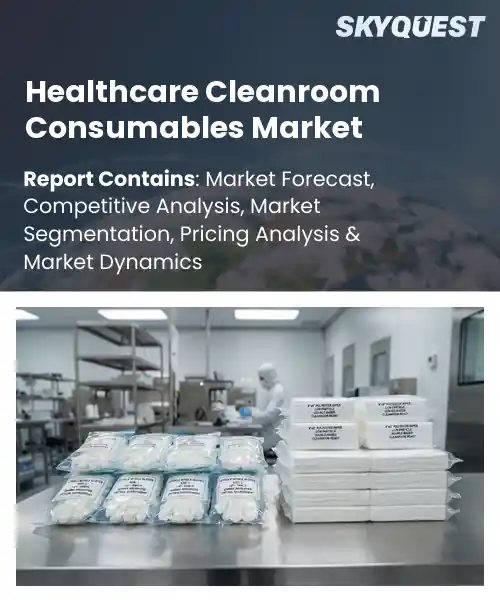
Healthcare Cleanroom Consumables Market
Report ID: SQMIG35B2549
Report ID: SQMIG35B2549
[email protected]
USA +1 351-333-4748
Report ID:
SQMIG35B2549 |
Region:
Global |
Published Date: August, 2026
Pages:
157
|Tables:
120
|Figures:
77


Global Healthcare Cleanroom Consumables Market size was valued at USD 4.58 Billion in 2024 and is poised to grow from USD 5.02 Billion in 2025 to USD 10.46 Billion by 2033, growing at a CAGR of 9.6% during the forecast period (2026-2033).
The Global Healthcare Cleanroom Consumables market comprises sterile garments, wipes, filtration media and barrier products used to maintain aseptic conditions in pharmaceutical manufacturing, hospitals and diagnostic labs. Its importance stems from the link between contaminant control and patient safety, a relationship amplified by stricter FDA and EU GMP guidelines over the past decade. Historically, demand was driven by basic sterility checks, but the advent of biologics, cell therapies and vaccine production has expanded the scope of cleanroom operations. For instance, the Covid‑19 vaccine rollout required a three‑fold increase in gown and glove shipments, illustrating how emerging therapies accelerate market maturity.
The growing demand for therapeutic manufacturing compels facilities to adopt higher‑class cleanrooms, thereby increasing consumption of disposables. As personalized medicine expands, manufacturers must assure sterility at every step, which leads to greater procurement of antimicrobial gowns, particulate‑free wipes and filters that tolerate changeovers. This pressure creates a cycle: tighter contamination limits spur material innovations, and those innovations reduce failure rates, allowing more complex biologics to reach patients sooner. A leading CAR‑T producer recently upgraded to a Class 5 cleanroom, boosting disposable glove usage by 45 percent and cutting batch release times, which in turn opened new revenue streams and accelerated market growth.
How is AI-driven automation reshaping demand for consumables in healthcare cleanrooms?
AI driven automation is reshaping demand for consumables in healthcare cleanrooms by shifting focus from bulk stocking to precise on demand provisioning. Sensors linked to machine learning models monitor particle levels and predict usage patterns, prompting real time ordering of low particulate wipes, sterile gloves and filtration media. This predictive approach reduces over ordering, cuts waste and ensures that only the most suitable consumables are present at each workstation. Operators benefit from hands free dispensing units that adjust dispense volumes based on AI recommendations, improving compliance and lowering contamination risk. As a result manufacturers see a steady rise in demand for smart consumables that integrate with automated workflows.
Market snapshot - (2026-2033)
Global Market Size
USD 4.58 Billion
Largest Segment
Gloves
Fastest Growth
Wipes
Growth Rate
9.6% CAGR
To get more insights on this market click here to Request a Free Sample Report
Global healthcare cleanroom consumables market is segmented by product type, cleanroom classification, end user, distribution channel and region. Based on product type, the market is segmented into Gloves, Apparel, Face Masks, Wipes, Cleaning Products, Adhesive Mats and Other Consumables. Based on cleanroom classification, the market is segmented into ISO Class 1–5 and ISO Class 6–8. Based on end user, the market is segmented into Pharmaceutical & Biopharmaceutical Companies, Medical Device Manufacturers, Hospitals and Research Laboratories. Based on distribution channel, the market is segmented into Direct Sales and Distributors. Based on region, the market is segmented into North America, Europe, Asia Pacific, Latin America and Middle East & Africa.
Gloves segment dominates because they are the primary barrier protecting both personnel and sterile products in high‑risk environments. In healthcare cleanrooms, the tactile sensitivity required for precise manipulation of biologics and devices makes gloves indispensable. Their material versatility addresses diverse chemical and biological exposures, while regulatory guidelines explicitly mandate glove use, reinforcing consistent demand across pharmaceutical, device, and research settings throughout the production lifecycle ensuring compliance.
However, Face Masks segment is witnessing the strongest growth momentum as sterility protocols extend beyond traditional gowning. Increased emphasis on airborne particle mitigation, driven by heightened awareness of viral and bacterial contamination, propels demand for advanced breathable yet efficient masks. Innovation in filter media and reusable designs broadens acceptance, positioning masks as a strategic growth lever for cleanroom consumables.
ISO Class 1–5 segment dominates because the most stringent contamination thresholds demand consumables with unparalleled purity and low particle generation. Pharmaceutical manufacturers prioritize these environments to meet critical sterility standards for injectable and biologic products, driving selection of ultra‑low‑lint wipes, precision‑engineered gloves, and adhesive mats with verified compliance. The rigorous validation requirements and risk‑averse culture further cement the central role of ISO Class 1–5 cleanrooms in shaping consumable specifications.
Meanwhile, ISO Class 6–8 segment emerges as a high‑growth area as biotech startups and diagnostic labs increasingly operate in moderately controlled spaces to accelerate time‑to‑market. The relaxed particle limits reduce cost pressures, encouraging broader adoption of reusable wipes and disposable apparel. This shift expands market breadth, creating new opportunities for manufacturers to tailor solutions for mid‑class cleanrooms.
To get detailed segments analysis, Request a Free Sample Report
North America benefits from a mature biotechnology infrastructure, stringent regulatory frameworks, and high adoption of advanced aseptic technologies. The presence of leading research hospitals and large pharmaceutical manufacturers drives continuous demand for specialized consumables that meet rigorous contamination control standards. Robust supply chain networks and well‑established distribution channels ensure reliable availability of high‑quality products. Collaborative ecosystems between academia, industry, and government foster innovation in cleanroom design and consumable materials. Customer preference for proven suppliers combined with strong intellectual property protection further consolidates market leadership. A focus on patient safety, ongoing investment in training, and standardization of best practices together create a competitive advantage that sustains North America’s dominant position in the global landscape.
Healthcare Cleanroom Consumables Market in United States is anchored by extensive network of top‑tier medical device firms and a deep talent pool specialized in sterile processing. The regulatory environment emphasises rigorous validation, prompting hospitals to source premium consumables that guarantee compliance. Continuous investment in cleanroom infrastructure and a culture of quality assurance drive demand for innovative consumable solutions, reinforcing the United States as a central hub for market activity.
Healthcare Cleanroom Consumables Market in Canada benefits from strong public healthcare investment and collaborative research initiatives that prioritize aseptic manufacturing. Provincial health authorities enforce rigorous standards, encouraging adoption of high‑performance consumables across hospitals and biotech facilities. Proximity to United States supply chains enhances accessibility to cutting‑edge products, while local manufacturers focus on sustainable material options. This synergy of regulatory rigor and innovation sustains Canada role as a key contributor to regional market dynamics.
Europe rapid expansion is propelled by a cohesive regulatory landscape that aligns with rigorous contamination control standards across member states. Strong governmental commitment to healthcare excellence fuels investment in state‑of‑the‑art cleanroom facilities, particularly in research‑intensive environments. Emphasis on sustainability drives demand for consumables with eco‑friendly attributes, encouraging manufacturers to innovate with recyclable and low‑emission materials. Cross‑border collaboration among leading hospitals, biotech clusters, and academic institutions accelerates knowledge transfer and best‑practice adoption. Additionally, a skilled workforce familiar with stringent quality protocols reinforces market confidence, positioning Europe as a dynamic hub where demand for advanced cleanroom consumables continues to rise.
Healthcare Cleanroom Consumables Market in Germany is characterized by a robust network of premium medical device producers and a legacy of precision engineering. National standards demand high‑level sterility assurance, prompting consistent procurement of sophisticated consumables. Collaborative programs between universities and industry accelerate development of next‑generation materials, while strong export orientation ensures alignment with global best practices. This combination sustains Germany leadership as a dominant force within the European landscape.
Healthcare Cleanroom Consumables Market in United Kingdom experiences accelerated growth driven by a proactive public health agenda and a thriving biotech ecosystem. Regulatory frameworks prioritize patient safety, encouraging hospitals to adopt cutting‑edge consumable solutions that meet stringent cleanroom criteria. Significant government funding for advanced therapy development fuels demand for specialized sterile environments, while a strong focus on digital integration streams consumable tracking and inventory control. These dynamics collectively underpin United Kingdom reputation as the fastest growing market segment in Europe.
Healthcare Cleanroom Consumables Market in France is emerging as a focal point for sustainable cleanroom practices and collaborative innovation. National health programs emphasize modernization of hospital infrastructure, creating opportunities for adoption of high‑efficiency consumables. Partnerships between research institutes and local manufacturers foster development of biodegradable and low‑particle generation products. The market benefits from a growing awareness of environmental impact, prompting procurement policies that favor greener alternatives. This emerging emphasis positions France as an influential contributor to the broader European expansion.
Asia Pacific is strengthening its position through strategic investments in advanced cleanroom infrastructure and a surge in biopharmaceutical manufacturing activities. Nations in the region prioritize rigorous quality management, encouraging adoption of consumables that meet exacting sterility standards. Rapid urbanization and expanding healthcare networks increase demand for reliable aseptic solutions across both public and private facilities. Emphasis on technological innovation leads to local development of next‑generation consumable materials, often tailored to regional production processes. Cross‑border trade agreements facilitate access to global suppliers, while a growing skilled workforce supports heightened operational excellence, collectively advancing the region’s role in the global market.
Healthcare Cleanroom Consumables Market in Japan is distinguished by a deep commitment to precision and reliability in sterile manufacturing. Japan focus on high‑quality medical device production drives consistent demand for consumables that deliver exceptional contamination control. Integration of advanced automation within cleanroom environments enhances efficiency, prompting selection of consumables compatible with sophisticated equipment. Collaborative research between leading universities and industry accelerates material innovation, while strict regulatory expectations sustain a culture of continual improvement, cementing Japan strong position in the regional landscape.
Healthcare Cleanroom Consumables Market in South Korea benefits from rapid expansion of biotech and pharmaceutical sectors supported by proactive government incentives. Emphasis on cutting‑edge research and development creates a need for consumables that align with stringent cleanroom protocols and high‑throughput production. Growing export-oriented manufacturing drives adoption of standardized, high‑performance products, while investment in workforce training ensures expertise in aseptic techniques. This blend of policy support, industry ambition, and technical capability reinforces South Korea emerging influence within the Asia Pacific market.
To know more about the market opportunities by region and country, click here to
Buy The Complete Report
Regulatory Pressure is Driving Adoption
Hospitals and Labs Adopt Consumables
Supply Chain Disruptions are Limiting Growth
Regulatory Approval Processes Remain Lengthy
Request Free Customization of this report to help us to meet your business objectives.
The healthcare cleanroom consumables market is dominated by established firms such as Valutek, Texwipe, Nitritex Ltd., DuPont and Kimberly‑Clarke, each intensifying competition through targeted product innovations and strategic collaborations that aim to secure supply chain resilience and meet stringent regulatory standards. Recent moves include joint development agreements and technology‑driven enhancements that differentiate offerings and address rising demand for contamination‑free environments.
SkyQuest’s ABIRAW (Advanced Business Intelligence, Research & Analysis Wing) is our Business Information Services team that Collects, Collates, Correlates, and Analyses the Data collected by means of Primary Exploratory Research backed by robust Secondary Desk research.
As per SkyQuest analysis, the market is propelled primarily by tightening regulatory pressure that forces manufacturers and healthcare facilities to adopt certified single‑use consumables, while AI‑driven automation serves as a second catalyst by enabling on‑demand provisioning and reducing waste. The gloves segment remains the dominant product category because it provides the essential barrier for precise sterile work. North America leads the market, driven by its mature biotech ecosystem, stringent standards and robust supply chains. However, growth is tempered by supply‑chain disruptions that cause raw‑material shortages and inventory gaps, limiting immediate procurement. Together these forces shape the trajectory of the global healthcare cleanroom consumables market.
| Report Metric | Details |
|---|---|
| Market size value in 2024 | USD 4.58 Billion |
| Market size value in 2033 | USD 10.46 Billion |
| Growth Rate | 9.6% |
| Base year | 2024 |
| Forecast period | (2026-2033) |
| Forecast Unit (Value) | USD Billion |
| Segments covered |
|
| Regions covered | North America (US, Canada), Europe (Germany, France, United Kingdom, Italy, Spain, Rest of Europe), Asia Pacific (China, India, Japan, Rest of Asia-Pacific), Latin America (Brazil, Rest of Latin America), Middle East & Africa (South Africa, GCC Countries, Rest of MEA) |
| Companies covered |
|
| Customization scope | Free report customization with purchase. Customization includes:-
|
To get a free trial access to our platform which is a one stop solution for all your data requirements for quicker decision making. This platform allows you to compare markets, competitors who are prominent in the market, and mega trends that are influencing the dynamics in the market. Also, get access to detailed SkyQuest exclusive matrix.
Table Of Content
Executive Summary
Market overview
Parent Market Analysis
Market overview
Market size
KEY MARKET INSIGHTS
COVID IMPACT
MARKET DYNAMICS & OUTLOOK
Market Size by Region
KEY COMPANY PROFILES
Methodology
For the Healthcare Cleanroom Consumables Market, our research methodology involved a mixture of primary and secondary data sources. Key steps involved in the research process are listed below:
1. Information Procurement: This stage involved the procurement of Market data or related information via primary and secondary sources. The various secondary sources used included various company websites, annual reports, trade databases, and paid databases such as Hoover's, Bloomberg Business, Factiva, and Avention. Our team did 45 primary interactions Globally which included several stakeholders such as manufacturers, customers, key opinion leaders, etc. Overall, information procurement was one of the most extensive stages in our research process.
2. Information Analysis: This step involved triangulation of data through bottom-up and top-down approaches to estimate and validate the total size and future estimate of the Healthcare Cleanroom Consumables Market.
3. Report Formulation: The final step entailed the placement of data points in appropriate Market spaces in an attempt to deduce viable conclusions.
4. Validation & Publishing: Validation is the most important step in the process. Validation & re-validation via an intricately designed process helped us finalize data points to be used for final calculations. The final Market estimates and forecasts were then aligned and sent to our panel of industry experts for validation of data. Once the validation was done the report was sent to our Quality Assurance team to ensure adherence to style guides, consistency & design.
Analyst Support
Customization Options
With the given market data, our dedicated team of analysts can offer you the following customization options are available for the Healthcare Cleanroom Consumables Market:
Product Analysis: Product matrix, which offers a detailed comparison of the product portfolio of companies.
Regional Analysis: Further analysis of the Healthcare Cleanroom Consumables Market for additional countries.
Competitive Analysis: Detailed analysis and profiling of additional Market players & comparative analysis of competitive products.
Go to Market Strategy: Find the high-growth channels to invest your marketing efforts and increase your customer base.
Innovation Mapping: Identify racial solutions and innovation, connected to deep ecosystems of innovators, start-ups, academics, and strategic partners.
Category Intelligence: Customized intelligence that is relevant to their supply Markets will enable them to make smarter sourcing decisions and improve their category management.
Public Company Transcript Analysis: To improve the investment performance by generating new alpha and making better-informed decisions.
Social Media Listening: To analyze the conversations and trends happening not just around your brand, but around your industry as a whole, and use those insights to make better Marketing decisions.
REQUEST FOR SAMPLE
 REQUEST FREE CUSTOMIZATION
Global Healthcare Cleanroom Consumables Market size was valued at USD 4.58 Billion in 2024 and is poised to grow from USD 5.02 Billion in 2025 to USD 10.46 Billion by 2033, growing at a CAGR of 9.6% during the forecast period (2026-2033).
The healthcare cleanroom consumables market is dominated by established firms such as Valutek, Texwipe, Nitritex Ltd., DuPont and Kimberly‑Clarke, each intensifying competition through targeted product innovations and strategic collaborations that aim to secure supply chain resilience and meet stringent regulatory standards. Recent moves include joint development agreements and technology‑driven enhancements that differentiate offerings and address rising demand for contamination‑free environments. 'DuPont de Nemours, Inc.', 'Kimberly-Clark Corporation', 'Ansell Limited', 'Contec, Inc.', 'Berkshire Corporation', 'Texwipe', 'Micronclean Limited', 'Valutek, Inc.', 'Illinois Tool Works Inc.', 'Cantel Medical Corporation', 'Cardinal Health, Inc.', 'Thermo Fisher Scientific Inc.', '3M Company', 'Nitritex Ltd.', 'Medline Industries, LP', 'Avantor, Inc.', 'VWR International, LLC', 'Repligen Corporation', 'STERIS plc', 'Azbil Telstar, S.L.U.'
Regulatory bodies worldwide are tightening standards for aseptic processing and contamination control, compelling manufacturers to rely on certified cleanroom consumables. This pressure pushes hospitals, biotech firms, and pharmaceutical plants to replace generic supplies with validated, single‑use items that guarantee compliance. By ensuring that consumables meet stringent guidelines, organizations reduce the risk of product recalls and audit penalties, fostering confidence among stakeholders. Consequently, demand for specialized cleanroom consumables expands as firms prioritize regulatory adherence in their operational strategies.
Advanced Sterilization Technologies: The adoption of next‑generation sterilization methods, such as vaporized hydrogen peroxide and low‑temperature plasma, is reshaping cleanroom consumable specifications. Manufacturers are redesigning gowns, gloves, and drapes to withstand these processes while maintaining barrier performance. This shift reduces reliance on traditional autoclave cycles, shortens turnaround times, and minimizes material degradation. As hospitals prioritize faster room turnover and lower operational costs, suppliers that certify compatibility with advanced sterilants gain a competitive edge and drive broader market acceptance across global healthcare facilities worldwide.
Why does North America Dominate the Global Healthcare Cleanroom Consumables Market? |@12


Want to customize this report? This report can be personalized according to your needs. Our analysts and industry experts will work directly with you to understand your requirements and provide you with customized data in a short amount of time. We offer $1000 worth of FREE customization at the time of purchase.
Feedback From Our Clients


 USA (+1) 351-333-4748

