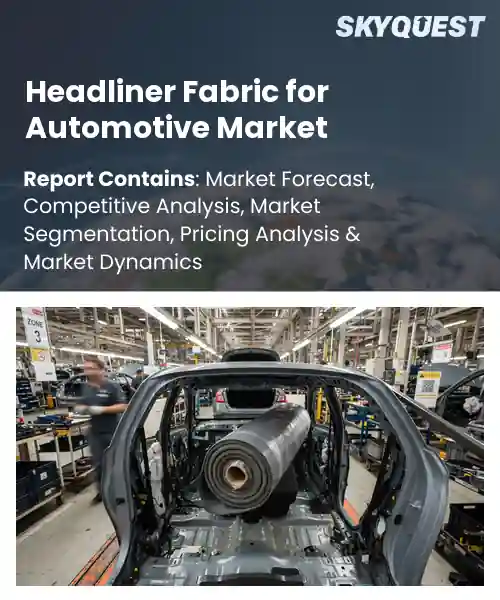
Headliner Fabric for Automotive Market
Report ID: SQMIG25A2937
Report ID: SQMIG25A2937
[email protected]
USA +1 351-333-4748
Report ID:
SQMIG25A2937 |
Region:
Global |
Published Date: August, 2026
Pages:
157
|Tables:
144
|Figures:
78


Global Headliner Fabric For Automotive Market size was valued at USD 2.18 Billion in 2024 and is poised to grow from USD 2.32 Billion in 2025 to USD 3.82 Billion by 2033, growing at a CAGR of 6.4% during the forecast period (2026-2033).
The headliner‑fabric market supplies the ceiling liners that shape a vehicle’s cabin ambience, acoustic comfort and interior weight. Its relevance stems from consumers now evaluating interior quality as strongly as performance, prompting OEMs to prioritize materials that blend aesthetic appeal, sound‑damping and low mass. Historically the segment began with PVC‑coated textiles in the 1970s, progressed to polyurethane laminates in the 1990s, and today embraces non‑woven polypropylene, recycled polyester and bio‑based fibers. For example, the Tesla Model 3 introduced a 30 % recycled‑polyester headliner, while Mercedes‑Benz employs acoustic‑enhanced woven fabrics to meet luxury expectations. This evolution reflects a shift toward sustainability and design. Regulatory pressure to cut vehicle weight and emissions serves as the catalyst for shifting headliner fabrics, because lighter interiors translate into lower fuel use and reduced CO₂ output. As a result, OEMs are swapping PVC‑based liners for recyclable non‑wovens that also provide acoustic insulation. Hyundai’s collaboration with a bio‑fiber producer introduced a plant‑based headliner that sheds roughly two kilograms per vehicle, yielding a 0.3 % boost in highway fuel economy. This gain fuels opportunities: textile suppliers scale bio‑polymer production, designers embed fabric specifications early in platform development, and aftermarket players source recycled material, expanding market size while meeting stricter global standards.
How is AI-driven automation influencing the adoption of headliner fabric in automotive interiors?
AI‑driven automation is reshaping how headliner fabric is selected, cut and assembled inside vehicles. Machine‑learning tools analyze passenger comfort data and predict the best fabric blends for acoustic performance and weight reduction. Robotic stitching stations use real‑time vision to place seams with precision, cutting waste and speeding up production lines. Virtual design platforms let engineers test fabric drape and color options without physical prototypes, shortening development cycles. These technologies lower costs, improve quality and enable manufacturers to respond quickly to changing interior trends, making fabric a more attractive choice over heavier or less adaptable materials.In June 2024, a leading supplier introduced an AI‑controlled stitching system that automatically adjusts tension for different fabric types, accelerating assembly and reducing defects, thereby supporting broader adoption of headliner fabric in automotive interiors.
Market snapshot - (2026-2033)
Global Market Size
USD 2.18 Billion
Largest Segment
Polyester
Fastest Growth
Other Synthetic Fibers
Growth Rate
6.4% CAGR
To get more insights on this market click here to Request a Free Sample Report
Global headliner fabric for automotive market is segmented by material, fabric type, vehicle type, application, sales channel and region. Based on material, the market is segmented into Polyester, Polyurethane Foam, Cotton and Other Synthetic Fibers. Based on fabric type, the market is segmented into Knitted Fabric, Woven Fabric and Non-Woven Fabric. Based on vehicle type, the market is segmented into Passenger Vehicles, Light Commercial Vehicles and Heavy Commercial Vehicles. Based on application, the market is segmented into Roof Headliners, Pillar Trim and Sun Visor Coverings. Based on sales channel, the market is segmented into OEM and Aftermarket. Based on region, the market is segmented into North America, Europe, Asia Pacific, Latin America and Middle East & Africa.
Polyester segment dominates because its inherent durability, ease of dyeing, and cost efficiency align closely with automotive manufacturers’ need for high volume, consistent headliner fabrics. The material’s resistance to moisture and UV exposure extends interior lifespan, while its compatibility with modern acoustic treatments enhances cabin quietness. These attributes, coupled with well established supply chains, give polyester a clear advantage in meeting OEM specifications and large scale production demands throughout the vehicle lifecycle.
However, cotton segment is witnessing the fastest growth as consumers prioritize natural feel and sustainability in interior appointments. Advances in fiber treatment improve moisture management and dimensional stability, allowing cotton to meet durability standards while delivering a premium tactile experience. This shift fuels new product launches and expands opportunities for eco focused brands.
Passenger Vehicles segment dominates because the bulk of global car production focuses on passenger models, driving the highest demand for interior headliner fabrics. Manufacturers prioritize lightweight, acoustically refined materials to meet fuel efficiency targets and enhance cabin comfort for everyday drivers. The need for aesthetic versatility across diverse model line ups further consolidates demand, compelling suppliers to concentrate innovation and capacity on solutions tailored for passenger vehicle interiors throughout production cycles.
Meanwhile, heavy commercial vehicles segment emerges as the fastest expanding area for headliner fabrics as fleet operators seek better driver ergonomics and noise reduction on long hauls. Reinforced fire retardant textile technologies satisfy strict safety codes while improving cabin ambience, driving material innovation and creating fresh revenue opportunities for manufacturers.
To get detailed segments analysis, Request a Free Sample Report
Asia Pacific leads the market through a combination of deep manufacturing expertise, aggressive adoption of lightweight textile technologies, and close alignment with leading vehicle producers. The region’s supply chain benefits from highly integrated component networks that accelerate prototype development and scale production efficiently. Innovation hubs in key economies prioritize sustainable material science, driving the creation of high‑performance, eco‑friendly fabrics that meet stringent interior quality expectations. Strong governmental encouragement of advanced material research further amplifies the region’s capacity to deliver cost‑effective yet premium solutions. Collaborative relationships between material suppliers and automakers foster rapid iteration, ensuring that new fabric designs quickly translate into production models and reinforcing the region’s leadership position.
Headliner Fabric for Automotive Market in Japan is characterised by an unwavering focus on premium quality and precision engineering. Domestic manufacturers blend traditional textile craftsmanship with cutting‑edge polymer technologies to create fabrics that deliver superior tactile feel and durability. Strategic partnerships with leading car makers enable seamless integration of bespoke designs into vehicle interiors, while a strong emphasis on sustainable sourcing aligns with broader environmental goals. This synergy of heritage and innovation sustains Japan’s reputation as a benchmark for high‑end automotive headliners.
Headliner Fabric for Automotive Market in South Korea thrives on a dynamic research ecosystem that merges advanced synthetic fibers with smart textile functions. Companies prioritize lightweight constructions that enhance fuel efficiency without compromising acoustic comfort. Close collaboration with technology firms introduces features such as embedded sensors and adaptive illumination into headliner fabrics. A proactive stance on eco‑friendly production processes, including recycled material utilization, positions South Korea as a forward‑looking contributor to the regional market, appealing to manufacturers seeking both performance and sustainability.
Europe’s expansion is propelled by stringent interior safety and environmental regulations that compel manufacturers to adopt lighter, recyclable fabrics without sacrificing comfort. A strong design heritage fuels demand for sophisticated, aesthetically pleasing headliners that complement premium vehicle cabins. The continent’s dense network of specialized textile suppliers offers high‑quality, innovative material solutions, fostering close collaboration with automakers focused on luxury and performance. Consumer expectations for refined acoustics and tactile richness drive investment in advanced fiber blends and functional coatings. Additionally, coordinated sustainability initiatives across the industry accelerate the shift toward bio‑based and circular material streams, reinforcing Europe’s position as a hub of progressive headliner fabric development.
Headliner Fabric for Automotive Market in Germany is distinguished by rigorous engineering standards and a commitment to precision. Suppliers leverage deep expertise in high‑performance composites to produce fabrics that meet exacting durability and acoustic criteria. Close integration with leading car manufacturers ensures that headliner solutions align seamlessly with premium interior architectures, while a strong focus on sustainability drives the adoption of recycled and bio‑based fibers. This blend of technical excellence and environmental responsibility sustains Germany’s dominant market role.
Headliner Fabric for Automotive Market in the United Kingdom is emerging through a vibrant blend of design innovation and smart textile integration. Companies capitalize on the nation’s reputation for bespoke interior styling, offering fabrics that combine artistic flair with functional benefits such as temperature regulation. Collaborative projects with technology firms introduce interactive elements, enhancing the user experience. An increasing emphasis on sustainable sourcing further supports growth, positioning the United Kingdom as a rising contributor to the European market.
Headliner Fabric for Automotive Market in France benefits from the country’s strong fashion and design sensibility, translating into interiors that prioritize aesthetic elegance and tactile luxury. Manufacturers focus on developing eco‑conscious fabrics that incorporate natural fibers and low‑impact production methods. Partnerships with premium automotive brands enable the creation of tailored headliner solutions that reflect both style and functionality. This fashion‑driven approach, coupled with a commitment to sustainability, fuels France’s rapid market expansion.
North America reinforces its position by leveraging a vast automotive ecosystem that emphasizes technological integration and consumer comfort. The region’s manufacturers invest heavily in research to produce fabrics that incorporate advanced acoustic dampening and smart connectivity features, catering to a market that values both performance and in‑vehicle experience. Strong supply chain capabilities ensure rapid scalability and responsiveness to shifting design trends. A growing consumer consciousness around sustainability drives the adoption of recycled and bio‑based materials, while collaborative ventures between textile suppliers and major vehicle assemblers accelerate the introduction of innovative headliner solutions. This confluence of technological ambition, scale, and environmental focus consolidates North America’s evolving leadership.
Headliner Fabric for Automotive Market in the United States centers on high‑tech functionality and expansive production capacity. Suppliers develop fabrics that integrate noise‑reduction technologies and embedded sensors to support next‑generation cabin experiences. Close ties with leading automakers facilitate swift adoption of these innovations across diverse vehicle segments. Sustainability initiatives promote the use of reclaimed fibers and greener manufacturing practices, aligning product development with evolving consumer expectations and regulatory guidance.
Headliner Fabric for Automotive Market in Canada emphasizes resilience to harsh climatic conditions while prioritizing environmental stewardship. Textile producers focus on materials that maintain structural integrity and comfort in extreme temperatures, appealing to manufacturers targeting northern markets. Collaborative efforts with neighboring industry players encourage the use of recycled content and low‑impact processes, reinforcing a commitment to sustainable supply chains and enhancing the region’s contribution to the broader market.
To know more about the market opportunities by region and country, click here to
Buy The Complete Report
Increasing Demand for Lightweight Interiors
Growing Consumer Preference For Premium Interiors
High Material Cost Limits Adoption
Complex Supply Chain Increases Lead Times
Request Free Customization of this report to help us to meet your business objectives.
The competitive landscape is shaped by intense rivalry among automotive interior suppliers and OEMs seeking to differentiate cabin aesthetics and acoustic performance. Companies are accelerating M&A activity to acquire advanced textile technologies, forming strategic partnerships with fiber innovators, and investing in lightweight, recyclable headliner fabrics to meet sustainability mandates and consumer demand for premium interiors. Recent collaborations between material specialists and vehicle manufacturers illustrate a clear shift toward integrated design‑to‑production pipelines, driving faster time‑to‑market for new fabric solutions.
Top Player’s Company Profile
Recent Developments
SkyQuest’s ABIRAW (Advanced Business Intelligence, Research & Analysis Wing) is our Business Information Services team that Collects, Collates, Correlates, and Analyses the Data collected by means of Primary Exploratory Research backed by robust Secondary Desk research. As per SkyQuest analysis, the headliner‑fabric market is being propelled primarily by the rising demand for lightweight interiors, as manufacturers seek weight reductions to meet fuel‑efficiency and emissions targets. A second strong driver is the shift toward sustainable material integration, with recycled polyester and bio‑based fibers gaining traction among OEMs and consumers alike. The market’s growth is tempered by the high material cost of premium polymers, which can limit adoption in price‑sensitive vehicle lines. Asia Pacific dominates the landscape, leveraging deep manufacturing expertise and close ties with major automakers, while the polyester segment leads in volume thanks to its durability, cost efficiency and compatibility with acoustic treatments.
| Report Metric | Details |
|---|---|
| Market size value in 2024 | USD 2.18 Billion |
| Market size value in 2033 | USD 3.82 Billion |
| Growth Rate | 6.4% |
| Base year | 2024 |
| Forecast period | (2026-2033) |
| Forecast Unit (Value) | USD Billion |
| Segments covered |
|
| Regions covered | North America (US, Canada), Europe (Germany, France, United Kingdom, Italy, Spain, Rest of Europe), Asia Pacific (China, India, Japan, Rest of Asia-Pacific), Latin America (Brazil, Rest of Latin America), Middle East & Africa (South Africa, GCC Countries, Rest of MEA) |
| Companies covered |
|
| Customization scope | Free report customization with purchase. Customization includes:-
|
To get a free trial access to our platform which is a one stop solution for all your data requirements for quicker decision making. This platform allows you to compare markets, competitors who are prominent in the market, and mega trends that are influencing the dynamics in the market. Also, get access to detailed SkyQuest exclusive matrix.
Table Of Content
Executive Summary
Market overview
Parent Market Analysis
Market overview
Market size
KEY MARKET INSIGHTS
COVID IMPACT
MARKET DYNAMICS & OUTLOOK
Market Size by Region
KEY COMPANY PROFILES
Methodology
For the Headliner Fabric for Automotive Market, our research methodology involved a mixture of primary and secondary data sources. Key steps involved in the research process are listed below:
1. Information Procurement: This stage involved the procurement of Market data or related information via primary and secondary sources. The various secondary sources used included various company websites, annual reports, trade databases, and paid databases such as Hoover's, Bloomberg Business, Factiva, and Avention. Our team did 45 primary interactions Globally which included several stakeholders such as manufacturers, customers, key opinion leaders, etc. Overall, information procurement was one of the most extensive stages in our research process.
2. Information Analysis: This step involved triangulation of data through bottom-up and top-down approaches to estimate and validate the total size and future estimate of the Headliner Fabric for Automotive Market.
3. Report Formulation: The final step entailed the placement of data points in appropriate Market spaces in an attempt to deduce viable conclusions.
4. Validation & Publishing: Validation is the most important step in the process. Validation & re-validation via an intricately designed process helped us finalize data points to be used for final calculations. The final Market estimates and forecasts were then aligned and sent to our panel of industry experts for validation of data. Once the validation was done the report was sent to our Quality Assurance team to ensure adherence to style guides, consistency & design.
Analyst Support
Customization Options
With the given market data, our dedicated team of analysts can offer you the following customization options are available for the Headliner Fabric for Automotive Market:
Product Analysis: Product matrix, which offers a detailed comparison of the product portfolio of companies.
Regional Analysis: Further analysis of the Headliner Fabric for Automotive Market for additional countries.
Competitive Analysis: Detailed analysis and profiling of additional Market players & comparative analysis of competitive products.
Go to Market Strategy: Find the high-growth channels to invest your marketing efforts and increase your customer base.
Innovation Mapping: Identify racial solutions and innovation, connected to deep ecosystems of innovators, start-ups, academics, and strategic partners.
Category Intelligence: Customized intelligence that is relevant to their supply Markets will enable them to make smarter sourcing decisions and improve their category management.
Public Company Transcript Analysis: To improve the investment performance by generating new alpha and making better-informed decisions.
Social Media Listening: To analyze the conversations and trends happening not just around your brand, but around your industry as a whole, and use those insights to make better Marketing decisions.
REQUEST FOR SAMPLE
 REQUEST FREE CUSTOMIZATION


Want to customize this report? This report can be personalized according to your needs. Our analysts and industry experts will work directly with you to understand your requirements and provide you with customized data in a short amount of time. We offer $1000 worth of FREE customization at the time of purchase.
Feedback From Our Clients


 USA (+1) 351-333-4748

