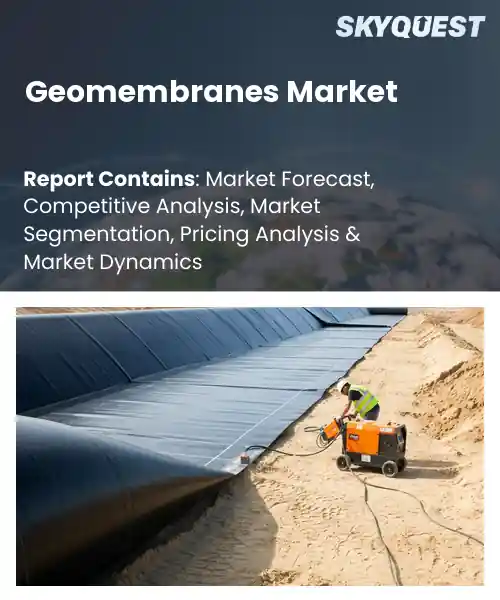
Geomembranes Market
Report ID: SQMIG15E3665
Report ID: SQMIG15E3665
[email protected]
USA +1 351-333-4748
Report ID:
SQMIG15E3665 |
Region:
Global |
Published Date: June, 2026
Pages:
157
|Tables:
121
|Figures:
72


Global Geomembranes Market size was valued at USD 3.52 Billion in 2024 and is poised to grow from USD 3.79 Billion in 2025 to USD 6.85 Billion by 2033, growing at a CAGR of 7.6% during the forecast period (2026-2033).
Geomembranes market trends serve as synthetic liners that are used to contain liquids, gases and solids for environmental applications and engineering. As regulatory enforcement of waste containment is increased, there is market demand for geomembranes due to increasing need for efficient containment which protects groundwater and soil from contamination. The geomembrane market is expected to continue to grow due to stricter regulations, increased investment in waste management projects and expanding infrastructure. Prior to 1990, geomembranes were made primarily from PVC or bituminous sheets; however, the marketplace has transitioned to utilize high-density polyethylene (HDPE), linear low-density polyethylene (LLDPE) and reinforced composite geomembranes as they provide an extended service life and have a lower total life cycle cost.
An example of this change occurred in the 1990s when many municipalities in North America transitioned from using smooth HDPE to using textured HDPE for municipal landfill projects. The use of textured HDPE in the municipal landfill sector is matched by the use of textured HDPE geomembranes in mining tailings and pond liners, as well as sealing canals, all of which demonstrates the technological advancement of geomembranes. Environmental initiatives combined with scalability and material innovation are the leading factors driving worldwide adoption of geomembranes (from manufacturers), as they can now produce larger panels, textured surfaces and composite layers that reduce installation time while minimizing the risk of seam failure and lowering the total project cost/risk.
This leads to an increase in the storage of mining tailings, oilfield containment, and large-scale irrigation canals where rapid deployment and long-term performance are highly valued. For example, the adoption of reinforced geomembranes market growth, that has enabled Chilean copper miners to mitigate the risk of leakage from acidic tailings by lowering the frequency and cost of remedial action. As such, the focus of investors and EPC contractors is to work with suppliers providing certified and high-strength materials while optimizing their designs.
How is AI Improving Quality Control in the Geomembranes Market?
The geomembrane market share is experiencing improvements in quality control from Artificial Intelligence, which is shifting to data-driven workflows vs. manual inspections. Automated inspection of seams and surfaces with artificial intelligence is one of the key improvements in quality control along with fusion of sensors for thickness and extrusion management, and artificial intelligence-assisted documentation that connects to the production of the geomembrane with a record of installation in the field.
Manufacturers and contractors are now able to use digital monitoring systems vs. spot checks (due to environmental impact) as containment failures present a significant liability. Manufacturing and contractor companies are utilizing A/V (audio visual) systems, A/V systems integrated with cameras, drones and thermal imaging and machine vision to identify anomalies, develop maintenance predictions, and establish standardization in testing reporting; this allows projects to be closed more quickly and consistently.
In May 2026 Solmax will be constructing its first European geosynthetic centre including manufacturing and laboratory capability as an industrial facility that incorporates inline AI for quality control, thus providing the market with enhanced efficiencies leading to improved testing capability and reduced risk of failure during installation and production processes through faster identification of defects and tighter control of processes.
Market snapshot - (2026-2033)
Global Market Size
USD 3.52 Billion
Largest Segment
Fastest Growth
Growth Rate
7.62% CAGR
To get more insights on this market click here to Request a Free Sample Report
Global geomembranes market is segmented by material type, application, end-use and region. Based on material type, the market is segmented into HDPE (High-Density Polyethylene), LLDPE (Linear Low-Density Polyethylene), PVC, EPDM and others. Based on application, the market is segmented into waste management, water management, mining and agriculture. Based on end-use, the market is segmented into landfills, reservoirs, tailings ponds and tunnels. Based on region, the market is segmented into North America, Europe, Asia Pacific, Latin America and Middle East & Africa.
The superior chemical resistance, low permeability, and high tensile strength of HDPE geomembranes make them the preferred option for containment applications in the geomembrane market due to their long service life and reduced leakage potential. This leads engineers and construction owners to prefer HDPE for projects that require geomembranes with high chemical resistance and tensile strength. The ability to weld HDPE geomembranes and the availability of HDPE materials from many sources, along with strong welding practices, increase the probability that HDPE will be specified and procured by firms working on long-term projects.
However, LLDPE is emerging as the most rapidly expanding material because its flexibility and puncture resistance allow conforming to uneven subgrades and simpler handling. Advances in blend formulations and installation practices lower labor demands and enable more applications that need conformable liners, unlocking new project types and accelerating demand.
The waste management industry is the dominant end-user of geomembrane materials due to the need for long-term durable low-permeable liners that will prevent leachate and contaminants from entering soil and groundwater in landfills and other containment applications, making geomembranes an essential part of regulatory compliance and the long-term viability of asset integrity. Regulations and lifecycle maintenance concerns cause designers to specify strong geomembrane systems. The integration of geomembranes with leachate collection systems, drainage layers, and performance monitoring systems further increases the likelihood that geomembranes will be utilized by end users because operators prefer to use materials that have a proven track record of being reliable and environmentally responsible when installing them.
Conversely, water management is the most rapidly expanding application because priorities around water conservation, reservoir lining and irrigation efficiency increase demand for impermeable, adaptable geomembranes. Advances in installation and UV resistant formulations enable wider use across agricultural and municipal projects, opening new procurement pathways and supporting designs that emphasize water storage, reuse and managed supply solutions.
To get detailed segments analysis, Request a Free Sample Report
There is a perfect alignment between the region's economic growth due to continuing industrial activity, rapid modernization of existing infrastructures, and an increasing number of countries adopting sound environmental policy frameworks, which emphasise containment, particularly with respect to freshwater and wastewater management. At the same time, continuous urban development coupled with large investments in both waste management and water treatment solutions provide a consistent and ongoing demand for performance liner applications and engineered containment systems within this region. In addition, a lower local manufacturing base increases the overall cost competitiveness of product purchase and installation, while a strong supply of engineering resources, engineering expertise, and research partnerships enable rapid innovation of materials and product development within the region. Furthermore, the extensive presence of contractors and integrators within the region solidifies the depth of the market and creates a capability to efficiently deliver complex projects in multiple geographical areas. Finally, the strategic focus on sustainable products and retrofit of older infrastructures continues to create opportunities for the use of geomembranes in long-term containment applications, making the Asia Pacific region a global leader in both the manufacture of and advanced use of geomembrane technology.
Geomembranes market regional outlook in Japan is characterized by a mature industrial base and a strong focus on material quality and longevity. Demand is shaped by rigorous regulatory standards and a culture of engineering excellence that favors high performance products. Applications concentrate on urban water management, landfill containment, and industrial wastewater systems where durability and precision installation are paramount. Close collaboration between manufacturers, research institutes, and end users fosters incremental innovations and tailored solutions that meet stringent performance expectations.
Geomembranes market regional forecast in South Korea is influenced by advanced construction practices and a compact yet intensive infrastructure landscape. Emphasis on industrial containment, coastal and port protection, and urban landfill management drives need for reliable liner systems. Local suppliers and engineering firms prioritize rapid deployment and integration with broader civil works, while regulatory oversight encourages adoption of certified materials. Proximity to regional supply chains and focus on high performance polymers support sophisticated applications and ongoing product refinement.
The growth of the geomembrane market within the region of North America is a result of three main influences; the increased regulatory focus on protecting the environment; a healthy sector for remediation & waste management; and continued investment into natural resource & infrastructure projects requiring safe containment options. As old facilities are being replaced or improved upon, new installations are being deployed into the marketplace as well. New technology using advanced materials in the creation of geomembranes coupled with an increase in demand for lifetime performance and one stop engineering services has contributed to the plate of geomembrane products available. As large general contracting firms continue to expand their reach into the supply chains of these companies and vice versa, there will be added capacity for these companies to deploy product while increasing the range of services provided. The overall geomembrane market benefits from an established ecosystem of professional services providing specification assistance, quality assurance and performance monitoring; thereby helping to build confidence in geomembrane systems for the containment of complex contamination issues.
Geomembranes market forecast in United States is characterized by broad demand across waste management, mining, and water infrastructure sectors. Emphasis on regulatory compliance and long term performance informs material selection and installation practices. Large scale projects and specialized remediation work create demand for engineered solutions and integrated services. Suppliers focus on certified products and comprehensive technical support, while engineering consultancies and contractors drive specification and quality assurance to meet rigorous site requirements.
Geomembranes market outlook in Canada is shaped by a strong mining sector and a need for robust containment systems in challenging climatic and remote conditions. Applications emphasize tailings management, water diversion, and landfill containment where durability and cold climate performance are critical. Logistics and site access considerations influence product selection and installation methodologies, and collaboration between suppliers and operators fosters solutions that address long term environmental stewardship and operational resilience.
Europe is pursuing an expanded role by establishing exemplary global operating models through regulatory implementation of rigorous global environmental standards, the establishment of circular economy principles, and continued innovation in both materials and installation technologies. Regulatory requirements are incentivising remediation, upgrading landfills and developing and upgrading water management systems, thus providing enhanced specifications for all containment solutions. Cross-border collaboration among manufacturers, test labs and research institutions is creating faster development pathways to US certified products and compliant installation standards. Investment in renewing or replacing aged infrastructure and urban resiliency projects are creating more varied applications for geomembranes. The role of established engineering firms and specialty contractors is significant in converting policy to high-quality installations and building confidence in the market for greater adoption of advanced geomembrane technologies among all sectors of our economy.
Geomembranes market analysis in Germany reflects a focus on engineering precision and regulatory conformity across industrial and municipal applications. Demand centers on waste containment, industrial runoff management, and water treatment systems where technical specification and material certification are emphasized. German manufacturers and engineering firms collaborate closely with research institutions to deliver high quality, performance driven solutions that align with national and regional environmental priorities and export oriented industrial practices.
Geomembranes industry in United Kingdom prioritizes applications in flood defense, urban drainage, and brownfield remediation where rapid mobilization and modular installation approaches are valued. Project delivery often involves specialist consultancies and integrators who focus on lifecycle performance and monitoring. Regulatory frameworks and a strong services sector support specification of reliable geomembrane systems, while emphasis on resilience and adaptability drives uptake in varied public and private infrastructure programs.
Geomembranes industry trends in France is driven by public infrastructure initiatives, wastewater management projects, and agricultural containment needs that require durable and visually considerate solutions. Municipal and regional programs favor certified materials and collaborative procurement approaches that engage local manufacturers and installers. Focus on environmental compliance and integrated project planning encourages tailored geomembrane applications that address both functional performance and stakeholder expectations.
To know more about the market opportunities by region and country, click here to
Buy The Complete Report
Infrastructure and Landfill Expansion
Demand For Water Management
High Raw Material Price Volatility
Complex Installation and Maintenance
Request Free Customization of this report to help us to meet your business objectives.
Competitive landscape shows active consolidation and capability plays by major geomembrane manufacturers who use targeted acquisitions and site level capacity upgrades to secure large containment contracts and technical specifications; Solmax's purchase of TenCate and earlier integration of GSE expanded product range and installer networks, while commissioning new extrusion lines at its Houston site exemplifies the buy plus build approach to win engineered projects and deepen partnerships with local installers and specifiers.
Top Player’s Company Profile
Recent Developments in the Geomembranes Market
SkyQuest’s ABIRAW (Advanced Business Intelligence, Research & Analysis Wing) is our Business Information Services team that Collects, Collates, Correlates, and Analyses the Data collected by means of Primary Exploratory Research backed by robust Secondary Desk research. As per SkyQuest analysis, a key driver is mounting demand for reliable containment as infrastructure and landfill expansion drive specification of durable liners, and a second driver is rapid material innovation and scalability that enable larger panels, reinforced composites and faster installations. A key restraint is high raw material price volatility that can undermine project economics and slow procurement. The dominating region is Asia Pacific where urbanization, water management investment and local manufacturing capacity concentrate demand, and the dominating segment is HDPE due to its chemical resistance, low permeability and long service life, making it the preferred choice for critical containment projects.
| Report Metric | Details |
|---|---|
| Market size value in 2024 | USD 3.52 Billion |
| Market size value in 2033 | USD 6.85 Billion |
| Growth Rate | 7.62% |
| Base year | 2024 |
| Forecast period | (2026-2033) |
| Forecast Unit (Value) | USD Billion |
| Segments covered |
|
| Regions covered | North America (US, Canada), Europe (Germany, France, United Kingdom, Italy, Spain, Rest of Europe), Asia Pacific (China, India, Japan, Rest of Asia-Pacific), Latin America (Brazil, Rest of Latin America), Middle East & Africa (South Africa, GCC Countries, Rest of MEA) |
| Companies covered |
|
| Customization scope | Free report customization with purchase. Customization includes:-
|
To get a free trial access to our platform which is a one stop solution for all your data requirements for quicker decision making. This platform allows you to compare markets, competitors who are prominent in the market, and mega trends that are influencing the dynamics in the market. Also, get access to detailed SkyQuest exclusive matrix.
Table Of Content
Executive Summary
Market overview
Parent Market Analysis
Market overview
Market size
KEY MARKET INSIGHTS
COVID IMPACT
MARKET DYNAMICS & OUTLOOK
Market Size by Region
KEY COMPANY PROFILES
Methodology
For the Geomembranes Market, our research methodology involved a mixture of primary and secondary data sources. Key steps involved in the research process are listed below:
1. Information Procurement: This stage involved the procurement of Market data or related information via primary and secondary sources. The various secondary sources used included various company websites, annual reports, trade databases, and paid databases such as Hoover's, Bloomberg Business, Factiva, and Avention. Our team did 45 primary interactions Globally which included several stakeholders such as manufacturers, customers, key opinion leaders, etc. Overall, information procurement was one of the most extensive stages in our research process.
2. Information Analysis: This step involved triangulation of data through bottom-up and top-down approaches to estimate and validate the total size and future estimate of the Geomembranes Market.
3. Report Formulation: The final step entailed the placement of data points in appropriate Market spaces in an attempt to deduce viable conclusions.
4. Validation & Publishing: Validation is the most important step in the process. Validation & re-validation via an intricately designed process helped us finalize data points to be used for final calculations. The final Market estimates and forecasts were then aligned and sent to our panel of industry experts for validation of data. Once the validation was done the report was sent to our Quality Assurance team to ensure adherence to style guides, consistency & design.
Analyst Support
Customization Options
With the given market data, our dedicated team of analysts can offer you the following customization options are available for the Geomembranes Market:
Product Analysis: Product matrix, which offers a detailed comparison of the product portfolio of companies.
Regional Analysis: Further analysis of the Geomembranes Market for additional countries.
Competitive Analysis: Detailed analysis and profiling of additional Market players & comparative analysis of competitive products.
Go to Market Strategy: Find the high-growth channels to invest your marketing efforts and increase your customer base.
Innovation Mapping: Identify racial solutions and innovation, connected to deep ecosystems of innovators, start-ups, academics, and strategic partners.
Category Intelligence: Customized intelligence that is relevant to their supply Markets will enable them to make smarter sourcing decisions and improve their category management.
Public Company Transcript Analysis: To improve the investment performance by generating new alpha and making better-informed decisions.
Social Media Listening: To analyze the conversations and trends happening not just around your brand, but around your industry as a whole, and use those insights to make better Marketing decisions.
REQUEST FOR SAMPLE
 REQUEST FREE CUSTOMIZATION
Global Geomembranes Market size was valued at USD 3.52 Billion in 2024 and is poised to grow from USD 3.79 Billion in 2025 to USD 6.85 Billion by 2033, growing at a CAGR of 7.62% during the forecast period (2026-2033).
Competitive landscape shows active consolidation and capability plays by major geomembrane manufacturers who use targeted acquisitions and site level capacity upgrades to secure large containment contracts and technical specifications; Solmax's purchase of TenCate and earlier integration of GSE expanded product range and installer networks, while commissioning new extrusion lines at its Houston site exemplifies the buy plus build approach to win engineered projects and deepen partnerships with local installers and specifiers. 'GSE Environmental', 'Solmax International', 'AGRU Kunststofftechnik', 'Carlisle Companies (Carlisle Geosynthetics)', 'Officine Maccaferri', 'TenCate Geosynthetics (Indorama)', 'Layfield Group', 'NAUE GmbH', 'Nilex Inc.', 'Raven Industries', 'Atarfil SL', 'Environmental Geotechnics', 'Polymer Group Inc.', 'Environmental Protection Inc.', 'Plastika Kritis SA'
The accelerated development of infrastructure projects and expansion of landfill facilities increases demand for geomembranes as reliable containment and barrier solutions, prompting project planners to specify durable liner systems that prevent contamination and groundwater infiltration. This need incentivizes manufacturers to scale production, innovate material formulations, and offer engineered solutions suited to diverse site conditions. The emphasis on long-term performance and risk mitigation fosters adoption of geomembranes across waste management and civil engineering applications, strengthening procurement pipelines and reinforcing their role as essential components in modern environmental infrastructure.
Sustainable Infrastructure Demand: Growing emphasis on resilient, water sensitive design is elevating demand for geomembranes in environmental containment and water management projects. Stakeholders prioritize long term impermeability, regulatory compliance, and reduced environmental footprint, driving specification of advanced geomembrane solutions across landfill liners, reservoirs, and remediation sites. Manufacturers respond with higher performance formulations, enhanced warranty offerings, and collaborative project design support. This trend underscores the role of geomembranes as integral components of sustainable infrastructure planning, promoting lifecycle thinking and public private partnership adoption globally.
Why does Asia Pacific Dominate the Global Geomembranes Market? |@12


Want to customize this report? This report can be personalized according to your needs. Our analysts and industry experts will work directly with you to understand your requirements and provide you with customized data in a short amount of time. We offer $1000 worth of FREE customization at the time of purchase.
Feedback From Our Clients


 USA (+1) 351-333-4748

