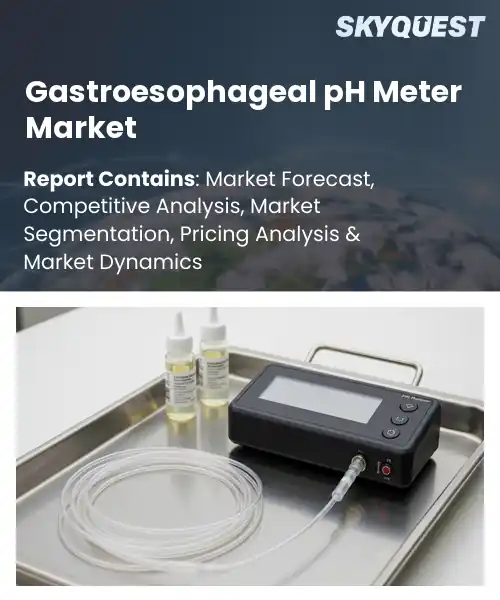
Gastroesophageal pH Meter Market
Report ID: SQMIG10C2075
Report ID: SQMIG10C2075
[email protected]
USA +1 351-333-4748
Report ID:
SQMIG10C2075 |
Region:
Global |
Published Date: April, 2026
Pages:
157
|Tables:
117
|Figures:
77


Global Gastroesophageal Ph Meter Market size was valued at USD 1.97 Billion in 2024 and is poised to grow from USD 2.06 Billion in 2025 to USD 1.9 Billion by 2033, growing at a CAGR of 4.7% during the forecast period (2026-2033).
The primary driver of the gastroesophageal pH meter market is the rising prevalence of gastroesophageal reflux disease and clinical emphasis on objective diagnostic metrics. Gastroesophageal pH meters are catheter-based devices that quantify esophageal acid exposure, enabling clinicians to distinguish reflux phenotypes and guide targeted therapy, reducing morbidity and optimizing PPI use. Historically, the market evolved from invasive stationary systems to minimally invasive wireless capsules and integrated impedance-pH platforms, prompted by demand for patient comfort and diagnostic accuracy. Early adoption in tertiary hospitals set a precedent that expanded into outpatient clinics and remote monitoring programs for longitudinal care and research applications.Building on that clinical diffusion, a key factor driving the gastroesophageal pH meter market is technological innovation which lowers barriers to testing and expands indications. As wireless pH capsules and combined impedance-pH systems improved patient tolerance and diagnostic yield, clinicians adopted ambulatory testing more readily, which increased procedure volumes and justified R&D investment. Concurrently, guideline endorsements and improved reimbursement created financial incentives that encouraged hospital procurement and outpatient service lines. This cascade created opportunities for remote monitoring, AI-enabled analytics to stratify risk, and perioperative assessment of anti-reflux surgery, translating into revenue growth for device manufacturers and expanded patient access.
How is IoT enabling remote monitoring in the gastroesophageal pH meter market?
IoT is enabling remote monitoring in the gastroesophageal pH meter market by linking sensors and wireless transmitters to cloud platforms that deliver continuous esophageal acidity data to clinicians. This connectivity turns short isolated tests into longitudinal data streams that improve patient comfort and enable remote review. Modern systems pair wireless capsules and impedance pH sensors with analytics and telemedicine workflows so clinicians can triage patients, personalize therapy, and reduce clinic visits. The market is shifting toward devices that support real time transmission and automated analysis, though cost and reimbursement still shape how quickly providers adopt connected solutions.Diversatek Healthcare June 2024, introduced an advanced impedance pH system with artificial intelligence enabled analysis and cloud capable transmission that supports remote review and streamlined interpretation. That development shows how IoT connectivity reduces clinician workload and speeds broader adoption by making diagnostic data accessible for telemedicine and efficient decision making.
Market snapshot - (2026-2033)
Global Market Size
USD 1.97 Billion
Largest Segment
Catheter-based pH Monitoring Systems
Fastest Growth
Wireless/Capsule-based pH Monitoring (Bravo style)
Growth Rate
4.7% CAGR
To get more insights on this market click here to Request a Free Sample Report
Global gastroesophageal ph meter market is segmented by product configuration, component/accessory, clinical indication, end-user facility and region. Based on product configuration, the market is segmented into Catheter-based pH Monitoring Systems, Wireless/Capsule-based pH Monitoring (Bravo style) and Impedance-pH Monitoring Combined. Based on component/accessory, the market is segmented into pH Probes & Sensors, Data Recorders & Transmitters and Analysis Software & Analytics. Based on clinical indication, the market is segmented into Gastroesophageal Reflux Disease (GERD), Laryngopharyngeal Reflux (LPR) and Non-cardiac Chest Pain Evaluation. Based on end-user facility, the market is segmented into Gastroenterology Clinics & Diagnostic Centers, Hospitals & Tertiary Care Units and Ambulatory Surgical Centers (ASCs). Based on region, the market is segmented into North America, Europe, Asia Pacific, Latin America and Middle East & Africa.
Catheter based pH Monitoring Systems segment dominates because clinicians and diagnostic pathways rely on its established accuracy and versatility for objective acid measurement. Its compatibility with existing monitoring protocols, straightforward interpretation, and lower per procedure cost encourage routine use across diagnostic settings. Reimbursement frameworks and clinician familiarity drive procurement and training, which in turn sustain widespread adoption and ensure these systems remain central to gastroesophageal pH measurement and long term clinical workflows.
Meanwhile, wireless capsule based pH Monitoring (Bravo style) is the fastest growing area, driven by patient comfort and prolonged ambulatory recording that improves diagnostic yield. Innovations in miniaturization and wireless data transfer boost clinician acceptance and enable wider outpatient and home use, creating demand for new services and follow up care pathways.
Gastroesophageal Reflux Disease (GERD) segment dominates because it represents the primary clinical driver for acid monitoring and sets diagnostic standards across care pathways. Established guidelines recommend objective pH assessment in complex or refractory cases, prompting routine use of pH meters in evaluation and presurgical workup. Strong clinician familiarity, consolidated reimbursement practices, and integration into treatment algorithms sustain device procurement and continuous investment in monitoring technology and training.
Conversely, Laryngopharyngeal Reflux (LPR) is witnessing the strongest growth momentum as awareness of extraesophageal manifestations rises and cross specialty referrals increase. Demand for prolonged and combined impedance pH protocols, coupled with innovations tailored to detect non acid reflux, expands clinical applications and opens pathways for product differentiation, specialized analytics, and new collaborative care models.
To get detailed segments analysis, Request a Free Sample Report
North America dominates the global gastroesophageal pH meter market due to a confluence of structural, clinical, and commercial advantages. Advanced healthcare infrastructure and extensive clinical research capacity create an environment that favors rapid adoption of diagnostic technologies. Established reimbursement frameworks and clear clinical guidelines reduce barriers to integration, while a dense network of hospitals and specialist centers provides efficient pathways for procurement and deployment. Major manufacturers maintain strong regional operations and local service capabilities, supporting device performance and clinician training. Collaboration between academia, clinical networks, and industry accelerates evidence generation and product refinement. In addition, high awareness among clinicians and patients about reflux diagnostics, combined with growing emphasis on minimally invasive and ambulatory monitoring approaches, sustains demand and drives continuous innovation across sensor and software offerings.
Gastroesophageal pH Meter Market United States features concentrated research centers, broad clinical adoption, and integrated hospital networks that support advanced diagnostics. Strong links between manufacturers and hospital systems enable product evaluation and service models. Reimbursement structures and clinical guidelines encourage evidence based use, while training programs and technical support ensure sustained device utilization. Market dynamics reflect collaborative innovation between industry and academic centers focused on clinical validation and workflow integration.
Gastroesophageal pH Meter Market Canada benefits from organized healthcare delivery, strong ties between community hospitals and specialist clinics, and regional distribution networks that facilitate device deployment. Clinical practice guidelines and payer frameworks support diagnostic adoption while academic hospitals contribute to training and evidence generation. Manufacturers tailor service offerings to regional needs, emphasizing support and remote monitoring. Collaborative initiatives between healthcare providers and industry are advancing clinical pathways and device acceptance.
Europe is experiencing rapid expansion in the gastroesophageal pH meter market as a result of several interrelated clinical and policy trends. Mature healthcare systems and regional clinical networks facilitate standardized adoption of diagnostic protocols, while growing emphasis on outpatient and ambulatory diagnostics aligns with pH monitoring capabilities. Regulatory harmonization across markets and targeted reimbursement pathways lower barriers to market entry for established and emerging suppliers. Strong presence of specialized gastroenterology centers supports clinician training and multicenter evidence generation. Innovation in sensor miniaturization, patient comfort, and data analytics enhances clinical utility and provider acceptance. Cross border collaborations among industry, academic institutions, and clinical societies accelerate dissemination of best practices and create a competitive landscape that encourages product refinement and service expansion throughout the region.
Gastroesophageal pH Meter Market Germany is characterized by a mature medtech ecosystem, robust hospital infrastructure, and strong ties between manufacturers and clinical research institutions. Established reimbursement frameworks and clinical guidelines support integration of diagnostic devices into routine care. Technical service networks and manufacturing capabilities facilitate support and customization. German specialist centers contribute to high quality evidence generation and clinician training, reinforcing physician confidence and driving preference for pH monitoring solutions.
Gastroesophageal pH Meter Market United Kingdom benefits from proactive clinical adoption, integrated care pathways, and emphasis on outpatient diagnostics. A collaborative ecosystem linking academic centers, specialist clinics, and medtech companies accelerates evaluation of novel monitoring approaches. Healthcare commissioning and centralized procurement create predictable routes for deployment, while investment in digital health and remote monitoring enhances patient engagement. Clinician training and evidence generation further support broader clinical use of pH monitoring.
Gastroesophageal pH Meter Market France is emerging through strengthened clinical awareness, growing specialist networks, and initiatives to expand ambulatory diagnostics. National healthcare structures support pilot programs in hospitals and specialist clinics, enabling evidence building and clinician engagement. Local distributors and medtech firms provide tailored service models while partnerships with academic centers foster clinical validation. Focus on patient comfort and digital reporting tools help increase provider acceptance and drive market maturation.
Asia Pacific is strengthening its position in the gastroesophageal pH meter market through a combination of technological capability, growing clinical capacity, and active industry collaboration. Regional hubs leverage advanced electronics and sensor expertise to enable innovation in miniaturized and wearable monitoring devices that appeal to clinicians and patients. National health systems and tertiary hospitals are increasingly incorporating ambulatory diagnostics into care pathways, supported by focused clinician training and local evidence generation. Partnerships between global manufacturers and regional distributors accelerate market access, while domestic medtech firms adapt devices for local practice and cost considerations. Integration of data analytics and remote reporting features aligns with broader digital health trends, enhancing clinical utility and fostering broader acceptance across both hospital and outpatient settings.
Gastroesophageal pH Meter Market Japan combines electronics expertise with healthcare infrastructure to support adoption of refined monitoring solutions. Domestic medtech firms collaborate with clinical centers to develop compact, patient friendly devices and integrate data reporting tools. Hospitals and specialist clinics drive clinical validation and training, while alignment with digital health initiatives supports remote monitoring and workflow integration. Local service networks ensure maintenance and clinician support, enhancing device reliability and adoption.
Gastroesophageal pH Meter Market South Korea benefits from strong technological capabilities in medical electronics and a responsive healthcare system that adopts advanced diagnostics. Collaboration between domestic manufacturers and clinical centers supports prototyping and local validation of monitoring devices. Emphasis on digital connectivity and remote reporting aligns with telehealth initiatives, improving patient engagement and follow up. Efficient distribution channels and technical support enhance device deployment across specialist clinics and regional networks.
To know more about the market opportunities by region and country, click here to
Buy The Complete Report
Rising Gastroesophageal Disorder Prevalence
Technological Advancements In Device Design
High Device And Procedure Costs
Regulatory and Reimbursement Challenges
Request Free Customization of this report to help us to meet your business objectives.
The competitive landscape is dominated by established medical device firms and diagnostic integrators, with competition driven by device innovation, strategic acquisitions and clinical partnerships that extend wireless and software enabled monitoring. Recent concrete moves include product introductions and regional launches by established vendors and clinical partnerships to scale home based reflux testing, showing technology advancement and alliance activity as primary competitive levers.
Top Player’s Company Profile
Recent Developments
SkyQuest’s ABIRAW (Advanced Business Intelligence, Research & Analysis Wing) is our Business Information Services team that Collects, Collates, Correlates, and Analyses the Data collected by means of Primary Exploratory Research backed by robust Secondary Desk research. As per SkyQuest analysis, rising prevalence of gastroesophageal reflux disease and growing clinical emphasis on objective diagnostic metrics drive demand for pH monitoring, while high device and procedure costs constrain adoption and slow penetration in smaller or resource limited centers. North America remains the dominant region because of advanced healthcare infrastructure, established reimbursement pathways and strong clinical research networks, and catheter based pH monitoring systems continue to dominate due to clinician familiarity, cost effectiveness and integration with existing workflows. A second major growth driver is rapid technological innovation including wireless capsules, combined impedance platforms and AI enabled analytics that improve patient comfort, diagnostic yield and support remote monitoring.
| Report Metric | Details |
|---|---|
| Market size value in 2024 | USD 1.97 Billion |
| Market size value in 2033 | USD 1.9 Billion |
| Growth Rate | 4.7% |
| Base year | 2024 |
| Forecast period | (2026-2033) |
| Forecast Unit (Value) | USD Billion |
| Segments covered |
|
| Regions covered | North America (US, Canada), Europe (Germany, France, United Kingdom, Italy, Spain, Rest of Europe), Asia Pacific (China, India, Japan, Rest of Asia-Pacific), Latin America (Brazil, Rest of Latin America), Middle East & Africa (South Africa, GCC Countries, Rest of MEA) |
| Companies covered |
|
| Customization scope | Free report customization with purchase. Customization includes:-
|
To get a free trial access to our platform which is a one stop solution for all your data requirements for quicker decision making. This platform allows you to compare markets, competitors who are prominent in the market, and mega trends that are influencing the dynamics in the market. Also, get access to detailed SkyQuest exclusive matrix.
Table Of Content
Executive Summary
Market overview
Parent Market Analysis
Market overview
Market size
KEY MARKET INSIGHTS
COVID IMPACT
MARKET DYNAMICS & OUTLOOK
Market Size by Region
KEY COMPANY PROFILES
Methodology
For the Gastroesophageal pH Meter Market, our research methodology involved a mixture of primary and secondary data sources. Key steps involved in the research process are listed below:
1. Information Procurement: This stage involved the procurement of Market data or related information via primary and secondary sources. The various secondary sources used included various company websites, annual reports, trade databases, and paid databases such as Hoover's, Bloomberg Business, Factiva, and Avention. Our team did 45 primary interactions Globally which included several stakeholders such as manufacturers, customers, key opinion leaders, etc. Overall, information procurement was one of the most extensive stages in our research process.
2. Information Analysis: This step involved triangulation of data through bottom-up and top-down approaches to estimate and validate the total size and future estimate of the Gastroesophageal pH Meter Market.
3. Report Formulation: The final step entailed the placement of data points in appropriate Market spaces in an attempt to deduce viable conclusions.
4. Validation & Publishing: Validation is the most important step in the process. Validation & re-validation via an intricately designed process helped us finalize data points to be used for final calculations. The final Market estimates and forecasts were then aligned and sent to our panel of industry experts for validation of data. Once the validation was done the report was sent to our Quality Assurance team to ensure adherence to style guides, consistency & design.
Analyst Support
Customization Options
With the given market data, our dedicated team of analysts can offer you the following customization options are available for the Gastroesophageal pH Meter Market:
Product Analysis: Product matrix, which offers a detailed comparison of the product portfolio of companies.
Regional Analysis: Further analysis of the Gastroesophageal pH Meter Market for additional countries.
Competitive Analysis: Detailed analysis and profiling of additional Market players & comparative analysis of competitive products.
Go to Market Strategy: Find the high-growth channels to invest your marketing efforts and increase your customer base.
Innovation Mapping: Identify racial solutions and innovation, connected to deep ecosystems of innovators, start-ups, academics, and strategic partners.
Category Intelligence: Customized intelligence that is relevant to their supply Markets will enable them to make smarter sourcing decisions and improve their category management.
Public Company Transcript Analysis: To improve the investment performance by generating new alpha and making better-informed decisions.
Social Media Listening: To analyze the conversations and trends happening not just around your brand, but around your industry as a whole, and use those insights to make better Marketing decisions.
REQUEST FOR SAMPLE
 REQUEST FREE CUSTOMIZATION


Want to customize this report? This report can be personalized according to your needs. Our analysts and industry experts will work directly with you to understand your requirements and provide you with customized data in a short amount of time. We offer $1000 worth of FREE customization at the time of purchase.
Feedback From Our Clients


 USA (+1) 351-333-4748

