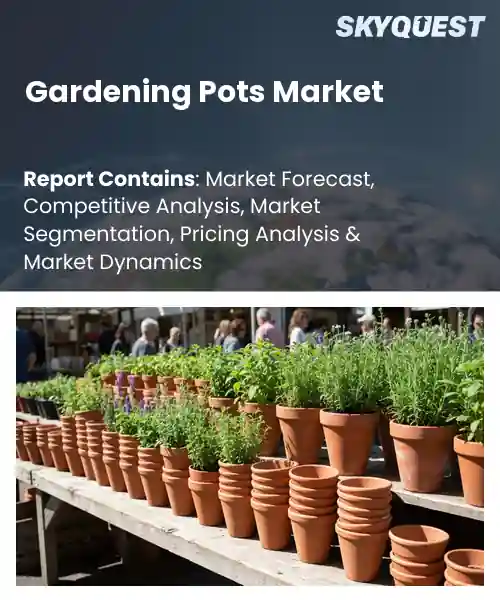
Gardening Pots Market
Report ID: SQMIG25I2066
Report ID: SQMIG25I2066
[email protected]
USA +1 351-333-4748
Report ID:
SQMIG25I2066 |
Region:
Global |
Published Date: May, 2026
Pages:
157
|Tables:
147
|Figures:
73


Global Gardening Pots Market size was valued at USD 3.22 Billion in 2024 and is poised to grow from USD 3.42 Billion in 2025 to USD 5.52 Billion by 2033, growing at a CAGR of 6.12% during the forecast period (2026-2033).
High urbanization, increasing interest in home gardening, rising demand for sustainable lifestyle products, innovations in self-watering and eco-friendly containers, and expansion of indoor and balcony gardening trends are driving sales of gardening pots.
Rising adoption of balcony gardening, community gardening, vertical farming, and indoor decorative plants is further creating new opportunities for gardening pots vendors. Increasing demands for eco-friendly gardening materials and new materials innovations are some other factors that would drive up the demand for gardening pots. As companies focus on manufacturing products made of recycled plastic, clay mixes, bioplastics, and gardening pots equipped with irrigation features to capture green-minded consumers, lifecycle costs are lowered at the same time. The rise in usage of pots for ornamental plants, food gardening, landscaping, and indoor gardening purposes would boost sales of gardening pots. Increasing interest in home gardening and urban farming around the world coupled with rising emphasis on sustainable living are expected to primarily drive gardening pots market growth.
On the contrary, fluctuations in raw material prices, intense competition from low-cost manufacturers, environmental concerns regarding plastic waste, and seasonal variations in gardening activities are anticipated to slow down gardening pots market penetration across the forecast period.
How is IoT Improving Smart Plant Monitoring in Gardening Pots?
IoT technology is enhancing smart plant monitoring in the gardening pots market with the use of sensors, wireless connections, and cloud-based analysis of data to make plant care easier. Moreover, smart gardening solutions make it possible for the users to conserve water consumption, ensure health of their plants, and do all the gardening tasks automatically by using plant monitoring and irrigation solutions with the help of sensors. The pot market is gradually shifting from unconnected pots to intelligent gardening solutions as a result of integrating smart plant management functions with mobile apps. This not only simplifies gardening but also encourages people to take up stylish smart pots for garden purposes.
Market snapshot - (2026-2033)
Global Market Size
USD 3.22 Billion
Largest Segment
Plastic
Fastest Growth
Fabric
Growth Rate
6.12% CAGR
To get more insights on this market click here to Request a Free Sample Report
Global gardening pots market is segmented by material, product type, end-use, distribution channel, and region. Based on material, the market is segmented into plastic, terracotta/ceramic, fiber/coir, metal, and fabric. Based on product type, the market is segmented into standard pots, self-watering pots, hanging baskets, and window boxes. Based on end-use, the market is segmented into residential, commercial (landscaping), and horticulture. Based on distribution channel, the market is segmented into garden centers, online, and supermarkets. Based on region, the market is segmented into North America, Europe, Asia Pacific, Latin America, and Middle East & Africa.
The plastic segment is forecasted to account for the highest global gardening pots market share in the future. Due to its low cost of production, lightweight, and easy to manufacture features, it allows for endless designs in terms of shape, size, and color, which cater to the needs of casual consumers and growers alike. The ease of its moldable nature and ability to integrate into automated distribution processes ensures that the product is readily accessible through various retail networks.
However, terracotta/ceramic segment is slated to expand at a robust CAGR as per this gardening pots industry analysis. Demand for natural looks and high-end finishes. The benefits of breathability and thermodynamic characteristics attract committed producers, while glazing helps achieve better profit margins and allows exclusive retailing. This focus on both aesthetics and functionality is opening up new premium avenues, as well as encouraging innovative designs.
The self watering pots segment is anticipated to spearhead the global gardening pots market revenue generation over the coming years. They address issues such as managing and maintaining water by integrating reservoir and wicking mechanisms, which ensure stable water levels, as well as minimizing plant stress. Convenience is their advantage that suits the lifestyles of people living in an urban setup, and hence, they become popular with both beginner and advanced gardeners. These products attract buyers easily due to their value propositions, such as dependability and minimal maintenance.
On the other hand, hanging baskets are experiencing the most vigorous growth impetus, propelled by the rising trends of vertical gardens and balcony gardening, as well as increasing demands for visual decorations. Lighter material and modular mounts make this product more accessible even for smaller places. Social media appeal enhances the likelihood of spontaneous purchases.
To get detailed segments analysis, Request a Free Sample Report
Asia Pacific dominates the global gardening pots market driven by a combination of deep-rooted gardening cultures, rapid urbanization that fuels container gardening, and a strong manufacturing base that supports both value and premium offerings. High appreciation among consumers for good designs and multifunctional goods foster innovations in terms of material and finishing technologies, while varying climates in the region drive the need for a wide variety of goods that can be used indoors and outdoors. Well-developed export centers, together with efficient supply chains, enable regional companies to manufacture their goods on a large scale, and an increasing prevalence of e-commerce and lifestyle retail contributes to faster product discovery. Working together in tandem, designers, material engineers, and producers create products unique to the region.
A deep cultural appreciation for compact and refined gardening solutions, driving demand for high quality materials and artisanal finishes shapes procurement of gardening pots in Japan. Designers work alongside producers to make sophisticated but practical pots suitable for minimalistic décor on balconies. Customers demand products that are efficient in use of space and high-quality ceramics, encouraging innovation. Sales outlets combine specialty stores and carefully selected websites.
Gardening pot demand in South Korea is shaped by urban gardening enthusiasm and a strong taste for contemporary design, encouraging lightweight, multifunctional pot solutions suitable for small living spaces. Designers’ collaboration with manufacturers produces collections that cater to fashion enthusiasts and are designed for purchasing gardening accessories. E-commerce sites and lifestyle boutiques serve as discovery channels for niche brands featuring experimental fabrics and colors.
Mature horticultural traditions, growing urban greening initiatives, and a strong emphasis on sustainability are creating an opportune setting in Europe. diversity of consumer tastes motivated by these three factors has set the stage for a broad range of materials and styles to satisfy the requirements of both practical gardeners and lifestyle consumers alike. Central to this distribution network are established garden centres supported by innovative online and specialty retailers that provide customers with greater access to products than ever. Within Europe, Germany is the leading market; the United Kingdom has the highest growth rate for adopting new modern solutions, and France is known for offering design-oriented solutions for both high-end consumers and urban planters, respectively. Government regulations mandating the use of recycled materials and building relationships between growers, designers and retailers are driving innovation, and the disparate climate conditions found in different countries have resulted in a demand for both durable outdoor solutions and aesthetic indoor collections.
Strong demand for durable, high-performance containers for urban balconies and landscaping shapes demand outlook in Germany. Specifications are mainly based on practical requirements and include considerations such as durability, frost resistance, and low-maintenance design. The focus on sustainability and materials results in customers choosing composite and long-lasting ceramic materials. An existing distribution channel benefits specialist landscape companies and regular gardeners alike.
Sales of gardening pots in the United Kingdom are experiencing dynamic shifts driven by evolving lifestyle trends and increased interest in urban green spaces, favoring contemporary designs and modular systems. Innovation in the retail sector and good online discovery mean that new products become available very quickly. Design studios shape consumer taste, while small manufacturers and brands compete based on style and sustainability, focusing on flexibility and utility indoors.
Growing appetite for design-oriented containers that blend traditional craftsmanship with contemporary aesthetics helps govern sales of gardening pots in France. Marketing is targeted towards concept boutiques that are story-driven and online stores that emphasize authenticity. Artisans and designers work together to come up with bold pieces for interior design and curated patios, with sustainability and traceable origins shaping purchasing choices.
Consumer desire for outdoor living, use of sustainable materials, and innovative functional design solutions that accommodate the varied landscaping requirements have been contributing towards the creation of such opportunities for this market. Design innovations are being focused on modular, light, and decorative products that can easily be used in either an urban garden or a suburban patio. Efforts are being made to improve material choices along with production techniques as well as networking with retailers and landscape professionals. The availability of locally sourced products increases brand presence. Expenditures for sustainable production methods and product certifications provide consumers with added confidence in purchasing products due to the level of integrity associated with gardening pots. By utilizing established retail ecosystems, retailers can reach both the novice gardener and more experienced gardeners in North America.
Sales of gardening pots in the United States are driven by homeowner interest in outdoor living and a preference for versatile containers that complement landscaping trends. Product manufacturers focus on research and development of materials, optimizing logistics, thus satisfying demands for durable and low maintenance flowerpots, along with designing with professional assistance from interior designers and landscapers. Big retailers and specialized garden shops provide variety, whereas online platforms help with direct launches of products.
Strong interest in adaptable containers that withstand varied seasonal conditions, prompting demand for novel gardening pots across Canada. Local manufactures focus on creating durable and fixable products, and the collaboration with landscaping experts ensures product suitability according to local conditions. Specialty stores and garden stores offer products that strike a balance between functional use and beauty. Online platforms serve to open up new markets in remote locations of the country.
To know more about the market opportunities by region and country, click here to
Buy The Complete Report
Rising Urban Gardening Popularity
Growing Demand For Sustainable Materials
Fluctuating Raw Material Costs
Limited Consumer Awareness In Emerging Markets
Request Free Customization of this report to help us to meet your business objectives.
The global gardening pots market competitive landscape has shifted as sustainability and circularity have become primary competition drivers, prompting incumbents and retailers to pursue recycling partnerships and closed-loop programs while investors back material innovation. Examples include retailer plant pot recycling rollouts and startups commercializing chitin and mycelium pots, and larger firms pursuing targeted acquisitions and retail partnerships to secure sustainable supply chains.
SkyQuest’s ABIRAW (Advanced Business Intelligence, Research & Analysis Wing) is our Business Information Services team that Collects, Collates, Correlates, and Analyses the Data collected by means of Primary Exploratory Research backed by robust Secondary Desk research.
As per SkyQuest analysis, growing interest in home gardening and increasing adoption of sustainable lifestyle products are anticipated to drive the demand for gardening pots going forward. However, fluctuations in raw material prices and environmental concerns regarding plastic waste are slated to slow down the adoption of gardening pots in the future. Asia Pacific is slated to spearhead the demand for gardening pots owing to rapid urbanization, rising popularity of balcony and indoor gardening, and strong horticulture product demand. Development of self-watering and biodegradable pots and increasing integration of IoT-enabled smart plant monitoring solutions are anticipated to be key trends driving the gardening pots market over the coming years.
| Report Metric | Details |
|---|---|
| Market size value in 2024 | USD 3.22 Billion |
| Market size value in 2033 | USD 5.52 Billion |
| Growth Rate | 6.12% |
| Base year | 2024 |
| Forecast period | (2026-2033) |
| Forecast Unit (Value) | USD Billion |
| Segments covered |
|
| Regions covered | North America (US, Canada), Europe (Germany, France, United Kingdom, Italy, Spain, Rest of Europe), Asia Pacific (China, India, Japan, Rest of Asia-Pacific), Latin America (Brazil, Rest of Latin America), Middle East & Africa (South Africa, GCC Countries, Rest of MEA) |
| Companies covered |
|
| Customization scope | Free report customization with purchase. Customization includes:-
|
To get a free trial access to our platform which is a one stop solution for all your data requirements for quicker decision making. This platform allows you to compare markets, competitors who are prominent in the market, and mega trends that are influencing the dynamics in the market. Also, get access to detailed SkyQuest exclusive matrix.
Table Of Content
Executive Summary
Market overview
Parent Market Analysis
Market overview
Market size
KEY MARKET INSIGHTS
COVID IMPACT
MARKET DYNAMICS & OUTLOOK
Market Size by Region
KEY COMPANY PROFILES
Methodology
For the Gardening Pots Market, our research methodology involved a mixture of primary and secondary data sources. Key steps involved in the research process are listed below:
1. Information Procurement: This stage involved the procurement of Market data or related information via primary and secondary sources. The various secondary sources used included various company websites, annual reports, trade databases, and paid databases such as Hoover's, Bloomberg Business, Factiva, and Avention. Our team did 45 primary interactions Globally which included several stakeholders such as manufacturers, customers, key opinion leaders, etc. Overall, information procurement was one of the most extensive stages in our research process.
2. Information Analysis: This step involved triangulation of data through bottom-up and top-down approaches to estimate and validate the total size and future estimate of the Gardening Pots Market.
3. Report Formulation: The final step entailed the placement of data points in appropriate Market spaces in an attempt to deduce viable conclusions.
4. Validation & Publishing: Validation is the most important step in the process. Validation & re-validation via an intricately designed process helped us finalize data points to be used for final calculations. The final Market estimates and forecasts were then aligned and sent to our panel of industry experts for validation of data. Once the validation was done the report was sent to our Quality Assurance team to ensure adherence to style guides, consistency & design.
Analyst Support
Customization Options
With the given market data, our dedicated team of analysts can offer you the following customization options are available for the Gardening Pots Market:
Product Analysis: Product matrix, which offers a detailed comparison of the product portfolio of companies.
Regional Analysis: Further analysis of the Gardening Pots Market for additional countries.
Competitive Analysis: Detailed analysis and profiling of additional Market players & comparative analysis of competitive products.
Go to Market Strategy: Find the high-growth channels to invest your marketing efforts and increase your customer base.
Innovation Mapping: Identify racial solutions and innovation, connected to deep ecosystems of innovators, start-ups, academics, and strategic partners.
Category Intelligence: Customized intelligence that is relevant to their supply Markets will enable them to make smarter sourcing decisions and improve their category management.
Public Company Transcript Analysis: To improve the investment performance by generating new alpha and making better-informed decisions.
Social Media Listening: To analyze the conversations and trends happening not just around your brand, but around your industry as a whole, and use those insights to make better Marketing decisions.
REQUEST FOR SAMPLE
 REQUEST FREE CUSTOMIZATION
Global Gardening Pots Market size was valued at USD 3.22 Billion in 2024 and is poised to grow from USD 3.42 Billion in 2025 to USD 5.52 Billion by 2033, growing at a CAGR of 6.12% during the forecast period (2026-2033).
The Global gardening pots competitive landscape has shifted as sustainability and circularity have become primary competition drivers, prompting incumbents and retailers to pursue recycling partnerships and closed loop programs while investors back material innovation. Examples include retailer plant pot recycling rollouts and startups commercializing chitin and mycelium pots, and larger firms pursuing targeted acquisitions and retail partnerships to secure sustainable supply chains. 'Keter Group', 'Elho (Royal Elho)', 'Haws Watering Cans', 'Lechuza (Gardena)', 'Stewart Garden Products', 'Plastia (Biolan)', 'Emsa GmbH', 'Deroma SpA', 'HC Companies', 'Landmark Plastic Corporation', 'Myers Industries', 'Novelty Inc.', 'Southern Patio (Ames True Temper)', 'Crescent Garden', 'Terra Pot'
Urbanization has increased interest in container based planting, prompting consumers to seek versatile gardening pots that suit small balconies, windowsills, and terraces. Retailers respond by expanding assortments of compact, lightweight, and decorative pots that enable cultivation where soil plots are unavailable. This shift encourages manufacturers to innovate in materials and design for ease of use and aesthetic appeal, while landscapers and developers incorporate potted greenery into projects, further normalizing pot based gardening and stimulating broader consumer adoption across age groups and lifestyles.
Sustainable Material Adoption: Demand for eco-friendly and recyclable materials is reshaping product development, supply chains, and brand positioning in the gardening pots market. Manufacturers are prioritizing renewable feedstocks, compostable composites, and designs that facilitate reuse and end-of-life recovery. Retailers and consumers increasingly reward transparent environmental claims and circularity initiatives, prompting investment in sustainable sourcing, certification, and packaging reduction. This shift is fostering collaboration across suppliers, designers, and waste management partners to deliver durable, attractive pots that align with evolving sustainability expectations.
Why does Asia Pacific Dominate the Global Gardening Pots Market? |@12


Want to customize this report? This report can be personalized according to your needs. Our analysts and industry experts will work directly with you to understand your requirements and provide you with customized data in a short amount of time. We offer $1000 worth of FREE customization at the time of purchase.
Feedback From Our Clients


 USA (+1) 351-333-4748

