
Gaming Peripherals for Esport Market
Report ID: SQMIG45I2363
Report ID: SQMIG45I2363
[email protected]
USA +1 351-333-4748
Report ID:
SQMIG45I2363 |
Region:
Global |
Published Date: March, 2026
Pages:
157
|Tables:
117
|Figures:
77


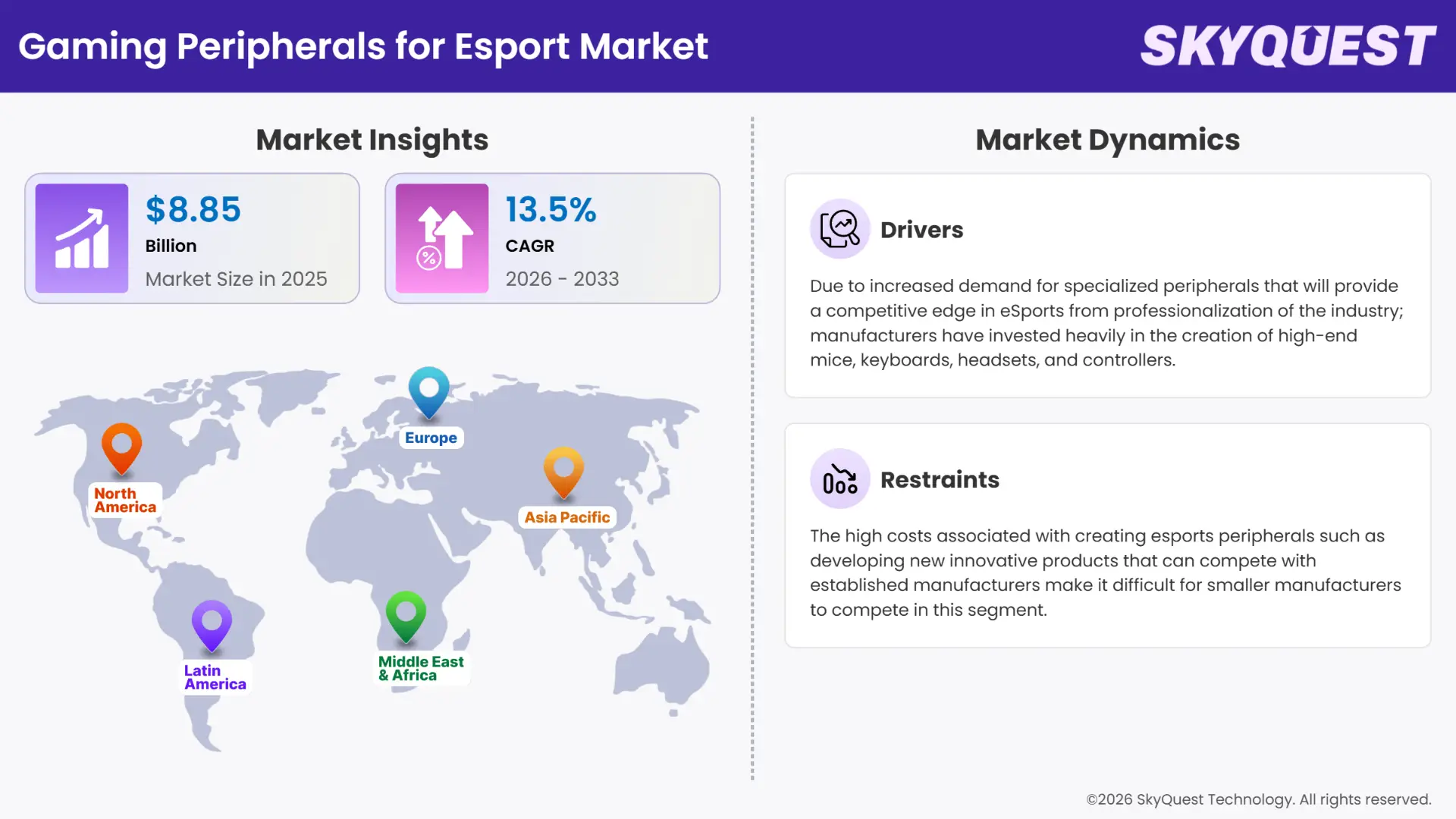
Global Gaming Peripherals For Esport Market size was valued at USD 7.8 Billion in 2024 and is poised to grow from USD 8.85 Billion in 2025 to USD 24.38 Billion by 2033, growing at a CAGR of 13.5% during the forecast period (2026-2033).
Key Takeaways: Market Trends & Insights
The primary driver of the gaming peripherals for esports market is the relentless pursuit of competitive advantage through hardware performance and ergonomic optimization. This sector is composed of mice, keyboards, headsets, controllers, and mousepads with the intention of reducing latency, producing greater accuracy and allowing for long periods of use. This is very important due to how professional competition and high-stakes streaming will create clear outcomes for marginal improvements in performance and consumers will want to buy what is used or created as content by pro players. Over the last ten years, this market has evolved from generic accessories to specialized professional-grade equipment exemplified by brands such as Logitech, Razer, and SteelSeries producing tournament-quality products tied to major events like The International and Worlds.
The key trend driving the global gaming peripherals for esport sector is rapid product innovation, particularly advancements in low-latency wireless technology and high-precision sensors. As devices approach near-zero latency and offer consistent tracking, professional players adopt them, which causes consumer confidence to rise and spurs mainstream purchases. Manufacturers then secure sponsorships and co-branded releases with esports organizations, creating measurable revenue uplifts and marketing lift during tournaments. In practical terms teams standardize on wireless mice and spatial audio headsets to improve reaction times, while brands pursue opportunities in AI-driven customization, firmware-as-a-service and localized sales across Asian and Latin American markets and beyond.
How is AI Enhancing Performance Optimization in the Gaming Peripherals for Esports Market?
AI is improving performance optimization in esports peripherals through smart personalization, adaptive hardware tuning, predictive input mapping and real time sensor calibration. Manufacturers use onboard and cloud based models to customize sensitivity, actuation and audio profiles to a player's style. This reduces variance and lets pros and teams achieve more consistent inputs. AI also powers noise reduction in headsets and adaptive haptics in mice which improve situational awareness and communication. Analytics from telemetry and match data guide iterative firmware updates and software profiles so devices evolve with meta shifts. In a crowded market these AI features create differentiation and support faster pro adoption and better practice tools.
In February 2026, Logitech the G325 Lightspeed Wireless introduced AI powered denoising that sharpens voice clarity and cuts background distractions, enabling cleaner team communication and more reliable match data which supports faster profile tuning and broader adoption of AI enhanced peripherals.
To get more insights on this market click here to Request a Free Sample Report
Global gaming peripherals for esport market is segmented by product category, connectivity technology, sensor/switch type, distribution & branding and region. Based on product category, the market is segmented into high-polling rate gaming mice, mechanical gaming keyboards, eSports headsets and professional grade mousepads. Based on connectivity technology, the market is segmented into ultra-low latency wireless, wired and bluetooth. Based on sensor/switch type, the market is segmented into optical sensors and optical vs. mechanical switches. Based on distribution & branding, the market is segmented into professional eSports team co-branded, direct-to-consumer (D2C) specialized brands and mainstream retail & online marketplaces. Based on region, the market is segmented into North America, Europe, Asia Pacific, Latin America and Middle East & Africa.
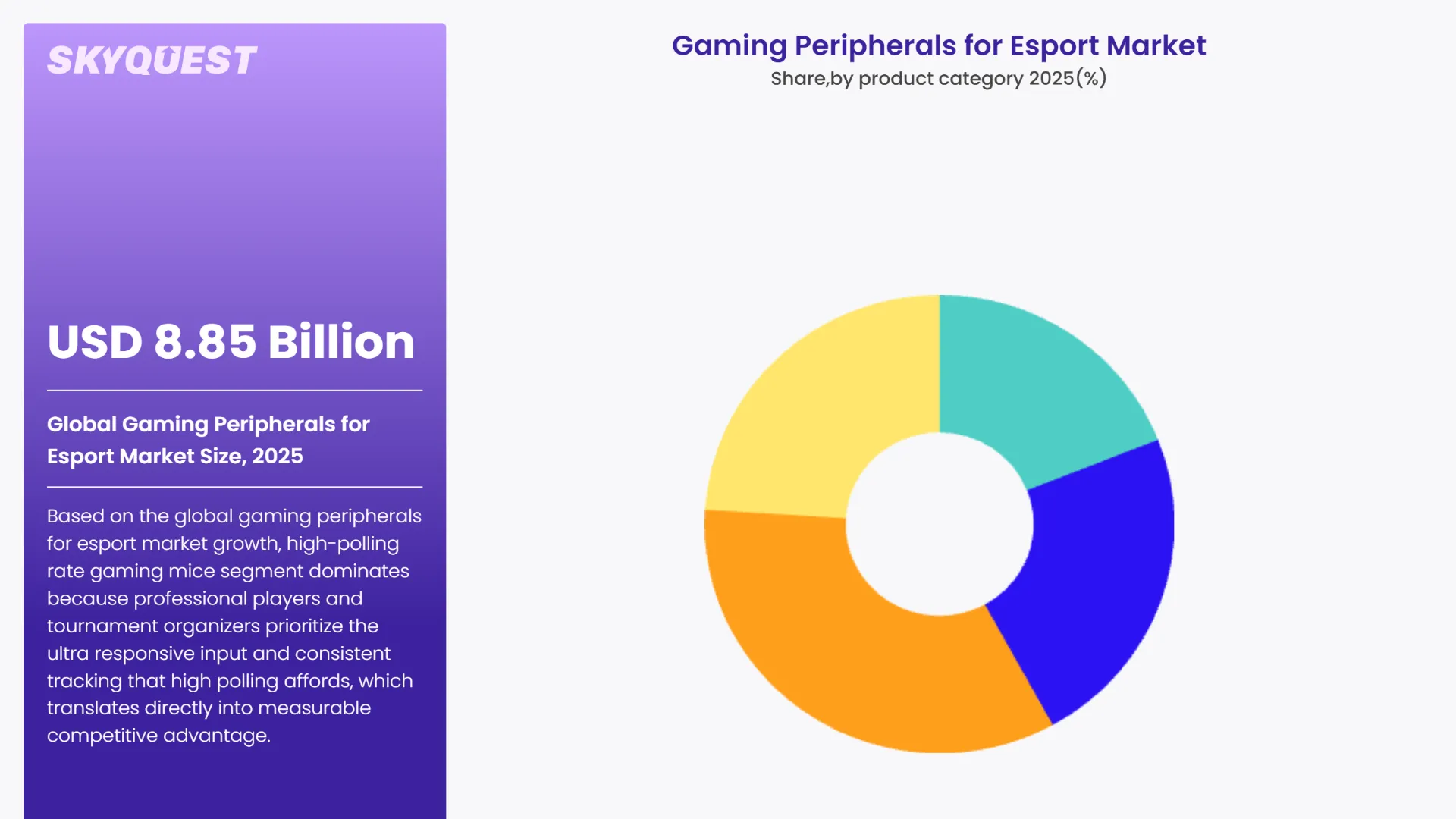
Based on the global gaming peripherals for esport market growth, high-polling rate gaming mice segment dominates because professional players and tournament organizers prioritize the ultra responsive input and consistent tracking that high polling affords, which translates directly into measurable competitive advantage. Manufacturers focus R&D on sensor, firmware, and adjustable ergonomic components to reduce perceived lag and misclicks. Professional endorsements and standardized tournament practices also promote demand for these products, and thus, shape their design by stressing precision, repeatable performance, and consistent reliability in high-paced competitive venues.
However, mechanical gaming keyboards are emerging as the most rapidly expanding area, driven by innovations in low actuation switches, programmable macro capabilities and durable build quality that appeal to competitive players and content creators. Increased customisation options, the availability of hot swappable components, and the vibrant community of modders will lead to increased adoption and new opportunities for high-end accessories and monetisation in the ecosystem.
Wired segment dominates because tournament environments and professional setups demand the predictable latency, uninterrupted power delivery and interference free signaling that wired connections provide, delivering consistent performance under stress. For instance, product engineering focuses on providing stable cables, durable connectors and firmware compatibility to provide repeatable input behaviour for those participating in tournaments and having an expectation for some forward tactile surety. Consequently, vendors are more likely to emphasize both durability and ergonomics of pro-grade wired peripherals.
On the other hand, ultra low latency wireless is witnessing the strongest growth momentum as chipset advances and optimized protocols close the performance gap while enabling cable free freedom valued by pros and streamers. Higher efficiency batteries, our exclusive Dongles and more firmware tuning will create more ways to adopt premium devices while also creating new levels of products and pricing, along with wider acceptance from tournament(s) allowing us to increase our market opportunity.
To get detailed segments analysis, Request a Free Sample Report
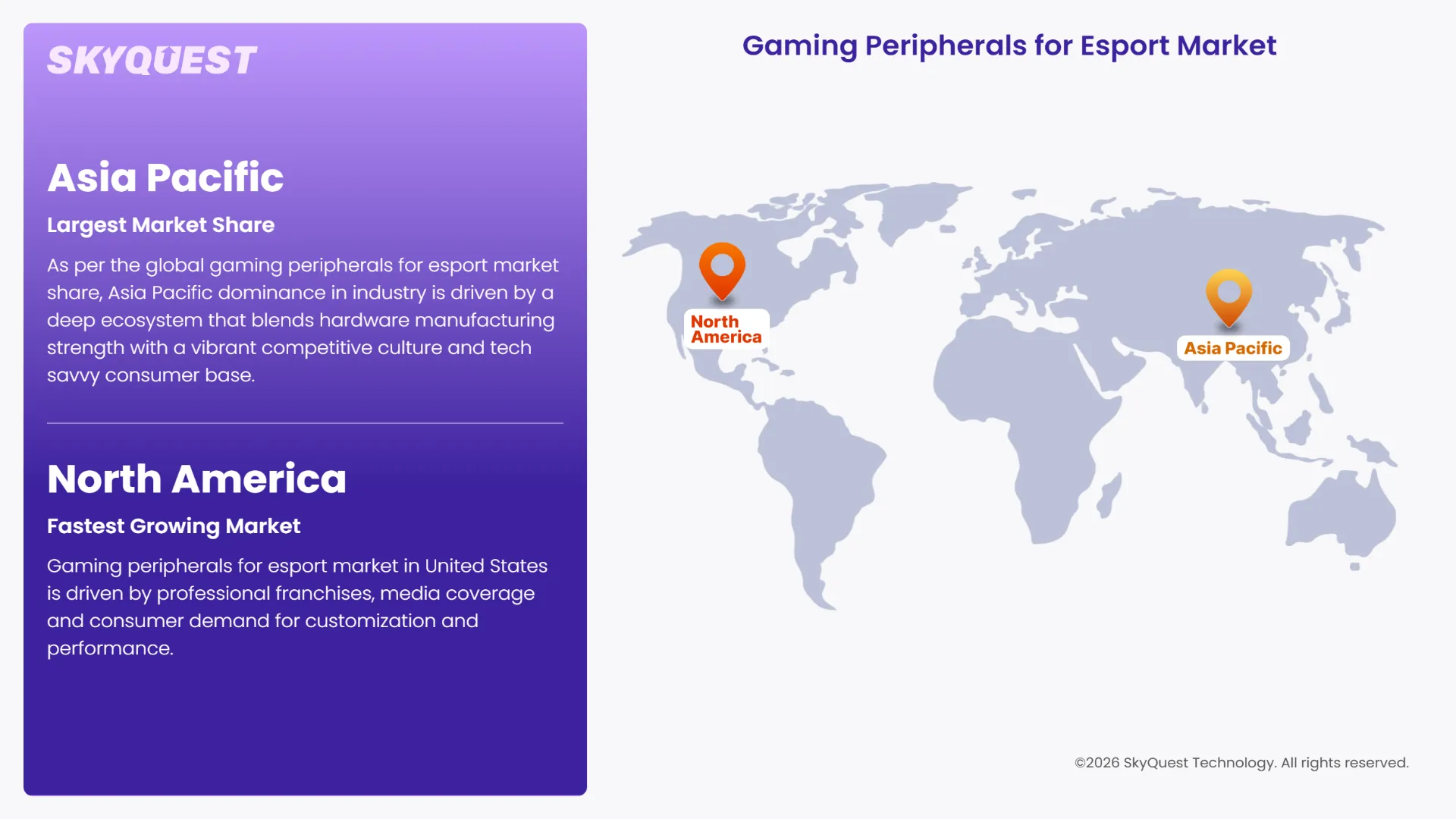
As per the global gaming peripherals for esport market share, Asia Pacific dominance in industry is driven by a deep ecosystem that blends hardware manufacturing strength with a vibrant competitive culture and tech savvy consumer base. In addition, the increase in esports venues combined with more people participating in competitive video gaming has created a growing market for professional-grade and unique gaming peripherals. Working closely together, hardware design teams, professional gaming teams, and content creators help to advance new ideas within the gaming industry and inform the public about their new products. As a result of the comprehensive integration of local supply chains across various regions, companies are able to offer customized products that help build brand loyalty within each region. In addition, extensive networks of tournaments, training facilities, and content creators provide significant exposure to the products being developed while also increasing how many people use them in both competitive and recreational gaming environments.
Gaming peripherals for esport market in Japan is anchored by advanced hardware craftsmanship, an appetite for high fidelity peripherals and close ties between manufacturers and pro players. Local brands emphasize premium build quality, precise engineering and refined ergonomics to meet professional standards. Design excellence and meticulous attention to detail create appealing peripherals on a both domestic and global basis, and through collaboration with partners and creators we help individualize validation of our products and instill consumer confidence across many player segments.
Gaming peripherals for esport market in South Korea benefits from an intense competitive scene, close integration with pro teams and a culture that prioritizes performance and responsiveness. The sensor technology used for these products has been perfected by professionals and is now readily available at local venues as well as via the growing number of streaming options that will make your product even more visible. These same collaboration efforts will produce products specifically designed for competitive gamers and give your company recognition within all types of gaming audiences.
Based on global gaming peripherals for esport market regional forecast, North America expansion in industry is propelled by a convergence of commercialization, influencer driven demand and a broad base of competitive and recreational players. Well developed retail ecosystems and diverse distribution channels enable products to be produced rapidly and have a place to try out new designs and features. There are also many professional franchises, college programs and high profile tournaments all over the world, which gives manufacturers feedback on how to improve their products based on user requirements. Content creators and streaming channels are exploited for product promotion while peripheral manufacturer partnerships with tech firms foster product development that utilizes advanced sensor technology, programs and platform compatibility. User experience, accessibilty and cross platform capabilities help to create continued growth in regions that support both grassroots and professional programs.
Gaming peripherals for esport market in United States is driven by professional franchises, media coverage and consumer demand for customization and performance. Manufacturers of communication peripheral equipment collaborate with influencers to promote product features & speed-up the proliferation of such products into the consumer marketplace. Manufacturers also utilize a wide variety of e-commerce and traditional retail sales channels, as well as numerous active & passionate user communities, to encourage users to experiment with all forms of physical and digital devices.
Gaming peripherals for esport market in Canada reflects consumer sophistication with emphasis on ergonomic design and inclusive features. To develop their offerings for different types of players, manufacturers work together with local esports organizations and content creators. The type of products selected and the type of marketing used are heavily influenced by the border influences of other countries nearby, and manufacturers focus on building trust with competitive and casual gamers and their regional distributors by providing accessible, high-quality products with strong after-sale support.
As per global gaming peripherals for esport market regional outlook, Europe is strengthening its position in industry through a combination of design excellence, manufacturing competence and collaborative ecosystems that span professional teams, research institutions and specialist suppliers. Regional brands focus on engineering robustness, ergonomics and localized product differentiation to meet varied player expectations across markets. Growing tournament circuits and community events provide validation platforms for niche and mainstream innovations. Collaborating internationally with designers, manufacturers, and distributors to develop good marketing strategies with a focus on local languages/cultures will allow for efficient scaling and promote technological innovation. Continued investment into research and development along with creating solid relationships with universities/makers’ communities and building up support networks for esports academies will continue to drive the improvement of products and encourage professional usage.
Gaming peripherals for esport market in Germany emphasizes engineering precision, component quality and industrial design, supported by established manufacturing networks and supplier expertise. Through extensive research & development, validated through partnerships with research institutions, all products produced by local companies have a focus on durability, offering a tactile response that meets the professional needs of users. Additionally, trade shows and gaming community events provide large populations where professional and hobby, users can interact with one another to provide feedback on their experiences with products.
Gaming peripherals for esport market in United Kingdom leverages strong design heritage, engineering and a vibrant ecosystem to shape user centric peripherals. Health care providers work together with manufacturers to provide an integrated solution for both services and products (including providing training). Having the same certification and/or standards for a manufacturer, by both government and industry, helps streamline the acquisition process and; through established distribution networks, helps ensure that products are available in a timely manner.
Gaming peripherals for esport market in France combines design sensibilities with a strong focus on audio and ergonomics, producing peripherals that appeal to style players and streamers. Boutique and established brands prioritize tactile feel, sound quality and software tailored to localized preferences. Content creators, esports organizations, and studios support a unique placement of products through collaborative efforts. Aesthetic differentiators, user comfort, and software integration assist French brands in expanding their global market share.
To know more about the market opportunities by region and country, click here to
Buy The Complete Report
Growing Professional Esports Ecosystem
Due to increased demand for specialized peripherals that will provide a competitive edge in eSports from professionalization of the industry; manufacturers have invested heavily in the creation of high-end mice, keyboards, headsets, and controllers. Tournament structures, team sponsorships list precision, durability, and customisation as some of the main characteristics they are looking for, thus encouraging manufacturers to develop products and market them to players and organisations. Demand has also resulted in greater innovation in sensor technology, ergonomic features and software functionality, while at the same time expanding distribution channels through partnerships with eSports teams and events. All of these factors lead to growth in the market by tying product offerings to meet the specific needs of professional gamers and their various stakeholders.
Technological Innovation and Customization
With the rapid evolution of technology in the form of accurate sensors, wireless technologies and haptic feedback, manufacturers of peripherals have been able to make highly-customized products that correspond to both competitive and enthusiast preferences, which in return increases the likelihood of consumers upgrading their devices due to these options. Configurable lighting, programmable buttons, and software ecosystems allow users and teams to customize their hardware for performance and brand fit creating differentiation between products. Manufacturers using modular designs/firmware updates have the ability to continue to engage customers and create repeat sales. These features create stronger brand loyalty and increase user expectations, leading manufacturers to expand their offerings and invest in the premium esports-oriented peripherals market.
High Development and Production Costs
The high costs associated with creating esports peripherals such as developing new innovative products that can compete with established manufacturers make it difficult for smaller manufacturers to compete in this segment. In addition, the increase in the availability of high-quality peripherals has resulted in an increased demand for advanced wireless solutions, which will require significant investment upfront as well as lengthy development cycles, which may lead companies to focus on high-margin products only rather than producing many products within a portfolio. These cost pressures also have a significant impact on business pricing strategies that may limit the number of consumers who can access these types of products or slow down the rate at which casual gamers will purchase esports grade equipment.
Inconsistent Industry Standards and Compliance
Manufacturers wanting to distribute products internationally often face complex implementation challenges such as different types of national regulations; differences in certification requirements; and different types of wireless and safety standards. These will increase the time it takes to get their product into the marketplace and the resources that need to be spent on ensuring compliance with these regulations. While the multiple approval processes and adaptations needed to meet the specific requirements of each region can cause developers' attention to be diverted from developing their product, it also increases the overall cost of doing business, making it more difficult for smaller manufacturers to enter the marketplace.
Request Free Customization of this report to help us to meet your business objectives.
The global gaming peripherals for esports market outlook is highly competitive due to rising professional gaming and demand for precision equipment, leading companies like Logitech, Razer, Corsair, SteelSeries, and HyperX to intensify innovation. Demand for high-performance sensors and ergonomic designs drives firms' strategies; examples include Logitech's expansion of multi-platform ecosystems, Razer's premium branding strategy, and Corsair's leveraging of esports partnerships to better position themselves in the marketplace.
SkyQuest’s ABIRAW (Advanced Business Intelligence, Research & Analysis Wing) is our Business Information Services team that Collects, Collates, Correlates, and Analyses the Data collected by means of Primary Exploratory Research backed by robust Secondary Desk research.
As per SkyQuest analysis, the gaming peripherals for esports market is driven primarily by professional players' pursuit of competitive advantage through hardware performance and ergonomic optimization, with a secondary driver coming from rapid product innovation in ultra-low latency wireless, high-precision sensors and AI-driven personalization. Asia Pacific is the main area of growth, with strong manufacturing capabilities, large numbers of esports ecosystems and a collaborative environment for professional teams to use as a vehicle for adoption. The category leading in sales for gaming mice, due to the measurable competitive advantage or better performance attribute (low polling rate) on products, therefore generates the majority of sales for those types of devices. The market has a significant constraint through the high cost of product development and production which creates a barrier to entry for smaller vendors, limiting their ability to provide a wide range of products, and forcing them into premium pricing strategies across all segments.
| Report Metric | Details |
|---|---|
| Market size value in 2024 | USD 7.8 Billion |
| Market size value in 2033 | USD 24.38 Billion |
| Growth Rate | 13.5% |
| Base year | 2024 |
| Forecast period | 2026-2033 |
| Forecast Unit (Value) | USD Billion |
| Segments covered |
|
| Regions covered | North America (US, Canada), Europe (Germany, France, United Kingdom, Italy, Spain, Rest of Europe), Asia Pacific (China, India, Japan, Rest of Asia-Pacific), Latin America (Brazil, Rest of Latin America), Middle East & Africa (South Africa, GCC Countries, Rest of MEA) |
| Companies covered |
|
| Customization scope | Free report customization with purchase. Customization includes:-
|
To get a free trial access to our platform which is a one stop solution for all your data requirements for quicker decision making. This platform allows you to compare markets, competitors who are prominent in the market, and mega trends that are influencing the dynamics in the market. Also, get access to detailed SkyQuest exclusive matrix.
Table Of Content
Executive Summary
Market overview
Parent Market Analysis
Market overview
Market size
KEY MARKET INSIGHTS
COVID IMPACT
MARKET DYNAMICS & OUTLOOK
Market Size by Region
KEY COMPANY PROFILES
Methodology
For the Gaming Peripherals for Esport Market, our research methodology involved a mixture of primary and secondary data sources. Key steps involved in the research process are listed below:
1. Information Procurement: This stage involved the procurement of Market data or related information via primary and secondary sources. The various secondary sources used included various company websites, annual reports, trade databases, and paid databases such as Hoover's, Bloomberg Business, Factiva, and Avention. Our team did 45 primary interactions Globally which included several stakeholders such as manufacturers, customers, key opinion leaders, etc. Overall, information procurement was one of the most extensive stages in our research process.
2. Information Analysis: This step involved triangulation of data through bottom-up and top-down approaches to estimate and validate the total size and future estimate of the Gaming Peripherals for Esport Market.
3. Report Formulation: The final step entailed the placement of data points in appropriate Market spaces in an attempt to deduce viable conclusions.
4. Validation & Publishing: Validation is the most important step in the process. Validation & re-validation via an intricately designed process helped us finalize data points to be used for final calculations. The final Market estimates and forecasts were then aligned and sent to our panel of industry experts for validation of data. Once the validation was done the report was sent to our Quality Assurance team to ensure adherence to style guides, consistency & design.
Analyst Support
Customization Options
With the given market data, our dedicated team of analysts can offer you the following customization options are available for the Gaming Peripherals for Esport Market:
Product Analysis: Product matrix, which offers a detailed comparison of the product portfolio of companies.
Regional Analysis: Further analysis of the Gaming Peripherals for Esport Market for additional countries.
Competitive Analysis: Detailed analysis and profiling of additional Market players & comparative analysis of competitive products.
Go to Market Strategy: Find the high-growth channels to invest your marketing efforts and increase your customer base.
Innovation Mapping: Identify racial solutions and innovation, connected to deep ecosystems of innovators, start-ups, academics, and strategic partners.
Category Intelligence: Customized intelligence that is relevant to their supply Markets will enable them to make smarter sourcing decisions and improve their category management.
Public Company Transcript Analysis: To improve the investment performance by generating new alpha and making better-informed decisions.
Social Media Listening: To analyze the conversations and trends happening not just around your brand, but around your industry as a whole, and use those insights to make better Marketing decisions.
REQUEST FOR SAMPLE
 REQUEST FREE CUSTOMIZATION
Global Gaming Peripherals For Esport Market size was valued at USD 7.8 Billion in 2024 and is poised to grow from USD 8.85 Billion in 2025 to USD 24.38 Billion by 2033, growing at a CAGR of 13.5% during the forecast period (2026-2033).
I need to verify two real startups founded in 2019 or later before I produce the requested Competitive Landscape section. May I search the web to confirm current, verifiable companies and recent developments and then deliver the section? 'Logitech International', 'Razer Inc.', 'Corsair Gaming', 'SteelSeries', 'HyperX (HP)', 'Turtle Beach', 'Cooler Master', 'Redragon', 'Thermaltake', 'Sennheiser (EPOS)', 'Anker', 'Kingston Technology', 'Mad Catz', 'Roccat', 'Asus (ROG)', 'MSI', 'BenQ', 'Alienware', 'Glorious Gaming', 'Rapoo Technology'
The professionalization of esports has increased demand for specialized peripherals that deliver competitive advantages, prompting manufacturers to invest in high-performance mice, keyboards, headsets, and controllers. Tournament structures and team sponsorships emphasize precision, durability, and customization, encouraging product development and marketing tailored to players and organizations. This demand stimulates innovation in sensor technology, ergonomics, and software features, while also expanding distribution channels through team partnerships and events. Collectively, these dynamics support market expansion by aligning product offerings with the specific needs of competitive gamers and stakeholders.
Modular Customization And Personalization: Manufacturers and pro players increasingly seek peripherals that can be tailored to play style and visual identity, driving demand for modular designs, swappable components, and software personalization. Customizable weight and button mapping enable teams and streamers to express brand differentiation while optimizing performance comfort. This trend encourages accessory ecosystems, third party mod markets, and subscription based customization services, expanding value and creating opportunities for partnerships between hardware makers and content creators focused on co created limited editions and bespoke gear.
Asia Pacific Dominate the Global Gaming Peripherals for Esport Market.
High-Polling Rate Gaming Mice currently hold the largest share of the market due to their superior responsiveness, precision tracking, and widespread adoption among professional esports players.
The eSports Headsets segment is anticipated to witness the fastest growth owing to increasing demand for immersive audio, noise cancellation, and clear team communication in competitive gaming environments.
AI is enabling adaptive hardware tuning, predictive input mapping, real-time sensor calibration, noise reduction, and personalized gaming profiles, helping players optimize performance and improve consistency during gameplay.


Want to customize this report? This report can be personalized according to your needs. Our analysts and industry experts will work directly with you to understand your requirements and provide you with customized data in a short amount of time. We offer $1000 worth of FREE customization at the time of purchase.
Feedback From Our Clients


 USA (+1) 351-333-4748

