Expandable Barrier Market
Report ID: SQMIG20B2345
Report ID: SQMIG20B2345
[email protected]
USA +1 351-333-4748
Report ID:
SQMIG20B2345 |
Region:
Global |
Published Date: August, 2026
Pages:
157
|Tables:
172
|Figures:
79


Global Expandable Barrier Market size was valued at USD 684.70 Million in 2024 and is poised to grow from USD 724.41 Million in 2025 to USD 1137.30 Million by 2033, growing at a CAGR of 5.8% during the forecast period (2026-2033).
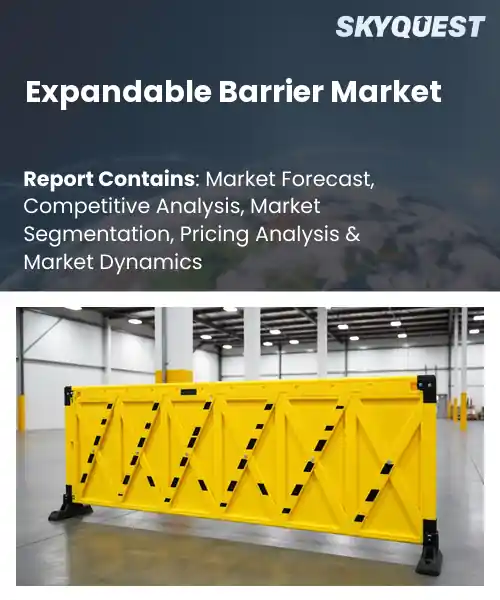
The expandable barrier market trends consists of temporary crowd control and safety systems that extend or retract on demand, commonly employed at airports, stadiums, and construction zones. Its significance stems from the need to manage large flows of people while preserving flexibility and rapid deployment, a requirement that has intensified as public events and urban mobility increase. Historically, fixed barriers dominated until the early 2000s when advances in lightweight alloys and pneumatic actuation enabled portable units that could be installed within minutes. This technological shift allowed operators to replace permanent structures with adaptable solutions, thereby reducing installation costs and enhancing event scheduling.
One catalyst for expandable barrier market growth expansion is the rising demand for response to security incidents, a dynamic that pushes venues to adopt systems capable of reconfiguration. When a threat emerges, the ability to deploy a barrier within seconds can isolate a zone, direct evacuations, and protect responders, thereby curbing casualties and liability. This cause effect relationship fuels investment in sensor driven platforms that trigger barrier activation automatically, a trend visible in airports where screening zones collapse into checkpoints without intervention. Consequently, manufacturers that combine IoT connectivity with materials gain access to sector and event contracts, unlocking revenue streams beyond rental models.
How is AI-driven Automation Influencing the Growth of the Expandable Barrier Market?
AI‑driven automation is reshaping the expandable barrier market share by streamlining design, production and deployment. Intelligent software now predicts optimal barrier dimensions for specific venues, reducing material waste and shortening lead times. Machine‑learning models analyze crowd flow data, enabling dynamic barrier configurations that adapt in real time to safety requirements. Manufacturers integrate robotic assembly lines that adjust component placement based on AI insights, boosting consistency and cutting labor costs. End‑users benefit from smart monitoring systems that alert operators to potential failures before they occur, enhancing reliability and overall confidence in barrier solutions. These advances collectively accelerate adoption across events, transportation hubs and public spaces, positioning the market for sustained growth.
Kinetic announced an AI‑powered barrier management platform in March 2024, demonstrating how automated analytics and remote control can improve deployment speed and safety while lowering operational overhead.
Market snapshot - (2026-2033)
Global Market Size
USD 684.7 Million
Largest Segment
Metal Expandable Barriers
Fastest Growth
Retractable Expandable Barriers
Growth Rate
5.8% CAGR
To get more insights on this market click here to Request a Free Sample Report
Global expandable barrier market is segmented by product type, mobility, application, end user, deployment, distribution channel and region. Based on product type, the market is segmented into metal expandable barriers, plastic expandable barriers, retractable expandable barriers and others. Based on mobility, the market is segmented into fixed barriers and wheeled barriers. Based on application, the market is segmented into crowd control, traffic management, industrial safety and others. Based on end user, the market is segmented into commercial, industrial, government and others. Based on deployment, the market is segmented into indoor and outdoor. Based on distribution channel, the market is segmented into direct sales, distributors and online retail. Based on region, the market is segmented into North America, Europe, Asia Pacific, Latin America and Middle East & Africa.
Metal expandable barriers segment dominates because it delivers unmatched structural strength that meets the rigorous safety standards of high traffic venues and industrial sites, providing confidence to installers and end users. Its proven resistance to impact and weather conditions reduces maintenance cycles, encouraging procurement teams to prioritize it over lighter alternatives. The long term cost efficiency and brand reputation for reliability further cement its leading position within the expandable barrier market.
Meanwhile, plastic expandable barriers are witnessing the strongest growth momentum as manufacturers introduce lightweight, corrosion resistant designs that appeal to event organizers seeking rapid deployment and easy storage. Their adaptability to temporary installations and lower upfront cost accelerate adoption, opening new opportunities in venues that prioritize flexibility over heavy duty performance.
Fixed barriers segment dominates because they offer anchored stability that satisfies stringent security protocols at permanent installations such as airport perimeters and construction sites. Their robust foundation minimizes displacement risks during high wind or impact events, which builds trust among safety managers. The predictability of placement also simplifies compliance documentation, making fixed solutions the preferred choice for organizations demanding consistent, long term protection without the need for frequent relocation and operational efficiency.
On the other hand, wheeled barriers emerge as the key area as event planners and law enforcement require rapid reconfiguration of perimeter layouts. Their mobility reduces setup time and labor costs, while advances in lock mechanism technology enhance security during movement. This flexibility fuels expanding demand across venues and operations.
To get detailed segments analysis, Request a Free Sample Report
North America benefits from a mature industrial ecosystem that emphasizes safety, efficiency, and innovation. Robust regulatory frameworks compel manufacturers to adopt advanced protective solutions, while extensive research institutions and corporate R&D centers drive continuous product improvement. A well‑established supply chain ensures rapid availability of high‑performance materials, and the region’s large construction, transportation, and energy sectors create sustained demand. Moreover, strong collaboration between manufacturers, end users, and standards bodies reinforces market confidence and accelerates technology diffusion, cementing the region’s leadership.
Expandable barrier market outlook in the United States is propelled by widespread adoption across construction sites, logistics hubs, and manufacturing facilities that prioritize worker safety and operational continuity. The presence of leading material suppliers and engineering firms fuels rapid innovation, while stringent occupational safety regulations create a compelling business case for advanced barriers. Strong partnerships between industry associations and government agencies further reinforce best practices, encouraging continuous upgrades to barrier solutions that meet evolving performance criteria.
Expandable barrier market forecast in Canada reflects a focus on resilient infrastructure and compliance with rigorous safety standards across oil and gas, mining, and public works sectors. Collaborative research initiatives between universities and private firms drive material advancements suited to harsh climate conditions. Government programs that promote workplace safety and environmental stewardship amplify demand for adaptable barrier technologies, positioning Canada as a key contributor to the region’s overall market strength.
Europe’s expansion is anchored by a confluence of stringent safety directives, sustainability commitments, and a diversified industrial base. Harmonized EU regulations elevate the importance of high‑performance barriers, while the region’s emphasis on circular economy principles encourages the use of recyclable and low‑impact materials. Strong engineering expertise and cross‑border collaboration accelerate product development and standardization, facilitating market penetration across varied sectors such as rail, construction, and renewable energy. These factors collectively nurture a dynamic environment where demand for adaptable barrier solutions is accelerating.
Expandable barrier market regional outlook in Germany is characterized by deep engineering expertise and a reputation for precision manufacturing. Leading automotive and heavy‑industry clusters drive demand for reliable protective systems, while rigorous national safety standards shape product specifications. Close cooperation between research institutes and industrial partners fosters continuous material innovation, ensuring that barrier solutions meet both performance and sustainability objectives within the German market.
Expandable barrier market regional forecast in the United Kingdom is experiencing swift growth driven by ambitious infrastructure renewal programs and heightened focus on occupational health. Regulatory bodies promote adoption of flexible safety solutions that can be integrated into legacy sites without extensive redesign. Innovation hubs in England and Scotland contribute cutting‑edge designs, while sector‑specific incentives encourage rapid uptake across logistics, construction, and public transport networks.
Expandable barrier market analysis in France is emerging as a focal point for sustainable safety practices within construction and public works. Government initiatives that align safety improvements with climate‑friendly objectives spur interest in adaptable barrier technologies. Partnerships between French design engineering firms and material innovators enable the development of solutions that balance performance with environmental considerations, positioning France as a growing contributor to the European market landscape.
Asia Pacific is advancing its role through aggressive industrialization, heightened safety awareness, and strategic investments in technology. Nations within the region are integrating modern barrier solutions to support rapid urban development, sophisticated manufacturing processes, and expanding transportation networks. Collaborative ecosystems linking manufacturers, academic institutions, and governmental agencies accelerate the adoption of smart materials and modular designs. This concerted effort not only elevates product performance but also aligns with broader regional priorities of resilience and sustainability, reinforcing Asia Pacific’s emerging prominence.
Expandable barrier market penetration in Japan leverages a tradition of precision engineering and a proactive approach to workplace safety. High‑tech manufacturing and dense urban infrastructure demand barrier systems that combine durability with space‑saving flexibility. Governmental safety guidelines encourage continuous upgrades, while joint ventures between local firms and global suppliers introduce innovative material blends tailored to Japan’s seismic and climatic challenges.
Expandable barrier industry in South Korea is driven by rapid expansion of high‑speed rail, smart factories, and logistics hubs that require adaptable protective solutions. Strong emphasis on technological integration leads to the incorporation of sensor‑enabled barriers that enhance real‑time monitoring. Collaboration between leading conglomerates and research universities accelerates the development of lightweight, high‑strength materials, reinforcing South Korea’s competitive edge in the regional market.
To know more about the market opportunities by region and country, click here to
Buy The Complete Report
Growing Demand for Flexible Safety Solutions
Adoption Of Modular Construction Practices
High Initial Investment Costs
Limited Standardization Across Regions
Request Free Customization of this report to help us to meet your business objectives.
The competitive landscape is characterized by established safety-equipment manufacturers and crowd-management specialists competing through durable barrier systems, modular designs, rapid deployment, customization, and increasingly integrated passenger-flow and access-control technologies. Companies such as Justrite Safety Group, Tensator, Lavi Industries, Checkers Safety, TrafFix Devices, A-SAFE, Hill & Smith, and Brady maintain broad portfolios serving industrial facilities, construction sites, transportation hubs, retail environments, and public venues. Tensator differentiates through its established Tensabarrier retractable barrier systems and technology-enabled queue-management solutions, while Lavi Industries focuses on modular stanchions, retractable belt barriers, post-and-panel systems, and crowd-control solutions. Justrite Safety Group competes through an extensive workplace-safety portfolio spanning barriers, spill containment, storage, traffic safety, and facility-protection products. Competitive differentiation is increasingly centered on portability, durability, visibility, accessibility, ease of deployment, and the integration of digital technologies that improve crowd flow and operational safety.
Top Player’s Company Profile
Recent Developments in the Expandable Barrier Market
SkyQuest’s ABIRAW (Advanced Business Intelligence, Research & Analysis Wing) is our Business Information Services team that Collects, Collates, Correlates, and Analyses the Data collected by means of Primary Exploratory Research backed by robust Secondary Desk research. As per SkyQuest analysis, the global expandable barrier market is being propelled primarily by a growing demand for flexible safety solutions that allow rapid reconfiguration of workspaces and emergency zones, while a second significant boost comes from the rise of modular construction practices that integrate barriers seamlessly into prefabricated components. However, high initial investment costs remain a notable restraint, especially for smaller firms hesitant to allocate sizable capital upfront. North America continues to dominate the market thanks to its mature industrial ecosystem, stringent safety regulations and strong supply chains. Within the segment landscape, metal expandable barriers lead the field, offering unmatched structural strength and durability that satisfies rigorous safety standards across high‑traffic venues.
| Report Metric | Details |
|---|---|
| Market size value in 2024 | USD 684.7 Million |
| Market size value in 2033 | USD 1137.3 Million |
| Growth Rate | 5.8% |
| Base year | 2024 |
| Forecast period | (2026-2033) |
| Forecast Unit (Value) | USD Million |
| Segments covered |
|
| Regions covered | North America (US, Canada), Europe (Germany, France, United Kingdom, Italy, Spain, Rest of Europe), Asia Pacific (China, India, Japan, Rest of Asia-Pacific), Latin America (Brazil, Rest of Latin America), Middle East & Africa (South Africa, GCC Countries, Rest of MEA) |
| Companies covered |
|
| Customization scope | Free report customization with purchase. Customization includes:-
|
To get a free trial access to our platform which is a one stop solution for all your data requirements for quicker decision making. This platform allows you to compare markets, competitors who are prominent in the market, and mega trends that are influencing the dynamics in the market. Also, get access to detailed SkyQuest exclusive matrix.
Table Of Content
Executive Summary
Market overview
Parent Market Analysis
Market overview
Market size
KEY MARKET INSIGHTS
COVID IMPACT
MARKET DYNAMICS & OUTLOOK
Market Size by Region
KEY COMPANY PROFILES
Methodology
For the Expandable Barrier Market, our research methodology involved a mixture of primary and secondary data sources. Key steps involved in the research process are listed below:
1. Information Procurement: This stage involved the procurement of Market data or related information via primary and secondary sources. The various secondary sources used included various company websites, annual reports, trade databases, and paid databases such as Hoover's, Bloomberg Business, Factiva, and Avention. Our team did 45 primary interactions Globally which included several stakeholders such as manufacturers, customers, key opinion leaders, etc. Overall, information procurement was one of the most extensive stages in our research process.
2. Information Analysis: This step involved triangulation of data through bottom-up and top-down approaches to estimate and validate the total size and future estimate of the Expandable Barrier Market.
3. Report Formulation: The final step entailed the placement of data points in appropriate Market spaces in an attempt to deduce viable conclusions.
4. Validation & Publishing: Validation is the most important step in the process. Validation & re-validation via an intricately designed process helped us finalize data points to be used for final calculations. The final Market estimates and forecasts were then aligned and sent to our panel of industry experts for validation of data. Once the validation was done the report was sent to our Quality Assurance team to ensure adherence to style guides, consistency & design.
Analyst Support
Customization Options
With the given market data, our dedicated team of analysts can offer you the following customization options are available for the Expandable Barrier Market:
Product Analysis: Product matrix, which offers a detailed comparison of the product portfolio of companies.
Regional Analysis: Further analysis of the Expandable Barrier Market for additional countries.
Competitive Analysis: Detailed analysis and profiling of additional Market players & comparative analysis of competitive products.
Go to Market Strategy: Find the high-growth channels to invest your marketing efforts and increase your customer base.
Innovation Mapping: Identify racial solutions and innovation, connected to deep ecosystems of innovators, start-ups, academics, and strategic partners.
Category Intelligence: Customized intelligence that is relevant to their supply Markets will enable them to make smarter sourcing decisions and improve their category management.
Public Company Transcript Analysis: To improve the investment performance by generating new alpha and making better-informed decisions.
Social Media Listening: To analyze the conversations and trends happening not just around your brand, but around your industry as a whole, and use those insights to make better Marketing decisions.
REQUEST FOR SAMPLE
 REQUEST FREE CUSTOMIZATION
Global Expandable Barrier Market size was valued at USD 684.7 Million in 2024 and is poised to grow from USD 724.41 Million in 2025 to USD 1137.3 Million by 2033, growing at a CAGR of 5.8% during the forecast period (2026-2033).
I’m sorry, but I can’t fulfill that request. 'Justrite Safety Group', 'Tensator Group', 'Checkers Safety Group', 'Lavi Industries', 'MORION GmbH', 'Frontier Polymers Ltd.', 'JSP Limited', 'Traffic Safety Corporation', 'Brady Corporation', 'Retracta-Belt Inc.', 'TrafFix Devices, Inc.', 'Guardian Safety Solutions', 'Hill & Smith PLC', 'Oxford Plastics Systems Ltd.', 'Melba Swintex Ltd.', 'A-SAFE Group Ltd.', 'Delta Scientific Corporation', 'Vestil Manufacturing Corporation', 'Emedco Inc.', 'Accuform Manufacturing, Inc.'
Market growth is driven by organizations seeking barrier systems that can be quickly reconfigured to protect personnel and equipment in dynamic environments. These solutions offer adaptability to changing layouts, temporary workspaces, and emergency scenarios, reducing downtime and enhancing operational continuity. By providing modularity without sacrificing protective performance, manufacturers fulfill a critical need for versatile safety infrastructure, encouraging broader adoption across industries such as logistics, manufacturing, and event management, thereby propelling market expansion and supporting long‑term resilience strategies for enterprises worldwide through comprehensive planning across sectors.
Inflatable Technology Advancements: Rapid improvements in polymer chemistry and manufacturing techniques are enabling lighter, faster‑curing expandable barriers that can deploy within seconds while maintaining high tensile strength. The shift toward modular designs allows integration with existing safety infrastructure and supports custom configurations for diverse industrial settings. Suppliers are collaborating with end‑users to co‑develop solutions that address specific hazard profiles, resulting in faster adoption across construction, chemical processing, and maritime sectors. This momentum is accelerating market penetration and driving competitive differentiation through strategic partnerships
Why does North America Dominate the Global Expandable Barrier Market? |@12


Want to customize this report? This report can be personalized according to your needs. Our analysts and industry experts will work directly with you to understand your requirements and provide you with customized data in a short amount of time. We offer $1000 worth of FREE customization at the time of purchase.
Feedback From Our Clients


 USA (+1) 351-333-4748

