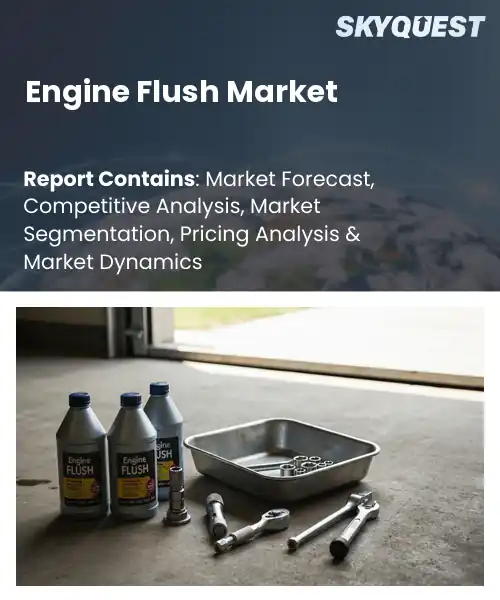
Engine Flush Market
Report ID: SQMIG15E3902
Report ID: SQMIG15E3902
[email protected]
USA +1 351-333-4748
Report ID:
SQMIG15E3902 |
Region:
Global |
Published Date: July, 2026
Pages:
157
|Tables:
144
|Figures:
78


Global Engine Flush Market size was valued at USD 1.58 Billion in 2024 and is poised to grow from USD 1.66 Billion in 2025 to USD 2.42 Billion by 2033, growing at a CAGR of 4.8% during the forecast period (2026-2033).
Engine flush products are chemical solutions that dissolve sludge, carbon deposits, and contaminant build‑up inside internal combustion engines, restoring lubrication efficiency and extending component life. The market appeared in the early 2000s when automotive owners sought alternatives to costly engine rebuilds, and it expanded as major aftermarket brands introduced kits sold through automotive retailers. Growing vehicle mileage and the spread of powerful engines heightened the need to keep oil passages clear, encouraging service centers to add flush steps to routine oil changes. As a result, the sector shifted from niche specialty shops to a distributed industry worth hundred million dollars.
Stringent emissions standards represent a catalyst for market expansion, because regulators require manufacturers to maintain low particulate and hydrocarbon outputs throughout a vehicle’s life cycle. When sludge accumulates, oil viscosity rises and combustion efficiency drops, increasing tailpipe pollutants; applying an engine flush restores optimal oil flow, thereby helping engines meet legal limits without costly component replacement. Services have begun providing flush services in combination with oil changes, increasing income for service stations, and providing car owners with the benefit of compliance. The simultaneous rise of online car parts dealers is making these products more accessible to do‑it‑yourselfers, resulting in even higher demand for flushes worldwide.
How is AI-driven Automation Reshaping the Engine Flush Market?
AI driven automation is turning the engine flush market into a data‑rich, highly efficient sector. Sensors now capture real‑time engine conditions and feed the information to machine learning models that predict the optimal timing for a flush. Such predictive methods have the potential to decrease unnecessary treatments, reduce the use of chemicals, and prolong the lifespan of engines. Integrated systems create a connection between flushing programs and fleet management systems which helps operators strategically organize maintenance without putting operations in a standby mode. Furthermore, such technology allows both remote monitoring so the servicing crew can adjust formulations during operation and timely respond to the new troubles than they arise, introducing a more flexible and sustainable servicing model.
In Aril 2025, ExxonMobil introduced an AI-powered lubricant condition monitoring platform that uses machine learning and predictive analytics to assess oil health, detect contamination, and recommend optimal maintenance intervals. The technology supports engine flush planning by identifying deposit buildup early, helping fleets reduce downtime, improve engine performance, and extend lubricant life.
Market snapshot - (2026-2033)
Global Market Size
USD 1.58 Billion
Largest Segment
Diesel Engines
Fastest Growth
Petrol Engines
Growth Rate
4.8% CAGR
To get more insights on this market click here to Request a Free Sample Report
Global engine flush market is segmented by engine type, engine oil type, packaging size, end use, distribution channel and region. Based on engine type, the market is segmented into petrol engines and diesel engines. Based on engine oil type, the market is segmented into fully synthetic oil, semi-synthetic oil and mineral oil. Based on packaging size, the market is segmented into small (up to 500 ml), medium (500 ml – 1 litre) and large (above 1 litre). Based on end use, the market is segmented into automotive, industrial equipment and marine. Based on distribution channel, the market is segmented into OEM & authorized workshops, retail, online retail and direct sales. Based on region, the market is segmented into North America, Europe, Asia Pacific, Latin America and Middle East & Africa.
Diesel engines segment leads because they generate higher soot and deposit levels, prompting frequent cleaning to maintain performance and emissions compliance. Diesel powertrains are known for their high torque requirements that contribute to the wear of internal parts used in them and require flushing on a regular basis. Furthermore, stringent emission regulations for diesel vehicles urge service stations to promote the usage of flushing products, keeping the segment active in the market. The extended periods between service for diesel fleets also provide hotels with specific maintenance intervals at which the flushing process can be integrated.
Meanwhile, petrol engines segment is witnessing the strongest growth momentum as manufacturers adopt turbocharged gasoline units to improve fuel efficiency. With the advancement in direct injection technology in these engines, the tendency of deposits formation is increasing, making users frequently adopt flush solutions. This growing importance of gasoline powertrains enhances the addressable market and opens doors for growth in the future.
Marine equipment segment stands out because saltwater exposure accelerates corrosion and sludge buildup, making routine flushing a critical maintenance practice. There is a strong demand due to the pressure exerted on the operators of the vessels and the authorities regarding the longevity of the engines. Their intention is to avoid expensive interruptions in work and to comply with the regulatory institutions’ requirements. In its turn, there is strong demand regarding the specific solutions for flushing technology that meets marine engine specifications in the market this segment has a great influence on market activities. The vessels which operate for long hours should be maintained, serviced, and flushed.
On the other hand, automotive segment emerges as the fastest growing area as consumer vehicles shift toward higher mileage usage and tighter emission standards. The proliferation of gasoline and diesel cars equipped with advanced engine technologies increases the need for periodic cleaning to sustain efficiency. This surge in passenger vehicle service activity expands the addressable customer base and propels market growth.
To get detailed segments analysis, Request a Free Sample Report
North America retains a clear advantage in the industry due to a mature automotive ecosystem, extensive distribution networks, and strong alignment between original equipment manufacturers and aftermarket service providers. High consumer awareness of the advantages of vehicle maintenance presents the need for regular adoption of cleaning solutions, accompanied by strong regulations promoting emission control and fuel efficiency as well as the use of products removing deposits and enhancing performance. The presence of several renowned chemical manufacturers with solid R&D background contributes to the advance in product innovations. All of this leads to the establishment of a strong demand, the reinforcement of the leadership position in the market, and the promotion of investment in innovative formulations in the U.S. and Canada.
Engine Flush Market in the United States benefits from a large fleet of passenger and commercial vehicles that undergo frequent maintenance cycles. High consumer confidence in performance‑enhancing chemicals drives retailer adoption, while service‑center networks promote routine usage. The market is also reinforced by strong technical expertise among distributors, enabling tailored solutions for diverse engine types and supporting a culture of preventive care that sustains product demand.
Engine flush market in Canada is shaped by a well‑organized service‑center landscape and a growing emphasis on vehicle longevity in colder climates. In an effort to reduce wear and improve fuel efficiency, operators are putting a premium on removing deposits, which is boosting demand for cleaning products. Successful partnerships between chemical suppliers and independent garages also ensure that products are available, and consumer education programs help create the perception that cleaning the engine is worthwhile, giving rise to a solid market foundation.
Europe experiences rapid expansion of the industry as regulators tighten emissions standards and manufacturers seek cost‑effective ways to meet them. The desire among consumers for vehicles to work well and require little maintenance motivates the implementation of cleaning solutions. A large number of service providers handling clients after purchases throughout Europe enables easy distribution of products available in the market, while great scientific research universities develop new environmentally-safe methods. The strict regulations, effective supply chains, and modern consumers enable Europe to be a starting point for development of engine-cleaning technologies.
Engine flush market in Germany is characterized by a dominant position driven by a highly engineered automotive sector and rigorous maintenance culture. Manufacturers in the local market stress importance of precision and reliability which leads to the need for formulations that can keep the engines in good condition. The collaboration between chemical manufacturers and service workshops on the development of the best products fulfilling German engine specifications leads to the production of premium quality products.
Engine flush market in the United Kingdom is the fastest growing segment, propelled by increasing awareness of fuel efficiency and emission reduction among drivers. A dynamic network of standalone garages and chain service outlets advocates the idea of frequent engine cleaning. Business players are taking full advantage of online promotion and assurances to make customers aware of its benefits. The UK’s forward-thinking strategy in vehicle maintenance is contributing to the rising demand for innovative cleaning solutions in the industry.
Engine flush market in France is emerging as a niche driven by heightened environmental consciousness and government incentives for cleaner transportation. The French motorists have started recognizing benefits of removing the deposits to prolong the use of vehicle engines and reduce fuel consumption. Service firms are bringing this flushing service into their maintenance packages while local distributors are stressing the importance of complying with the European environmental regulations.
Asia Pacific is strengthening its role in the industry through a blend of expanding vehicle ownership, rising consumer sophistication, and localized product development. An increase in the number of people belonging to the middle class has led to efforts aimed at maintaining vehicles in good condition, increasing requirements for various chemical products that can improve car performance. Nonetheless, local production facilities modify their compositions in accordance with the types of climate and fuel. Collaboration with service chains makes the introduction to the market easier.
Engine flush market in Japan benefits from a tradition of meticulous vehicle upkeep and a high proportion of technologically advanced engines. Japanese service centers emphasize precision cleaning for maintaining the best possible working efficiency while creating a constant need for specialized formulations. Local chemical manufacturers work in close conjunction with car manufacturers to create products that meet critical quality standards, thus promoting a preventive maintenance culture in this industry.
Engine flush market in South Korea is driven by a rapidly modernizing automotive fleet and a consumer base that values efficiency and reliability. In Korea, the practice of engine cleaning is included in the regular service schedules of workshops, thanks to well-established distribution channels that guarantee easy access to the products. Local manufacturers focus on providing innovative low-odor products that fulfill both performance requirements and regulatory regulations, thus facilitating the rise of engine cleaning practices in the market.
To know more about the market opportunities by region and country, click here to
Buy The Complete Report
Rising Demand For Cleaner Engines
Stringent Emission Regulations Worldwide
High Cost Of Specialized Fluids
Limited Awareness Among Small Workshops
Request Free Customization of this report to help us to meet your business objectives.
The competitive landscape of the global engine flush market is shaped by intense rivalry among established fluid manufacturers and emerging specialty chemical firms, each leveraging strategic M&A, distribution partnerships, and advanced formulation technologies to capture market share and meet tightening emissions regulations. Recent collaborations between OEMs and niche additive developers have accelerated product innovation, while acquisitions of regional distributors have expanded geographic reach and reinforced supply chain resilience.
Top Player’s Company Profile
Recent Developments
SkyQuest’s ABIRAW (Advanced Business Intelligence, Research & Analysis Wing) is our Business Information Services team that Collects, Collates, Correlates, and Analyses the Data collected by means of Primary Exploratory Research backed by robust Secondary Desk research.
As per SkyQuest analysis, the global engine flush market is being propelled primarily by the rising demand for cleaner engines as manufacturers and owners seek to curb emissions and improve fuel efficiency, while a second powerful catalyst is the integration of AI‑driven automation and digital diagnostics that enable predictive flushing and reduce chemical usage. The market’s growth is tempered by the high cost of specialized fluids, which limits adoption among price‑sensitive owners and small workshops. North America remains the dominant region thanks to its mature automotive ecosystem, extensive distribution channels, and strong regulatory push. The automotive end‑use segment leads the market, capturing the largest share of demand across both petrol and diesel engine applications.
| Report Metric | Details |
|---|---|
| Market size value in 2024 | USD 1.58 Billion |
| Market size value in 2033 | USD 2.42 Billion |
| Growth Rate | 4.8% |
| Base year | 2024 |
| Forecast period | (2026-2033) |
| Forecast Unit (Value) | USD Billion |
| Segments covered |
|
| Regions covered | North America (US, Canada), Europe (Germany, France, United Kingdom, Italy, Spain, Rest of Europe), Asia Pacific (China, India, Japan, Rest of Asia-Pacific), Latin America (Brazil, Rest of Latin America), Middle East & Africa (South Africa, GCC Countries, Rest of MEA) |
| Companies covered |
|
| Customization scope | Free report customization with purchase. Customization includes:-
|
To get a free trial access to our platform which is a one stop solution for all your data requirements for quicker decision making. This platform allows you to compare markets, competitors who are prominent in the market, and mega trends that are influencing the dynamics in the market. Also, get access to detailed SkyQuest exclusive matrix.
Table Of Content
Executive Summary
Market overview
Parent Market Analysis
Market overview
Market size
KEY MARKET INSIGHTS
COVID IMPACT
MARKET DYNAMICS & OUTLOOK
Market Size by Region
KEY COMPANY PROFILES
Methodology
For the Engine Flush Market, our research methodology involved a mixture of primary and secondary data sources. Key steps involved in the research process are listed below:
1. Information Procurement: This stage involved the procurement of Market data or related information via primary and secondary sources. The various secondary sources used included various company websites, annual reports, trade databases, and paid databases such as Hoover's, Bloomberg Business, Factiva, and Avention. Our team did 45 primary interactions Globally which included several stakeholders such as manufacturers, customers, key opinion leaders, etc. Overall, information procurement was one of the most extensive stages in our research process.
2. Information Analysis: This step involved triangulation of data through bottom-up and top-down approaches to estimate and validate the total size and future estimate of the Engine Flush Market.
3. Report Formulation: The final step entailed the placement of data points in appropriate Market spaces in an attempt to deduce viable conclusions.
4. Validation & Publishing: Validation is the most important step in the process. Validation & re-validation via an intricately designed process helped us finalize data points to be used for final calculations. The final Market estimates and forecasts were then aligned and sent to our panel of industry experts for validation of data. Once the validation was done the report was sent to our Quality Assurance team to ensure adherence to style guides, consistency & design.
Analyst Support
Customization Options
With the given market data, our dedicated team of analysts can offer you the following customization options are available for the Engine Flush Market:
Product Analysis: Product matrix, which offers a detailed comparison of the product portfolio of companies.
Regional Analysis: Further analysis of the Engine Flush Market for additional countries.
Competitive Analysis: Detailed analysis and profiling of additional Market players & comparative analysis of competitive products.
Go to Market Strategy: Find the high-growth channels to invest your marketing efforts and increase your customer base.
Innovation Mapping: Identify racial solutions and innovation, connected to deep ecosystems of innovators, start-ups, academics, and strategic partners.
Category Intelligence: Customized intelligence that is relevant to their supply Markets will enable them to make smarter sourcing decisions and improve their category management.
Public Company Transcript Analysis: To improve the investment performance by generating new alpha and making better-informed decisions.
Social Media Listening: To analyze the conversations and trends happening not just around your brand, but around your industry as a whole, and use those insights to make better Marketing decisions.
REQUEST FOR SAMPLE
 REQUEST FREE CUSTOMIZATION
Global Engine Flush Market size was valued at USD 1.58 Billion in 2024 and is poised to grow from USD 1.66 Billion in 2025 to USD 2.42 Billion by 2033, growing at a CAGR of 4.8% during the forecast period (2026-2033).
The competitive landscape of the global engine flush market is shaped by intense rivalry among established fluid manufacturers and emerging specialty chemical firms, each leveraging strategic M&A, distribution partnerships, and advanced formulation technologies to capture market share and meet tightening emissions regulations. Recent collaborations between OEMs and niche additive developers have accelerated product innovation, while acquisitions of regional distributors have expanded geographic reach and reinforced supply chain resilience. 'LIQUI MOLY GmbH', 'Valvoline Inc.', 'BG Products, Inc.', 'BARDAHL Manufacturing Corporation', '3M Company', 'BULLSONE Co., Ltd.', 'Penrite Oil Company Pty Ltd', 'Chevron Corporation', 'PETRO-CANADA (Suncor Energy)', 'Lubricant Specialist (MECA) Inc.', 'AMSOIL Inc.', 'STP Products Company', 'PETRO S.A.', 'Tec4 Lubricants', 'LUBRITA EUROPE B.V.', 'Berner Group', 'Berryman Products, Inc.', 'Mopar (Stellantis)', 'Castrol (bp PLC)', 'Mobil (ExxonMobil Corporation)'
Manufacturers are responding to consumer preferences for reduced exhaust emissions, prompting them to incorporate engine flush solutions that remove deposits and improve combustion efficiency. This shift enhances perceived vehicle reliability and aligns with sustainability goals, encouraging broader adoption across passenger and commercial fleets. Consequently, demand for engine flushing products expands as owners seek to maintain performance while complying with environmental expectations. Service providers also report increased interest, as regular engine flushes are perceived to lower long-term maintenance expenses and extend engine lifespan, reinforcing the market’s growth trajectory.
Sustainability‑Driven Fluid Innovation: Manufacturers are reformulating engine‑flush concentrates to incorporate biodegradable base oils and renewable additives, responding to stricter environmental regulations and heightened consumer demand for greener maintenance solutions. This shift emphasizes reduced volatile organic compound emissions and easier end‑of‑life disposal, positioning eco‑friendly flush products as preferred choices for service centers seeking compliance and brand differentiation. As sustainability narratives become central to automotive after‑sales, providers that demonstrate clear lifecycle benefits gain stronger partnerships and market traction in emerging global markets by 2035 rapidly.
Why does North America Dominate the Global Engine Flush Market? |@12


Want to customize this report? This report can be personalized according to your needs. Our analysts and industry experts will work directly with you to understand your requirements and provide you with customized data in a short amount of time. We offer $1000 worth of FREE customization at the time of purchase.
Feedback From Our Clients


 USA (+1) 351-333-4748

