Disinfection Cap Market
Report ID: SQMIG35A3521
Report ID: SQMIG35A3521
[email protected]
USA +1 351-333-4748
Report ID:
SQMIG35A3521 |
Region:
Global |
Published Date: May, 2026
Pages:
157
|Tables:
176
|Figures:
79


Global Disinfection Cap Market size was valued at USD 418.6 Million in 2024 and is poised to grow from USD 439.95 Million in 2025 to USD 654.97 Million by 2033, growing at a CAGR of 5.1% during the forecast period (2026-2033).
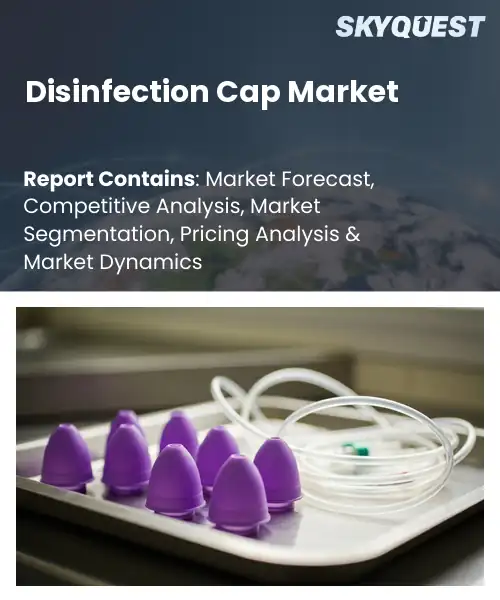
The primary driver of the disinfection cap market is the need to prevent catheter-related bloodstream infections, which transformed a niche accessory into a standard infection-control tool. Disinfection caps are small devices that cover needleless connectors and deliver alcohol contact time automatically, and they matter because they reduce healthcare-associated infections, protect patients, and lower treatment costs. Historically clinicians relied on manual 'scrub the hub' routines that suffered inconsistent compliance, but over the past decade passive caps gained acceptance in intensive care units, outpatient infusion suites and home health programs as trials linked use to measurable reductions in CLABSIs and shorter stays.
A key factor driving global market growth is demonstrated cost-effectiveness, because studies showing fewer CLABSIs yield lower treatment and liability expenses which incentivize hospital purchasing committees and bundled-payment frameworks to adopt disinfection caps. As procurement increases, manufacturers scale production and invest in innovations like time-indicating, alcohol-impregnated caps and electronic compliance sensors that further raise clinical fidelity and justify higher price points. This cause-and-effect dynamic creates opportunities in home infusion, oncology clinics and dialysis centers where reducing infection-related readmissions translates into measurable savings, and in emerging markets where improved supply chains and training can accelerate uptake rapidly.
How is AI optimizing manufacturing in the disinfection cap market?
AI is optimizing manufacturing in the disinfection cap market by tightening quality control and smoothing throughput. Key aspects include computer vision for automated inspection of cap surfaces and seals, predictive maintenance to prevent line stoppages, digital twins for process validation and faster scale up, and demand forecasting that aligns production with hospital purchasing patterns. The current state blends traditional molding with AI enabled cells that improve antiseptic dosing consistency and reduce rework. In a market driven by infection prevention and single use preference, these advances help manufacturers meet regulatory standards and deliver more reliable product availability with less manual inspection.
3M December 2025, announced an AI powered innovation tool at CES that the company said will accelerate R and D and manufacturing automation across product lines including Curos disinfecting caps, supporting faster quality checks and more efficient scale up through better process simulation and analytics.
Market snapshot - (2026-2033)
Global Market Size
USD 418.6 Million
Largest Segment
Alcohol-Based Disinfection Caps
Fastest Growth
Dual-Action/Combination Disinfection Caps
Growth Rate
5.1% CAGR
To get more insights on this market click here to Request a Free Sample Report
Global disinfection cap market is segmented by product type, application, end user, material type, sterility, distribution channel and region. Based on product type, the market is segmented into Alcohol-Based Disinfection Caps, CHG (Chlorhexidine Gluconate)-Based Disinfection Caps, Dual-Action/Combination Disinfection Caps and Non-Alcohol Disinfection Caps. Based on application, the market is segmented into IV Needleless Connectors, Hemodialysis Connectors, Catheter Hubs & Ports, Syringe & Tubing Connectors and Others. Based on end user, the market is segmented into Hospitals, Ambulatory Surgical Centers, Dialysis Centers, Clinics and Home Healthcare Settings. Based on material type, the market is segmented into Plastic-Based Caps, Silicone-Based Caps and Hybrid Material Caps. Based on sterility, the market is segmented into Sterile Disinfection Caps and Non-Sterile Disinfection Caps. Based on distribution channel, the market is segmented into Direct Sales, Medical Device Distributors, Group Purchasing Organizations (GPOs) and Online Medical Supply Platforms. Based on region, the market is segmented into North America, Europe, Asia Pacific, Latin America and Middle East & Africa.
Alcohol-Based Disinfection Caps segment dominates because their rapid broad spectrum antimicrobial action and compatibility with diverse connectors have earned strong clinical acceptance and procurement preference across acute care settings. Ease of use, quick evaporation that minimizes residue, manufacturing maturity and established evidence linking use to lower infection risk drive institutional adoption and supplier investment, creating high availability, reliable quality and stable cost structures that reinforce their leading presence in clinical workflows.
However, CHG (Chlorhexidine Gluconate) Based Disinfection Caps are emerging as the fastest growing area owing to persistent residual activity and rising clinical preference for sustained antisepsis. Advances in CHG formulations and guideline emphasis on long lasting protection drive adoption in high risk settings, creating avenues for product innovation and expanded clinical use.
Group Purchasing Organizations (GPOs) segment dominates because they consolidate demand from large institutional buyers, enabling strong negotiating power and standardized procurement pathways that favor established disinfection cap specifications. By leveraging volume agreements and formulary placement GPOs reduce purchaser complexity and procurement cycle time, encourage supplier scale up, and influence product development priorities, which together channel supply, streamline purchasing decisions and anchor widespread clinical adoption across health systems.
Meanwhile, Online Medical Supply Platforms are witnessing the strongest growth momentum driven by digital procurement adoption and improved fulfillment that give smaller providers direct access. Their convenience and pricing transparency accelerate trial of innovative disinfection cap designs, broadening the customer base outside traditional buyers and enabling faster supplier entry and more targeted product availability.
To get detailed segments analysis, Request a Free Sample Report
North America leads due to a combination of mature healthcare infrastructure, strong institutional emphasis on infection prevention, and a well developed regulatory and reimbursement environment that supports adoption of safety devices. Established medical device manufacturers and specialized suppliers have deep distribution networks that reach large hospital systems and outpatient settings, facilitating rapid scaling of new products. Clinical stakeholders prioritize interventions that reduce device related infections, and procurement decisions frequently reflect patient safety priorities. High levels of research collaboration between clinical centers and industry drive product refinement and evidence generation. The result is a market characterized by sophisticated product portfolios, multi channel availability, and sustained demand from hospital infection control programs and ambulatory care providers.
Disinfection Cap Market in the United States reflects strong demand from large hospital systems and integrated health networks that prioritize device related infection prevention. Clinical guidelines and hospital safety programs drive routine incorporation of disinfection caps into central venous access protocols. A competitive manufacturing base, combined with extensive distribution and group purchasing organization influence, supports broad availability across acute care and outpatient dialysis settings. Ongoing collaboration between clinicians and suppliers fosters product innovation and adoption.
Disinfection Cap Market in Canada is shaped by centralized procurement practices within provincial health systems and a strong emphasis on standardized infection prevention protocols. Hospitals and regional health authorities favor products that demonstrate alignment with safety and quality objectives, promoting consistent adoption across facilities. Collaboration between academic hospitals and suppliers supports evidence driven selection, while procurement frameworks encourage long term supplier partnerships that facilitate training and protocol integration.
Rapid expansion in Europe stems from heightened regulatory focus on medical device safety, stronger harmonization of infection control standards, and increasing prioritization of hospital acquired infection reduction across national health services. A growing number of manufacturers in the region are investing in product development and clinical validation, raising market competitiveness and variety. Public procurement and hospital purchasing decisions increasingly favor devices that offer demonstrable reductions in contamination risk and that integrate with existing vascular access workflows. Market dynamics are also influenced by cross border knowledge exchange, where successful clinical practices diffuse between countries, and by the presence of established medical technology clusters that accelerate commercialization and distribution.
Disinfection Cap Market in Germany is characterized by dominance of well established medical technology firms and strong integration with hospital procurement processes. High expectations for product quality and clinical evidence drive preference for certified devices that fit into existing vascular access management protocols. Regional manufacturing capability and close relationships between suppliers and clinical centers support iterative product improvements, while hospital networks emphasize standardized infection prevention practices.
Disinfection Cap Market in the United Kingdom is experiencing rapid expansion driven by proactive procurement policies within national and regional health services and a heightened focus on reducing hospital acquired infections. Hospital trusts increasingly adopt evidence based protocols that incorporate disinfection caps into central line maintenance. A dynamic landscape of local innovation and private sector engagement supports swift adoption, with supplier collaborations providing training and implementation support to accelerate uptake across acute and community care settings.
Disinfection Cap Market in France is emerging as hospitals and private clinics modernize infection prevention strategies and upgrade vascular access protocols. Growing attention to clinical guidelines and quality improvement initiatives is encouraging wider consideration of disinfection cap use. Domestic and international suppliers are engaging with healthcare stakeholders to address procurement preferences and to provide clinical data and training that support gradual integration into routine device care practices.
Asia Pacific is strengthening its role through expansion of healthcare infrastructure, increased collaboration between local manufacturers and global suppliers, and progressively tighter regulatory frameworks that emphasize device safety. Investments in tertiary care facilities and ambulatory services increase opportunities for adoption, while regional centers of clinical research contribute evidence for best practice integration. Demand is supported by a growing awareness of the clinical and economic benefits of infection prevention devices, prompting hospitals to incorporate disinfection caps into vascular access protocols. Technology transfer, localized production, and targeted education initiatives further accelerate market penetration and help build sustainable supply chains across diverse healthcare systems in the region.
Disinfection Cap Market in Japan benefits from a highly developed healthcare system that emphasizes quality assurance and device reliability. Local manufacturers with strong engineering capabilities work closely with clinical institutions to ensure products meet rigorous standards and integrate smoothly into care pathways. Hospitals prioritize interventions that reduce device related infections and value well documented performance and training support from suppliers, facilitating steady adoption across acute and specialty care settings.
Disinfection Cap Market in South Korea is advancing through rapid assimilation of technological innovations and strong ties between manufacturers and leading clinical centers. Healthcare facilities demonstrate openness to adopting proven infection prevention devices, supported by efficient distribution channels and active engagement from suppliers in clinician training. The combination of a competitive manufacturing base and focused regulatory oversight encourages both domestic adoption and export oriented growth, reinforcing market momentum across multiple care settings.
To know more about the market opportunities by region and country, click here to
Buy The Complete Report
Rising Infection Control Investments
Technological Advancements In Disinfection
Regulatory Compliance Complexity
Environmental and Safety Concerns
Request Free Customization of this report to help us to meet your business objectives.
Competition in the global disinfection cap market is intensifying as incumbents pursue acquisitions to broaden portfolios, while specialized entrants push IoT enabled and autonomous UV solutions. Buyers pressure for verified continuous disinfection drives competition toward partnerships and product differentiation, exemplified by Applied UV’s acquisition of PURO Lighting and R-Zero’s platform partnerships and funding to scale IoT linked UV deployments.
SkyQuest’s ABIRAW (Advanced Business Intelligence, Research & Analysis Wing) is our Business Information Services team that Collects, Collates, Correlates, and Analyses the Data collected by means of Primary Exploratory Research backed by robust Secondary Desk research.
As per SkyQuest analysis, the global disinfection cap market is driven primarily by the need to prevent catheter-related bloodstream infections, which has made passive caps a standard infection-control tool, and additionally by demonstrated cost-effectiveness that reduces treatment and liability expenses and encourages institutional procurement. Growth is supported by technological advancements and AI-enabled manufacturing that improve quality and supply reliability, while regulatory compliance complexity remains a key restraint that raises development costs and delays market entry. North America dominates the market due to mature healthcare infrastructure and strong infection prevention programs, and alcohol-based disinfection caps lead the product segment thanks to broad antimicrobial efficacy and clinical acceptance.
| Report Metric | Details |
|---|---|
| Market size value in 2024 | USD 418.6 Million |
| Market size value in 2033 | USD 654.97 Million |
| Growth Rate | 5.1% |
| Base year | 2024 |
| Forecast period | (2026-2033) |
| Forecast Unit (Value) | USD Million |
| Segments covered |
|
| Regions covered | North America (US, Canada), Europe (Germany, France, United Kingdom, Italy, Spain, Rest of Europe), Asia Pacific (China, India, Japan, Rest of Asia-Pacific), Latin America (Brazil, Rest of Latin America), Middle East & Africa (South Africa, GCC Countries, Rest of MEA) |
| Companies covered |
|
| Customization scope | Free report customization with purchase. Customization includes:-
|
To get a free trial access to our platform which is a one stop solution for all your data requirements for quicker decision making. This platform allows you to compare markets, competitors who are prominent in the market, and mega trends that are influencing the dynamics in the market. Also, get access to detailed SkyQuest exclusive matrix.
Table Of Content
Executive Summary
Market overview
Parent Market Analysis
Market overview
Market size
KEY MARKET INSIGHTS
COVID IMPACT
MARKET DYNAMICS & OUTLOOK
Market Size by Region
KEY COMPANY PROFILES
Methodology
For the Disinfection Cap Market, our research methodology involved a mixture of primary and secondary data sources. Key steps involved in the research process are listed below:
1. Information Procurement: This stage involved the procurement of Market data or related information via primary and secondary sources. The various secondary sources used included various company websites, annual reports, trade databases, and paid databases such as Hoover's, Bloomberg Business, Factiva, and Avention. Our team did 45 primary interactions Globally which included several stakeholders such as manufacturers, customers, key opinion leaders, etc. Overall, information procurement was one of the most extensive stages in our research process.
2. Information Analysis: This step involved triangulation of data through bottom-up and top-down approaches to estimate and validate the total size and future estimate of the Disinfection Cap Market.
3. Report Formulation: The final step entailed the placement of data points in appropriate Market spaces in an attempt to deduce viable conclusions.
4. Validation & Publishing: Validation is the most important step in the process. Validation & re-validation via an intricately designed process helped us finalize data points to be used for final calculations. The final Market estimates and forecasts were then aligned and sent to our panel of industry experts for validation of data. Once the validation was done the report was sent to our Quality Assurance team to ensure adherence to style guides, consistency & design.
Analyst Support
Customization Options
With the given market data, our dedicated team of analysts can offer you the following customization options are available for the Disinfection Cap Market:
Product Analysis: Product matrix, which offers a detailed comparison of the product portfolio of companies.
Regional Analysis: Further analysis of the Disinfection Cap Market for additional countries.
Competitive Analysis: Detailed analysis and profiling of additional Market players & comparative analysis of competitive products.
Go to Market Strategy: Find the high-growth channels to invest your marketing efforts and increase your customer base.
Innovation Mapping: Identify racial solutions and innovation, connected to deep ecosystems of innovators, start-ups, academics, and strategic partners.
Category Intelligence: Customized intelligence that is relevant to their supply Markets will enable them to make smarter sourcing decisions and improve their category management.
Public Company Transcript Analysis: To improve the investment performance by generating new alpha and making better-informed decisions.
Social Media Listening: To analyze the conversations and trends happening not just around your brand, but around your industry as a whole, and use those insights to make better Marketing decisions.
REQUEST FOR SAMPLE
 REQUEST FREE CUSTOMIZATION
Global Disinfection Cap Market size was valued at USD 418.6 Million in 2024 and is poised to grow from USD 439.95 Million in 2025 to USD 654.97 Million by 2033, growing at a CAGR of 5.1% during the forecast period (2026-2033).
Competition in the global disinfection cap market is intensifying as incumbents pursue acquisitions to broaden portfolios, while specialized entrants push IoT enabled and autonomous UV solutions. Buyers pressure for verified continuous disinfection drives competition toward partnerships and product differentiation, exemplified by Applied UV’s acquisition of PURO Lighting and R-Zero’s platform partnerships and funding to scale IoT linked UV deployments. '3M Company', 'Becton, Dickinson and Company', 'ICU Medical, Inc.', 'B. Braun SE', 'Baxter International Inc.', 'Merit Medical Systems, Inc.', 'Cardinal Health, Inc.', 'Nexus Medical, LLC', 'ICU Medical TIDI Products, LLC', 'PuraCap Pharmaceutical LLC', 'Caps Discounter B.V.', 'Galt Medical Corp.', 'Nipro Medical Corporation', 'Poly Medicure Limited', 'RyMed Technologies, LLC', 'Excelsior Medical Corporation', 'Vygon SA', 'Medline Industries, LP', 'Fresenius Kabi AG', 'AngioDynamics, Inc.'
Investment by healthcare institutions and corporate facilities in infection prevention has expanded procurement of advanced disinfection solutions, encouraging manufacturers to innovate and scale production. Heightened allocation toward sanitization programs enables broader adoption of automated disinfection systems, environmentally friendly chemistries, and integrated service models, thereby stimulating market expansion. Such focused spending creates predictable demand streams and incentivizes suppliers to enhance distribution and training capabilities, which further lowers barriers to implementation. This virtuous cycle between institutional investment and supplier response directly supports sustained growth in the disinfection cap market.
Smart Connected Systems: Growing demand for disinfection caps integrated with sensors and connectivity is driving manufacturers to develop solutions that enable remote monitoring, predictive maintenance, and data-driven validation of sanitation workflows. This trend emphasizes interoperability with facility management systems and cloud platforms, supporting real-time alerts and digital records for operational accountability. Adoption is fueled by a focus on workflow efficiency, reduced manual inspections, and enhanced traceability, prompting investment in user-friendly interfaces and secure communication protocols to meet institutional hygiene expectations.
Why does North America Dominate the Global Disinfection Cap Market? |@12


Want to customize this report? This report can be personalized according to your needs. Our analysts and industry experts will work directly with you to understand your requirements and provide you with customized data in a short amount of time. We offer $1000 worth of FREE customization at the time of purchase.
Feedback From Our Clients


 USA (+1) 351-333-4748

