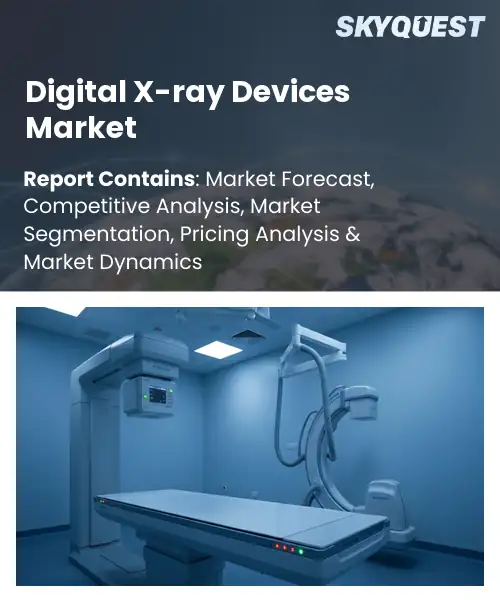
Digital X-ray Devices Market
Report ID: SQMIG35A3471
Report ID: SQMIG35A3471
[email protected]
USA +1 351-333-4748
Report ID:
SQMIG35A3471 |
Region:
Global |
Published Date: May, 2026
Pages:
157
|Tables:
200
|Figures:
80


Global Digital X-Ray Devices Market size was valued at USD 5.20 Billion in 2024 and is poised to grow from USD 5.42 Billion in 2025 to USD 7.60 Billion by 2033, growing at a CAGR of 4.3% during the forecast period (2026-2033).
Global digital x-ray device market trends are primarily driven by the need to improve diagnostic accuracy and enhance workflow efficiencies within healthcare systems globally. The digital x-ray device market covers both computed radiography and digital radiography systems which convert traditional film-based imaging into electronic formats to increase the speed at which the images can be shared and analyzed. The significance of this is simple; if conditions such as fractures, lung cancers or pneumonia are detected earlier, they will likely result in lower treatment costs and better patient outcomes, especially considering that there is considerable pressure on hospitals to enhance throughput. Adoption has moved from analog film to flat panel detectors at major hospitals over the last 20 years, while teleradiology companies have built teleradiology and PACS (Picture Archiving & Communication System) facilities to accommodate remote reads which has developed into a sustainable source of continued demand.
A key contributor to accelerating the growth of the digital x-ray device market growth is the increasing adoption of AI combined with connected devices, thereby increasing the speed of image interpretation and reducing the workload of radiologists. With AI algorithms activating abnormality detection and prioritizing the reading of urgent cases, hospitals can improve throughput and reduce reading time, allowing budget allocation for digitization by hospital administration. Digital portable units also increase the opportunity to conduct bedside imaging in emergency and intensive care units to obtain immediate diagnostic information, thus avoiding patient transport risks. The practical benefits of these devices are motivating purchases by local hospitals and outpatient clinics, providing opportunities for vendors to offer subscription software, remote maintenance and bundled services to create new sources of revenue.
How is AI Improving Diagnostic Accuracy in the Digital X-Ray Devices Market?
AI is changing how we diagnose patients using digital x-ray equipment; digital x-ray devices are significantly improving how accurate we can be when diagnosing patients through two key areas: image quality and decreasing the variation in interpreting those images. The improved clarity of the images, through processes such as image processing and reconstruction, allows more subtle pathologies to be visible for the first time. Secondly, the ability of AI based tools to help locate abnormal findings during a diagnostic exam and provide a priority to ensure clinicians are able to focus on the highest value items, is also greatly improving clinician's ability to efficiently diagnose patients. The ability of these AI powered tools to allow the creation of workflows that integrate AI based reminders and guidelines provides many clinicians with more stable reads of the digital X-ray images. As major vendors of imaging equipment and software programs bring AI to their products, this area will continue to shift from small pilot studies to large scale use.
In February 2026, Qure.ai gained regulatory approval for computer aided detection of chest x-rays using "Qure" software. With this software, clinicians will be able to detect lung disease at a much earlier stage than previously possible. This will help them to improve the efficiency and accuracy of their initial diagnostic procedures.
Market snapshot - (2026-2033)
Global Market Size
USD 5.2 Billion
Largest Segment
Fixed Digital X-ray Systems
Fastest Growth
Portable Digital X-ray Systems
Growth Rate
4.3% CAGR
To get more insights on this market click here to Request a Free Sample Report
Global digital x-ray devices market is segmented by product type, technology, detector type, portability, application, end user, connectivity and region. Based on product type, the market is segmented into fixed digital x-ray systems, portable digital x-ray systems and mobile digital x-ray systems. Based on technology, the market is segmented into computed radiography (CR) and direct radiography (DR). Based on detector type, the market is segmented into flat panel detectors, CCD detectors and CMOS detectors. Based on portability, the market is segmented into stationary systems and portable systems. Based on application, the market is segmented into general radiography, orthopedic imaging, chest imaging, dental imaging, mammography, fluoroscopy and cardiovascular imaging. Based on end user, the market is segmented into hospitals, diagnostic imaging centers, specialty clinics and ambulatory surgical centers. Based on connectivity, the market is segmented into wired digital x-ray systems and wireless digital x-ray systems. Based on region, the market is segmented into North America, Europe, Asia Pacific, Latin America and Middle East & Africa.
The Direct Radiography (DR) segment of the digital x-ray device market share is the largest because it offers immediate acquisition of images and easy connection into information systems that assist clinicians with managing images, which greatly improves the efficiency of the clinical workflow and reduces the number of retakes needed. The improved efficiency creates higher patient throughput and improves the overall productivity of the facility, resulting in DR becoming a primary focus of capital expenditure for healthcare providers. In turn, this results in stronger procurement preference for vendors and greater focus by vendors on DR features, driving further refinement of products and increasing the overall adoption of DR across all areas of healthcare where reliable diagnostic information is required.
However, the second largest segment of the digital x-ray device market forecast is computed radiography (CR) and the CR market is the fastest growing area as a result of cost effective upgrade pathways to CR from analog x-ray systems, and the ability of CR systems to be integrated into existing analog infrastructure. These lower cost entry points and upgrade potential are spurring adoption of CR systems in small facilities and clinics, expanding the breadth of the CR market. This growing level of adoption is creating opportunities for vendors to support CR users and introducing incremental innovation into the CR workflow, thereby creating new service opportunities and accelerating x-ray imaging market growth.
This segment is primarily comprised of flat panel detectors, which dominate the market due to their ability to provide high levels of image uniformity, high levels of spatial resolution, and because they have a rugged structure, which all positively impacts diagnostic confidence across the wide variety of applications. In addition, through the use of advanced imaging modes and the ability to optimize dose, flat panels will be the preferred detector option in modern digital x-ray systems. Manufacturers' investments are being directed toward the enhancement of flat panels; therefore, flat panels will continue to maintain their dominance as manufacturers look to enhance detector performance to meet clinicians' needs for accuracy and reliability in clinical imaging.
CMOS detectors are achieving the highest growth rate of all detector types because they are small, they can be read out rapidly, and they have low power requirements for use in portable and wireless designs. Developments in CMOS manufacturing provide increasingly lower costs and allow for integration into smaller devices, thus creating new applications in point of care and mobile diagnostics. The rapid growth of CMOS detectors will continue to drive diversifying products and establish new commercialization opportunities throughout the market.
To get detailed segments analysis, Request a Free Sample Report
The global digital X-ray devices market is dominated by North America through multiple factors including its advanced clinical infrastructure, strong purchasing power, and highly developed innovation ecosystem. Leading networks of hospitals and imaging centers create a consistent replacement cycle and uptake of progressive diagnostic imaging equipment; long-standing distribution channels and comprehensive support services provided by incumbent suppliers are additional drivers of this behavior. Favorable reimbursement and clinical guideline alignment enhance the incorporation of digital X-ray into standard pathways for use in diagnostic testing. Substantial research institutions and point of collaboration between industry and academia provide for rapid rates of product development, testing and introduction into clinical practice. Private investors continue to actively invest in digital X-ray technology, while efficient pathways for obtaining regulatory approval have facilitated the rapid commercialization and expansion of new technologies in North America, strengthening the regional position of North America's X-ray device manufacturers.
Digital x-ray devices market outlook in United States is supported by vast hospital and academic networks, as well as strong vendor presence which helps hospitals procure and maintain digital x-ray equipment. Demand for digital x-ray devices is driven by extensive clinical studies, strong reimbursement policies, and the ability for hospitals to integrate digital x-ray data into their electronic health records. Adoption of digital x-ray technology is widespread with acute care hospitals, specialty clinics and outpatient imaging facilities all using high-quality resolution x-ray equipment; utilizing vendor support networks to ensure proper maintenance of the equipment; and conducting collaborative studies to validate its use within their clinical workflow.
Digital x-ray devices market forecast in Canada will be impacted by a number of factors including the support for a fully integrated provincial healthcare system, extensive implementation in hospital facilities, as well as the establishment of partnerships between public healthcare entities and vendors. Clinical priorities include: Support for inter-operability, remote diagnostics and economical imaging solutions, all of which are supportive of rural and urban healthcare. Additionally, procurement will focus on long-term service contracts along with training programs, while academic research centres will work together on validating pilot studies and creating pathways to support the adoption of digital x-ray devices that address both clinical and operational requirements.
Several factors are contributing to the fast-growing presence of digital X-ray solutions throughout Europe, including aligned healthcare policies, a robust medical technology manufacturing base and strong investment in the digitalization of health care. Health authorities around Europe and larger institutions are focused on implementing upgrades that lead to improved accuracy and efficiency in the diagnostic process; procurement models are increasingly weighted toward integrated technologies that allow teleradiology and sharing of data across institutions. The regulatory environment is stable with consistent certification processes, giving vendors a predictable path to enter the market; a competitive and innovative environment has developed based on the presence of a large number of local and global vendors. Collaborative research efforts, pilot programs testing artificial intelligence technologies, and cooperative development of interoperability standards all create a more rapid clinical validation of digital imaging solutions in many types of healthcare environments, while at the same time reinforcing each region’s strategic position with respect to imaging technology and encouraging the scale of advanced digital radiography products. Stakeholder engagement is widely positive.
Digital x-ray devices market regional outlook in Germany, given its strong industrial base, well-developed hospital infrastructure, and leading manufacturers providing high-quality imaging solutions. Local vendors partner with clinical centers to improve product design and service delivery. Purchasing preferences favor durable, high-performance units with extensive maintenance plans. Research institutions and specialty clinics provide opportunities for validation, while regional groupings support public/private partnerships and internationalization of the market to maintain global competitiveness.
Digital x-ray devices market regional forecast in United Kingdom is supported by; modernisation of facilities in both the public & private healthcare sectors, an emphasis on digital transformation & increased use of teleradiology & remote diagnostics. New procurement/evaluation procedures will assist in the integration of imaging with electronic records & Clinical Decision Support Systems. Innovation & trial centres will help supporters assess emerging technologies. Demand from private providers & specialist centres will further enhance demand for mobile and AI-enabled systems, thereby providing a catalyst for growth in the market.
Digital x-ray devices market share in France is becoming increasingly prominent from investments in upgrading the hospitals' infrastructure, the establishment of health initiatives by the various health care stakeholders, and the development of collaborative networks between public hospitals and private clinics. The focus on interoperability and clinical standardization facilitates the widespread acceptance of digital radiography throughout the patient care continuum. The vendors are adapting their product offerings to meet the needs of their customers with regard to procurement and training. In addition, the pilot deployments and research collaborations for evaluation of new technologies are being carried out by the metropolitan research networks in the cities of France. Clinical demand for portable, cost effective, and AI-assisted digital x-ray systems is increasing.
As healthcare modernization continues in the Asia-Pacific region, the expansion of hospital beds and investment in diagnostic infrastructure has augmented both the local market for digital X-ray devices and manufacturers of such systems (i.e. fixed and portable). The proliferation of both digital X-ray devices is supported by many local manufacturing capabilities, which have provided competitive production costs to support the adoption of both fixed and portable systems in numerous different regional markets. Digital health initiatives are a high priority for governments and private investors; telemedicine has expanded significantly due to the prioritization of workforce training for image interpretation and integration into existing workflow processes that occur at a distance. There is also rapid technology transfer between regional suppliers and vendors who have established themselves in the global market, as well as software localization efforts and the development of service models tailored to specific needs and circumstances.
Digital x-ray devices industry in Japan, advanced electronics manufacturing, integration of manufacturers with clinical institutions, and rigorous quality standards all work together to support the industry. Companies based in the country focus on delivering their products through precision engineering, compact designs, and compatibility with hospital information systems. Clinical research and specialty centers offer validation for products manufactured in Japan, while ongoing maintenance programs ensure that devices maintain optimal performance throughout their life cycle. Demand drivers include an emphasis on high fidelity images, retrofit options for current facilities, and incremental innovations that match clinician requirements as well as his or her work flow.
Digital x-ray devices industry trends in South Korea has been positively impacted by close integration of technology, fast uptake of digital health solutions, and collaboration between the electronics companies. The key vendors within this sector have been focusing on connectivity, the use of portable units, and offering software that connects to hospital information systems. Clinical centres and innovation labs provide a testing ground for new digital health devices, while manufacturers have created products to suit different regional markets. Hospitals modernising their facilities, the rise in AI-assisted diagnostics and service models which favour rapid deployment of products are examples of the factors driving demand for digital x-ray devices within South Korea.
To know more about the market opportunities by region and country, click here to
Buy The Complete Report
Growing Adoption Of Digital Radiography
Advances In Detector Technologies
High Equipment Acquisition Costs
Regulatory And Reimbursement Barriers
Request Free Customization of this report to help us to meet your business objectives.
The global market for digital X-ray devices is competitive due to innovations in sensors and workflows; targeted acquisitions for consolidation; and partnerships between imaging vendors and artificial intelligence (AI) and cloud-based companies. For example, Shimadzu acquired California X Ray Imaging Services' for better service and distribution in the U.S.; and GE HealthCare expanded its collaboration with NVIDIA for AI and autonomy. Pressure from startup companies that leverage innovative detector materials and sensor architectures further intensifies competition.
Top Player’s Company Profile
Recent Developments in the Digital X-ray Devices Market
SkyQuest’s ABIRAW (Advanced Business Intelligence, Research & Analysis Wing) is our Business Information Services team that Collects, Collates, Correlates, and Analyses the Data collected by means of Primary Exploratory Research backed by robust Secondary Desk research.
As per SkyQuest analysis, the digital x-ray devices market is growing primarily due to two important factors the need for a more accurate and efficient way to diagnose patients and the increased use of artificial intelligence (AI) and connectivity in X-ray devices that are making image interpretation of urgent cases much faster. Another factor slowing the adoption of digital X-ray devices, especially at small facilities is the capital intensity and cost of acquiring the equipment. North America is the largest region for Digital X-ray devices because of the availability of an advanced clinical infrastructure; favorable reimbursement policies; and a broad range of reliable suppliers. Direct radiography is currently the leading segment of the Digital X-ray devices market due to the quick acquisition of images and integration of the system into existing workflows. Vendors should focus on providing portable, AI-enabled solutions with flexible payment options to ensure continued growth.
| Report Metric | Details |
|---|---|
| Market size value in 2024 | USD 5.2 Billion |
| Market size value in 2033 | USD 7.6 Billion |
| Growth Rate | 4.3% |
| Base year | 2024 |
| Forecast period | (2026-2033) |
| Forecast Unit (Value) | USD Billion |
| Segments covered |
|
| Regions covered | North America (US, Canada), Europe (Germany, France, United Kingdom, Italy, Spain, Rest of Europe), Asia Pacific (China, India, Japan, Rest of Asia-Pacific), Latin America (Brazil, Rest of Latin America), Middle East & Africa (South Africa, GCC Countries, Rest of MEA) |
| Companies covered |
|
| Customization scope | Free report customization with purchase. Customization includes:-
|
To get a free trial access to our platform which is a one stop solution for all your data requirements for quicker decision making. This platform allows you to compare markets, competitors who are prominent in the market, and mega trends that are influencing the dynamics in the market. Also, get access to detailed SkyQuest exclusive matrix.
Table Of Content
Executive Summary
Market overview
Parent Market Analysis
Market overview
Market size
KEY MARKET INSIGHTS
COVID IMPACT
MARKET DYNAMICS & OUTLOOK
Market Size by Region
KEY COMPANY PROFILES
Methodology
For the Digital X-ray Devices Market, our research methodology involved a mixture of primary and secondary data sources. Key steps involved in the research process are listed below:
1. Information Procurement: This stage involved the procurement of Market data or related information via primary and secondary sources. The various secondary sources used included various company websites, annual reports, trade databases, and paid databases such as Hoover's, Bloomberg Business, Factiva, and Avention. Our team did 45 primary interactions Globally which included several stakeholders such as manufacturers, customers, key opinion leaders, etc. Overall, information procurement was one of the most extensive stages in our research process.
2. Information Analysis: This step involved triangulation of data through bottom-up and top-down approaches to estimate and validate the total size and future estimate of the Digital X-ray Devices Market.
3. Report Formulation: The final step entailed the placement of data points in appropriate Market spaces in an attempt to deduce viable conclusions.
4. Validation & Publishing: Validation is the most important step in the process. Validation & re-validation via an intricately designed process helped us finalize data points to be used for final calculations. The final Market estimates and forecasts were then aligned and sent to our panel of industry experts for validation of data. Once the validation was done the report was sent to our Quality Assurance team to ensure adherence to style guides, consistency & design.
Analyst Support
Customization Options
With the given market data, our dedicated team of analysts can offer you the following customization options are available for the Digital X-ray Devices Market:
Product Analysis: Product matrix, which offers a detailed comparison of the product portfolio of companies.
Regional Analysis: Further analysis of the Digital X-ray Devices Market for additional countries.
Competitive Analysis: Detailed analysis and profiling of additional Market players & comparative analysis of competitive products.
Go to Market Strategy: Find the high-growth channels to invest your marketing efforts and increase your customer base.
Innovation Mapping: Identify racial solutions and innovation, connected to deep ecosystems of innovators, start-ups, academics, and strategic partners.
Category Intelligence: Customized intelligence that is relevant to their supply Markets will enable them to make smarter sourcing decisions and improve their category management.
Public Company Transcript Analysis: To improve the investment performance by generating new alpha and making better-informed decisions.
Social Media Listening: To analyze the conversations and trends happening not just around your brand, but around your industry as a whole, and use those insights to make better Marketing decisions.
REQUEST FOR SAMPLE
 REQUEST FREE CUSTOMIZATION
Global Digital X-Ray Devices Market size was valued at USD 5.2 Billion in 2024 and is poised to grow from USD 5.42 Billion in 2025 to USD 7.6 Billion by 2033, growing at a CAGR of 4.3% during the forecast period (2026-2033).
Competition in the global digital X ray devices market is driven by sensor and workflow innovation, consolidation through targeted acquisitions, and platform partnerships that pair imaging vendors with AI and cloud leaders. Examples include Shimadzu acquiring California X Ray Imaging Services to strengthen U S service and distribution, and GE HealthCare expanding an AI and autonomy collaboration with NVIDIA. Startups scaling novel detector materials and sensor architectures intensify competitive pressure. 'Canon Medical Systems Corporation', 'FUJIFILM Holdings Corporation', 'Koninklijke Philips N.V.', 'GE HealthCare Technologies Inc.', 'Siemens Healthineers AG', 'Carestream Health, Inc.', 'Hologic, Inc.', 'Shimadzu Corporation', 'Agfa-Gevaert Group', 'Konica Minolta, Inc.', 'Samsung Medison Co., Ltd.', 'Mindray Medical International Limited', 'Planmed Oy', 'Varex Imaging Corporation', 'Aspenstate Inc.', 'DRGEM Corporation', 'Vieworks Co., Ltd.', 'Swissray International, Inc.', 'DMS Group', 'iRay Technology Company Limited'
Ai Enhanced Diagnostics: Integration of advanced machine learning into digital x ray systems reshapes diagnostic workflows by automating image enhancement, prioritizing critical cases and supporting structured reporting. This trend fosters consistent interpretation across operators, streamlines referral decision pathways and reduces unnecessary repeat imaging through intelligent quality checks. Vendors focus on seamless workflow integration, clinician centric interfaces and interoperability with enterprise systems to enable adoption. Clinical validation studies and vendor hospital partnerships drive trust, while scalable deployment models encourage uptake across diverse care settings.
Why does North America Dominate the Global Digital X-ray Devices Market? |@12


Want to customize this report? This report can be personalized according to your needs. Our analysts and industry experts will work directly with you to understand your requirements and provide you with customized data in a short amount of time. We offer $1000 worth of FREE customization at the time of purchase.
Feedback From Our Clients


 USA (+1) 351-333-4748

