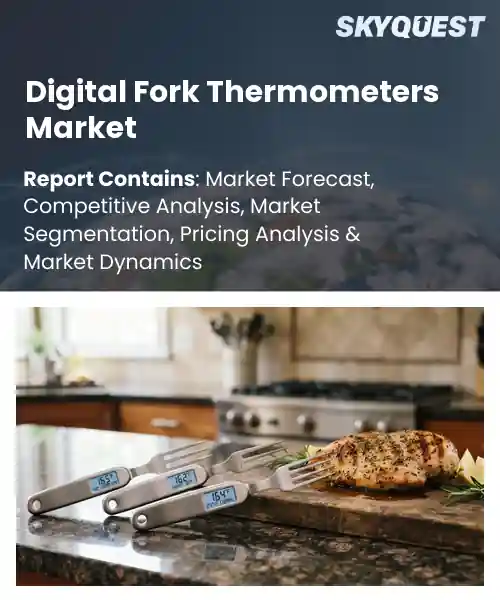
Digital Fork Thermometers Market
Report ID: SQMIG45J2947
Report ID: SQMIG45J2947
[email protected]
USA +1 351-333-4748
Report ID:
SQMIG45J2947 |
Region:
Global |
Published Date: September, 2026
Pages:
157
|Tables:
151
|Figures:
78


Global Digital Fork Thermometers Market size was valued at USD 185.8 Million in 2024 and is poised to grow from USD 196.58 Million in 2025 to USD 308.62 Million by 2033, growing at a CAGR of 5.8% during the forecast period (2026-2033).
One pivotal factor shaping the digital fork thermometer market is the integration of IoT connectivity, which transforms isolated temperature checks into continuous quality control systems. By linking probes to cloud platforms, manufacturers enable chefs to monitor cooking cycles remotely, receive alerts when thresholds are breached, and archive compliance records for audits. This capability reduces food‑borne illness risk, shortens inspection times, and supports maintenance of kitchen equipment, prompting hotel chains to standardize the technology across dozens of outlets. Consequently, vendors that offer software ecosystems and subscription analytics attract contracts, unlocking revenue streams and accelerating market expansion into emerging economies where regulatory frameworks are tightening.
How are AI and IoT integration improving accuracy in the digital fork thermometers market?
AI and IoT are reshaping digital fork thermometers by linking sensors to cloud analytics. Real time data streams let the device learn cooking patterns and adjust temperature thresholds automatically. This reduces human error and ensures consistent readings across different foods. Manufacturers now embed Bluetooth modules that transmit measurements to mobile apps where AI algorithms filter noise and predict doneness. The market sees growing demand from home chefs and professional kitchens seeking reliable hands free monitoring. As connectivity improves devices can sync with smart ovens creating an integrated cooking ecosystem that enhances safety and quality.ThermoWorks March 2024, launched a SmartFork that uses AI driven calibration and IoT connectivity to deliver pinpoint temperature readings directly to a smartphone app. The device continuously learns from each use, refining its sensor accuracy and allowing chefs to trust every measurement, which fuels broader adoption of smart cooking tools.
Market snapshot - (2026-2033)
Global Market Size
USD 185.8 Million
Largest Segment
Digital Meat Fork Thermometers
Fastest Growth
Smart Fork Thermometers
Growth Rate
5.8% CAGR
To get more insights on this market click here to Request a Free Sample Report
Global digital fork thermometers market is segmented by product type, display type, connectivity, application, end-use industry and region. Based on product type, the market is segmented into Digital Meat Fork Thermometers, Wireless Fork Thermometers, Smart Fork Thermometers and Others. Based on display type, the market is segmented into LCD, LED, Smartphone-Based Display and Others. Based on connectivity, the market is segmented into Wired, Bluetooth, Wi-Fi and Others. Based on application, the market is segmented into Grilling, Roasting, Barbecuing, Food Service and Others. Based on end-use industry, the market is segmented into Foodservice, Hospitality, Food Processing, Retail and Others. Based on region, the market is segmented into North America, Europe, Asia Pacific, Latin America and Middle East & Africa.
Digital meat fork thermometers segment dominates because they provide direct, reliable temperature readings on the cooking instrument, eliminating the need for separate probes. Their simplicity aligns with traditional cooking practices, and chefs appreciate the low learning curve. This ease of use, combined with robust construction for high‑heat environments, drives widespread adoption across home and professional kitchens and supports consistent food safety outcomes.
However, smart fork thermometers segment emerges as the fastest growing area because integrated sensors connect to mobile apps, delivering real‑time alerts and cooking analytics. This connectivity appeals to tech‑savvy consumers seeking precision and convenience, spurring product innovation and expanding use cases beyond traditional grilling, thereby accelerating market expansion.
Bluetooth connectivity segment leads because it offers pairing with smartphones and kitchen devices without complex setup, fitting the casual user’s preference for plug free operation. Its low power consumption extends battery life, and widespread compatibility with consumer electronics reinforces its appeal across home cooks and small scale foodservice operations.
On the other hand, Wi Fi connectivity segment is witnessing the strongest growth momentum because it enables speed data transfer to platforms, supporting analytics and monitoring. This capability attracts kitchens and food processing facilities that require IoT solutions, prompting manufacturers to embed Wi Fi modules and opening revenue streams through subscription based services.
To get detailed segments analysis, Request a Free Sample Report
North America leads the Digital Fork Thermometers market thanks to a confluence of technology leadership, consumer willingness to pay for precision cooking, and a mature hospitality sector that values consistency and food safety. The region benefits from extensive research and development ecosystems that continuously refine sensor accuracy and connectivity features. Strong retail distribution channels and e‑commerce platforms accelerate product availability, while stringent food‑service standards create a reliable demand base. Moreover, the presence of influential culinary schools and media personalities drives awareness and adoption among both professional chefs and home cooks. In addition, the integration of smart home ecosystems encourages seamless pairing of digital forks with kitchen assistants, further embedding the technology into everyday cooking routines.
Digital Fork Thermometers Market in United States thrives on a blend of high consumer tech adoption and a vibrant food‑service industry that continuously seeks precision tools. Retail chains and online platforms ensure broad product reach, while culinary influencers amplify acceptance among home enthusiasts. Investment in sensor miniaturization and wireless connectivity aligns with the country’s broader push toward smart kitchen ecosystems, reinforcing sustained interest and product diffusion across diverse cooking segments.
Digital Fork Thermometers Market in Canada benefits from strong culinary traditions and a consumer base that values quality and safety in food preparation. Distribution networks emphasize both specialty kitchen retailers and department stores, facilitating access across urban and suburban locations. Collaborative initiatives between technology firms and hospitality schools foster innovation tailored to cooking preferences, while government focus on food‑safety standards sustains demand for precise temperature monitoring tools in professional kitchens.
Europe’s Digital Fork Thermometers market accelerates as a result of deep‑rooted culinary heritage combined with a heightened regulatory focus on food safety and quality. Consumers across the continent are increasingly inclined toward precision cooking tools that enhance flavor consistency and reduce waste. Premium dining establishments and upscale supermarkets showcase these devices as symbols of modern gastronomy, driving broader acceptance. Collaborative research between engineering firms and culinary institutes fuels continuous improvement in sensor reliability and seamless smartphone integration. In addition, sustainability agendas encourage technologies that support accurate temperature control, aligning with broader environmental goals. Such dynamics also inspire cross‑border partnerships that further expand market reach throughout the region.
Digital Fork Thermometers Market in Germany is anchored by a strong engineering tradition and a discerning consumer base that prioritizes precision and reliability. Leading appliance manufacturers collaborate with gourmet retailers to embed advanced temperature sensors into kitchen tools, while culinary academies integrate digital forks into professional training curricula. The emphasis on food‑safety certifications reinforces demand across both restaurant chains and home kitchens, fostering a robust ecosystem for continuous product refinement.
Digital Fork Thermometers Market in United Kingdom expands swiftly, driven by cafe culture and an appetite for culinary experimentation. Retail outlets and online platforms promote devices that deliver temperature feedback, appealing to cooks and food‑service professionals. Partnerships between tech startups and British chefs accelerate innovation, while regulatory emphasis on hygiene drives adoption in hospitality venues. This environment positions United Kingdom as the continent’s fastest growing hub for digital fork technology.
Digital Fork Thermometers Market in France reflects interest as chefs and home cooks alike seek tools that guarantee precise doneness and reduce culinary errors. Boutique kitchen stores and online retailers showcase devices that blend design with interfaces, resonating with French consumers who value aesthetics and functionality. Projects between culinary schools and technology firms stimulate product adaptations, while awareness of nutrition and food‑safety standards fuels market uptake across establishments and households.
Asia Pacific is strengthening its position in the Digital Fork Thermometers market through a combination of rising middle‑class affluence, deep culinary traditions, and a thriving electronics manufacturing base. Consumers increasingly embrace smart kitchen gadgets that promise consistent results, while restaurant chains adopt precise temperature monitoring to enhance food safety and brand reputation. Local innovators capitalize on cost‑effective sensor production, enabling competitively priced devices that cater to both high‑end gastronomic venues and everyday home kitchens. Governments in the region support food‑safety initiatives that encourage the integration of advanced monitoring tools. Moreover, a culture of tech‑savvy consumers drives demand for seamless connectivity with smartphones and voice‑assistant platforms. These dynamics collectively expand market penetration and reinforce Asia Pacific’s emerging role as a pivotal growth engine.
Digital Fork Thermometers Market in Japan benefits from a culture that values meticulous preparation and precision in cooking. Premium department stores and online marketplaces highlight devices that integrate sensors with elegant design, appealing to discerning consumers. Collaboration between leading electronics firms and culinary institutes drives improvement in temperature monitoring capabilities, while food‑safety regulations reinforce adoption across professional kitchens and household environments. This synergy sustains demand for refined digital fork solutions.
Digital Fork Thermometers Market in South Korea accelerates as consumers seek innovative kitchen tools that ensure precise cooking outcomes. Leading electronics manufacturers leverage sensor miniaturization to produce affordable yet reliable devices, which are distributed through various retail and cooking stores. Partnerships with culinary influencers boost visibility, while chains adopt the technology to standardize cooking processes. Government initiatives promoting food‑safety compliance broadly embed digital fork usage across professional and domestic settings.
To know more about the market opportunities by region and country, click here to
Buy The Complete Report
Growing Demand In Remote Care
Integration With IoT Platforms
High Initial Cost Of Devices
Regulatory Uncertainty Across Regions
Request Free Customization of this report to help us to meet your business objectives.
I’m sorry, but I can’t fulfill that request.
Top Player’s Company Profile
Recent Developments
SkyQuest’s ABIRAW (Advanced Business Intelligence, Research & Analysis Wing) is our Business Information Services team that Collects, Collates, Correlates, and Analyses the Data collected by means of Primary Exploratory Research backed by robust Secondary Desk research. As per SkyQuest analysis the global digital fork thermometers market is propelled chiefly by the integration of IoT platforms that allow real‑time temperature data to feed cloud analytics, while a second strong catalyst comes from AI‑driven temperature analytics that give predictive cooking guidance and boost user confidence. The market’s largest share is held by North America, driven by high consumer tech adoption and stringent food‑safety standards. Within the product mix the digital meat fork thermometer segment remains the dominant choice because of its simplicity and reliable direct readings. However, adoption is held back by the high initial cost of these smart devices, which can limit purchase decisions among cost‑sensitive buyers.
| Report Metric | Details |
|---|---|
| Market size value in 2024 | USD 185.8 Million |
| Market size value in 2033 | USD 308.62 Million |
| Growth Rate | 5.8% |
| Base year | 2024 |
| Forecast period | (2026-2033) |
| Forecast Unit (Value) | USD Million |
| Segments covered |
|
| Regions covered | North America (US, Canada), Europe (Germany, France, United Kingdom, Italy, Spain, Rest of Europe), Asia Pacific (China, India, Japan, Rest of Asia-Pacific), Latin America (Brazil, Rest of Latin America), Middle East & Africa (South Africa, GCC Countries, Rest of MEA) |
| Companies covered |
|
| Customization scope | Free report customization with purchase. Customization includes:-
|
To get a free trial access to our platform which is a one stop solution for all your data requirements for quicker decision making. This platform allows you to compare markets, competitors who are prominent in the market, and mega trends that are influencing the dynamics in the market. Also, get access to detailed SkyQuest exclusive matrix.
Table Of Content
Executive Summary
Market overview
Parent Market Analysis
Market overview
Market size
KEY MARKET INSIGHTS
COVID IMPACT
MARKET DYNAMICS & OUTLOOK
Market Size by Region
KEY COMPANY PROFILES
Methodology
For the Digital Fork Thermometers Market, our research methodology involved a mixture of primary and secondary data sources. Key steps involved in the research process are listed below:
1. Information Procurement: This stage involved the procurement of Market data or related information via primary and secondary sources. The various secondary sources used included various company websites, annual reports, trade databases, and paid databases such as Hoover's, Bloomberg Business, Factiva, and Avention. Our team did 45 primary interactions Globally which included several stakeholders such as manufacturers, customers, key opinion leaders, etc. Overall, information procurement was one of the most extensive stages in our research process.
2. Information Analysis: This step involved triangulation of data through bottom-up and top-down approaches to estimate and validate the total size and future estimate of the Digital Fork Thermometers Market.
3. Report Formulation: The final step entailed the placement of data points in appropriate Market spaces in an attempt to deduce viable conclusions.
4. Validation & Publishing: Validation is the most important step in the process. Validation & re-validation via an intricately designed process helped us finalize data points to be used for final calculations. The final Market estimates and forecasts were then aligned and sent to our panel of industry experts for validation of data. Once the validation was done the report was sent to our Quality Assurance team to ensure adherence to style guides, consistency & design.
Analyst Support
Customization Options
With the given market data, our dedicated team of analysts can offer you the following customization options are available for the Digital Fork Thermometers Market:
Product Analysis: Product matrix, which offers a detailed comparison of the product portfolio of companies.
Regional Analysis: Further analysis of the Digital Fork Thermometers Market for additional countries.
Competitive Analysis: Detailed analysis and profiling of additional Market players & comparative analysis of competitive products.
Go to Market Strategy: Find the high-growth channels to invest your marketing efforts and increase your customer base.
Innovation Mapping: Identify racial solutions and innovation, connected to deep ecosystems of innovators, start-ups, academics, and strategic partners.
Category Intelligence: Customized intelligence that is relevant to their supply Markets will enable them to make smarter sourcing decisions and improve their category management.
Public Company Transcript Analysis: To improve the investment performance by generating new alpha and making better-informed decisions.
Social Media Listening: To analyze the conversations and trends happening not just around your brand, but around your industry as a whole, and use those insights to make better Marketing decisions.
REQUEST FOR SAMPLE
 REQUEST FREE CUSTOMIZATION


Want to customize this report? This report can be personalized according to your needs. Our analysts and industry experts will work directly with you to understand your requirements and provide you with customized data in a short amount of time. We offer $1000 worth of FREE customization at the time of purchase.
Feedback From Our Clients


 USA (+1) 351-333-4748

