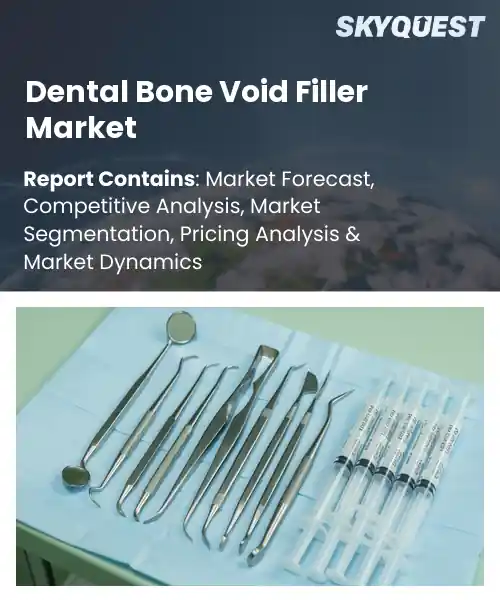
Dental Bone Void Filler Market
Report ID: SQMIG35A3451
Report ID: SQMIG35A3451
[email protected]
USA +1 351-333-4748
Report ID:
SQMIG35A3451 |
Region:
Global |
Published Date: May, 2026
Pages:
157
|Tables:
90
|Figures:
71


Global Dental Bone Void Filler Market size was valued at USD 682.5 Million in 2024 and is poised to grow from USD 731.84 Million in 2025 to USD 1285.4 Million by 2033, growing at a CAGR of 7.23% during the forecast period (2026-2033).
Growing demand for dental implants, increasing prevalence of tooth loss and periodontal diseases, rising adoption of oral reconstructive procedures, advancements in regenerative biomaterials, and growing preference for minimally invasive dental treatments are driving demand for dental bone void fillers.
Growing investment in regenerative dentistry, combination therapy packages, and minimally invasive reconstructive dental technology has opened more possibilities for commercializing such materials on the global scale. An increased demand for bone graft substitute materials and regenerative biomaterials for socket preservation, sinus augmentation, periodontal reconstruction, and stabilization of implants is also contributing towards market growth. Rising advancements in osteoconductive and bioactive materials are also expected to help bolster the demand for dental bone void fillers. Dental clinics and manufacturers are increasingly adopting growth factor-enhanced graft materials, beta-tricalcium phosphate products, and customized 3D-printed scaffolds to accelerate healing and improve implant success rates. Increasing need for effective bone regeneration solutions and increasing adoption of dental implant procedures around the world coupled with rising prevalence of tooth loss and oral diseases are expected to primarily drive dental bone void filler market growth.
On the contrary, high treatment and material costs, limited reimbursement coverage, risk of graft rejection or infection, and stringent regulatory approval requirements for biomaterials are anticipated to slow down dental bone void filler market penetration across the study period and beyond.
How is AI Improving Clinical Outcomes for Patients Using Dental Bone Void Fillers?
In the dental bone void filler industry, AI technology has led to improved treatment outcomes through better diagnostics, treatment plans, and surgical assistance. AI-powered deep learning applications that can automatically diagnose maxillary sinus and graft placement are also ensuring that augmentation processes become more predictable for patients, thus leading to better recovery outcomes. The use of AI has enabled clinicians to be able to assess bone defects effectively and efficiently, as well as choose more patient-specific biocompatible materials for their treatments. With increasing need for dental implants, AI has been able to cut down planning times and reduce surgery risks.
Market snapshot - (2026-2033)
Global Market Size
USD 682.5 Million
Largest Segment
Xenograft (Animal-Derived)
Fastest Growth
Synthetic Bone Fillers
Growth Rate
7.23% CAGR
To get more insights on this market click here to Request a Free Sample Report
Global dental bone void filler market is segmented by product type, application, end-user, and region. Based on product type, the market is segmented into synthetic bone fillers, allograft (human-derived), and xenograft (animal-derived). Based on application, the market is segmented into tooth extraction sites, implant surgery, and periodontal defects. Based on end-user, the market is segmented into dental clinics, oral surgery centers, and dental hospitals. Based on region, the market is segmented into North America, Europe, Asia Pacific, Latin America, and Middle East & Africa.
The synthetic bone fillers segment is projected to lead the global dental bone void filler market revenue generation in the future. They are reliable in terms of their composition, predictability regarding their absorption profile, and lower chances of transmitting diseases, all of which contribute towards greater levels of clinician trust and preference for such materials. This is made possible through the design process which allows engineers to customize porosity and strength according to requirements, hence offering better results when dealing with bone void filling procedures.
However, allograft (human-derived) is emerging as the fastest growing segment as per this dental bone void filler market forecast. Increased clinician interest in using biologically compatible materials as well as improvements in donor testing that alleviate potential risks. Better integration properties, along with their combination with biologics, have increased the acceptance of such materials and opened the door to differentiation.
The implant surgery segment is slated to account for the highest global dental bone void filler market share going forward. The clinician's need for predictability in ridge augmentation influences his/her desire for materials that are mechanically stable and encourage osseous integration. The needs for materials that are conducive to immediate or delayed implant placement influence material development and delivery systems specifically designed for use with implants. This focus on the implant application influences the manufacturers' efforts to develop materials and conduct clinical studies aimed at implant applications.
On the other hand, periodontal defects segment is expected to grow at the highest rate driven by the development in regenerative periodontology and biologics, which would help increase the indications for bone fillers. Increasing importance for minimally invasive treatments would help boost innovations in the form of novel formulations and new treatment protocols.
To get detailed segments analysis, Request a Free Sample Report
North America dominates the global dental bone void filler market through a combination of advanced clinical infrastructure, established reimbursement frameworks, and strong adoption of innovative biomaterials. An extensive network of manufacturing companies, research organizations, and clinicians ensures constant development and verification of products. Research investment by both private and public sectors helps to build up the evidentiary base, which facilitates translational development. Efficient logistics networks and collaborations with dental services organizations contribute to wider access to products. Heightened awareness on the part of patients regarding implants and restorations spurs the need for predictable regeneration therapies, whereas established regulatory standards and strong protection of intellectual property make this sector commercially promising and hence attractive for investments. In turn, high levels of training for clinicians combined with the tendency to use innovations in this area stimulate adoption of new technologies for grafts.
Dental bone void filler demand in the United States benefits from leading clinical research, dense specialist networks, and well developed private and public healthcare channels. Extensive clinician training and collaboration between manufacturers and academic centers support clinical translation. Established distribution systems, robust intellectual property frameworks, and strong patient demand for restorative and implant dentistry sustain utilization and encourage ongoing product innovation and adoption across private and institutional practice settings nationwide.
Sales of dental bone void filler in Canada are influenced by a publicly oriented healthcare environment, regional procurement practices, and concentrated centers of excellence. Academic dental faculties collaborating with suppliers support clinical evaluation and practitioner education. Hospital procurement pathways and clinic level adoption shape commercialization strategies, while clinician emphasis on regenerative outcomes and rising patient interest in implant and restorative care drive demand across specialized clinics and general dental practice networks.
The expansion of the dental bone void filler market in Europe is driven by a synergistic mix of strong clinical research traditions, harmonized regulatory standards, and increasing cross border collaboration among manufacturers and academic centers. Increasing emphasis on minimally invasive procedures and reliable regenerative methods inspires clinicians to use more sophisticated grafting substances. Established networks of hospitals and private clinics ensure effective dissemination routes for new products, and through collaboration and proper education of clinicians, confidence can be built up much faster. Expansion is further supported by diversified reimbursement approaches across markets and proactive participation by key European manufacturers in generating region-specific clinical evidence. Consolidation among distributors and increased availability of specialized centers of excellence enable standardized treatment protocols and consistent clinician exposure to advanced products. Cross border clinical trials and pan European registries are enhancing the evidence base, and rising patient interest in implant-based rehabilitations is prompting clinics to pursue regenerative approaches routinely.
Strong domestic manufacturing capability, rigorous clinical evaluation, and close engagement between industry and university clinics helps shape dental bone void filler demand in Germany. Efficient procurement methods within hospitals and strong networks of private clinics lead to wider clinical experience, while educated patients and professional organizations ensure that clinicians adopt them, and that innovation continues locally. High standards in clinical evidence and dental specialist interactions facilitate the implementation of innovative materials.
Adoption of dental bone void fillers in the United Kingdom is notable for rapid adoption driven by an expanding private dentistry sector, dynamic dental service organizations, and proactive clinician networks. Clinical education specific to the field, along with increased consumer interest in implants, helps speed up the process in both urban and rural settings. Connections made between specialist practitioners and innovative providers help ensure that grafting material developments reach the market as quickly as possible.
Increasing engagement from university hospitals, private specialist clinics, and research groups are supporting adoption of dental bone void filler in France. Partnerships among local distributors and foreign companies have been effective in entering the market, while training programs have enhanced clinician awareness of the regenerative options. Focus on clinical study and performance of products fits into conservative clinician mindset, whereas increasing curiosity about implantology and restorative treatments increases the clinical application opportunities for the products.
Increased investment in material science, growing clinical expertise, and expanding manufacturing capabilities help shape the adoption of dental bone void fillers in Asia Pacific. Support provided by regional centers of excellence, to develop clinical protocols and facilitate knowledge transfer, is being enhanced through increased collaboration between local companies and foreign entities with respect to technology transfer and product localization. The growing demand for restorative dentistry, implant procedures as well as the expanding availability of clinics on urbanization will contribute to the overall acceptance of these new therapies; additionally, the provision of education and training experiences to clinicians will accelerate this process. The introduction of more liberal regulatory standards in each of these markets will further enhance their ability to compete on a global basis, as will an increased focus on developing clinical evidence for the products being manufactured. Using world-class clinical evidence, local OEMs are maturing their product lines by taking advantage of their lower production costs to begin scaling their manufacturing operations as well as creating customized formulations based upon their customers' clinical preferences. Collaborative research and educational initiatives between local organizations, as well as with international institutions, are creating new opportunities for generating clinical evidence, while promoting medical and dental tourism create further opportunities for generating clinical experience.
Dental bone void filler adoption in Japan benefits from advanced biomaterials research, strong domestic manufacturing expertise, and close collaboration between academic centers and industry. A cultural emphasis on clinical precision and stringent regulatory expectations drive quality evidence generation. Growing demand from an aging population for restorative and implant therapies, combined with targeted clinician training and efficient hospital adoption pathways, supports broader clinical use and encourages localized product refinement and innovation.
Agile manufacturing, export orientation, and a culture of clinical adoption boosts dental bone void filler demand in South Korea. Patient interest in aesthetic and implant dentistry acts as the source of demand, whereas further training and collaboration with other foreign companies help generate evidence and commercialization. Domestic suppliers focus on research and innovation regarding the materials, along with consulting specialists in their respective fields to improve product efficacy.
To know more about the market opportunities by region and country, click here to
Buy The Complete Report
Rising Dental Implant Procedures
Advancements In Biomaterial Technology
High Regulatory Approval Requirements
High Treatment Costs and Reimbursement
Request Free Customization of this report to help us to meet your business objectives.
Competitive landscape in the global dental bone void filler market is driven by product differentiation through proprietary biomaterials and regulatory milestones that favor nimble startups and consolidation among incumbents. Recent strategic moves include M&A and licensing by major firms such as Zimmer Biomet and Geistlich, commercialization partnerships like Celularity with BioCellgraft, and startup scaleups exemplified by Tetrous Series A financing and Marine Biomedical regulatory progress.
SkyQuest’s ABIRAW (Advanced Business Intelligence, Research & Analysis Wing) is our Business Information Services team that Collects, Collates, Correlates, and Analyses the Data collected by means of Primary Exploratory Research backed by robust Secondary Desk research.
As per SkyQuest analysis, rising demand for dental implants and increasing adoption of oral reconstructive procedures are anticipated to drive the demand for dental bone void fillers going forward. However, high treatment costs and stringent regulatory approval requirements for biomaterials are slated to slow down the adoption of dental bone void fillers in the future. North America is slated to spearhead the demand for dental bone void fillers owing to advanced dental healthcare infrastructure and high adoption of regenerative dentistry technologies. Development of bioactive and 3D-printed graft materials and increasing integration of AI-enabled treatment planning and scaffold design technologies are anticipated to be key trends driving the dental bone void filler sector over the coming years.
| Report Metric | Details |
|---|---|
| Market size value in 2024 | USD 682.5 Million |
| Market size value in 2033 | USD 1285.4 Million |
| Growth Rate | 7.23% |
| Base year | 2024 |
| Forecast period | (2026-2033) |
| Forecast Unit (Value) | USD Million |
| Segments covered |
|
| Regions covered | North America (US, Canada), Europe (Germany, France, United Kingdom, Italy, Spain, Rest of Europe), Asia Pacific (China, India, Japan, Rest of Asia-Pacific), Latin America (Brazil, Rest of Latin America), Middle East & Africa (South Africa, GCC Countries, Rest of MEA) |
| Companies covered |
|
| Customization scope | Free report customization with purchase. Customization includes:-
|
To get a free trial access to our platform which is a one stop solution for all your data requirements for quicker decision making. This platform allows you to compare markets, competitors who are prominent in the market, and mega trends that are influencing the dynamics in the market. Also, get access to detailed SkyQuest exclusive matrix.
Table Of Content
Executive Summary
Market overview
Parent Market Analysis
Market overview
Market size
KEY MARKET INSIGHTS
COVID IMPACT
MARKET DYNAMICS & OUTLOOK
Market Size by Region
KEY COMPANY PROFILES
Methodology
For the Dental Bone Void Filler Market, our research methodology involved a mixture of primary and secondary data sources. Key steps involved in the research process are listed below:
1. Information Procurement: This stage involved the procurement of Market data or related information via primary and secondary sources. The various secondary sources used included various company websites, annual reports, trade databases, and paid databases such as Hoover's, Bloomberg Business, Factiva, and Avention. Our team did 45 primary interactions Globally which included several stakeholders such as manufacturers, customers, key opinion leaders, etc. Overall, information procurement was one of the most extensive stages in our research process.
2. Information Analysis: This step involved triangulation of data through bottom-up and top-down approaches to estimate and validate the total size and future estimate of the Dental Bone Void Filler Market.
3. Report Formulation: The final step entailed the placement of data points in appropriate Market spaces in an attempt to deduce viable conclusions.
4. Validation & Publishing: Validation is the most important step in the process. Validation & re-validation via an intricately designed process helped us finalize data points to be used for final calculations. The final Market estimates and forecasts were then aligned and sent to our panel of industry experts for validation of data. Once the validation was done the report was sent to our Quality Assurance team to ensure adherence to style guides, consistency & design.
Analyst Support
Customization Options
With the given market data, our dedicated team of analysts can offer you the following customization options are available for the Dental Bone Void Filler Market:
Product Analysis: Product matrix, which offers a detailed comparison of the product portfolio of companies.
Regional Analysis: Further analysis of the Dental Bone Void Filler Market for additional countries.
Competitive Analysis: Detailed analysis and profiling of additional Market players & comparative analysis of competitive products.
Go to Market Strategy: Find the high-growth channels to invest your marketing efforts and increase your customer base.
Innovation Mapping: Identify racial solutions and innovation, connected to deep ecosystems of innovators, start-ups, academics, and strategic partners.
Category Intelligence: Customized intelligence that is relevant to their supply Markets will enable them to make smarter sourcing decisions and improve their category management.
Public Company Transcript Analysis: To improve the investment performance by generating new alpha and making better-informed decisions.
Social Media Listening: To analyze the conversations and trends happening not just around your brand, but around your industry as a whole, and use those insights to make better Marketing decisions.
REQUEST FOR SAMPLE
 REQUEST FREE CUSTOMIZATION
Global Dental Bone Void Filler Market size was valued at USD 682.5 Million in 2024 and is poised to grow from USD 731.84 Million in 2025 to USD 1285.4 Million by 2033, growing at a CAGR of 7.23% during the forecast period (2026-2033).
Competitive landscape in the global dental bone void filler market is driven by product differentiation through proprietary biomaterials and regulatory milestones that favor nimble startups and consolidation among incumbents. Recent strategic moves include M&A and licensing by major firms such as Zimmer Biomet and Geistlich, commercialization partnerships like Celularity with BioCellgraft, and startup scaleups exemplified by Tetrous Series A financing and Marine Biomedical regulatory progress. 'Geistlich Pharma AG', 'Osteohealth Company', 'Straumann Group', 'Nobel Biocare (Envista)', 'Dentsply Sirona', 'Zimmer Biomet Dental', 'BioHorizons', 'Osstem Implant', 'DENTSPLY Friadent', 'Botiss Biomaterials', 'ACE Surgical Supply', 'Collagen Matrix Inc.', 'TRB Chemedica', 'AlloSource', 'RTI Surgical'
The increasing prevalence of dental implant procedures has created a sustained need for effective bone regeneration solutions, prompting clinicians to adopt bone void fillers to ensure predictable outcomes. As surgical techniques prioritize restoration of alveolar bone structure and stability, demand for materials that support osteoconduction and provide handling convenience rises. Manufacturers respond with diverse formulations and delivery formats, which in turn encourage wider clinical acceptance and integration into treatment protocols, reinforcing market uptake through perceived improvements in procedural success and patient satisfaction.
Innovation In Biomaterial Technologies: Advances in biomaterial formulation and scaffold design are driving differentiated dental bone void fillers that promote predictable bone regeneration while improving surgical handling. Emergent composite and bioactive materials, including resorbable hybrids and surface-modified scaffolds, enable better integration with host tissue and biologic adjuvants. These innovations support minimally invasive workflows, greater clinician confidence, and collaborative development between dental device makers and biotech firms. The result is expanding clinical applications and pipeline focus on regenerative performance, ease of use, and patient-centered outcomes.
Why does North America Dominate the Global Dental Bone Void Filler Market? |@12


Want to customize this report? This report can be personalized according to your needs. Our analysts and industry experts will work directly with you to understand your requirements and provide you with customized data in a short amount of time. We offer $1000 worth of FREE customization at the time of purchase.
Feedback From Our Clients


 USA (+1) 351-333-4748

