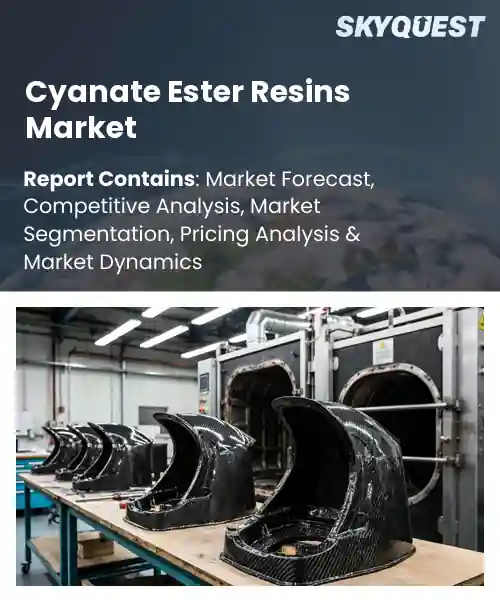
Cyanate Ester Resins Market
Report ID: SQMIG15B2245
Report ID: SQMIG15B2245
[email protected]
USA +1 351-333-4748
Report ID:
SQMIG15B2245 |
Region:
Global |
Published Date: July, 2026
Pages:
157
|Tables:
173
|Figures:
79


Global Cyanate Ester Resins Market size was valued at USD 467.8 Million in 2024 and is poised to grow from USD 510.37 Million in 2025 to USD 1024.43 Million by 2033, growing at a CAGR of 9.1% during the forecast period (2026-2033).
The cyanate ester resins market trends includes high-performance thermosetting polymers that find extensive application in aerospace, automotive, and electronics sectors owing to their excellent thermal stability and low dielectric loss. The relevance of this lies in the ever increasing need for lightweight and fire resistant components which is a trend driven by strict safety regulations and the ongoing effort to reduce carbon footprint. Historically, the market was created in the 1970s as a niche material for military aircraft, but the introduction of next-generation composites in the 2000s increased its adoption to commercial jets and electric-vehicle battery housings. This evolution shows how incremental material innovations and regulatory pressures have gradually expanded the scope of the market and the requirements of global competitiveness.
Rising demand for electrically insulating materials in electric-vehicle power systems is a key driver of the global cyanate ester resins market growth. As the car makers move to higher voltage architectures, standard epoxy cannot meet the thermal and dielectric requirements, and designers are replacing it with cyanate ester formulations that can work above 250 °C and still have the loss tangent. The replacement improves battery safety and allows for thinner packaging, which in turn results in weight savings that directly contribute to the vehicle's range. At the same time, aerospace manufacturers are using attributes to make radar-transparent nose cones, closing a loop that feeds R&D investment and expands global capacity across the supply chain.
How is AI-driven Formulation Automation Impacting the Cyanate Ester Resins Market?
AI-driven formulation automation is transforming the cyanate ester resins market share, speeding up the design of high-performance polymers and shortening trial-and-error cycles. Machine-learning models can predict the optimal monomer ratios, cure schedules and additive selections, helping manufacturers to tailor thermal stability, dielectric properties and mechanical strength for demanding aerospace and electronics applications. The technology also offers real‑time data from reactors, enabling quick adjustments to enhance batch consistency and cut waste. These tools are being used by companies to reduce development times, meet more demanding regulations and react more quickly to customer specifications, thus making the market more agile and innovation-driven.
Solvay, June 2023, launched an AI-based formulation platform that streamlines the design of cyanate ester resin in an effort to improve production efficiency and facilitate market growth.
Market snapshot - (2026-2033)
Global Market Size
USD 467.8 Million
Largest Segment
Bisphenol-Based Cyanate Ester Resins
Fastest Growth
Blended/Modified Cyanate Ester Resins
Growth Rate
9.1% CAGR
To get more insights on this market click here to Request a Free Sample Report
Global cyanate ester resins market is segmented by type, application, end user industry, form, curing type, distribution channel and region. Based on type, the market is segmented into bisphenol-based cyanate ester resins, novolac-based cyanate ester resins and blended/modified cyanate ester resins. Based on application, the market is segmented into printed circuit boards (PCBs), aerospace & defense composites, radomes & antennas, adhesives & coatings and others. Based on end user industry, the market is segmented into aerospace & defense, electrical & electronics, automotive, telecommunications and others. Based on form, the market is segmented into resin, prepreg and composite systems. Based on curing type, the market is segmented into thermally cured and catalytically cured. Based on distribution channel, the market is segmented into direct sales and distributors & dealers. Based on region, the market is segmented into North America, Europe, Asia Pacific, Latin America and Middle East & Africa.
The bisphenol-based cyanate ester resins segment is the dominant segment due to the molecular framework of the resin that offers superior thermal stability and low dielectric loss, fulfilling the high performance requirements for advanced electronic assemblies. It can operate reliably under severe conditions due to its high glass transition temperature and excellent mechanical strength, and is the preferred material for high frequency and high reliability products. Hence, the manufacturers are giving priority to the chemistry to achieve competitive differentiation and further enhance its market leadership.
However, novolac-based cyanate ester resins are experiencing the highest growth momentum, driven by their highly cross-linkable structure leading to superior moisture resistance and dimensional stability, attracting nascent demand in next-generation aerospace composites. Ongoing work on the design of specific monomers is expanding their use, driving market growth and opening up new pipelines of opportunity.
The printed circuit boards (PCBs) segment dominates the market as cyanate ester resins offer an unrivaled combination of low dielectric constant and high thermal endurance that is necessary for miniaturized high-speed circuitry. The capability to sustain signal integrity at higher operating temperatures enables closer placement of components and increased layer counts, directly contributing to the push for smaller, higher-performance electronic devices. As designers stretch the frequency envelope, this choice of material becomes critical, further cementing the dominance of the application landscape.
Meanwhile, adhesives & coatings is emerging as the key high-growth segment as manufacturers are incorporating cyanate ester formulations to meet stringent thermal and fire-rating requirements in automotive and renewable energy structures. The quest for light-weight and durable bonding solutions drives formulation innovation, expands market reach and creates new application niches, accelerating overall market growth.
To get detailed segments analysis, Request a Free Sample Report
Asia Pacific combines strong demand from high-performance sectors such as aerospace, electronics and automotive, with deep research expertise and advanced manufacturing capabilities. An industrial cluster approach in the region promotes close collaboration between resin producers, manufacturers of end-use products and academic institutions to accelerate innovation in low-dielectric and high temperature materials. Strategic government initiatives in support of advanced composites and renewable technologies are further boosting market traction and a skilled workforce ensures rapid scale-up of production capacities. Together, these factors create a virtuous cycle that enhances the region’s leadership in cyanate ester resin applications.
Cyanate ester resins market outlook in Japan benefits from a long tradition of precision engineering and a robust aerospace supply chain. Leading polymer manufacturers invest heavily in specialty resin development, emphasizing thermal stability and fire‑retardant properties required by cutting‑edge electronic devices. Collaborative research programs with universities drive continuous improvement of processing techniques, positioning Japan as a hub for high‑reliability applications in both defense and commercial sectors.
Cyanate ester resins market forecast in South Korea is propelled by rapid growth in the display and semiconductor industries, where superior dielectric performance is essential. Government‑backed initiatives promote advanced materials for next‑generation automotive and renewable energy systems, encouraging local producers to adopt eco‑friendly synthesis routes. The synergy between strong industrial partners and focused R&D centers reinforces South Korea’s capacity to supply high‑quality resins to demanding global customers.
Europe’s growth is driven by high environmental standards and a clear push for lightweight, high-performance composites for transport, aerospace and wind energy. The continent’s strong engineering heritage and collaborative research ecosystem foster the development of resins with lower VOC emissions and enhanced recyclability. The focus on sustainability and circular-economy principles in the region is driving demand for green building materials and sophisticated infrastructure projects. Strong relationships between resin manufacturers and OEMs have resulted in product innovations that closely follow evolving industry standards, helping to accelerate market uptake.
Cyanate ester resins market regional outlook in Germany is shaped by a robust automotive sector seeking weight reduction without compromising safety. German chemical firms leverage precision formulation capabilities to deliver resins that meet demanding thermal and mechanical specifications. Integration with high‑tech engineering firms enables seamless adoption in aerospace components and renewable energy structures, reinforcing Germany’s reputation as a leader in high‑performance material solutions.
Cyanate ester resins market regional forecast in the United Kingdom benefits from a dynamic aerospace and defense ecosystem that prioritizes cutting‑edge composite technologies. The nation’s research institutions focus on enhancing resin toughness and fire resistance, aligning with stringent aerospace certification standards. Collaborative innovation hubs bridge academic insights with industrial production, supporting rapid commercialization of advanced resin systems for aircraft and marine applications.
Cyanate ester resins market analysis in France is emerging through focused investment in sustainable transportation and renewable energy infrastructure. French manufacturers emphasize low‑toxicity formulations suited for wind turbine blades and electric vehicle components. Partnerships with research laboratories drive advancements in processability and long‑term durability, positioning France as an up‑and‑coming player in the European resin landscape.
North America builds on a strong base of aerospace, defense and high-tech electronics manufacturing that require superior thermal and dielectric performance. Close collaboration between the world’s top polymer producers and top OEMs is leading to rapid iteration of resin chemistries for emerging applications such as electric propulsion and advanced aerospace structures, driving continuous innovation. The region’s emphasis on material efficiency and sustainability drives the need for greener synthesis pathways as a well-developed supply chain ensures reliable delivery to end-users in a variety of sectors.
Cyanate ester resins market penetration in the United States thrives on a vibrant research environment and extensive aerospace infrastructure that prioritize high‑temperature stability and flame retardancy. Leading chemical firms partner with defense contractors to develop bespoke resin solutions for next‑generation aircraft and satellite components. Emphasis on process optimization and low‑emission production supports the broader industry push toward environmentally responsible manufacturing.
Cyanate ester resins industry in Canada is reinforced by a growing focus on renewable energy and advanced transportation projects that require lightweight, high‑performance composites. Canadian research institutes specialize in enhancing resin durability under harsh climatic conditions, making them well suited for offshore wind turbines and cold‑climate infrastructure. Collaborative efforts with North American industry partners promote the adoption of innovative, low‑toxicity resin formulations across the region.
To know more about the market opportunities by region and country, click here to
Buy The Complete Report
Rising Demand for High Performance Materials
Regulatory Push for Energy Efficient Composites
High Production Cost and Complexity
Limited Availability of Raw Materials
Request Free Customization of this report to help us to meet your business objectives.
The global cyanate ester resin market is characterized by strong competition among specialty chemical manufacturers and advanced materials companies focused on developing high-performance thermosetting resins for aerospace, defense, electronics, automotive, and industrial applications. Leading companies are strengthening their market positions through continuous investment in research and development, strategic collaborations with aerospace OEMs, electronics manufacturers, and composite fabricators, and expansion of specialty resin production capabilities.
Market participants are increasingly focusing on improving thermal stability, dielectric performance, flame resistance, moisture resistance, and processability to meet the demanding requirements of next-generation aerospace structures, high-frequency electronic devices, satellite systems, and advanced composite materials. Growing demand for lightweight materials, high-speed communication technologies, and defense modernization programs continues to encourage innovation, production expansion, and long-term customer partnerships across the global cyanate ester resin market.
Top Player’s Company Profile
Recent Developments in the Cyanate Ester Resins Market
SkyQuest’s ABIRAW (Advanced Business Intelligence, Research & Analysis Wing) is our Business Information Services team that Collects, Collates, Correlates, and Analyses the Data collected by means of Primary Exploratory Research backed by robust Secondary Desk research. As per SkyQuest analysis the global cyanate ester resin market is being propelled primarily by the rising demand for high‑performance materials in aerospace, electronics and EV power systems, while a second catalyst comes from stricter energy‑efficiency regulations that push manufacturers toward lighter, low‑emission composites. The market is still hampered by the high production cost and complexity of synthesising the monomers, which limits adoption in price‑sensitive segments. Asia Pacific leads the market thanks to its advanced manufacturing clusters and strong R&D support, and within the product mix the bisphenol‑based cyanate ester resin segment holds the largest share because of its superior thermal stability and low dielectric loss.
| Report Metric | Details |
|---|---|
| Market size value in 2024 | USD 467.8 Million |
| Market size value in 2033 | USD 1024.43 Million |
| Growth Rate | 9.1% |
| Base year | 2024 |
| Forecast period | (2026-2033) |
| Forecast Unit (Value) | USD Million |
| Segments covered |
|
| Regions covered | North America (US, Canada), Europe (Germany, France, United Kingdom, Italy, Spain, Rest of Europe), Asia Pacific (China, India, Japan, Rest of Asia-Pacific), Latin America (Brazil, Rest of Latin America), Middle East & Africa (South Africa, GCC Countries, Rest of MEA) |
| Companies covered |
|
| Customization scope | Free report customization with purchase. Customization includes:-
|
To get a free trial access to our platform which is a one stop solution for all your data requirements for quicker decision making. This platform allows you to compare markets, competitors who are prominent in the market, and mega trends that are influencing the dynamics in the market. Also, get access to detailed SkyQuest exclusive matrix.
Table Of Content
Executive Summary
Market overview
Parent Market Analysis
Market overview
Market size
KEY MARKET INSIGHTS
COVID IMPACT
MARKET DYNAMICS & OUTLOOK
Market Size by Region
KEY COMPANY PROFILES
Methodology
For the Cyanate Ester Resins Market, our research methodology involved a mixture of primary and secondary data sources. Key steps involved in the research process are listed below:
1. Information Procurement: This stage involved the procurement of Market data or related information via primary and secondary sources. The various secondary sources used included various company websites, annual reports, trade databases, and paid databases such as Hoover's, Bloomberg Business, Factiva, and Avention. Our team did 45 primary interactions Globally which included several stakeholders such as manufacturers, customers, key opinion leaders, etc. Overall, information procurement was one of the most extensive stages in our research process.
2. Information Analysis: This step involved triangulation of data through bottom-up and top-down approaches to estimate and validate the total size and future estimate of the Cyanate Ester Resins Market.
3. Report Formulation: The final step entailed the placement of data points in appropriate Market spaces in an attempt to deduce viable conclusions.
4. Validation & Publishing: Validation is the most important step in the process. Validation & re-validation via an intricately designed process helped us finalize data points to be used for final calculations. The final Market estimates and forecasts were then aligned and sent to our panel of industry experts for validation of data. Once the validation was done the report was sent to our Quality Assurance team to ensure adherence to style guides, consistency & design.
Analyst Support
Customization Options
With the given market data, our dedicated team of analysts can offer you the following customization options are available for the Cyanate Ester Resins Market:
Product Analysis: Product matrix, which offers a detailed comparison of the product portfolio of companies.
Regional Analysis: Further analysis of the Cyanate Ester Resins Market for additional countries.
Competitive Analysis: Detailed analysis and profiling of additional Market players & comparative analysis of competitive products.
Go to Market Strategy: Find the high-growth channels to invest your marketing efforts and increase your customer base.
Innovation Mapping: Identify racial solutions and innovation, connected to deep ecosystems of innovators, start-ups, academics, and strategic partners.
Category Intelligence: Customized intelligence that is relevant to their supply Markets will enable them to make smarter sourcing decisions and improve their category management.
Public Company Transcript Analysis: To improve the investment performance by generating new alpha and making better-informed decisions.
Social Media Listening: To analyze the conversations and trends happening not just around your brand, but around your industry as a whole, and use those insights to make better Marketing decisions.
REQUEST FOR SAMPLE
 REQUEST FREE CUSTOMIZATION
Global Cyanate Ester Resins Market size was valued at USD 467.8 Million in 2024 and is poised to grow from USD 510.37 Million in 2025 to USD 1024.43 Million by 2033, growing at a CAGR of 9.1% during the forecast period (2026-2033).
The competitive landscape is shaped by incumbents leveraging M&A to broaden resin portfolios, forming strategic partnerships with aerospace and electronics firms to secure supply chains, and accelerating technology innovation through advanced polymerization processes that improve thermal stability and dielectric performance, thereby differentiating their offerings in a market driven by high‑performance material demand. 'Huntsman Corporation', 'Lonza Group AG', 'Mitsubishi Gas Chemical Company, Inc.', 'Solvay S.A.', 'Toray Industries, Inc.', 'Jiangsu Qianrong New Materials Co., Ltd.', 'KUKDO Chemical Co., Ltd.', 'Shikoku Chemicals Corporation', 'Showa Denko Materials Co., Ltd.', 'TenCate Advanced Composites', 'Syensqo SA', 'DIC Corporation', 'Evonik Industries AG', 'Hexcel Corporation', 'Park Aerospace Corp.', 'Jiangsu Jinma High-Tech Fiber Co., Ltd.', 'Hubei Xianlin Chemical Co., Ltd.', 'Novoset LLC', 'Renegade Materials Corporation', 'AOC LLC'
Manufacturers across aerospace, electronics, and automotive sectors are adopting cyanate ester resins to meet stringent thermal stability and mechanical strength requirements, which drives market expansion as these industries seek materials that can sustain higher operating temperatures while maintaining lightweight characteristics, thereby enabling design innovations and longer product lifespans. The ability of cyanate esters to provide superior dielectric properties also supports their integration into high‑frequency circuit boards, further broadening application scope and reinforcing demand across multiple high‑value segments. This cumulative advantage solidifies cyanate ester resins as preferred choices for next‑generation products.
Advanced Composites In Aerospace: Aerospace manufacturers are increasingly adopting cyanate ester resins to fabricate high‑performance composite structures, driven by the demand for lighter airframes that sustain extreme temperatures and fire‑resistance requirements. The resins’ low dielectric constant and superior mechanical strength enable integration of multifunctional components, reducing part count and assembly time. This shift aligns with industry goals of fuel efficiency, lower emissions, and extended service life, positioning cyanate ester technology as a strategic material for next‑generation aircraft and space vehicles in commercial and defense.
Why does Asia Pacific Dominate the Global Cyanate Ester Resins Market? |@12


Want to customize this report? This report can be personalized according to your needs. Our analysts and industry experts will work directly with you to understand your requirements and provide you with customized data in a short amount of time. We offer $1000 worth of FREE customization at the time of purchase.
Feedback From Our Clients


 USA (+1) 351-333-4748

