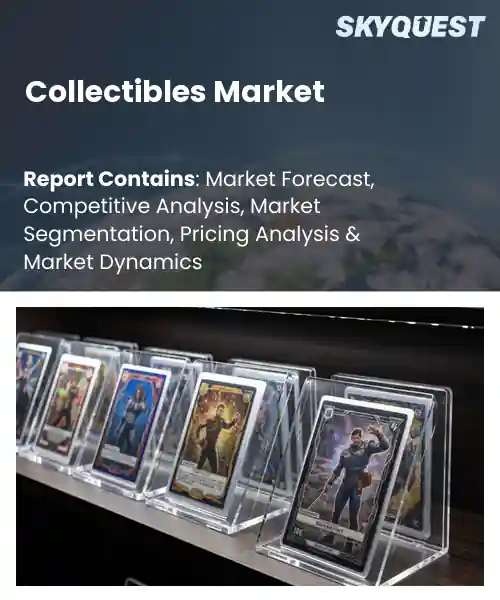
Collectibles Market
Report ID: SQMIG25K2192
Report ID: SQMIG25K2192
[email protected]
USA +1 351-333-4748
Report ID:
SQMIG25K2192 |
Region:
Global |
Published Date: June, 2026
Pages:
157
|Tables:
175
|Figures:
81


Global Collectibles Market size was valued at USD 547.6 Billion in 2024 and is poised to grow from USD 584.84 Billion in 2025 to USD 989.93 Billion by 2033, growing at a CAGR of 6.8% during the forecast period (2026-2033).
At the heart of the collectibles market lies perceived scarcity coupled with provenance, which functions as the primary driver by converting cultural artifacts into tradable assets. The market encompasses physical and digital items stamps, coins, sports cards, fine art, sneakers and NFTs and matters because it channels aesthetic, nostalgic and investment motives into measurable value. Over time the market evolved from localized exchanges and auction houses for coins and postage stamps to globalized, technology-mediated platforms that supported the sports-card resurgence and contemporary art auctions; for example, Sotheby’s and Christie’s expanded online bidding, while StockX and eBay enabled price discovery and cross-border flows.
A key trend driving the global collectibles sector is the expansion of technology-enabled accessibility and authentication systems, which cause greater liquidity and attract a broader range of buyers and capital. Digital ledgers and online marketplaces have been able to reduce frictions between the buyer and seller, making it easier for sellers to connect with global collectors on platforms such as eBay, StockX, and OpenSea, providing greater price discovery, creating a pathway for institutional buyers who want to acquire alternative assets; a lack of trusted grading and provenance through the use of blockchain has been used by companies to reduce information asymmetry and facilitate fractional ownership models like Masterworks and NFTs, creating new revenue-generating opportunities in developing markets around the world.
How is Blockchain Enhancing Authenticity Verification in the Collectibles Market?
One way blockchain is able to improve the verification of an item’s authenticity is through the creation of immutable provenance records for each item as well as connecting each item to a secure digital identity. The key features include tamper-proof ledgers, digital certificates using cryptography and a digital twin of the physical item which is connected via NFC or QR markers. Collectors, grading services and auction houses now use on chain registries to reduce forgery risk and simplify ownership transfers. This moves verification away from fragile paper trails toward transparent histories visible to buyers, sellers and custodians. The change strengthens buyer confidence, eases due diligence for dealers and enables new services that combine physical grading with persistent on chain proof for cards, art and limited edition items.
In January 2026, Alliance Entertainment launched Alliance Authentic which embeds NFC chips and records each item on a blockchain built on Base. The offering links verified sourcing to a public tamper resistant record and powers a trusted resale marketplace, reducing friction in transfers, enabling faster settlement and supporting long term market confidence and efficient provenance checks.
Market snapshot - (2026-2033)
Global Market Size
USD 547.6 Billion
Largest Segment
Fine Art and Sculptures
Fastest Growth
Jewelry and Luxury Watches
Growth Rate
6.8% CAGR
To get more insights on this market click here to Request a Free Sample Report
Global collectibles market is segmented by product type, category, price range, distribution channel, end user, licensing type and region. Based on product type, the market is segmented into coins & currency, trading cards, toys & action figures, comics & memorabilia, stamps, art collectibles and others. Based on category, the market is segmented into physical collectibles and digital collectibles. Based on price range, the market is segmented into mass market, mid-value collectibles and high-value collectibles. Based on distribution channel, the market is segmented into online marketplaces, auctions, specialty stores, direct-to-consumer and others. Based on end user, the market is segmented into individual collectors, investors and museums & institutions. Based on licensing type, the market is segmented into licensed collectibles and non-licensed collectibles. Based on region, the market is segmented into North America, Europe, Asia Pacific, Latin America and Middle East & Africa.
Based on the global collectibles market growth, trading cards segment dominates because widespread fandom and a mature grading and authentication ecosystem create consistent demand and trusted resale pathways. The secondary market also continues to be fuelled by collectible culture, frequent releases and player-driven narratives. Low entry prices and modular rarity tiers facilitate wide participation in the secondary market. The development of online auction sites and other social networks has created opportunities for price discovery and liquidity, thus causing collector interest to self-reinforce and allowing for the continuous turnover and public visibility of the secondary market to sustain speculative and hobbyist participants.
However, Comics & Memorabilia Is The most rapidly expanding area as media adaptations and streaming-driven nostalgia reignite demand. Classic franchises, the celebrity connection and cross-platform stories are revised areas of focus attracting new collectors through the revival of overall mainstream interest. The creation of new authentication services, curated auction events, and hybrid offerings providing both physical and digital access have also made collectibles much more readily available.
Digital collectibles segment leads because enabled by programmable ownership and instant global distribution, it lowers friction for provenance tracking and broadens participation beyond traditional buyers. With blockchain technology supporting a new economy of scarce assets and new, interoperable standards for asset exchange, and the introduction of integrated marketplaces, we can expect rapid iterations of products and monetization opportunities. Factors such as social sharing, gamified utility, and drops created by creators will create an ongoing engagement with the product thus leading to ongoing investment into the platform and the creation of developer ecosytems that will create new product offerings and expand the addressable audience for these new product offerings.
However, physical collectibles is emerging as the fastest-growing area as collectors seek tangible provenance and experiential value. Advances in authentication, restoration, and insured logistics are reducing ownership friction, while hybrid exhibit experiences and high-profile auctions drive institutional interest. This renewed demand for real-world assets complements digital growth and opens cross-market monetization pathways.
To get detailed segments analysis, Request a Free Sample Report
As per the global collectibles market share, North America commands the industry due to a combination of mature retail infrastructure, an established collector culture, and concentration of high-value content industries that continually generate desirable intellectual property. Established auction houses, specialty shops and e-commerce platforms have made it possible to efficiently find, appraise and sell items. Also, professional appraisal and authentication services provide buyers with confidence in their purchases. In addition, the presence of a solid event ecosystem including conventions and boutique shows helps engage the community and provide opportunities for premium brand partnerships. A well-developed logistics and payment structure allows for international commerce and secure transactions. Many types of collectors exist from amateur to professional/institutional creating a diverse range of demand for many different types of collectible items.
Collectibles market in United States benefits from a wide collector base and concentration of high-profile auction houses, entertainment IP and sports memorabilia demand. Well established grading and authentication services and advanced online platforms facilitate trust and liquidity. The colours of the event circuit, endorsement from celebrities and partnerships with brands create maximum visibility. Institutional engagement, and sophisticated private-market activity helps increase the premium segment, while multiple retail channels provide consumer access to the overall buying public as well as niche collectables.
Collectibles market in Canada reflects a culturally diverse collector community and strong regional retail networks that support both vintage and contemporary segments. Collectors benefit from access to a vast array of curated merchandise via authentic certification authorities and physically located auction houses, in addition to connecting to adjacent markets for access to rare pieces through cross border connection points. Community Events and Gallery Partnerships support the development of new genres of Collectibles through these efforts.
Based on global collectibles regional forecast, expansion in Asia Pacific is driven by a confluence of cultural production, technological adoption and evolving consumer behavior that elevates collectibles from niche hobbies to mainstream lifestyle purchases. Local ecosystems working together for intellectual property in animation, gaming and music help create large amounts of licensed merchandise which have high demand. Young people who are raised in this digital world adopt social commerce and secondary-market places at large numbers. The clusters of companies involved in manufacturing and design have the ability to quickly develop many different products and use a limited-edition strategy to satisfy collectors. The growing emphasis on authentication by professionals, the creation of curated retail spaces and hosting of regional events helps build a sense of community and trust. Cross-border commerce and making partnerships or collaborations with international brands helps further integrate the Asia-Pacific region into the global collecting circuits and turn the region's interest into one that is more obvious and powerful within the marketplace.
Collectibles market in Japan is anchored by deep cultural linkages to anime, manga and character merchandise, supported by meticulous production standards and collectible culture. A passionate collector base builds its community around specialty stores, exhibitions and events, which focus on artistry and craftsmanship and value authenticity. Limited and/or high-quality reproduction or limited edition items draw attention, while auction houses (local) and niche online marketplaces make it easier for collectors to find new items and sell them. Brand collaboration and licensing initiatives create stronger appeal to a wider audience, both domestic and international.
Collectibles market in South Korea is propelled by intense fan culture around music, entertainment and fashion that drives demand for limited merchandise and exclusive releases. Brands and agencies team up to create drop models and pop-up stores that blend retail with entertainment. As such, mobile-first commerce and social media platforms speed up the customer journey to finding products and enhance customer-to-customer transactions. With innovative packaging and design, Korean collectibles gain more global visibility due to increased domestic demand and export opportunity.
As per global collectibles regional outlook, Europe is strengthening its role through a combination of cultural heritage leverage, sophisticated auction ecosystems and growing integration of traditional galleries with digital marketplaces. The craft traditions and museum networks provide provenance and authenticity stories that are appealing to collectors who are interested in both quality and history. Major fairs and specialized exhibitions provide paired opportunities to access a large number of works and develop new online platforms for access. Strategic partnerships among cultural organizations, luxury brands, and creative industries create high-quality product development and licensing opportunities, allowing European markets to develop unique and historically significant collectibles that function in a global economy. The investment in digital authentication, targeted marketing, and partnerships with international entities for exhibitions further enhances European relevance to both established and emerging collector segments.
Collectibles market in Germany is shaped by a strong tradition of design appreciation and meticulous curation that favors high-quality production and preservation. Specialty dealers/auctioneers with an established business and authenticity verification assist in building a marketplace for new and old items through their partnerships with museums and/or cultural institutions for exhibitions that prove the legitimacy of the items' provenance. Trade shows and collector clubs facilitate social activity while manufacturers focus on craftsmanship and the number of pieces produced. Digital platforms provide additional access to potential customers.
Collectibles market in United Kingdom benefits from auction houses and a vibrant gallery scene that cultivate high-end and emerging categories. Provenance stories are supported by reputable institutions and their programming; the active network of dealers and specialist fairs assist with cross-genre discovery of items. Trust for domestic and international purchasers is reinforced through digital marketplaces and certification services. Cultural institutions, designers, and brands are working together to create curated drops that resonate with both traditional audiences as well as new audiences.
Collectibles market in France is anchored in artistic heritage, galleries and a luxury ecosystem that elevates design-oriented collectibles. Museum and boutique stores, in addition to private dealers, have auction houses as well. Curatorial endeavours will create both significant offerings and those that are trend-focussed through partnerships between fashion houses, creative studios and other cultural institutions. Many exhibitions and curated online platforms will help with the explorative experience of buyers, but will also continue the tradition of enhancing France's status for craftsmanship and artistic accomplishment.
To know more about the market opportunities by region and country, click here to
Buy The Complete Report
Digital Platforms Expand Accessibility
Growing Interest Among Younger Collectors
Counterfeit and Fraud Risks
High Costs For Authentication and Compliance
Request Free Customization of this report to help us to meet your business objectives.
The competitive landscape for the global collectibles market outlook is intensifying as incumbents and new entrants leverage distinct strategies to win market share; key competition drivers include fee models, token incentives, and authenticated provenance technologies. Recent concrete moves include Fanatics acquisition of Topps to scale branded physical and digital drops and trader focused NFT marketplaces such as Blur using zero fee and airdrop incentives to shift trading activity.
Top Player’s Company Profile
Recent Developments
SkyQuest’s ABIRAW (Advanced Business Intelligence, Research & Analysis Wing) is our Business Information Services team that Collects, Collates, Correlates, and Analyses the Data collected by means of Primary Exploratory Research backed by robust Secondary Desk research.
As per SkyQuest analysis, the global collectibles industry is being propelled by technology-enabled accessibility and authentication systems that increase liquidity and provenance visibility, while counterfeit and fraud risks remain a key restraint that undermines buyer confidence. North America continues to dominate the market supported by mature auction houses, grading services and vibrant collector networks, and trading cards remain the leading segment due to fandom, grading ecosystems and active secondary markets. A second important growth driver is rising interest among younger, digitally native collectors who embrace drops, social commerce and hybrid physical-digital formats, expanding participation and sustaining long-term demand and attracting institutional buyers.
| Report Metric | Details |
|---|---|
| Market size value in 2024 | USD 547.6 Billion |
| Market size value in 2033 | USD 989.93 Billion |
| Growth Rate | 6.8% |
| Base year | 2024 |
| Forecast period | (2026-2033) |
| Forecast Unit (Value) | USD Billion |
| Segments covered |
|
| Regions covered | North America (US, Canada), Europe (Germany, France, United Kingdom, Italy, Spain, Rest of Europe), Asia Pacific (China, India, Japan, Rest of Asia-Pacific), Latin America (Brazil, Rest of Latin America), Middle East & Africa (South Africa, GCC Countries, Rest of MEA) |
| Companies covered |
|
| Customization scope | Free report customization with purchase. Customization includes:-
|
To get a free trial access to our platform which is a one stop solution for all your data requirements for quicker decision making. This platform allows you to compare markets, competitors who are prominent in the market, and mega trends that are influencing the dynamics in the market. Also, get access to detailed SkyQuest exclusive matrix.
Table Of Content
Executive Summary
Market overview
Parent Market Analysis
Market overview
Market size
KEY MARKET INSIGHTS
COVID IMPACT
MARKET DYNAMICS & OUTLOOK
Market Size by Region
KEY COMPANY PROFILES
Methodology
For the Collectibles Market, our research methodology involved a mixture of primary and secondary data sources. Key steps involved in the research process are listed below:
1. Information Procurement: This stage involved the procurement of Market data or related information via primary and secondary sources. The various secondary sources used included various company websites, annual reports, trade databases, and paid databases such as Hoover's, Bloomberg Business, Factiva, and Avention. Our team did 45 primary interactions Globally which included several stakeholders such as manufacturers, customers, key opinion leaders, etc. Overall, information procurement was one of the most extensive stages in our research process.
2. Information Analysis: This step involved triangulation of data through bottom-up and top-down approaches to estimate and validate the total size and future estimate of the Collectibles Market.
3. Report Formulation: The final step entailed the placement of data points in appropriate Market spaces in an attempt to deduce viable conclusions.
4. Validation & Publishing: Validation is the most important step in the process. Validation & re-validation via an intricately designed process helped us finalize data points to be used for final calculations. The final Market estimates and forecasts were then aligned and sent to our panel of industry experts for validation of data. Once the validation was done the report was sent to our Quality Assurance team to ensure adherence to style guides, consistency & design.
Analyst Support
Customization Options
With the given market data, our dedicated team of analysts can offer you the following customization options are available for the Collectibles Market:
Product Analysis: Product matrix, which offers a detailed comparison of the product portfolio of companies.
Regional Analysis: Further analysis of the Collectibles Market for additional countries.
Competitive Analysis: Detailed analysis and profiling of additional Market players & comparative analysis of competitive products.
Go to Market Strategy: Find the high-growth channels to invest your marketing efforts and increase your customer base.
Innovation Mapping: Identify racial solutions and innovation, connected to deep ecosystems of innovators, start-ups, academics, and strategic partners.
Category Intelligence: Customized intelligence that is relevant to their supply Markets will enable them to make smarter sourcing decisions and improve their category management.
Public Company Transcript Analysis: To improve the investment performance by generating new alpha and making better-informed decisions.
Social Media Listening: To analyze the conversations and trends happening not just around your brand, but around your industry as a whole, and use those insights to make better Marketing decisions.
REQUEST FOR SAMPLE
 REQUEST FREE CUSTOMIZATION
Global Collectibles Market size was valued at USD 547.6 Billion in 2024 and is poised to grow from USD 584.84 Billion in 2025 to USD 989.93 Billion by 2033, growing at a CAGR of 6.8% during the forecast period (2026-2033).
The competitive landscape for the global collectibles market is intensifying as incumbents and new entrants leverage distinct strategies to win market share; key competition drivers include fee models, token incentives, and authenticated provenance technologies. Recent concrete moves include Fanatics acquisition of Topps to scale branded physical and digital drops and trader focused NFT marketplaces such as Blur using zero fee and airdrop incentives to shift trading activity. 'Blur: Established in 2022, their main objective is to provide a trader focused NFT marketplace and aggregator that competes on speed, zero fee listings, and advanced order tools. Recent development: after a seed round led by Paradigm the platform deployed token incentives and airdrops to onboard active traders, pushed optional royalty models and expanded aggregator features to capture market share from incumbents, signaling competition driven by fee structures and product led incentives globally.', 'LooksRare: Established in 2022, their main objective is to operate a community incentivized NFT marketplace that challenges incumbents through token rewards and fee rebates. Recent development: the platform executed a prominent airdrop and native token distribution to early traders, created strong secondary market activity and regulatory scrutiny around trade practices, and prompted rivals to test similar token and fee experiments.', 'Funko', 'Hasbro', 'Mattel', 'The Walt Disney Company', 'Bandai Namco Holdings', 'Nintendo', 'Panini Group', 'Fanatics', 'Upper Deck Company', 'Leaf Trading Cards', 'Sideshow Collectibles', 'Hot Toys', 'Good Smile Company', 'Kotobukiya', 'McFarlane Toys', 'NECA', 'Pop Mart', 'Mighty Jaxx', 'TCGplayer', 'Cryptozoic Entertainment'
Digital marketplaces, auction platforms, and social channels have broadened access to collectibles by connecting sellers and buyers across regions, reducing traditional geographic limitations and exposing niche items to wider audiences. Improved user interfaces and curated listings help collectors discover items more easily, while integrated authentication and provenance tools increase trust in online transactions. These platforms also enable flexible pricing, direct communication, and community building, which together stimulate demand and participation by making collecting more convenient and appealing to diverse demographic segments.
Digital Community Engagement: Collectors increasingly rely on online communities and platforms to discover, validate and trade items, driving engagement through narratives and creator collaborations. Platforms foster trust via transparent storytelling and peer feedback, enabling niche interests to scale and categories to emerge. Community driven curation and fan led events influence demand and perceived value, while digital tools support provenance records and interactive showcases. Brands and marketplaces that nurture authentic relationships and participatory experiences unlock loyal audiences, transactions and opportunities to co create offerings.
Why does North America Dominate the Global Collectibles Market? |@12


Want to customize this report? This report can be personalized according to your needs. Our analysts and industry experts will work directly with you to understand your requirements and provide you with customized data in a short amount of time. We offer $1000 worth of FREE customization at the time of purchase.
Feedback From Our Clients


 USA (+1) 351-333-4748

