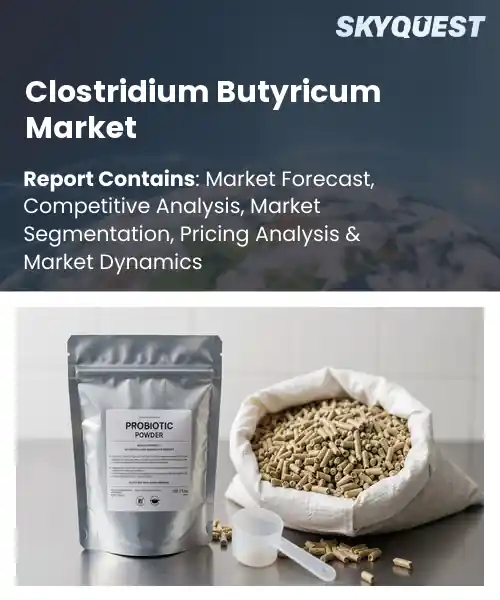
Clostridium Butyricum Market
Report ID: SQMIG35H2455
Report ID: SQMIG35H2455
[email protected]
USA +1 351-333-4748
Report ID:
SQMIG35H2455 |
Region:
Global |
Published Date: March, 2026
Pages:
157
|Tables:
118
|Figures:
77


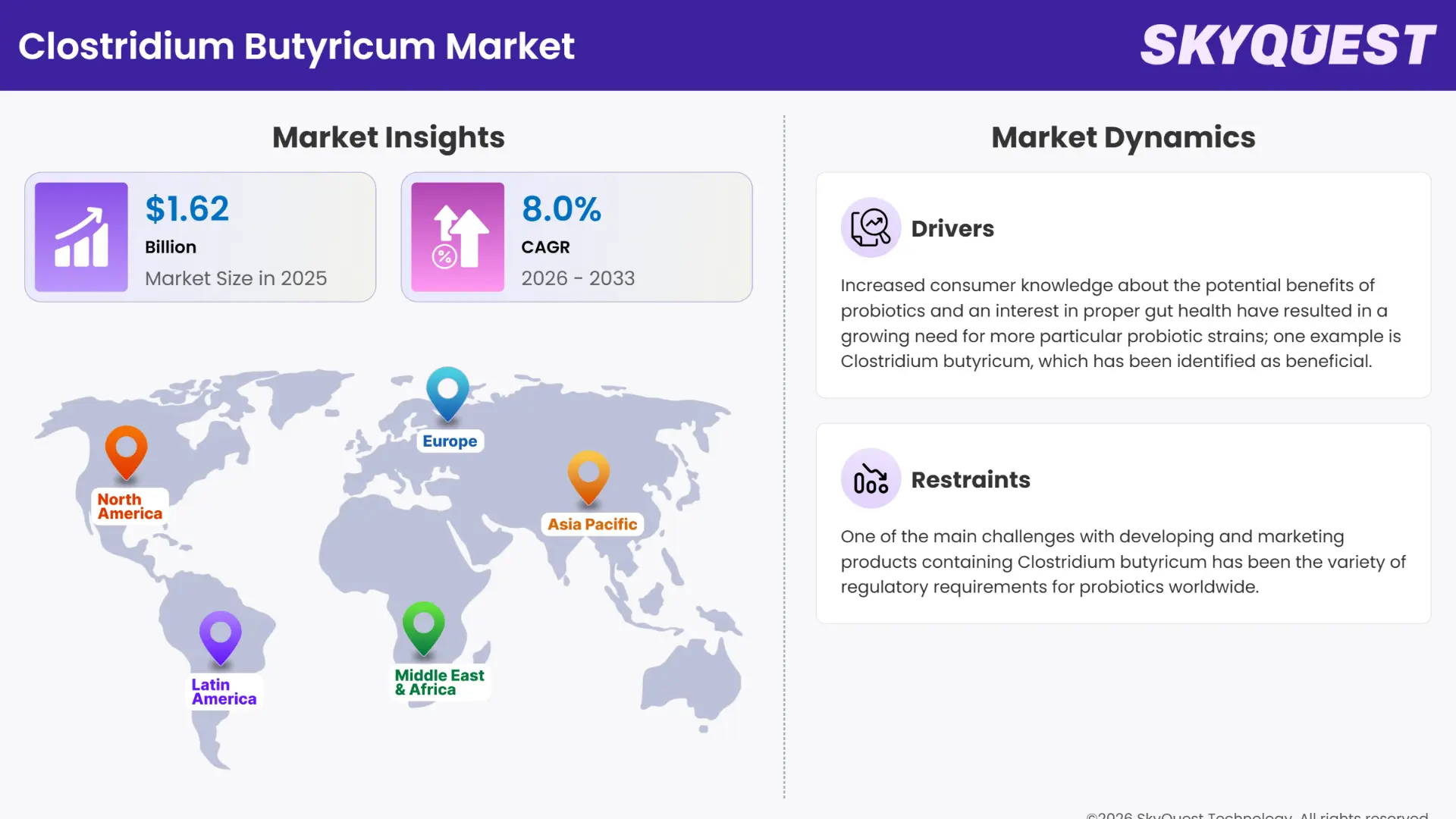
Global Clostridium Butyricum Market size was valued at USD 1.5 Billion in 2024 and is poised to grow from USD 1.62 Billion in 2025 to USD 3.0 Billion by 2033, growing at a CAGR of 8.0% during the forecast period (2026-2033).
Key Takeaways: Market Trends & Insights
The Clostridium butyricum market as the commercial ecosystem for a spore-forming probiotic bacterium used in human and animal health, food preservation, and industrial fermentation. The significance of this growing market lies in its microbial strains that provide benefits related to the modulation of the gut and the antimicrobial activity of the produced peptides and the production of butyrate, which form the basis for regulatory approval and claims, and hence the uptake of these markets as pharmaceuticals, feed additives, and functional food products, respectively. Historically, the growth of this market has transitioned from a niche area of microbiology research with limited local use for probiotic products to global success due to improved culture, encapsulation and cold-chain logistics.
Building on expanded production and regulatory acceptance, a key trend driving the global clostridium butyricum sector growth is rising demand for antibiotic alternatives in livestock and probiotics for gut disorders, because pressure to curb antibiotics compels stakeholders to adopt effective, safe substitutes. When producers adopt C. butyricum as a feed additive, incidences of enteric infections decline and growth performance improves, which lowers overall production costs and creates market pull for premix manufacturers. Similarly, clinical trials showing symptomatic relief in irritable bowel syndrome and postoperative infections drive pharmaceutical partnerships and label extensions, producing opportunities in R&D, formulation technologies, and broader geographic expansion.
How is AI Driving Product Development and Market Growth in the Clostridium Butyricum Market?
The introduction of Artificial Intelligence technologies has transformed the community of clostridium butyricum by making the process of discovering and growing clostridium butyricum more quantitative/data driven throughout the entire lifecycle of clostridium butyricum. Major elements for the use of AIs in clostridium butyricum include strain selection using genomic/metabolic signatures, predictive models of fermentation performance, and the use of machine learning for quality control/formulations stability. Many companies are already utilizing AIs to assist with the above-mentioned data to decrease the time from development to being on the shelf and to create better reproducibility of products. Therefore, manufacturers will be able to provide more robust product claims, operate on more stable supply chains, and differentiate themselves better from their competitors as a result.
In October 2025, ILDONG Bioscience introduced a spore forming Clostridium butyricum strain at Hi Japan 2025 and this kind of release shows how AI guided screening and process modeling can accelerate scale up and improve formulation stability to support market growth and manufacturing efficiency.
To get more insights on this market click here to Request a Free Sample Report
Global clostridium butyricum market is segmented by product grade, formulation type, target application, end-user and region. Based on product grade, the market is segmented into pharma grade, food grade and feed grade. Based on formulation type, the market is segmented into powder/granules, capsules & tablets and liquid fermentation broth. Based on target application, the market is segmented into human digestive health, poultry feed additives, aquaculture health management and swine & ruminant nutrition. Based on end-user, the market is segmented into pharmaceutical companies, food & beverage manufacturers and animal husbandry & farming. Based on region, the market is segmented into North America, Europe, Asia Pacific, Latin America and Middle East & Africa.
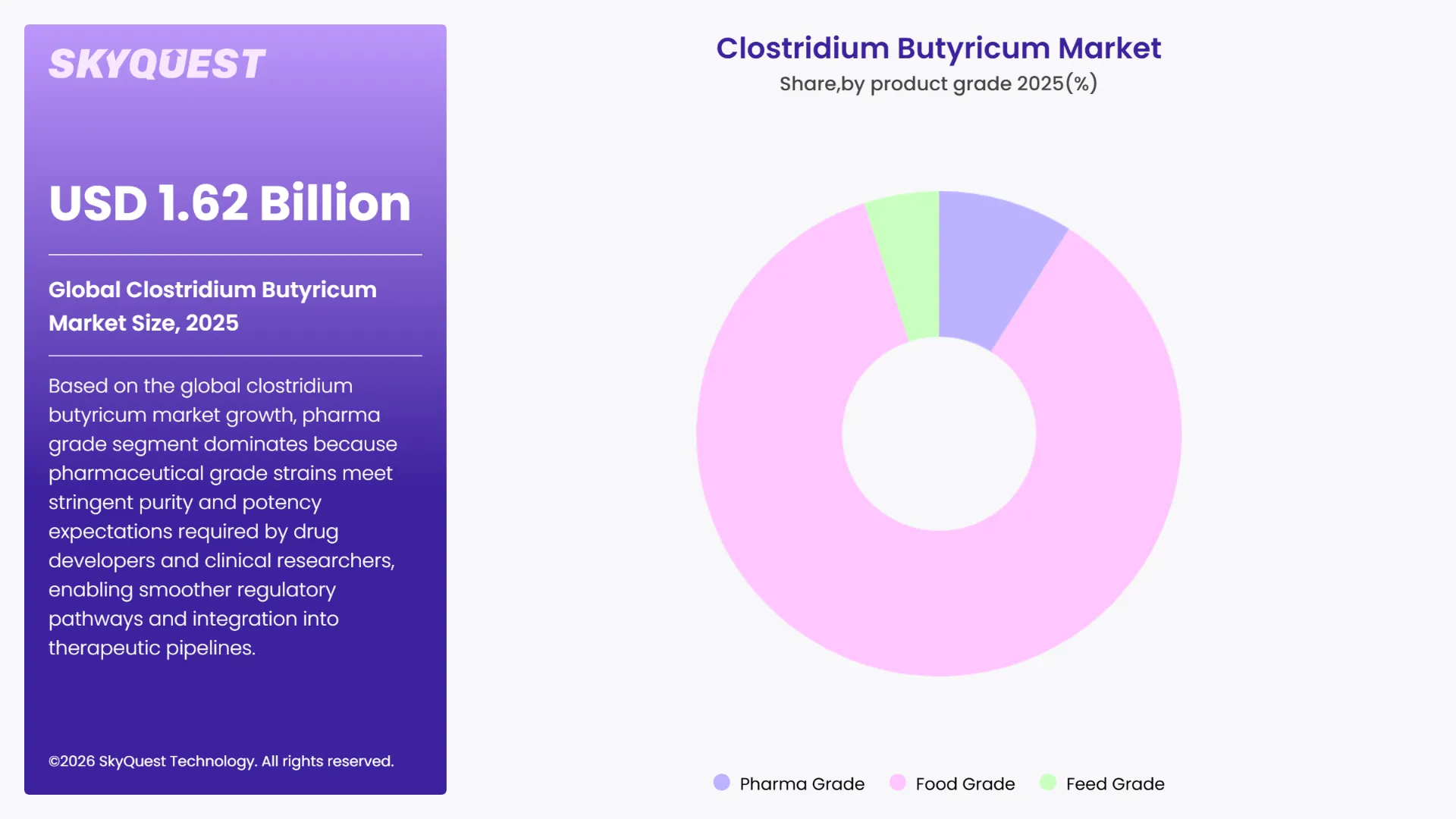
Based on the global clostridium butyricum market growth, pharma grade segment dominates because pharmaceutical grade strains meet stringent purity and potency expectations required by drug developers and clinical researchers, enabling smoother regulatory pathways and integration into therapeutic pipelines. Having established, reliable manufacturing processes and validated quality assurance systems will reduce uncertainty in the development of business entities and will yield clinical outcome consistency, supporting larger healthcare systems to either adopt or have the confidence to commit long term to such strains for targeted approaches.
However, food grade is emerging as the fastest growing area due to growing consumer interest in functional foods and fortified probiotics, prompting food manufacturers to incorporate clostridium butyricum into everyday products. Easier food compliance, innovation in powder delivery forms, and strong retail demand are unlocking new product lines and commercial channels, driving broader market penetration and developer investment.
Powder/granules segment dominates because these formats deliver robust stability, low moisture profiles, and straightforward incorporation into existing manufacturing lines for food, feed, and pharmaceutical producers, reducing formulation complexity and logistics risk. The compatibility of standard blending and encapsulation methodologies allows for accurate and consistent dosage at long distance distribution points; this makes products a preferred choice for significant volume purchasers; hence enabling scalable operations and consistent product performance.
Meanwhile, capsules & tablets are witnessing the strongest growth because they offer precise dosing, convenient administration, and clear consumer labeling that supports health claim positioning and clinical adoption. Innovations in controlled release technologies and enteric coatings have created new premium products for clinical uses that provide opportunities for commercialization and are attracting research and development (R&D) interest. As demand increases for standardized dosages of probiotics, we see growth in product development and commercialization in this space.
To get detailed segments analysis, Request a Free Sample Report
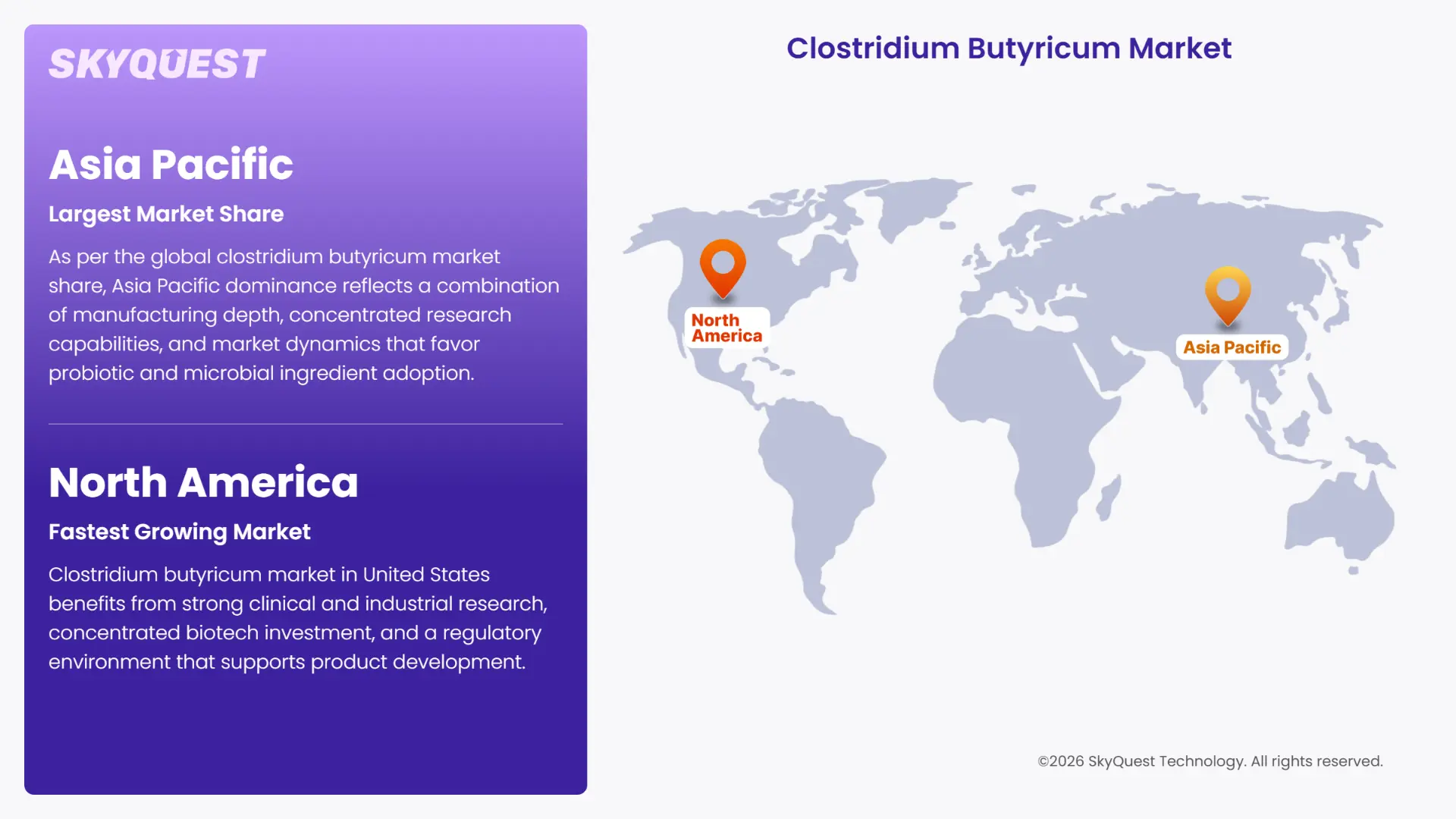
As per the global clostridium butyricum market share, Asia Pacific dominance reflects a combination of manufacturing depth, concentrated research capabilities, and market dynamics that favor probiotic and microbial ingredient adoption. The efficient scaling of production and an ongoing consistent supply of Clostridium Butyricum will be provided by existing fermentation infrastructure and experienced contract manufacturers.
The cost of producing Clostridium Butyricum is also enhanced by the competitive nature of the regional cost structures and the integration of the supply chain. The policy/ regulatory framework in key economies tends to support the approval of functional foods and feeds, thus facilitating their commercialization. Collaborative activities between colleges/ universities/ research institutes and industry allow for an accelerated development of bacterial strains for Clostridium Butyricum and application specific formulations.
Clostridium butyricum market in Japan benefits from advanced bioprocessing capabilities, stringent quality standards, and close collaboration between research institutions and industry. When it comes to product development, regulatory clarity regarding probiotics and therapeutic use can be beneficial, and there are also established pharmaceutical and food ingredient manufacturing networks to further assist with scaling up the products and exporting them to a global audience. Investment in precision fermentation and analytics enhances the ability of new products to be consistent with previous products.
Clostridium butyricum market in South Korea leverages strong industrial biotechnology clusters, high regulatory alignment for health ingredients, and skilled technical workforce to drive innovative product development. Investment and academic research on optimizing strains and formulating products has helped develop local expertise within the manufacturing sector, which supports flexible production. Local producers' focus on quality assurance and certification through international standards allows them to be in a strong position for exporting, supporting South Korea's position as a dynamic regional centre of supply for probiotic ingredients to the global market.
Based on global clostridium butyricum market regional forecast, expansion in North America is propelled by a mature innovation ecosystem, significant private investment in biotech, and close ties between clinical research and industrial development. The strong contract development and manufacturing sector enables companies to devote their time and resources to developing, validating, and scaling their formulations. There is a growing demand for both human health and animal nutrition applications that drive product diversification and the development of new delivery modes, as well as regulatory and quality assurance frameworks, collaboration among academia, and both large and small companies provide an environment where scientific discovery can rapidly translate into finished products and international partnerships.
Clostridium butyricum market in United States benefits from strong clinical and industrial research, concentrated biotech investment, and a regulatory environment that supports product development. Networks of contract development and manufacturing organizations enable scale up and formulation work. The demand for human health supplements and animal nutrition is driving innovation in the way products are delivered and the development of new strains. Collaborations among academic institutions, businesses, and service providers will help position producers for domestic growth and opportunities to partner internationally.
Clostridium butyricum market in Canada is characterized by strong regulatory alignment with international standards, focused research initiatives, and an ecosystem that supports smaller manufacturers. Emphasis on quality control and certification enables producers to compete in export channels, while collaboration between universities and industry fosters applied research in strain development and formulation. Proximity to North American supply chains with emphasis on functional ingredients position Canada as strategic production and innovation partner.
As per global clostridium butyricum market regional outlook, Europe is reinforcing its role through a combination of rigorous quality and safety standards, deep pharmaceutical and food ingredient capabilities, and coordinated research networks that emphasize clinical validation and product quality. Contract research organizations (CRO) and Analytical Service Providers (ASP) offer a high degree of service which supports the production of compliant products of superior quality. Providing access to traceability, sustainability, and advanced analytical techniques influences how producers differentiate their products. Domestic and international collaborations between academia and industry assist in accelerating the development of optimized strains and applications, allowing European manufacturers to provide the top-quality certified Clostridium Butyricum ingredients for sophisticated markets.
Clostridium butyricum market in Germany benefits from a deep pharmaceutical manufacturing tradition, rigorous quality frameworks, and strong industrial biotechnology clusters that support strain development and high quality production. Specialized contract manufacturers and research institutes have worked together to produce advanced formulations and analytical solutions. There is a focus on meeting regulatory requirements and certifications to improve credibility in both domestic & international markets. In Germany, manufacturers have a strong focus on precision in the manufacturing process and supply chain traceability to help ensure that they meet their customer’s rigorous requirements.
Clostridium Butyricum Market in United Kingdom is driven by strong life science research, adaptable regulatory pathways, and a vibrant biotech ecosystem that includes startups and contract providers. Building a reputation as a product(s) producer relies on the emphasis on clinical validation, and the high quality of product manufacturing for both the domestic and export markets. Collaborations between academic institutions/centres and industry for formulations and strain performance; adhering to compliance requirements; and ensuring supply chain transparency provides UK producers with access to potential global-partners.
Clostridium butyricum market in France benefits from robust research institutions, a strong agro food industry, and industrial initiatives that support microbial ingredient development and production. By working together, academicians, food manufacturers, and specialty suppliers can develop systems that will facilitate the ability for them to expand their manufacturing capability. Producers in France often have increased sustainable practices and documentation of their sourcing materials within their supply chains in order to provide their customers with the highest level of quality products & services.
To know more about the market opportunities by region and country, click here to
Buy The Complete Report
Rising Probiotic Awareness Globally
Increased consumer knowledge about the potential benefits of probiotics and an interest in proper gut health have resulted in a growing need for more particular probiotic strains; one example is Clostridium butyricum, which has been identified as beneficial. As professionals within the healthcare and nutrition fields begin to advocate for specific types of microbial therapies to help improve digestion and the immune system, manufacturers are beginning to add Clostridium butyricum into their supplement and functional food product lines. In turn, this has increased the number of companies willing to invest in and develop both Clostridium butyricum production capabilities and new Clostridium butyricum products throughout the supply chain.
Expansion In Animal Feed Applications
Growing adoption of Clostridium butyricum as a probiotic additive in animal nutrition supports livestock health and feed efficiency, prompting feed manufacturers to seek reliable strain sources. Improved animal performance and reduced dependence on antimicrobial growth promoters encourage the incorporation of beneficial microbes into feed formulations, creating steady demand for commercial strains and formulations. When feed producers work together with their microbial suppliers to create new products, this increases the development of new fermentation and formulation methods. These two activities then improve the supply chain and increase the potential for placing products in more markets, which will ultimately expand the market.
Regulatory Approval Complexity
One of the main challenges with developing and marketing products containing Clostridium butyricum has been the variety of regulatory requirements for probiotics worldwide. Each country has its own classification, labeling, and allowable use standards for these types of products, making obtaining regulatory approval and entering the market time-consuming and administratively burdensome. As a result, the complexity of these requirements discourages smaller companies from developing new products and slows the introduction of new products to the marketplace; this leads larger companies to focus more on compliance than innovation and, consequently, creates congestion in the marketplace of these products.
Manufacturing Scale Up Challenges
Technical difficulties encountered when scaling up production of Clostridium butyricum include: strain stability, consistency of potency, and the prevention of microbial contamination throughout both large-scale fermentation and downstream production. In order to achieve such goals, careful monitoring of specialized cultivation environments and quality control protocols are necessary which require significant technical know-how and capital investments in infrastructure that are often difficult to rapidly obtain. As a result of these limitations, manufacturers have been unable to respond rapidly to unexpected increases in consumer demand and present barriers to new suppliers entering the market.
Request Free Customization of this report to help us to meet your business objectives.
Competition in the global clostridium butyricum market outlook is driven by strain IP, manufacturing scale up and regulatory positioning, with firms pursuing licensing deals, CDMO partnerships and targeted acquisitions to secure supply and therapeutic claims. Examples include licensing activity around the MIYAIRI 588 strain to clinical developers and ingredient firms forming CDMO alliances to scale postbiotic and spore forming production.
SkyQuest’s ABIRAW (Advanced Business Intelligence, Research & Analysis Wing) is our Business Information Services team that Collects, Collates, Correlates, and Analyses the Data collected by means of Primary Exploratory Research backed by robust Secondary Desk research.
As per SkyQuest analysis, the global clostridium butyricum industry is being driven primarily by rising demand for antibiotic alternatives and growing clinical and consumer interest in targeted probiotics, supported further by expanding use as an animal feed additive that improves growth performance and reduces antimicrobial reliance. The complexity of regulatory approval continues to be a major barrier to entry as there are many different types of frameworks and safety assessments that delay new drugs coming to market. The Asia Pacific region is the global leader in terms of their fermentation capabilities, research hubs and export-focused manufacturers; however, the pharma grade market is the largest due to their high levels of purity and quality assurance standards which are critical for therapeutic use and clinical collaboration as well as continued support from R&D investment will provide added long-term growth opportunities.
| Report Metric | Details |
|---|---|
| Market size value in 2024 | USD 1.5 Billion |
| Market size value in 2033 | USD 3.0 Billion |
| Growth Rate | 8.0% |
| Base year | 2024 |
| Forecast period | 2026-2033 |
| Forecast Unit (Value) | USD Billion |
| Segments covered |
|
| Regions covered | North America (US, Canada), Europe (Germany, France, United Kingdom, Italy, Spain, Rest of Europe), Asia Pacific (China, India, Japan, Rest of Asia-Pacific), Latin America (Brazil, Rest of Latin America), Middle East & Africa (South Africa, GCC Countries, Rest of MEA) |
| Companies covered |
|
| Customization scope | Free report customization with purchase. Customization includes:-
|
To get a free trial access to our platform which is a one stop solution for all your data requirements for quicker decision making. This platform allows you to compare markets, competitors who are prominent in the market, and mega trends that are influencing the dynamics in the market. Also, get access to detailed SkyQuest exclusive matrix.
Table Of Content
Executive Summary
Market overview
Parent Market Analysis
Market overview
Market size
KEY MARKET INSIGHTS
COVID IMPACT
MARKET DYNAMICS & OUTLOOK
Market Size by Region
KEY COMPANY PROFILES
Methodology
For the Clostridium Butyricum Market, our research methodology involved a mixture of primary and secondary data sources. Key steps involved in the research process are listed below:
1. Information Procurement: This stage involved the procurement of Market data or related information via primary and secondary sources. The various secondary sources used included various company websites, annual reports, trade databases, and paid databases such as Hoover's, Bloomberg Business, Factiva, and Avention. Our team did 45 primary interactions Globally which included several stakeholders such as manufacturers, customers, key opinion leaders, etc. Overall, information procurement was one of the most extensive stages in our research process.
2. Information Analysis: This step involved triangulation of data through bottom-up and top-down approaches to estimate and validate the total size and future estimate of the Clostridium Butyricum Market.
3. Report Formulation: The final step entailed the placement of data points in appropriate Market spaces in an attempt to deduce viable conclusions.
4. Validation & Publishing: Validation is the most important step in the process. Validation & re-validation via an intricately designed process helped us finalize data points to be used for final calculations. The final Market estimates and forecasts were then aligned and sent to our panel of industry experts for validation of data. Once the validation was done the report was sent to our Quality Assurance team to ensure adherence to style guides, consistency & design.
Analyst Support
Customization Options
With the given market data, our dedicated team of analysts can offer you the following customization options are available for the Clostridium Butyricum Market:
Product Analysis: Product matrix, which offers a detailed comparison of the product portfolio of companies.
Regional Analysis: Further analysis of the Clostridium Butyricum Market for additional countries.
Competitive Analysis: Detailed analysis and profiling of additional Market players & comparative analysis of competitive products.
Go to Market Strategy: Find the high-growth channels to invest your marketing efforts and increase your customer base.
Innovation Mapping: Identify racial solutions and innovation, connected to deep ecosystems of innovators, start-ups, academics, and strategic partners.
Category Intelligence: Customized intelligence that is relevant to their supply Markets will enable them to make smarter sourcing decisions and improve their category management.
Public Company Transcript Analysis: To improve the investment performance by generating new alpha and making better-informed decisions.
Social Media Listening: To analyze the conversations and trends happening not just around your brand, but around your industry as a whole, and use those insights to make better Marketing decisions.
REQUEST FOR SAMPLE
 REQUEST FREE CUSTOMIZATION
Global Clostridium Butyricum Market size was valued at USD 1.5 Billion in 2024 and is poised to grow from USD 1.62 Billion in 2025 to USD 3.0 Billion by 2033, growing at a CAGR of 8.0% during the forecast period (2026-2033).
Competition in the global Clostridium butyricum market is driven by strain IP, manufacturing scale up and regulatory positioning, with firms pursuing licensing deals, CDMO partnerships and targeted acquisitions to secure supply and therapeutic claims. Examples include licensing activity around the MIYAIRI 588 strain to clinical developers and ingredient firms forming CDMO alliances to scale postbiotic and spore forming production. 'Miyarisan Pharmaceutical', 'Zhejiang Biorun Biotech', 'Scitop Biomaterials', 'Hangzhou Fuli Biotech', 'Guangdong Yuewei Biotech', 'Shanghai Sinehealth', 'Wuhan Yuancheng', 'Hefei Originwater', 'Chongqing Yunstar', 'Hubei Jiuding', 'AOR Canada', 'Mitushi Bio Pharma', 'Hangzhou Vega', 'Sunhy Group', 'Kemin Industries', 'Novozymes', 'Lallemand Health', 'ADM', 'Chr. Hansen', 'DuPont'
Rising consumer awareness of probiotic benefits and growing interest in gut health has increased demand for specialized probiotic strains such as Clostridium butyricum. Healthcare professionals and nutritionists increasingly recommend targeted microbial therapies to support digestion and immune function, encouraging manufacturers to incorporate this strain into supplements and functional foods. Expanded educational efforts and media coverage enhance acceptance among consumers, reducing skepticism and facilitating market entry for new products, which in turn motivates investment in production capacity and product development across the supply chain.
Rising Probiotic Demand In Healthcare: Clostridium butyricum is increasingly positioned as a preferred probiotic strain for gut health and immune support. Stakeholders focus on evidence generation, formulation stability, and delivery formats tailored to medical and consumer wellness channels. Collaborations between biotech companies and clinical researchers expand product pipelines and professional acceptance. This trend encourages targeted marketing, clinically grounded claims, and investment in validated therapeutic and preventive applications that enhance product differentiation, customer trust, and long term integration while supporting regulatory dialogue and clinical evidence adoption.
Asia Pacific Dominate the Global Clostridium Butyricum Market?
Clostridium butyricum is a beneficial probiotic bacterium widely used in dietary supplements, animal nutrition, and functional foods. It supports gut health by promoting beneficial intestinal microflora and improving digestive function.
The healthcare, dietary supplement, functional food, and animal feed industries are among the primary users of Clostridium butyricum products due to their probiotic and digestive health benefits.


Want to customize this report? This report can be personalized according to your needs. Our analysts and industry experts will work directly with you to understand your requirements and provide you with customized data in a short amount of time. We offer $1000 worth of FREE customization at the time of purchase.
Feedback From Our Clients


 USA (+1) 351-333-4748

