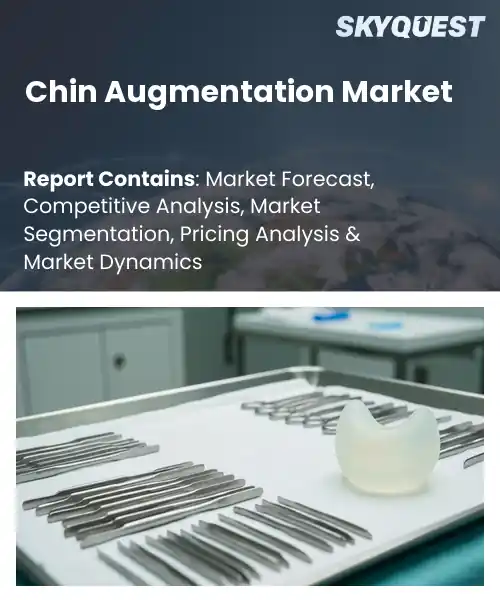
Chin Augmentation Market
Report ID: SQMIG35D2408
Report ID: SQMIG35D2408
[email protected]
USA +1 351-333-4748
Report ID:
SQMIG35D2408 |
Region:
Global |
Published Date: March, 2026
Pages:
157
|Tables:
115
|Figures:
77


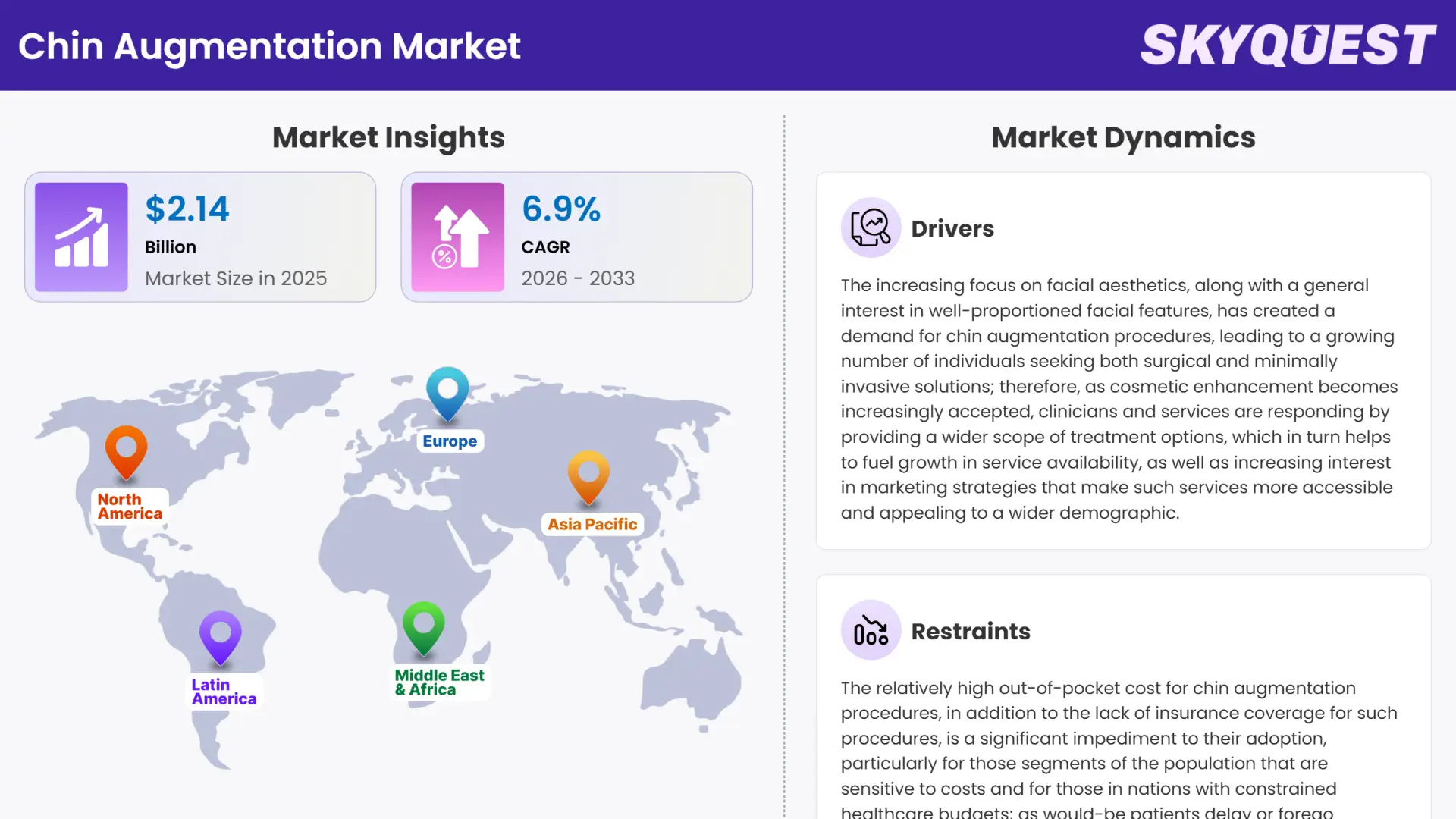
Global Chin Augmentation Market size was valued at USD 2.0 Billion in 2024 and is poised to grow from USD 2.14 Billion in 2025 to USD 3.65 Billion by 2033, growing at a CAGR of 6.9% during the forecast period (2026-2033).
Key Takeaways: Market Trends & Insights
Growing demand for aesthetic facial enhancements, increasing awareness of cosmetic procedures, rising disposable incomes, advancements in minimally invasive techniques, and growing influence of social media on beauty standards are driving sales of chin augmentation procedures.
The shift towards minimally invasive techniques has been very effective in terms of patient acceptability by reducing risks, recovery periods, and cost factors, and by making it possible to repeat the treatment. Clinics are increasingly opting for a combination of chin augmentation with other surgical procedures like rhinoplasty to achieve better results. With the improvement in imaging techniques and CAD planning tools, the accuracy of the procedure and patient confidence are improving, and with the rise of medical tourism and the expansion of aesthetic clinic networks, opportunities are opening up for players in the industry.
Evolution of chin augmentation from a niche segment of reconstructive surgery to a mainstream aesthetic procedure is also expected to help the chin augmentation product segment going forward. Growing preference for facial symmetry and balanced aesthetics among consumers around the world coupled with a shift toward minimally invasive cosmetic treatments is expected to primarily drive chin augmentation market growth.
On the contrary, high costs of advanced procedures, potential risks and complications, lack of standardized regulations across regions, social stigma in certain markets, and variability in clinical outcomes are anticipated to slow down chin augmentation market penetration in the long run.
How is AI Enhancing Precision In Chin Augmentation Procedures?
AI is helping to achieve precision in chin augmentation. For instance, there are improvements in precision due to the use of AI, which is helping to plan chin augmentations objectively. In this regard, there is a focus on precision, which is helping to achieve objective planning. For instance, there is a focus on precision due to the use of automated facial analysis, 3D imaging, and prediction simulations. In this regard, there is a focus on precision, which helps to achieve objective planning. There is a focus on precision, which helps to achieve objective planning.
In November 2025, Galderma received U.S. FDA approval for Restylane Lyft for chin augmentation. Clinics are now combining this filler with AI-based 3D simulation tools to refine injection planning, improve patient communication, and support wider adoption of efficient treatment approaches.
To get more insights on this market click here to Request a Free Sample Report
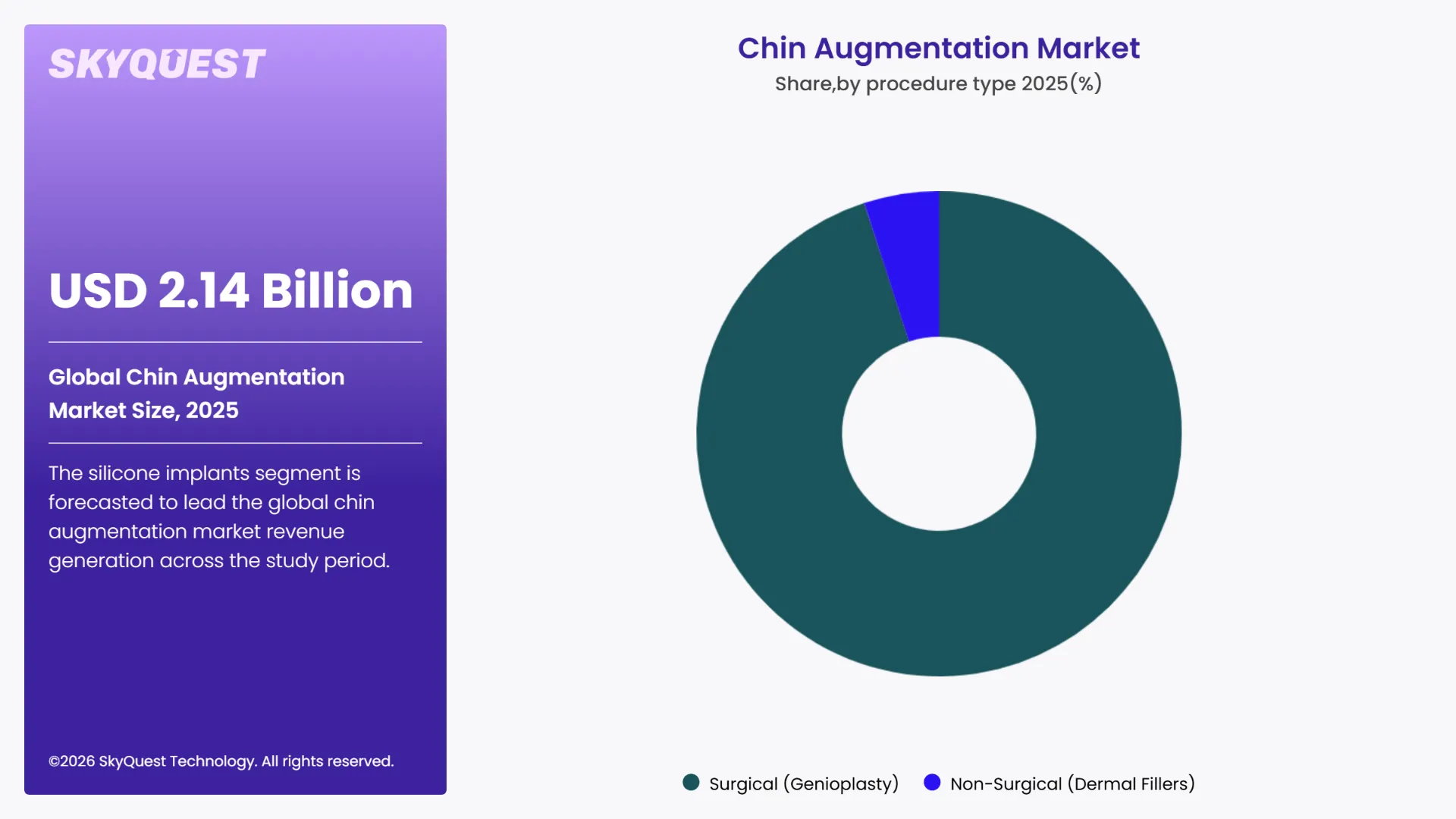
Global chin augmentation market is segmented by procedure type, implant material (surgical only), injectable filler type, end-user and region. Based on procedure type, the market is segmented into Surgical (Genioplasty) and Non-Surgical (Dermal Fillers). Based on implant material (surgical only), the market is segmented into Silicone Implants, Porous Polyethylene (Medpor) and Gore-Tex (ePTFE). Based on injectable filler type, the market is segmented into Hyaluronic Acid (HA) and Calcium Hydroxylapatite (CaHA). Based on end-user, the market is segmented into Specialized Cosmetic Surgery Clinics, Dermatology Centers and Multi-specialty Hospitals. Based on region, the market is segmented into North America, Europe, Asia Pacific, Latin America and Middle East & Africa.
The silicone implants segment is forecasted to lead the global chin augmentation market revenue generation across the study period. Silicone implants provide highly predictable shape control and ease of surgical placement, which drives surgeon preference and standardized treatment pathways to cement the dominance of this segment. Their widespread availability in preformed shapes, as well as their familiarity to clinicians, helps to limit variability in surgical approaches and perceptions of risk, which in turn helps to promote their use. Consistent quality in manufacturing, as well as the longevity of aesthetic results, helps to promote a self-reinforcing bias for these devices in chin augmentation planning and counseling.
However, porous polyethylene (Medpor) is emerging as the most rapidly expanding segment as per this chin augmentation industry analysis. Its porous structure promotes tissue integration, improving stability and perceived natural feel, innovations in pore design are creating new opportunities. The evolving surgical procedures increase surgeon confidence, broaden product indications, and drive product development as well as training programs that accelerate future growth in structural chin augmentation.
The hyaluronic acid (HA) segment is projected to account for the highest global chin augmentation market share going forward. Hyaluronic acid fillers offer reversible, immediate contouring that aligns with patient demand for minimally invasive chin refinement to help this segment hold sway over others. The versatility of the product in the range of product viscosities facilitates volumization and refinement by skilled injectors, which enhances the confidence level of the clinicians in using the product. The familiarity of the clinicians with the product, the safety protocols in place, and the availability of various formulation options enhance the routine use of the product and the expansion of the service lines in aesthetic clinics.
On the other hand, Calcium Hydroxylapatite (CaHA) fillers are found to have the highest growth potential as injectable fillers for chin augmentation due to their higher durability and scaffolding properties that allow for a structural projection necessary for chin augmentation, as well as product improvements and injector skills that facilitate deeper injection protocols to increase product indications.
To get detailed segments analysis, Request a Free Sample Report
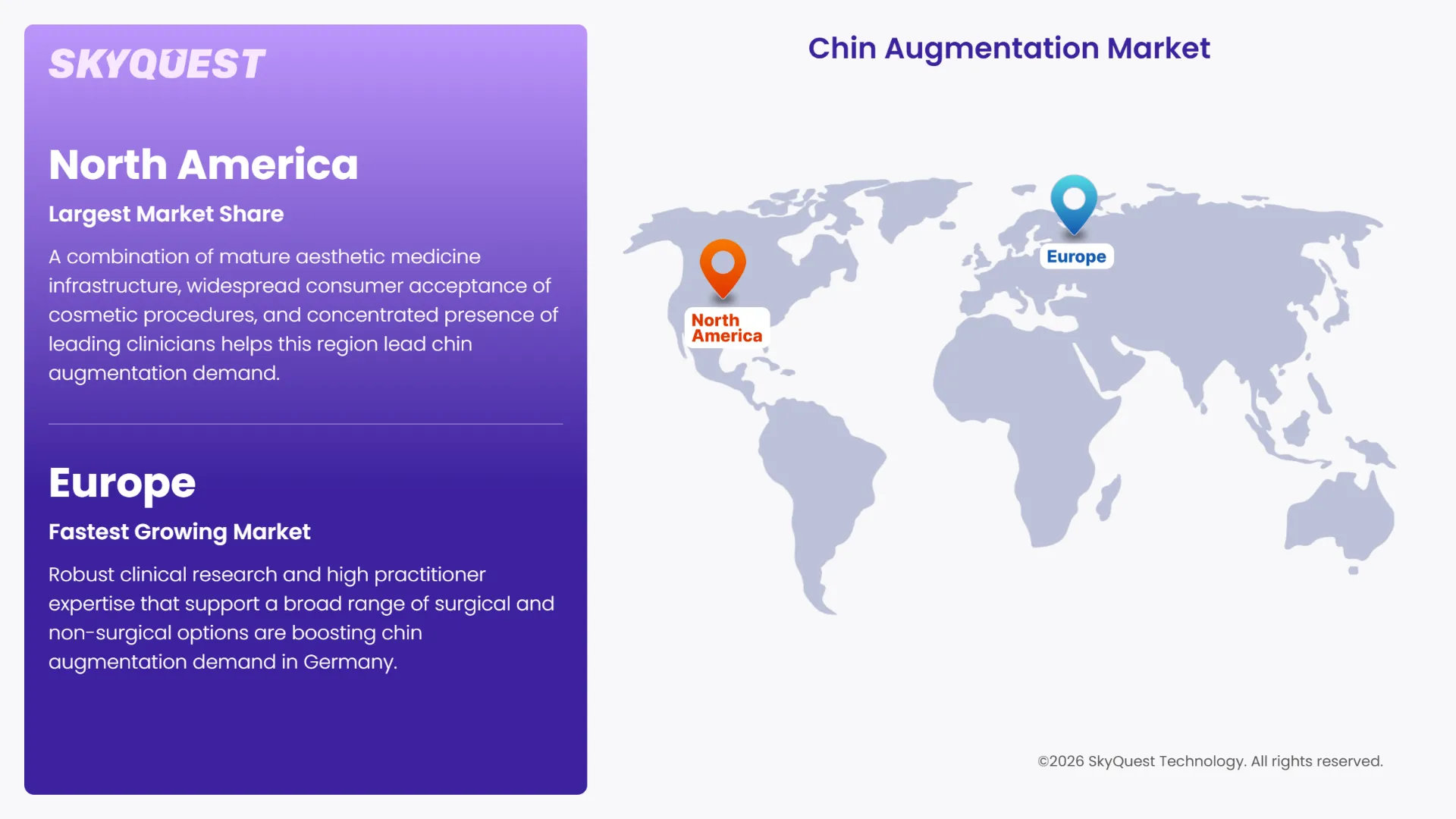
A combination of mature aesthetic medicine infrastructure, widespread consumer acceptance of cosmetic procedures, and concentrated presence of leading clinicians helps this region lead chin augmentation demand. Established private healthcare channels and aesthetic clinics facilitate rapid adoption of new techniques and product launches. Strong regulatory frameworks with clear regulations regarding reimbursement and payment practices support market entry, and demand for chin augmentation products is driven by strong marketing efforts and patient education. Collaboration between research organizations, industry and professional organizations helps create clinical evidence and clinical standardization, this further reinforces the North American region as the principal center for product development and clinical practice in chin augmentation. The ecosystem created by the above components encourages continuous improvement as well as high quality service delivery. Defined training pathways and high willingness to spend on aesthetic enhancements further cement the dominance of this region.
Mature provider network and deep clinical expertise supporting surgical and injectable options are forecasted to govern the demand for chin augmentation in the United States. Education and marketing efforts of specialist centers maintain the interest in personalized chin enhancement products for various segments of the population. High aesthetic augmentation acceptance and clustering of clinics in urban areas are also driving revenue generation in the country.
Established clinical services with rising interest in minimally invasive enhancements among urban populations are shaping chin augmentation demand in Canada. Emphasis on professional training, cross-border clinical practices, and patient-centric business models contributes to a balanced growth pattern. High interest of urban consumers in such procedures, with safe practices facilitated through regional centers and certified professionals, further creating new opportunities.
Evolving aesthetic ideals, increased consumer openness to cosmetic enhancements, and expanding clinical capabilities across urban centers are boosting adoption of chin augmentation in Europe. Networks of professionals and the increased availability of education for professionals to perform both implant-based and non-implant procedures have made it possible for practitioners to perform these procedures with confidence. Increased clinic size and focused marketing campaigns by the clinics have increased the number of patients who are aware of the existence of the clinic. Additionally, collaborations between academic and industry have facilitated evidence-based practice. Investments in patient education and minimally invasive procedures have contributed to increasing demand for cosmetic procedures and have made Europe one of the more dynamic regions in which both established and new companies can succeed in attracting patients who are clinically sophisticated and quality-driven. Medical tourism and clinic accreditation and patients wanting to have procedures at accredited clinics all add to the depth of the overall market and the learning across the overall markets.
Robust clinical research and high practitioner expertise that support a broad range of surgical and non-surgical options are boosting chin augmentation demand in Germany. Strong centers of excellence and close links between academia and industry help to drive product development and clinical validation, which supports Germany’s position as a regional hub for advanced chin augmentation treatment and innovation.
Rapid adoption of new techniques supported by a robust private clinic sector and concentrated urban specialist practices drives chin augmentation demand in the United Kingdom. Investment in clinics and marketing strategies enhances service delivery, thereby creating a healthy competition for tailored chin enhancement services. High emphasis on training, patient safety, and practitioner visibility enhances trust in chin augmentation procedures. Minimally invasive procedures offer additional alternatives to surgical procedures, thereby attracting both local and international patients.
Rising consumer interest in refined and natural aesthetic outcomes are supporting chin augmentation demand in France. Education of practitioners, patients, and safety of procedures are helping to drive the growth of this market. Combined research and marketing initiatives are driving the growth of implant procedures. Specialist practitioners and clinics in metropolitan cities are expanding their service offerings to include implant procedures as well as non-surgical fillers.
High investments in clinical expertise, rapid adoption of minimally invasive techniques, and strong cultural demand for aesthetic refinement are boosting chin augmentation adoption in this region. Strong emphasis on clinical training and experience allows for the performance of a variety of innovative procedures with great effectiveness on patients who have different facial forms. Additionally, beauty trends that are prevalent in this region are also supported by high-profile professionals helping to drive consumer interest; the region also attracts significant medical tourism because the exchange of knowledge across countries helps facilitate best practice principles. As improvements continue to be made in terms of clearer regulations/guidelines for cosmetic surgeons as well as the establishment of accredited medical clinics that specialize in aesthetic procedures leads to increased patient and practitioner confidence, Asia Pacific will be positioned as one of the most important global players influencing current and future trends and techniques used in chin augmentation. Ongoing joint research efforts and targeted educational programs have and will continue to positively impact the overall clinical standards and sophistication levels of cosmetic surgery throughout the entire Asia Pacific region.
Chin augmentation procedures in Japan are centered around precision and subtle reshaping that reflects local preferences for natural contours. Domestic industry players contribute to the development of products. A strong focus on patient consultation and post-surgical care enhances the reputation of the market. Education is a key area for the sophistication of the market, which is further enhanced by collaborative research. Specialist clinics and experts focus on minimally invasive procedures as well as conservative surgical techniques according to the regional facial anatomy.
Cultural focus on facial aesthetics and widespread familiarity with cosmetic procedures are boosting chin augmentation demand in South Korea. Comprehensive education systems, prominent aesthetic practitioners, and medical tourism help ensure the clinical adoption of chin augmentation services and its continuous development within the market. Clinics specialize in surgically reshaping and using advanced techniques of injecting fillers for a more refined look. Working together with medical practitioners and manufacturers helps refine the product and procedure.
To know more about the market opportunities by region and country, click here to
Buy The Complete Report
Increasing Demand For Aesthetic Procedures
The increasing focus on facial aesthetics, along with a general interest in well-proportioned facial features, has created a demand for chin augmentation procedures, leading to a growing number of individuals seeking both surgical and minimally invasive solutions; therefore, as cosmetic enhancement becomes increasingly accepted, clinicians and services are responding by providing a wider scope of treatment options, which in turn helps to fuel growth in service availability, as well as increasing interest in marketing strategies that make such services more accessible and appealing to a wider demographic.
Advances In Implant and Filler Technology
Ongoing innovations in materials used for implants and the injectable filler agents have improved their biocompatibility, longevity, and predictability, thus making practitioners more willing to use the latest products for patient-specific chin contouring; improved delivery systems and surgical instruments alleviate concerns related to the recovery period, thus making a wider category of patients eligible for the procedure, which is a positive aspect for practitioners’ confidence, manufacturers’ innovation, and clinics’ ability to market unique services, thus boosting the global chin augmentation market outlook.
High Cost and Limited Insurance Coverage
The relatively high out-of-pocket cost for chin augmentation procedures, in addition to the lack of insurance coverage for such procedures, is a significant impediment to their adoption, particularly for those segments of the population that are sensitive to costs and for those in nations with constrained healthcare budgets; as would-be patients delay or forego procedures, clinics may have to focus their services in more affluent segments of the population, thereby limiting market penetration, diversification, and investment in cost-effective service delivery models that could stimulate more widespread adoption of chin augmentation procedures.
Safety Concerns and Complication Risks
Procedural safety, the presence of possible complications, and the skill level of practitioners give rise to caution among the would-be patients or referring practitioners themselves, thus acting as a deterrent to the growth of the market for chin augmentation. Scrutiny of practices by governing bodies may result in the imposition of stricter standards of practice, thereby increasing the operational burden for practitioners or deterring less experienced ones from participating in the market, which could act as a deterrent to the growth of the market for chin augmentation procedures.
Request Free Customization of this report to help us to meet your business objectives.
The competitive landscape in global chin augmentation is shifting toward tech driven differentiation as incumbents and new entrants pursue point of care manufacturing, hospital partnerships, and product innovation to deliver patient specific implants and resorbable solutions. Strategic moves include point of care launches by 3D Systems, Factory in a Box hospital partnerships from Meticuly, and research alliances such as OsseoLabs with universities.
OsseoLabs: Established in 2021, their main objective is to deliver AI driven personalized 3D printed implants for craniomaxillofacial and mandibular reconstruction that reduce surgical time and follow up interventions. The Thailand-based startup introduced magnesium based bioresorbable implant prototypes, ran clinical pilot cases in Thailand, partnered with North Carolina State University on additive manufacturing and material testing, and closed early-stage funding to scale manufacturing and regulatory work.
SkyQuest’s ABIRAW (Advanced Business Intelligence, Research & Analysis Wing) is our Business Information Services team that Collects, Collates, Correlates, and Analyses the Data collected by means of Primary Exploratory Research backed by robust Secondary Desk research.
As per SkyQuest analysis, rising demand for aesthetic facial enhancements, increasing adoption of minimally invasive cosmetic procedures, and growing influence of social media on beauty standards are anticipated to drive the demand for chin augmentation going forward. However, high procedure costs, potential risks and complications, lack of standardized regulations, and variability in clinical outcomes are slated to slow down the adoption of chin augmentation in the future. North America is slated to spearhead the demand for chin augmentation owing to strong presence of advanced aesthetic clinics, high consumer awareness, and favorable regulatory approvals for dermal fillers. Integration of AI-assisted treatment planning, advancements in injectable filler technologies, and growing adoption of non-surgical procedures are anticipated to be key trends driving the chin augmentation sector through 2033.
| Report Metric | Details |
|---|---|
| Market size value in 2024 | USD 2.0 Billion |
| Market size value in 2033 | USD 3.65 Billion |
| Growth Rate | 6.9% |
| Base year | 2024 |
| Forecast period | 2026-2033 |
| Forecast Unit (Value) | USD Billion |
| Segments covered |
|
| Regions covered | North America (US, Canada), Europe (Germany, France, United Kingdom, Italy, Spain, Rest of Europe), Asia Pacific (China, India, Japan, Rest of Asia-Pacific), Latin America (Brazil, Rest of Latin America), Middle East & Africa (South Africa, GCC Countries, Rest of MEA) |
| Companies covered |
|
| Customization scope | Free report customization with purchase. Customization includes:-
|
To get a free trial access to our platform which is a one stop solution for all your data requirements for quicker decision making. This platform allows you to compare markets, competitors who are prominent in the market, and mega trends that are influencing the dynamics in the market. Also, get access to detailed SkyQuest exclusive matrix.
Table Of Content
Executive Summary
Market overview
Parent Market Analysis
Market overview
Market size
KEY MARKET INSIGHTS
COVID IMPACT
MARKET DYNAMICS & OUTLOOK
Market Size by Region
KEY COMPANY PROFILES
Methodology
For the Chin Augmentation Market, our research methodology involved a mixture of primary and secondary data sources. Key steps involved in the research process are listed below:
1. Information Procurement: This stage involved the procurement of Market data or related information via primary and secondary sources. The various secondary sources used included various company websites, annual reports, trade databases, and paid databases such as Hoover's, Bloomberg Business, Factiva, and Avention. Our team did 45 primary interactions Globally which included several stakeholders such as manufacturers, customers, key opinion leaders, etc. Overall, information procurement was one of the most extensive stages in our research process.
2. Information Analysis: This step involved triangulation of data through bottom-up and top-down approaches to estimate and validate the total size and future estimate of the Chin Augmentation Market.
3. Report Formulation: The final step entailed the placement of data points in appropriate Market spaces in an attempt to deduce viable conclusions.
4. Validation & Publishing: Validation is the most important step in the process. Validation & re-validation via an intricately designed process helped us finalize data points to be used for final calculations. The final Market estimates and forecasts were then aligned and sent to our panel of industry experts for validation of data. Once the validation was done the report was sent to our Quality Assurance team to ensure adherence to style guides, consistency & design.
Analyst Support
Customization Options
With the given market data, our dedicated team of analysts can offer you the following customization options are available for the Chin Augmentation Market:
Product Analysis: Product matrix, which offers a detailed comparison of the product portfolio of companies.
Regional Analysis: Further analysis of the Chin Augmentation Market for additional countries.
Competitive Analysis: Detailed analysis and profiling of additional Market players & comparative analysis of competitive products.
Go to Market Strategy: Find the high-growth channels to invest your marketing efforts and increase your customer base.
Innovation Mapping: Identify racial solutions and innovation, connected to deep ecosystems of innovators, start-ups, academics, and strategic partners.
Category Intelligence: Customized intelligence that is relevant to their supply Markets will enable them to make smarter sourcing decisions and improve their category management.
Public Company Transcript Analysis: To improve the investment performance by generating new alpha and making better-informed decisions.
Social Media Listening: To analyze the conversations and trends happening not just around your brand, but around your industry as a whole, and use those insights to make better Marketing decisions.
REQUEST FOR SAMPLE
 REQUEST FREE CUSTOMIZATION
Global Chin Augmentation Market size was valued at USD 2.0 Billion in 2024 and is poised to grow from USD 2.14 Billion in 2025 to USD 3.65 Billion by 2033, growing at a CAGR of 6.9% during the forecast period (2026-2033).
The competitive landscape in global chin augmentation is shifting toward tech driven differentiation as incumbents and new entrants pursue point of care manufacturing, hospital partnerships, and product innovation to deliver patient specific implants and resorbable solutions. Strategic moves include point of care launches by 3D Systems, Factory in a Box hospital partnerships from Meticuly, and research alliances such as OsseoLabs with universities. 'AbbVie', 'Galderma', 'Merz Aesthetics', 'Sientra, Inc.', 'Implantech', 'Johnson & Johnson (Mentor)', 'Polytech Health & Aesthetics', 'Sebbin', 'Stryker', 'Zimmer Biomet', 'Integra LifeSciences', 'GC Aesthetics', 'HansBiomed', 'KLS Martin Group', 'Nagor (GC Aesthetics)', 'Croma-Pharma', 'Sinclair Pharma', 'Teoxane', 'Revance Therapeutics', 'Bloomage Biotech'
The growing social emphasis on facial aesthetics and a preference for balanced facial proportions has expanded interest in chin augmentation procedures, prompting more patients to seek both surgical and minimally invasive options; as acceptance of cosmetic enhancement increases, clinicians and clinics respond by offering a broader range of techniques and customized treatment plans, which in turn promotes service availability and market expansion by encouraging investment in training, facility upgrades, and marketing initiatives that make procedures more accessible and appealing to a wider patient base.
Minimally Invasive Technique Adoption: Surgeons and clinics increasingly prefer incision-sparing approaches that reduce recovery time and improve aesthetic refinement. Adoption of refined instrumentation and streamlined procedural protocols enables broader practitioner uptake and patient acceptance, expanding the market beyond traditional surgical candidates. This shift fosters clinic workflow efficiencies, appeals to consumers seeking lower downtime, and stimulates service differentiation among providers. As procedural offerings diversify, marketing and training investments intensify, supporting sustained growth in demand for minimally invasive chin augmentation solutions across variety of care settings.
North America Dominate the Global Chin Augmentation Market?
Chin augmentation is a cosmetic procedure designed to enhance chin shape and facial balance through surgical methods such as genioplasty or non-surgical treatments such as dermal fillers.
The market is driven by rising demand for aesthetic facial enhancements, growing adoption of minimally invasive cosmetic procedures, and the increasing influence of social media on beauty standards.


Want to customize this report? This report can be personalized according to your needs. Our analysts and industry experts will work directly with you to understand your requirements and provide you with customized data in a short amount of time. We offer $1000 worth of FREE customization at the time of purchase.
Feedback From Our Clients


 USA (+1) 351-333-4748

