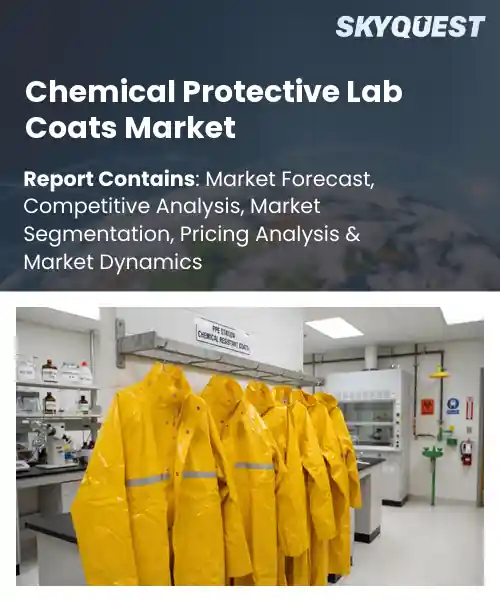
Chemical Protective Lab Coats Market
Report ID: SQMIG25K2258
Report ID: SQMIG25K2258
[email protected]
USA +1 351-333-4748
Report ID:
SQMIG25K2258 |
Region:
Global |
Published Date: August, 2026
Pages:
157
|Tables:
145
|Figures:
78


Global Chemical Protective Lab Coats Market size was valued at USD 2.46 Billion in 2024 and is poised to grow from USD 2.63 Billion in 2025 to USD 4.57 Billion by 2033, growing at a CAGR of 7.1% during the forecast period (2026-2033).
The global chemical protective lab coat market comprises garments engineered to shield scientists, technicians, and industrial workers from hazardous liquids, vapors, and particulates. Its importance stems from safety regulations and rising awareness of contamination risks in pharmaceutical, petrochemical, and research laboratories. Historically, the sector evolved from cotton aprons in the early twentieth century to polymeric laminates introduced in the 1990s, such as Tyvek and HDPE‑coated fabrics. Incidents like the COVID‑19 pandemic accelerated demand for barrier‑rated coats, while government mandates in the United States and Europe expanded the market. Consequently, the market has transitioned from niche specialty to a safety essential.Building on this evolution, the dominant growth driver is the tightening of chemical safety standards, which forces laboratories to adopt certified protective apparel. When regulators impose criteria such as ASTM F1506 or EN 343, manufacturers must provide coats with barrier ratings, spurring innovation and prices. This pressure creates opportunities for firms that combine antimicrobial linings with recyclable polymers; leading biotech campuses have replaced single‑use garments with such reusable coats, cutting waste by 30 percent. Simultaneously, expanding petrochemical projects in Southeast Asia raise demand, while collaborations between coating specialists and medical‑device makers open segments, reinforcing a cycle of adoption and advancement.
How is AI improving safety standards in the chemical protective lab coats market?
AI improves safety in chemical protective lab coats by analysing thousands of test results to identify the most resistant fabrics and stitching patterns. Machine learning models forecast how a coat will react to specific chemicals, allowing designers to choose materials that block exposure before a prototype is made. Integrated sensors linked to AI platforms alert wearers instantly when hazardous vapours breach the garment, reducing reaction time. Digital simulations let manufacturers test new designs virtually, cutting costly physical trials and ensuring each coat meets strict safety standards. The approach also streamlines compliance reporting, giving labs clear evidence that protective wear meets regulatory expectations.Genius Lab Gear, May 2026, introduced an AI driven material recommendation platform that matches lab tasks with the safest fabric blends, accelerating product rollout and reinforcing market confidence in protective performance.
Market snapshot - (2026-2033)
Global Market Size
USD 2.46 Billion
Largest Segment
Polyester
Fastest Growth
Polypropylene
Growth Rate
7.1% CAGR
To get more insights on this market click here to Request a Free Sample Report
Global chemical protective lab coats market is segmented by material, protection level, product type, application, end user and region. Based on material, the market is segmented into Cotton, Polyester, Polypropylene and Blended Fabrics. Based on protection level, the market is segmented into Basic Chemical Protection, Intermediate Chemical Protection and High Chemical Protection. Based on product type, the market is segmented into Disposable and Reusable. Based on application, the market is segmented into Laboratory Work, Chemical Handling and Pharmaceutical Manufacturing. Based on end user, the market is segmented into Research Laboratories, Pharmaceutical Companies, Chemical Companies and Academic Institutions. Based on region, the market is segmented into North America, Europe, Asia Pacific, Latin America and Middle East & Africa.
Polypropylene segment dominates because its inherent resistance to a wide range of solvents and acids makes it suited for harsh laboratory environments. The material’s lightweight nature enhances wearer comfort while maintaining barrier integrity, encouraging widespread adoption among safety-conscious users. Its non absorbent surface simplifies decontamination procedures, reducing downtime and operational costs. Consequently, manufacturers prioritize polypropylene when designing chemical protective lab coats, reinforcing its market leadership in the supply chain today.
Meanwhile, blended fabrics segment is the fastest growing because it combines the durability of synthetic fibers with the breathability of natural fibers, meeting emerging demands for ergonomic protection. Ongoing research into hybrid yarns expands its applicability across diverse laboratory tasks, driving new product launches and creating fresh market opportunities today.
High chemical protection segment leads because it satisfies the stringent occupational safety regulations that govern hazardous material handling. The advanced barrier layers prevent permeation of corrosive and toxic substances, ensuring compliance with government and industry standards. This reliability builds trust among end users, prompting procurement policies that favor high performance coats. As a result, manufacturers invest heavily in developing and certifying high protection garments, cementing their dominance in the sector.
On the other hand, intermediate chemical protection segment is witnessing the strongest growth because it offers a trade off between safety and cost for routine laboratory work. Growing awareness of moderate risk exposures drives organizations to adopt these coats as a pragmatic solution. Material enhancements broaden appeal, accelerating market expansion.
To get detailed segments analysis, Request a Free Sample Report
North America maintains a leading position in the chemical protective lab coats market due to a combination of rigorous occupational safety regulations, a mature research and development ecosystem, and a concentration of globally recognized manufacturers. The region benefits from strong collaboration between academic institutions, industry associations, and government agencies that drive continuous innovation in material performance and ergonomic design. End‑users across pharmaceutical, biotechnology, and academic laboratories prioritize compliance and reliability, reinforcing demand for high‑quality protective apparel. Additionally, well‑established distribution networks and a culture of proactive risk management enable rapid adoption of advanced protective solutions, further cementing the region’s dominance. The presence of major chemical suppliers and a robust testing infrastructure also contributes to confidence in product performance. Moreover, the emphasis on sustainability drives manufacturers to incorporate recyclable fibers and environmentally friendly production methods, aligning with broader corporate responsibility goals.
Chemical Protective Lab Coats Market in the United States is shaped by a strong emphasis on compliance with occupational health standards and a deep pool of research institutions that demand high‑performance apparel. Leading manufacturers invest heavily in advanced textile technologies, while end‑users in pharmaceutical and biotech sectors prioritize durability and comfort. The well‑integrated supply chain ensures rapid product availability, and collaborative industry forums foster continuous improvement in safety features today.
Chemical Protective Lab Coats Market in Canada benefits from a proactive regulatory environment and a growing emphasis on laboratory safety across academic and industrial settings. Domestic manufacturers focus on integrating breathable yet barrier‑effective fabrics, while import channels provide access to specialized designs. Collaborative research initiatives between universities and industry drive adoption of innovative protective solutions, and a strong commitment to environmental stewardship influences material selection and production practices nationwide today.
Europe experiences rapid expansion of the chemical protective lab coats market driven by stringent EU safety directives, a dense network of research laboratories, and a cultural commitment to worker protection. The region’s emphasis on sustainable manufacturing encourages the adoption of recyclable and low‑impact materials, aligning product development with broader environmental goals. Collaborative innovation platforms among leading textile firms, academic institutions, and industry associations accelerate the introduction of high‑performance fabrics that balance barrier efficiency with wearer comfort. Growing investment in life‑science clusters across key economies fuels demand for specialized protective apparel, while robust certification processes ensure consistent quality across borders, reinforcing market confidence and encouraging cross‑national adoption. Additionally, government incentives for occupational health initiatives and the presence of multinational pharmaceutical hubs further stimulate market activity. The convergence of regulatory rigor and innovation creates a fertile environment for continuous product refinement and market penetration.
Chemical Protective Lab Coats Market in Germany is anchored by a strong engineering tradition and a high concentration of pharmaceutical and chemical research facilities that demand reliable protective apparel. Domestic producers leverage advanced textile engineering to deliver garments with superior barrier performance and ergonomic design. Close collaboration with standards bodies ensures compliance with European norms, while sustainability initiatives drive the integration of recycled fibers, reinforcing Germany’s leadership in the market.
Chemical Protective Lab Coats Market in the United Kingdom is propelled by a life‑science sector and health‑and‑safety legislation that encourages adoption of protective wear. Manufacturers focus on lightweight, breathable fabrics that meet stringent barrier requirements, while established suppliers expand product portfolios to serve academic and industrial laboratories. Collaborative research programs between universities and textile innovators accelerate the development of coatings, positioning the United Kingdom as a hub for market growth.
Chemical Protective Lab Coats Market in France is emerging as research institutions and biotech startups prioritize laboratory safety. Domestic producers are adopting textile processes to meet growing demand for sustainable protective garments. Partnerships with European standardization bodies ensure alignment with safety regulations, while collaborations with academic labs foster testing of innovative fabric blends. This ecosystem encourages gradual market expansion and positions France as a notable contributor to the European landscape.
Asia Pacific is strengthening its position in the chemical protective lab coats market through a combination of expanding industrial activity, heightened awareness of occupational health, and adoption of advanced textile technologies. Nations across the region are updating safety standards that require performance protective apparel, prompting both local manufacturers and multinational suppliers to invest in research and development. The presence of major research hubs and a growing biotech sector drives demand for specialized lab wear that balances protection with comfort in diverse climatic conditions. Additionally, production capabilities coupled with a focus on sustainable material sourcing enable the region to offer competitive solutions, while incentives for workplace safety accelerate market uptake. The rise of digital manufacturing and smart fabric integration positions Asia Pacific as a leader in next‑generation protective apparel. Collaborative platforms linking universities, industry and government foster continuous innovation, ensuring the region remains at the forefront of safety performance advancements.
Chemical Protective Lab Coats Market in Japan is driven by an emphasis on research and a rigorous regulatory framework that mandates protective apparel. Domestic textile firms specialize in developing lightweight, breathable fabrics with chemical resistance, catering to pharmaceutical, electronics, and academic laboratories. Collaborative initiatives between universities and manufacturers accelerate integration of textile features, while a cultural focus on safety and quality ensures consistent demand for lab coats across the nation.
Chemical Protective Lab Coats Market in South Korea benefits from a growing biotech sector and strong government support for workplace safety standards. Local manufacturers focus on barrier fabrics that also provide comfort for extended laboratory use. Partnerships with research institutes drive development of innovative coating technologies, while strategies expand the market reach beyond domestic laboratories. This combination of innovation, regulatory compliance, and ambition fuels growth in the South Korean market.
To know more about the market opportunities by region and country, click here to
Buy The Complete Report
Increasing Safety Regulations
Growing Need for Biocontainment
High Production Costs
Complex Regulatory Landscape
Request Free Customization of this report to help us to meet your business objectives.
The competitive landscape of the global chemical protective lab coats market is shaped by intense rivalry among manufacturers who are pursuing strategic mergers, cross‑industry partnerships, and rapid adoption of antimicrobial textile technologies to differentiate their offerings and meet stringent safety regulations. Recent collaborations between protective apparel firms and material science innovators have accelerated the launch of next‑generation lab coats with integrated barrier performance, while selective acquisitions have expanded product portfolios and geographic reach.
Top Player’s Company Profile
Recent Developments
SkyQuest’s ABIRAW (Advanced Business Intelligence, Research & Analysis Wing) is our Business Information Services team that Collects, Collates, Correlates, and Analyses the Data collected by means of Primary Exploratory Research backed by robust Secondary Desk research. As per SkyQuest analysis, the global chemical protective lab coats market is being propelled primarily by increasing safety regulations that compel laboratories to adopt certified protective apparel, while a second driver is the growing need for biocontainment as institutions seek garments with advanced filtration and antimicrobial treatment. The market faces a restraint in the form of high production costs due to premium polymers and laminate layers, which can limit adoption in price‑sensitive labs. North America remains the dominating region thanks to stringent occupational standards and a mature R&D ecosystem. Within the product mix, the polypropylene material segment leads the market because of its solvent resistance, lightweight comfort and ease of decontamination, reinforcing its leadership position.
| Report Metric | Details |
|---|---|
| Market size value in 2024 | USD 2.46 Billion |
| Market size value in 2033 | USD 4.57 Billion |
| Growth Rate | 7.1% |
| Base year | 2024 |
| Forecast period | (2026-2033) |
| Forecast Unit (Value) | USD Billion |
| Segments covered |
|
| Regions covered | North America (US, Canada), Europe (Germany, France, United Kingdom, Italy, Spain, Rest of Europe), Asia Pacific (China, India, Japan, Rest of Asia-Pacific), Latin America (Brazil, Rest of Latin America), Middle East & Africa (South Africa, GCC Countries, Rest of MEA) |
| Companies covered |
|
| Customization scope | Free report customization with purchase. Customization includes:-
|
To get a free trial access to our platform which is a one stop solution for all your data requirements for quicker decision making. This platform allows you to compare markets, competitors who are prominent in the market, and mega trends that are influencing the dynamics in the market. Also, get access to detailed SkyQuest exclusive matrix.
Table Of Content
Executive Summary
Market overview
Parent Market Analysis
Market overview
Market size
KEY MARKET INSIGHTS
COVID IMPACT
MARKET DYNAMICS & OUTLOOK
Market Size by Region
KEY COMPANY PROFILES
Methodology
For the Chemical Protective Lab Coats Market, our research methodology involved a mixture of primary and secondary data sources. Key steps involved in the research process are listed below:
1. Information Procurement: This stage involved the procurement of Market data or related information via primary and secondary sources. The various secondary sources used included various company websites, annual reports, trade databases, and paid databases such as Hoover's, Bloomberg Business, Factiva, and Avention. Our team did 45 primary interactions Globally which included several stakeholders such as manufacturers, customers, key opinion leaders, etc. Overall, information procurement was one of the most extensive stages in our research process.
2. Information Analysis: This step involved triangulation of data through bottom-up and top-down approaches to estimate and validate the total size and future estimate of the Chemical Protective Lab Coats Market.
3. Report Formulation: The final step entailed the placement of data points in appropriate Market spaces in an attempt to deduce viable conclusions.
4. Validation & Publishing: Validation is the most important step in the process. Validation & re-validation via an intricately designed process helped us finalize data points to be used for final calculations. The final Market estimates and forecasts were then aligned and sent to our panel of industry experts for validation of data. Once the validation was done the report was sent to our Quality Assurance team to ensure adherence to style guides, consistency & design.
Analyst Support
Customization Options
With the given market data, our dedicated team of analysts can offer you the following customization options are available for the Chemical Protective Lab Coats Market:
Product Analysis: Product matrix, which offers a detailed comparison of the product portfolio of companies.
Regional Analysis: Further analysis of the Chemical Protective Lab Coats Market for additional countries.
Competitive Analysis: Detailed analysis and profiling of additional Market players & comparative analysis of competitive products.
Go to Market Strategy: Find the high-growth channels to invest your marketing efforts and increase your customer base.
Innovation Mapping: Identify racial solutions and innovation, connected to deep ecosystems of innovators, start-ups, academics, and strategic partners.
Category Intelligence: Customized intelligence that is relevant to their supply Markets will enable them to make smarter sourcing decisions and improve their category management.
Public Company Transcript Analysis: To improve the investment performance by generating new alpha and making better-informed decisions.
Social Media Listening: To analyze the conversations and trends happening not just around your brand, but around your industry as a whole, and use those insights to make better Marketing decisions.
REQUEST FOR SAMPLE
 REQUEST FREE CUSTOMIZATION


Want to customize this report? This report can be personalized according to your needs. Our analysts and industry experts will work directly with you to understand your requirements and provide you with customized data in a short amount of time. We offer $1000 worth of FREE customization at the time of purchase.
Feedback From Our Clients


 USA (+1) 351-333-4748

